Beaded Lanterns QAL Week 1 Cutting

This week it’s time to cut into your yummy fabrics as we begin to make Beaded Lanterns. If you haven’t done so yet, be sure to download my free Beaded Lanterns Quilt pattern to follow along. Now, let’s get started!

Cutting Beaded Lanterns Fabrics

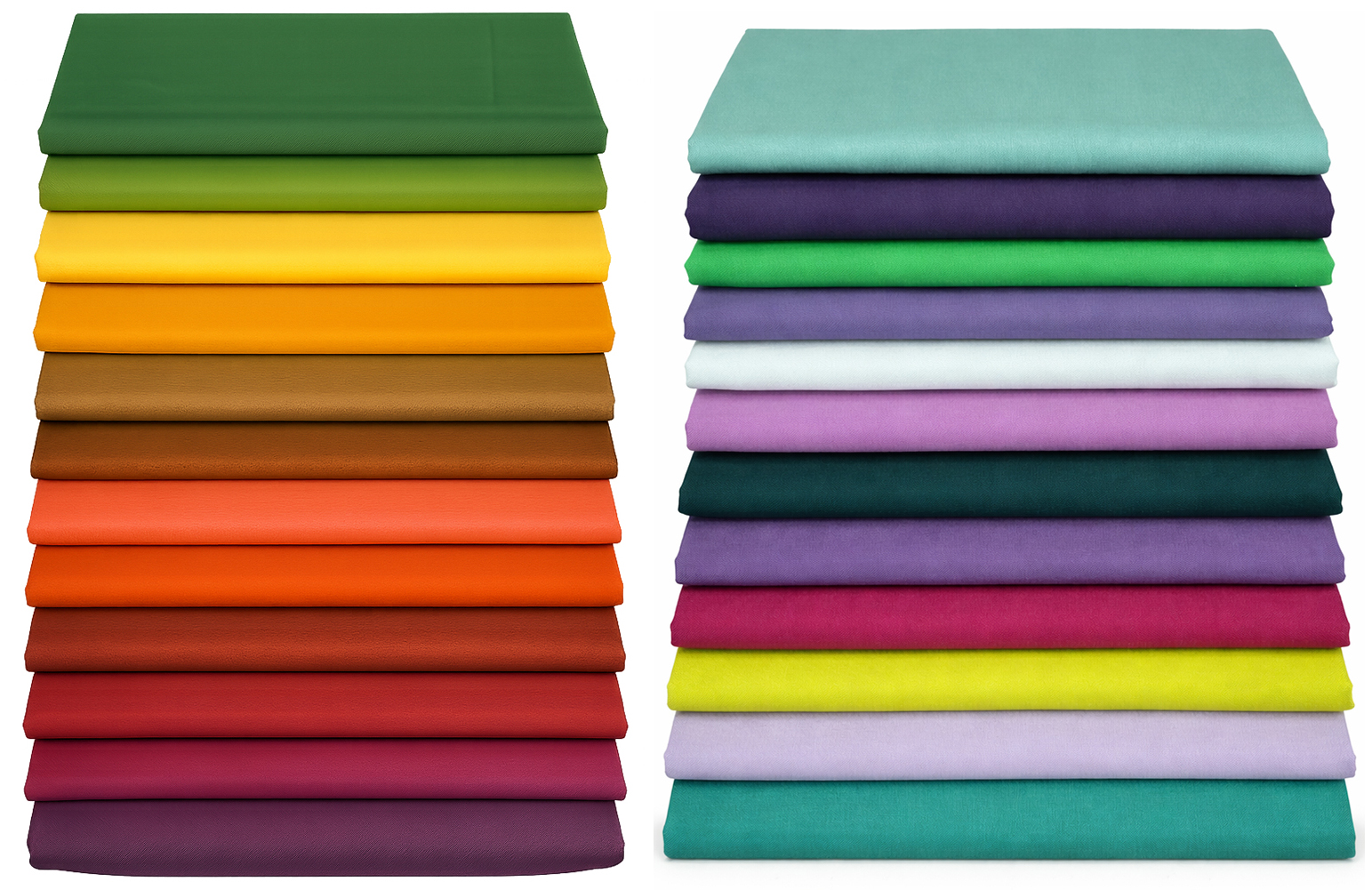
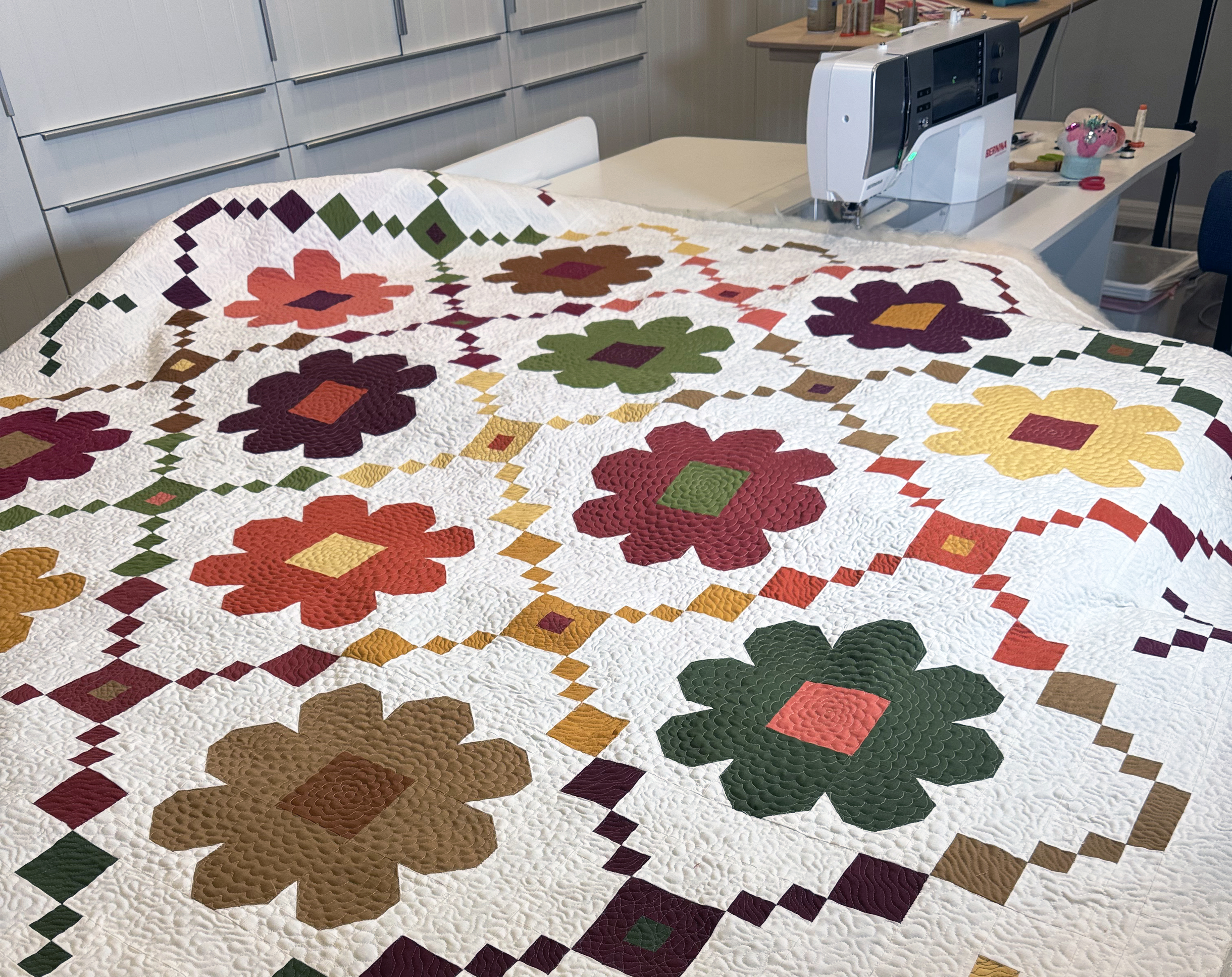
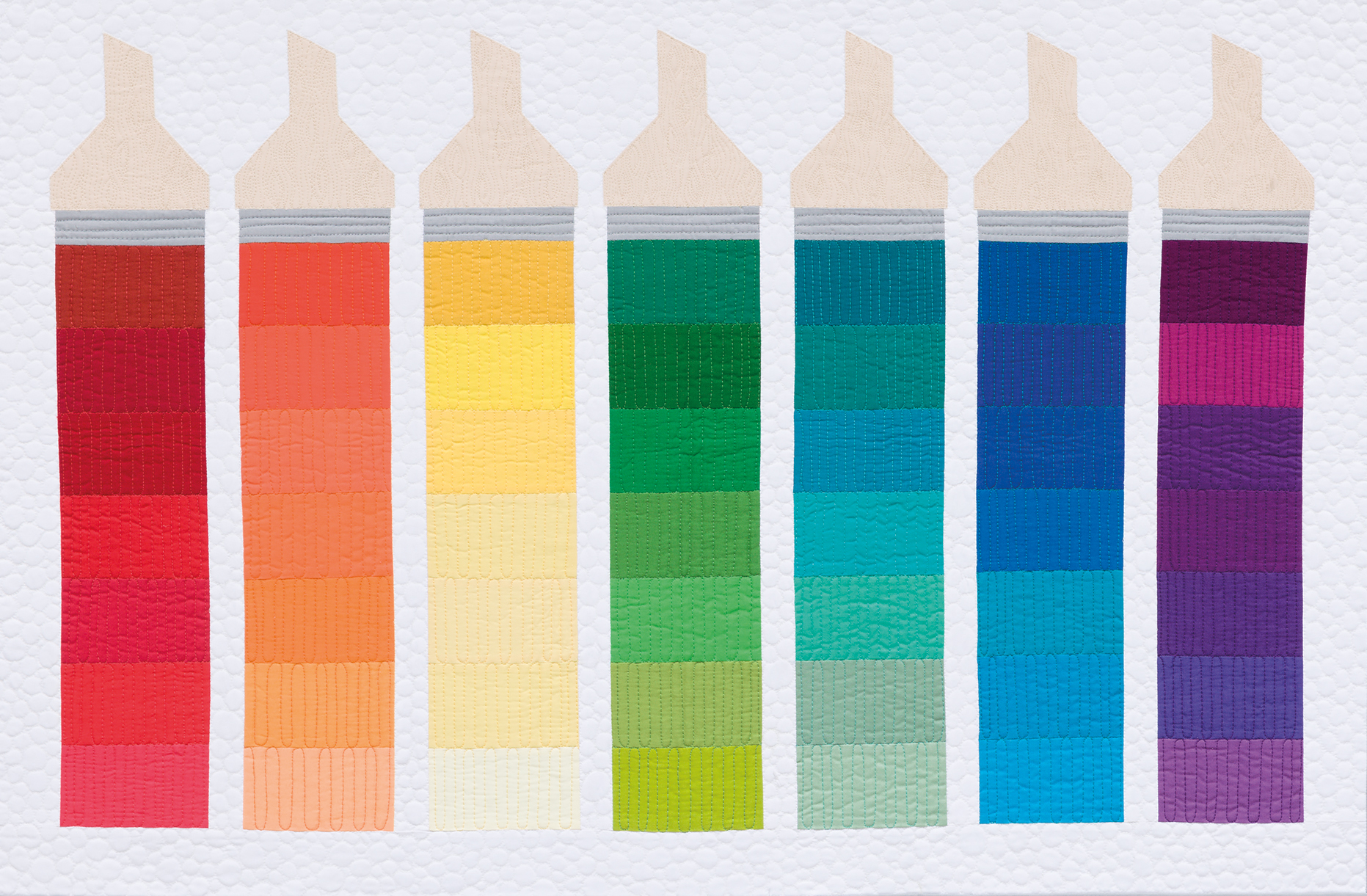
You’ll need a total of 36 precut strips from a standard sized strip roll. Using my Dazzle Dots 2 roll shown above, I took out 2 strips of the ice blue color because it was the same as the background and I didn’t want a “hole” in my quilt. I also took out the 2 white strips since it had the least amount of contrast. That left me with a total of 18 colors, 2 strips of each. Perfect!

Click here to get my Christa Quilts Rotary Cutter (on sale while supplies last).
It includes my special “magical” pixie dust which makes you a better quilter, LOL!!

Follow the pattern instructions on page 2 to cut out your individual units for each block, plus cutting up the 4 yards of background fabric (which includes the binding). To speed up the cutting, I layered 2 strips of each color (4 layers of fabric), and cut through several stacks of strips at one time.

I prefer to cut out all of my units to the correct size first, before sewing. After many years of trial and error, I’ve found that my units are much more accurate this way.

I plan to set aside the leftovers after cutting, and then piece them into the backing. This is totally optional, but it’s a fun way to personalize your quilt!

Ta-Da! All of my pieces are cut and ready to sew into blocks for next week!

Now it’s your turn to share. You can share your work in progress on social media using #beadedlanternsqal. Or you can post pics and ask questions over in my Christa Quilts Facebook group.

Machine Quilting Bling with Your Walking Foot

I’m excited to share my step-by-step process for quilting my latest iteration of Bling. This is one of my favorite patterns I’ve made over the years. Whenever I get a new idea for a fun colorscheme or quilting plan, I can’t help remaking some of my most popular patterns! Click below to watch and let me know what you think!

Get the Bling Quilt Pattern

Bling quilt pattern

You can choose a similar color story and layout, or you can switch things up and make it your own! The last few times I’ve made this quilt, I chose scrappy backgrounds, but you can also use one fabric for the background and it looks just as good. Hmmm, maybe you’ll want to make more than one like I did??

Grab My Kits and Fabrics While Supplies Last!

I always like to kit up a quilt when I make it because I know others will like it too. However, these are only available for a limited time, as long as the fabrics are in print. Enjoy some beauty shots of this quilt that I took while on a recent beach vacation. It was a nice cloudy day, and seeing these pics brings back great memories!

I had just as much fun making the pieced backing and using up a bunch of leftover Dazzle Dots!

99 Designs Video Episode 6 – FMQ Triangle Texture

This week for 99 Machine Quilting Designs we are learning to quilt Triangle Texture, a design that’s great for modern OR traditional quilts! Watch below and let me know what you think!

Get the Surplus Strips Quilt Pattern or Kit
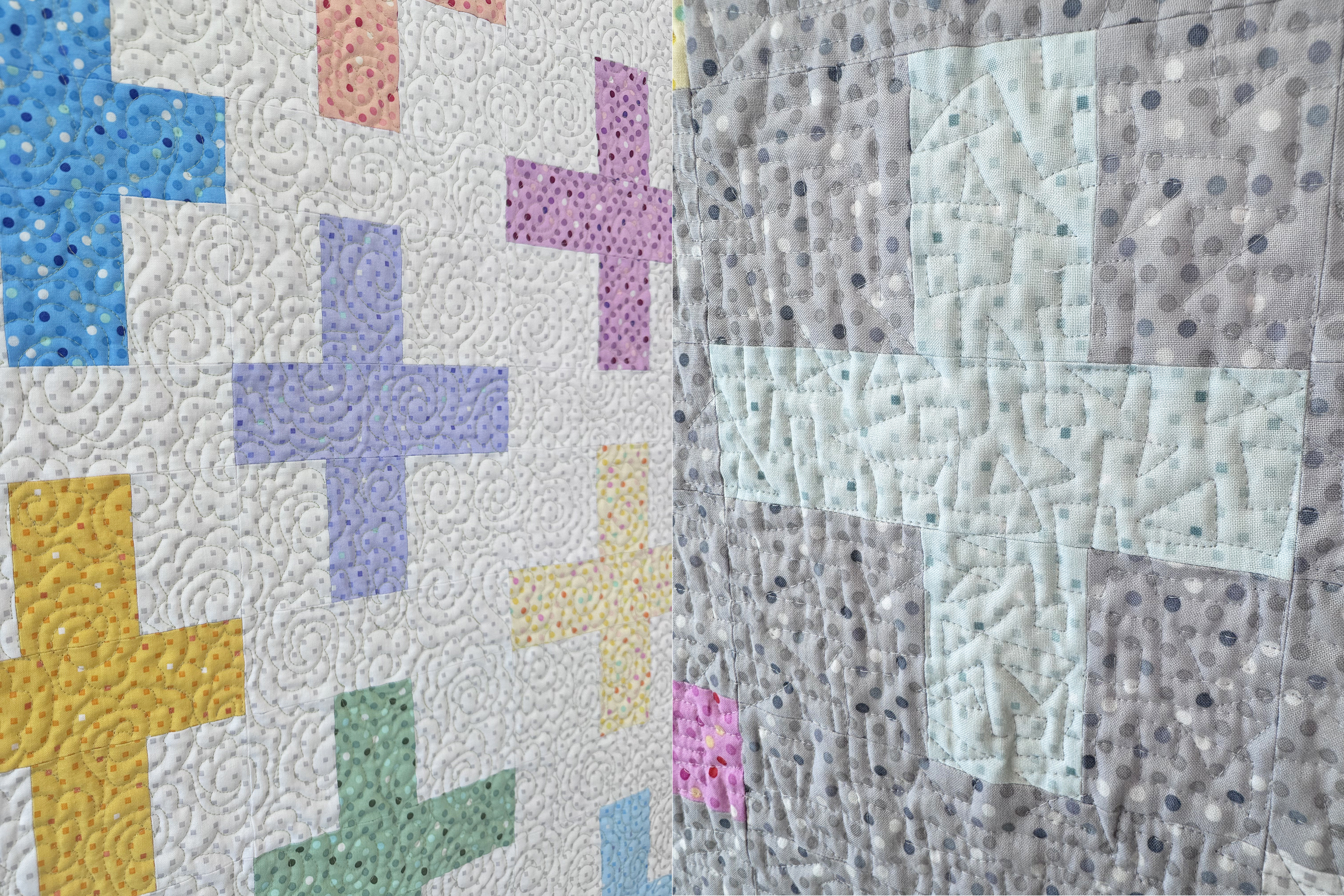
I recently combined 2 motifs – boxes and triangles on the gray version of my Surplus Strips quilt! You can now grab the kit to make this quilt with the gray or white background, or grab the pattern and choose your own colors. It’s fun to make and fun to quilt! 

Suplus Strips Quilt Pattern

If you’d like to choose your own adventure, grab the Surplus Strips quilt pattern and then rummage through your stash for the perfect colors to make it your own. It’s the perfect design for using up leftover (surplus) precut strips!!

Below are 2 versions I made a few years ago and it looks great no matter what!

Surplus Strips quilts made from Fandangle by Christa Watson

Piecing Inset Circles – The Next Experimental step

In my quest to explore the concept of geometric abstraction, I felt compelled to take a perfectly interesting quilt top and cut holes in it, then inset some circles.

Click here to read my previous blog post about the making of this quilt.

It’s been very liberating to play with color, line & shape, without the need for my design to represent anything concrete. It’s a risky move for sure, but I just couldn’t move forward until I explored this idea.

Below are a few in progress pics while I was inserting the circles. It’s not a tutorial, but it was more of a journal exercise to write down my thoughts while making this top because it was bold and risky move for moe to even attempt to do something like this, LOL!!

First I started by making a sample circle. This obviously was not going to go in the quilt and I just grabbed some scraps I had lying around to test the technique (ahem… you may see more of these fabrics shown in the circle a bit later this year… just saying!!). I pinned it to the sewn top to see if the scale looked right.

The basic idea is to cut your focus circle 1/2″ larger than your finished size. Then cut a circle into the background that’s 1/2″ smaller than your finished size.

I wanted 12″ finished circles so I drew out 12 1/2″ and 11 1/2″ circles using EQ8 and printed them out on paper, then taped them together. I know there are templates and rulers for this, but since this is all one big experiment I just used the supplies I had on hand.

The hole in the peach background was cut 11 1/2″. The lilac circle was cut 12 1/2″.

By creasing both units you can match up the 4 quadrants and then sew with the background fabric on top. The hardest part is pinning the circle to the background. I used a million pins! There are tons of tutorials on youtube, google, pinterest etc. showing how to insert a circle into a block, using lots of different methods like using freezer paper, glue, etc, but I just went old school with pins.

It’s also super important to heavily press the back and front until it lies flat. With the successful test block complete, I was ready to dive in and start adding circles to my quilt.

I created a bunch of low volume improv units – way more than I needed, but I set aside any leftovers knowing I could probably use them up in some way on the back.

These are actually the wrong side of a bunch of low volume prints from my various collections. I really like the softer effect this gives to the fabric.

I traced out the circle shape onto the pieced background fabric, then very very carefully cut a circle with a super small rotary cutter. I made 3 circles like this with subtle shading. One was all light grays and whites (below), one had the light grays and just a little color (not pictured); the third was all light colors (above).

I pinned the circles roughly in place where I wanted them on the top; but then I needed to trace the smaller 11 1/2″ circle size using a paper template (NOT the 12 1/2″ cut unit), so that I could account for the seam allowances. Now the scary part – cutting holes in the quilt top!

This was a bit scary, but I wanted to take a risk and really explore this idea. The whole time I kept reminding myself it’s just fabric – I can get more!!! I only cut and sewed one hole at a time just in case anything went awry.

Oh no!! There’s a hole in my quilt top, LOL!! By the way there are no tutorials I know of showing how to insert a circle into a whole top, so I just sort of winged it and hoped for the best! I treated the whole top as the background or concave unit and folded it so that the circle was folded in half both ways, first horizontally and then vertically.

I used pins to mark the midpoints of the circle in 4 places. I’ll do the same for the inset circle so that I can match up the pins and they act as my registration marks for proper placement.

Can you see my crease lines? I’ll match up the background pins to circle pins.

Then it was just a matter of subdividing each quadrant evenly and adding more pins to distribute the bulk. I actually looked into the idea of using a freezer paper method as the circle template and sewing on the paper, but it looked way too complicated.

Even though this method used a ton of pins, it made more sense to my brain. Basically I’m sewing wrong sides together and matching up a concave (background) curve with a convex (inset circle) curve. The actual sewing just uses a straight stitch, sewing in a line, but very slowly.

Dealing with the bulk doesn’t bother me because I’m so used to moving a large quilt when I’m domestic machine quilting. It gave me similar happy vibes like that. 🙂

I wasn’t sure about this after I put in one circle, although I was pleased that the technique worked. But by the time I added the 2nd circle I knew it was going to be ok. So if at first you aren’t sure – just keep going!! More than anything I wanted to try out a technique that’s been on my bucket list for years (perhaps decades).

When adding the inset circles I didn’t overthink it. I let the orientation of the circles be random and I’m really pleased with how it turned out.

Thinking ahead to basting and quilting, I’m planning to use a Hobbs Silk batting to quilt it. I like the drape and texture this adds to the quilt. I took a picture of the finished top with the batting I plan to use so I don’t forget!

I have big plans to use up all the leftovers on the back, so stay tuned for the next step! The nice thing about sewing without a deadline is that I can make this quilt on my own time frame. Let me know what you think about my experiment so far. I’m loving inset circles and will definitely do them more in the future!

Color Weave Quilt Along is Coming!!

My Color Weave Quilt along kicks off Monday, Sept 16th and I’m doing something a little a little different this time around. I’ll be sharing everything via email rather than here on my blog. Lately I’ve been rethinking my social media strategy and looking at numbers. Because I get higher engagement via my direct newsletter, this will be an experiment to see if that format works best for a quilt along. Keep reading below to see how you can join in the fun….

Click here and download any of my free patterns to join my email list!

Now, not to confuse things, but this is my blog post you are reading right now. You may get this delivered to you via email if you’ve signed up for that. But that’s a totally different system than my regular, weekly email newsletter. So if you aren’t sure if you are on that list, you can sign up here. This link will take you to my free patterns page which automatically signs you up for my emails. Got it??

Everyone already on my email list will automatically get the Quilt Along emails, and the best thing about it is that it’s free and you don’t even have to make the quilt! I will share tips and tricks for making the entire quilt from start to finish, including basting, machine quilting AND binding. These are techniques that will apply to any quilt you make. I really love empowering others to actually finish their quilts and reduce their UFO piles!

So to recap, click here to grab any of my FREE patterns and join my email list. That will give you free access to the entire Color Weave quilt along. Now if you DO want to make the quilt, pick up a copy of my Color Weave quilt pattern in either PDF or print.

Click here to get the Color Weave quilt kit – made from Dazzle Dots.

And while supplies last, I’ve put together kits made from precut strips of my Dazzle Dots fabric line. This includes the beautiful rainbow colors as well as both the light and dark grey strips. This is everything you’ll need for the quilt top – including the binding.

So – who’s excited for this one??? I know I am!!!

Christa’s Soapbox – Making Soul-Fulfilling Work

I’ve been sitting on a feeling for awhile that I need to change up a little bit of what I’ve been doing. I will still be doing all the fun things: designing, writing, traveling & teaching, but I’m starting to make space to work on some more “experimental” ideas.

A current “What If?” Idea in progress…

A few years ago I started getting an itch to explore new concepts and ideas in my quilting work. As a full time professional quilter, that can cause somewhat of a conflict because most everything I currently make is for commercial consumption. Meaning that I have to sell what I make or design in order to pay the bills. It’s a fun job for sure, but it often times leaves little space for trying out new ideas that may not be financially viable. It’s the old adage, that “if you find something that works, don’t fix what isn’t broken!”

A couple of times this has pulled me into a direction I’d rather not go in and I have to course correct. I can also be slow to change because I’m not a boat rocker. All this is to say I’ve finally decided to prioritize the “what if?” ideas.

I publicly mentioned the idea of making soul-fulfilling work in a video I created about QuiltCon 2024 earlier this year. This idea of making what my heart desires has been nagging at me for awhile. And each time I teach at a large national show (AQS in Paducah earlier this spring and at PIQF over the summer) that desire grows stronger.

I like where this is going, although I’m not quite sure what to name it yet….

The biggest issue I’ve had to navigate is how to actually carve out the time in my already busy schedule to make this happen. And without any external deadlines, the exploratory concepts keep getting pushed to the side because I can do them at “any time,” right?? So to actually make time and space for what I want to do, I’ve decided to make 2 tweaks in my routine.

First of all, I’m going to post less on social media. My accounts aren’t going away, but rather than being a slave to the algorithms, I’ll post what I want, when I want! There may be periods of time when things are more quiet, and other times where I may want to share a boat load of new ideas! Along the way I may even write longer blog post like this one.

This has been fun to work on for a few minutes each day, and I’m already getting ideas on how to machine quilt it while I piece.

The second thing I’m doing is actually getting back to what first got me noticed in the quilting industry in the first place: participating in quilt shows again. I do love sharing my work publicly, and I don’t enter my quilts to win ribbons (although it’s a nice bonus when they do)!

However, having that external deadline of finishing something for a show really motivates me to explore, experiment and push the boundaries a little bit. I’ve come to accept that fact that it’s hard for me to make a quilt “just because.” For me, each quilt needs to serve a purpose. So I’ve given myself permission to use those external deadlines as a catalyst to keep me sewing, exploring and just playing. It feels very refreshing to make what I want to make and share what I want to share!

I’m at a pause point with this design, so now I’m thinking through what comes next….

So… I’ll continue to document my process of both my commercial work and my experimental work. I’ll continue to share both my successes and lessons learned along the way. But it will be more random and less scheduled.

Have YOU ever had an a-ha moment, or a strong feeling when you know it’s time to pivot? Let’s definitely continue this conversation in the comments, and I’m sending hugs to everyone who’s continuing to support me on this journey!!

xoxox

What It’s Like to Judge a Large, International Quilt Show

I recently returned from my trip teaching – and judging – at Pacific International Quilt Festival, which took place in Santa Clara California in July of 2024. The quilts of course were amazing, and my students were well prepared for success!

Click here to see images of all the winning quilts.

Best Mid Century Modern Quilt: Retro Living by Tami Graeber

For the record I am NOT a certified quilt judge, but I’ve had many years experience entering my own work into quilt shows. I’ve also volunteered numerous hours in judging rooms as a scribe or quilt handler, and I’ve judged several shows (both in person and online) when the occasion arrises. I’ve also served on the jury of large shows and I’ve sat on committees that help formulate rules for their particular shows. So before we get into sharing what that’s like, let me define a few terms for you.

First of all, what’s a jury? This is a select group of quilters who are chosen for their knowledge of quilting, and/or design. This group pre-screens all of the quilts that are submitted for entry to a show, and they determine which quilts will be accepted for exhibit into that show. A quilter who wishes to submit a quilt to a large, juried show will submit photos of their quilts along with an entry fee. The requirements are usually 2 photos – a clear image showing the full quilt, plus another detailed photo showing a small section of the quilt to show techniques and workmanship.

Judges and Scribes at Breakfast on Judging Day

Not all quilt shows are “juried” but most large international shows are. This is because of the sheer volume of quilts submitted. There are usually many more quilts entered into a well known show, compared to how much space is available to showcase them. So it’s simply a numbers game. The jury is “blind” meaning the jurors do not have any information on who made each quilt. They may or may not be able to read the artist statement but that’s it.

Click here to read about my experience as a QuiltCon Juror

A scribe is someone who records the judges’ comments during evaluation of each quilt. The scribe is usually given a separate sheet of paper with the name of each quilt and the judging criteria, along with room for comments. The judge will then evaluate each quilt according to the criteria which is set by show. A handler is literally someone who helps handle each quilt as they are being judged. Quilts are usually judged together as a group by category. That means each quilt is evaluated relative to all of the quilts in the same category.

Best Handwork, Modern: Katzen Krankenhaus by Katherine M. Dossman

There can be 1 or more judges at the show and shows are usually judged one of two ways: with the quilts by category laid out flat on a table, one on top of another. Or the quilts can be hung on the show floor first, and the judge(s) walk around the show looking at each quilt by category. Each show is different and the judges are given instructions on how to judge. Some shows require their judges to be certified, but most large, international shows do not. Many shows invite some of the teaching staff to also serve as judges due to their expertise in their particular field. And usually the shows hire different judges each year for variety.

Just like a jury, the judges do not know whose quilt they are evaluating at any given time. They may be able to read the artist’s statement but they are evaluating the quilt on its own merits. When more than one judge is involved, the judges can discuss each quilt together to decide on the final evaluation of each.

My judging partner Mel Beach and I hanging out during the “meet the teacher” event.

So here’s how it worked at PIQF. There were 4 of us judging, and we were divided up into two teams of two, along with one scribe for each team. At this particular show there were 4 main categories (Traditional, Innovative, Modern, and Wall) so it worked out nicely for each team to judge half of the quilts. We all met for a working breakfast on the morning of judging day, and were given instructions by the show organizer. The instructions included how to evaluate each quilt along with the numbers of ribbons and prizes that would be awarded in each category. In addition, each of the 4 judges got to select our own judges’ choice for a special ribbon.

At this show, the quilts were hung on the show floor and we were given a map along with a binder for each team that had all of the evaluation sheets for each quilt we were judging. So we walked around the show floor looking at each quilt one at a time. They had numerous special exhibits for display only, so these were not a part of our evaluations.

My judges’ choice ribbon: The Chairs by Deborah Ryan

First we looked at each category we were judging to get an overall impression of the quilts. The scribe helped us note which particular quilts stood out and started writing down some of our preliminary comments. We discussed and evaluated each quilt as a team and then took our time in deciding which quilts would be awarded.

After the winners were chosen, we went back and looked at each quilt we had awarded to ensure we were happy with our choices and that we followed the judging criteria. Once that was done, we turned in our results to the show organizers so that they could begin moving the “Best Of” quilts to the front of the room and then begin pinning ribbons onto the winning quilts.

Below, I’ve made a short video showing all of the quilts entered into the Modern Category, which I helped judge. Can you see how it’s difficult to choose the winners? I could have awarded them all!!

Click on the image below to start the video. It’s about 8 minutes long.

While the volunteers were shuffling a few quilts around, and as the vendors were setting up on the show floor, we once again looked at each quilt and made comments for each and every one. Not every show includes judges’ comments with each quilt, but I really loved that this one did. We tried our best to be very fair and positive, even when giving constructive criticism.

I can tell you that at this show, and most high level shows like this, the work is top notch so most of the comments are very positive. The most common advice we included in our team’s judging was that it could benefit from additional quilting. When a quilt is hung at a show it can become very apparent if the quilting isn’t balanced. The quilt can sag a little or look a little wrinkly in some areas and can be fixed with additional quilting. Since this is my area of expertise, it’s one of the things that often catches my notice.

Best Modern Wall Quilt: Out of the Blue by Linda Branting

I was very pleased to be involved with this show so intimately and I can tell you that getting up close and personal with the quilts like that is very joyful. I will be teaching and judging at another show run by the same group – Mancuso Show Management – next February. If you are in the Virginia area, I’d love for you to join me at the Mid Atlantic Quilt Festival. So stay tuned for more details about that!!

Click here to see where I’ll be traveling to next!

Bling Quilt – One Pattern, Many Possibilities

I was recently unpacking from my latest quilty travels and as I was putting my quilts away, I realized I’ve made 5 different versions of the same quilt. How does that even happen?? LOL!! So today I thought it would be fun to share all of them together in one post, plus a few more bonus ideas!!

Click here to get my Bling pattern – PDF version
Click here to get my Bling pattern – paper version

The original version of Bling shown above was created for a magazine and originally came in one size only. I made it to showcase an earlier fabric line that’s now out of print and wanted to quilt it fairly quickly with a simple wavy walking foot grid design.

As I was designing this quilt I started playing around with different layouts and fabric placement. I love the version below which I call “Trinket Boxes.” I haven’t made it….yet, but it’s still on my “to make” list one day!!

Once the pattern rights reverted back to me, I created a version of my Bling pattern that now includes multiple sizes. This time I made two more versions of Bling to showcase another colorful fabric collection I had designed. I wanted to demonstrate how the same bright fabrics can pop against either a very dark OR very light background as shown below:

With the release of the stand-alone quilt pattern, I also include a few alternate layout ideas. I love how the same design can look so different, just by rotating all the blocks! All of the images below are included in the current version of this pattern.

I was really intrigued by the Hashtags layout above. Next, I wanted to explore how it could look if the colors were a little more unified rather than completely random. So when it was time to release my Black, White & Bright collection, I made a 4th version where all of the hashtags were made from the same fabric in each block. I also went scrappy in for the backgrounds, too.

When people see this version, they can’t believe it’s the exact same pattern!!

Finally, I made a 5th version of Bling to showcase my Stitchy fabric collection. I kept the look of the scrappy backgrounds and even made a video showing how I machine quilted it with fun decorative machine stitches. Click the image below to watch the video:

After making all these quilts, I’m still not tired of this design!!

While supplies last, I have kits available to make the Black White & Bright Hashtags version above, or either of the bright pastel Stitchy versions below.

Click here to view all quilt kits and get started on a fun project right away!!

If you make any of these versions – or even one inspired by them, do let me know!

Positive Direction Quilt Remake Part 2

I am enjoying sharing the making of this quilt in real time with no strict deadlines. If you’d like to follow along as I make this quilt, click here to read about Positive Direction Part 1.

Once I sewed the blocks together, I quickly got them up on my design wall following the quilt pattern layout. This wasn’t the final arrangement, but it let me see at a glance what it was going to look like.

Next, I spent a bit of time rearranging all of my blocks in a pleasing order. I wanted to keep the colors in the same position, but balance them out so you could start seeing the diagonal rows emerging. I purposefully made a few blocks that were a little lighter or darker to give the quilt some depth and sparkle.

I took a picture with my phone so that I could gather up each row of blocks and sew them all together, assemby-line style. I placed each row of blocks in a stack next to my sewing machine in order. I oriented them so that each pair of blocks is right sides together and the right hand side of the block closest to the machine is the side I’m sewing on.

I press all of my seams open so that the blocks lie super flat and I pin next to each intersection so that my points and corners wil match. I place my pins perpendicular so I can quickly grab them before sewing over them.

Each row had an odd number of blocks, so I left the odd block on the design wall. I can refer to my layout image and match up with each row with the missing block to keep things organized while I’m sewing.

As each row was completed, I started laying them out in order on my cutting table. This is so that I could press each row flat before adding it to the design wall to check the overall layout.

I put together a little video montage showing how it was starting to look as I sewed each row together. It’s fun to see the quilt shrink and the design to appear more prominent. Click the image below to watch. It’s only 20 seconds long, but of course took much longer in reality!

I’m really happy with how the finished quilt top turned out.

My Positive Direction quilt pattern is available as a PDF download and includes instructions for 4 sizes, including the one seen here.

Click here to get your copy of my Positive Direction quilt pattern.

Next up, I need to make the backing, then baste & quilt it. Those will all be separate posts, so stay tuned for more behind the scenes as I continue to make this quilt!

Sending Good Vibes & Free Quilt Patterns!

It’s fun to share some of the reasoning behind the fabrics I’ve designed. With my Good Vibes collection, I wanted to create a group of fabrics with an equal number of lights and darks so that they’d work well in lots of precut friendly patterns.

Click here to view all Good Vibes fabrics.

Good Vibes by Christa Watson for Benartex

Speaking of precut friendly patterns made from light and dark, have you downloaded my FREE Puzzle Box quilt pattern? It’s made from 2 sets of 2 1/2″ wide strip rolls – half light and half dark! The picture below was taken at our favorite summer spot – Hermosa Beach in California.

Click here to get my free Puzzle Box quilt pattern emailed to you.

Puzzle Box Quilt Made from Good Vibes

Gotta Love Precuts!

Of course this quilt would look fabulous in any fabrics, but I just love the way it looks in the summery, citrus hues of my Good Vibes collection. You can grab 2 jelly rolls to make the quilt exactly as I did. Or, change things up and pair 1 jelly roll with a highly contrasting light or dark fabric that’s all the same. No matter what you do, it’s going to look great!!

Click here to get 1-2 jelly rolls to make this quilt.

Free Companion Video – Learn to Quilt Simple Wavy Lines

Nowadays, I can’t even make a quilt without recording a video while I’m machine quilting it. Nothing pleases me more than sharing my super simple domestic machine quilting techniques with all of you! Click the image below to watch my video tutorial and add this one to your quilty bucket list!