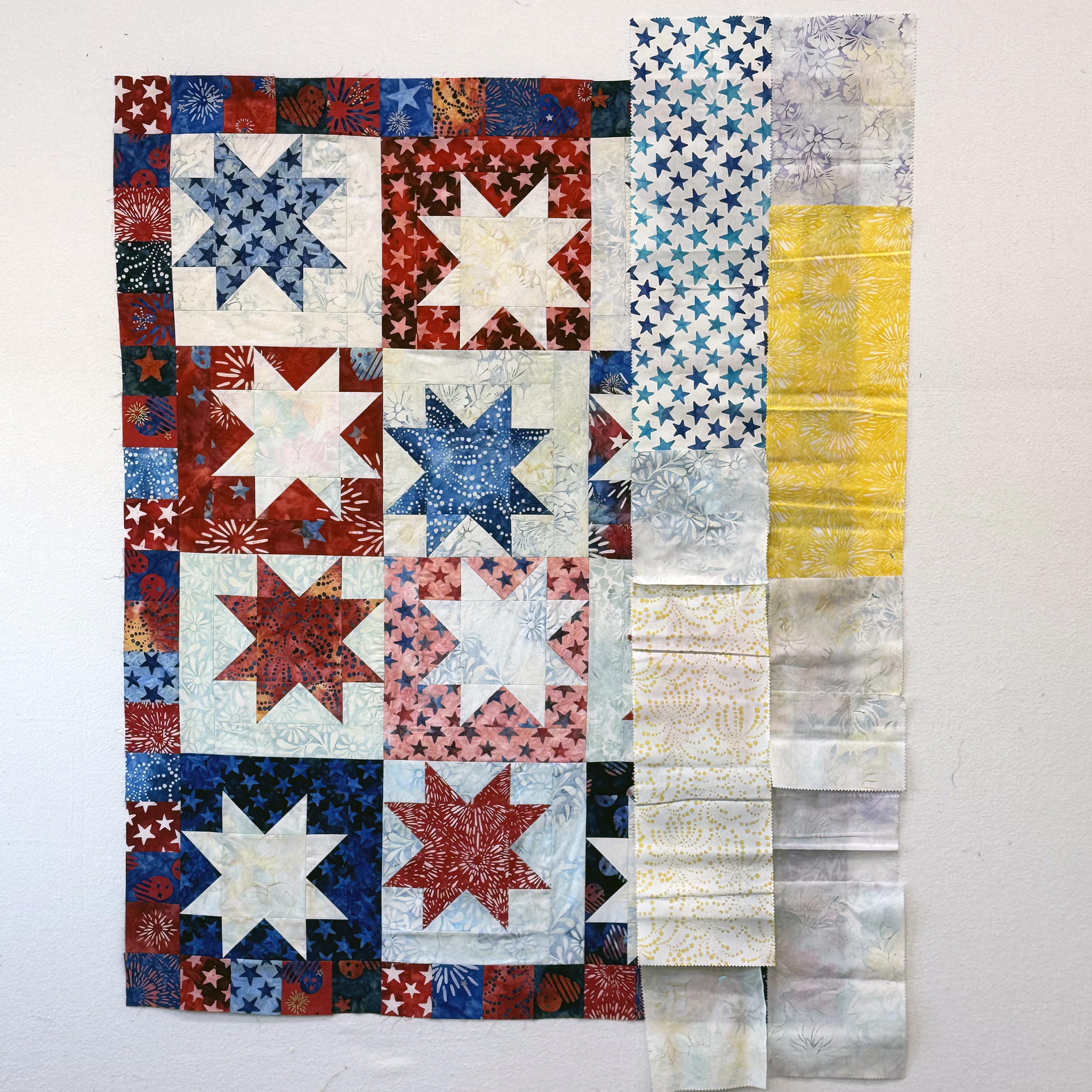
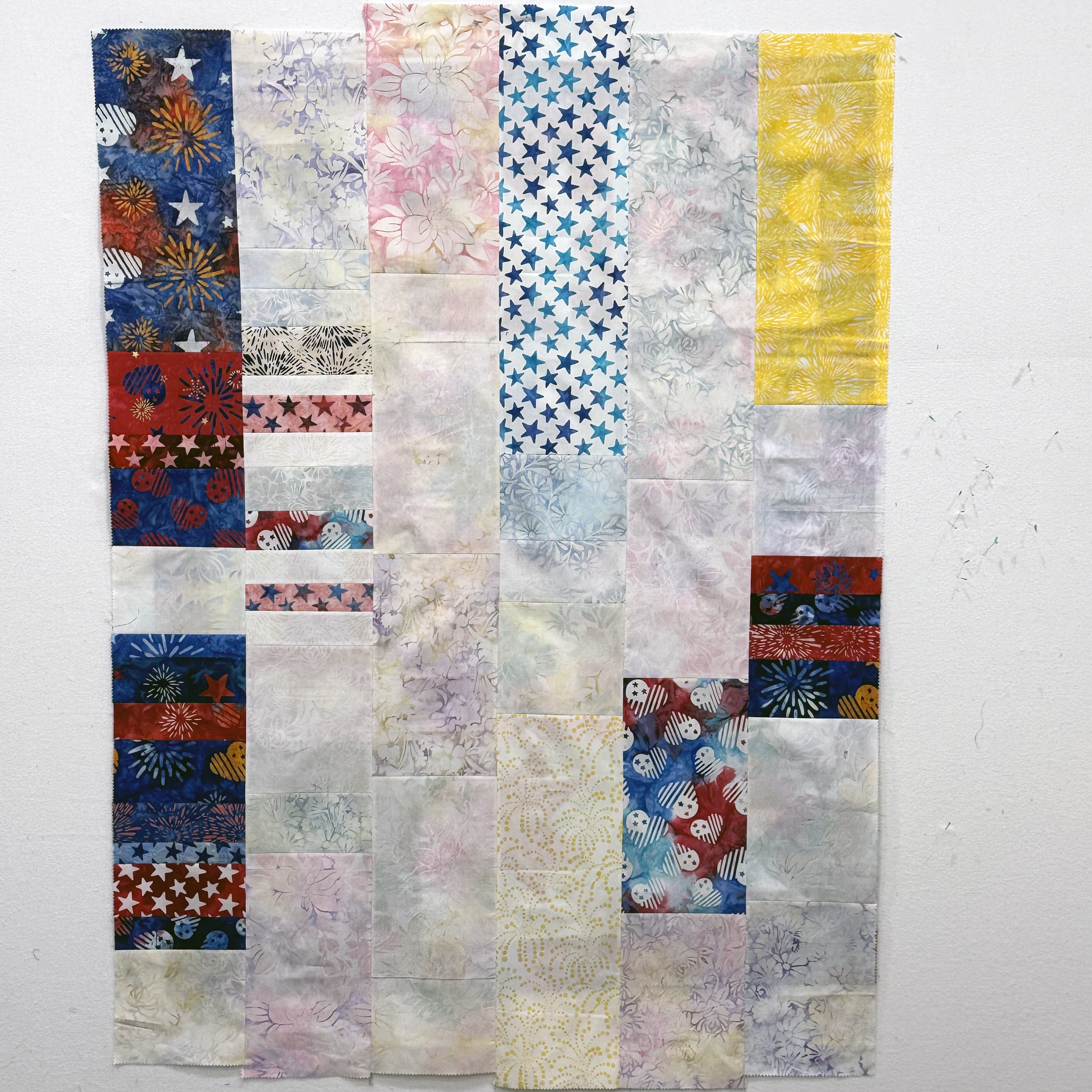
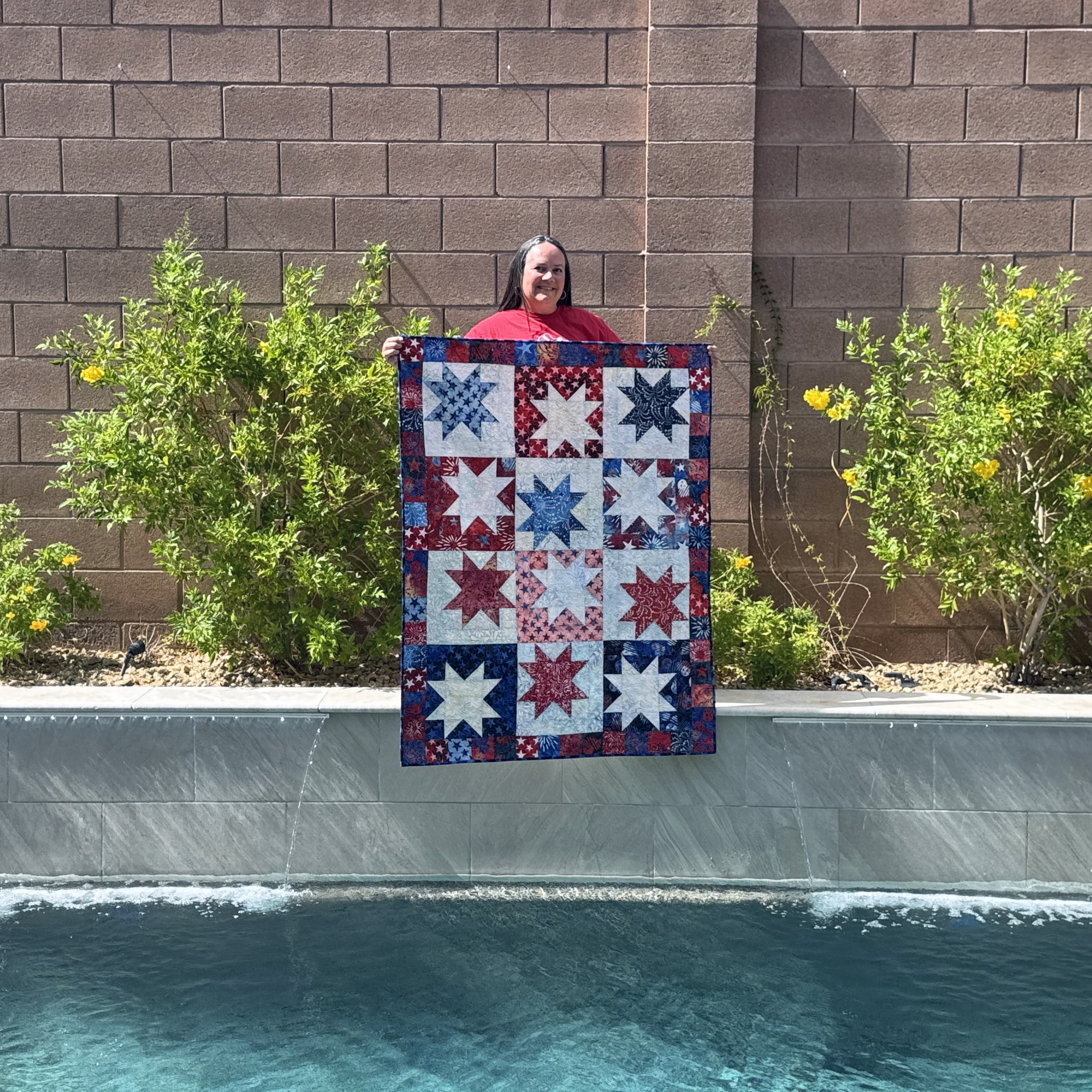
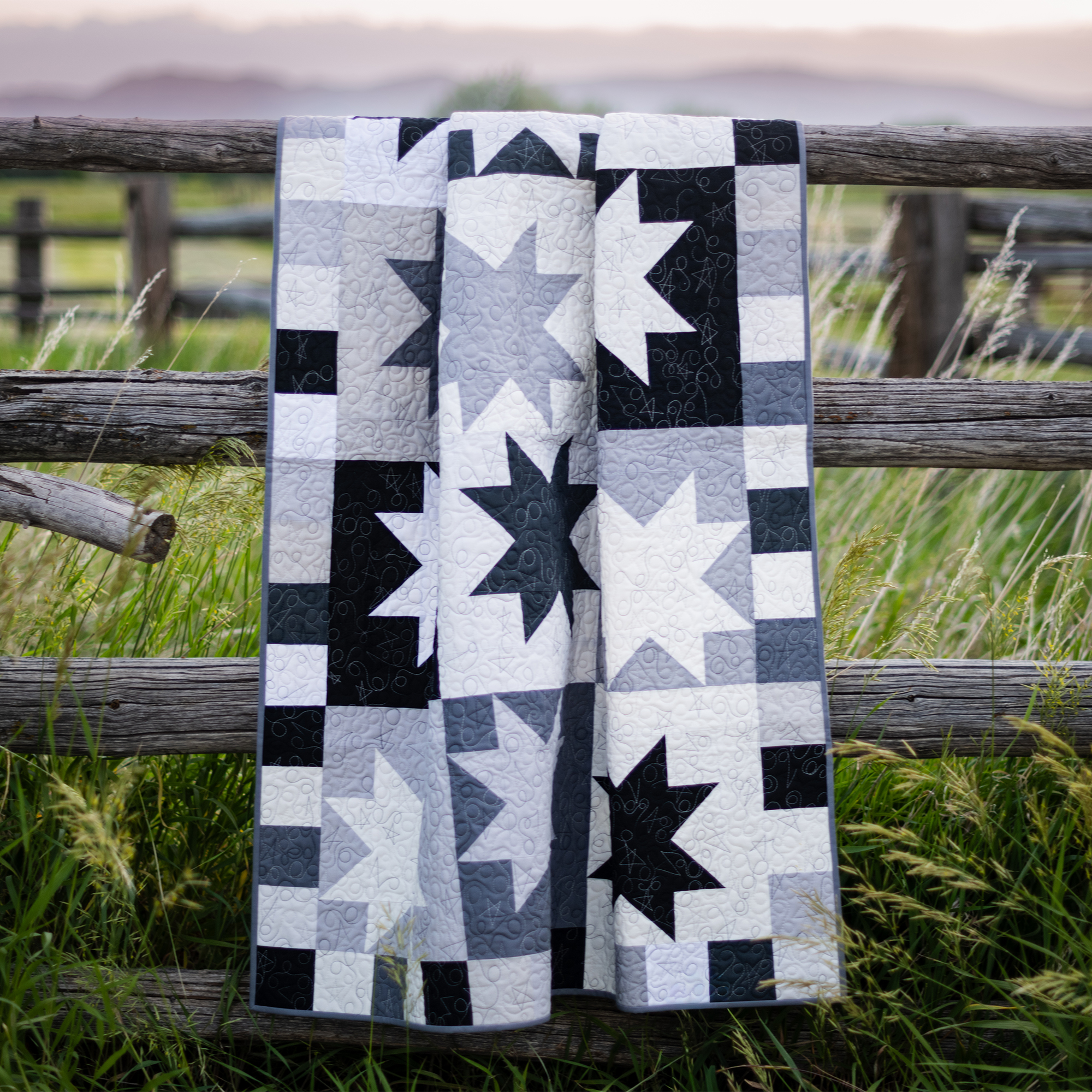
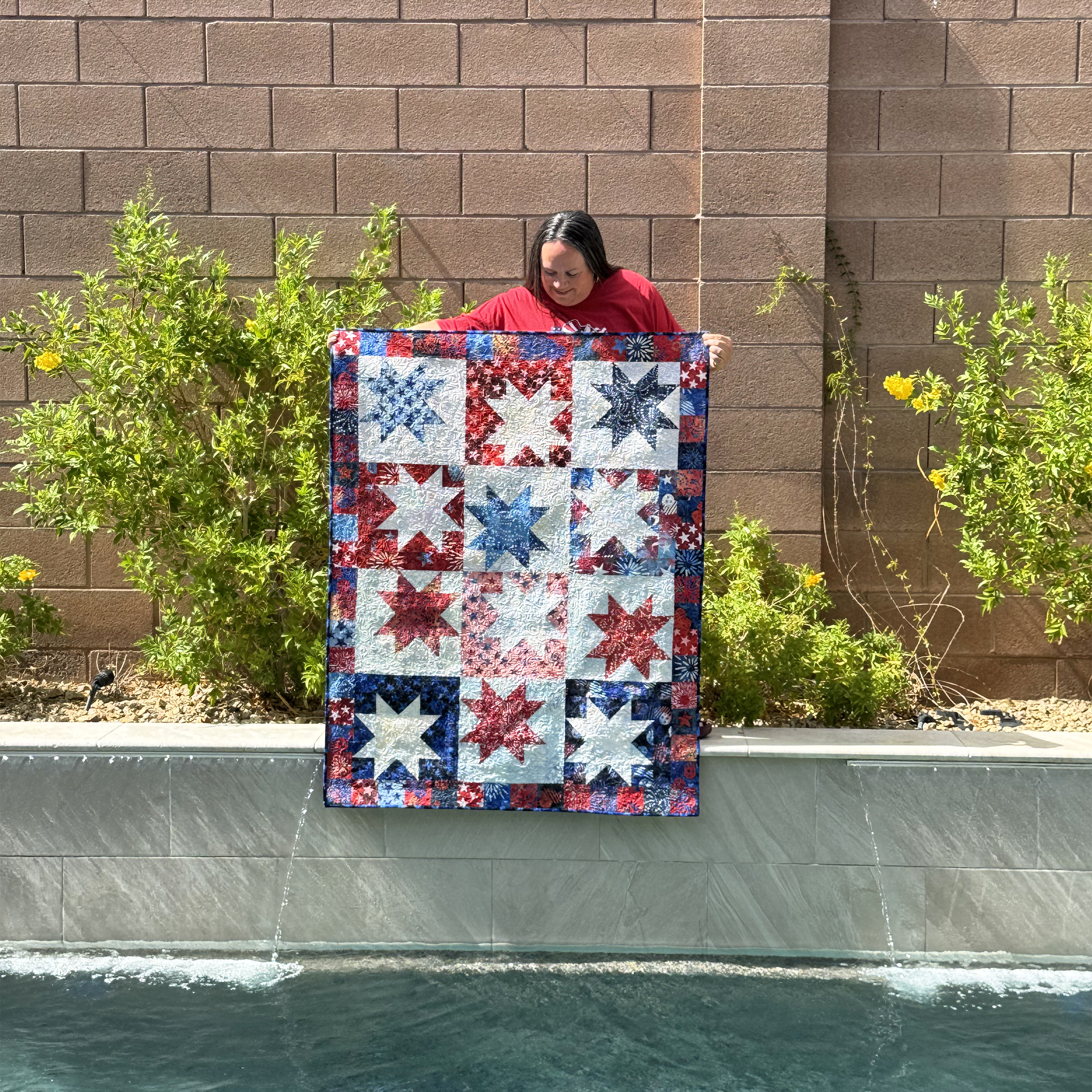
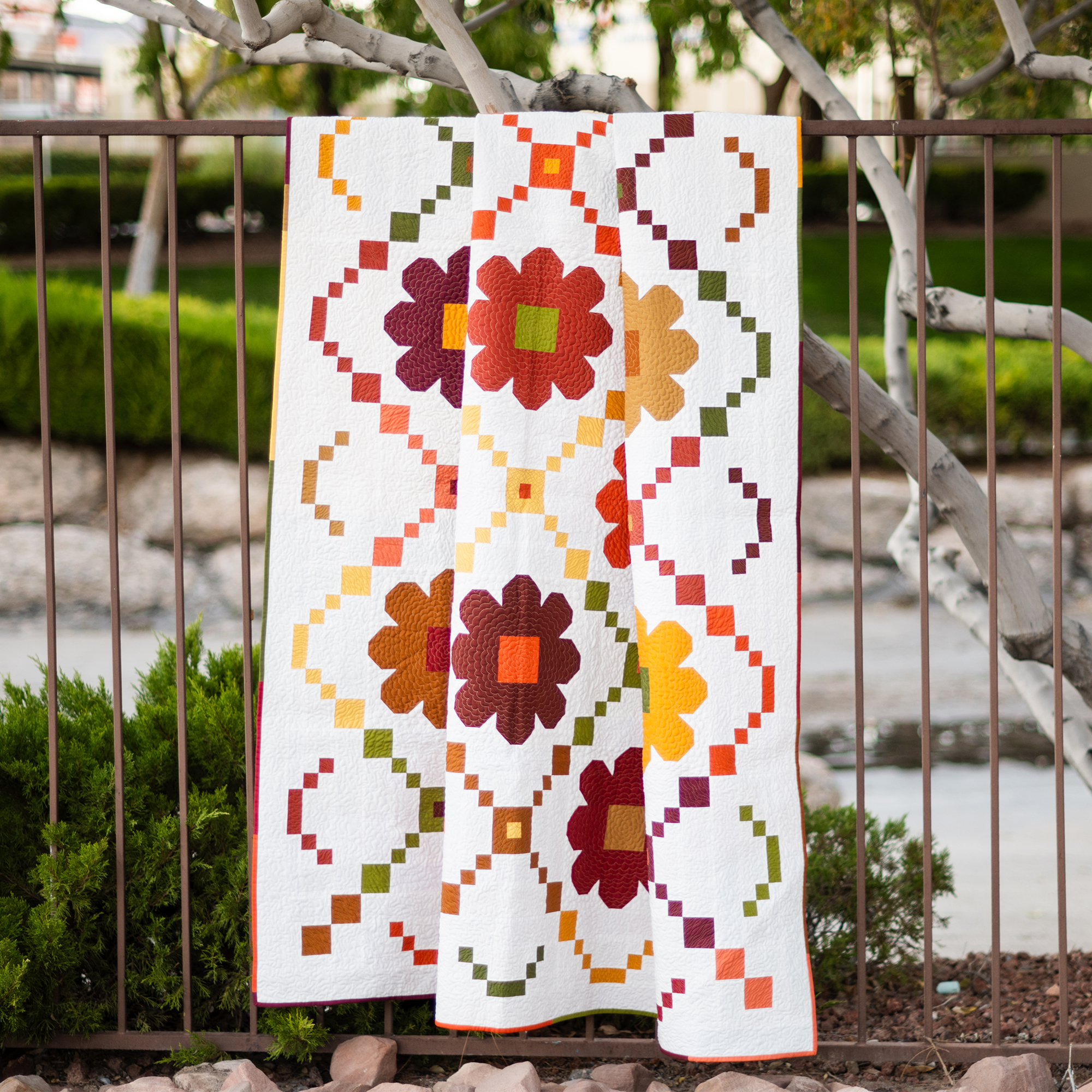
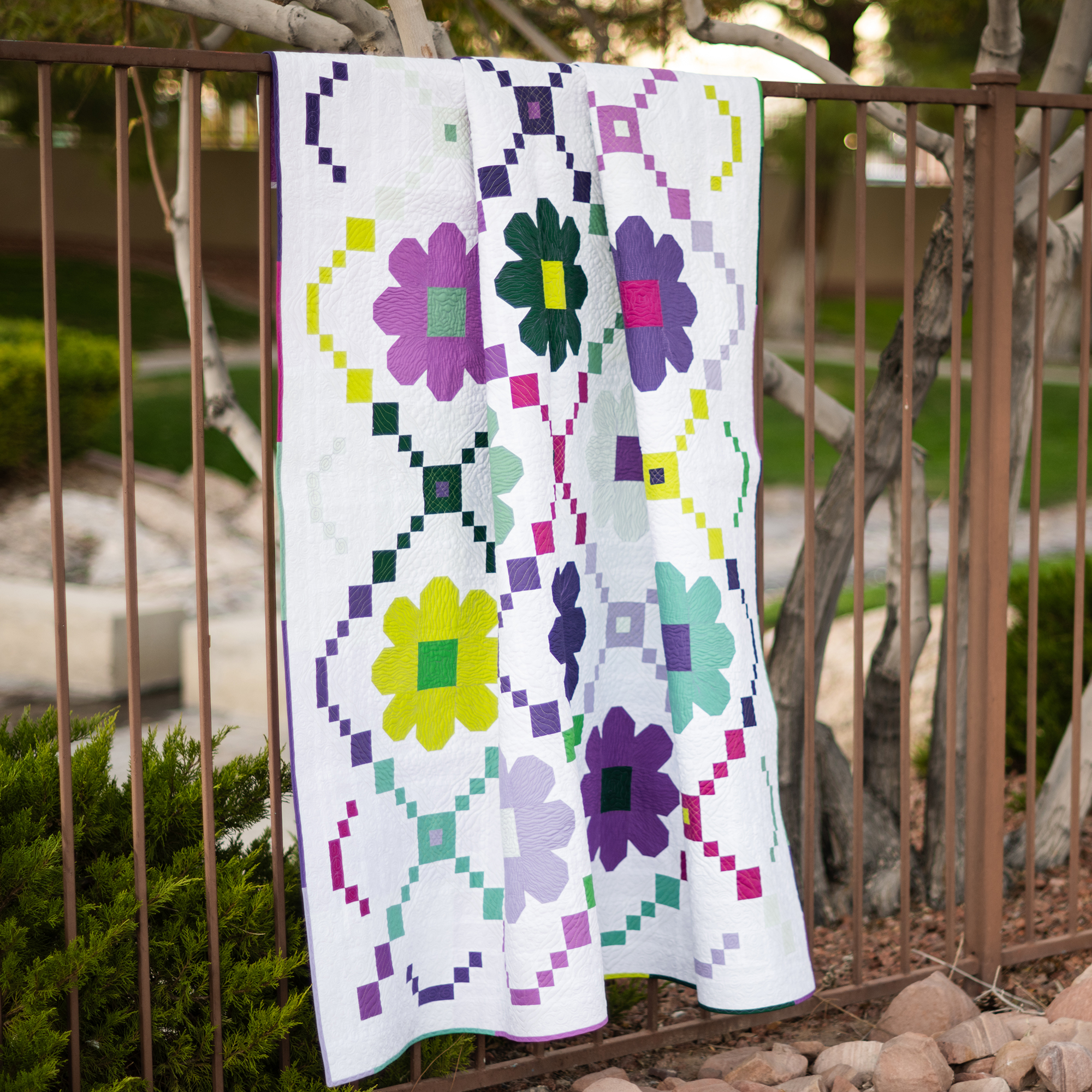
If you have lots of leftover scraps, throw them onto the back to add a creative touch to your quilt. That’s what I did for my Americana version. I do what’s called the “Puzzle Method” where I put the top on my design wall and then cover it up with leftover chunks of fabric until it’s enough.
If I have smaller pieces of fabric, I’ll sew those together into larger segments first, and then make sure they aren’t around the edges since that will get trimmed off the most. If you are just finding this quilt along, be sure to grab a copy of the Dancing Stars pattern to follow along. Remember, you can sew at your own pace!
I was in a hurry to make Dancing Stars so I didn’t film a new basting tutorial, but I have 2 videos I’ve made previously showing how to spray baste on a design wall or just using a table outside. Be sure to watch and give them a try. If you do – please let me know what you think!
Previous Quilt Along Steps
If you’d like to catch up to what we’ve been doing each week, click each of the links below:
How is your Dancing Stars quilt going? Remember, during this quilt along you can sew at your own pace! This week we are sewing our blocks together to make the quilt top. I made 2 versions with a couple of tips for each.
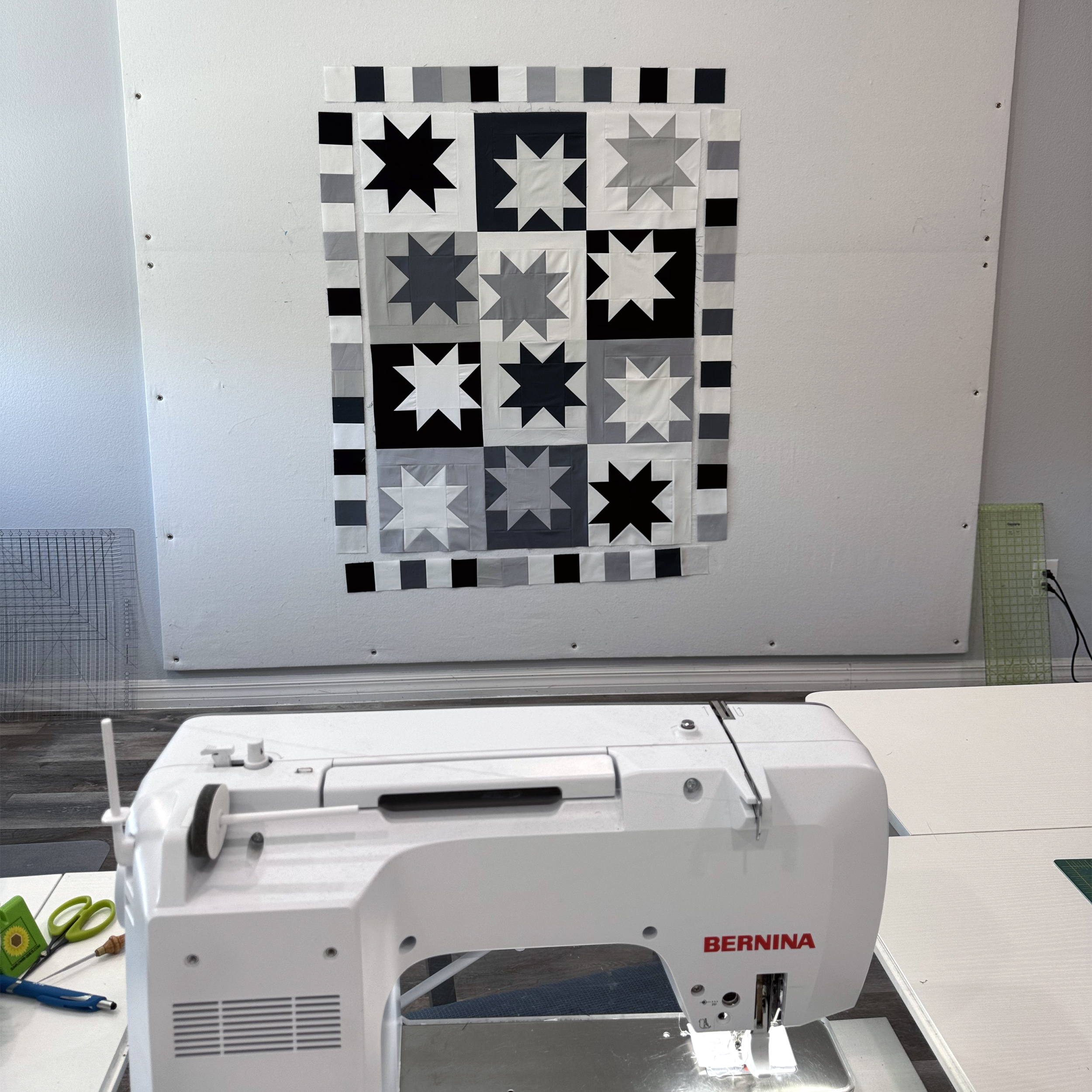
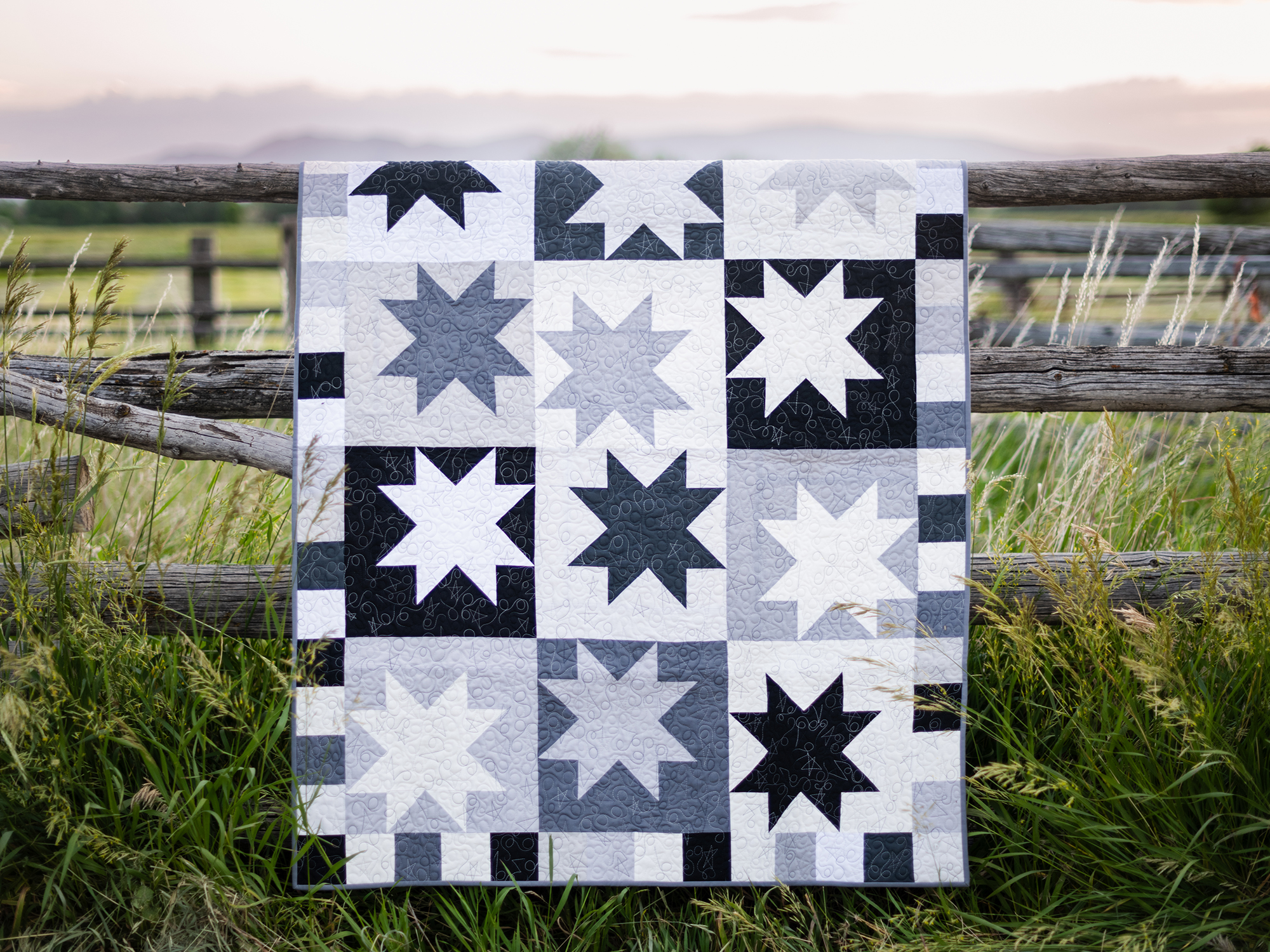
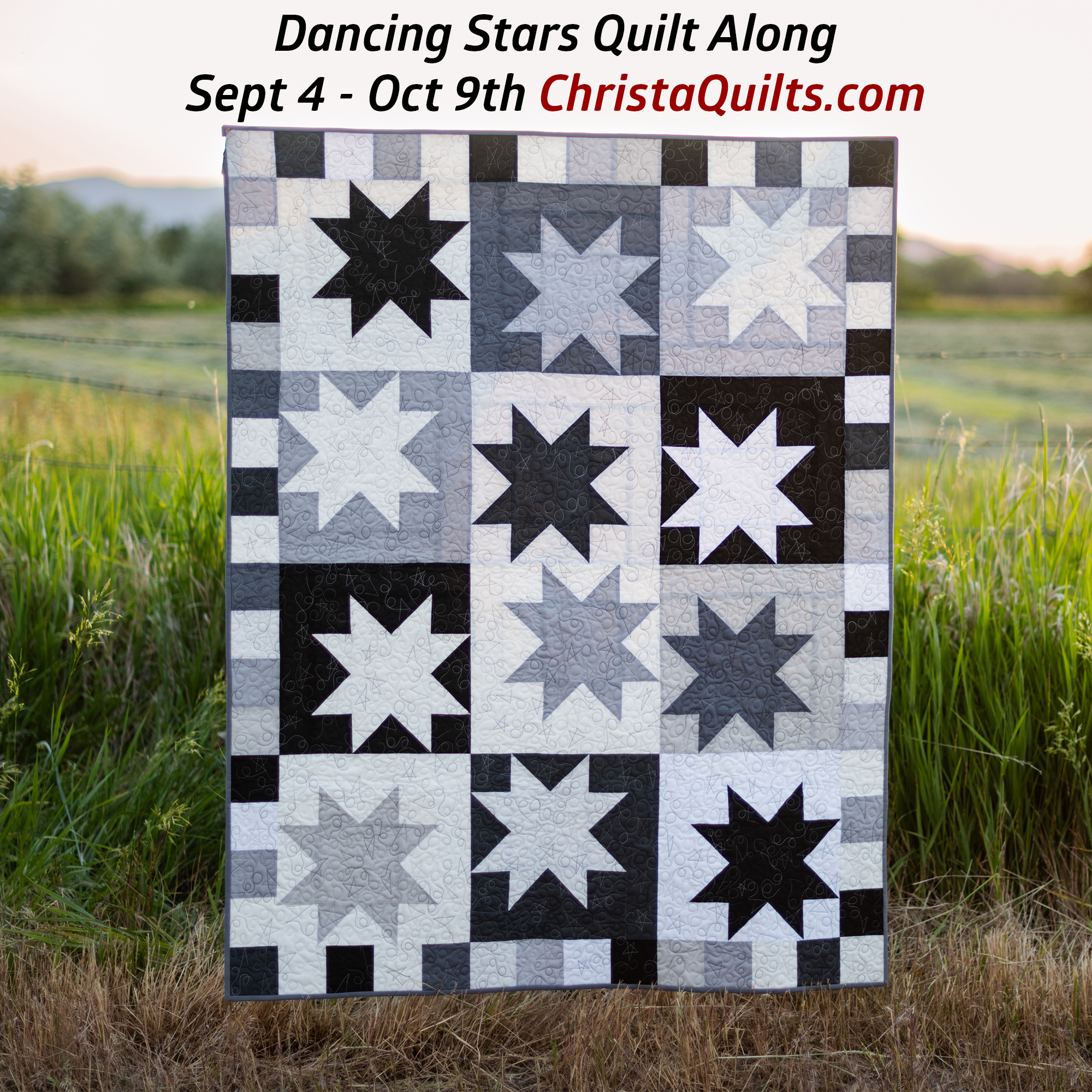
First of all, for my black & white version, I had mapped out all of the colors ahead of time so it was simple to sew the blocks and then arrange them in a pleasing order. I created a checker board around the blocks with every other square being light or dark. As you can see above, a couple of the grays could have gone either way, so I think that gives it a “not quite perfect” border layout which is what I was going for.
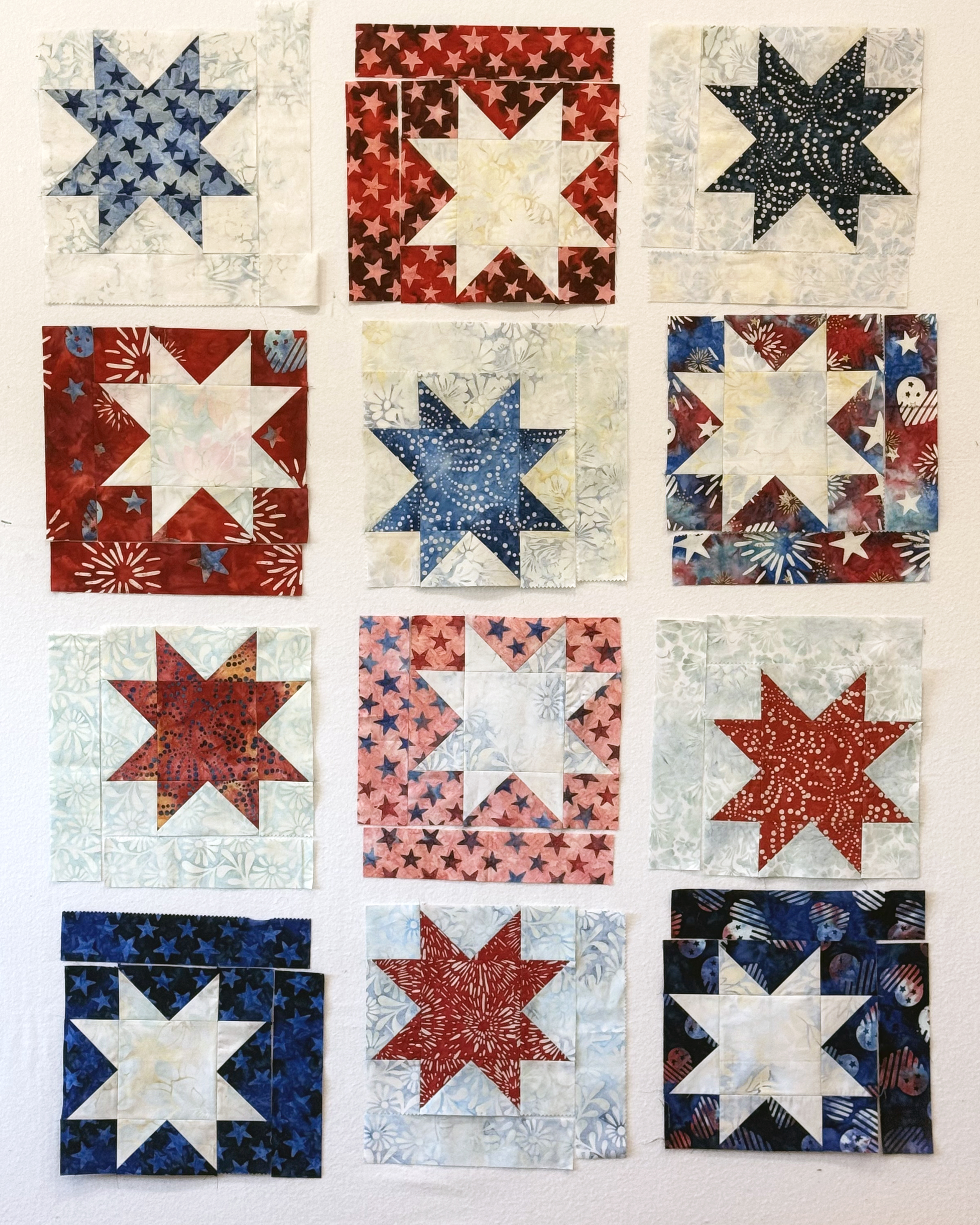
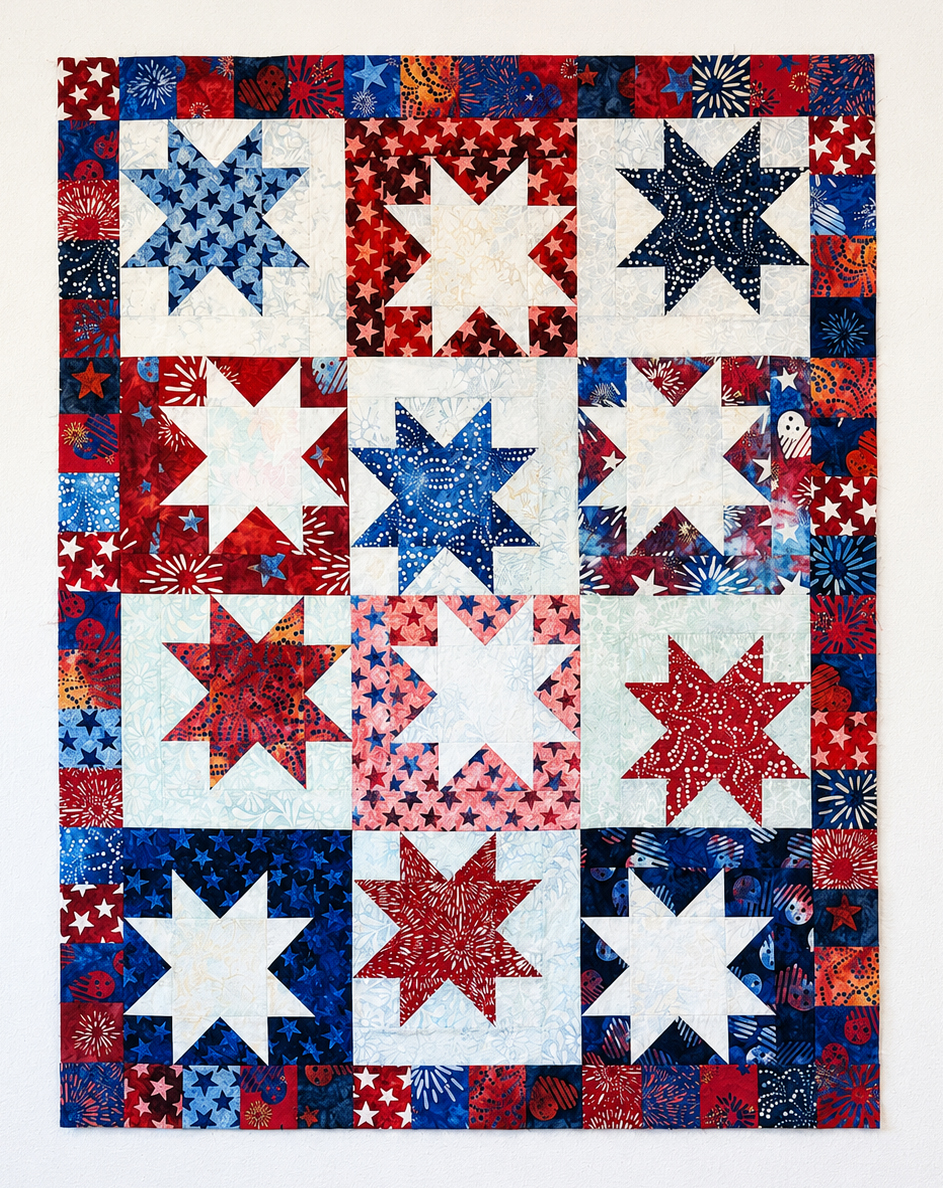
For my Americana version, I sewed all the inner blocks, but waited to add the extra rectangles that spin the blocks until I was pleased with the color arrangmement. My design wall worked really well for this, but you can always use a bed or the floor if you don’t have a design wall.
For the scrappy looking Americana border, I still did a checkerboard arrangment but it was more subtle since I only chose blue and red fabrics and alternated them. Remember – you can change up this design to make it your own!
If you’re just now finding this quilt along, be sure to grab the pattern (either in print or PDF below) and then share pics of your progress. You’re welcome to reach out to me anytime via social media or email: christa@christaquilts.com if you need any trouble-shooting advice. I’m here to help!
We’ve gathered our fabrics and cut everything out, so this week we finally get to sew those pretty star blocks together. This is the part I love – seeing all the different fabric combinations turn into actual stars!
If you are still cutting, no worries. You can work at your own pace and jump into the sewing whenever you are ready. Keep your Dancing Stars pattern handy and follow the block assembly steps there. Today I’m sharing a peek at how both of my versions came together.
Sewing My Americana Version with Riley Blake Batiks
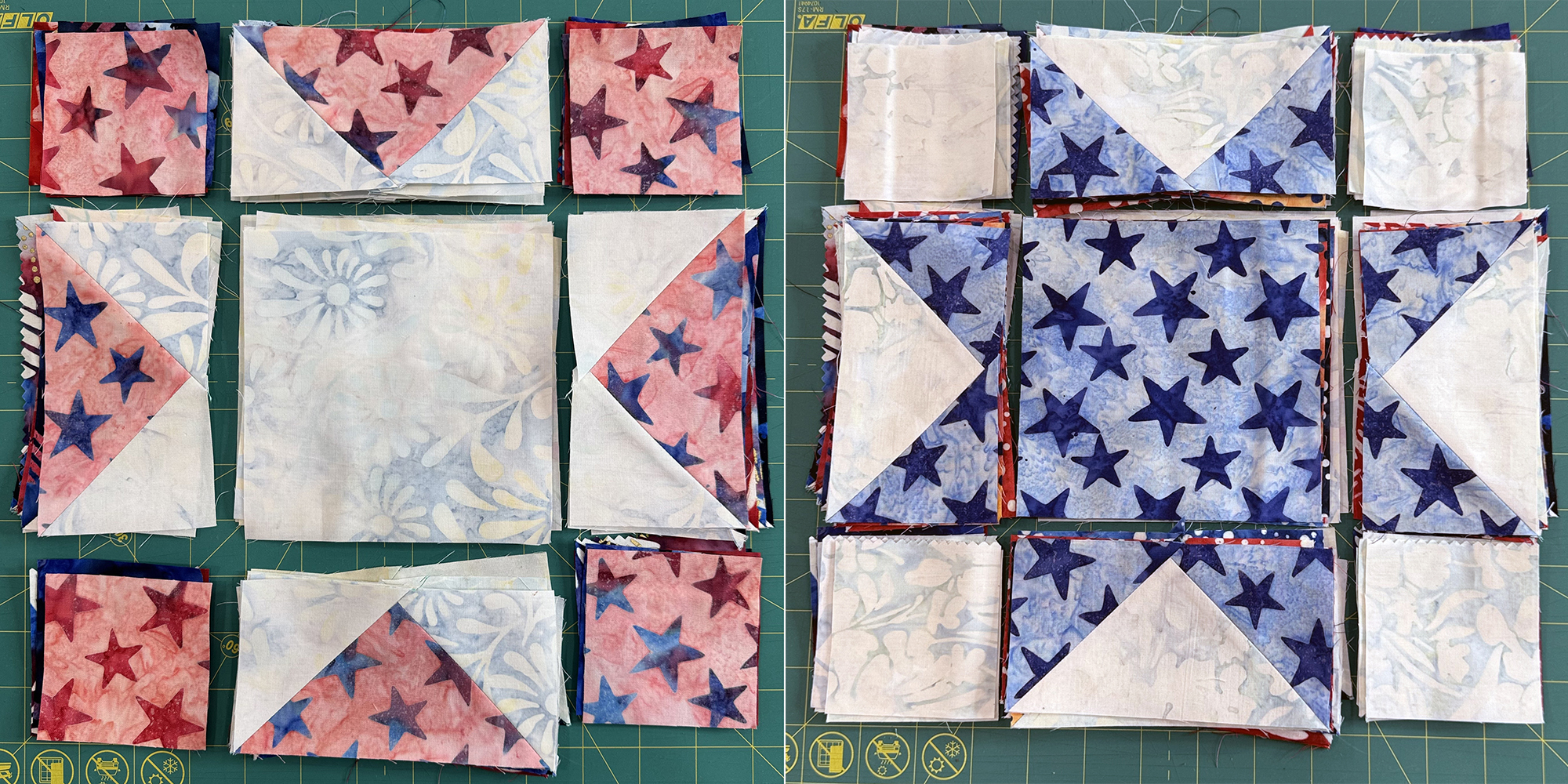
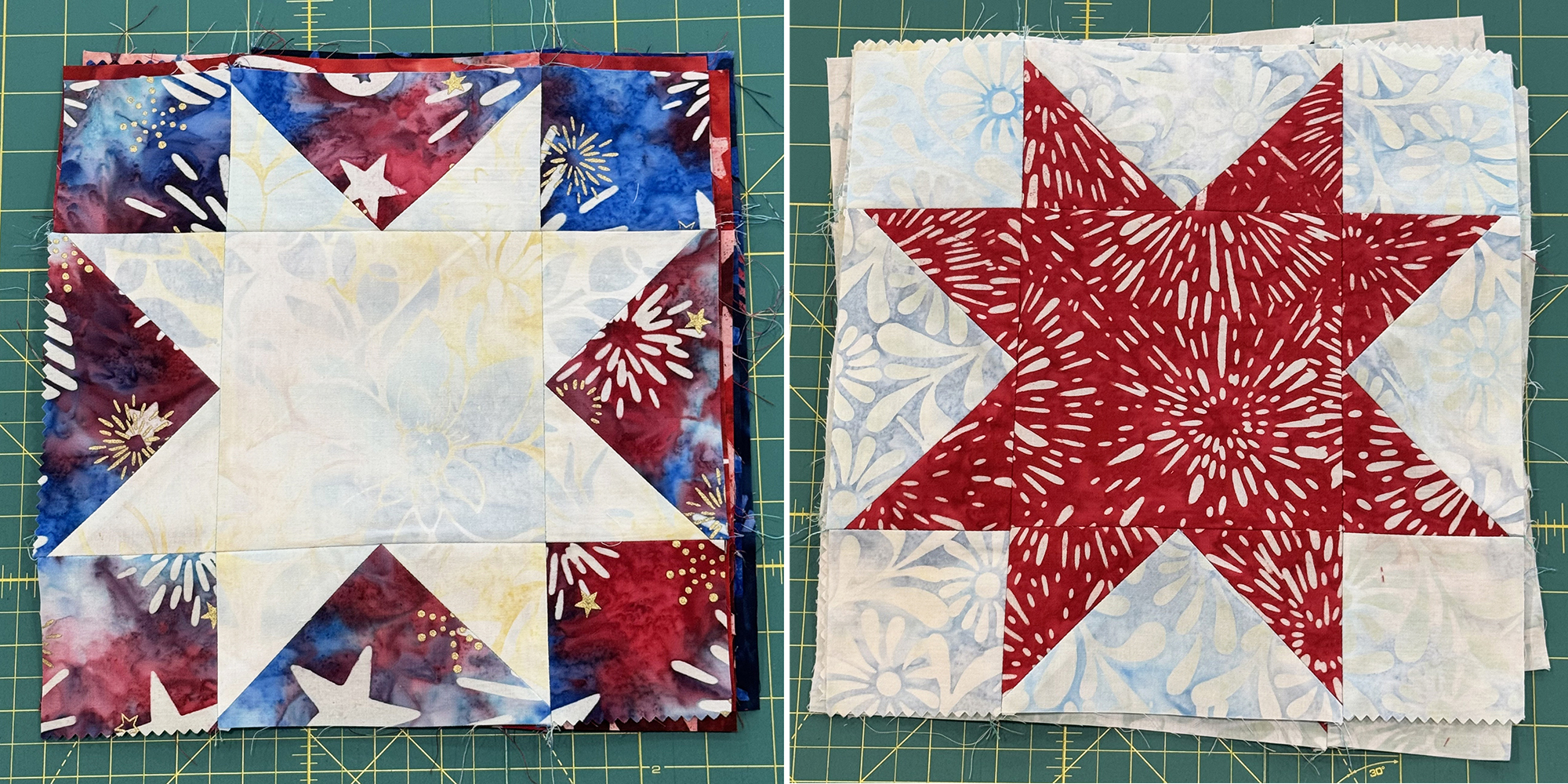
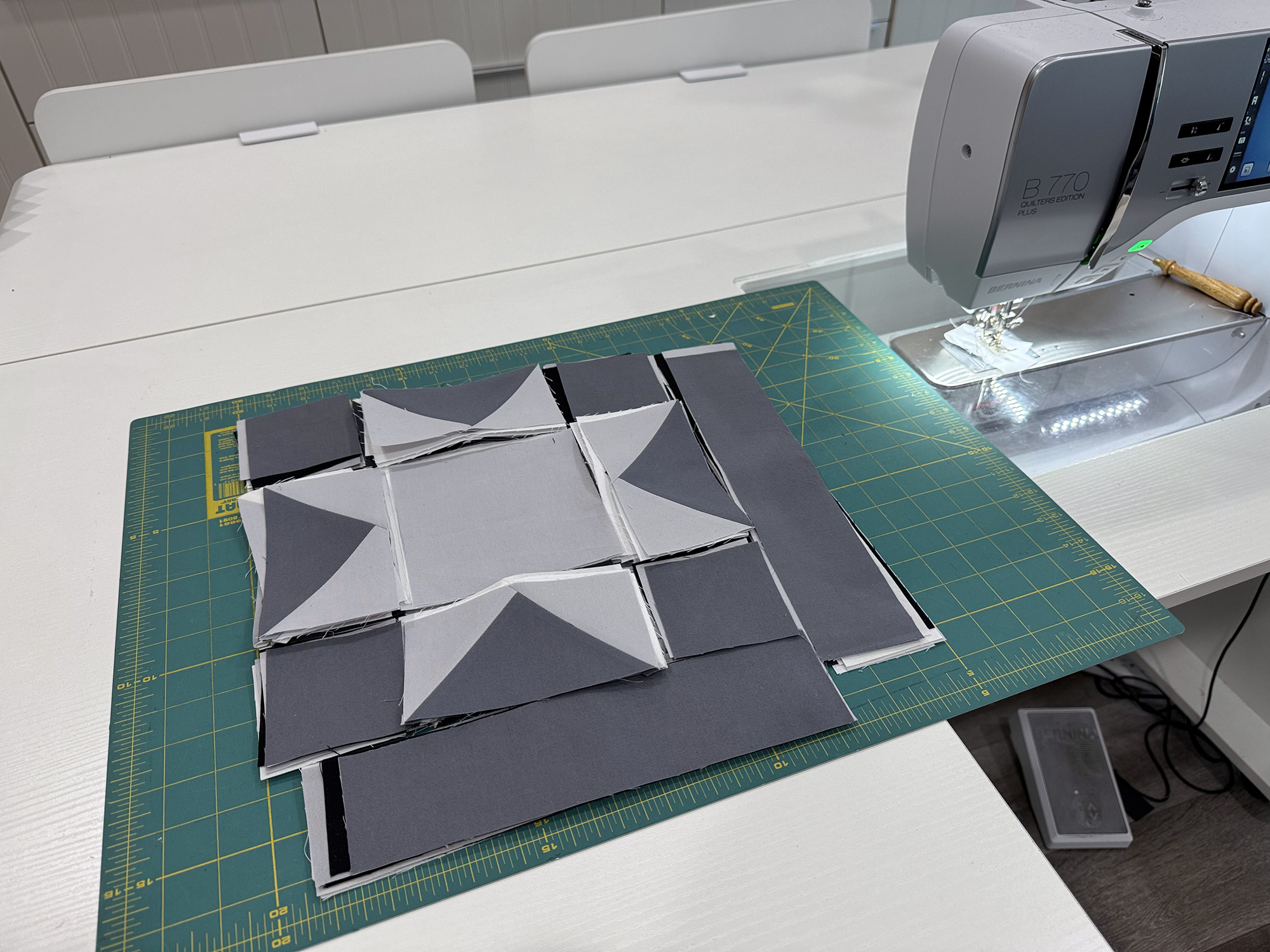
I started with my red, white and blue batiks from Riley Blake Designs. Last week I had all of my light and dark fabrics separated into stacks. Now I could start pairing them up and watching the star points take shape. Before sewing a star together, I like to lay out the pieces so I can see the whole thing at once. Half of the stars will be light with darker backgrounds and the other half will be the reverse with darker stars and lighter background fabrics.
I like to assembly-line sew and press so that I can whip these out very quickly. I prefer to sew with a short stitch length (2.0 or less) and press all of my seams open so they lay nice and flat. But go ahead and use whatever cutting, piecing and pressing methods you prefer!
Bonus tip: you may wish to wait and add the extra pieces around the stars until you lay them all out on your design wall. You may decide to place your colors randomly, or do a light/dark/light pattern. And you can rotate the stars in any direction to make them spin once the other pieces have been sewn around the edge.
My Black, White & Grey Confetti Cotton Solids Version
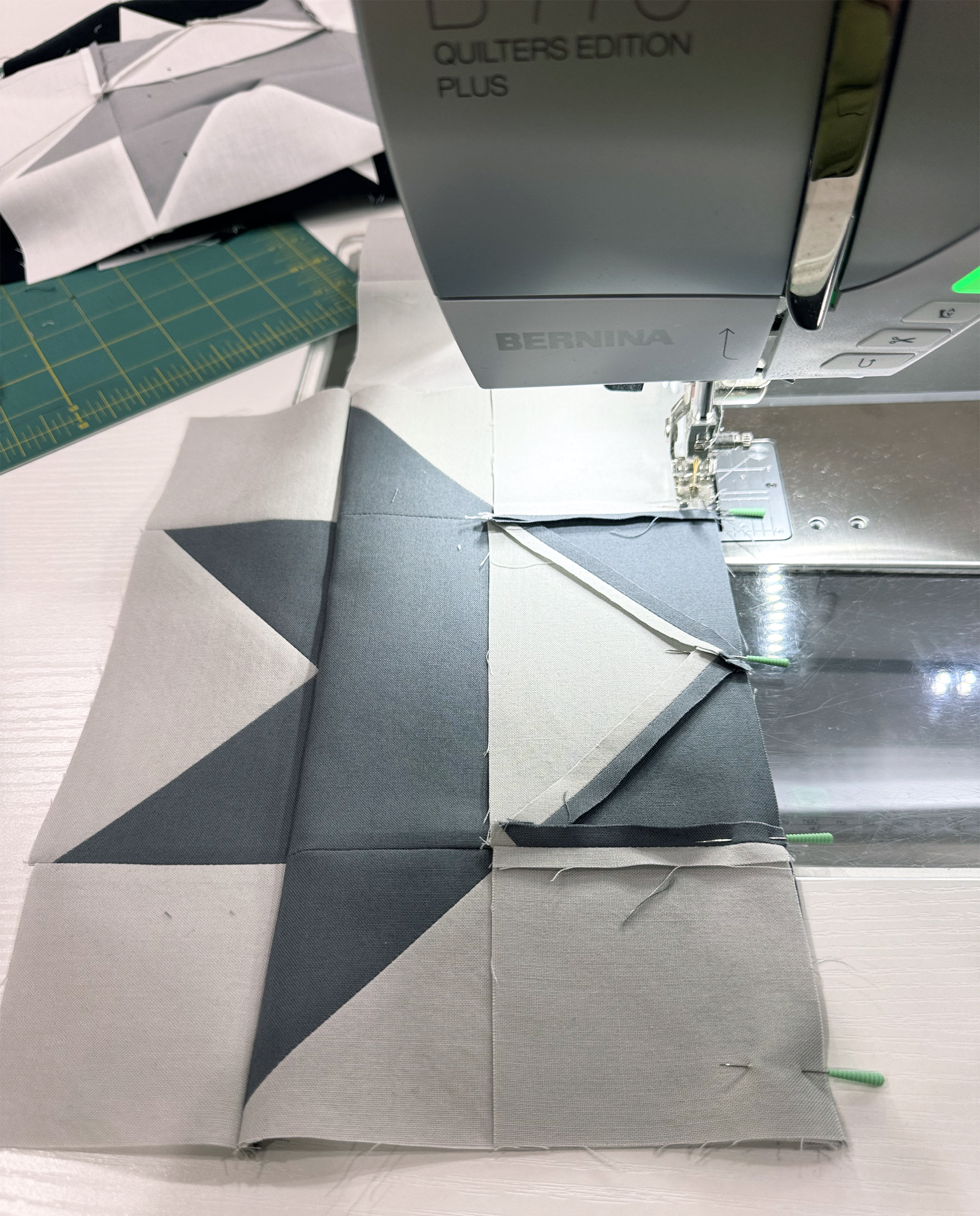
I also made a second version with black, white and grey Confetti Cotton Solids from Riley Blake Designs. With these fabrics, the contrast is even more obvious, and you can really see the shape of each star as the pieces come together. I preplanned the exact color placement for this version so I know exactly where I want to sew each of the side units to make the stars “dance.”
I like to keep the pieces for the next block laid out beside my machine. It gives me a quick visual check of the fabric placement, especially when I’m switching between different shades of grey. I also pin generously so that I can get perfectly matched points.
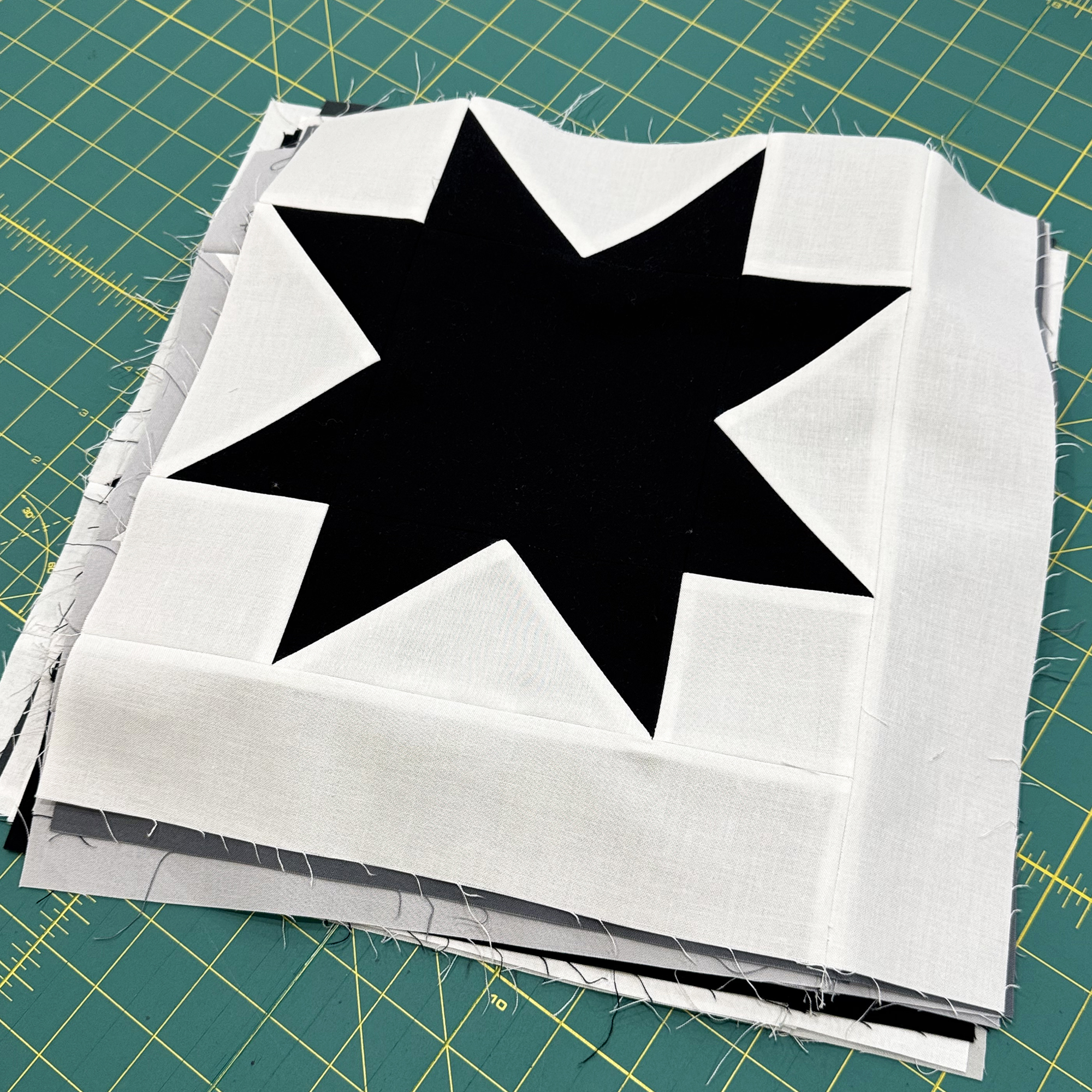
Now my blocks are finished and reasy to assemble into the quilt top for next week!
Share Your Star Blocks!
How are your stars coming along? Whether you’ve finished just one block or you’ve already made a whole stack, I’d love to see your progress. It’s always fun to see how the same pattern looks in everyone’s different fabrics!
Next week we’ll arrange the blocks and complete our quilt tops. Get ready to see those Dancing Stars come together! If you are new to this quilt along, grab a copy of the quilt pattern in your favorite format below and join the fun!!
Welcome back to the Dancing Stars quilt along! This week it’s time to cut our fabrics. If you are one of those people who loves a pretty pile of freshly cut fabric, this is your week. If you’d rather skip ahead to sewing, hang in there – a little organization now will make the star blocks much easier to sew next week!
Remember, this is a quilt along, not a race. If you don’t get everything cut this week, no worries. These posts will stay up indefinitely, so you can work at whatever pace makes you happy.
Before you start cutting, make sure you know which size you are making and keep the Dancing Stars pattern close by. The fat quarter cutting diagram in the pattern is there to help you make efficient use of your fabric, so I recommend cutting one or two fabrics to start to make sure you are comfortable with how the units are cut, then layer additional fabrics on top of each other if you’d like to cut more at one time.
The biggest tip of the week is to stay organized. Keep the pieces from each fabric together, and separate the star, background and border units as you go. You can label your units if you need to.
Cutting My Americana Version made from Riley Blake Batiks
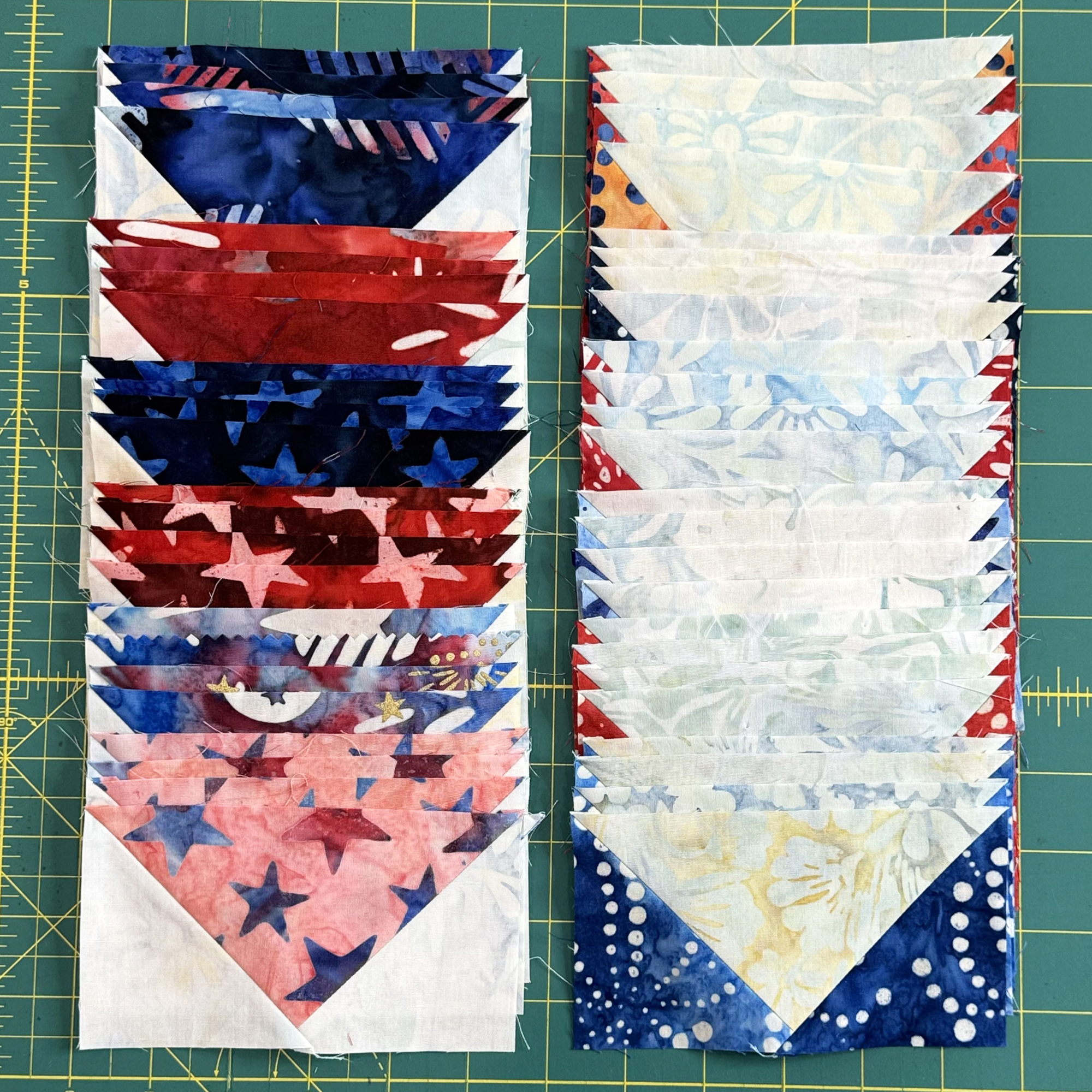
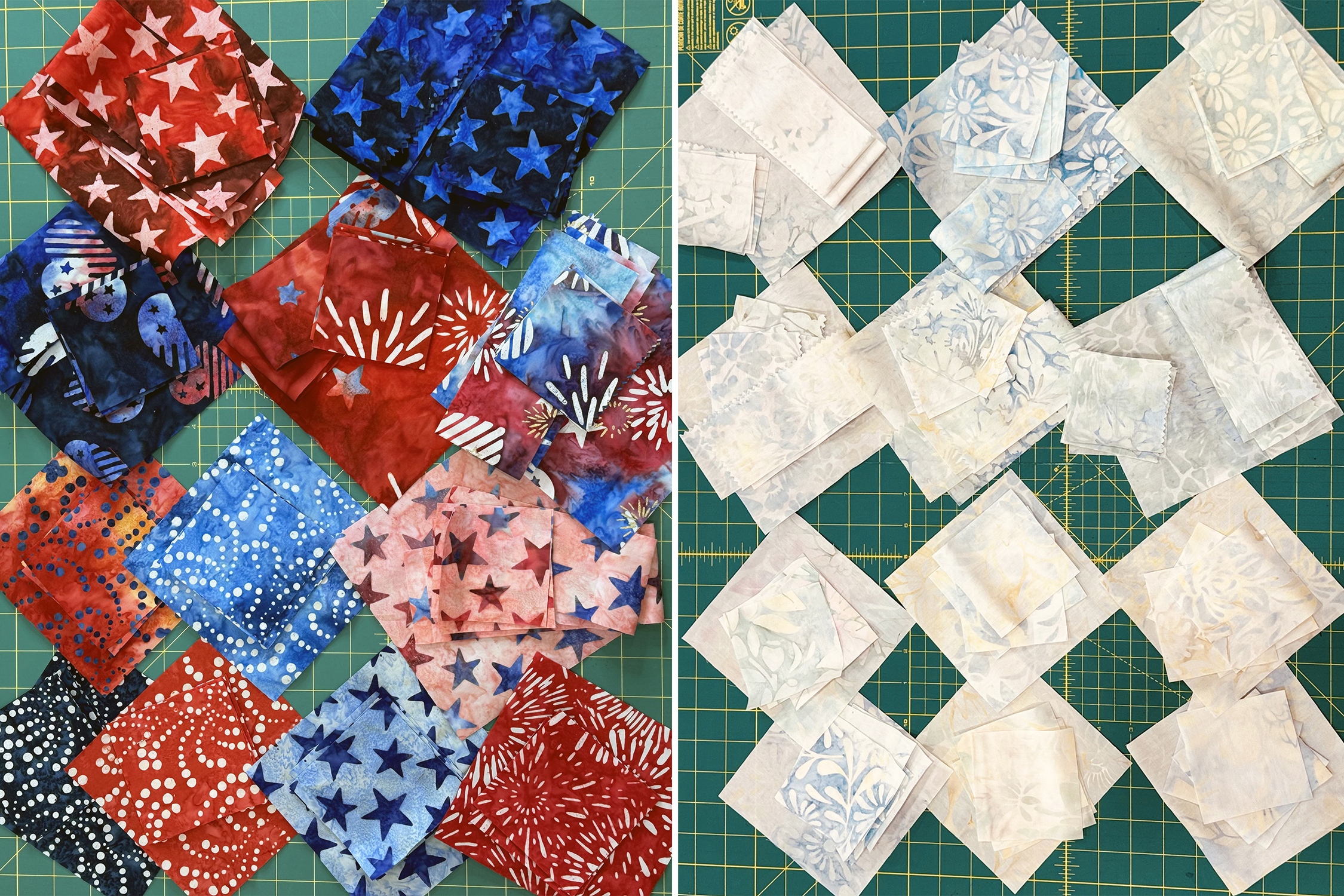
For my Americana version, I wasn’t starting with full fat quarters. I had smaller pieces of sample batiks to work with, so I divided everything into two groups first: cream batiks for the lights, and red and blue batiks for the darks. That made it much easier to keep track of what I had as I cut.
Here are all of my light cream batiks after cutting. They are fairly subtle on their own, but I love how much variety you can see when they are all together. Low-volume fabrics don’t have to match perfectly – they just need to read as the lighter side of the light/dark contrast.
And here are the reds and blues! This pile is definitely a little louder. I kept each fabric in its own stack so I could easily see the different prints and make sure I had plenty of variety.
Once everything was cut, I started loosely stacking the lights and darks together. These aren’t necessarily the final fabric pairings – I’m mostly checking contrast and keeping things corralled until it’s time to sew. The fun part of this design is that you can still play around with the combinations and block arrangement later.
The Black, White & Grey Version made from Confetti Cotton Solids
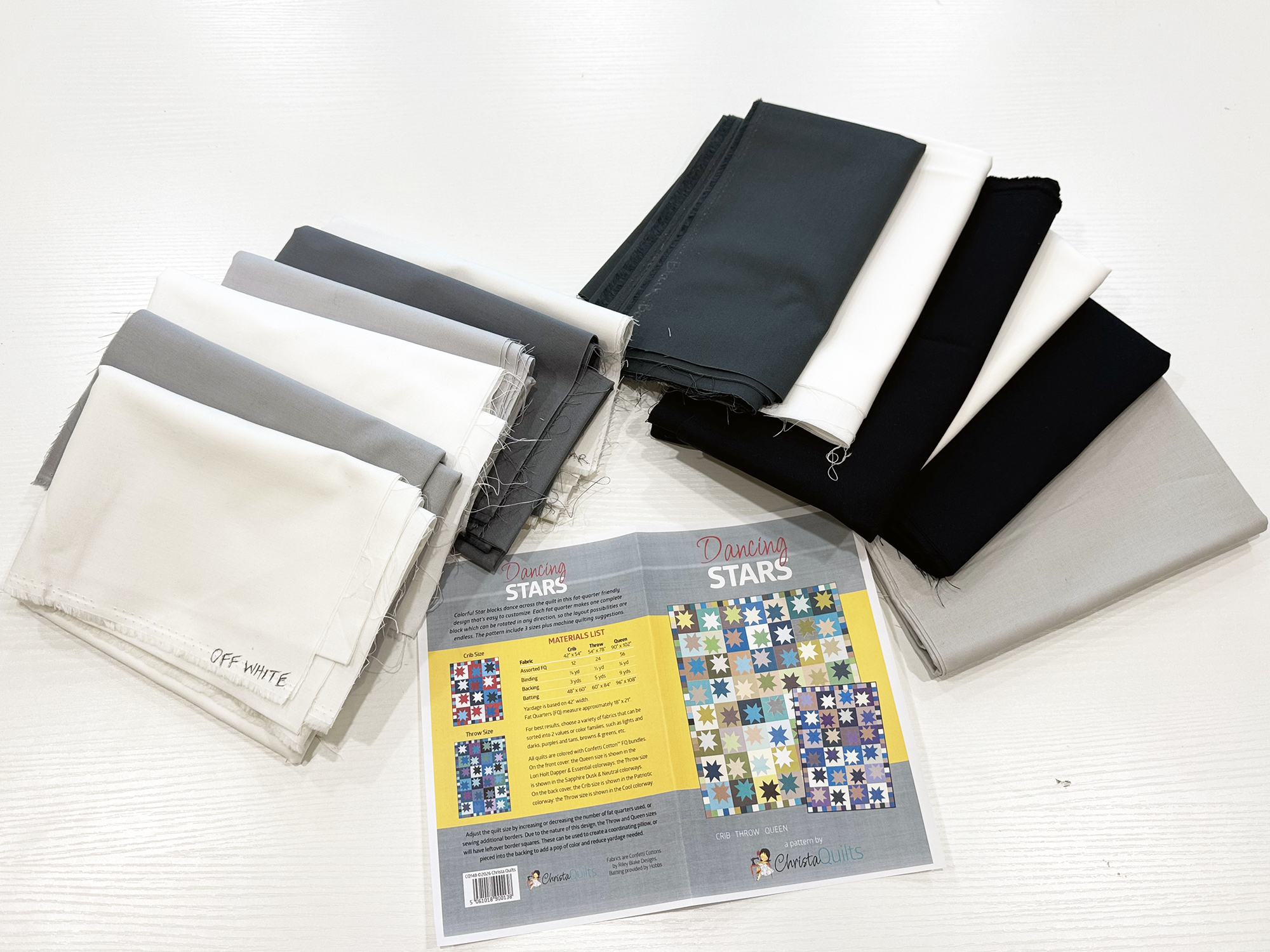
I used the same general approach when cutting my black, white and grey version. Because these fabrics are solids and several of the greys are close in value, keeping everything separated became even more important.
This is what everything looked like after cutting. I kept the block pieces together by fabric and set the border units aside so they wouldn’t get mixed in with the star blocks.
Because some of my greys were so similar, I added labels to keep track of which colors I chose.
Welcome to Dancing Stars quilt along! We will take it nice and easy this week. Jut gather up the fabrics you plan to use and do whatever prep you normally do (prewash, starch etc. if so desired.) The quilt pattern includes 3 sizes and it calls for fat quarters, but this patten works very well with scraps, or fewer colors, too.
When choosing colors, think about complementary pairs of fabrics that will work well together, such as black and white, shown above or think in terms of value like light and dark. In order for this quilt to work successfully, you want to clearly see the boundary between each star block and it’s background color. Scraps will work well as long as you sort them together into pairs that contrast.
I used a fat quarter bundle of Confetti Cotton Solids in black, white and grey for my first go-round.
In my black/white/grey version I used 12 fat quarters – half of them were white to light grey, and the other half went from medium gray to black. However, I did NOT try to make any sort of pattern with the placement of the black and white in the quilt. I made sure each individual block contrasted well and then I placed the star blocks rather randomly. However, I did do a checkerboard of dark-light-dark in the border to unify the design.
Each fat quarter will be enough fabric for one star, and one background. So you can make two opposite stars with a positive/negative vibe, OR you can mix up the stars and backgrounds so that no two fabrics are paired together more than once.
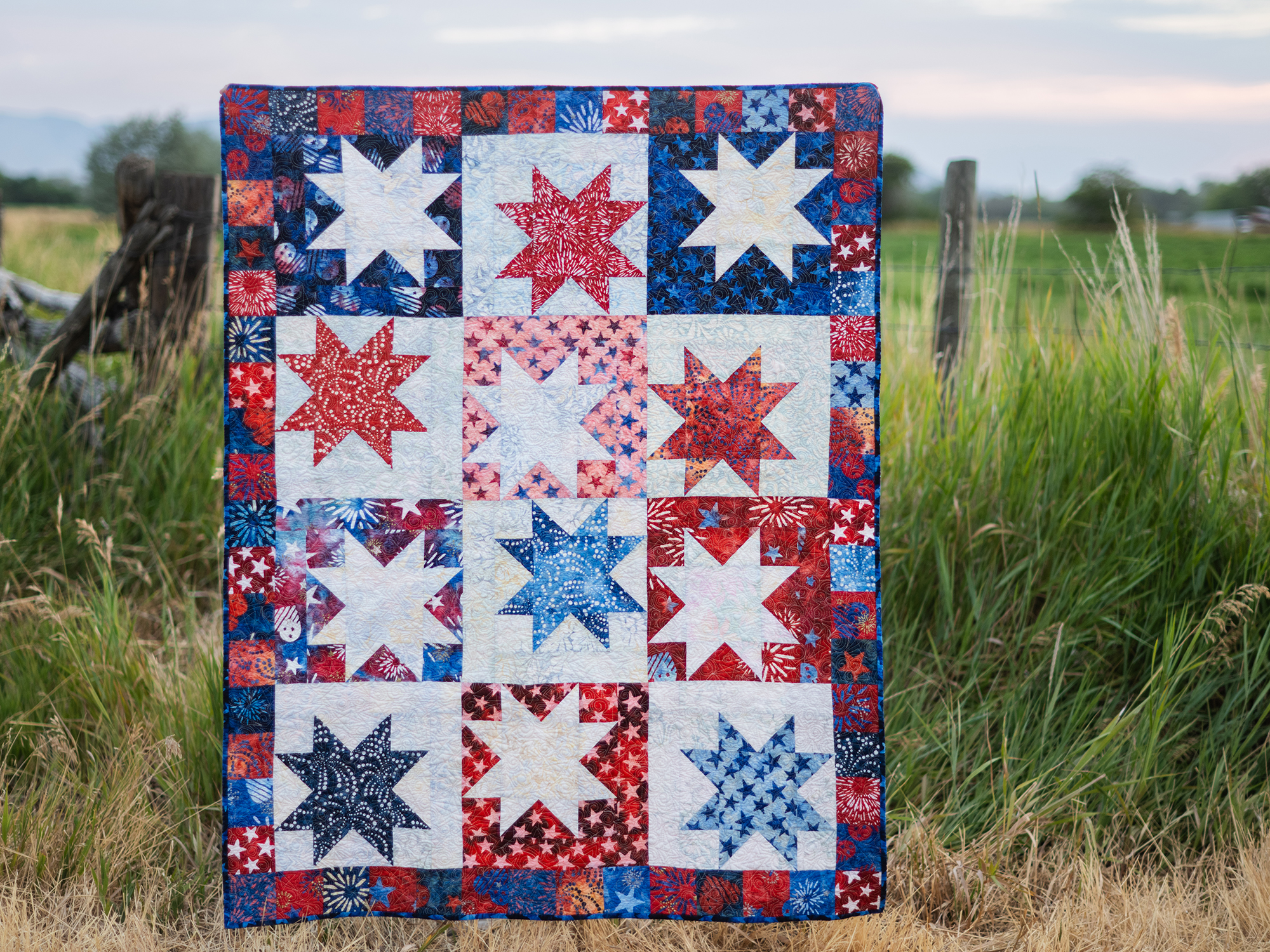
For my Americana version of Dancing Stars, I had less than a fat eighth of each fabric to work with (1/2 of a fat quarter). So I chose 12 different red and blue fabrics for darks and 12 different cream batiks for lights. In the color layout above, I made sure that every other star was a contrast to its neighbor (light-dark-light) and I repeated that pattern in the stars, too. I didn’t use any of the lighter fabrics in the border like I did for the black/white version. Instead I only cut those squares from red and blue fabrics. In fact there ARE a few fabrics in the border that aren’t in the stars. Sometimes, limitations can lead to creative outcomes!
These are the fabric scraps I had to work with. Here’s a sneaky hint: I made this batik version of Dancing Stars to test out Riley Blake batiks. That’s because I’m going to design a line of modern batik fabrics in the future and wanted to make sure I was happy with their performance. The answer was yes – so stay tuned!!
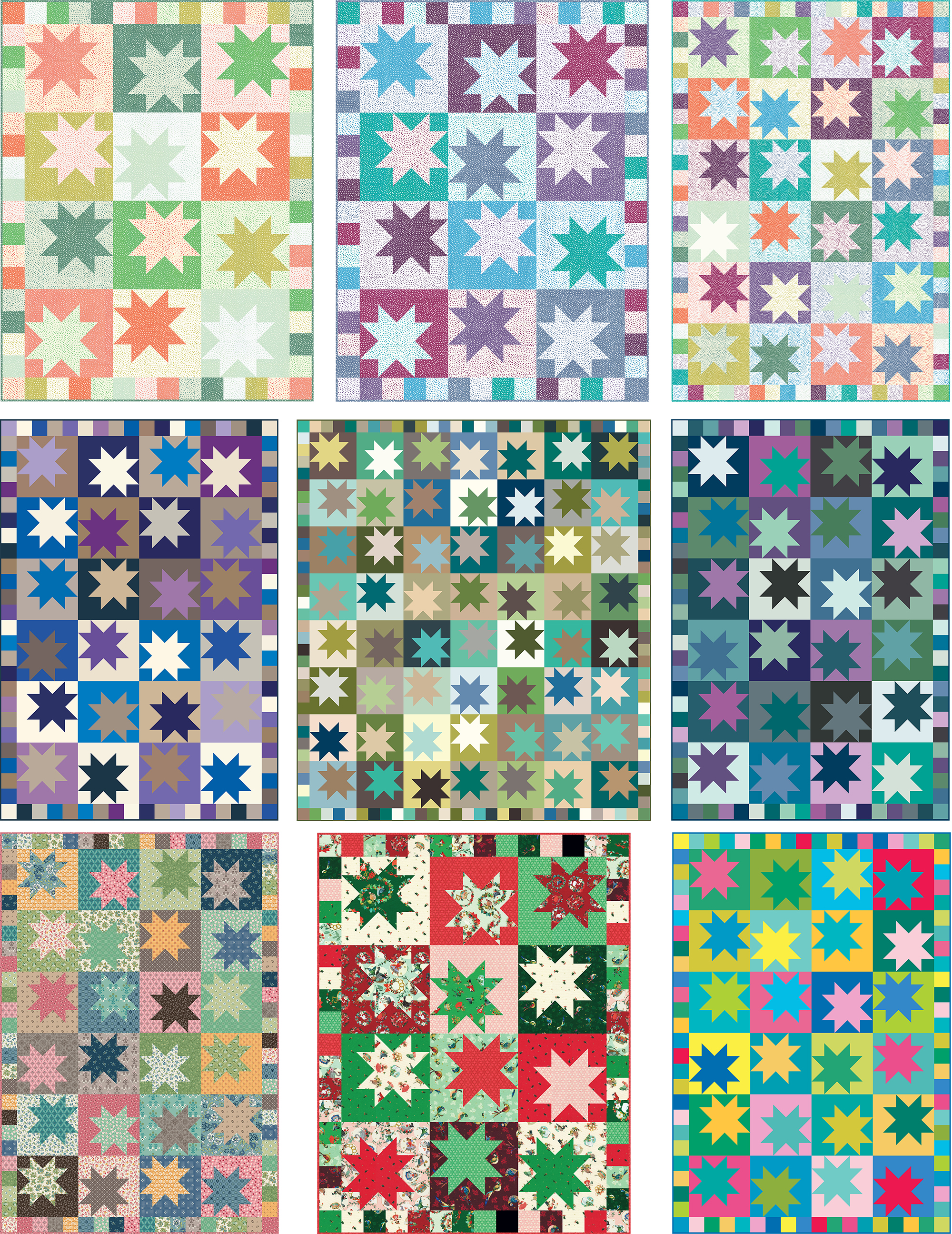
Here are some other color combinations I came up with. Just remember, The sky is the limit when it comes to your creativity so be fearless when it comes to choosing colors. After all, you make want to make this quilt more than once, like I did!!
Share Your Work in Progress!
Each week as you work on this quilt, I would love to see how you are doing and cheer you on. It’s important to note that everyone will work at their own pace, so please don’t ever feel left behind. These blog posts will stay up indefinitely so you can sew on your own schedule. Even if you make it much later in the future I still want to see!
Next week it’s time to cut everything out, so if you haven’t already done so, be sure to grab a copy of the Dancing Stars quilt pattern to follow along!
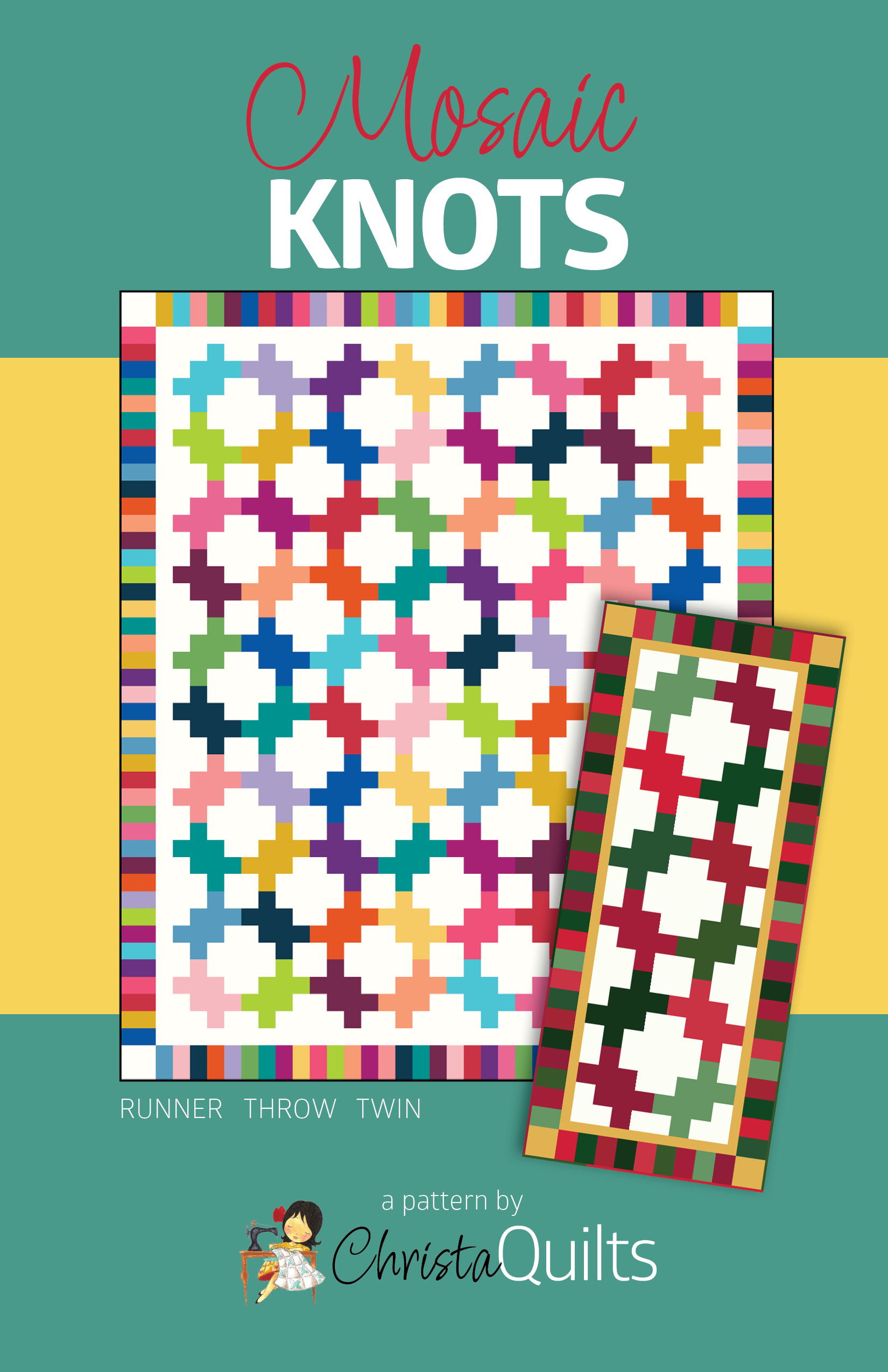
I”m so excited to introduce my latest and greatest quilt pattern, called Mosaic Knots. It can be made either from fat quarters or precut strips and includes 4 sizes to choose from.
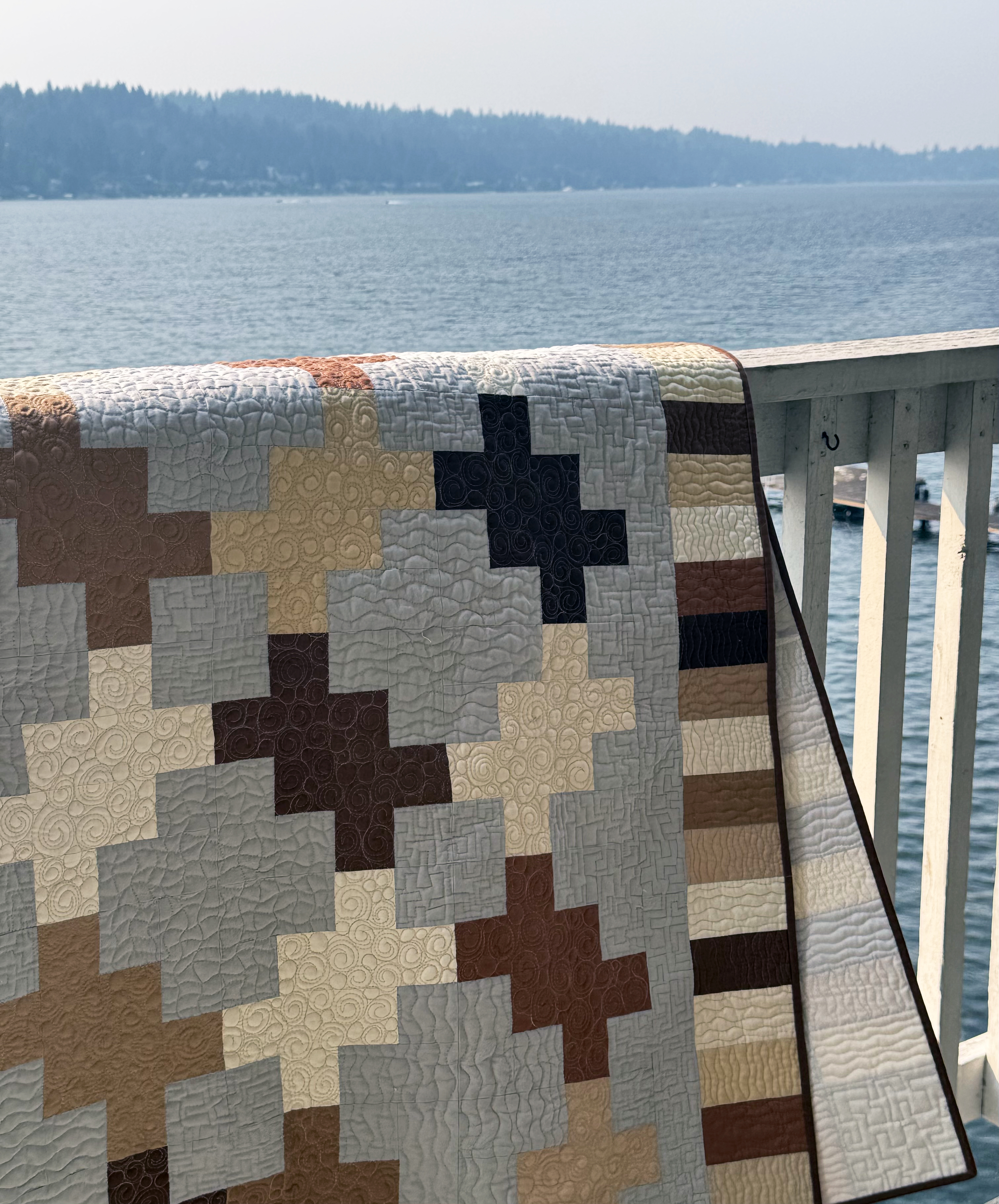
I’ve been on a roll, regularly releasing new patterns featuring Riley Blake Designs Confetti Cotton Solids. I chose to make this quilt in the throw size from neutral fabrics, but it looks fabulous in bright colors and prints, too!
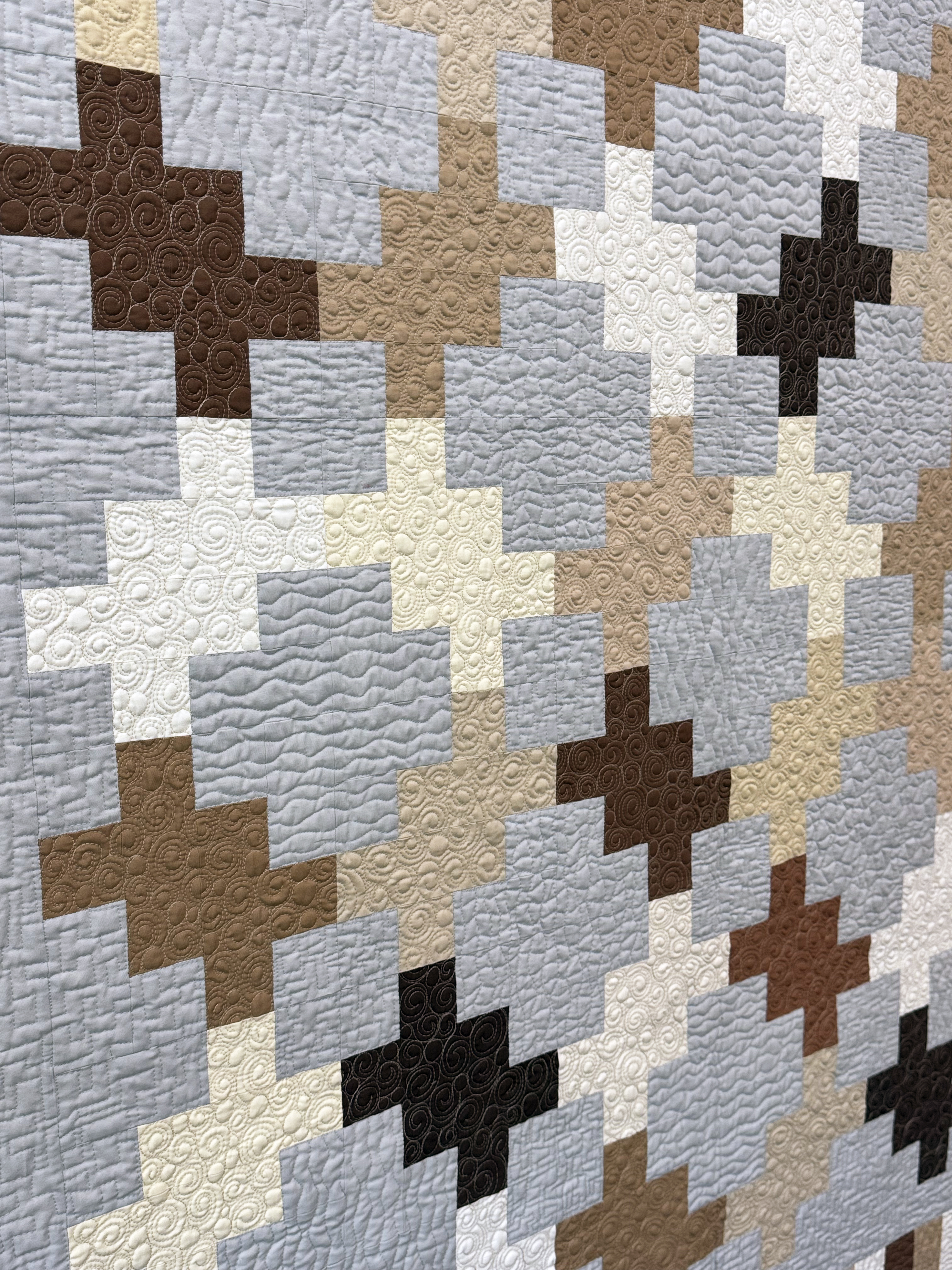
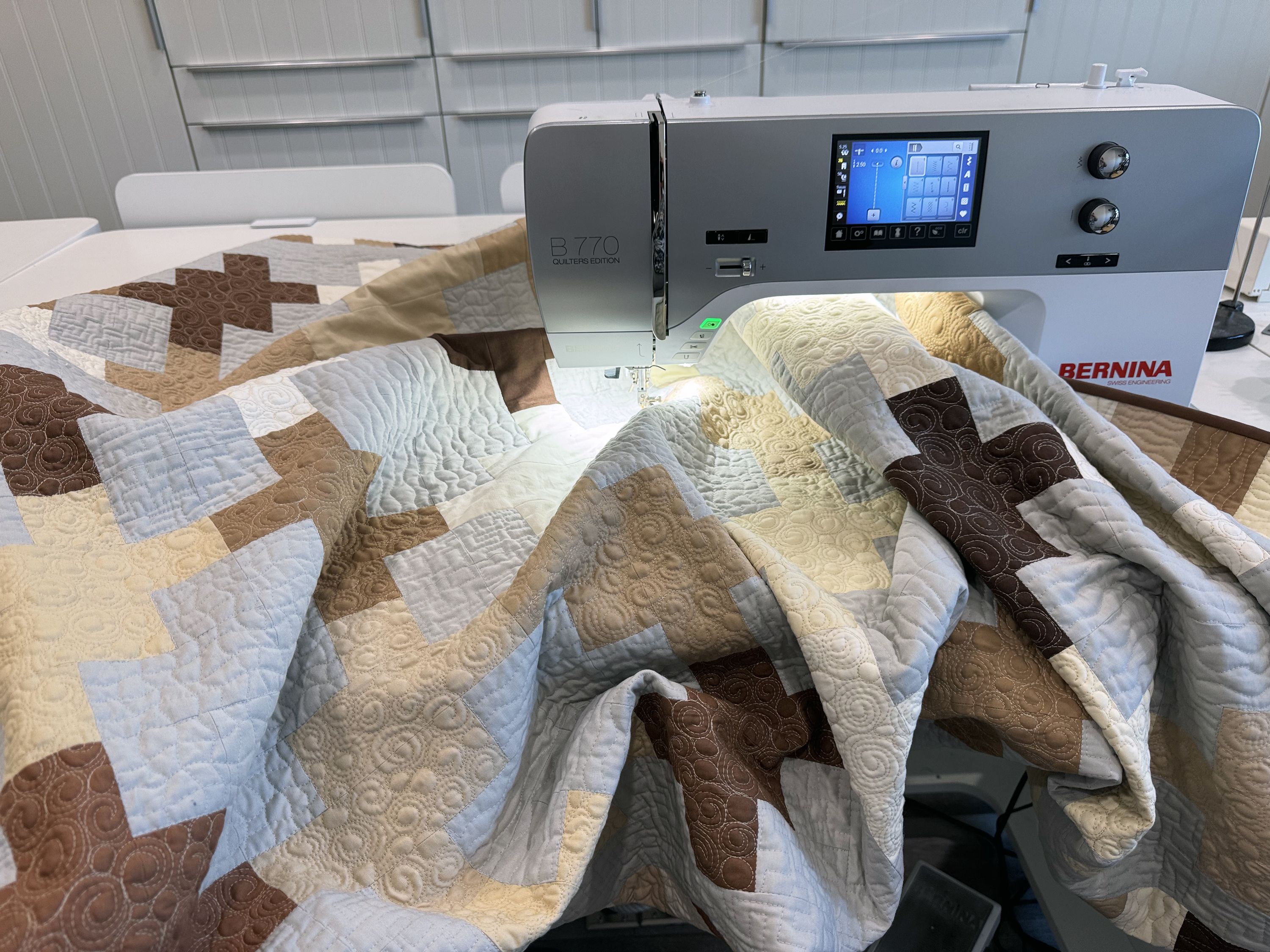
In all of my patterns I love to include machine quilting suggestions so that you can actually finish the quilt, and I had plenty of room in this pattern to include details of the quilting, diagrams of the quilting motifs I used, plus a coloring page which you can also use to sketch out other quilting plan ideas.
I recommend asking for this quilt pattern from your favorite quilt shop, or you can grab the PDF download from me and get starting making this quilt right away!
Are you excited to join me for another quilt along? Below you’ll find the supply list and schedule to make Dancing Stars, one of my newest and most versatile quilt patterns. I’ve already made it twice, and it’s one of those fun patterns that looks great in any fabrics you choose!
Week of Oct 9 – Finishing Your Quilt – with a Bonus Machine Quilting Video!
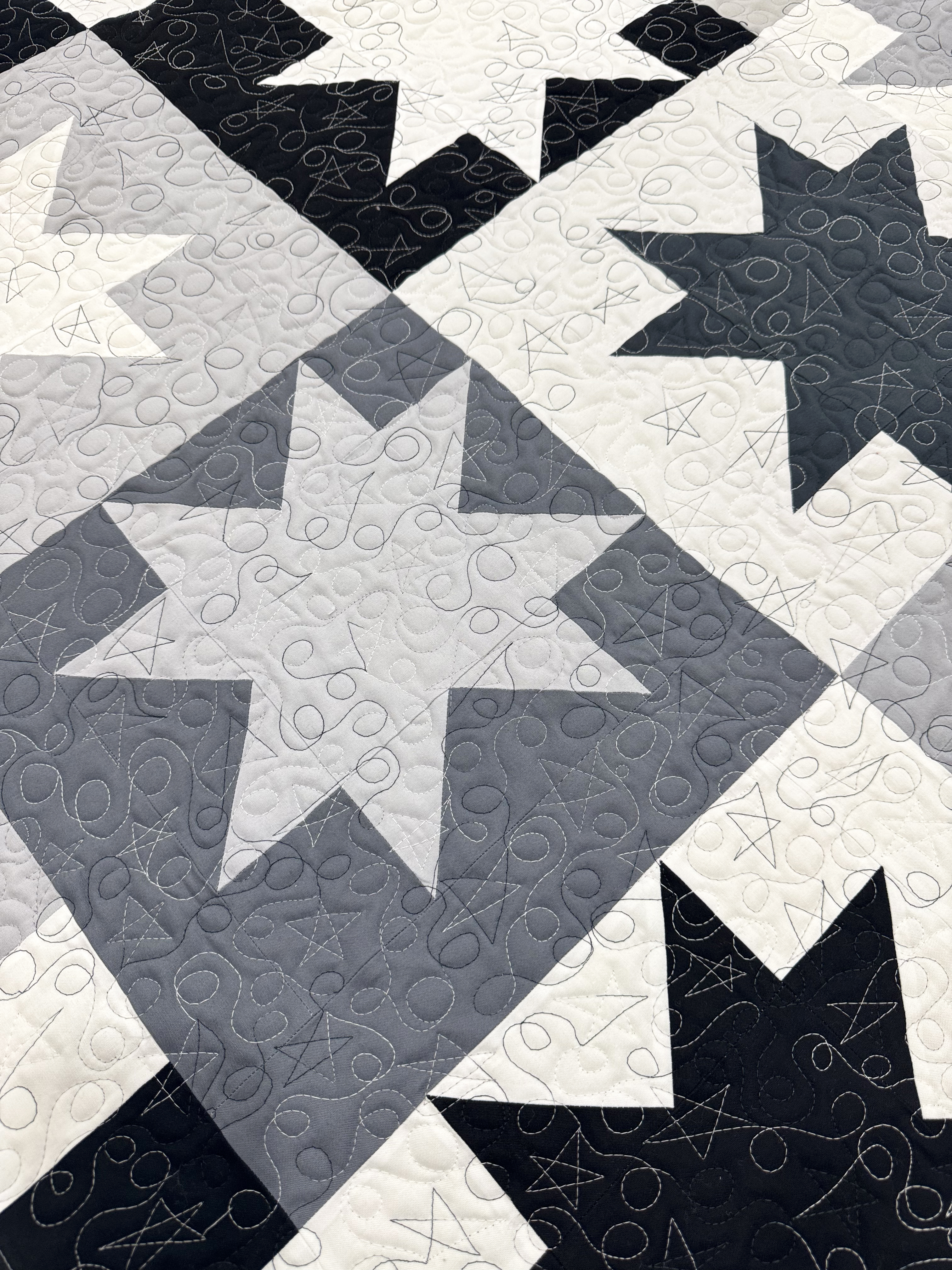
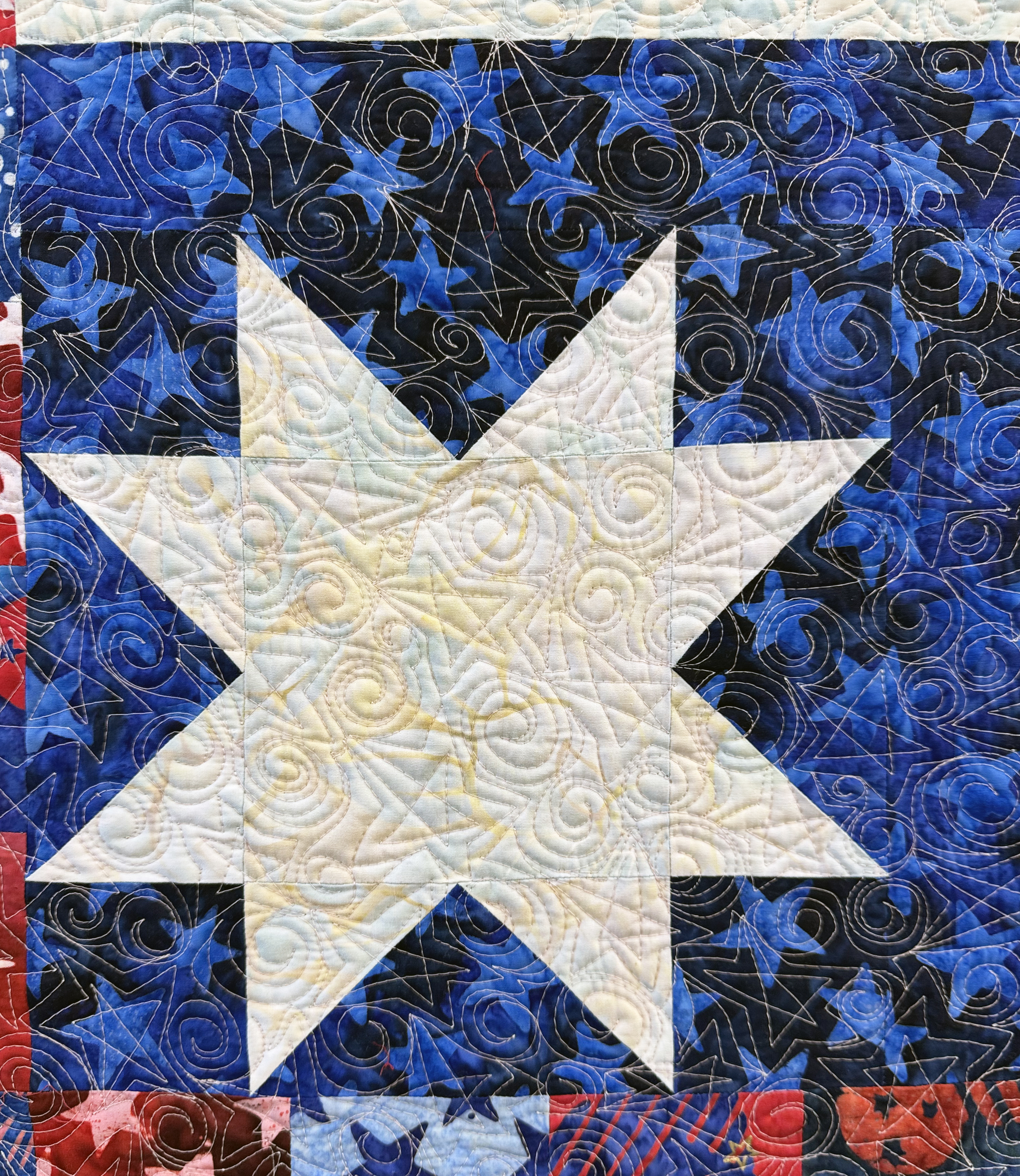
I love including quilting suggestions in my patterns so that you can actually FINISH your quilt! Here’s a close-up detail of the quick and easy loopy stars motif I stitched in the black/white/grey version. I’ll be sharing tips on exactly how I did this in the bonus machine video, so stay tuned!
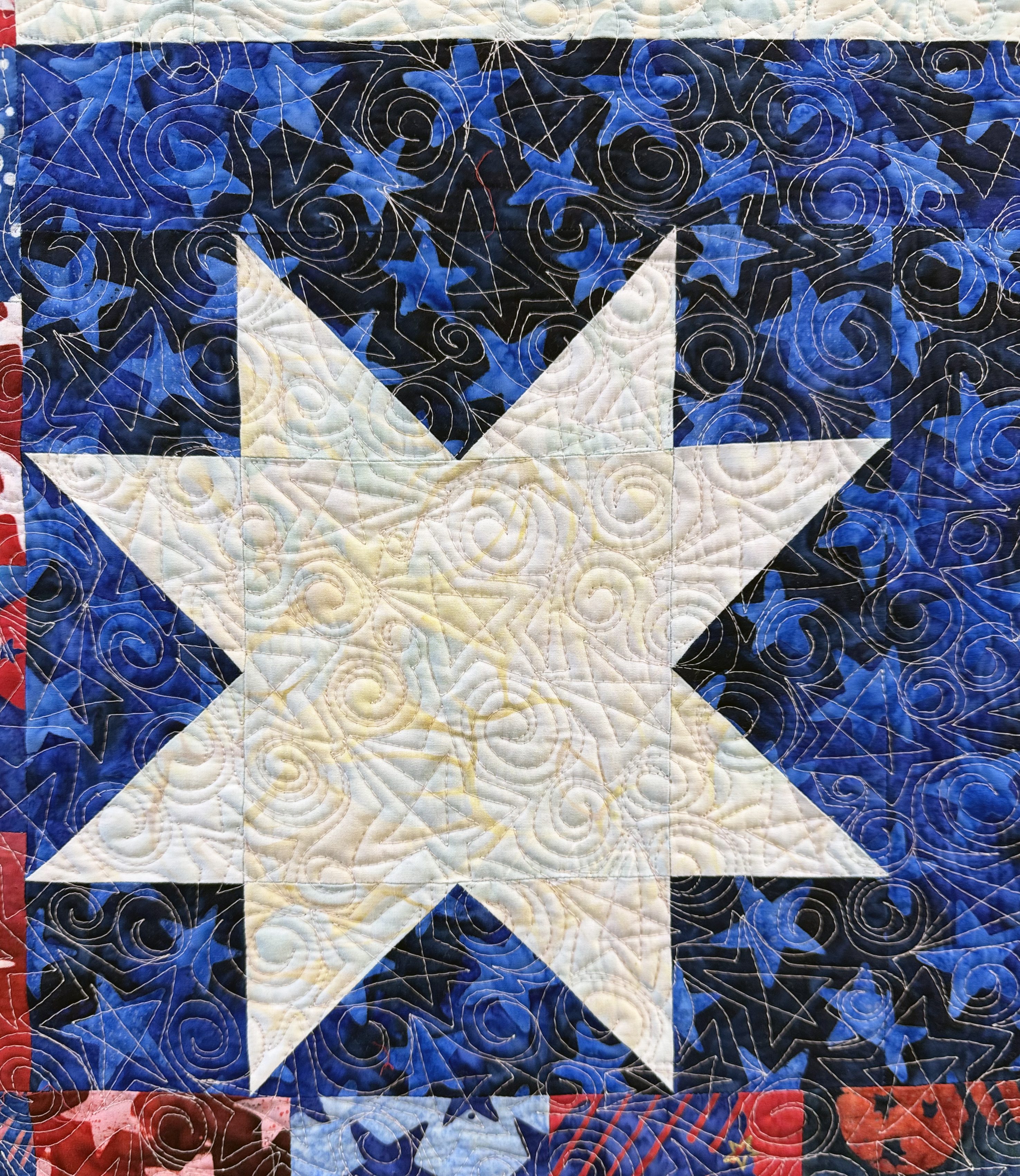
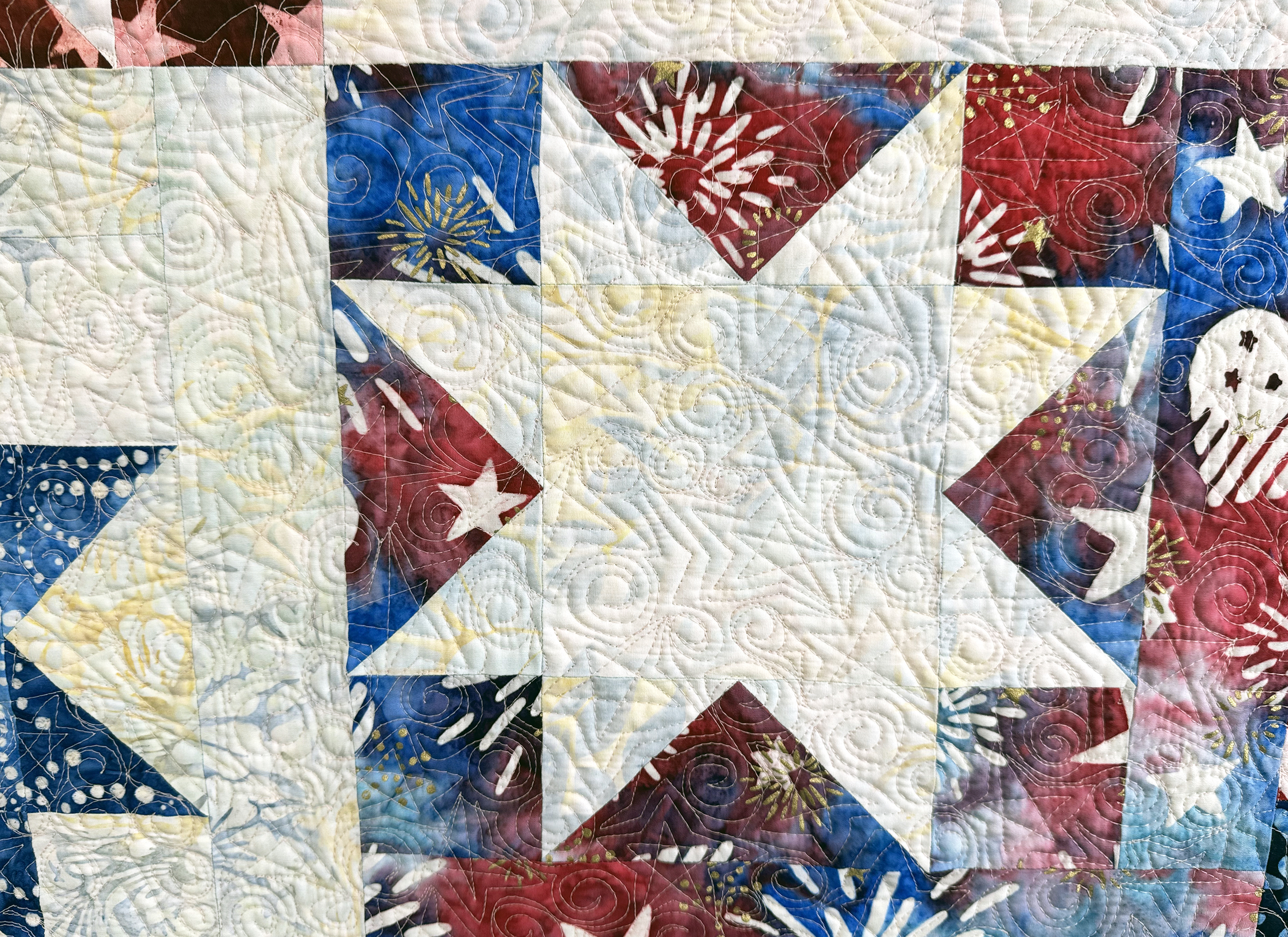
Then I re-imagined those motifs as a denser design in my Americana version with echoed stars and swirls! I’ll share how I came up with the quilting plan for this one in the video as well, so you’ll have lots of options to choose from!
Dancing Stars Supplies Needed
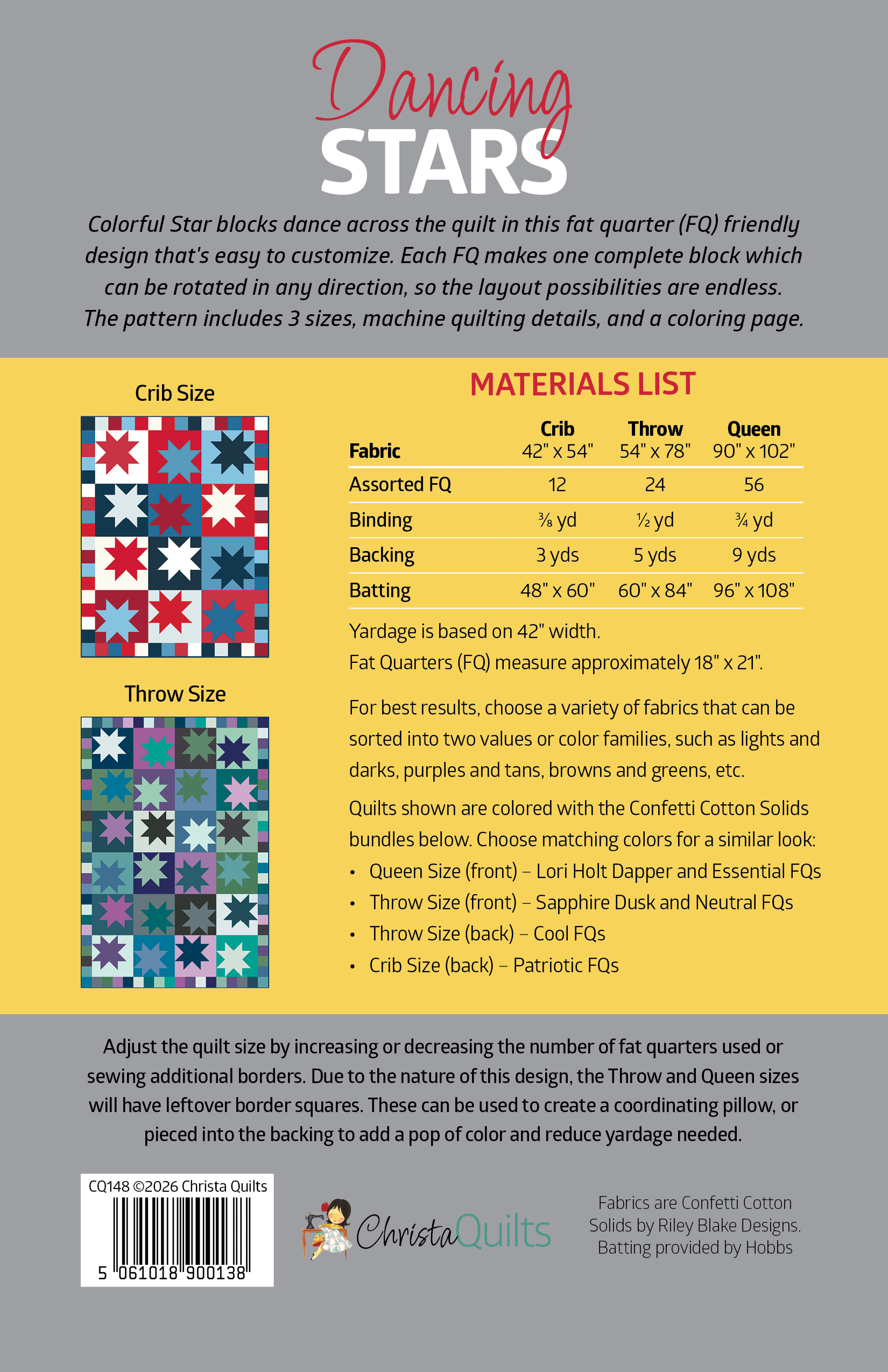
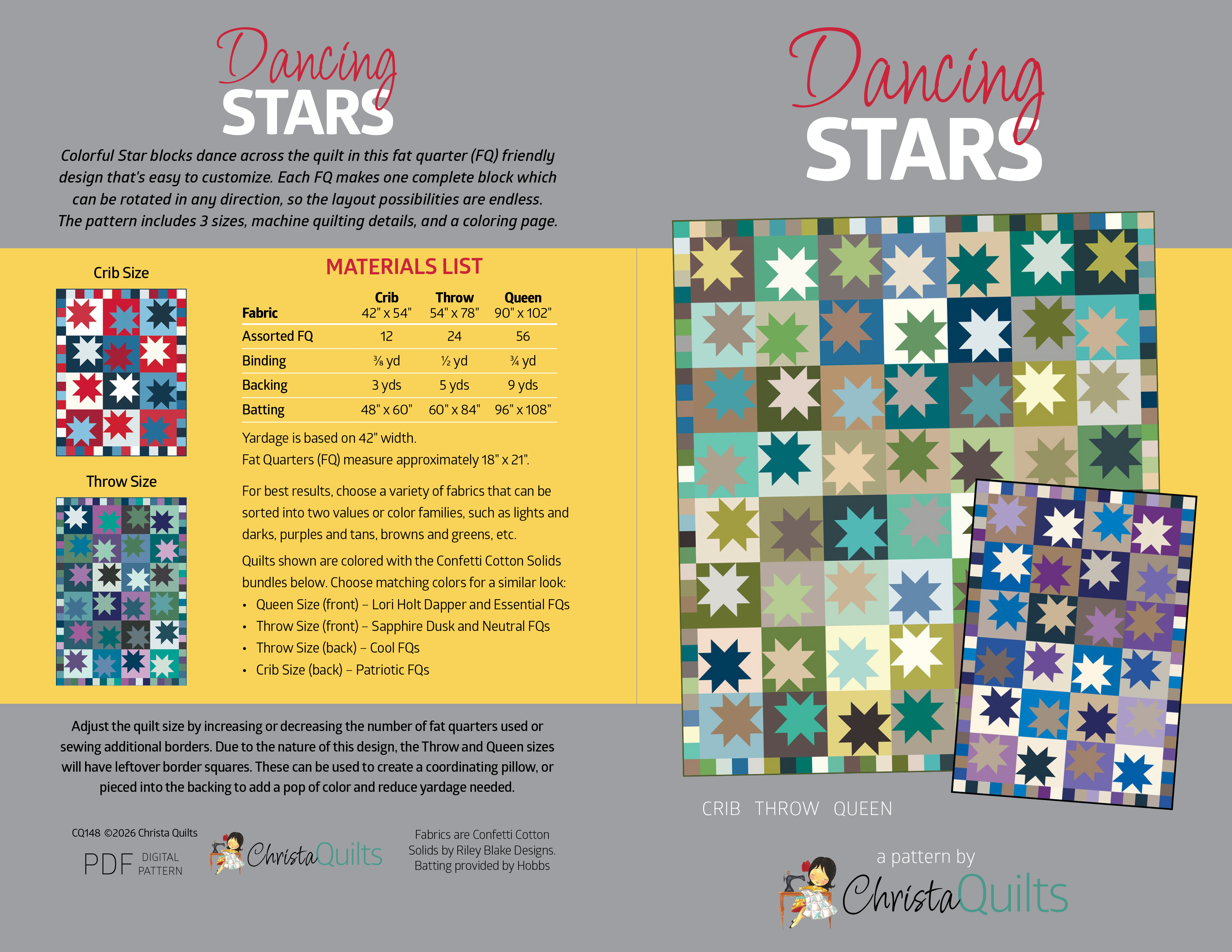
See the back pattern cover for a list of yardage requirements. In addition, you’ll need basic cutting and sewing supplies. I recommend pre-washing and starching your fat quarters. You can zig zag the edges or wash them in a small garment mesh bag to prevent fraying.
Although the quilt along itself is free, you’ll need a copy of the quilt pattern to make this quilt. You can ask for it from your favorite quilt shop. They can order it from Riley Blake Designs, or Checker Distributors.
If you can’t find it locally, you can always get a copy of the quilt pattern from me, either as a printed hardcopy or instant PDF download.
Your “can-do” attitude. This is going to be fun!!
Share Your Work!
If you’d like to show off your progress so that I can cheer you on, you are welcome to tag me on social media (@christaquilts). You can also share progress and ask any questions in my Christa Quilts group on Facebook.
It’s quilt along season and I’m excited to share one of my newest patterns with you! This fall beginning in September we’re going to make my Dancing Stars quilt. This is a fat quarter friendly design that’s easy to customize and make it your own!
In additional to including three size options and colorways in the pattern above, I’ve already made two versions of this eye catching quilt. The first one was made from black, white and grey Confetti Cotton Solids shown below.
Then just for fun, I whipped up a patriotic version made from batik scraps, shown below.
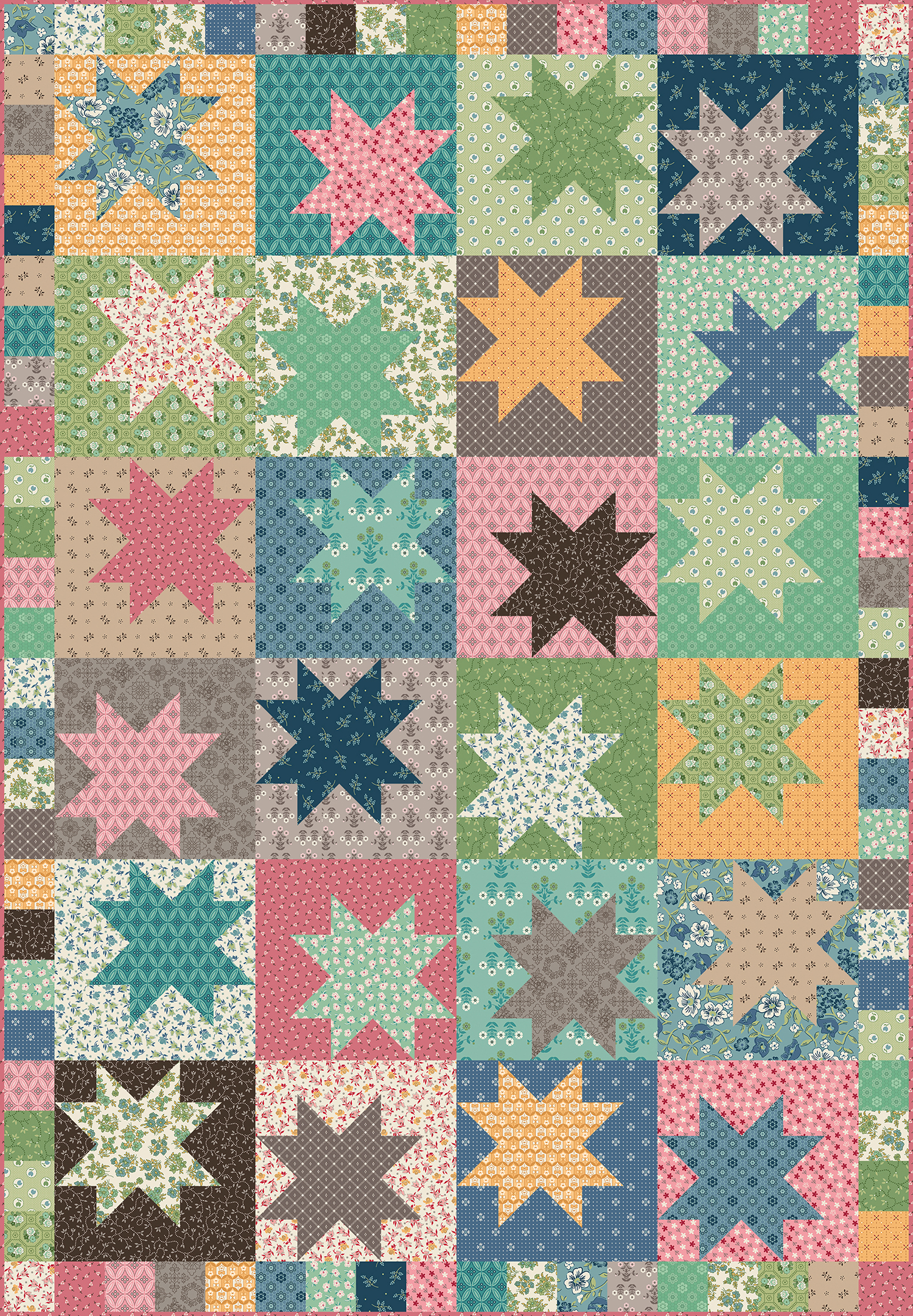
Then by request, I digitally recolored another version using Lori Holt Family Reunion from Riley Blake Designs. Isn’t it cute??
To join, you just need to purchase a copy of the Dancing Stars Quilt pattern in print or PDF and you’ll be all set. I’ll include weekly updates here on the blog, including a bonus machine quilting video showing how I quilted both versions shown above.
I recently finished two patriotic quilts that I’m excited to share as I say, “Happy Birthday, America!”
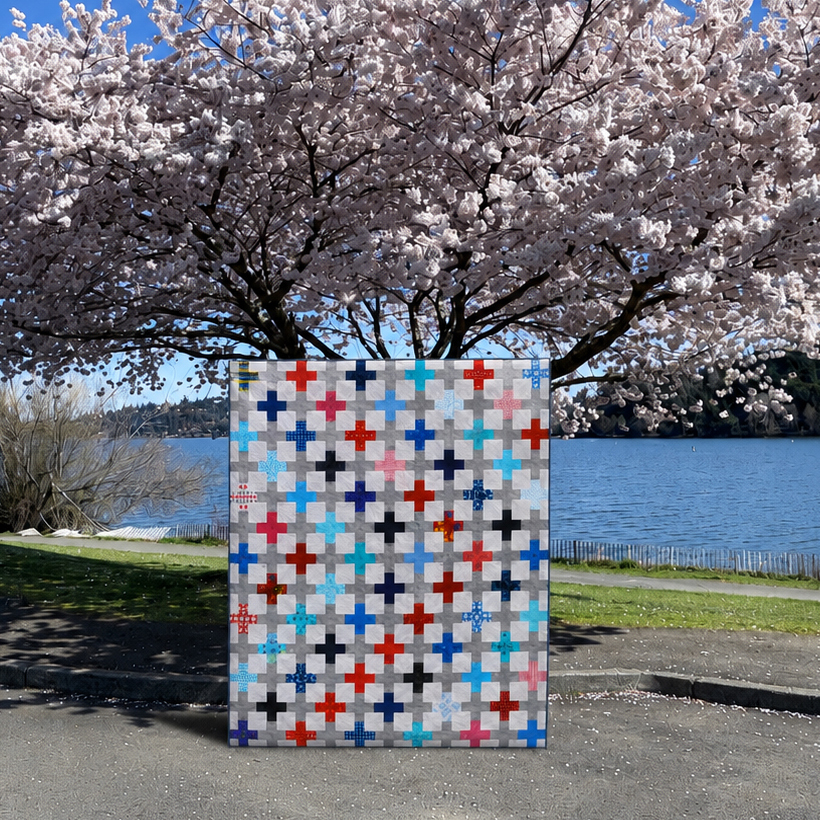
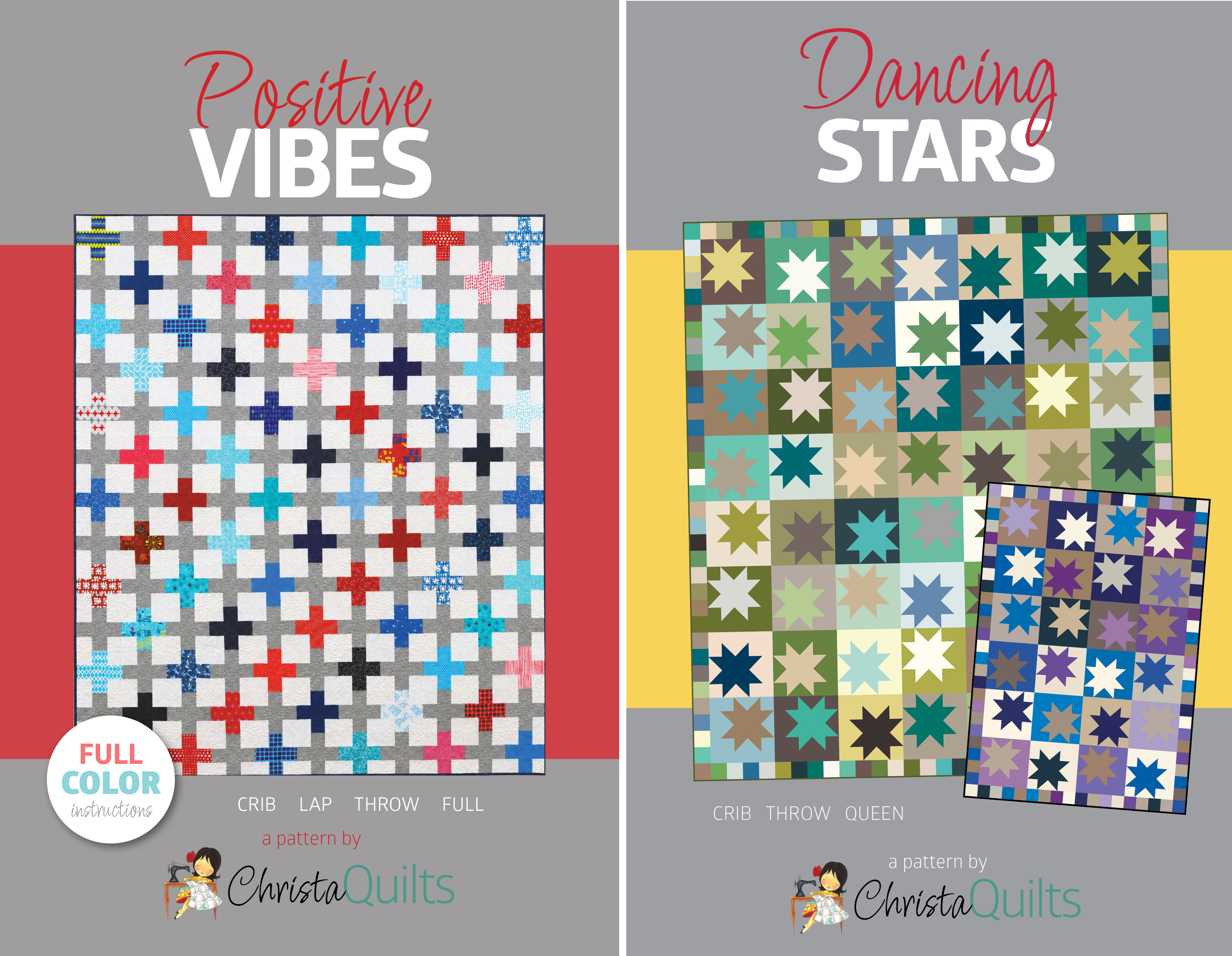
This first one is called Positive Vibes and is a remake of a pattern I first had published in a magazine nearly 10 years ago. That was before I became a fabric designer and I always knew I wanted to remake using red, white and blue scraps of my own fabrics.
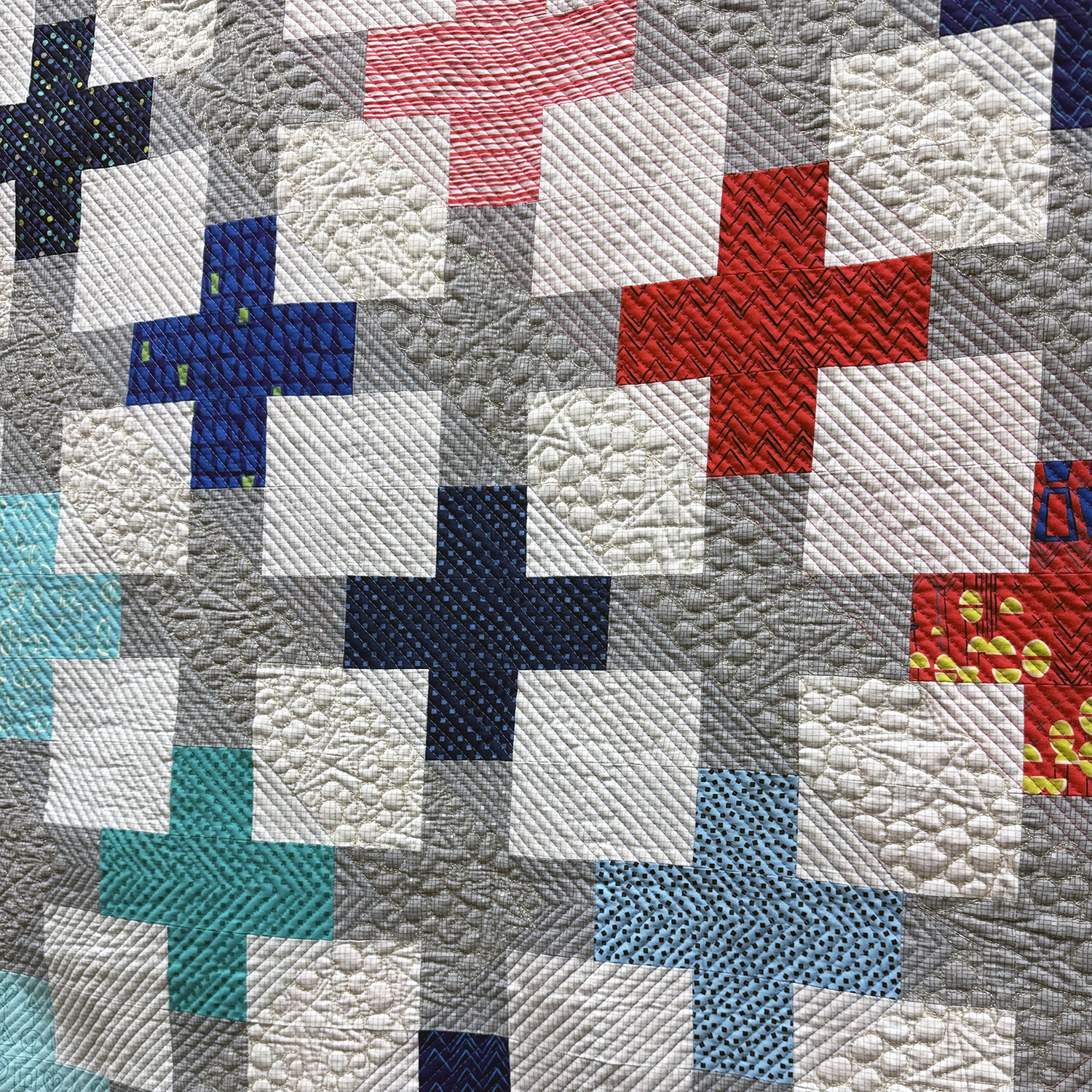
I quilted it with Red, Aqua, Navy and Gold Metallic threads. In each of the aqua, red and navy rows of plus blocks, I quilted straight lines to represent stars. In the alternating rows I added the gold stars with pebbles for added texture.
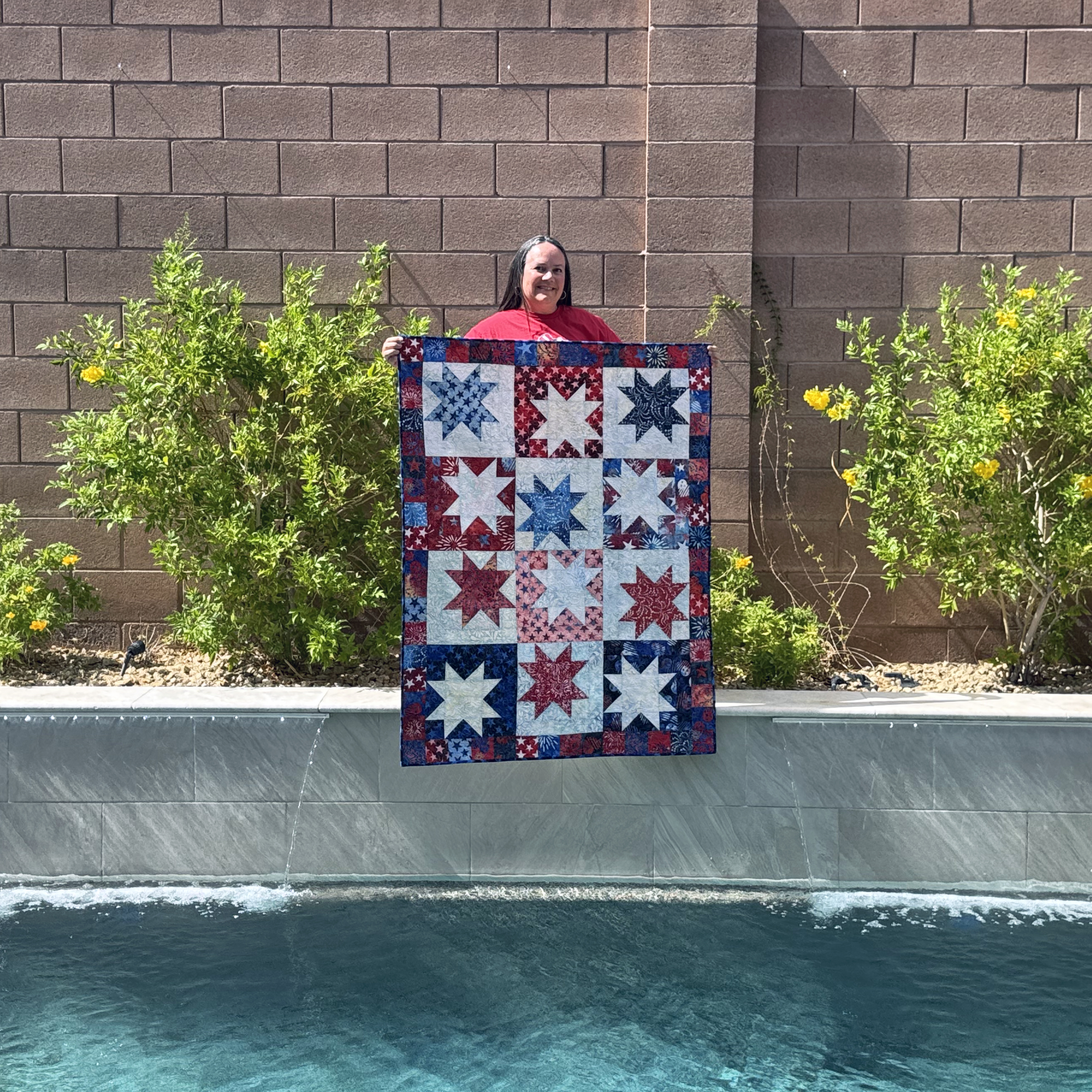
The second one I literally just finished today in time to share for the 4th of July is called Dancing Stars. I made this from Riley Blake Batik scraps to test them out. It’s been years since I’ve sewn with batiks and I wanted to make sure I love working with them before I dive in and design my own line of batiks in the future…
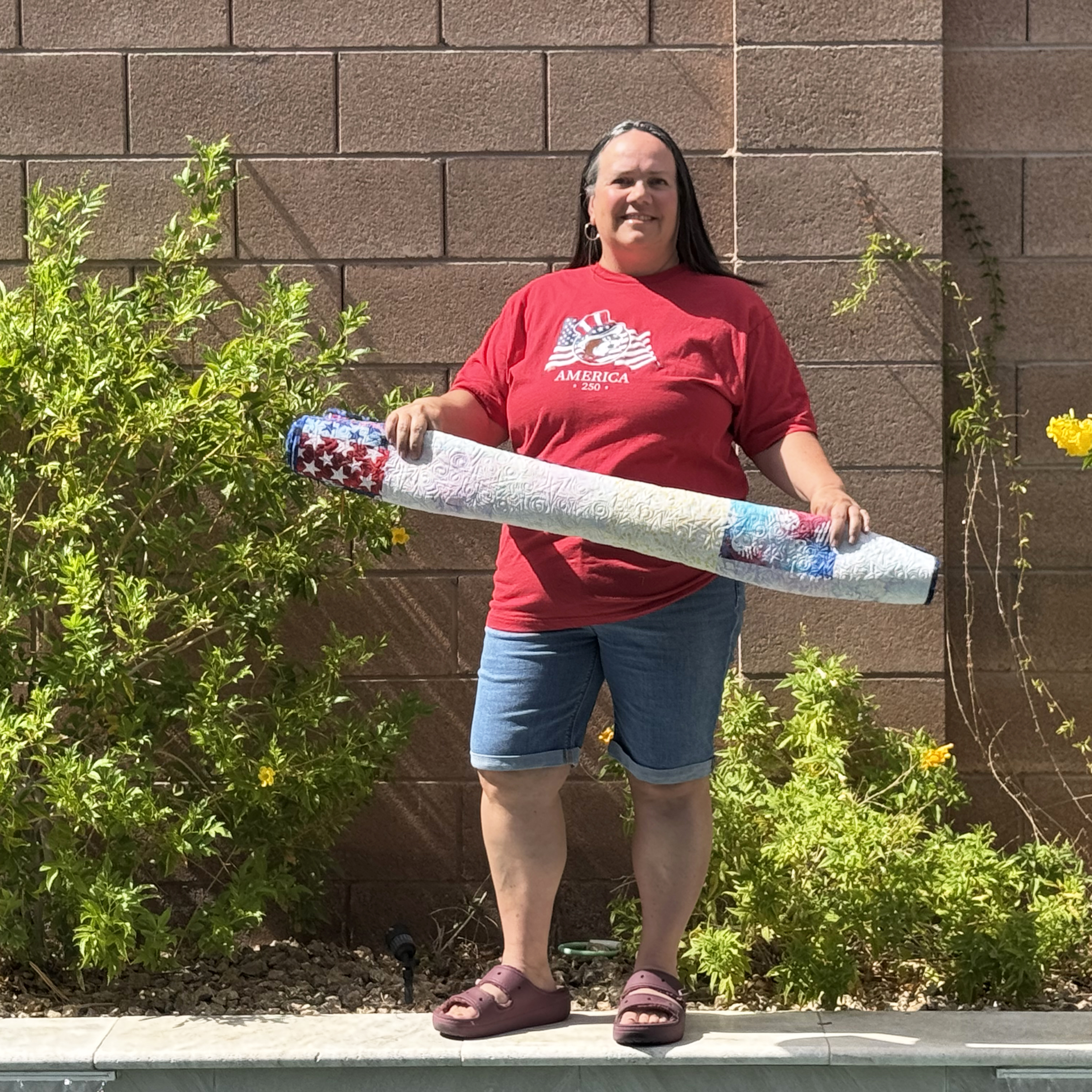
The fabrics were wonderful to work with during piecing, basting, quilting AND binding. So they definitely get my stamp of approval! Here’s me proudly showing off my patriotic Buc-ee’s shirt that we picked up on a cross country drive earlier this summer.
And here are so closeup details of the quilting. I stitched an edge to edge free motion mix of echoed stars and swirls.
My #1 free-motion quilting tip is to practice one motif across an entire quilt. When you’re done with the quilt, you’ll be an expert at that design!
Both of these quilt patterns are available as PDF downloads in my Etsy shop. Click the links below to grab them:
We are nearly to my favorite part of any quilt – the machine quilting! But first we need to prep our quilts by making sure the backing is big enough, and then basting. I love making pieced backs from leftovers or other coordinating fabrics because that makes the quilt twice as nice!!
Because I had too many pictures of this process to share, I thought it would be much easier to put them all together into a super short video and talk over the process. You can watch that by clicking play below:
Once the quilt is basted, you are ready to quilt. Just remember, all of these quilt along posts will stay up indefinitely so you can make your quilt any time you wish. I’m here to help you every step of the way!