Favorite Tools #3 – Design Wall

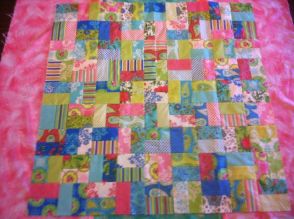
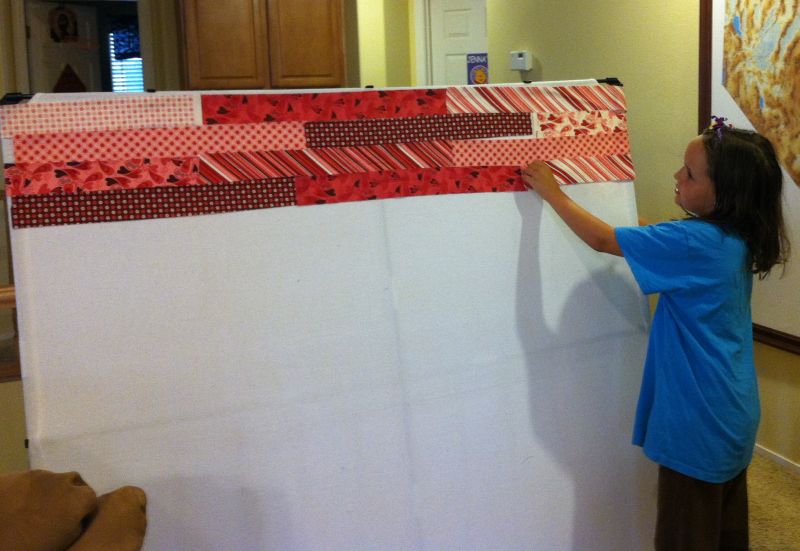
I love my design wall! I use it all the time when working on quilt blocks and my daughter is even using it this week while she works on her jelly roll quilt. (More about that later!)

Flannel Design WallI got it from a wonderful vendor, Cheryl Ann’s, 2 years ago when I went to the Road to California quilter’s conference.

The design wall is totally portable and comes in a bag, like a tent. In fact, it’s made from tent poles and flannel fabric. (I sound like a commercial, don’t I?)

Portable Design Wall BagDesign Wall Pieces

It’s very lightweight and only takes a few minutes to assemble. You can see the back below.

Back of Design WallI was very impressed with this company. About a year after I got it, I lost one of the small pieces. When I went back to Road to California the next year and told the guys at Cheryl Ann’s how much I used it, they gave me the replacement part for free!

They come in 3 sizes and I bought the medium sized one that measures about 4 1/2 feet square. I think I need to go back and get the large sized one now!

Favorite Tools #2 – Shout Color Catchers

Shout Color CatchersOn my last soapbox, I blogged about how much I advocate pre-washing fabrics for quilts.

To make this job easier, I love using Shout Color Catchers. You can get them pretty inexpensively at Target or Wal-Mart and they work wonders with quilt fabrics.

They are rectangular sheets of material that almost look like dryer sheets.  You put them in with the fabric during the wash cycle. The extra color that comes off in the water adheres to the sheets, not other fabrics. I’ll use at least 2 per load when washing a bundle of fabric, and will throw in more if I’m washing a large quilt.

After discovering problems with some of my personal stash fabrics running, I used several sheets when washing my sister-in-law’s wedding quilt I recently finished (only 2 years late). I had sewn the blocks so long ago, I couldn’t remember if they had been pre-washed or not. I used 4 color catchers with the quilt and it came out fine. I breathed a huge sigh of relief!

Color CatchersI used this red batik fabric in a small wholecloth quilt I recently made. I wanted to make sure it didn’t run so I washed it twice – with one color catcher each time.

The first color catcher sheet came out orange after the first wash; by the second wash, the excess color was mostly gone so I knew it was now safe to use this fabric!

I’m still experimenting with pre-washing,  using color catchers in every load of cut yardage, and throwing a sheet in with quilts made from fabric that I can’t pre-wash like Moda Precuts.

During my previous post about pre-washing I got a really good comment about using Retayne, a dye fixative, with unwashed precuts. I forgot I even had some! So that will be my next experiment I think…..

Favorite Tools #1 – Seam Roller

Wooden Seam RollerI’m going to start a new series each week exploring some of my favorite tools, tips, and techniques for quilting.

As I’ve been sewing a lot more recently, I’ve realized it’s a much more enjoyable experience when I have the right tools.

I pressed all of the seams open in the latest quilting project I’m working on, my Bungle Jungle modern quilt.

Wooden Tool SetIt was “sew” much easier to press the seams open with an iron when I had first “finger-pressed” them with a wooden seam roller.

I got this fantastic tool at a quilt show I attended a few years ago.

The sad thing is that I asked the vendor if I could get them wholesale to carry in my shop and he said no, he just made them himself and sold them individually at shows. 😦

The next year I went back to the same show and bought a 3 piece set for myself which included a matching seam ripper, seam roller and sewing stiletto.

So if you are ever out and about and run into one of these gadgets, pick it up in a hurry! And if anyone out there has a source for these, please let me know!

Little Rascals Quilt Part 3 – Stencil Quilting

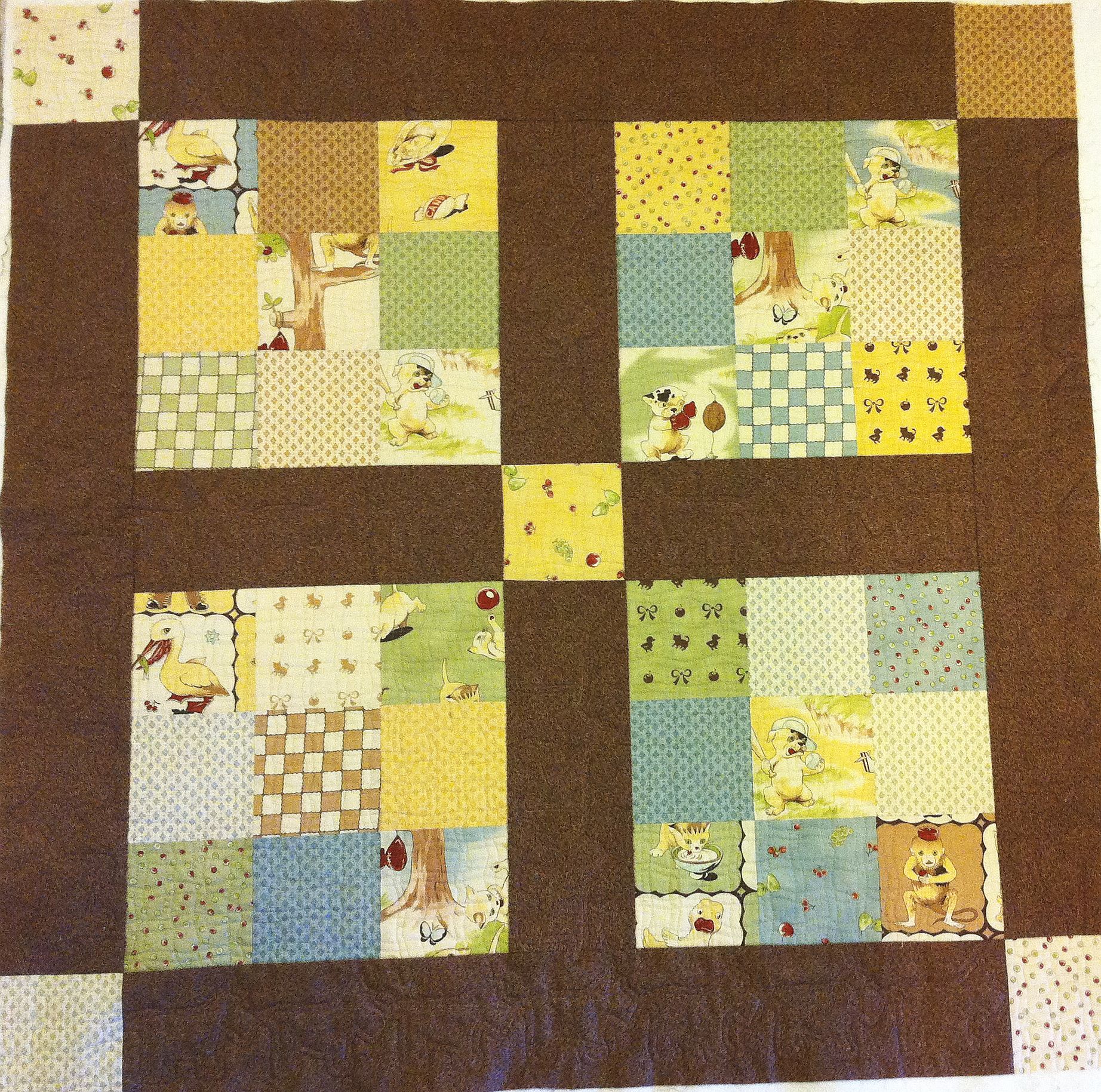
This week I finished quilting the brown sashing on this adorable Li’l Rascals baby quilt. You can learn how I free-motion quilted the blocks in last week’s blog post.

Li'l Rascals Baby QuiltFirst, I selected a cute Scottie Dog quilt stencil. I lucked out because each dog motif was about the size of one of my charm squares, so I didn’t have to adjust the size of the design. I love collecting all sizes and styles of quilting stencils. I probably have over 100!

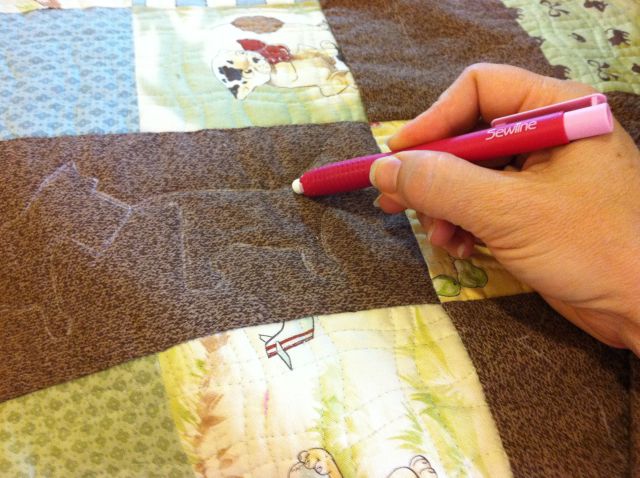
Scottie Dog StencilSewline Marking Pencil

To mark the design, I used a Sewline mechanical pencil with white ceramic leads. It made a nice clear line to follow.

The lines came off easily with a Sewline eraser stick after quilting. The left picture below shows 2 marked and quilted motifs. The right picture is after I erased the right motif. You can clearly see the quilting, but not the lines!

Sewline Fabric EraserRight Motif Erased After Quilting

After I quilted the dogs with a matching brown thread, I decided I wanted to see them a little better, so I quilted them again, going over my previous lines, but this time with metallic thread. (To avoid problems using specialty threads I use titanium-coated top-stitch needles from Superior Threads.)

The design still wasn’t quite finished, so I added another line of quilting, echoing the shape of the dogs. Then I was happy with the quilting. Echo Quilting with Metallic ThreadNext time I think I would try a much darker or lighter thread so that I can see the design even better. I’ve been quilting for so many years with matching thread to hide my mistakes. But now that I’m getting better with my free motion quilting I want my stitches to show!

Next week, I will finish this quilt by showing how to block it and bind it.

If you’d like to make a similar quilt like mine, it requires just one charm pack and 1 yard of coordinating fabric for sashing.

Machine Quilting – Sharp Wavy Stippling

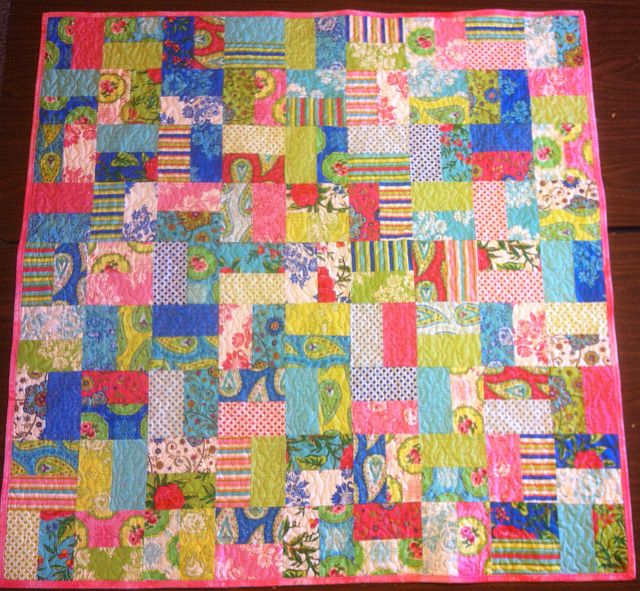
My Summer House charm pack quilt is finally finished! Well, it’s not mine anymore – I gave it to my sister in law for her new baby girl due this summer. Cresen is very lucky because I made her 2 quilts in one year! I finally made her wedding quilt this spring, although she’s been married for a couple of years now. You can see pictures of her wedding quilt here.

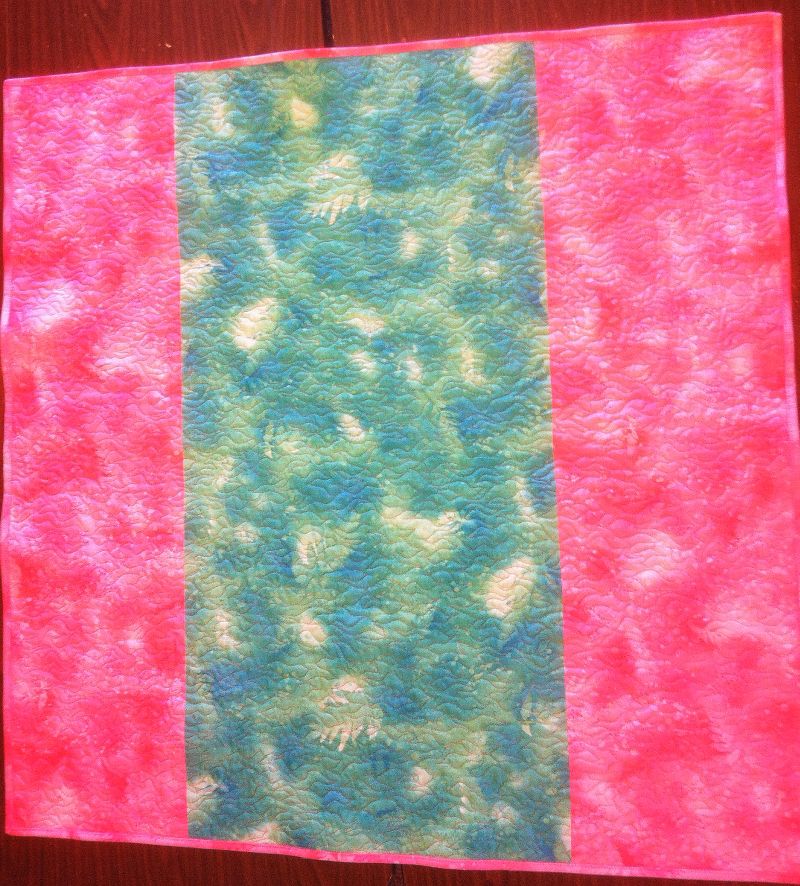
Be sure to click on the pictures below for closeups of the front and back of this cute quilt.

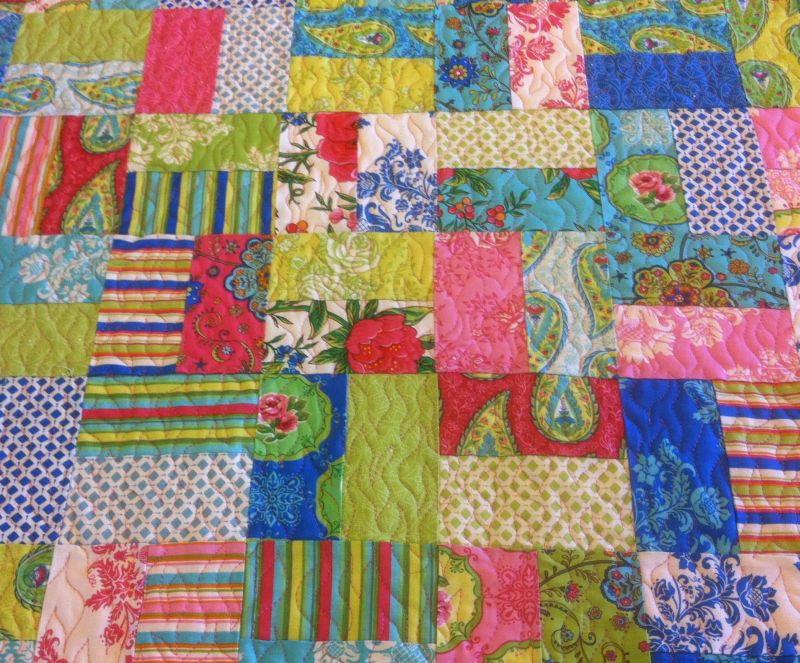
Ella's Baby QuiltPieced BackI was really pleased with how the machine quilting turned out on this quilt. I tried some new tools that really made the process much easier.

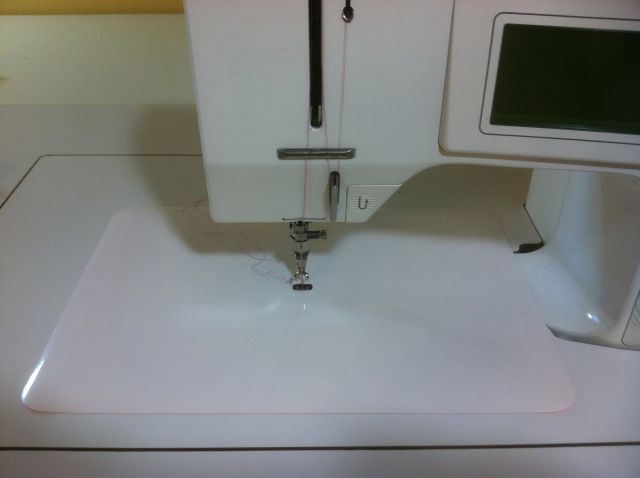
Supreme SliderFirst,  I attached a Supreme Slider to the bed of my sewing machine. This thick slippery plastic material reduces the friction on the bottom side of the quilt and significantly improves the whole free-motion quilting process. With less drag, it’s much easier to glide the quilt around and get good quality stitches.

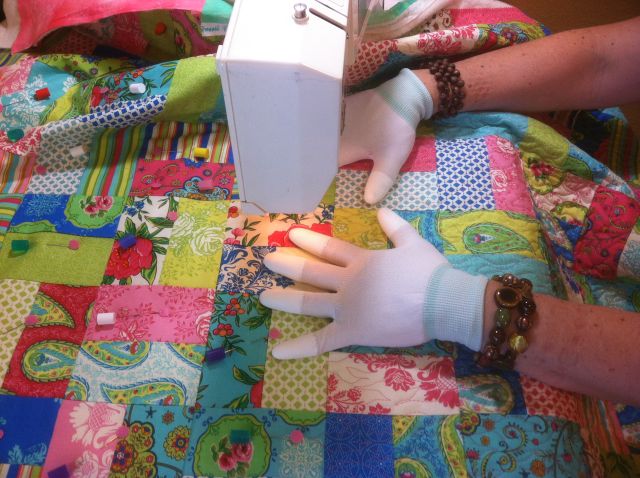
Machingers Quilting Gloves

Next, I used a pair of Machingers machine quilting gloves. They are very comfortable and I can even thread the machine while wearing them.

They gave me a better grip on the quilt. Pushing the bulk of the quilt  through the bed of the machine was much easier, too, making the whole experience more enjoyable.

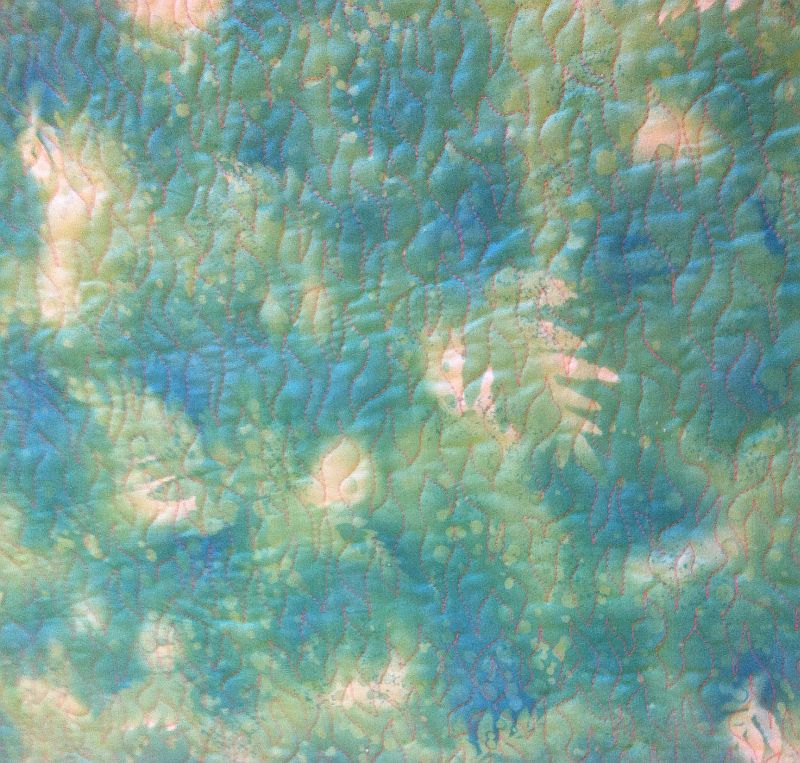
I wanted to try another version of stippling – sharp wavy stippling, inspired by Leah Day’s free-motion quilting project. Instead of doing a simple meander, I quilted wavy lines, ending in a point and coming back down. I also used more of a contrasting thread so you can see it.

Wavy QuiltingThis was the first time I free-motion quilted in an orderly fashion – stitching one block at a time – then moving onto the next block in rows (rather than randomly every which way all over the quilt). I like the progress I made and the interesting texture. It reminds me of flames or waves, depending on which way you look at it. See above and below for closeups.

Sharp Wavy Quilting TextureI like branching out with my machine quilting. I’m happy drawing and quilting marked lines, but the random n0-mark free-motion fillers give me more flexibility with my designs.

Basting a Quilt With Pinmoors

Machine quilting is my absolute favorite part of making a quilt. However, before I get to that super-fun part, I have to get it all basted and ready to go first. Here’s my favorite method of basting. (You can read about preparing the quilt backing for this quilt here.)

Cotton BattingI have two favorite battings that I like to use (cotton or wool). For a small baby quilt such as this one, I love Warm-N-Natural 100% cotton batting. It’s very inexpensive and quilts up wonderfully. It also gives an antique look once you wash it. I usually buy it by the bolt from my local craft-supply store when it’s on sale.

I always cut the batting a little larger than the quilt top, with the backing being slightly larger, too. Once the top is laid out, I’ll trim off the excess leaving about an inch or two around on all sides. For a larger quilt I would tape or clamp the backing & batting down, but that’s not necessary for a smaller quilt like this one.

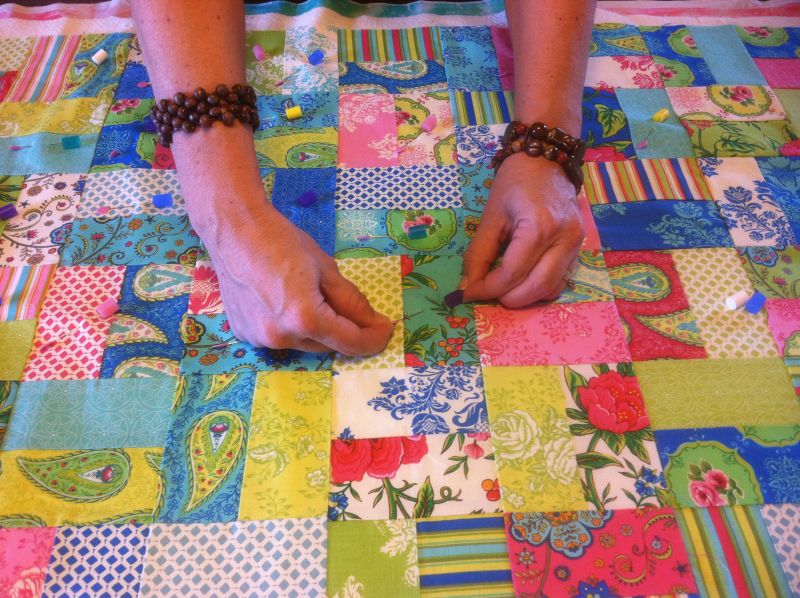
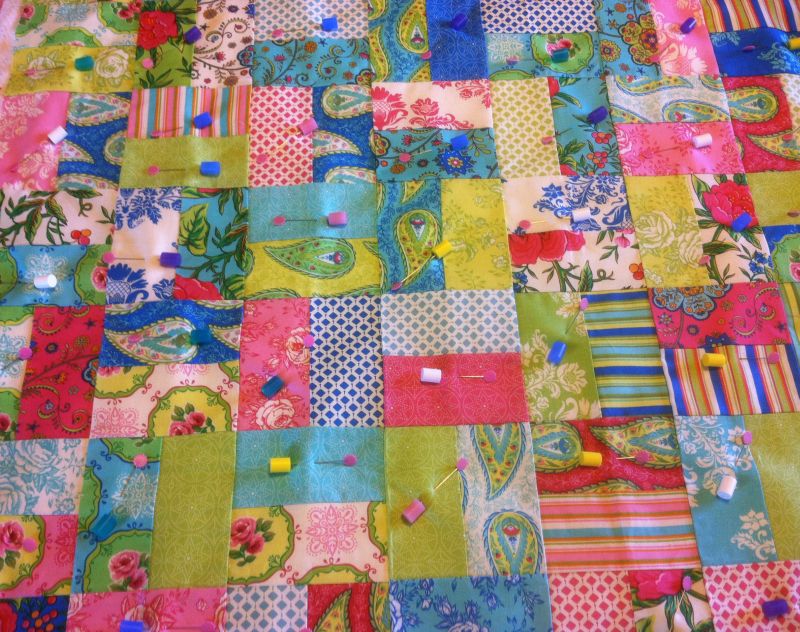
A customer of mine suggested that I start carrying Pinmoor pin anchors, so I took her suggestion and I’m glad I did. This is by far the easiest way to baste a quilt! You just insert any straight pin into all 3 layers of the quilt.  (I like the cute flower pins.) Then you cap the pin with a Pinmoor. It’s like a little nub of soft sturdy plastic that catches the end of the pin.

Basting with PinmoorsThe best part about using the Pinmoors is that they are extremely easy to take out of the quilt while machine quilting. Just toss the pin into one container and the Pinmoors into another so they are ready for next time. You could also throw them all into one container and use a magnet to separate out the pins. They are indefinitely reusable.

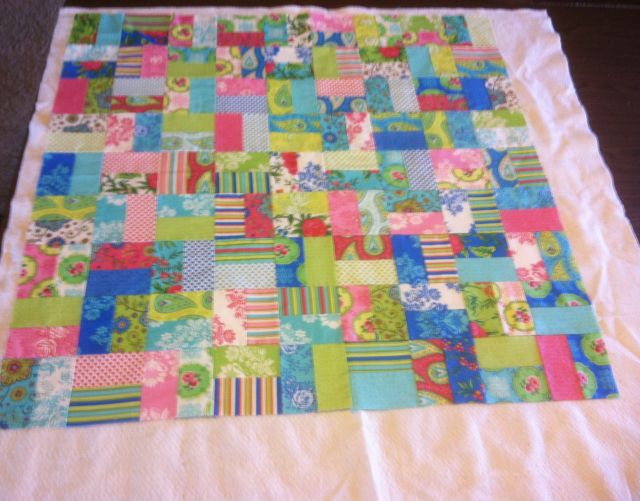
Pinmoor Basted QuiltIt took exactly 81 Pinmoors  and pins to baste this quilt – one for each block! In my next blog post, I’ll write about machine quilting this quilt with an allover design. This is for my sister-in-law’s baby girl, due this summer. I used Lily Ashbury’s Summer House fabric cut into 2 1/2″ by 4 1/2″ strips to make this quilt. It was fun, quick and easy to sew!

How to Prepare a Pieced Quilt Backing

I’m working on a baby quilt for my sister in law. I started the top last summer while on vacation, using fabric from Lily Ashbury’s Summer House. It’s going to finish around 40 inches square and can be made from 2 Charm Packs, 1 Jelly Roll, or about 21 strips of fabric. I made a total of 81 blocks, measuring 4 1/2 each, set 9 across by 9 down. You can read my earlier post about starting the quilt top here.

I’m ready to finish the quilt, but first I have to piece the backing and then baste it before I get to the fun part – the quilting! Here are some step by step procedures to prepare the backing. This method will work with any size quilt.
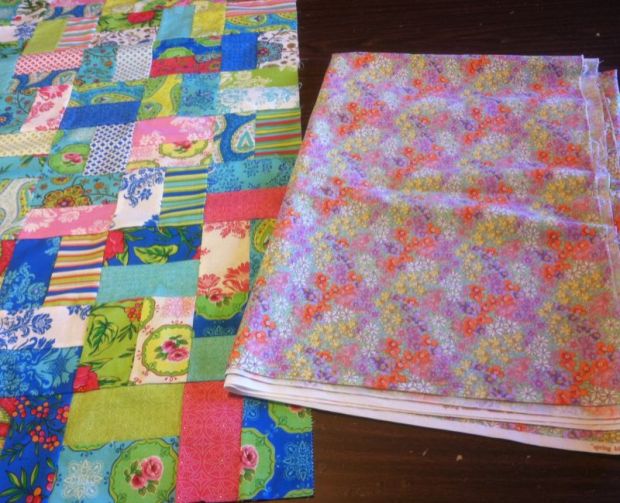
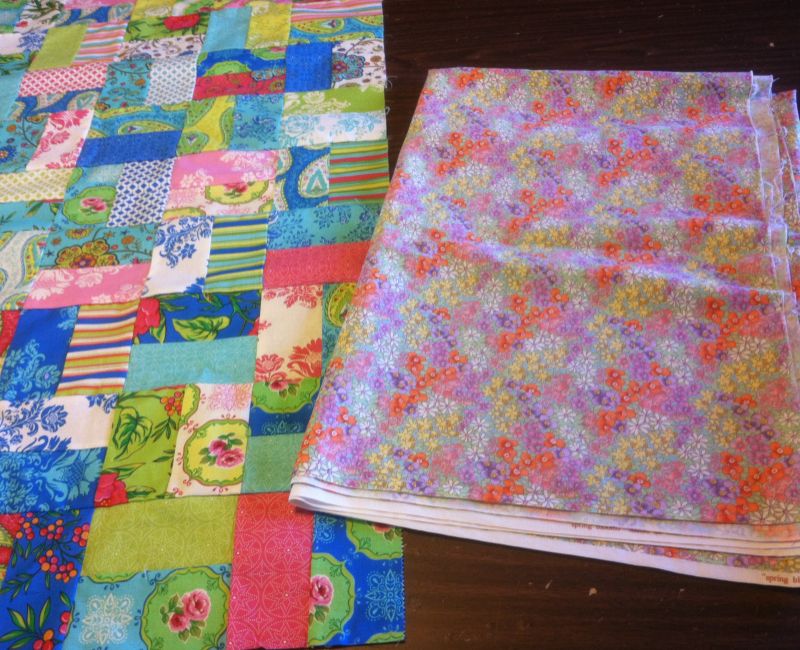
Backing Choice 1First, I go through my stash to find something with the same colors so that I can use the same thread in both the needle and the bobbin. I really like the flower print above, but it’s not quite the same style and it has too much purple and orange.
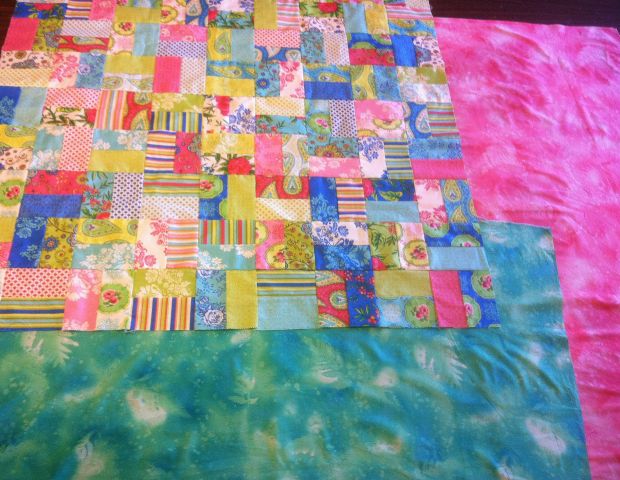
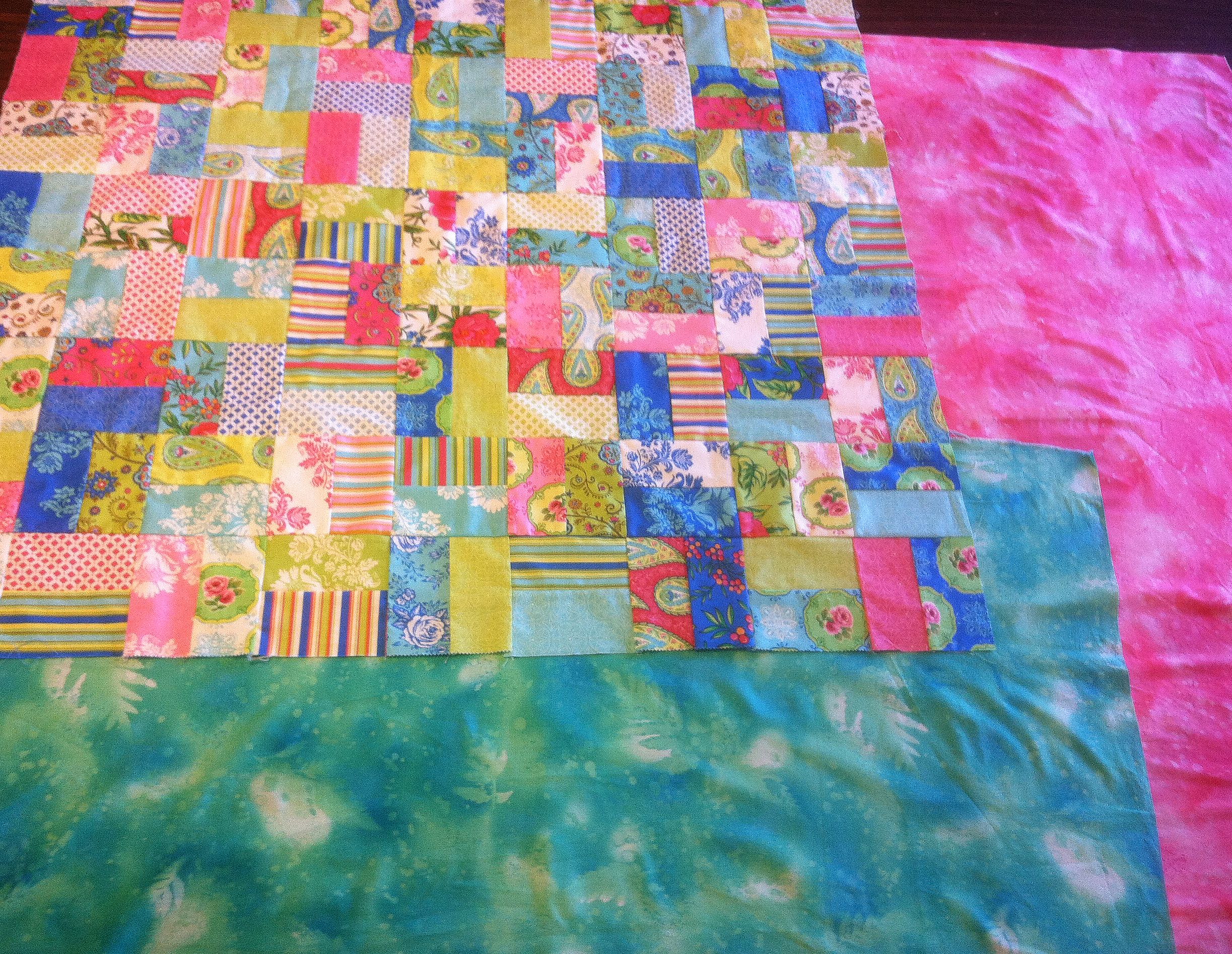
Backing Choice 2I like the pink and green fabrics much better. However, there’s not enough of either one, so the next step will be to sew the pieces together to make a large enough backing.

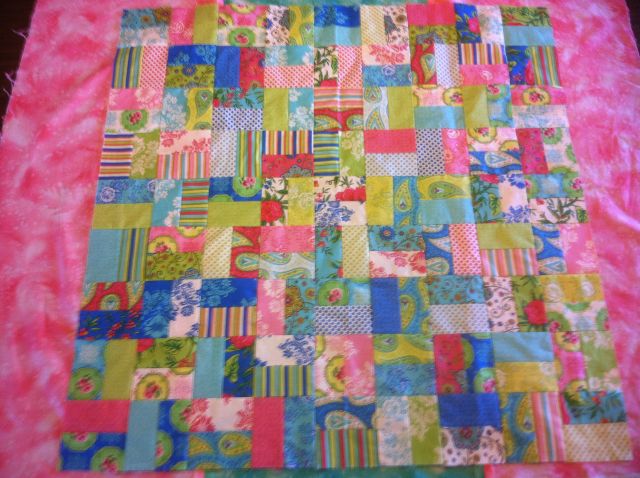
Backing Too SmallNext, I lay the backing piece over the quilt top so I can see how much more fabric I need to add to make the backing big enough. I usually don’t use precise measurements – a visual is all I need. I will add on additional pieces to make the backing a couple of inches wider on all sides; then I’ll trim it down later.

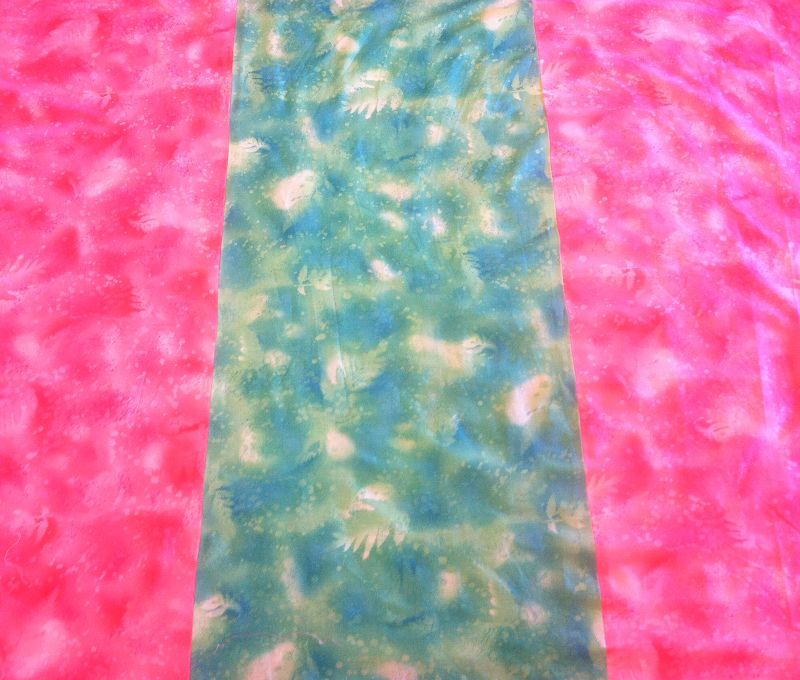
I could simply sew the pink and green fabrics together side by side, but I don’t think that looks very balanced. I’d rather split the backing into three pieces, with green in the middle and pink on both sides.
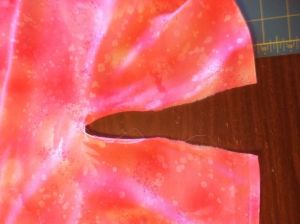
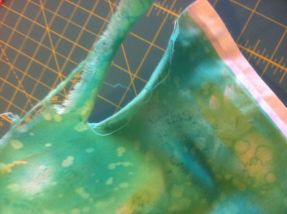
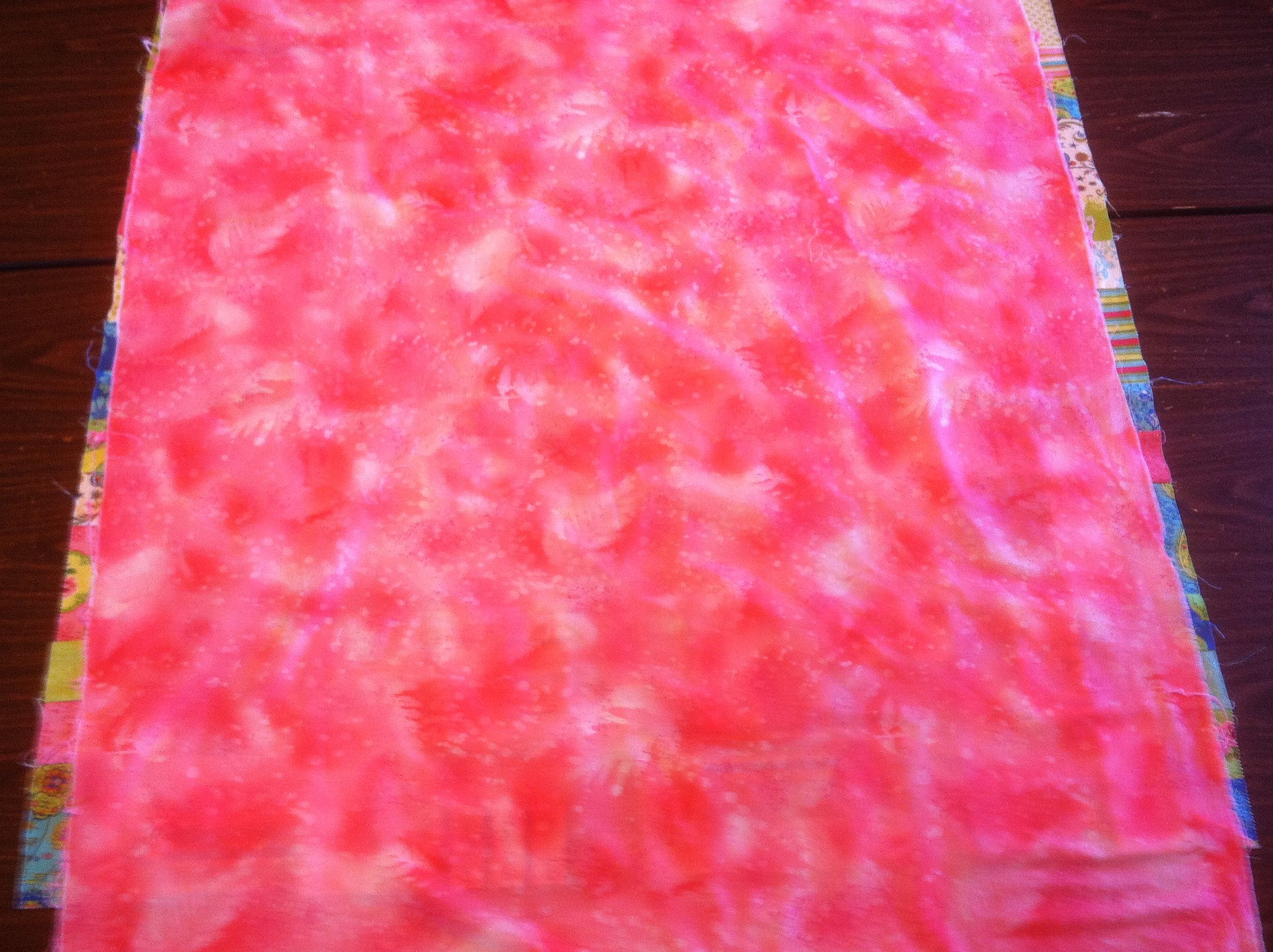
Pink FabricGreen Fabric

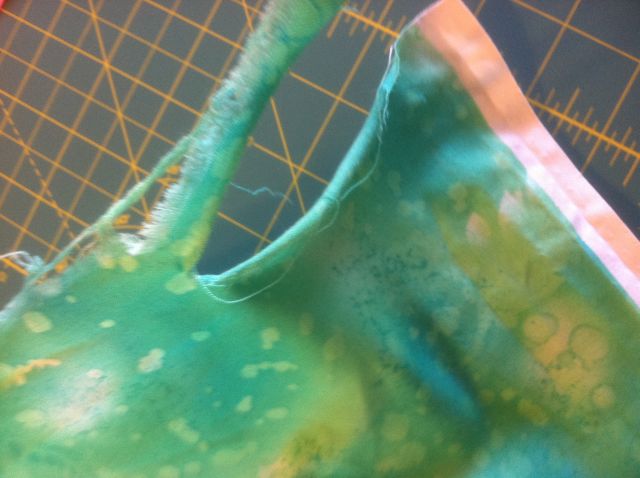
With scissors, I snipped in the middle of the pink fabric, then ripped it into two roughly equal sized pieces. On the green fabric, I squared up the piece by ripping off a small amount on both sides to straighten the grain for sewing.
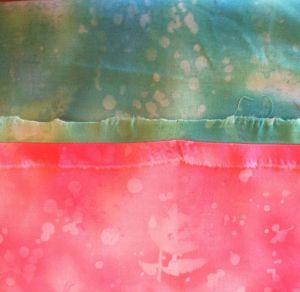
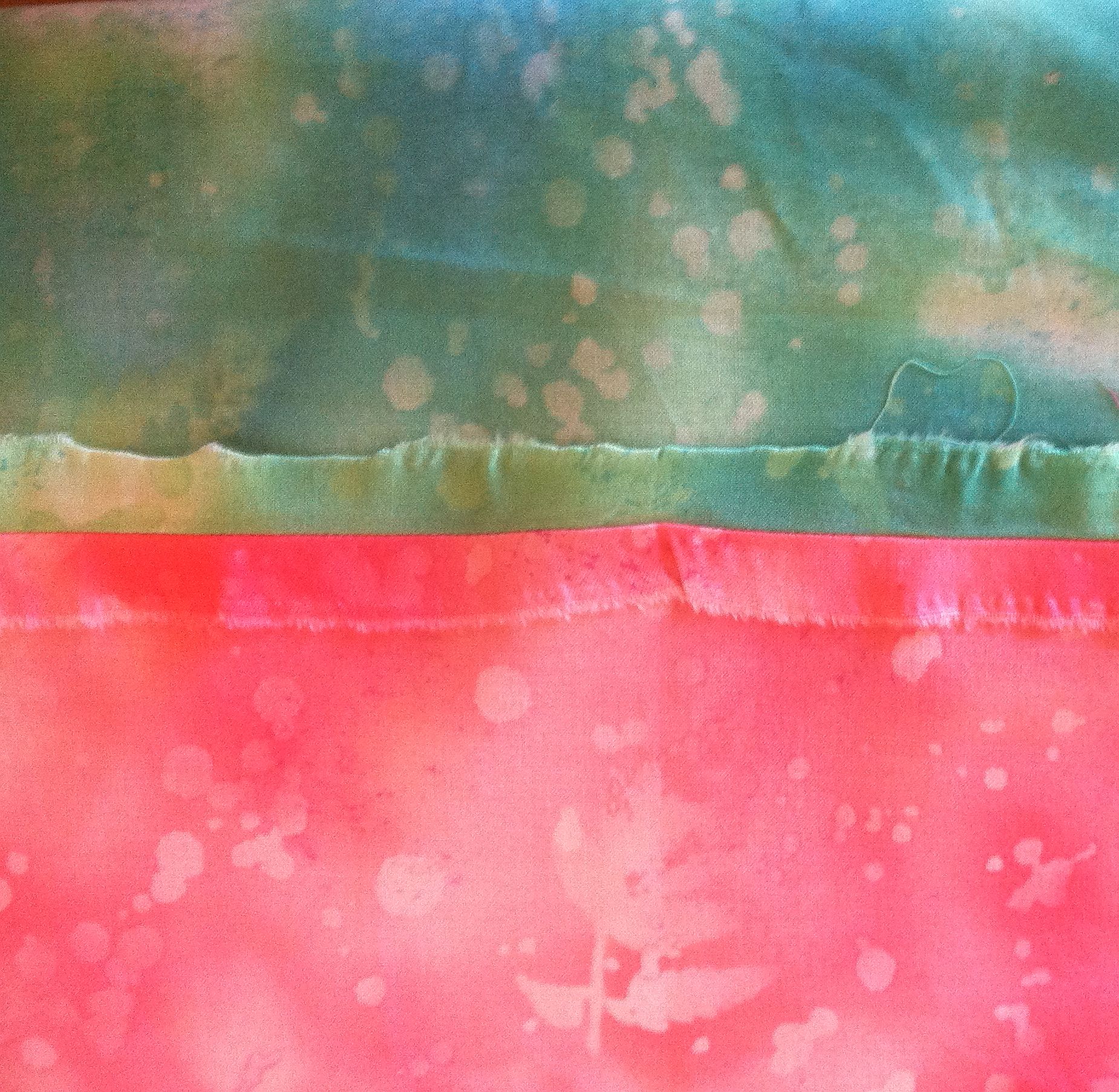
Larger Seam AllowanceI don’t mind ripping the backing pieces because it’s easier than rotary cutting, especially for long pieces of fabric.

I sew them together using a wide half-inch seam allowance and press the seams open.

This quilt back will have two seams just like the picture shown at left.

Now the backing is large enough and I will use the excess pink fabric for the binding.
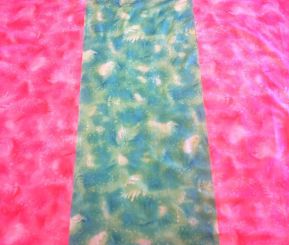
Prepared BackingReady to Baste

The top is laid out on top of the backing to get an idea of how much extra there will be.

My next blog entry will be about basting this quilt using my new favorite tool: Pinmoors!