Learn to quilt two innovative designs with your walking foot: decorative-stitch wonky squares and decorative-stitch spiral maze. Watch & learn below:
This week’s featured quilt comes from my book, The Ultimate Guide to Machine Quilting that I co-authored with Angela Walters. You can grab the PDF download to see how I quilted Fractured Squares using only walking foot motifs.
Bonus Walking Foot Quilting Video
In case you missed it, check out the pre-cursor video showing how to quilt the exact same designs using regular straight-line quilting, below:
Please let me know how you are liking these videos – I only have a few more left to share!
This week’s machine quilting tutorial takes the traditional paisley design and modernizes it by adding filler motifs inside the design! It’s a fun way to change things up. Click the image below to watch on my YouTube channel:
Make This Quilt!
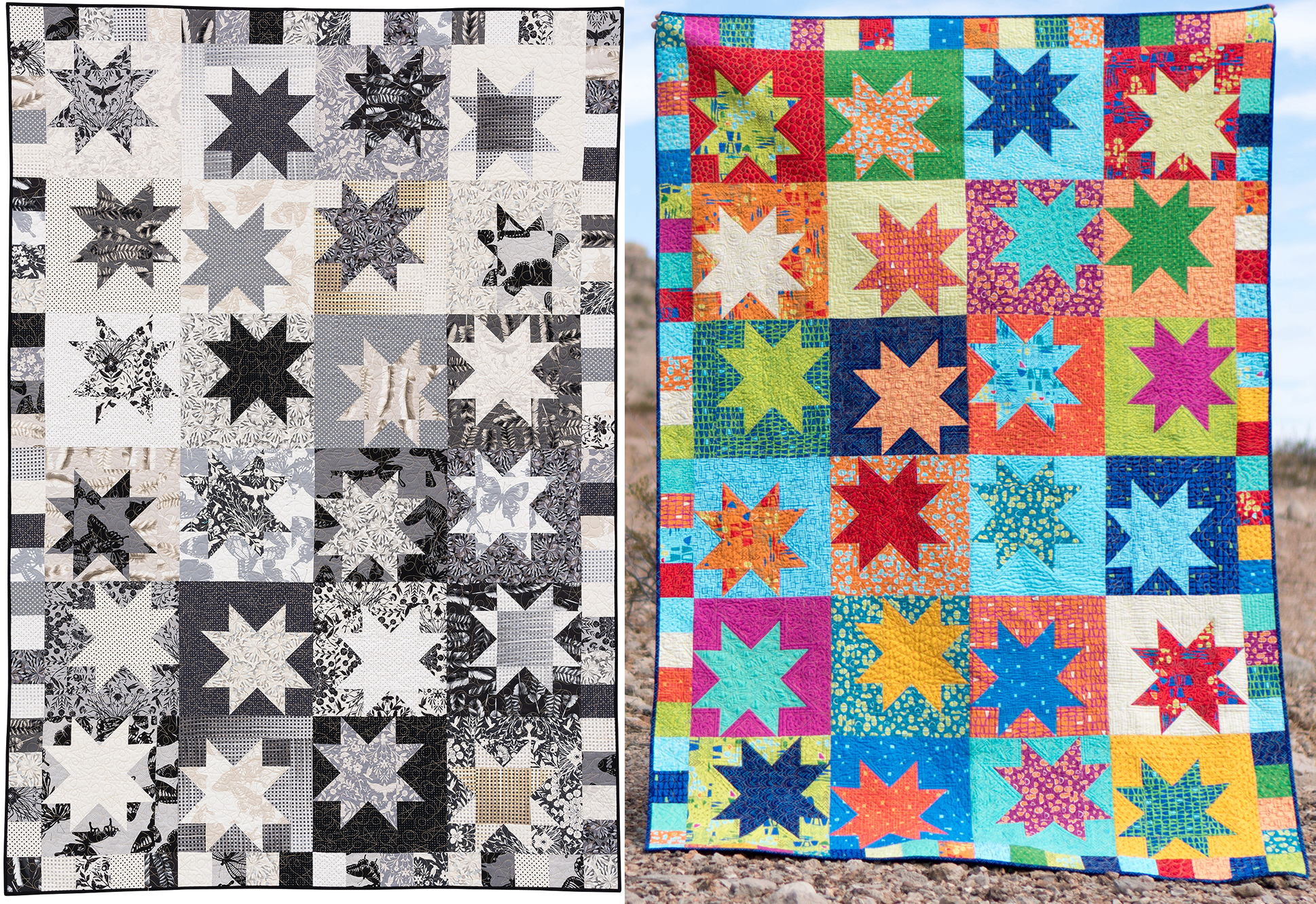
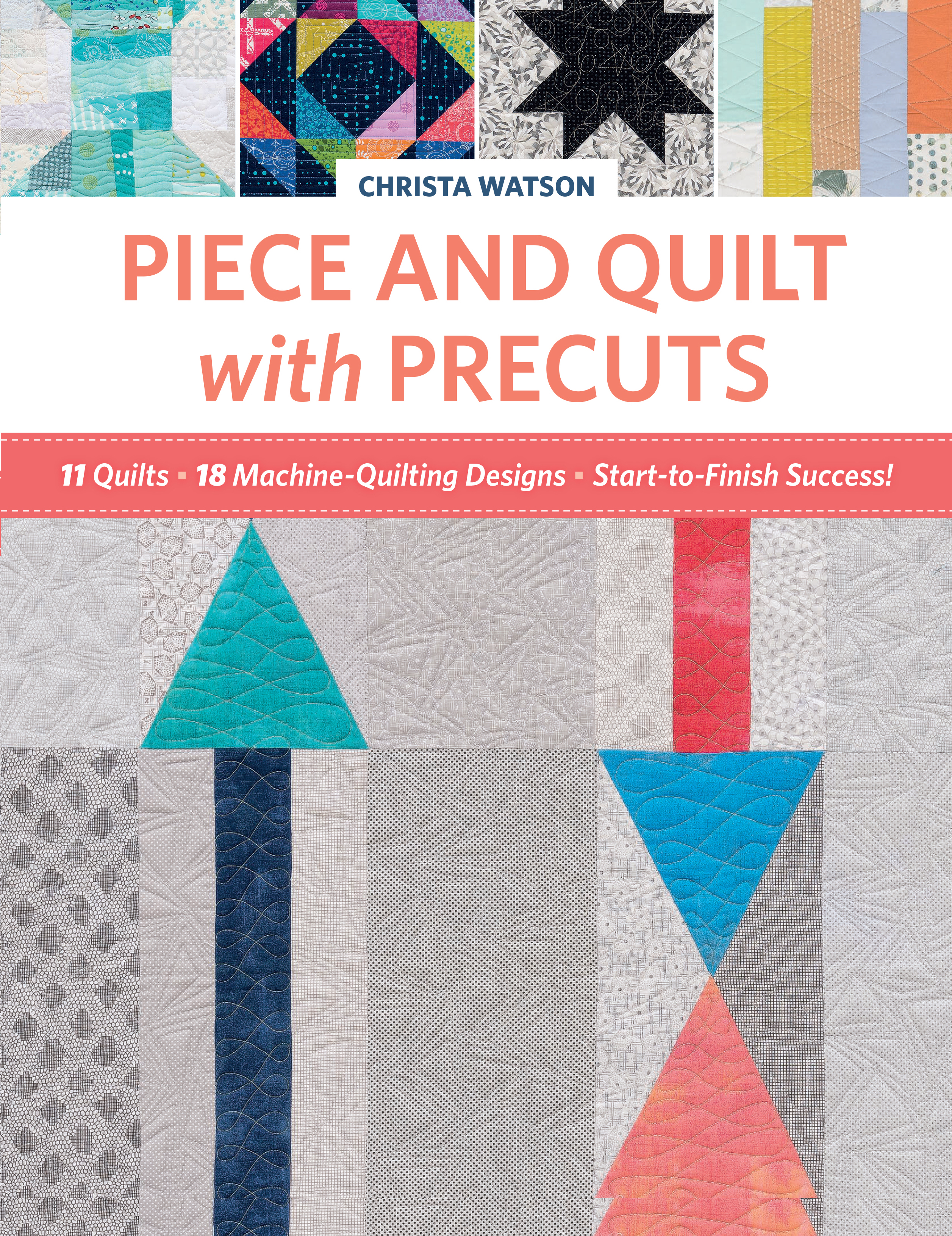
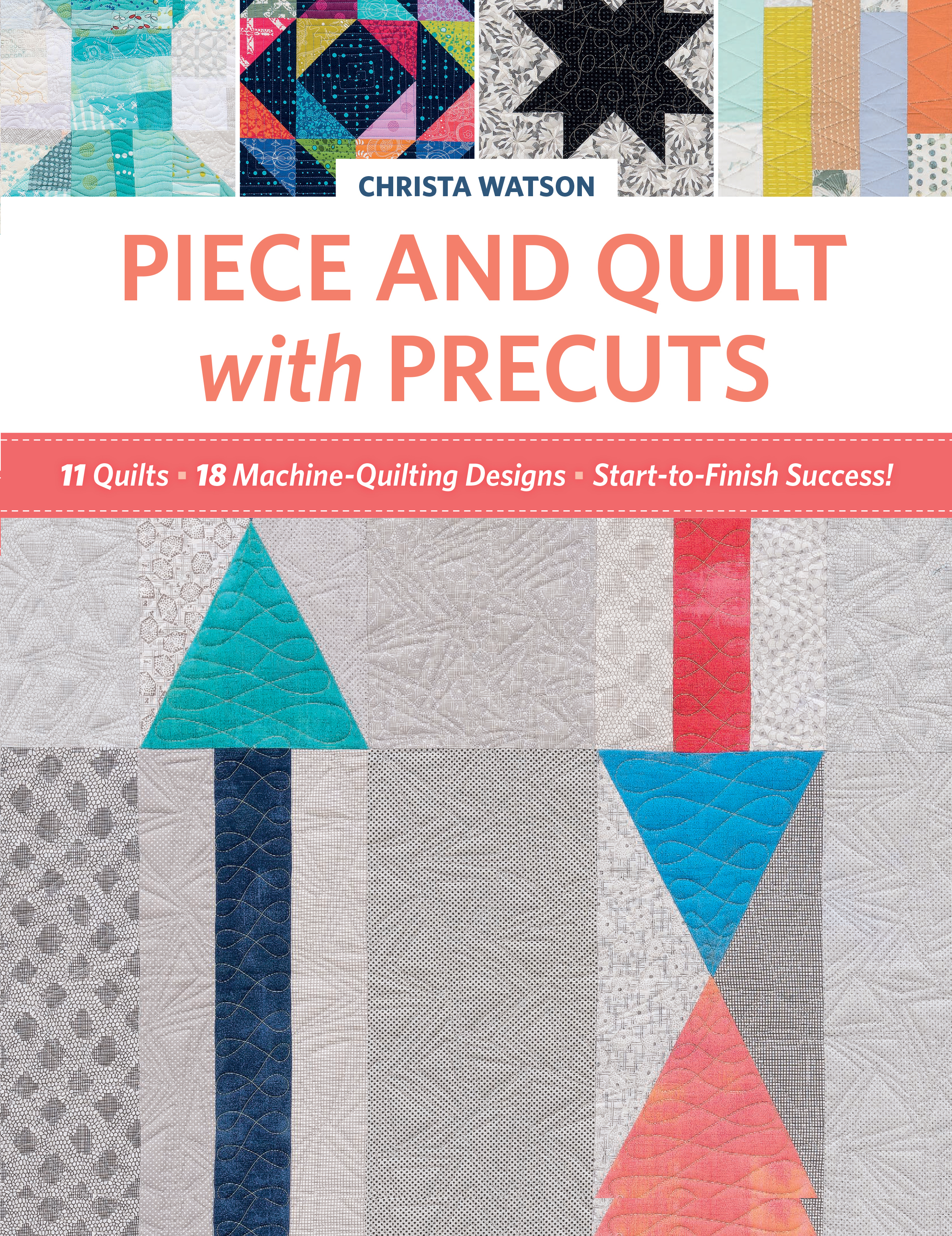
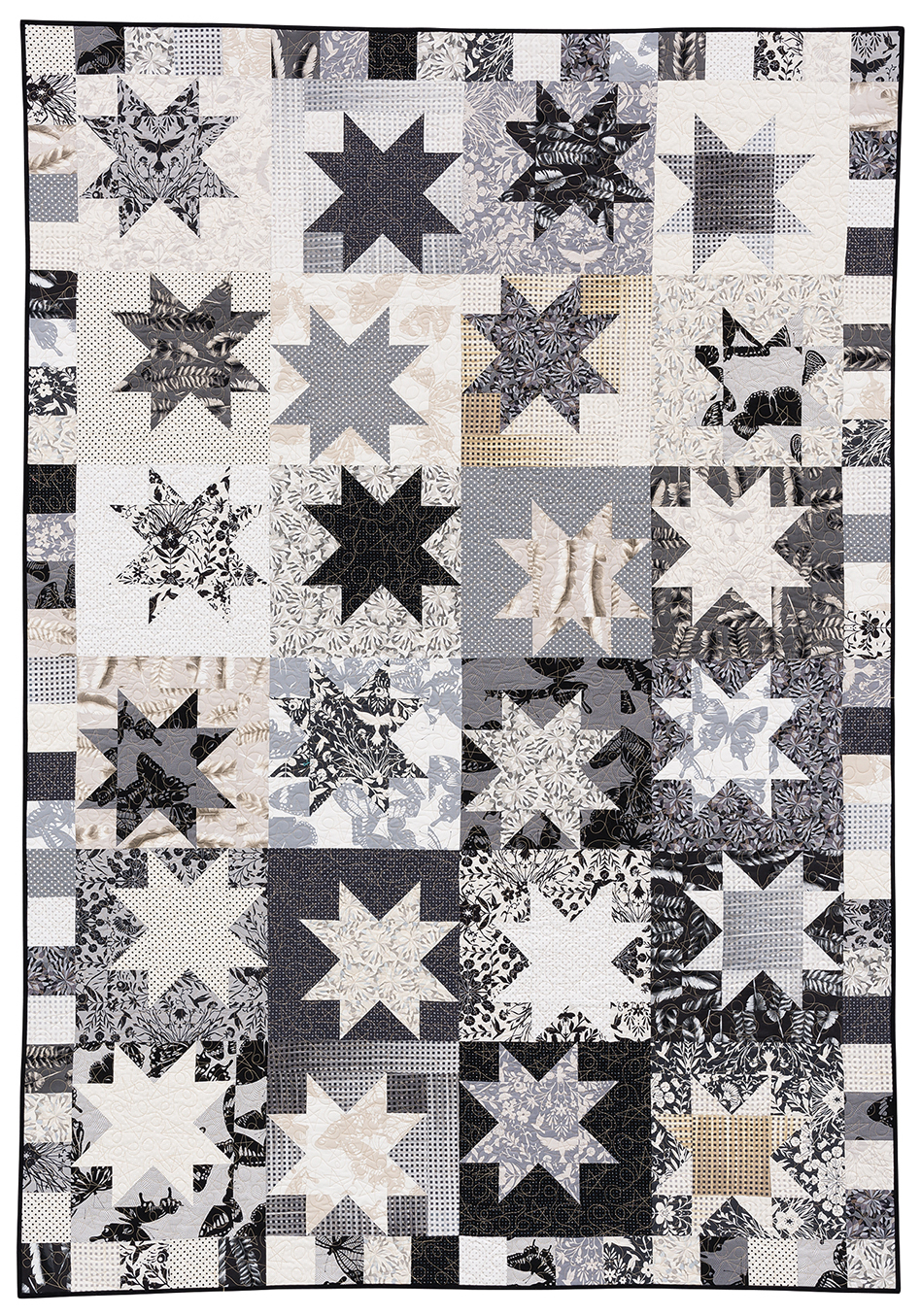
Throughout this series, I’ve loved showing how I quilted these designs on actual, real quilts. The quilt shown in the video behind me is called Star Struck and it’s fun to see how different it looks depending on the fabrics that are chosen. Complete, start to finish instructions for this pattern are included in my book, Piece and Quilt with Precuts!
I’m almost finished sharing all of the designs from this series. If you’ve missed any of them be sure to check out the complete play list for hours and hours of viewing pleasure!
For this week’s tutorial we are back in business with free-motion quilting! This design, Hourglass, is basically a geometric and modern version of an earlier design: Cursive L’s. The technique of these two designs is very similar, so if you got one down, you can easily do the other!
Dot n’ Dash Quilt – Pick Up Piece and Quilt With Precuts
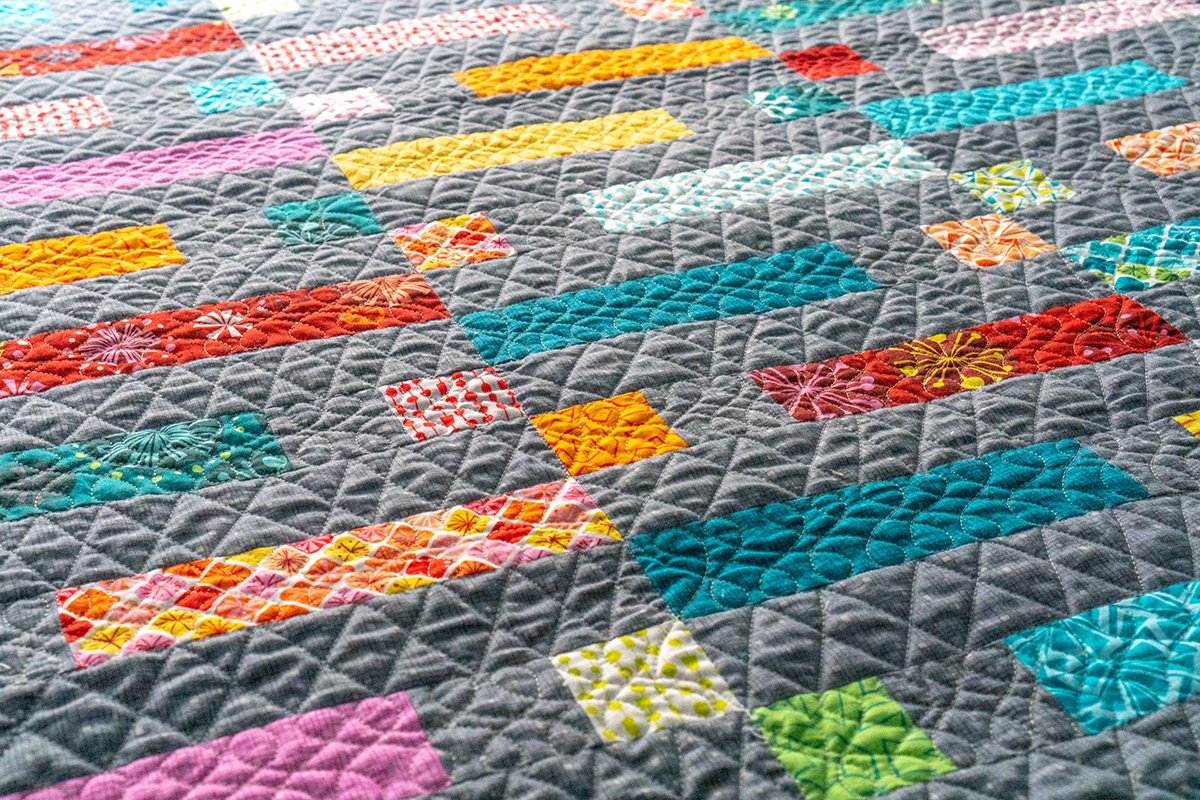
I admit I haven’t actually made a full-size quilt with Hourglass – that is on my bucket list! However, I’ve quilted a similar design on Dot n’ Dash, the featured quilt of this week. I call this a my Modern Jelly Roll Quilt since it can just be made with strips from a jelly roll! If you are interested in making this quilt for yourself, the original version of the pattern comes from my book, Piece and Quilt with Precuts.
Are you excited to make Daisy Chain along with me? See below for the complete quilt along schedule. Although this event will be quickly paced, I’ll leave these blog posts up indefinitely so you can work on your quilt any time you wish. I’m here to help you each step of the way!
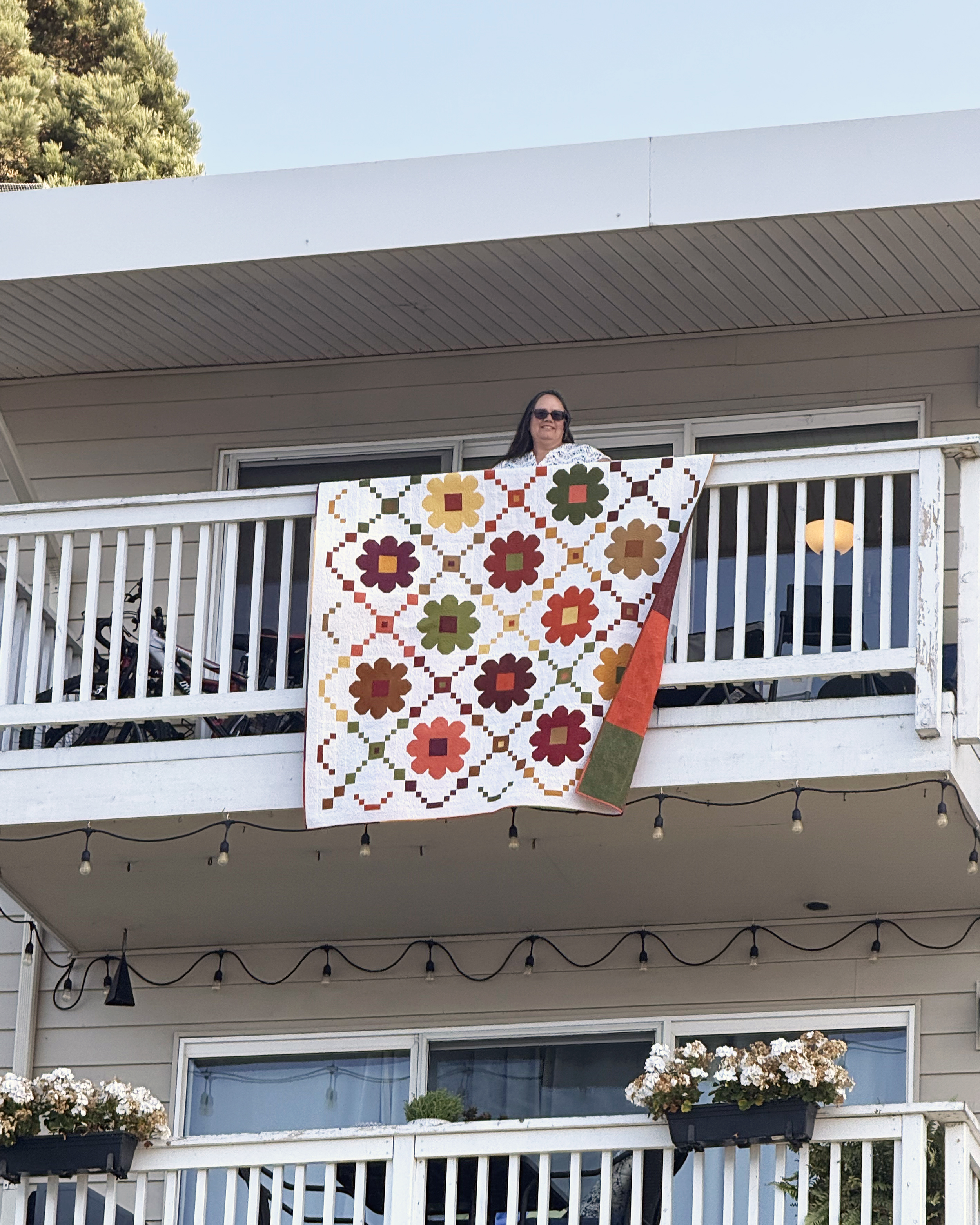
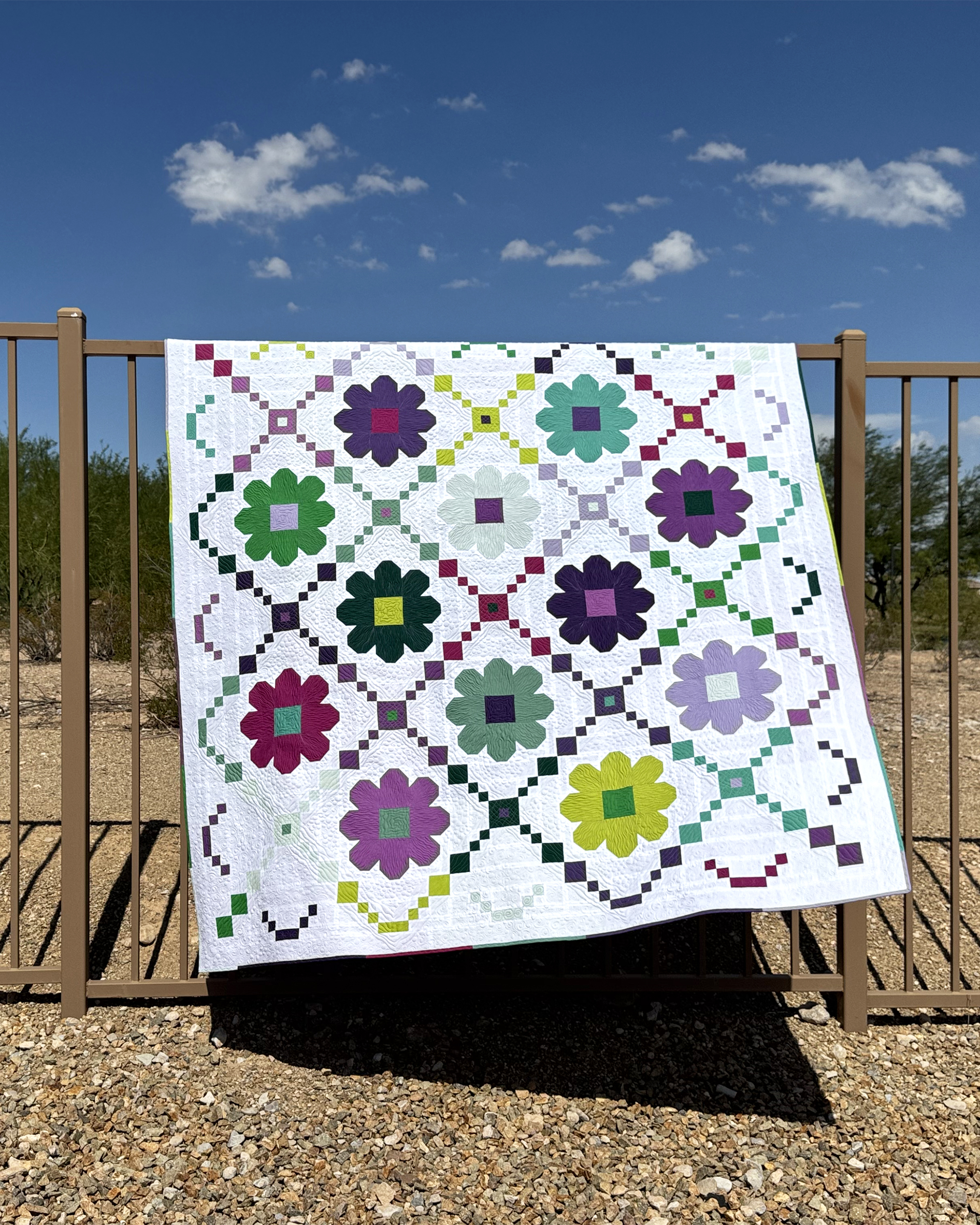
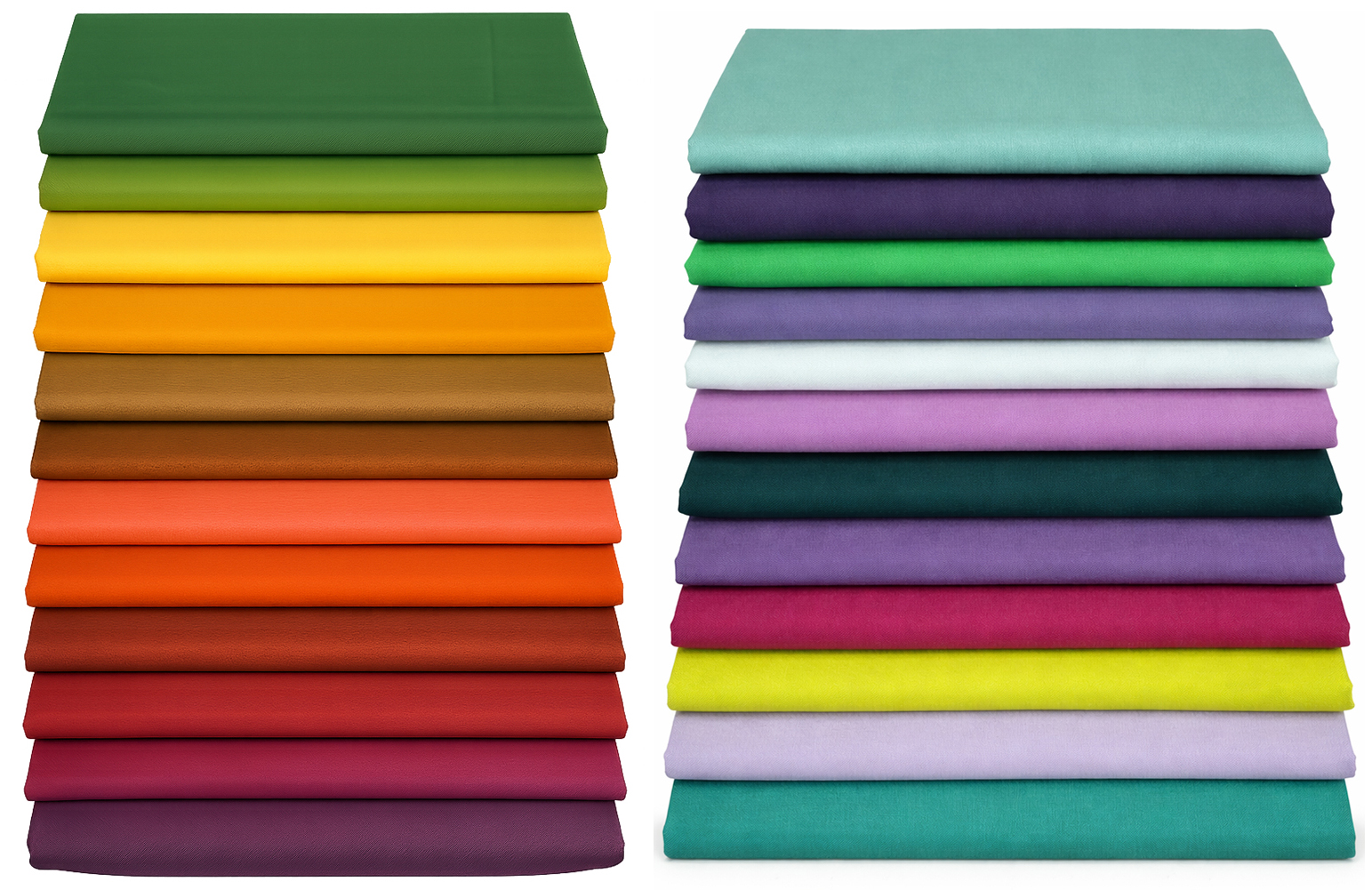
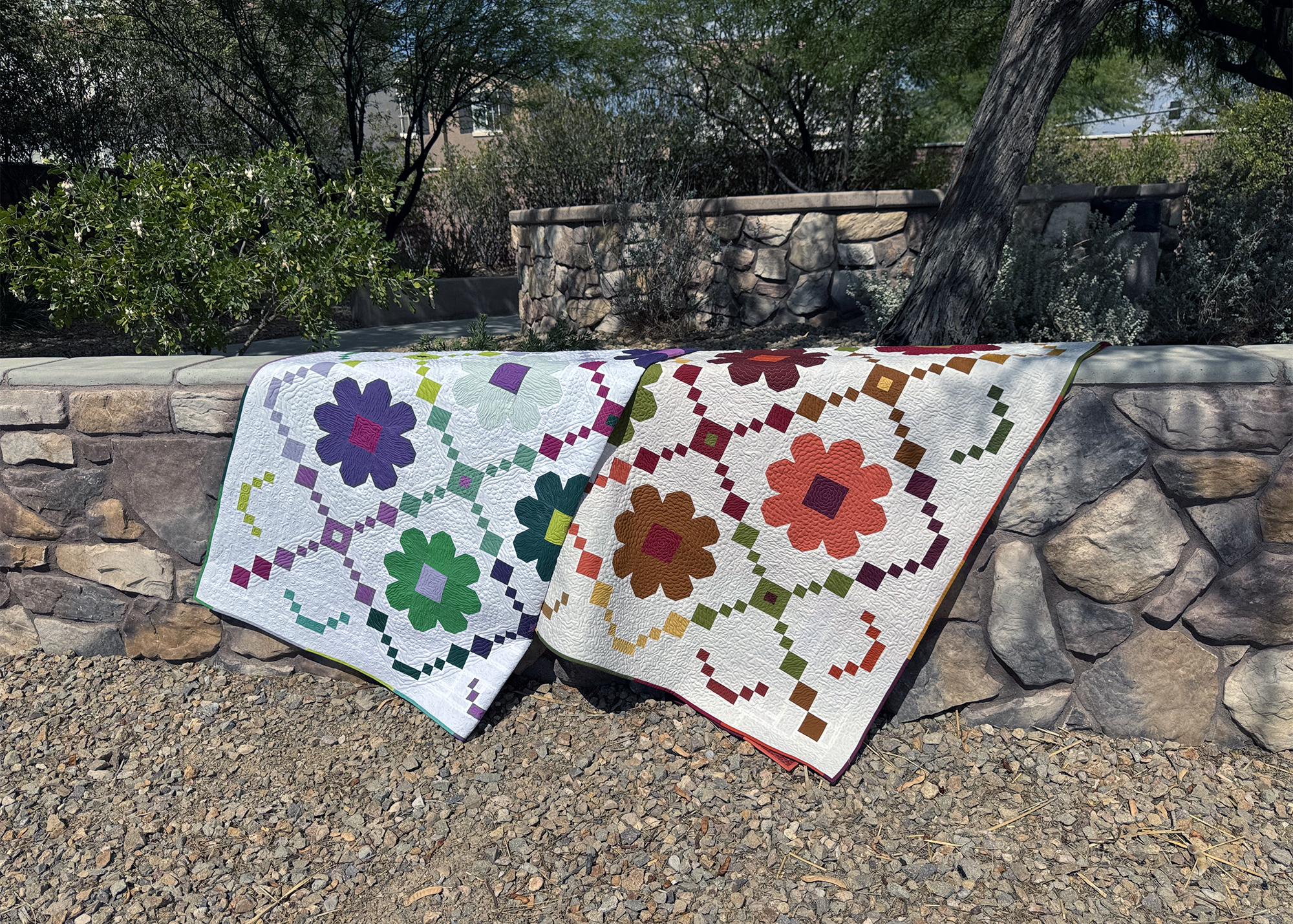
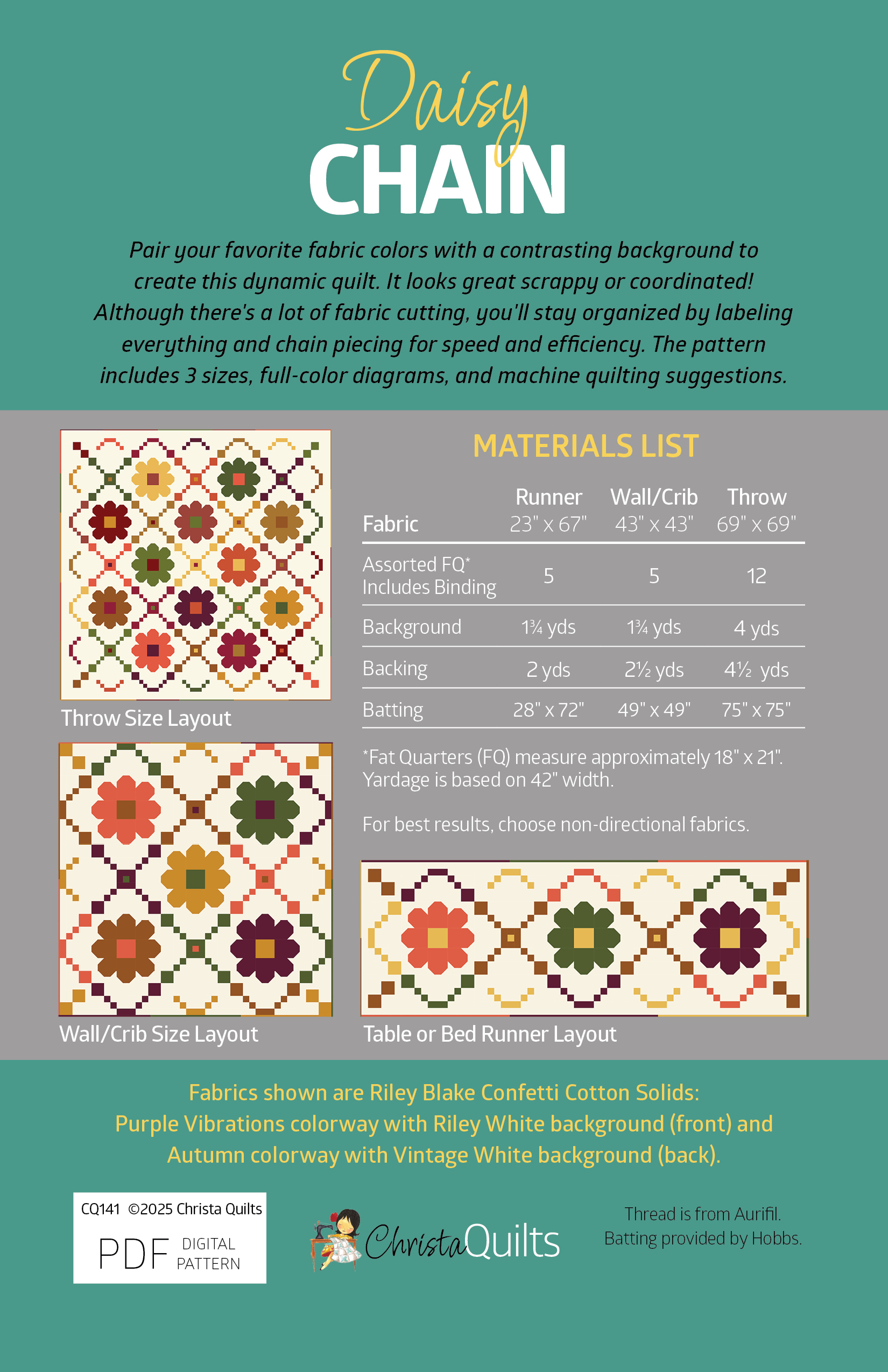
I made both versions of this quilt using fat quarters of Riley Blake Designs’ Confetti Cotton solids. The throw sizes shown here are made with 12 fat quarters plus 4 yards background, and the leftovers form a scrappy binding. Color selection is super easy for this quilt – just grab your favorite fabrics and pair them up with a highly contrasting background and you are good to go!!
I used fat quarters in the Autumn & Purple Vibrations Colorways for my Quilts
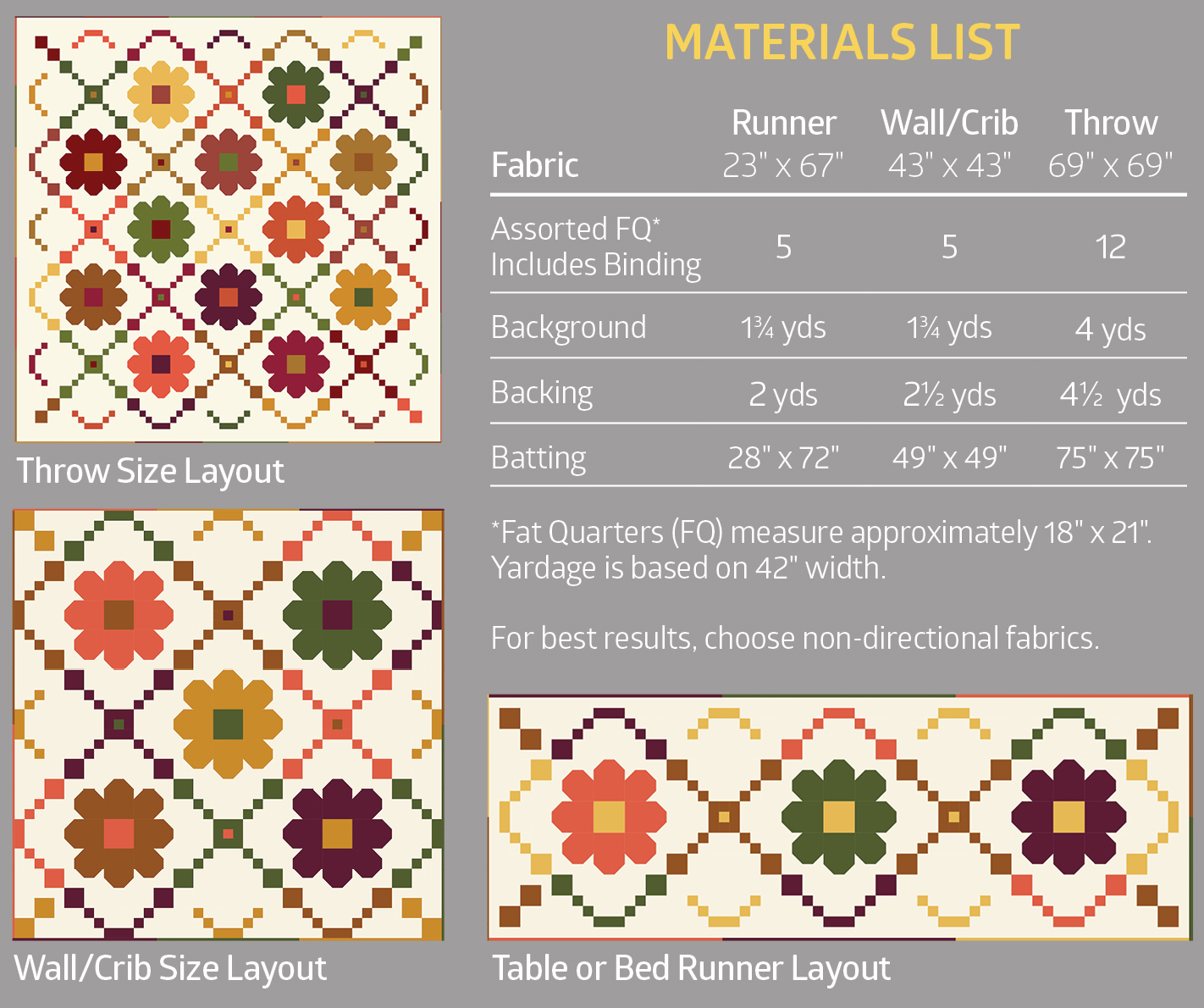
Here’s a the complete supply list so you can make this quilt in 3 different sizes. It’s a LOT of cutting, but it’s all just straight seams with traditional piecing techniques. So there’s no specialty rulers required. I do recommend getting some small label stickers though so you can label all your pieces to stay organized.
Quilt Along Schedule
Throughout the quilt along I will refer you to specific parts of the pattern and will share lots of in progress pics and bonus tips. When it’s time to machine quilt, I’m going to share 2 bonus videos showing how I quilted each version. Hopefully this will inspire you get it done!! After all, machine quilting is my favorite part of the entire process, and there’s lots of room for experimentation and play in this quilt.
Feb 27 – Week 1: Cutting
March 6 – Week 2: Sewing the Daisy Blocks
March 13 – Week 3: Sewing the Chain Blocks
March 20 – Week 4: Sewing the Quilt Top
March 27 – Week 5: Backing & Basting
April 3 – Week 6: Quilting Option #1 – With Bonus Video Tutorial!!
April 10 – Week 7: Quilting Option #2 – With Bonus Video Tutorial!!
April 17 – Week 8: Binding to Finish
Machine Quilting in progress – can’t wait to share more details on how I quilted them!!
I’m happy to offer lots of support during this quilt along. You can share pics in my ChristaQuilts group on Facebook or leave a comment here on the blog with any questions you have. You can also share on social media using #daisychainquilt. I can’t wait to see how you make this your own!!
Want to level up your walking foot quilting game? Try combining straight lines and decorative stitches to create unique motifs that are super easy to do! Click below to watch my latest video tutorial and be sure to leave a comment letting me know what you think!
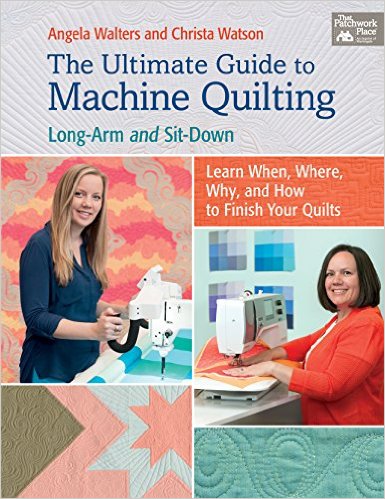
Get My Book – The Ultimate Guide to Machine Quilting
In the second book I ever wrote – The Ultimate Guide to Machine Quilting – I first explored this idea of combining straight lines and decorative stitches. The book itself includes 10 patterns and 20 quilts (each pattern is made 2 different ways). It was fun to explore lots of different domestic quilting ideas, while my co-author Angela Walters explored lots of different long arm quilting ideas.
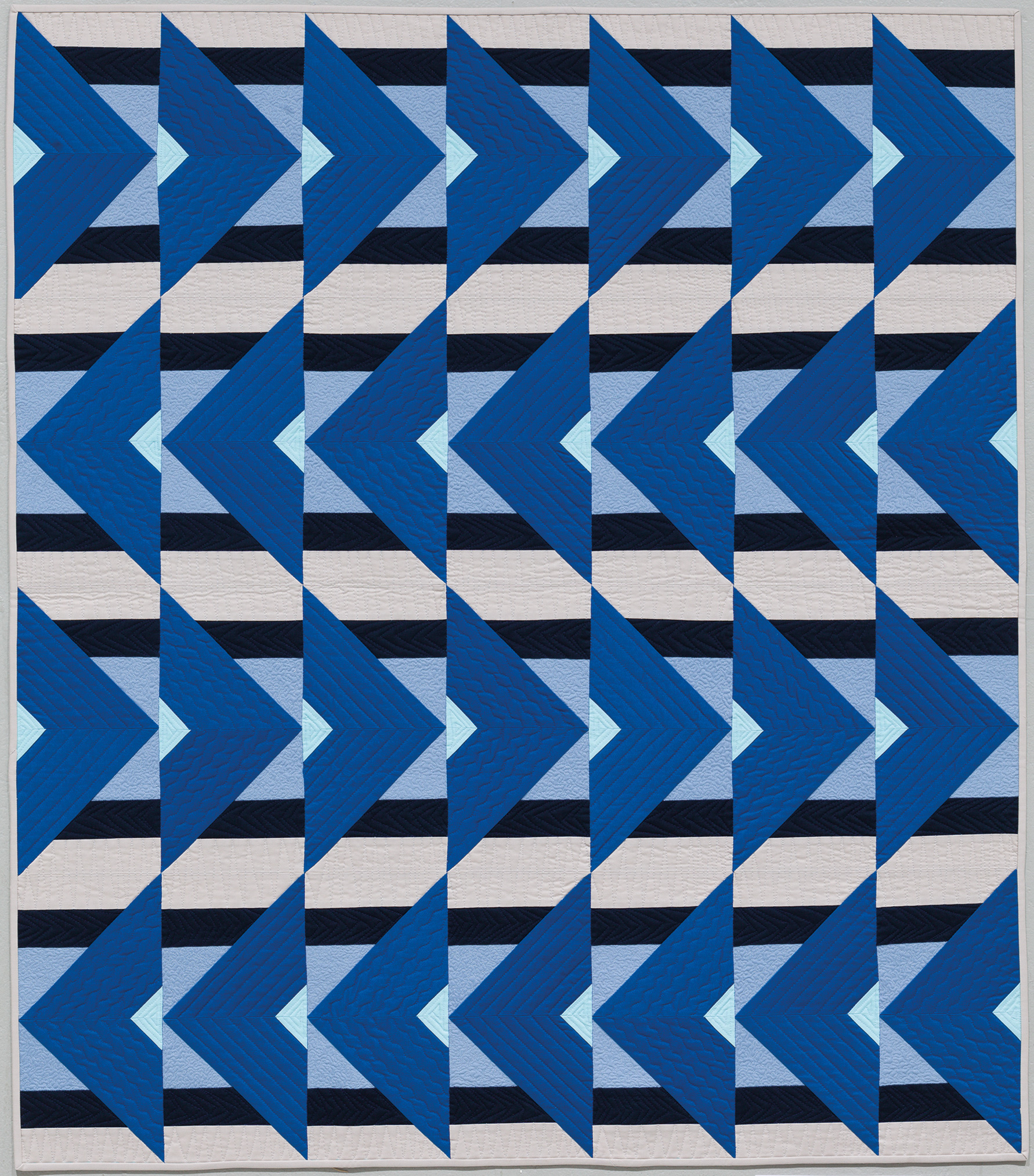
In 2 of the quilts I combined straight lines and decorative stitch ideas in 2 different ways. In the quilt called Directionally Challenged (shown below), I stitched straight lines in every other block, with decorative stitching in the alternate blocks.
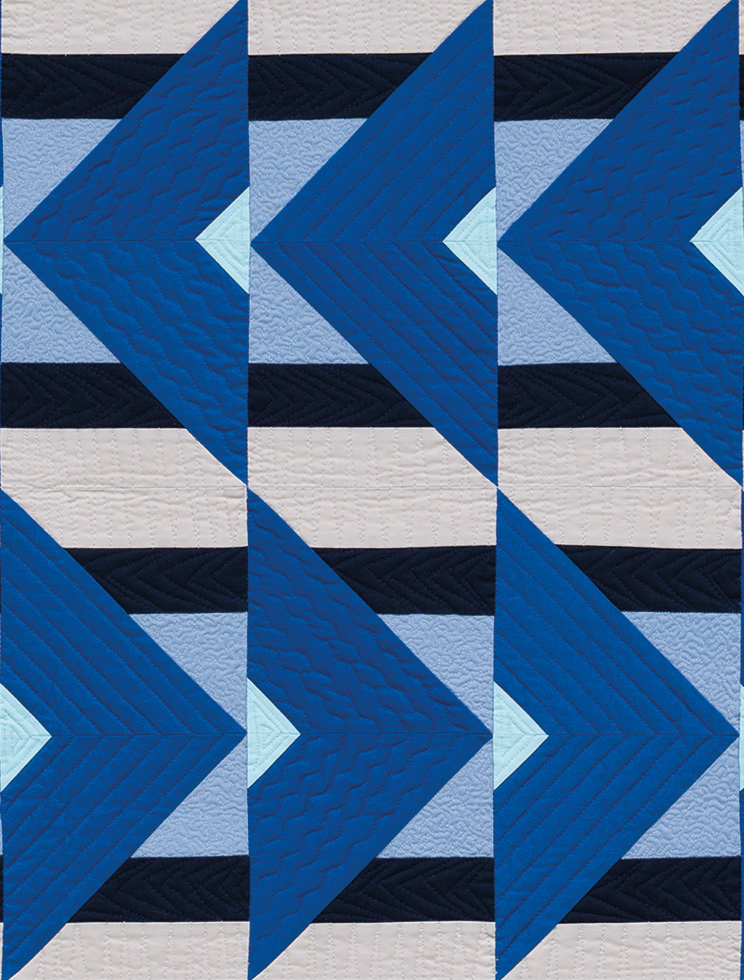
Here’s a closeup image of the quilting so you can see more of the detail:
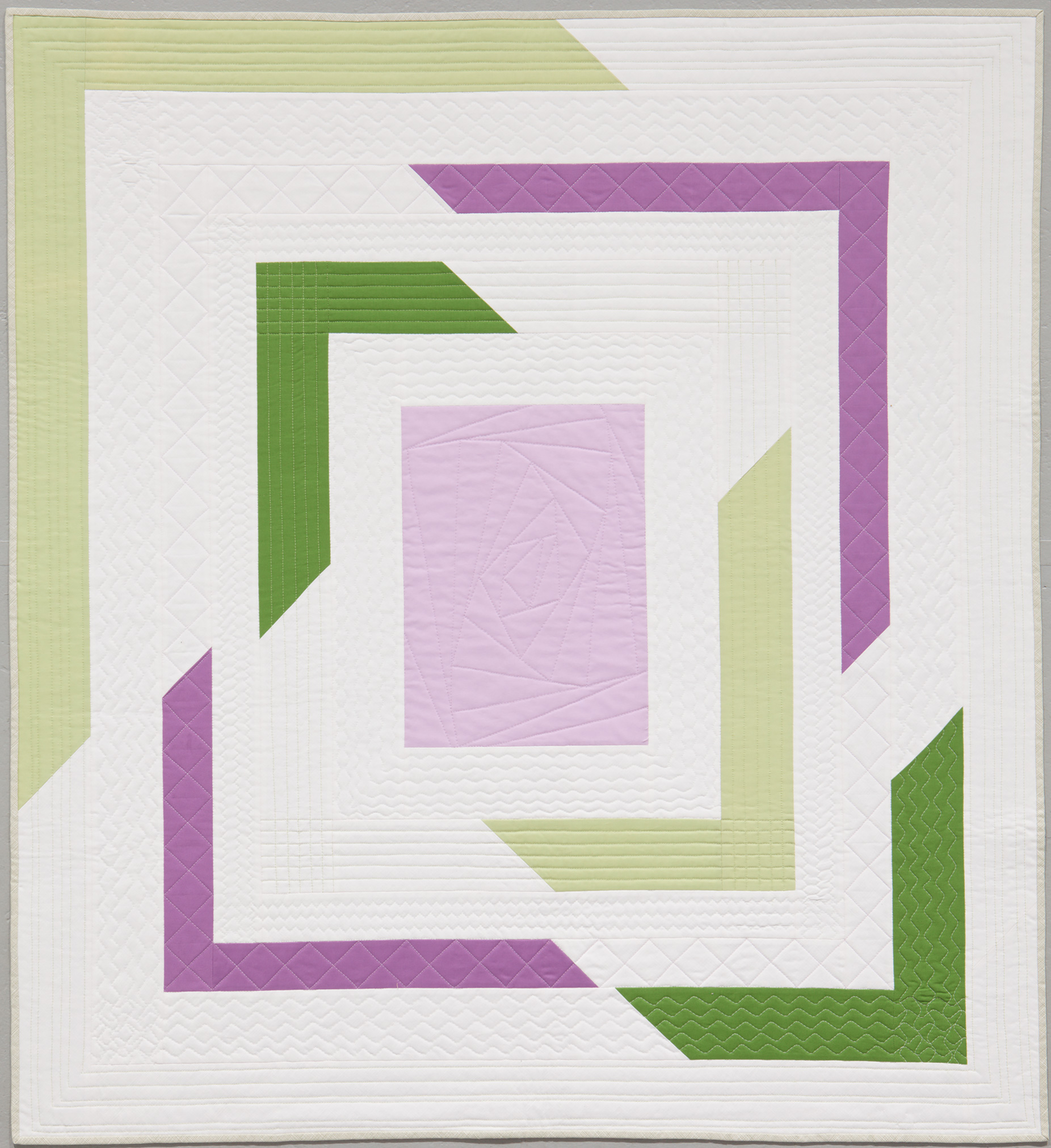
In another quilt, called Fractured Squares, I quilted it like a round robin design, with a different walking foot motif in each part of the quilt.
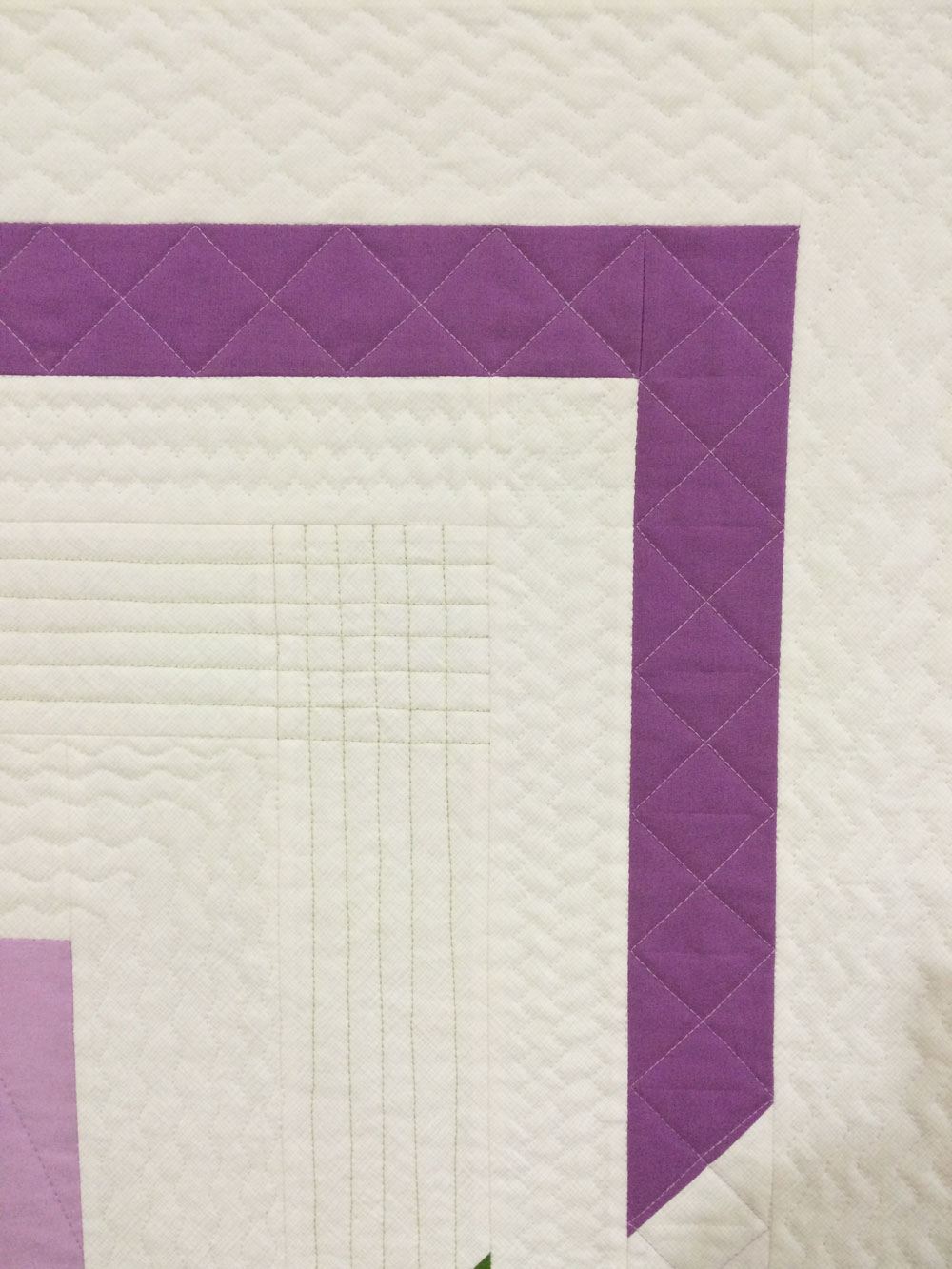
Here’s a closer shot of the quilting detail:
Let me know what you think of combining these two walking foot quilting ideas. It takes just a little bit of planning, but it’s a unique way to stitch and add lots of texture to your quilts!
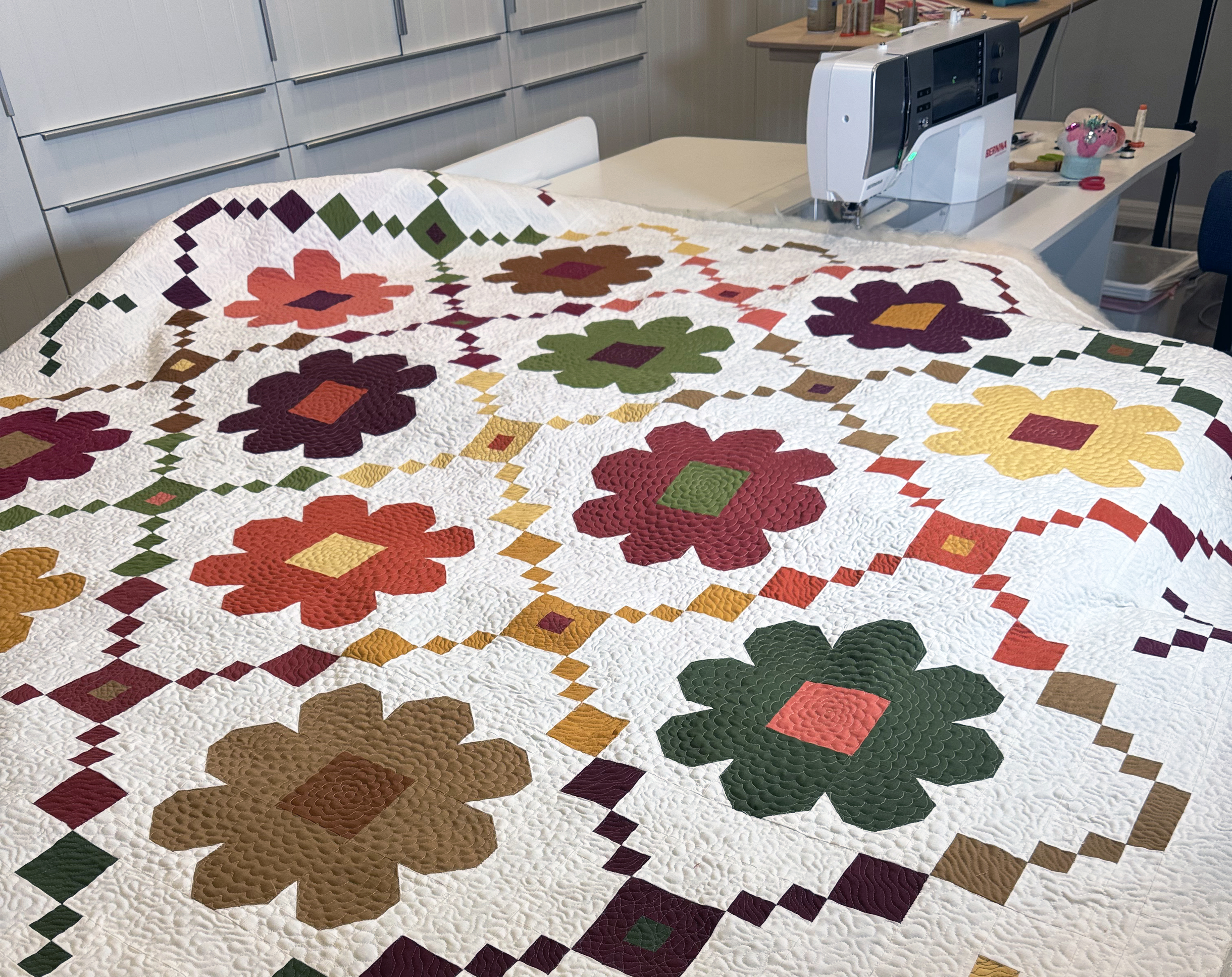
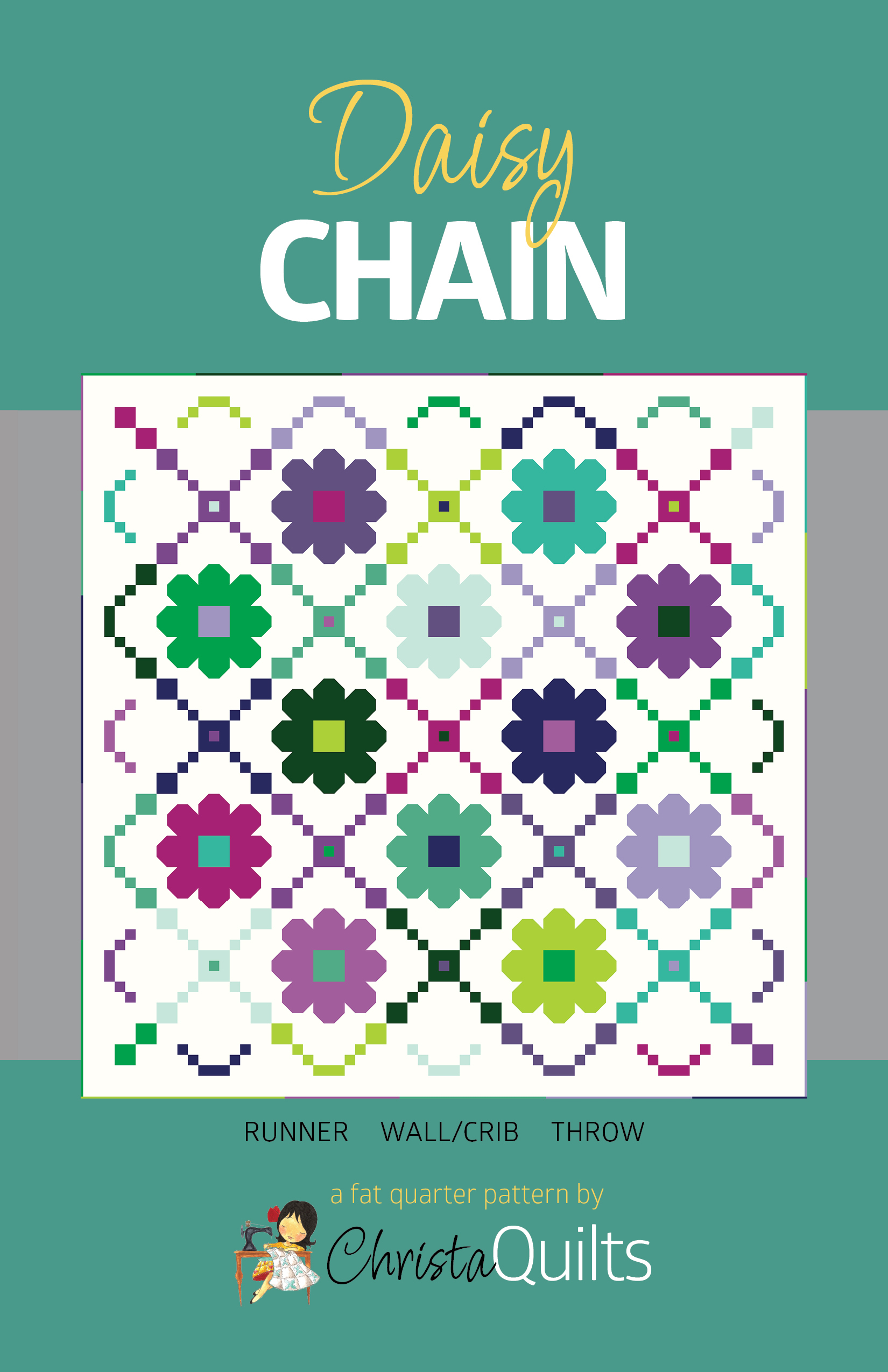
Let’s kick off the new year right with a new pattern and Quilt Along! Check out Daisy Chain, a super fun pieced pattern shown in 2 colorways, with multiple sizes.
It’s been awhile since I’ve made a quilt completely from solids, and I chose to work with Riley Blake Confetti Cotton solids for both colorways. It really shows off the quilting and I’m thrilled with how they turned out.
I thought it would be fun to host a quilt along to make this quilt completely from start to finish. The quilt along will kick off right here on my blog, beginning February 27, 2026 so save the date if you’d like to join in. The quilt along is free – all you need is a copy of the quilt pattern.
Pre-sales of this pattern to quilt shops have been the best I’ve ever seen, so you can always ask for it at your local quilt shop, and any shop owners out there can purchase it wholesale directly through Riley Blake.
Stay tuned for next week where I’ll share a break down of the quilt along schedule, along with a supply list to make this quilt. For now here’s a sneak peek of the back cover, showing the different sizes and alternate colorways.
If you’d like get notified when the quilt along begins, be sure to sign up for email notifications (in the sidebar of this blog post) so you don’t miss a thing! You can also join my ChristaQuilts group on Facebook to share pics of your quilt in progress and to ask questions at any time. I can’t wait to tell you more, so stay tuned!!
For this week’s tutorial, we have two geometric spiral designs: Square and Triangle Spirals. These two free-motion designs can be used separately, or you can combine them in the same quilting plan to give lots of texture to your quilt. If you want to check out this video, click the link below:
Piece and Quilt with Precuts
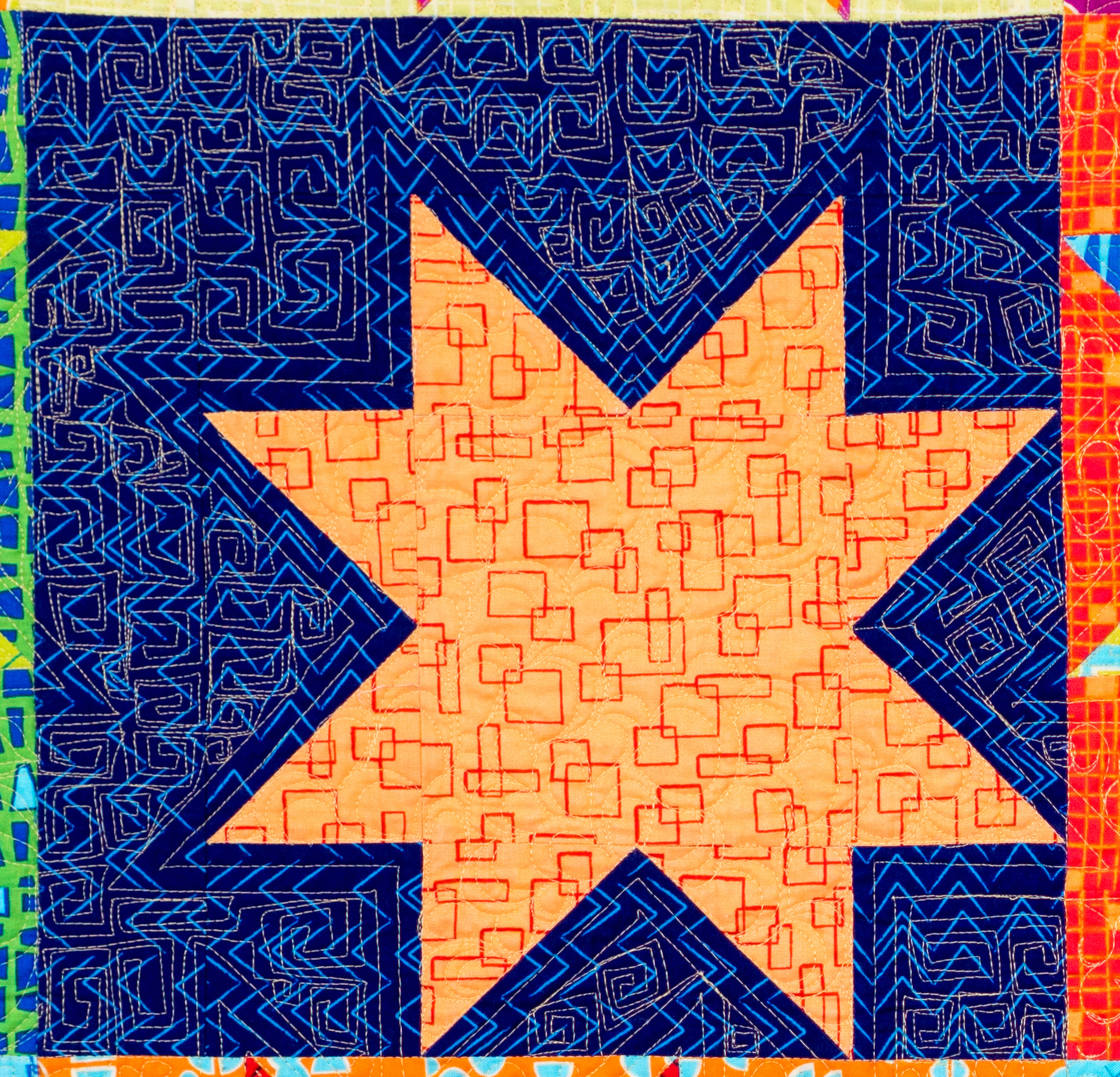
The quilt I feature in this week’s video is called Starstruck. I used both Triangle and Square spirals on this quilt, but you can choose any designs from this series, as the busy pattern for this quilt and fabric choice can help to hide inconsistencies. This quilt comes from my book, Piece and Quilt with Precuts. If you want to get this pattern, as well as 10 other quilt patterns that come with this book, check out the link below for a digital PDF download.
I made the original version of Modern Starstruck with black and white fabrics. I later remade a version with bright, colorful fabric that I designed. You can use either color scheme, or make up your own, using any color combination you want. The pattern works with any choice of fabric, so let me know what you put together!
Bonus Video – Setting Yourself Up for Machine Quilting Success
Just getting into series? I’ve made an introduction video that goes over how to set up your machine and the basics of walking foot and free motion quilting. If you want to get started, check out this video for machine quilting success!
We’re back to walking-foot quilting this week with another decorative stitch design! This time, I’ll teach you how to quilt a round spiral. If you need a refresher on how to stitch the straight-line version, refer all the way back to episode 24. It will go over all the steps needed to start a spiral on your domestic machine. If you want to learn more, click on the video below:
Optical Illusion Quilt Pattern
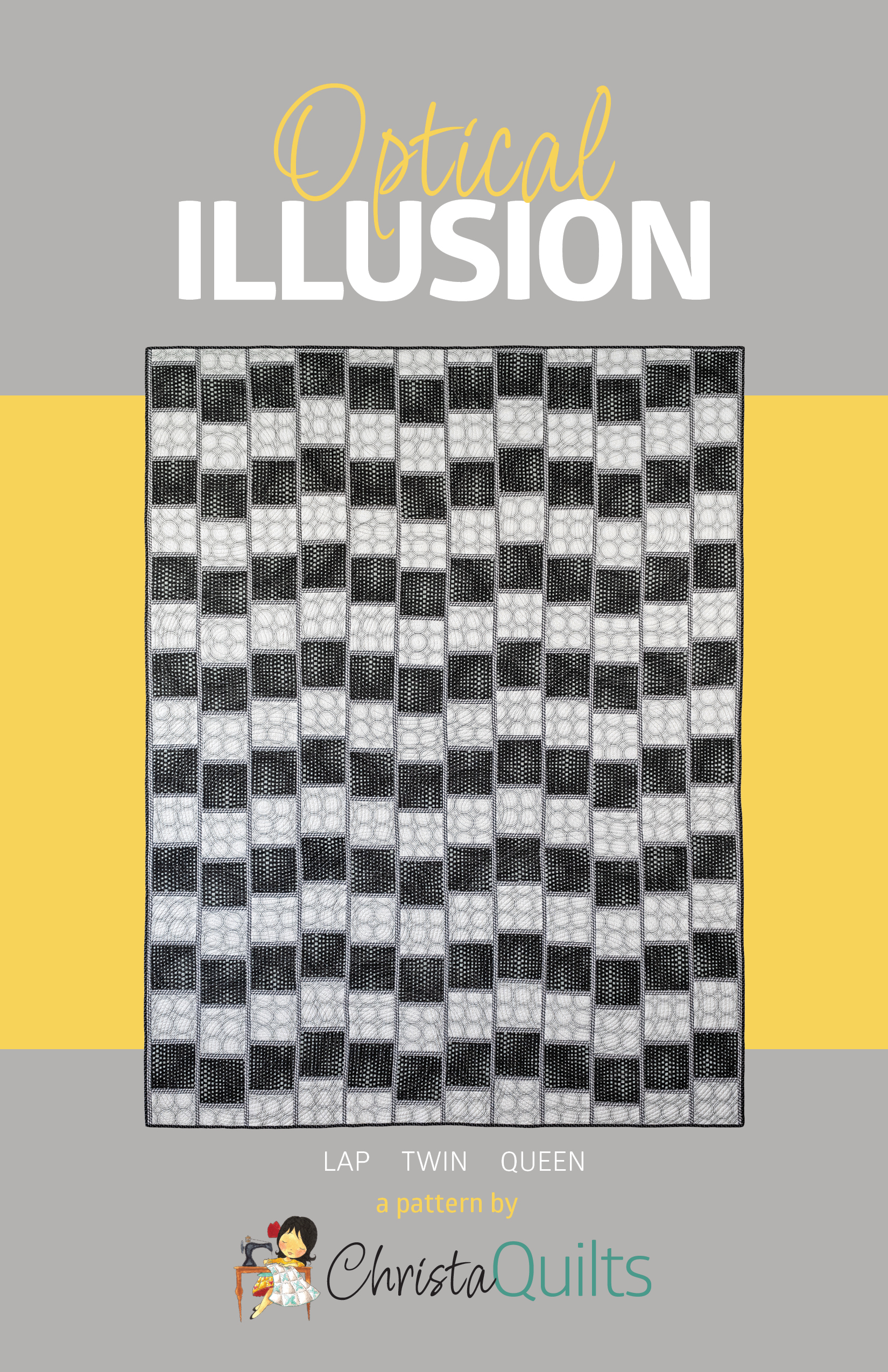
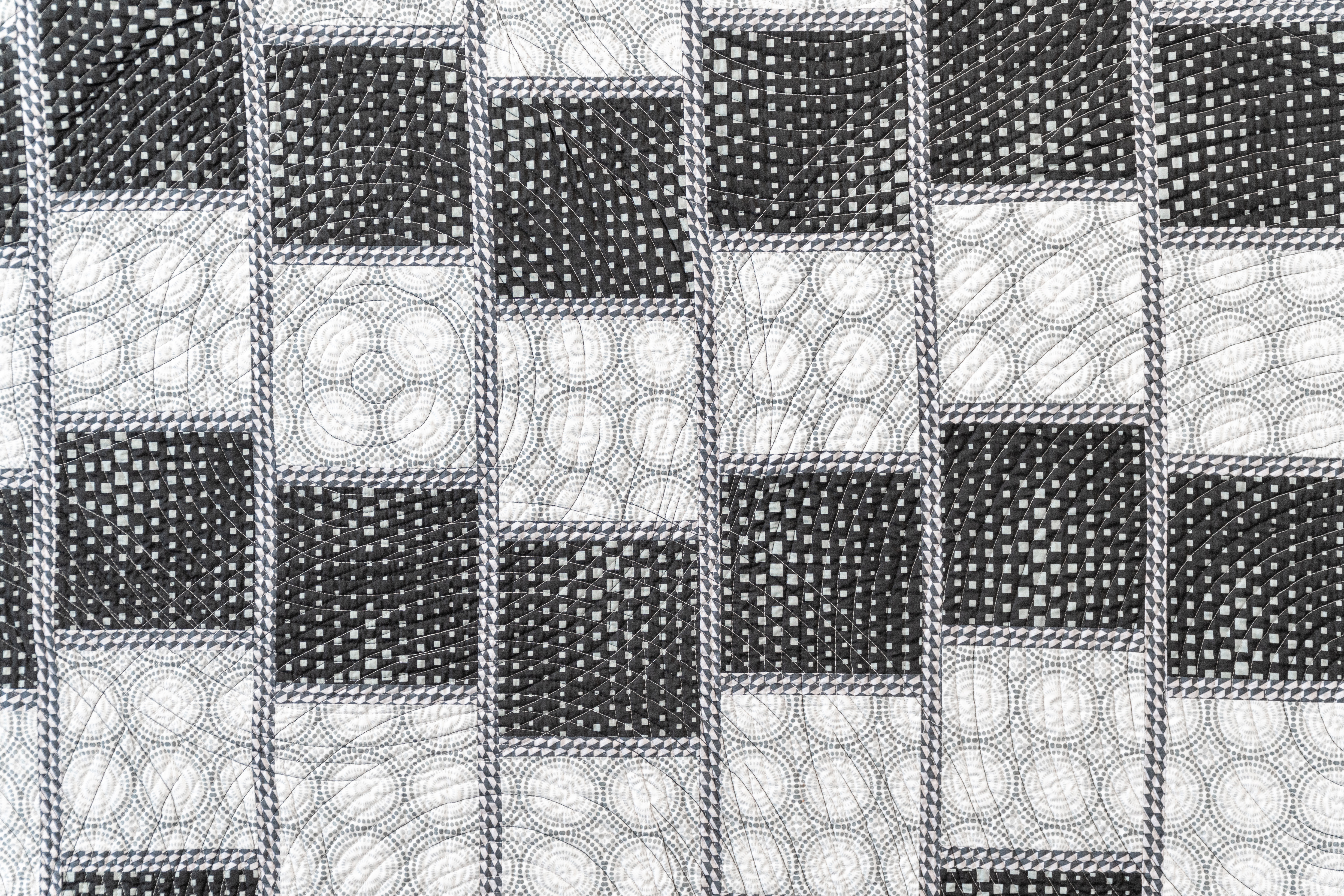
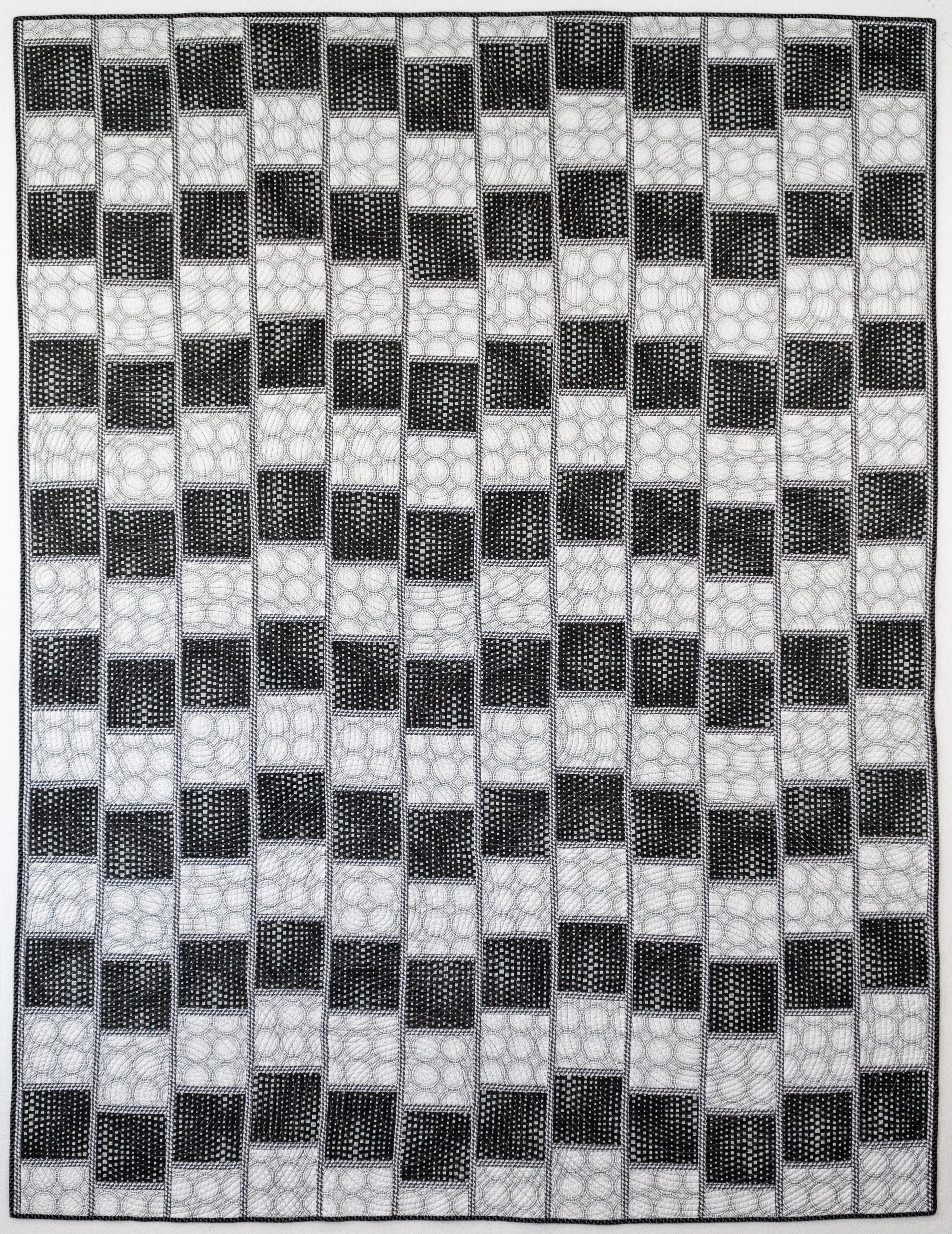
This week’s featured quilt is called Optical Illusion. The pattern is inspired by a real life parallel line optical illusion. Yes, that’s right, the lines in between the black and white blocks are actually straight! To achieve this you just need dark and light colored fabric, with a middle value in between them. I’ve provided a link below to the pattern, so you can make the quilt yourself!
If you want to try quilting decorative spirals on a full-sized quilt, check out the quilt kit for Optical Illusion! The kit includes everything you need to make the B/W version of the quilt with fabrics from one of my fabric collections. Check out the link below:
I haven’t actually quilted decorative round spiral on a full-sized quilt yet, but I use the straight-line version on this quilt. Since you can stitch any straight-line quilting with a decorative stitch, you can use the same quilting plan shown in the pattern.
Bonus Video – Setting Yourself Up for Machine Quilting Success
If you missed the start of this series – don’t worry. I’ve made an introduction video that goes over how to set up your machine and the basics of walking foot and free motion quilting. If you want to get started, check out this video for machine quilting success!
In this week’s episode of 99 Machine Quilting Designs, we’re bringing back swirls with a modified, or “squished” spiral that resembles a woodgrain texture. Refer back to episode 25 for how to quilt a basic swirl design. This might be a helpful refresher, since squished spirals is basically just a variation on this design. It’s a great way to add realistic texture to your quilt, so check out the video below if you want to learn more:
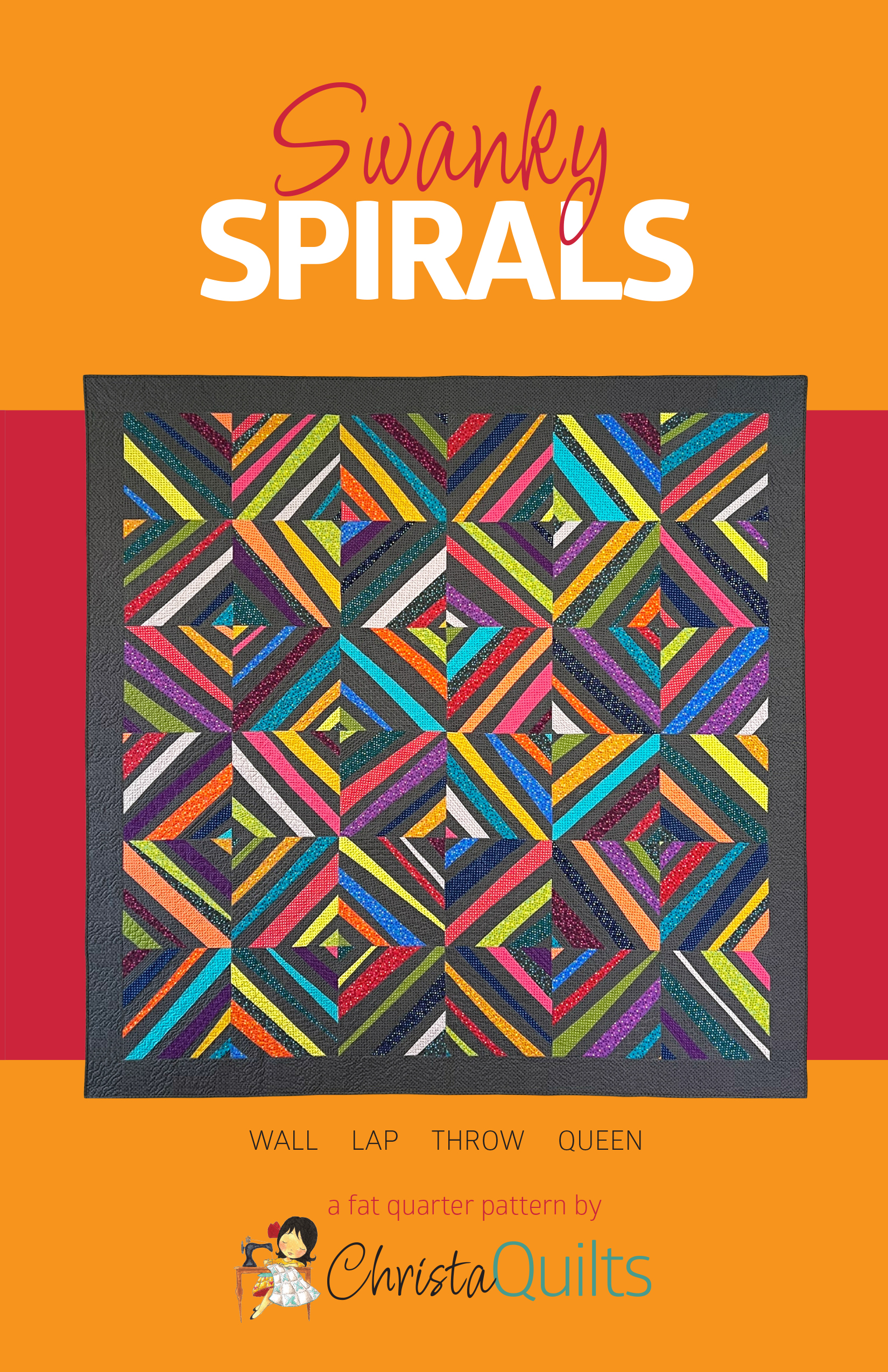
Get the Swanky Spirals Quilt Pattern
This week’s featured quilt is a fun, modern improv quilt called Swanky Spirals. I use this quilt as a design “sampler,” as I’ve quilted every design from 99 Designs on it! As you can see, it’s a versatile pattern that can be quilted with virtually any design you can think of!
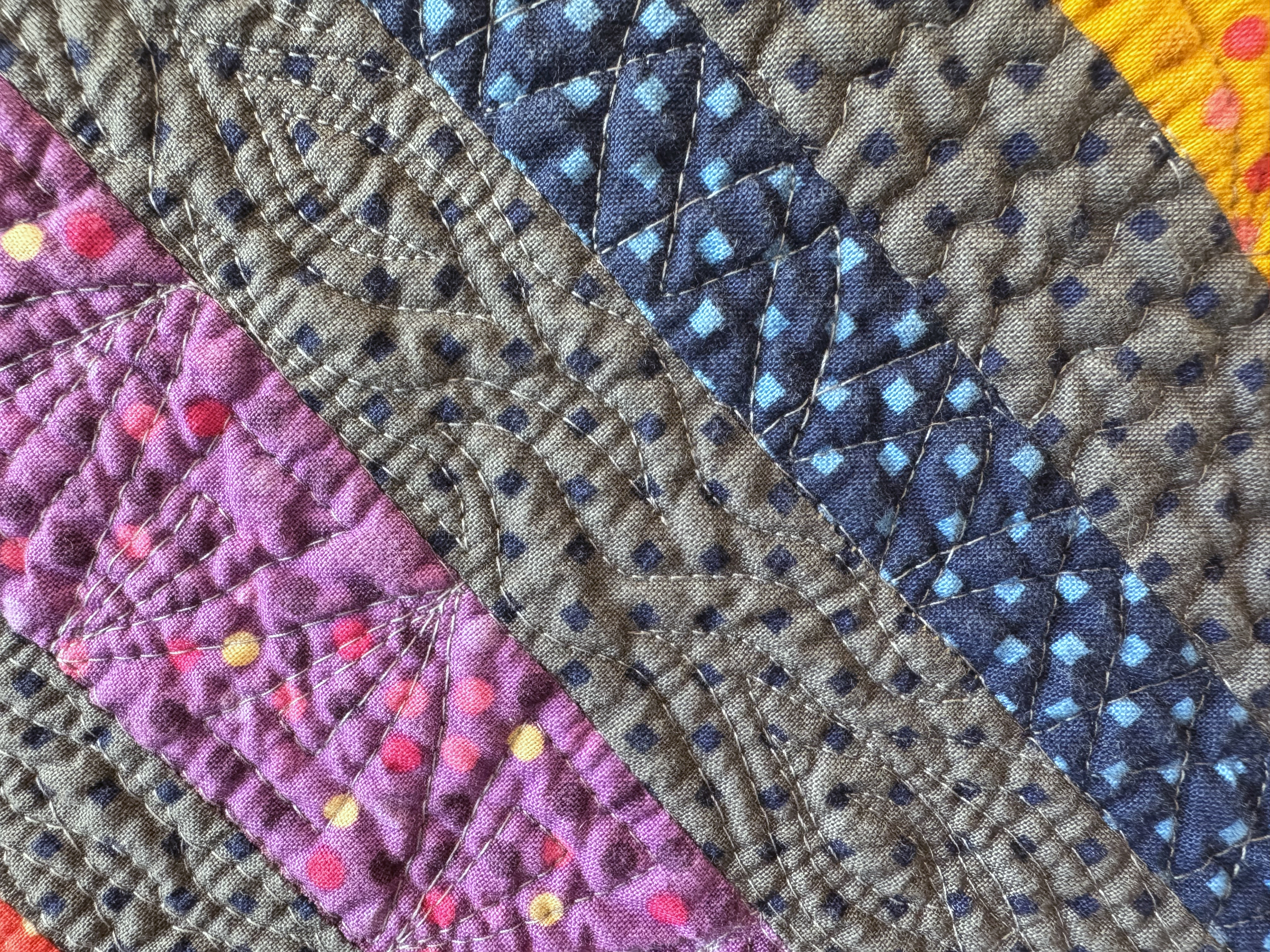
In this detail closeup, you can see where I quilted Squished Spirals. Since I’m using gray thread on gray fabric, the quilting blends right in.
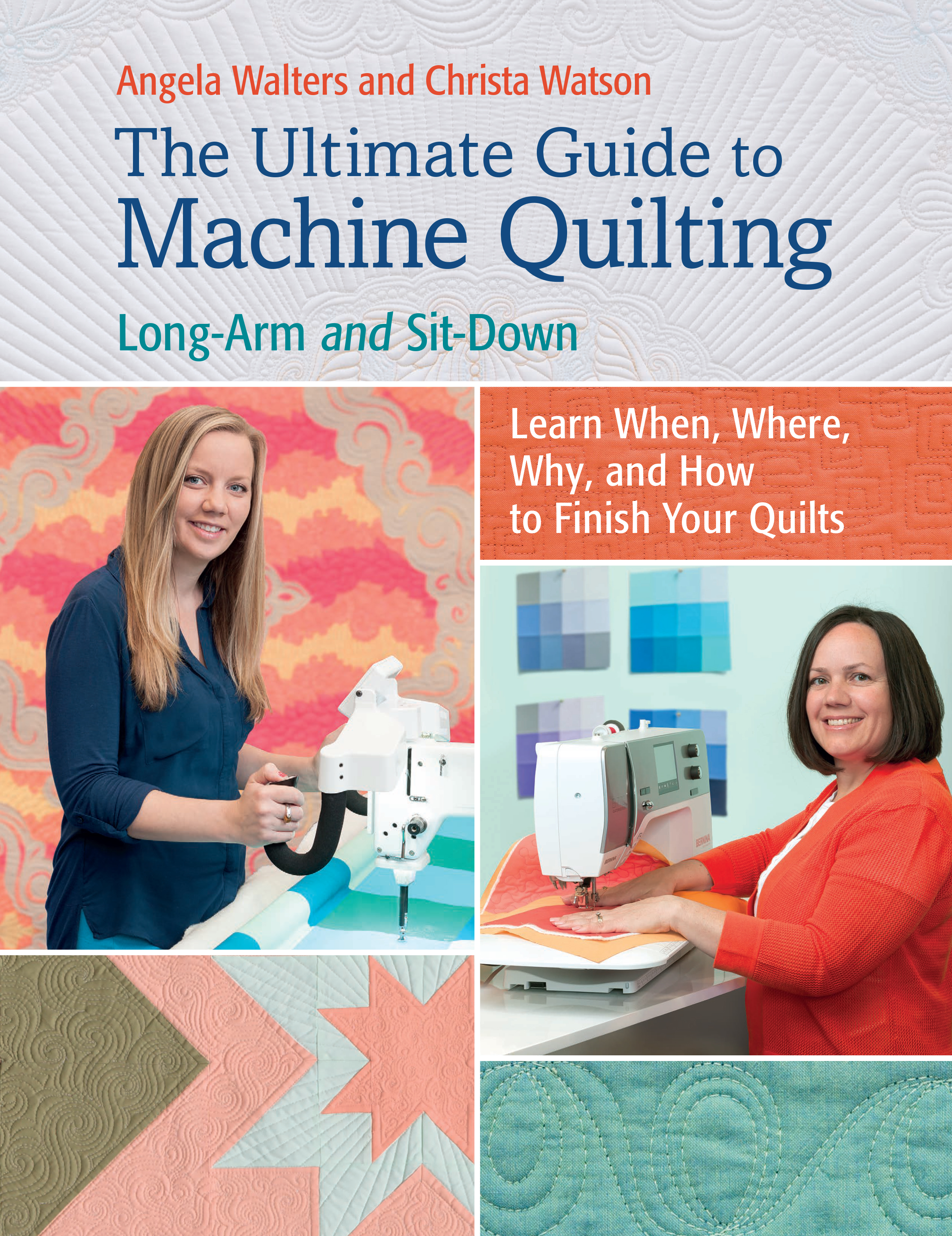
The Ultimate Guide to Machine Quilting
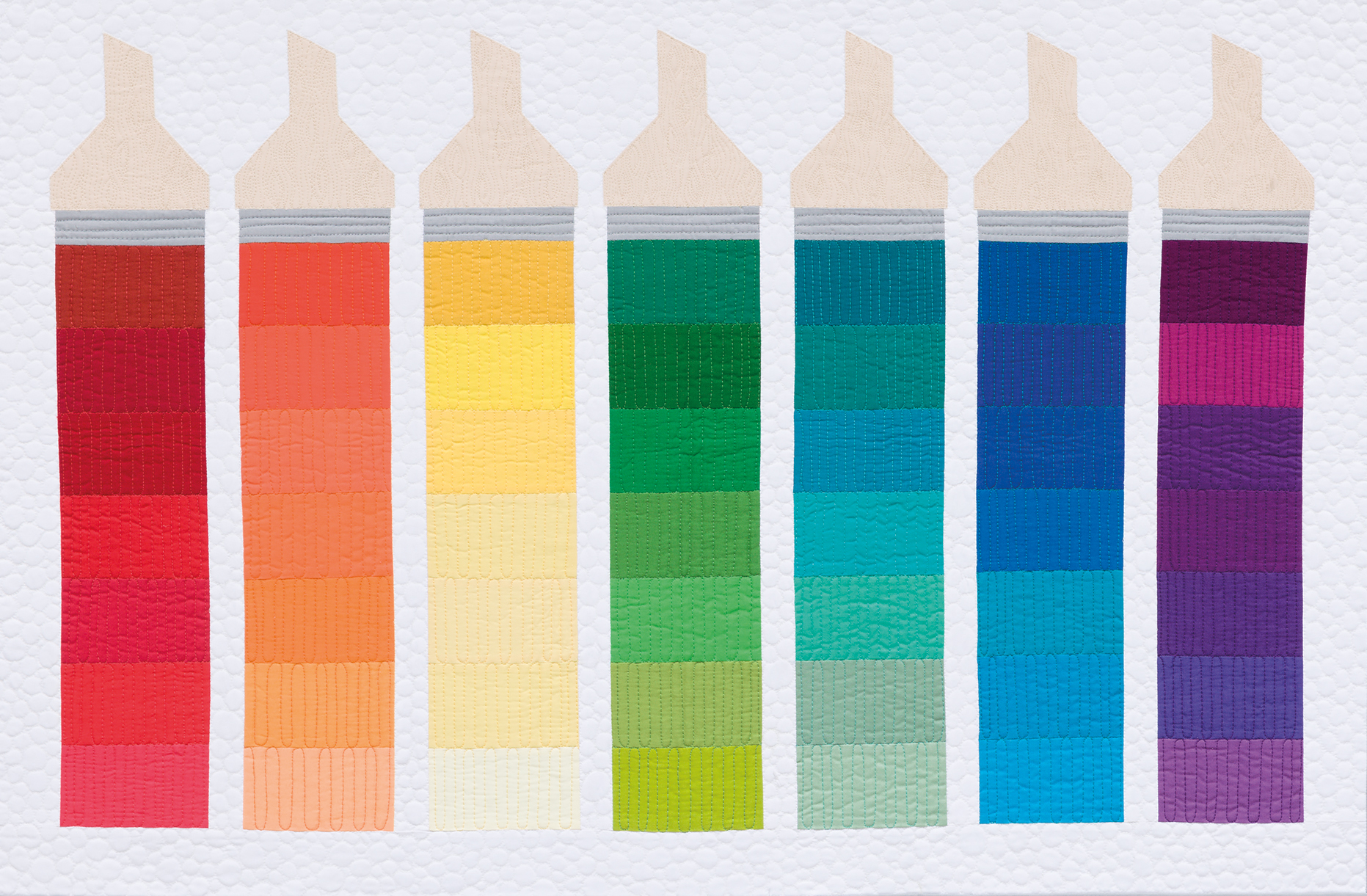
Another quilt I’ve done a woodgrain texture on is called Choosing Colors. This quilt comes from one of my books, The Ultimate Guide to Machine Quilting. If you want to pick up the PDF version of this book, check out the link below
Want to learn more about how to quilt Swanky Spirals? I’ve included an in-depth tutorial on how I quilted it. This video also includes a bunch of tips and tricks for this particular pattern, so if you want to try making Swanky Spirals I highly recommend you check out this video to get yourself started.
P.S – Let me know what you think!
I always love getting feedback from my viewers. If you have any questions about the 99 Design series, leave a comment on any of my videos, I’ll be sure to answer!
For this week’s episode of 99 Designs, I have a very dense motif that works well to make a quilt more modern. As the design is rows and rows of little bricks, it could also work well to add realistic texture to a landscape or art quilt. To learn how to quilt this design, check out the video below:
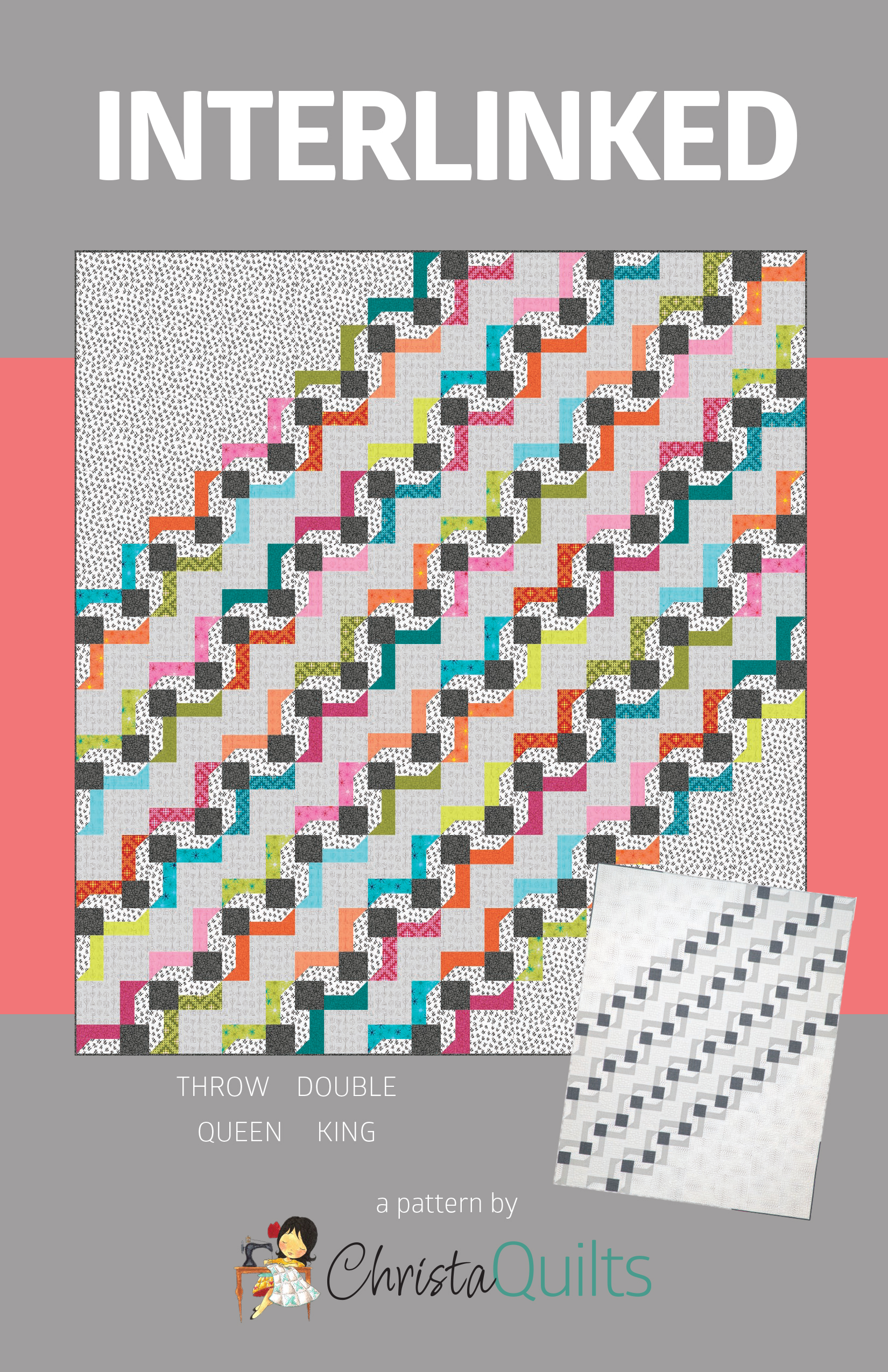
Interlinked Quilt Pattern
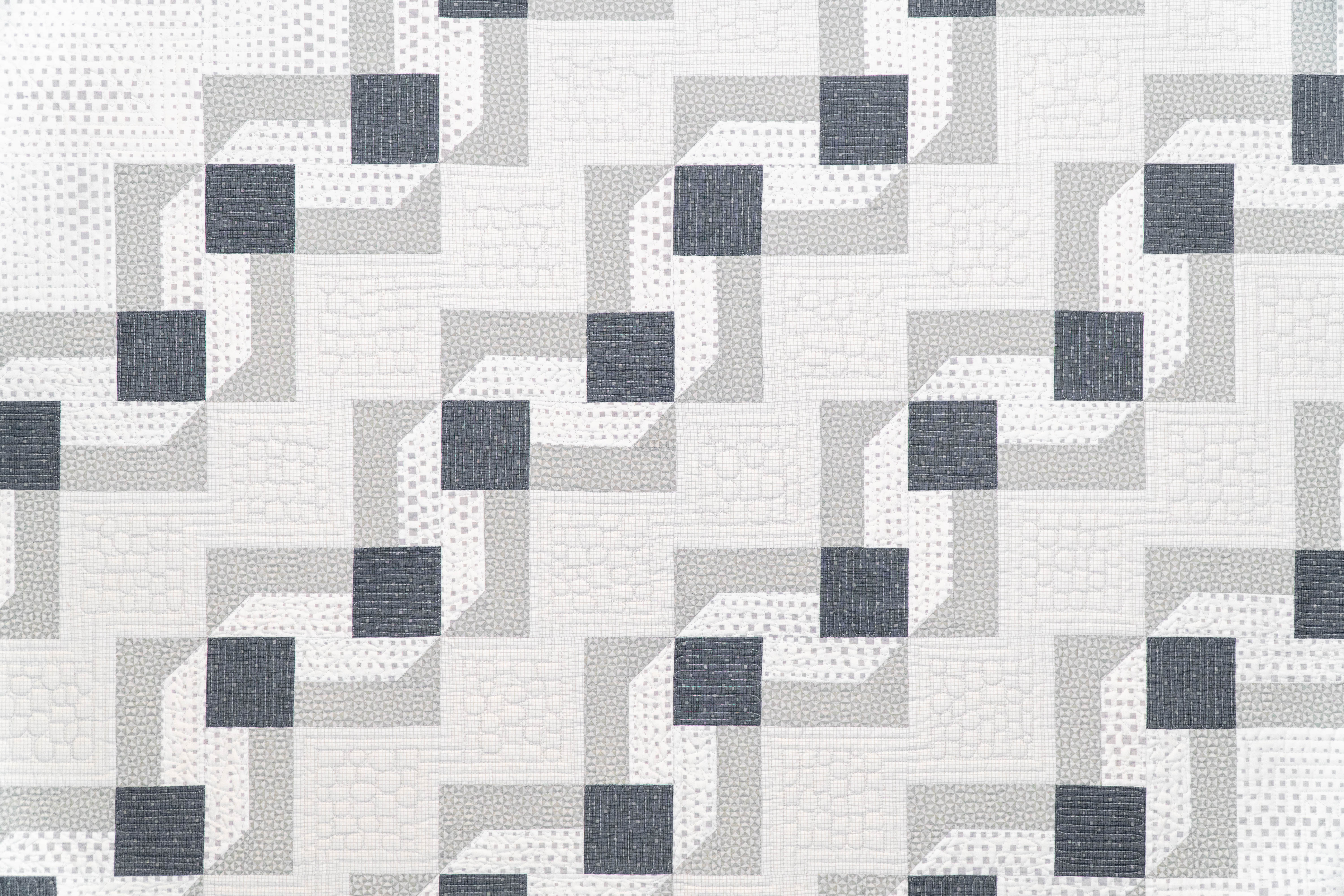
The sample quilt used in the video is called Interlinked. It’s one of the quilts I’ve made several different variations of, from one that uses a monochromatic color scheme to one that uses a vibrant and saturated palette. Any choice of fabric will work! I also quilted it using a different but related design to Bricks, so even though it’s not exactly what’s shown in this week’s tutorial, the techniques used are the same. If you want to try out this quilt for yourself, be sure to grab my quilt pattern!
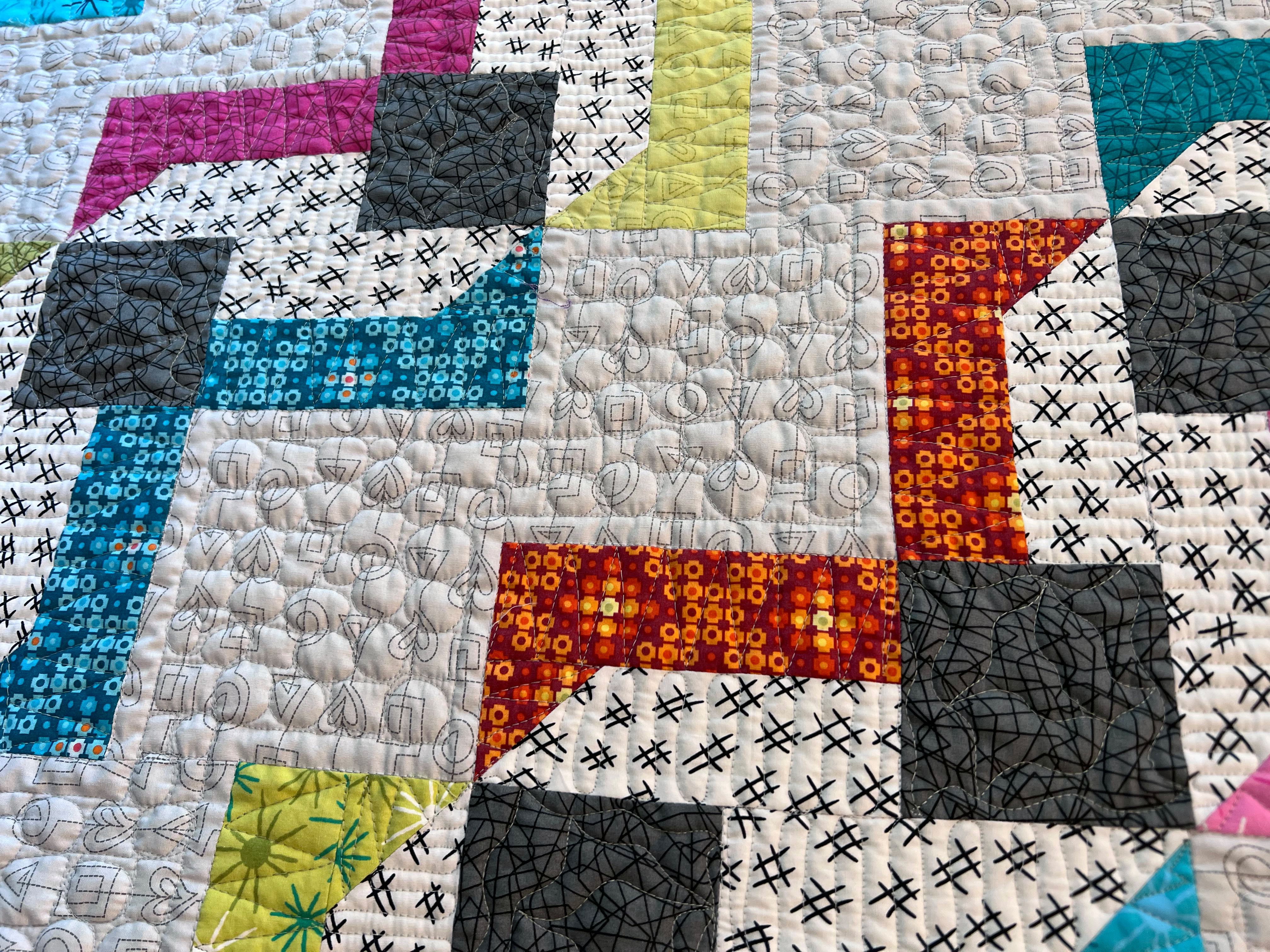
Here’s a detail shot showing off the custom quilting of the colorful version of Interlinked. And since I’m using gray thread on busy gray fabric, you can see how it blends in and you can hardly notice any mistakes. Instead, you can only see the delicious texture!
Bonus Video – How to Machine Quilt a King Sized Quilt
In addition to the pattern, I’ve provided a longer tutorial that teaches you how to quilt Interlinked. It’s a great in-depth guide that really breaks everything down step by step, in case you need some extra tips. You can do a quilt this large with just your domestic machine. Also, if you want to quilt a different design from what is shown in the video, you can chose any design from this series to incorporate into the quilting plan. What will you quilt?

 Christa Quilts