Tuesday Tools – Wooden Seam Roller Giveaway Winner

From time to time I like to blog about some of my favorite quilting tools. Several months ago as part of my favorite tools series, I first mentioned using a wooden seam roller rather than finger pressing or ironing my seams. I was frustrated at the time because I couldn’t find a wholesale source for these so that I could sell them in my store.

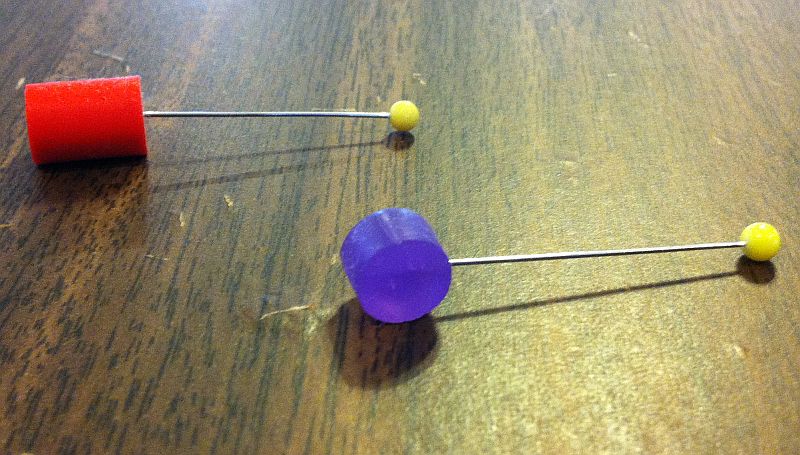
Wooden Seam Roller

Wooden Seam Roller

Then I took a class from Deb Karasik who turned me onto the idea of using a wooden wallpaper roller as a pressing tool for paper piecing. Eureka! Not only does it do the job, but it is wider than my original tool which makes it easier to “seam press” regular blocks, too.

In fact, I will be showing how I used the wooden seam roller in my next DIY quilt tutorial tomorrow!  So now I’m happy to say I have these tools available in my shop. And I’m even happier to say that I’ve decided to give one away to one lucky blog reader.

To enter this giveaway, leave a comment on this post telling me what quilting project you are currently working on. You can even include a link to your blog  in your comments if you want to share a picture of it!

On Friday around 5 PM Pacific Time, I will randomly select one winner from all of the comments posted. I will update this blog at that time to announce the winner (and will also contact him or her separately via email.) So good luck this week and happy pressing!


Updated – We have a winner!!!

First of all I want to share how much fun it was to read about what everyone was working on. Thank you all for your wonderful comments – I do read them all!

Congratulations to Brooke who said “I’m working on a quilt using Sweetwater’s Notworthy…Simply Woven quilt tutorial from Moda Bake Shop.”

Enjoy your seam roller and let me know how you like it. 🙂

Favorite Tools #10 – Machingers Quilting Gloves

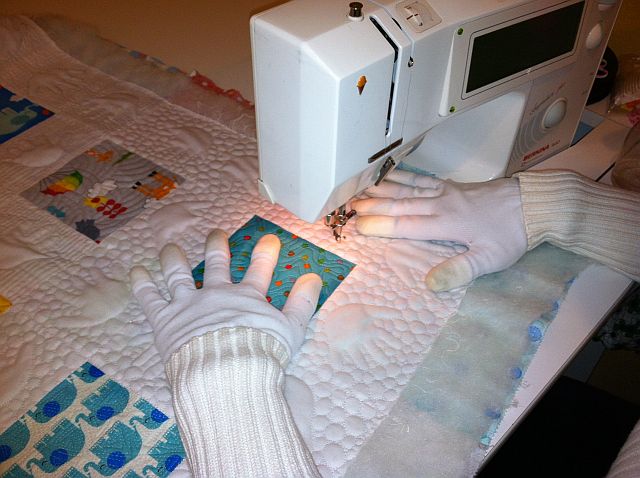
Machingers Quilt GlovesProbably one of the most important tools I own that has improved my quilting is Machingers Quilting Gloves.

I first heard about them when I took a series of quilting lectures from Joanie Poole. She highly recommended them so I bought a pair, but then I quickly shoved them in a drawer and soon forgot all about them.

About a year later I discovered the Free Motion Quilting Project and they were again recommended by Leah Day. So I bought another pair and this time I finally used them!

The reason they work so well is that they give your hands some extra grip while quilting.

The hardest thing to deal with when quilting is the drag on the quilt. I have drop-in table and also use a Free-Motion Slider whenever doing FMQ (free-motion quilting). However, the quilt gloves give that little bit of extra friction that is needed while pushing and shoving my quilt around underneath the needle.

And yes, I highly recommend the push & shove, pull & scrunch method of quilting –  no quilt clips for me! Machingers work wonders when doing lots of intricate free-motion work like on my Busy Hands quilt below. I sure kept my gloved hands busy when quilting this quilt!

Busy Hands Quilt

I use the gloves even when I am stitching in the ditch with a walking foot, or quilting straight lines, like on  my Charming Chevrons quilt below.

Machingers Stitch in the Ditch

The tips of the gloves do seem to yellow and get dirty after a lot of use, but they are safe to throw in the washing machine and I’ve washed mine several times. Sometimes I feel a little bit like a white glove lady or like I’m all dressed up for a party with my fancy gloves, but I have found that they make all the difference in the world when quilting.

Favorite Tools #9 Supreme Slider

I am in love with free-motion quilting. To me, it’s the best part of making a quilt! I find myself hurrying through the piecing process just so I can get to the quilting. So of course I love tools that make the job even easier. I first heard about the Supreme Slider when I attended a lecture on free-motion quilting from Joanie Zeier Poole nearly 2 years ago. Leah Day from The Free Motion Quilting Project highly recommends them, too!

It took me about a year to finally buy my first Supreme Slider, but I have been using it ever since for all of my free-motion quilting. It’s a piece of slick teflon plastic that rests on the bed of my sewing machine. Because it is so slick, the quilt glides over the surface of my sewing table and there is less resistance and drag on the quilt. That means less tension issues for both me and the sewing machine!

Original Supreme SliderQueen Supreme SliderI started with the regular size slider which measures 8″ x 11.5″.

This size has worked well and was a good size to start with to see if I liked it.

Once I became hooked, I upgraded to the larger 11.5″ x 17″ Queen size. This covers more surface area and is perfect for use on my drop-in table. You can see a comparison of the two sizes shown with my sewing machine below.

Supreme Slider 2 Sizes

I only use the Supreme Slider when I am doing free-motion quilting. It covers the feed-dogs so I can either drop them or leave them up, depending on the type of thread I’m using and how my machine is sewing on any particular day. However, I remove it when stitching in the ditch since the feed dogs are engaged and I don’t need to slide the quilt around as much.

When the bottom (pink side) of the Supreme Slider gets dusty (usually while waiting for me to use it again), I just rinse it off underneath the sink and pat it down dry. Then it adheres again easily to the bed of my machine.

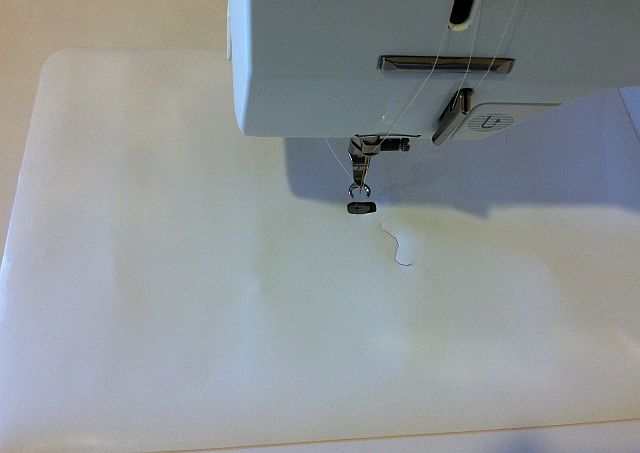
Supreme Slider Scar

Here’s one word of caution – be sure the slider is completely “stuck” down before you begin FMQ so it doesn’t move around while quilting. I accidentally stitched through my smaller version right after I got it. It still works but it now has a permanent “scar!”

Favorite Tools #8 – Pinmoor Pin Anchors

I love Pinmoors! These nifty little pieces of hard rubbery plastic are my favorite way to baste a quilt. I first heard about them a year ago and it’s taken me that long to try them out and see if I like them. The answer is a definite yes.

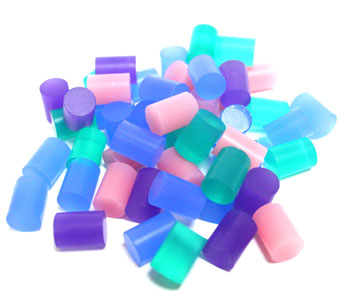
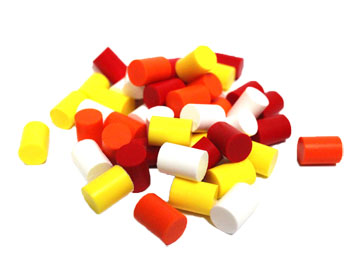
Pinmoor Jewel TonePinmoor Sunburst

Now I use them for basting all of my quilts. Both the pin and the Pinmoor rest on the surface of the quilt and are made of silicone that will last indefinitely. Here’s a picture of my Busy Hands quilt I basted, using Pinmoors:

Pinmoor Basting

One of my customers suggested this tip to make them more economical:  cut each one in half and insert the pin into the edge. You can see a whole versus half Pinmoor below:

Half PinmoorIt takes me about 50-100 Pinmoors to baste a baby-sized quilt depending on how far apart I space them. I use regular quilting pins to pin through the layers of my quilt and cap each one with a Pinmoor. I can stick the pin anywhere into the Pinmoor and it will hold nicely.

It’s very easy to remove them while machine quilting; I just drop each piece into a bag that I keep at my table while quilting. I can separate the pins from the Pinmoors with a magnet when I’m all done and they are ready to go for next time!

Bag of PinmoorsPinmoors also come in very handy for putting on a binding. I like to pin my binding around the entire edge of my quilt then hand or machine stitch it closed.

Binding with PinmoorsFor more of my favorite tools, please see my previous post here.

Favorite Tools #7 – Acrylic Rulers

I’ve skipped a couple of weeks of blogging about my favorite tools so here are all of my previous posts so far if you want to catch up:

  1. Wooden Seam Roller
  2. Shout Color Catchers
  3. Design Wall
  4. My Toothbrush!
  5. Batting
  6. Needles

Today I wanted to mention acrylic rulers as a whole. I have tons of them and use them for all different purposes.

Acrylic Rulers

In addition to the workhorse 6″ x 12″ ruler which I use for cutting most of the pieces of my quilt, I like big square rulers  and longer rulers to help block the corners of my quilts.

I use smaller square rulers for trimming small blocks and strips. The largest ruler I could find, an 8 1/2″ x 24″ ruler is great for cutting longer border strips and trimming the sides of a quilt before applying the binding.

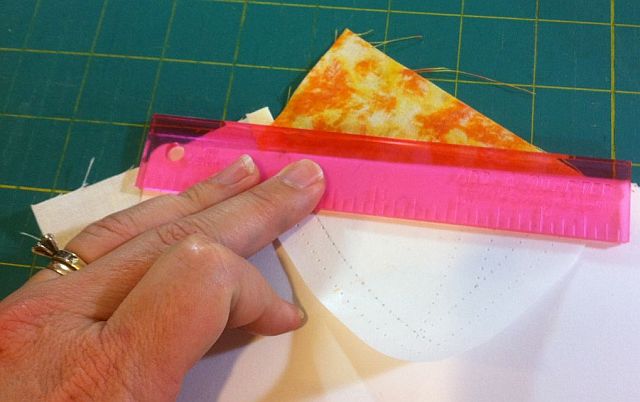
Long RulerI recently starting using a small ruler, called “add a quarter” when paper piecing. I took a class from awesome teacher and author Gail Garber. You can read my blog post about that.

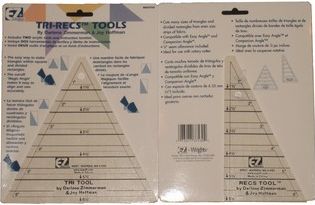
Add a Quarter RulerI don’t carry any of the larger rulers because they are too hard to ship but I guess I can start stocking up on the smaller ones. My favorite specialty ruler set is called Tri-Recs. You can make awesome triangle blocks and half-square and half-rectangle blocks from them.

Tri-Recs Tools

I used Tri-Recs when I designed one of my first quilt patterns, many years ago (and yes, it’s still waiting for me to put it in a professionally published format. For now, you can get a free version on my website).

Do you have a favorite ruler you’d like to share? I’m always on the lookout for nifty new tools!

Favorite Tools #6 – Needles

Since we will be quilting our Jolly Jelly Roll quilts this week, I thought it was an appropriate time to talk about sewing machine needles. Needles are often the least expensive but one of the most important components of making a successful quilt!

If your needle is old, bent, or flawed, it will make quilting much more difficult. Often times when you think thread or tension is the problem, it may actually be your needle!

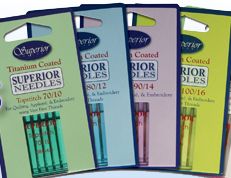
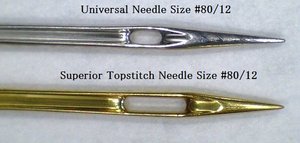
Superior Needles

My favorite needles to use for both piecing and quilting are Superior’s Titanium Coated needles. They come in a variety of sizes and work wonderfully. There are a lot of different types of needles out there – really more than you need.

The titanium needles are perfect for  sewing, piecing, machine applique, and machine quilting. They work well with metallic threads, too. So forget about having different needles for different purposes, ie: universal, ball point, sharp, or metallica needles. Just stick with the titanium topstitch needles for everything and all you have to think about is which size to use. They last much longer than most of the other brands, too.

So how do you know which sized needle to use? It depends on your thread. The titanium needles come in 4 sizes – 70/10; 80/12; 90/14; 100/16. They have a much larger eye which allows the thread to pass through with less tension and therefore fewer thread breaks.Needle Closeup

Size 70 needles are  for very fine threads such as 60 weight cotton or polyester, monofilament, #100 and silk threads. I use these with silk thread for machine applique that blends into my quilts.

Size 80 needles are for for fine threads such as 50 weight cotton or polyester. I use these for piecing quilts together and sometimes for allover stippling with cotton thread that blends into the top.

Size 90 needles are for medium threads such as 40 weight cotton or polyester. This is the also the needle I use for decorative threads and metallics. The thread does not shred!!

Size 100 needles are for heavier weight cotton or polyester threads. I’ve only used these needles once so far when I quilted with a 30 weight variegated thread. It worked like a charm with no thread breaks or skipped stitches!

I use the 80’s & 90’s most often in my everyday piecing and quilting. Since these needles last for a long time I can usually piece and quilt a medium throw sized quilt with just one needle.

I’m still not convinced that Superior Threads offers my favorite thread, however. You can read my opinion about the company here on my soapbox, but I do love their needles!

Favorite Tools #5 – Batting

Later this week during my do it yourself quilt-along, we are going to be basting our Jolly Jelly Roll quilts so I thought it would be an appropriate time to talk a little bit about batting.

From my experience, the type of batting you choose can really make a difference in creating a well-done quilt. Since all of my quilts are machine quilted, I need to use battings that are easy to quilt through and are not so bulky that they won’t fit under my machine.

So far, my two favorite battings are Warm-N-Natural 100% cotton, and Pellon Legacy Wool. (Unfortunately I don’t carry these in my shop because they are too bulky to ship!)

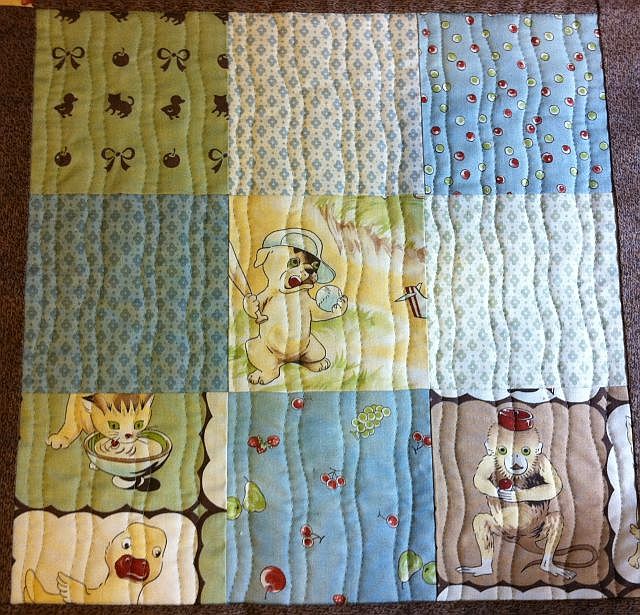
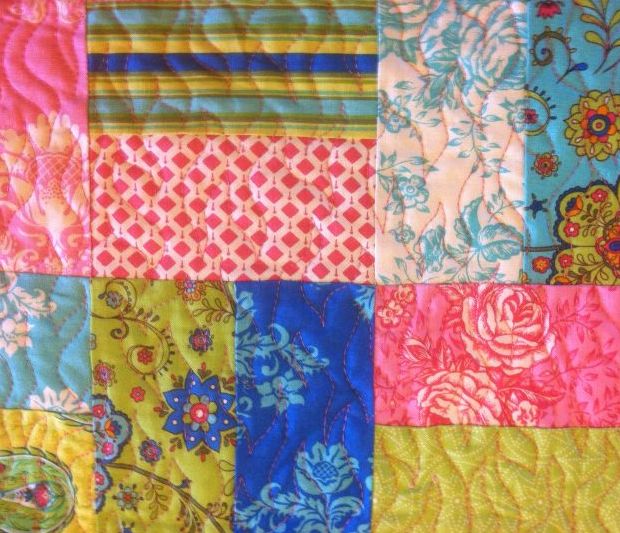
I like Warm-N-Natural because it’s very flat and relatively inexpensive. I can actually buy it buy the bolt with a discount coupon from Joanne’s for about the same price that I can get it wholesale. It does shrink up a bit, but it gives that nice antique wrinkly look when washed. Here are some machine quilting closeups using Warm-N-Natural.

Little Rascals QuiltingQuilting Warm-N-Natural

These were both densely quilted with an allover free-motion quilting design.

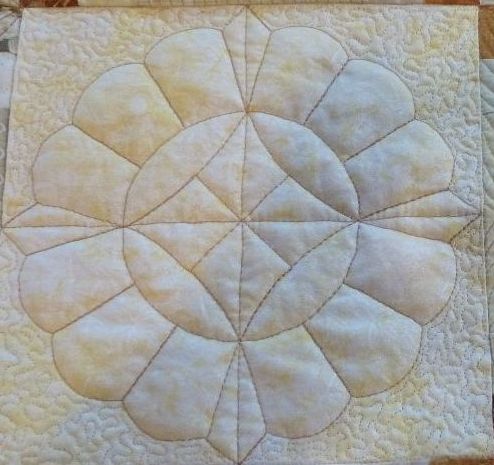
If I want my quilting to really pop, or if I am doing intricate quilting like feathers, wreaths or focus designs, I will use Legacy Wool batting. It’s a little more expensive but it’s very clean and white so it’s a perfect choice for quilts with lots of white backgrounds like in my Bungle Jungle quilt below. It also allows me to achieve a “faux” trapunto look if I densely quilt the background areas. The pictures below show quilts using Legacy Wool.

Quilting Legacy Wool

Faux Trapunto QuiltingThe little hands really pop! Wool has a nice loft but the background squishes down nicely when you quilt the heck out of it!

As far as polyester battings go, I’m not too fond of them as they are usually too lofty for me. I haven’t tried any of the newer blends out there like bamboo or silk yet. One batting that is next on my list to try is Quilter’s Dream Cotton.

If any of you out there have favorite battings that you like, please add your comments!

Favorite Tools #4 – My Toothbrush

One of my favorite tools used for quilting is my toothbrush! No, it’s not a used one, but rather a nice new clean one that I use exclusively for quilting! I actually have 2. One of them I keep by my sewing machine to brush out excess dirt and lint. ( Q-tips work well too!)

Toothbrush EraserBut my favorite use of a nice clean toothbrush is for getting out marked quilting lines.

A toothbrush works really nicely to wipe away chalk marks when using a chalk pencil. I made a Double Wedding Ring quilt for my sister-in-law earlier this year and marked all of the center motifs with a chalk pencil. I just took a little water and scrubbed with my toothbrush to get out the marks.

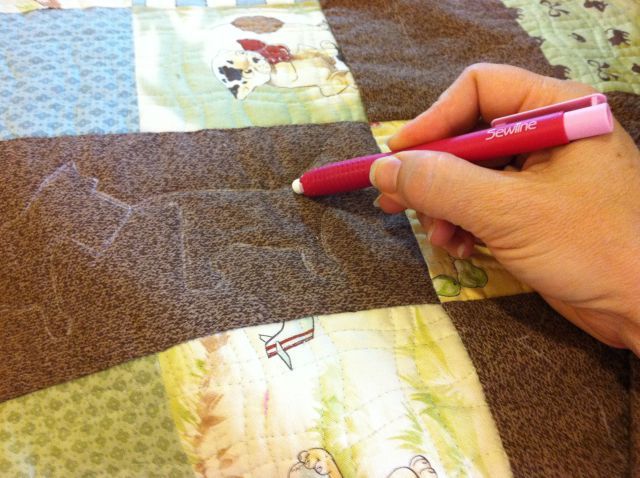
Sewline EraserThis spring I starting using Sewline marking tools. I stenciled some Scottie dog motifs with white ceramic leads on my Little Rascals charm pack quilt.

I erased the lines with an eraser pen and easily brushed away the erasures with my handy-dandy toothbrush.

Most recently, when quilting the cute little hands and background fillers of my Bungle Jungle charm pack modern quilt (it needs a shorter name!!), I used a toothbrush dipped in water to clean off all of the blue ink from a blue marking pen. With my toothbrush I was able to control where the water goes.

Toothbrush Eraser and WaterI love using my toothbrush as a tool for quilting.

I wonder what else can I find around the house that I can put to good quilting use???

Favorite Tools #3 – Design Wall

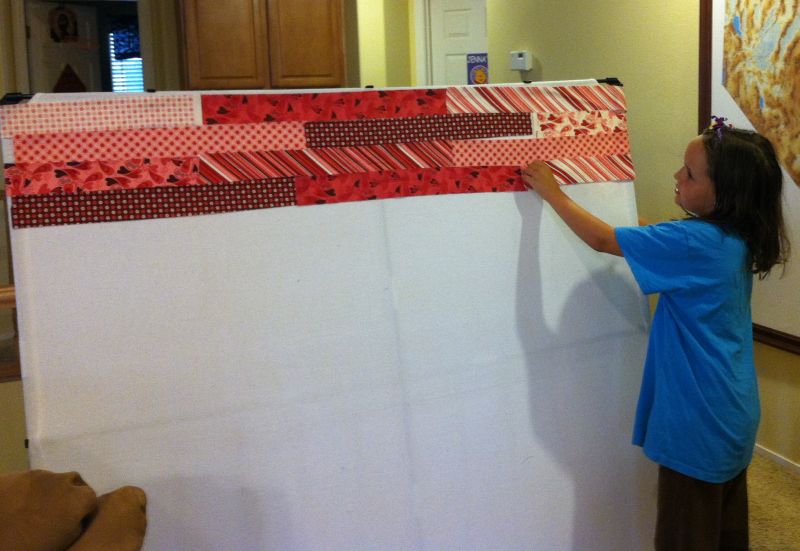
I love my design wall! I use it all the time when working on quilt blocks and my daughter is even using it this week while she works on her jelly roll quilt. (More about that later!)

Flannel Design WallI got it from a wonderful vendor, Cheryl Ann’s, 2 years ago when I went to the Road to California quilter’s conference.

The design wall is totally portable and comes in a bag, like a tent. In fact, it’s made from tent poles and flannel fabric. (I sound like a commercial, don’t I?)

Portable Design Wall BagDesign Wall Pieces

It’s very lightweight and only takes a few minutes to assemble. You can see the back below.

Back of Design WallI was very impressed with this company. About a year after I got it, I lost one of the small pieces. When I went back to Road to California the next year and told the guys at Cheryl Ann’s how much I used it, they gave me the replacement part for free!

They come in 3 sizes and I bought the medium sized one that measures about 4 1/2 feet square. I think I need to go back and get the large sized one now!

Favorite Tools #2 – Shout Color Catchers

Shout Color CatchersOn my last soapbox, I blogged about how much I advocate pre-washing fabrics for quilts.

To make this job easier, I love using Shout Color Catchers. You can get them pretty inexpensively at Target or Wal-Mart and they work wonders with quilt fabrics.

They are rectangular sheets of material that almost look like dryer sheets.  You put them in with the fabric during the wash cycle. The extra color that comes off in the water adheres to the sheets, not other fabrics. I’ll use at least 2 per load when washing a bundle of fabric, and will throw in more if I’m washing a large quilt.

After discovering problems with some of my personal stash fabrics running, I used several sheets when washing my sister-in-law’s wedding quilt I recently finished (only 2 years late). I had sewn the blocks so long ago, I couldn’t remember if they had been pre-washed or not. I used 4 color catchers with the quilt and it came out fine. I breathed a huge sigh of relief!

Color CatchersI used this red batik fabric in a small wholecloth quilt I recently made. I wanted to make sure it didn’t run so I washed it twice – with one color catcher each time.

The first color catcher sheet came out orange after the first wash; by the second wash, the excess color was mostly gone so I knew it was now safe to use this fabric!

I’m still experimenting with pre-washing,  using color catchers in every load of cut yardage, and throwing a sheet in with quilts made from fabric that I can’t pre-wash like Moda Precuts.

During my previous post about pre-washing I got a really good comment about using Retayne, a dye fixative, with unwashed precuts. I forgot I even had some! So that will be my next experiment I think…..