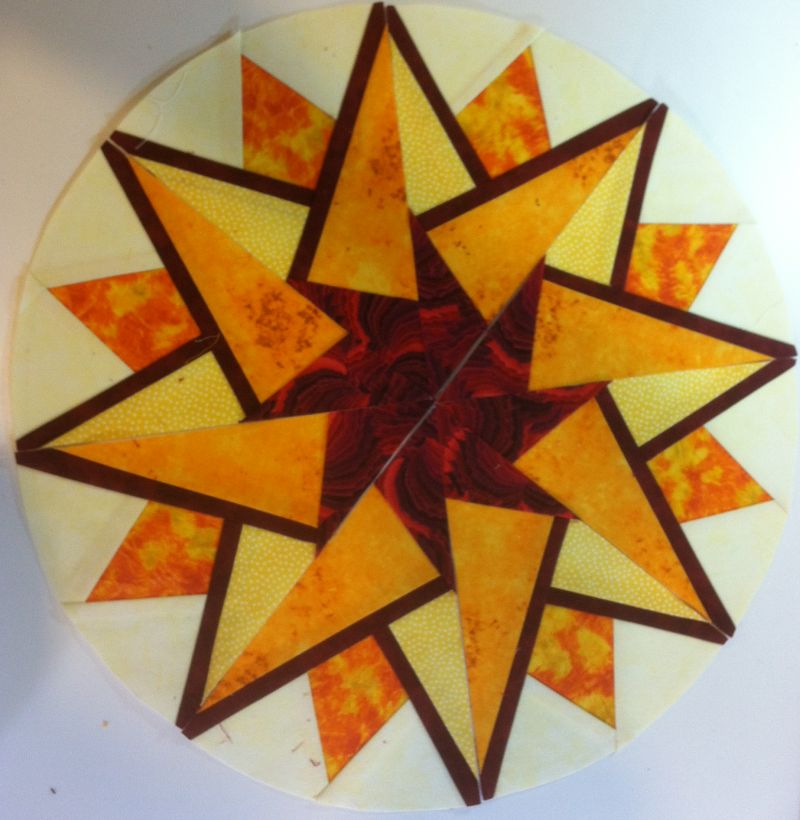
 Many Circular Star designs are more commonly known as Mariner’s Compass blocks. They look very complicated but are actually quite simple to piece.
To make my fiery star block that I’m working on this week, I began with a hand-drafted pattern that I learned how to make in a workshop I attended recently from Gail Garber. You can read more about that awesome class HERE.
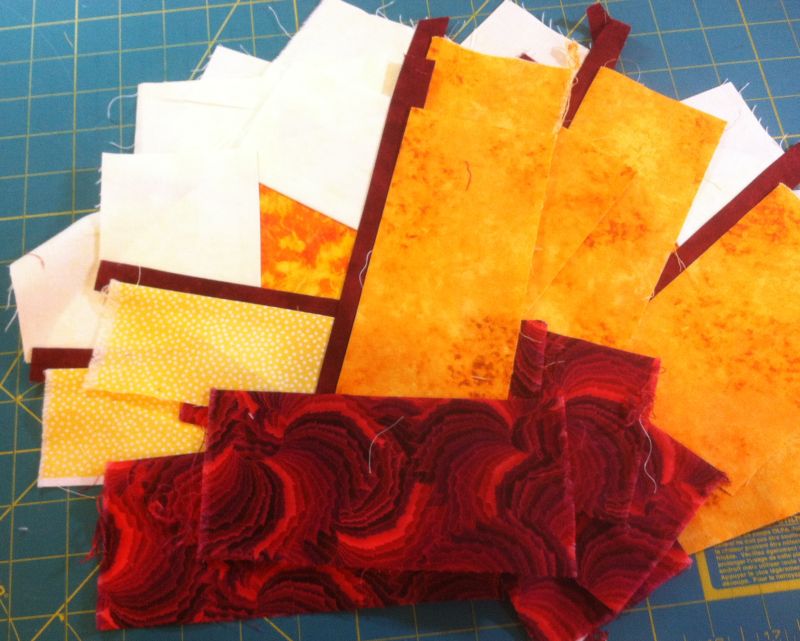
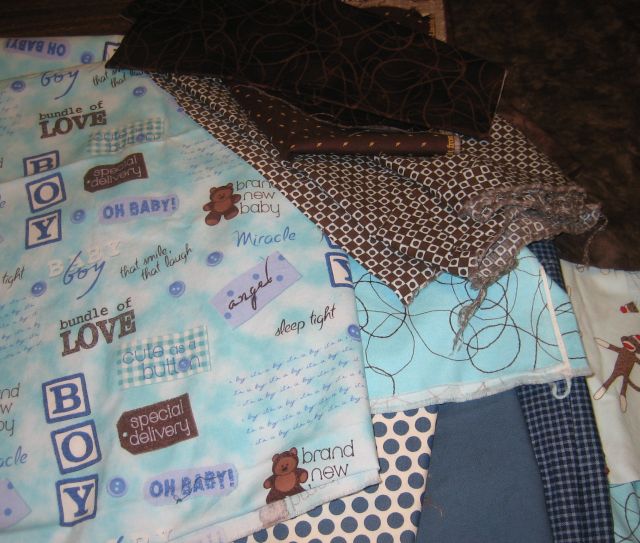
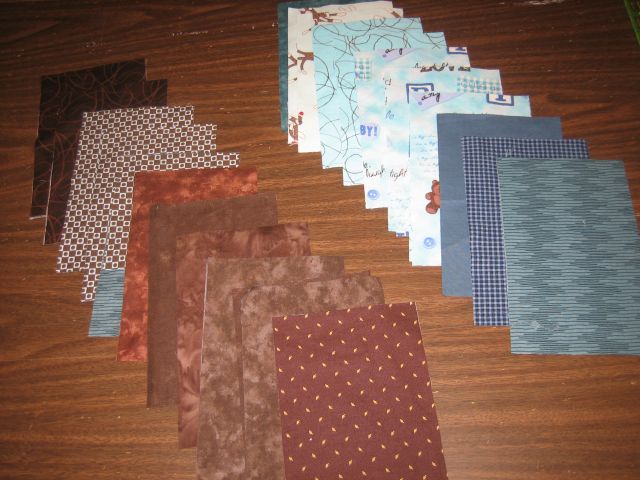
For me, the hardest part was picking out the colors! I started out by bringing the whole pile of fabrics shown below to class. It’s hard for me to envision a project until I know exactly what I’m doing. After a day of block designing I was able to narrow down my choices and stick with an analogous color scheme – colors that lie right next to each other on the color wheel. I’ve been learning a little color theory, too.

 My heart really yearned for reds, oranges, and yellows so I rummaged around in my stash until I was happy with my fabric choices. I needed to make sure there was enough contrast in value to make the design stand out.
Once the pieces were rough cut into large rectangular patches, the sewing fun could begin! Gail’s method of paper-piecing is to cut each piece out 1″ bigger on all sides. I don’t mind the waste if I can trade it for extreme accuracy. The REALLY nifty part is below.
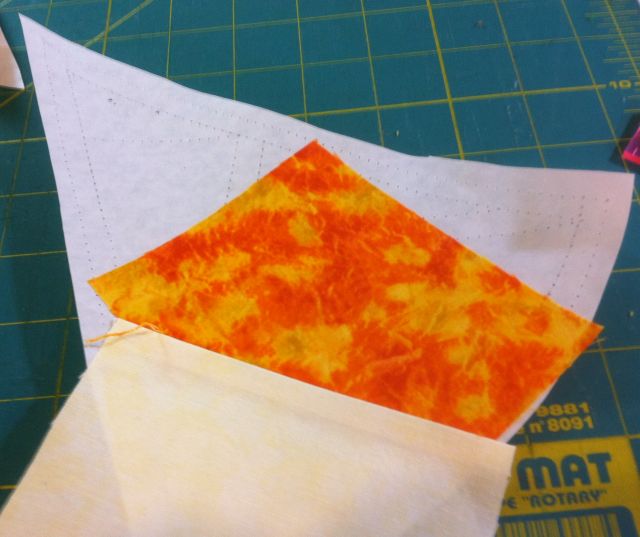
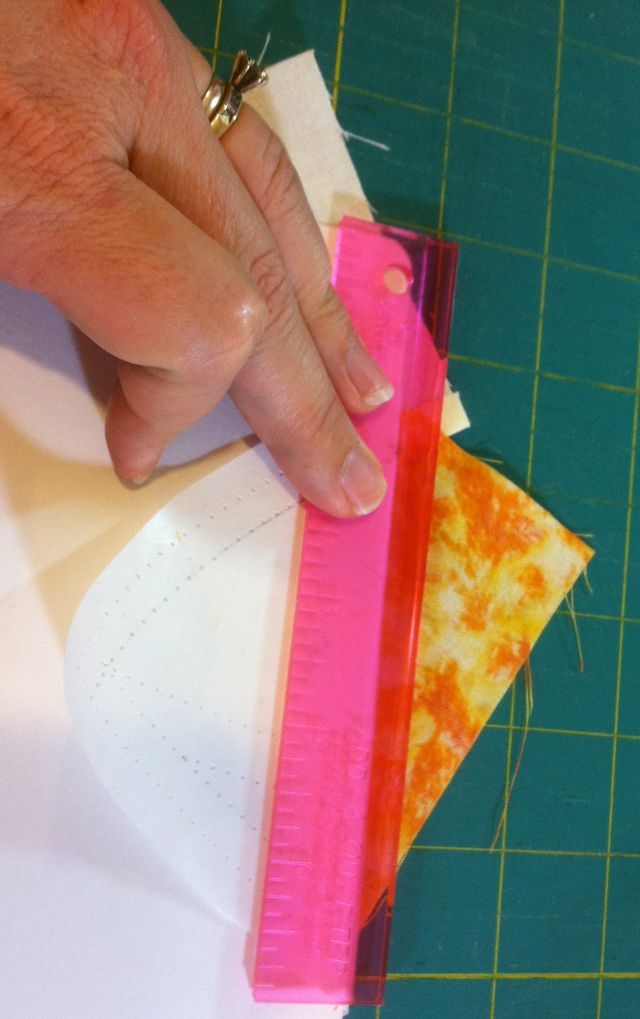 We started off with the first piece in the middle like you normally would for paper piecing. We used freezer paper foundations and made multiple copies by pinning them together and running an unthreaded needle through a stack of freezer paper sheets. The fabric adhered to the freezer paper when I ironed between seams. That meant no shifting! It easy pulled away when I was ready to add the next piece.
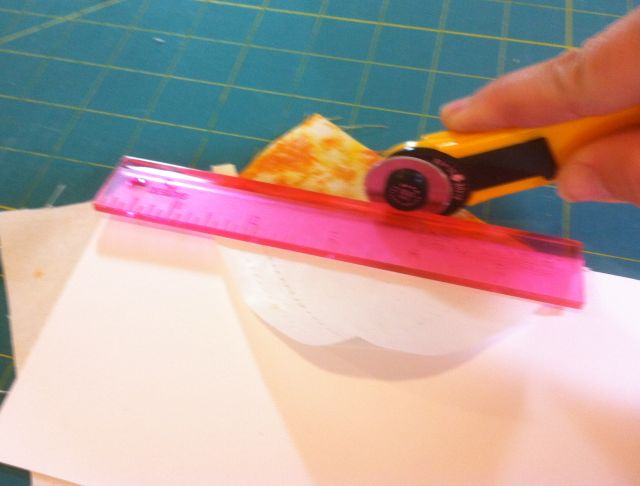

The “magic” happened when we used an add-a-quarter ruler to the edge of each sewn piece to cut off the excess. Instead of getting globs of fabric lumps on the back, each seam was nice and tidy. It made lining up the next piece super simple!

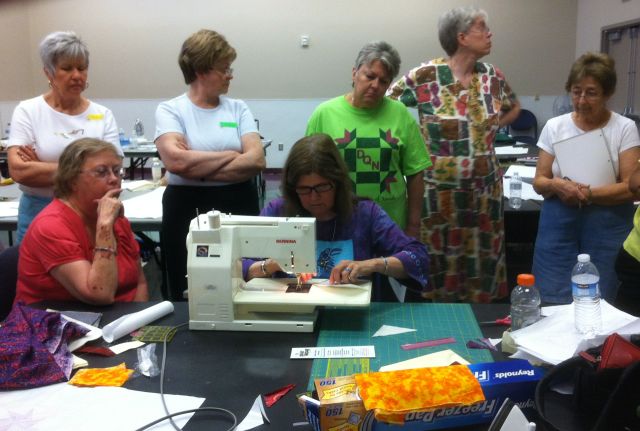
 Once I had a stack of pie slices – 8 to be exact, they were ready to be trimmed and sewn into a circle. The picture below shows Gail in class demonstrating how to paper piece on my Bernina. The best thing about taking technique classes is that it gives me great ideas for nifty notions that I’ll eventually carry in my store. In the meantime, if you are interested in the add-a-quarter ruler and other supplies for paper piecing, you can order them from Gail’s website here: www.GailGarber.com.
Now I can’t wait to turn this block into an exciting (perhaps award-winning??) quilt! I will post weekly updates as I work on this project.

















 Christa Quilts