Paper Pieced Wreath Berry Christmas – Part 1 of 2

Paper Pieced Log Cabin WreathThis is a Christmas Wreath quilt I designed and made from paper-pieced Log Cabin blocks.

Since I can’t make anything anymore without feeling the need to write a tutorial for it, here you go:

I will demo making the log cabin blocks today. Part 2 covers completing the top and machine quilting.

The finished block size is 3″. The finished mini quilt (or table topper or pillow) is 18″ x 18.”

Step 1 – Gather Your tools and supplies. These are not a necessity, but as with any project, they make the job easier!

  • Rotary Cutter
  • Wooden Seam Roller for pressing
  • Add a Quarter Ruler for neatly trimming while piecing
  • A straight edge surface such as a postcard or piece of template plastic
  • Vellum Tracing Paper to print the foundations on
  • 1/2 yard of red fabric for centers, borders and binding (or scraps to equal that much)
  • 1/4 yard of cream to tan fabric for light half of log cabin blocks (or scraps)
  • 1/2 yard total of assorted green fabric scraps for log wreaths and border
  • FQ of green for outer border
  • Size 90 sewing needles for sewing through paper foundations
  • Small scissor snips for trimming
  • Cotton Thread for piecing
  • Your choice of decorative thread for machine quilting

Step 2 – Cutting all the logs. I prefer to have everything cut out before I begin my sewing. The pieces are cut bigger and will be trimmed later. Although there are 4 sizes of  light logs and 4 sizes of dark logs, I cut only 2 sizes for each. It wastes a tiny bit more fabric, but it’s easier to keep things organized, especially if I change my mind on fabric placement.

A little note on cutting pieces to fit – measure the finished size of your pieces and add 3/4  inch to this measurement (more if working with triangles). The units used for paper piecing have the extra 3/4 inch added in already.

Fabric cuts are based on 20-22″ long strips for working with fat quarters.

From the red fabric cut (if you cut very carefully you can get it all from just one fq):Red Fabric

  • 16 – 1.75″ squares for centers
  • 4 – 1.25 ” x 16″ strips for inner borders (to trim down later)
  • 4 – 2 .25″ strips for binding (2 strips if using 42″ wide fabric)

From assorted white, cream, or tan scraps, cut 10 – 1.25″ wide Cream Fabricstrips. Cross-cut into:

  • 32 – 1.25″ x 2.25″ rectangles
  • 32 – 1.25 x 3.25″ rectangles

From assorted green scraps, cut 12 – 1.25″ wide strips. Cross-cut into: Green Fabric

  • 32 – 1.25″ x 2.75″ rectangles
  • 32 – 1.25″ x 3.75″ rectangles

From green border fabric, cut 4 – 2.25″ x 22″ strips (trim later)


Step 3 – Printing the Paper Foundations

You can download the paper pieced log cabin block pattern by clicking the image below. There are 4 per page, so you would need to print 4 pages for a total of 16 blocks. Be sure to set your printer to print the PDF at actual size, not print to fit.

Paper Pieced Log Cabin Blocks

You can print on copy paper but it is much easier to see what you are doing if you use see-through paper (vellum) instead. Cut apart your paper foundations leaving a seam allowance all around. It is printed in grey-scale so you can tell which side of the block is light and which is dark. The blocks are printed as a mirror image for this technique.

Step 4 – Sewing the Paper Pieced Log Cabins

There are a lot of pictures for this next section so I have shrunk them down in order. Just click on any picture to enlarge so you can see the details.

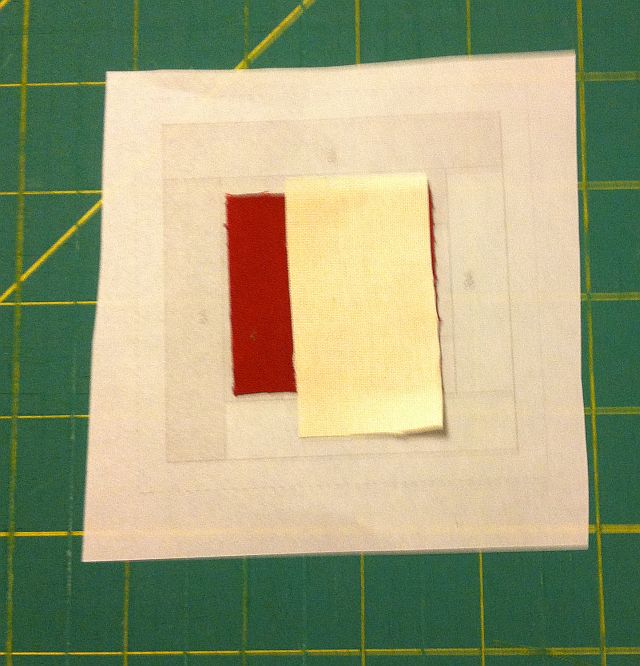
Line up your red square so that the BACK of the fabric touches the BACK of the paper. (Kind of tricky with solids – I know!) With right sides together, line up your first short white log on top of the red square, with about 1/4 inch overlapping your sewing line.

This first two pictures show the back side. You will be sewing from the front.

Log Cabin 1

Log Cabin 2

Log Cabin 3

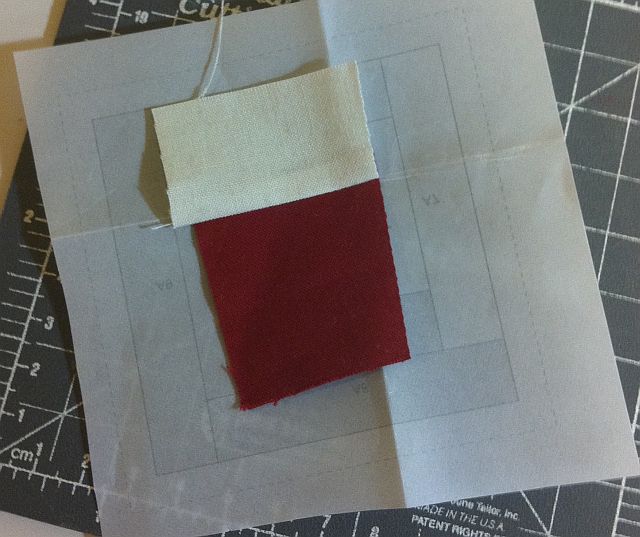
You can see a shadow where the fabric is sticking out far enough for the seam allowance.

Remember to start and end 1/8 to 1/4 inch before and after the line. Use a smaller stitch length and a larger needle. Sew on the line between A1 and A2.

Log Cabin 4

Log Cabin 5

Log Cabin 6Log Cabin 7

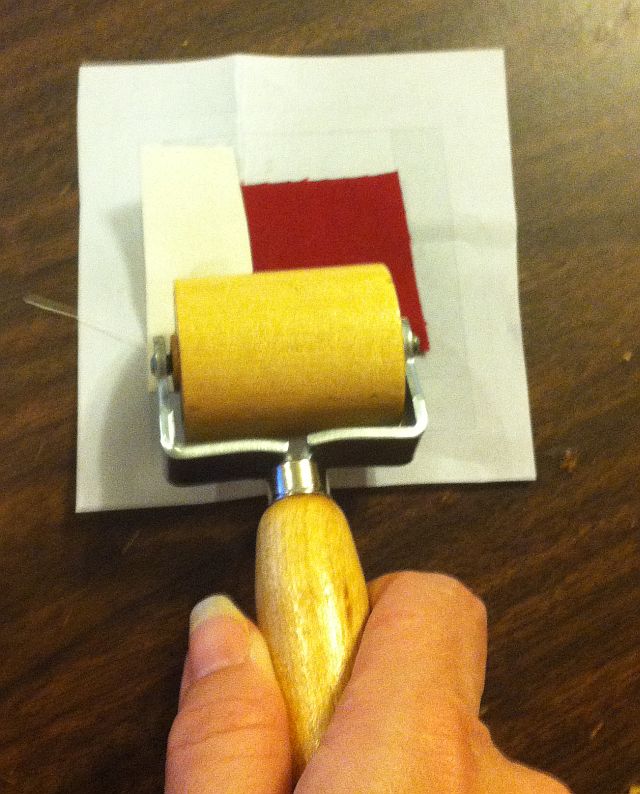
Remove the block from the machine and clip threads. Use a wooden seam roller to press the newly sewn piece to the side. Flip the block back over to the front and using a straight edge (like a business card), fold over the paper on the next sewing line (between A1 & A3).

Log Cabin 8

Log Cabin 9Log Cabin 10Log Cabin 11

The excess seam will be exposed. (You may need to tug the fabric from the paper a bit to get it to lie flat.) To trim it neatly, use the add-a-quarter ruler to create a ridge on top of your block, paper, and straight edge. Trim off the excess. Flip the block over and add your next light log along the newly trimmed edge. Sewing on the printed side, sew the next seam.
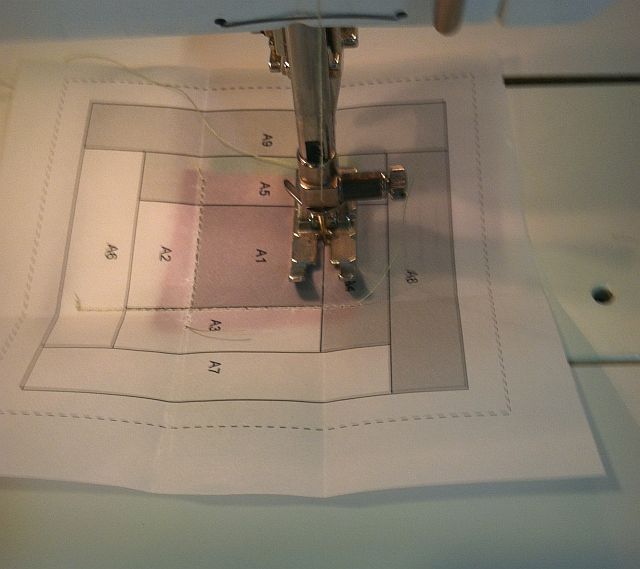
Log Cabin 12

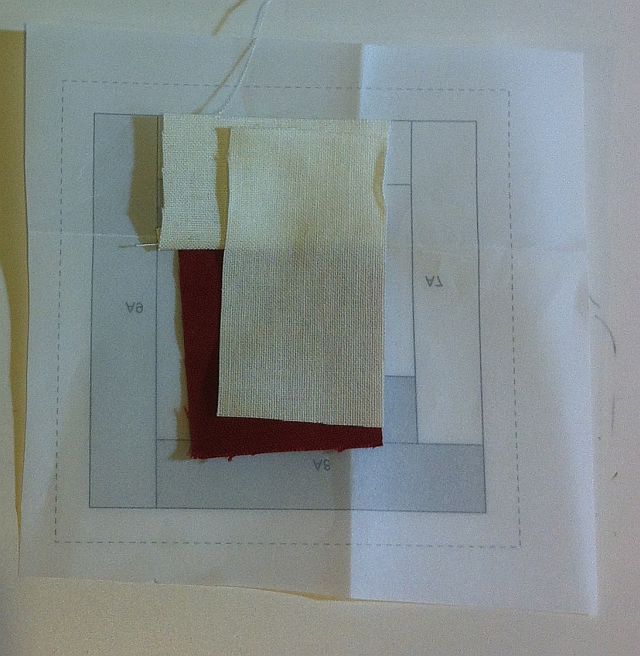
Log Cabin 14Log Cabin 15Continue sewing in this manner until all of your logs have been added. Remember to Sew, then Press, then Trim each seam.

Once the block is complete you can trim off the excess leaving 1/4″ seam allowances.

Make your first block completely to test your process. Once you are satisfied with the results,  Repeat to make a total of 16 blocks. You can sew all of the same steps at the same time to speed up the process. When you are done with the blocks, you may remove all the foundations, or keep them on until your complete your top.

Giveaway Day Blog Hop – Win a Charm Pack of Your Choice

Giveaway DayDecember is turning out to be a great month for giveaways!

I just gave away 2 pairs of Machingers gloves last week. Now I am participating in Sew Mama Sew’s Giveaway Day which actually lasts all week long! (Plus there’s another giveaway fest sponsored by the Quilting Gallery starting next week on December 10th.)

Here’s my giveaway: I am offering one free charm pack of your choice to 2 lucky readers! To enter,  leave a comment on this post stating which charm pack you’d love to get your hands on. Here are just a few samples out of all the charms I offer:

Sew Stitchy Charm Pack

Farmers Market Charm Pack

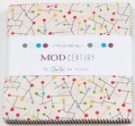
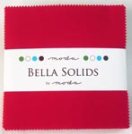
Mod Century Charm PackBella Solids Charm Pack


You can visit my web store at www.ChristaQuilts.com to see which charms I have in stock. What’s more – if you don’t want to wait to win the contest, you can fill your stash with your favorite charm packs because they are on sale at 20% off all during the contest!

While you are visiting, be sure to sign up for my email newsletter and blog so you can stay informed of all the latest and greatest “quilty” stuff!

The contest runs through Friday, December 7th at 5 PM PST and two winners will be chosen at random from all comments received (one comment per person, please). I will post the winning names here on this post at that time and will also contact them via email.

My giveaway is open to everyone, both in the US and across the world.

Good luck and happy hopping!


Updated 7:15 PM, Friday December 7th – We Have Our Winners!!

Thank you everyone who commented. This was a fantastic giveaway and this is the most comments I’ve ever received on a single post so that was exciting, too. By far the most popularly requested charm pack was “Sew Stitchy” – I love that one, too!

Congratulations to these 2 winners below, chosen at random. I will be emailing you directly on how to claim your charm pack from my store at http://www.ChristaQuilts.com.

Sara from thedomina.blogspot.com who said, “Love the Domestic Bliss charm pack!”

Terry from aquiltingblog.com who commented, “Would love Pat Sloan Eat Your Fruits and Veggies Charm Pack…thanks for the chance!”

Thanks for participating – this contest is now closed.

Christa’s Soapbox – My 2013 Quilting Goals

I decided not to wait until the new year to make a list of quilt goals! Instead, I decided to write it down for all the world (or maybe just the blogosphere) to see.

This list will mostly be for me to keep track of what I want to accomplish, how I’m going to do it,  and to take note of both successes and failures. Everyone brags about their success, but who actually publicly takes note of their failures?? I will – so I can learn from both!

It’s a pretty ambitious list but here’s a saying I heard once, “It’s better to shoot for the stars and hit the rooftop, than to shoot for the roof and end up in the garbage can.”

Christa’s Quilting Goals

1.  Get a Quilt Accepted Into a Major Show (Updated 12/28 – Done!)

  • What I’ve done about it: I took the plunge and registered 3 quilts into QuiltCon on November 30th. It’s a juried show which means a panel will review pictures of the quilts  I submitted and decide whether or not they will hang for judging at the show in February.
  • What happens next: I will find out by the end of December whether or not any of them are accepted into the show. This is the very first time I have ever tried to enter a juried show so I have no big expectations about getting in, but it sure would be cool.

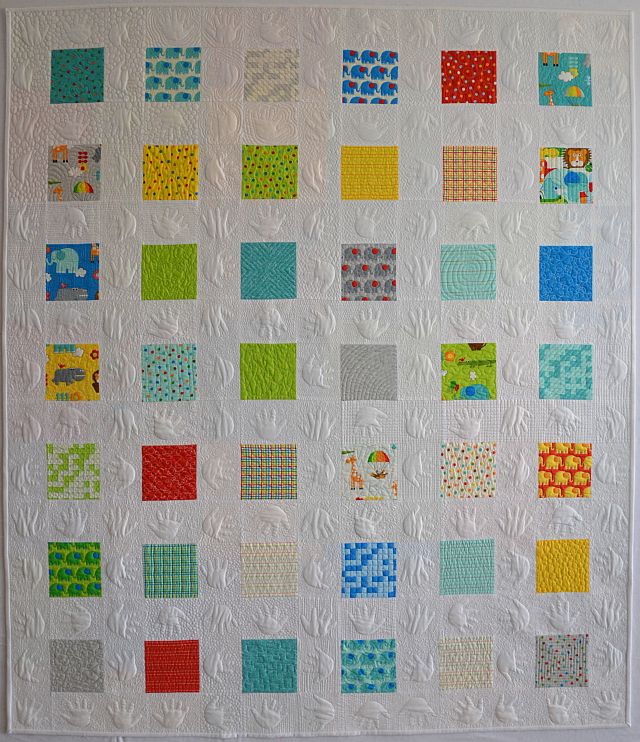
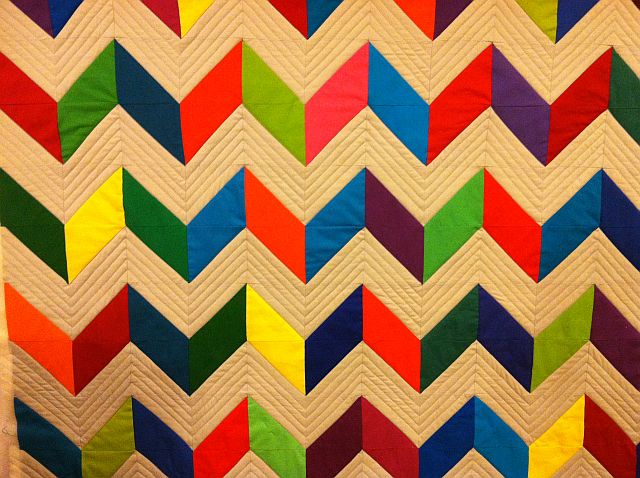
Here are small pictures of the 3 quilts I entered. You can read more about them here.

Charming ChevronsBusy HandsBaby Bricks


2. Get Published in a Quilting Magazine (Updated) and (Done 10/15)

  • What I’ve done about it: Back in the summer I submitted  a little essay for a major quilting magazine that jump-started me to thinking about what I really wanted to do with my quilting, and how to set goals to get there.
  • What happens next: they liked it enough to consider it for possible publication – in other words, they didn’t reject it outright, so that is really saying something! I have to wait at least another month to see if it gets published. Of course I won’t mention which magazine until I hear back either way.

3. Become a Moda Bakeshop Designer (Didn’t happen – but I’ve moved on.)

  • What I’ve done about it: Several months ago I submitted two original quilt tutorial ideas to Moda Bakeshop, but never heard back. I am assuming they didn’t accept either one.
  • What happens next: Continue to come up with original ideas of quilts made from charm packs, layer cakes, and jelly rolls and try again.
  • What I learned: Whether or not I eventually get a project accepted, the idea of designing quilt tutorials helped me launch my own series of Quilt-Alongs. So I consider that a definite success!

4. Publish My Own Original Quilt Patterns (Tabling this idea for now).

  • What I’ve done about it: Along with the success of my weekly quilt-alongs, I have put together original quilt kits for sale in my shop. Both the tutorials and the kits are helping me narrow down my design choices and come up with “rough drafts” of my patterns.
  • What happens next: Jason is the real technical brains behind our business. I am learning more about designing quilt patterns in EQ7 and he is developing his graphic design and layout skills so we can transform my drafts into professionally published patterns. We hope to launch them sometime next year.

Here are two of the finished tutorials I’ve written so far on my blog, with more to come!

Jolly Jelly Roll Quilt

Jolly Jelly Roll Quilt

Boy Baby Bricks

Boy Baby Bricks


5. Write a Quilt Book (Finally Started – Moved to 2014 Goal)

  • What I’ve done about it: I’ve contacted a major publisher to find out what is involved in getting started writing a book. They gave me their book proposal form which is a pretty intensely detailed plan outlining what quilts I would want to make and how I would pull it all together. I have several ideas already (which of course I can’t mention yet)!
  • What happens next: I need to make at least two unpublished sample quilts (which means I can’t blog about them) to submit with the book proposal. Then write the proposal.

6. Win an Award in a Major Quilt Show (Updated 6/2/13) and (Done 10/11/13)

  • What I’ve done about it: Over the years I have entered numerous quilts in my guild’s quilt show and have won my fair share of ribbons. I’ve learned from the judges’ comments on how to improve my techniques. I’ve also taken a number of classes from professional quilt teachers so I can learn all of their award-winning tricks, too.
  • What happens next: focus on a single quilt or two to enter into next year’s show.  I need to quilt every day now so that I do not procrastinate and finish them last minute like I have done in previous years. 🙂 Make my absolute best quilt(s) and enjoy all of the other beautiful quilts in the show!

7. Keep the Blog a Fun and Friendly Place and Attract New Followers
 (Updated 4/8/13) and (Done!)

  • What I’ve done about it: starting this blog has helped me set deadlines for myself and learn how to stay focused on a particular topic. It has also taught me how to express myself in print and to write down as many ideas as I can before they slip away.
  • What happens next: continue following as many blogs as I have time for, participate in as many swaps, hops, linkups and “tutes” as I can, and keep enjoying the ride! I will start attending blogger-friendly Conferences (like QuiltCon, Sewing Summit, etc.) so I can meet up with fellow bloggers for fun, friendship, and inspiration!

8. Quilt Every Day – This really should be at the top of the list!! (Updated 1/11/13)

  • What I’ve done about it: I’m great about getting a project finished when I have a deadline. But what this means is that my sewing machine can sit idle for weeks and then at the last minute, I rush to get the next one done “just in time”.
  • What happens next: I’ve set a goal for myself of sewing, or designing, or writing about quilting for just 1/2 hour a day (more if I have time). I’ve learned that if I quilt for an hour a day for 10 days, that’s much less stressful than trying to do 10 hours of quilting all in one day!

Whew! It was  pretty intense coming up with that list. I’ve got my work cut out for me, so now I’d better get started!


Christa’s Quilt Links – Linky Parties and Blog Hop Giveaways

I’ve been having so much fun surfing the web and discovering so many fantastic quilting blogs! Did you know that many bloggers have fun linky parties where you can share your work and be inspired by others?

UFO Sundays on the Free Motion Quilting ProjectThe Free Motion Quilting Project – Leah Day offers  a chance to bust through your pile of UFO’s with her linkup every Sunday.

Each Wednesday she demonstrates a new free-motion quilting design along with a link-up party for that, too.


Plum and JunePlum and June – On Mondays, Beth asks a fun question each week.

You get to  answer with a linkup to any sewing project you are currently working on.


Canoe Ridge Creations – Also on Mondays, Megan inspires us with Sew Modern Monday, a chance for you to show off your modern creations.

Her style is bright and clear and she serves up plenty of hand-made inspiration.


Fresh Poppy DesignQuilt Story – Each week, sisters Heather and Megan host Fabric Tuesday, a fun linkup where you can share your projects.

It’s not  just limited to quilts, and the work they do is fantastic!


WIP Wednesday at Freshly PiecedFreshly Pieced – WIP Wednesdays are the focus of Lee’s fresh, fun and colorful blog.

She occasionally features guest posters with lots of great inspiration, too.


Please leave me a comment and let me know about any other linky parties that you participate in so we can share more of the fun!

While you are surfing around, be sure to mark your calendars so you can participate in these fun giveaway hops in the next couple of weeks:

Sew Mama Sew launches their giveaway day this coming Monday, December 3rd. Lots of blogs will be participating and will give away fun handmade items along with sewing and craft supplies. Can you say free fabric??? It should be fun!

The Quilting Gallery will be hosting their 5th anniversary blog hop party beginning Monday, December 10. Hundreds of different blogs will be hosting giveaways all at the same time. What a great chance to find some new fun blogs and win cool “quilty” prizes!

Christa’s Quilt Along 3.7 – Quilting Chevrons Part 1

As I quilted my Charming Chevrons quilt this week I realized it would be way too much “homework” to try to get it all into one post. Therefore, I’ve broken down the steps into two parts. I’ll cover the straight line quilting this week, and then the free-motion quilting (FMQ) in next week’s post.

I had so much fun quilting this quilt! Machine quilting is my absolute favorite part of making any project. I often spend much more time on the quilting than I do in piecing the top.

It took me a total of 5 Hours to quilt the straight lines.

Step 1 – Stitch in the Ditch

Probably one of the most important (and often overlooked) parts of quilting any quilt successfully is to first outline all of them major seams by stitching in the ditch. This may be the most boring  step because you can’t really see your stitches. However, it can really make your quilt “pop”, no matter what additional quilting you add to it.

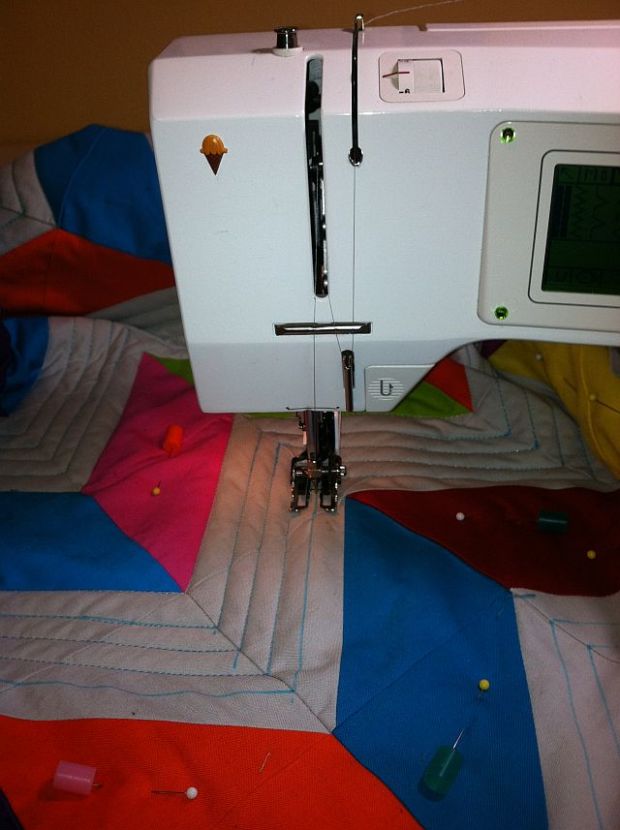
Be sure to start with a brand new needle when quilting. I used a Size 90 Topstitch needle for all of my machine quilting. The longer shaft and larger eye eliminated stress on the thread passing through the needle. My quilting was smooth and trouble free!

Though I list step 1 and 2 separately, you can combine them if you wish, and do all of the quilting at the same time.

Step 2 – Quilt The Chevron Echoes

If you have marked straight lines onto your background, you can stitch them with a walking foot. I like to match my thread as closely as I can do my background so that you notice the quilting first, not the thread. I used Isacord polyester in the Sterling silver color for all of my straight line quilting. It was weighty enough to show the quilting and there were no issues with thread breaks.

Starting on one edge of the quilt, stitch one straight line at a time all the way over to the other edge of the quilt. This means no tying off or needing to bury threads. I simply started a few stitches off the quilt on either side to anchor my threads.

I started quilting in the center row of my quilt and worked my way across half of the quilt. When I got to the end I rotated the quilt and finished the other side.

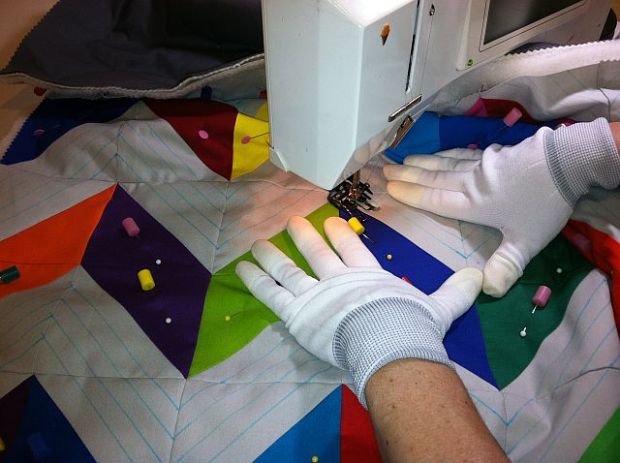
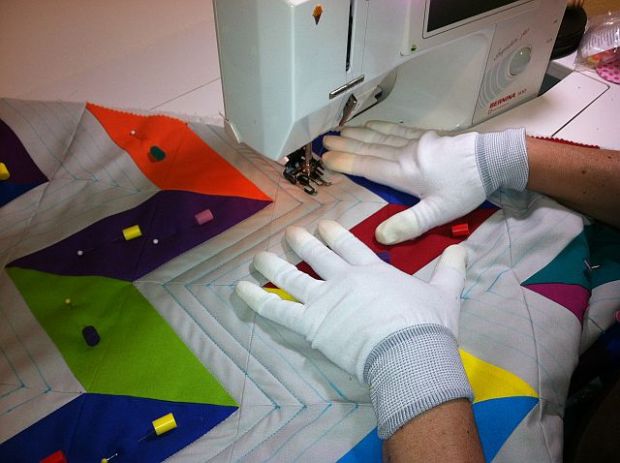
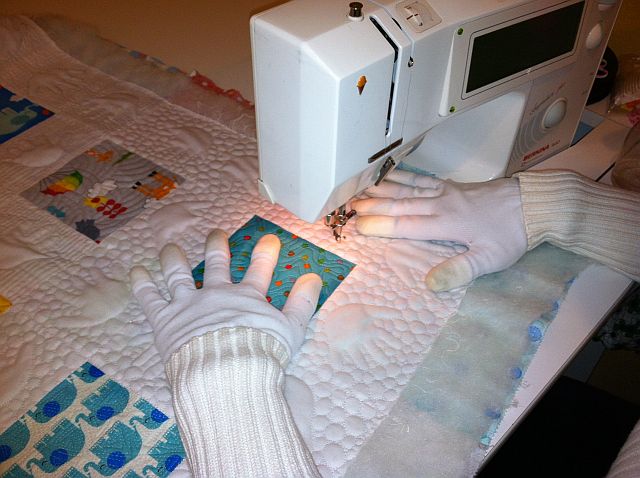
I did have to pivot each time the lines zigged and zagged so I got really good at pushing and scrunching the bulk of the quilt out of my way. The Machingers gloves helped me keep a good grip on the quilt. (They also helped keep the quilt clean from any chocolate residue left on my fingers during snack break time!!)

I removed the Pinmoors, one a time as they got in my way while quilting. Once the straight quilting was finished, I removed the rest of the pins.

Step 3 – Removing the Blue Lines

Because I like to see my work as soon as possible, I like to remove the lines immediately once I am done quilting them. One word of caution here, be sure to test your fabrics to make sure they are color fast before you spray water all over your quilt. If there are any worries about color bleeding, you can remove the lines with an aqua eraser pen or a wet toothbrush instead so you can more easily guide where the water goes.

If the blue lines resurface later, I simply wet them again, or soak the whole quilt when finished (if I know I’m not going to have any issues with fabric bleeding).

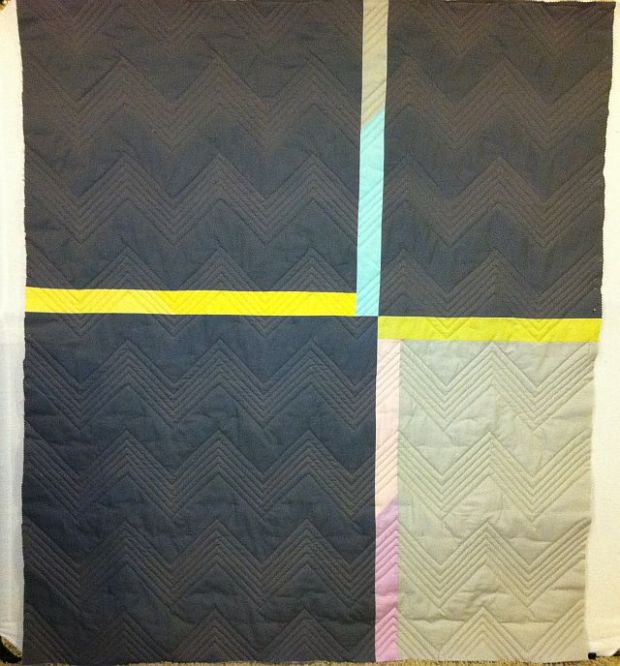
Doesn’t the back of the quilt look scrumptious, too?

Additional Ideas

If you don’t want to hassle with marking or quilting straight lines, you can quilt a wavy decorative stitch instead. It goes a little faster and you don’t have to be so precise. I used this type of quilting on my first tutorial – The Jolly Jelly Roll Quilt.

I feel very accomplished this week – how about you?

Quilt Along Schedule (Links are active once each step has been completed.)

Sew and Tell and Giveaway Winners!

I quilted all weekend on my Charming Chevrons quilt and am really pleased with the progress so far. It was pure bliss to sew for hours on end while my hubby entertained the kiddos with movies and games. But more about that later. Here’s a sneak peek, and I’ll post more pictures on this week’s Do-It-Yourself Quilt Along.

Christa's Charming Chevrons

Diana, AKA Quilting Grandma sent me a picture of her version of Charming Chevrons, made from Berenstain Bears Charm Packs. Aren’t the colors just wonderful?? I love how she added the extra borders, and her choice of solid green for the background is just awesome!

Diana's Chevrons

And I couldn’t resist sharing this picture of Martha from Illinois, modeling her Machingers Quilting Gloves on her new Tiara machine. I have to say I’m a little bit jealous of all that quilting space under the machine!

Quilting with Machingers

That got me to thinking, wouldn’t it be fun to win some of my favorite gadgets and quilting tools I talk about? Since I just reviewed Machingers Gloves last week, I’m going to give two lucky readers each a pair of gloves to try out.

It’s easy to enter, simply post a comment (any comment) and you’ll be entered to win. I’ll randomly select 2 winners and post their names here on the blog. I’ll also notify them via email. Contest ends this Friday, November 30th at 9PM Pacific Time (Midnight Eastern).

Good luck!


Updated November 30th, 9:30 PM

Thank you all for participating. This was a fun contest to run and all of the comments were much appreciated! We now have our winners!

The first winner, drawn at random is:

Judith:

Right now, I’m using a pair of slightly textured gardening gloves. The disadvantage is that they’re fairly bulky and not particularly grippy. The advantage is that I can blame any quilting gaffes on the gloves ;-) Thanks for the great giveaway opportunity.
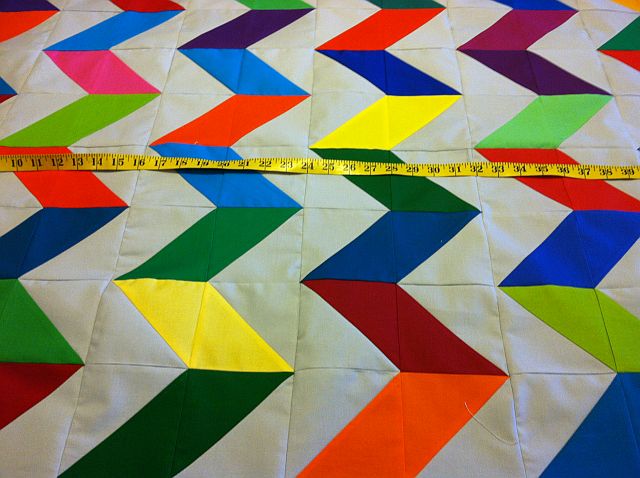

The second winner, also drawn at random is

Evelyn H:

I haven’t done your Chevron quilt, but I made the Jolly Jelly Roll. I love that pattern. I would love a pair of the quilting gloves, which are on my Christmas wish list! Thanks for doing this and for your fun tutorials.

Congratulations, ladies! I will be emailing you shortly with your winning prize!

Artistic Pieced Quilt Backing Tutorial

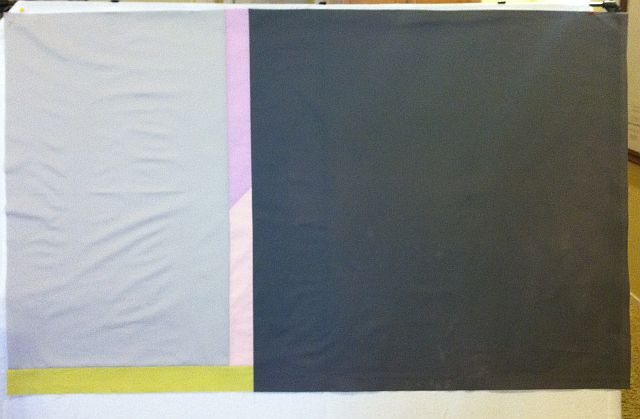
As promised, here is a mini-tutorial on how I made my pieced backing for my Charming Chevrons quilt-along. I like to call it “Back Art.”

First, I started with a rough sketch of what I want the backing to look like. I designed it  EQ7, but paper and colored pencils work well, too. Next, I measured my finished quilt top and added three  inches around the perimeter (six inches total to the length & width)  to calculate how large the backing needed to be.  I came up with a backing measurement of 54″ x 60.”

Pieced Quilt Back Diagram

Measure Quilt Top

The thing I like about pieced quilt backs is that it’s almost like making another quilt top. I know how the pieces will fit together and it’s much easier to assemble from large scraps and chunks I have leftover in my stash.

For my backing above, I cut out three chunks of dark grey and one chunk of light grey, plus some assorted colored strips, all Kona Solids.

Light Grey Piece

Going from left to right and top to bottom, we could label these sections 1-4. In this order, the cut measurements are:

  1.  19.5″ x 31.5″ (light grey)
  2. 33.5″ x 33.5″ (dark grey)
  3. 21.5″ x 27.5″ (dark grey)
  4. 31.5″ x 25.5″ (dark grey)

I then cut out several 2 1/2″ strips of color to add a touch of whimsy to the back.

I sewed them to the two opposite corners, log cabin style on either side of a light and dark grey piece.

I was working with some leftover fat quarters so I just pieced enough partial strips to get the length I needed.

Once the light grey chunk was pieced, I added a solid dark grey chunk (#2) to the right side.

Top Half of the BackingI repeated the process for the bottom half of the quilt top also. I sewed 2 1/2″ strips of Kona colors to the left side of a dark grey chunk (#4) and then added the solid piece of grey (#3) to form  bottom half. Then I joined the two halves to complete the backing.

Pieced Quilt Back

While sewing, I made sure to press every seam open and use pins so that my pieces would line up correctly. Because I had a stripe roughly in the center of my quilt, this helped me line everything up straight when it came time to baste the quilt.

I like this technique so much I will probably sew a pieced back for every quilt I do in the future. One more idea I may try on my next quilt backing is to sew a colorful square somewhere on the back near the corner of the quit (but away from the edges). This could serve as a label ready to write on as soon as the quilt is finished!

If you were inspired to create some “back art” of your own, I’d love to see it! You can email your pictures to christa@christaquilts.com.

Yes I’m old school when it comes to technology. I don’t really use Facebook or Twitter very often and I haven’t gotten on the Flikr or Instagram bandwagon yet – sorry!!

Happy Thanksgiving!

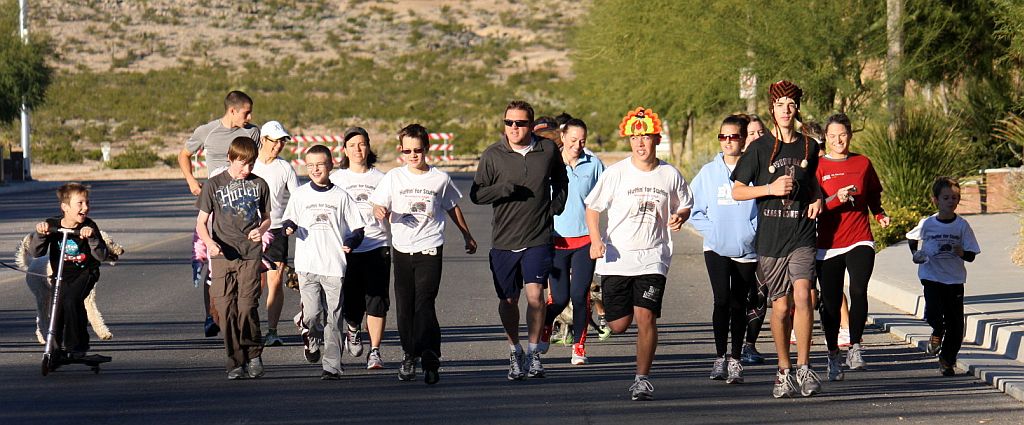
In our family, we have a tradition of running a 5k in the morning before we celebrate the rest of the day with thankfulness. This tradition was started by my mother-in-law at least 10 years ago (or more)!

Last year, we simplified things and hosted our own 5k around our neighborhood instead of running a more formal organized Turkey Trot.

Thanksgiving Day Race

This year, friends and family showed up to run, bike, scoot, or walk around the block. My oldest son won last year’s race so he was the “turkey” to beat this year.

In addition to an active lifestyle, I have so much to be thankful for. Here are just a few on the top of my list:

  • My Family – Jason and I both run our business full-time from home and we also homeschool our kids.  We figured as long as we were going to have a crazy lifestyle,  we may as well throw that into the routine, too! It allows us to spend A LOT of time with our children and have some wonderful non-traditional education experiences, too.
  • My Faith -If the above didn’t keep us busy enough, Jason is also a Bishop for our church. What that means is he spends countless volunteer hours with members of our congregation as an unpaid clergy member. It has really helped me learn the value of service and how much Heavenly Father loves each of his children on this earth.
  • My (Quilting) Friends – I didn’t realize how much I needed friends, both to sew with and to share with. As a mom of teenagers with middle age in the not too distant future (I’m 39 & holding!), I appreciate the value of connecting with other women, both young and old who love to share my passion for art and creativity.
  • My Drive to Succeed – The number one thing I love about having my quilt shop is the satisfaction I get from seeing a happy customer. People often ask me how I have to time get everything done that I do. My answer? I don’t watch much TV and don’t spend a lot of time cleaning my house. I’d rather be doing something more productive! Nothing beats receiving a friendly email from a customer showing me their latest finished quilt.  It  makes all the hard work worth the effort.

I hope you are having a wonderful day, too!

Christa’s Quilt Along 3.6 – Marking and Basting the Chevrons

Grid MarkingAlthough basting a quilt is my least favorite “chore” of the whole quilting process, it’s a necessary step so I can get to my most favorite part which is the machine quilting. I always have better results if I take the time to properly mark and baste my quilt.

It took me a total of 2.5 hours to mark the top and prepare my quilt for machine quilting.

This doesn’t include the time it took to sew my quilt backing which took an additional 1.5 hours.

I wrote a separate pieced quilt backing tutorial where I could show off my “back art”.

Step 1 – Marking The Quilt Top (1 Hour, 15 Minutes)

If I know the design I’m going to quilt ahead of time, I will mark my lines before I baste, using a water-soluble blue marking pen. (Test ahead of time to be sure your marks will come out and that your fabrics are color-safe.)

June Tailor Grid Marker

For my Charming Chevrons, I chose to mark a set of grid lines following the outline of the chevrons. I used a June Tailor grid marker to speed up the process. I drew my lines so that they were about 1/2″ apart. I marked the top at my dining table while watching a movie with the family!

Step 1 – Preparing to Baste (30 Minutes)

Be sure your backing is at least 3″-4″ larger than your quilt top on all sides. (Professional long-armers need even more space than this but since I know you will all be quilting your own quilts, you can get away with less space if you are careful with your layout!)

Roll of Batting

Roll out your batting if cut from a roll, and cut it a couple of inches bigger than your quilt top. If you are using a packaged batting, be sure to unfold it and air it out a day or two before you begin to remove as many wrinkles as possible.

Be sure you have a nice big area for basting. You can use the floor, your kitchen table, a couple of utility tables, or even some tables thrown together at your local library or quilt shop.

Give your backing a final pressing before laying it out. Remove any excess threads and smooth it out a flat as you can onto your basting surface. Clamp or tape down all sides of your quilt backing. I use binder clips on two sides of the quilt where the backing meets the edge of the table. I tape down the other two sides.

Layer 1 Quilt Backing

Layer 1 – Quilt Backing

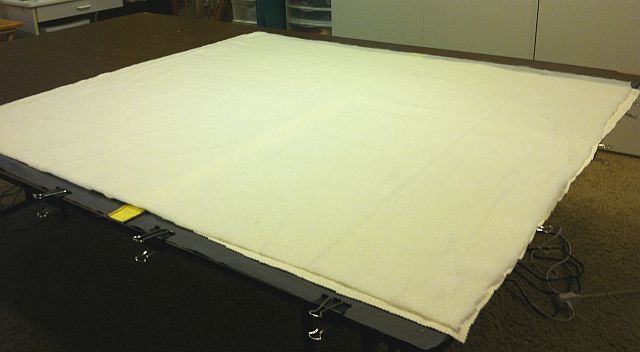
Spread out your batting onto your quilt backing. Again, smooth it out so there are no wrinkles and puckers. You don’t need to clamp down the batting. For my quilt I am experimenting with a double batting. I laid down a layer of Warm-N-Natural Cotton, then a layer of Wool on top of that. I’ll let you know how I like it when it comes to quilting!

Layer 2 Quilt Batting

Layer 2 – Quilt Batting

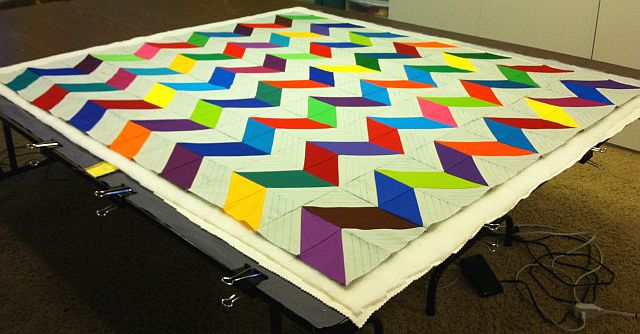
Finally, spread out your quilt top as smoothly as possible. Since I use two tables to baste, I use the center between the tables as my reference point for where the middle is. This helps me keep the quilt top straight.

Layer 3 Quilt Top

Layer 3 – Quilt Top

Step 3 – Pin Basting (45 Minutes)

Pinmoors for Quilt BastingI mention this every time I get to this step of the quilting process, but I really love Pinmoors for basting!

They go into the batting quickly and come out super easy when machine quilting.

You get 50 per pack and it took just over 3 packs (168 to be exact) to baste my Chevrons quilt. I put one pin and Pinmoor anchor in each colored triangle and that was enough for this size quilt.

Because my batting was a little thicker, the longer flower pins worked great for getting through all the layers.

Trim the Excess

The last step before I begin quilting is to trim up the extra couple of inches around the quilt.

I don’t cut off all the excess, but I do trim it up pretty close so I have less bulk going under the arm of the machine.

I am super excited to quilt this puppy!

Be sure to email me pictures of your progress – it’s so fun to see all the variety!


Quilt Along Schedule (Links are active once each step has been completed.)

Favorite Tools #10 – Machingers Quilting Gloves

Machingers Quilt GlovesProbably one of the most important tools I own that has improved my quilting is Machingers Quilting Gloves.

I first heard about them when I took a series of quilting lectures from Joanie Poole. She highly recommended them so I bought a pair, but then I quickly shoved them in a drawer and soon forgot all about them.

About a year later I discovered the Free Motion Quilting Project and they were again recommended by Leah Day. So I bought another pair and this time I finally used them!

The reason they work so well is that they give your hands some extra grip while quilting.

The hardest thing to deal with when quilting is the drag on the quilt. I have drop-in table and also use a Free-Motion Slider whenever doing FMQ (free-motion quilting). However, the quilt gloves give that little bit of extra friction that is needed while pushing and shoving my quilt around underneath the needle.

And yes, I highly recommend the push & shove, pull & scrunch method of quilting –  no quilt clips for me! Machingers work wonders when doing lots of intricate free-motion work like on my Busy Hands quilt below. I sure kept my gloved hands busy when quilting this quilt!

Busy Hands Quilt

I use the gloves even when I am stitching in the ditch with a walking foot, or quilting straight lines, like on  my Charming Chevrons quilt below.

Machingers Stitch in the Ditch

The tips of the gloves do seem to yellow and get dirty after a lot of use, but they are safe to throw in the washing machine and I’ve washed mine several times. Sometimes I feel a little bit like a white glove lady or like I’m all dressed up for a party with my fancy gloves, but I have found that they make all the difference in the world when quilting.