To Market, To Market…

Later this week kicks off the semi-annual International Quit Market for the quilting industry. It’s a place to see the latest and greatest in quilting fabric, supplies, books and patterns and it’s also an excellent source of what’s happening world of quilting!
I am excited because I get to share sneak peeks of my new book (it doesn’t release until September), and share a little machine quilting love with whomever stops by the Martingale booth. If you are there on Friday – why don’t you pop by and say hi! Details below:
 MachineQuiltingwithStyle_FB_Demo
If you can sketch it, you can quilt it!
Martingale Booth (#325)
Friday, May 15th, 4:30-5:30 PM

And guess what? There will also be some pin-trading going on at this market!

pinsign

A few industry friends and I teamed up to get the word out about each other’s pins. Look for these signs throughout market and grab a souvenir pin! I’m sure plenty of other exhibitors and attendees will have them, too, so it will be a like a little treasure hunt!

If you can’t be at quilt market in person, be sure to follow along virtually on instagram with the hashtag #quiltmarket. And I’m sure there will be lots of fun pics shared with #notgoingtomarket or #vitrualquiltmarket, too! 🙂

A Behind-the-Scenes Look at My New Branding

Christa-Quilts-lede

Hey guys, you may have noticed my new blog design. It’s all thanks to a lot of hard work from Design by Lindsie. I asked her to join me for an in-depth behind the scenes look at what it took to make these changes. This is a rather long and detailed blog post, but full of great info I wanted to share. So take it away Lindsie….

Hi! This is Lindsie Bergevin, Christa’s graphic designer. I wanted to stop by today and share with you an inside peek of the creative process we went through to create Christa’s branding, visual materials and website update. I also hope to share a few tips for those of you who want to go through a similar process.

It starts with a brand, not a logo

We all know how important a logo is to your business — it is the essence of your business in the simplest form. Everything your business represents is communicated in the logo. But too often we business owners get hung up on this and forget that there’s something more important.

When Christa contacted me to help her with the visual aspects of their business, the conversation started with discussion about her logo. She had a wonderful illustration she wanted to keep using in her new business identity, and incorporate it into her logo. But before I started in on that, we first talked about her branding.

What is branding? It’s not a logo. Or a color palette. Or even a website.

It is a message. And it’s one that you communicate to your customers whether you realize it or not.

Before I even start designing anything for my clients, I have found it essential to discuss the message they want to communicate. Having a clear idea of what your business is all about, who the audience is, and how you are going to approach them, are essential when you are creating the branding for your business.

To start the conversation with Christa, I asked her a few questions:

  • Tell me about yourself and your business
  • Who is your audience?
  • Who is your competition?
  • What colors inspire you?
  • What are some words that describe the message you want to communicate, words that describe the visual identity of your business?
  • What elements do you want incorporated into your visual identity? What do you not want?

What message do you want to communicate to your customers? What message are you communicating right now? Are they the same?

Branding is about creating a customer experience. When you apply branding, you are developing a perception about your business. Design is part of this process, but branding also includes elements such as naming, marketing strategy, advertising, public relations, market research, customer feedback and more. All of this helps you make decisions to run your business.

The fundamental idea behind having a brand is that everything a company does, everything it owns and everything it produces should reflect the values and aims of the business as a whole.

The visual identity then, is the application of your brand onto visual materials that your customers will see. It’s how you communicate your message.

That’s why I ask all of those questions. The answers to those questions, in particular the list of words that describe the business, drive every design decision I make in the creation and execution of the visual identity. I want each aspect I design to communicate the message of the branding.

For Christa, the list of words that she came up with to describe her business were:

  • Modern without screaming “Modern!”
  • Warm
  • Clean
  • Straight
  • Approachable
  • Trustworthy (Be a coach/Best friend)
  • Honest and upfront
  • Where to go to learn all about quilting
  • A modern quilting cheerleader

This provided a great starting point for us as we started in on the logo development.

Creating the logo and visual identity pieces
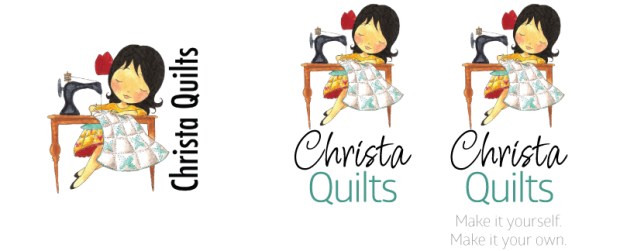
Before (left) and after of Christa's logo.

Before (left) and after of Christa’s logo.

When you work with a graphic designer to create your visual identity, it should be a back and forth process where you, as the client, are presented with an array of options that you pick from, then are narrowed down and refined by the designer, and then you pick again. These rounds of options are important to explore the design possibilities and give you say in how the logo is developed and what variations are created in the final suite of logos.

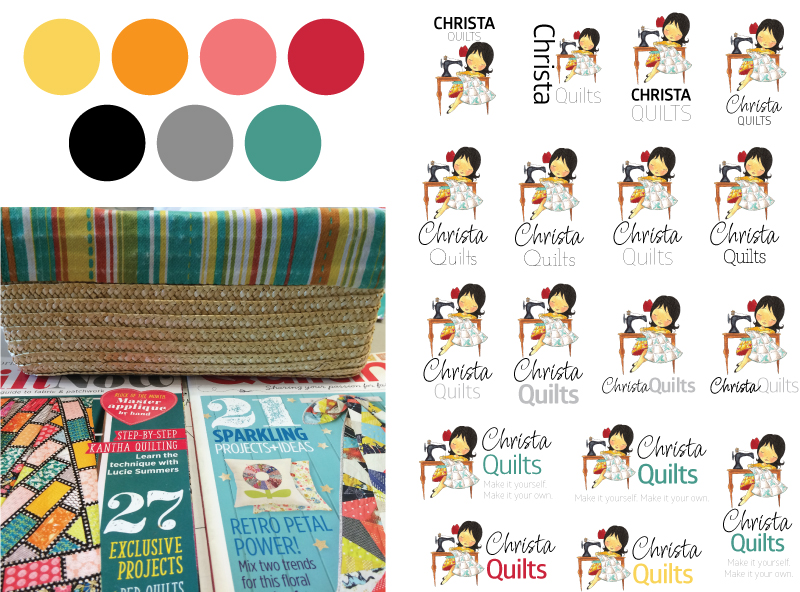
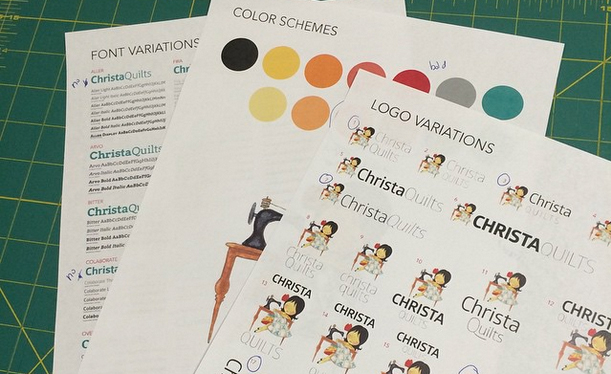
A selection of the logo comps we explored during the development phase. First row explores a B&W logo in various placement options, 2nd: font choices, 3rd: font weights, 4th and 5th rows: color variations. Above left is her color palette based on a photo she took of a few items that inspired the colors she wanted to use.

A selection of the logo comps we explored during the development phase. First row explores a B&W logo in various placement options, 2nd: font choices, 3rd: font weights, 4th and 5th rows: color variations. Above left is her color palette based on a photo she took of a few items that inspired the colors she wanted to use.

Christa and I went through six rounds of logo development, and while she probably didn’t expect going into the process that it would be that involved, I think the end product is a testament to her dedication and willingness to explore the options and really hone in on the versions she wanted. She’s happy with her logo and it embodies her — a win win!
The final variations of the logo include 4 sizes, all in color, b&w and reverse options. This provides Christa with flexibility to use the logo in virtually any application.

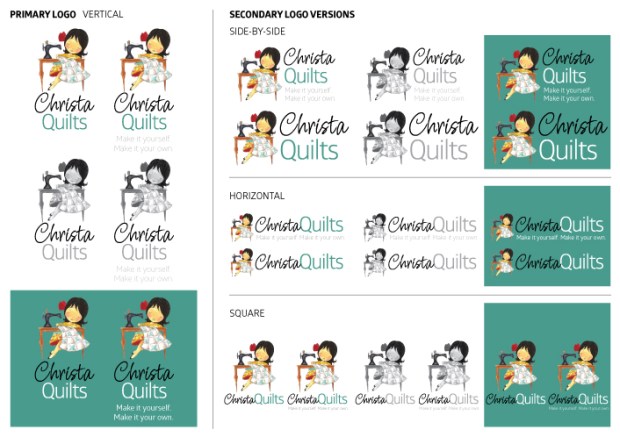
The final variations of the logo include 4 sizes, all in color, b&w and reverse options. This provides Christa with flexibility to use the logo in virtually any application.

I start off designing the logo and visual identity basics like fonts and color palette, and then apply that to the various collateral my clients need. Not everything has to be created, and each client has different needs.

Visual identity pieces usually include:

  • Logo
  • Stationary – letterhead, business card, envelopes, etc.
  • Marketing collateral – flyers, brochures, books, websites, etc.
  • Products and packaging
  • Apparel
  • Signage
  • Messages & actions
  • Anything that visually represents the business
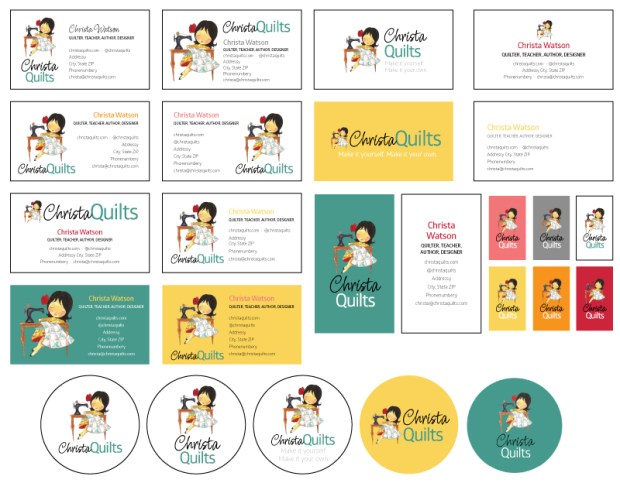
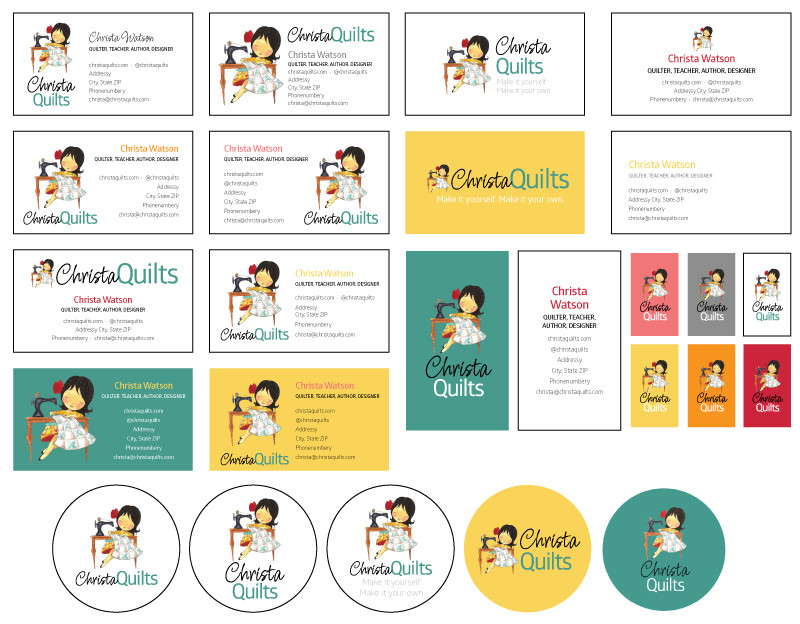
Christa-Quilts-marketingvariations

A look at the comps I created for Christa’s business cards and QuiltCon button. She chose the vertical double-sided card option with matching button.

Start with what you need to get rolling, then work with your designer to develop items as needed. Your designer should also provide you with high-quality, vector files of each of your logo versions so that you can apply your identity to pieces (with and without a designer) down the road if need be.

Website updates

When I started with Christa, she already had a successful business going, with a busy shop, active social media followers and this awesome blog. Big changes weren’t in order, just a visual update. We are in the process of updating logos throughout social media and other locations online. Her newsletter got a new banner and next up is a redesign of her quilt patterns.

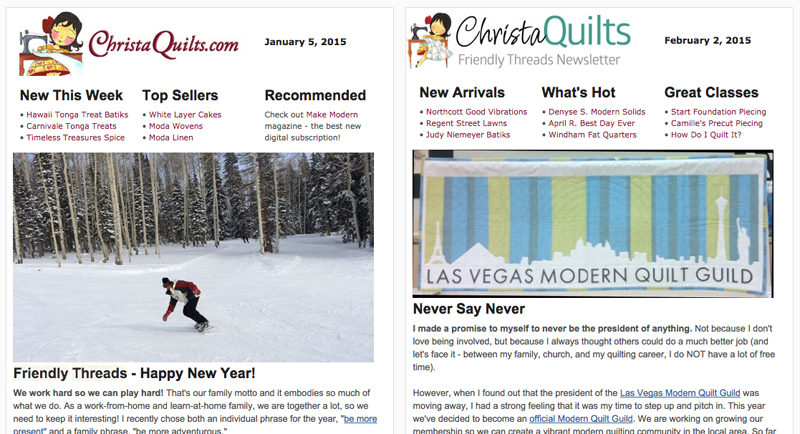
Friendly Threads Newsletter before and after application of the branding.

Friendly Threads Newsletter before and after application of the branding.

For this website, though, it needed a visual refreshening. Christa is using WordPress.com for her site, and the software has a variety of themes that allow varying degrees of customization. Prior to the redesign, the site was using a basic WordPress theme that didn’t have much personality. (It didn’t communicate her branding and message very well.)
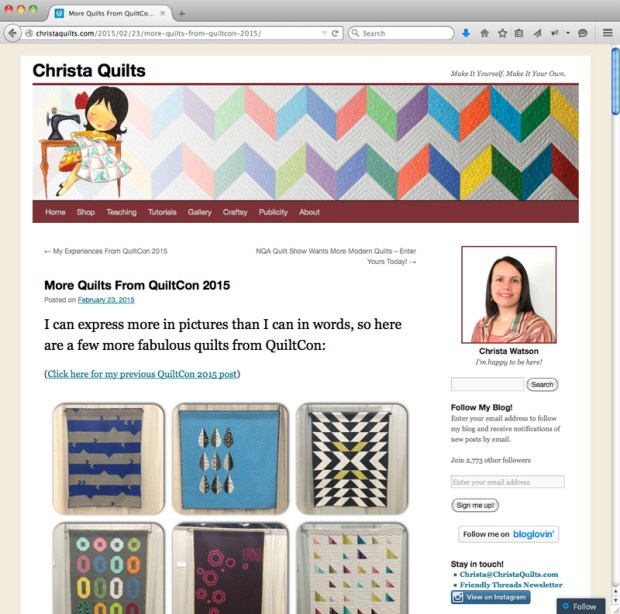
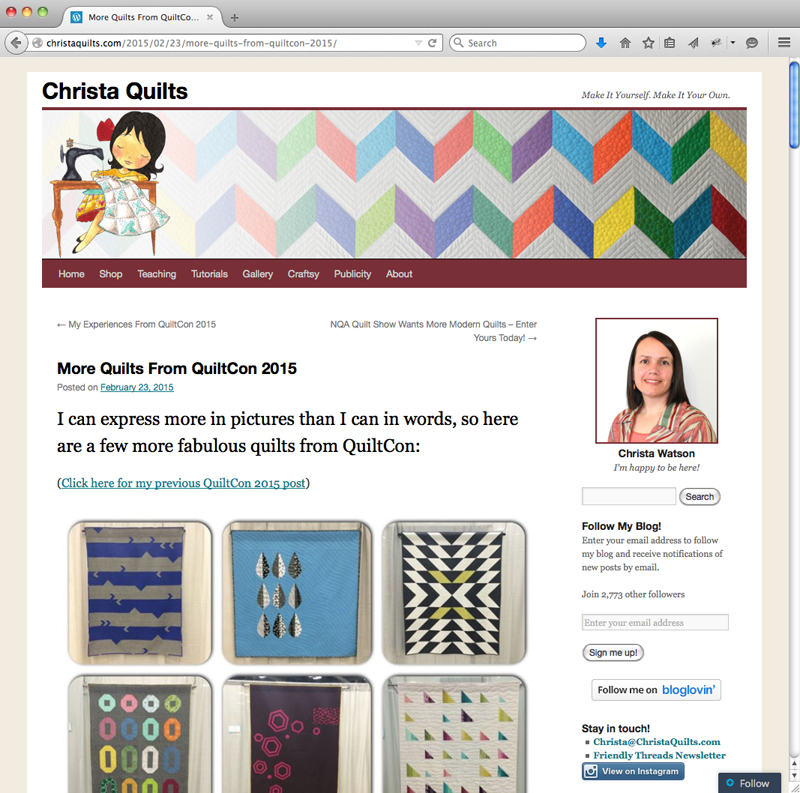
Before: The old site used generic typography in the banner and throughout the site and dated colors in the menubar.

Before: The old site’s theme used generic fonts that didn’t pair well together, an understated title in the banner and dated colors in the menubar.

That was my task — to find a better theme that supported her message, and then customize it as well as I could. I found success in the Selah theme, and used WordPress’ Premium Design Customization options to further tweak the colors, fonts and CSS styling of various parts.

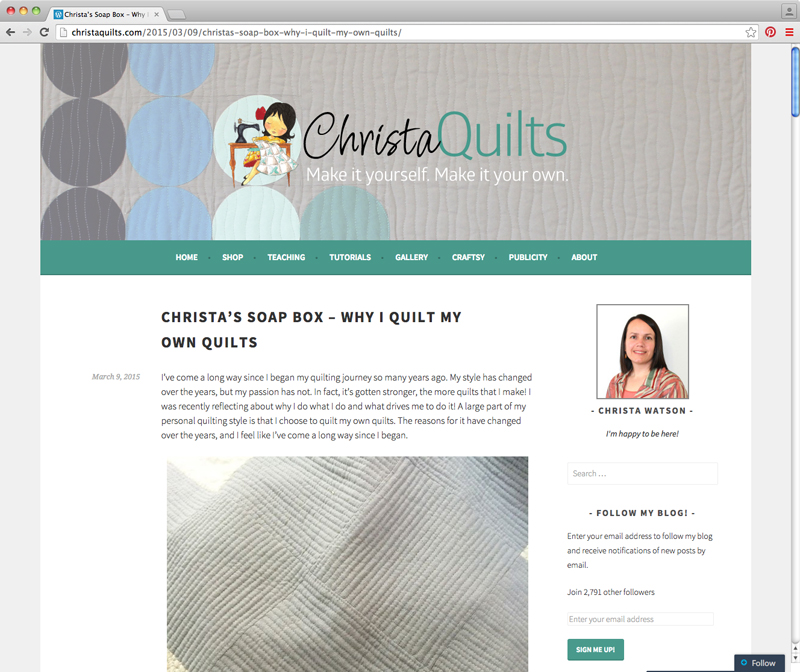
After: The new site feels cohesive in its use of typography, colors, large photos and more white space.

After: The new site feels cohesive in its use of typography, colors, large photos and more white space.

The new site has a wider main area, allowing for bigger photos, and a wider sidebar, too. We cleaned up the items on the sidebar, getting rid of outdated buttons and adding a widget of her quilt designs that refreshes on each visit to the page.

A new banner also was key to making the site feel fresh and new.

Christa-Quilts-headers

A few of the banner options Christa considered before deciding on the current banner that highlights her quilt Abacus.

A few tips

For those of you just starting a business, or those who want to retool their current one, congrats! Hopefully you have realized what message you want to communicate and are ready to get to work. Do you have a logo? How about a website? Here are a few tips for improving your site:

  • Add a custom banner that showcases your logo and communicates your branding. It’s the first thing your readers will see, so make it count.
  • Use the theme options and customization options to your advantage. You will be surprised what you can accomplish with the right CSS and plugins.
  • Test your site on multiple browsers and devices. Each show sites differently and you may not be aware something is broken until you pull up your site in different places.
  • A successful site can be built with either WordPress.com or self-hosted WordPress.org setups. It all comes down to theme selection and customization. You can find a way to make your site what you want. You may just need to find someone to help you get there.

If all of this seems overwhelming, please don’t stress out and feel that you have to know everything to make your business successful. Find someone to help that knows what you don’t know. I promise it will be worth your time. Each of my clients came to that realization before finding me. They each realized that their time was worth more doing what they did best (creating their products and running their businesses) than it was getting frustrated trying to figure out how to do things they didn’t know as well.

So a little plug for my fellow graphic designers and web developers out there: Hire a professional. They can help you achieve your goals and you’ll both be happier doing what you each do best.

Button Button – Who’s Got a Button?

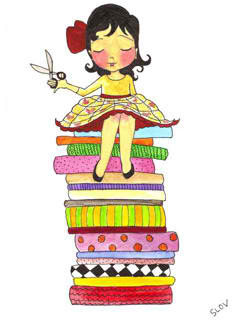
The next step I’m taking in my branding re-design is to change up my logo. My friend Sabrina from Slovly drew this caricature of me a few years ago in exchange for a quilt (of course)! I recently bought the rights from her so that I can now incorporate it into everything I do.

ChristaQuiltsButton_small

My graphic designer Lindsie has taken the artwork and created a series of logos for me which I’ll share more of later. For now, the first thing on the agenda is to order some buttons for pin-trading at QuiltCon. (Check out #quiltconpinswap on instagram to see who’s bringing what!)

Will you be there? If so – I’d love to trade buttons with you! And just because I know you are going to ask, I ordered mine from Cheapest Buttons on Etsy. I went with the 1 1/2″ size. Now I can’t wait to get them!

Christa’s Soap Box – I’m Jumping Off the Deep End With My Patterns

After literally 10 years of going back and forth on whether I wanted to design and write individual quilt patterns, I’ve finally come to a decision – I’m going to do it! For real! 🙂 I’m jumping on the bandwagon, diving in head first, or whichever metaphor is appropriate for what I’m doing, LOL!

If you’ve followed me for any length of time, you’ll know that the best way for me to accomplish a given task is to blog about it. So guess what? I’ve decided to take you along with me on this journey as I go from concept to completion.

CQ-PatternsThese cover shots are ok – but there’s no branding!

The background leading up to this decision:

I’ve seriously wanted to do patterns forever but never thought I had the skills to successfully sell my own patterns. I can do all the math and come up with the designs, but the idea of creating a professional looking layout was a huge roadblock for me. It hasn’t stopped me from releasing a limited number of self-designed PDF patterns, but I wasn’t ready to get serious about pattern design until now.

At first I thought I’d learn how to do everything myself, take some online courses, and read a few books on how to create a professionally looking layout. But you know what – I tried that and found that it’s just not fun for me. In the end, I’ve decided to hire a graphic designer (hi Lindsie!) to do that part for me, so I could concentrate on what I love best: designing, writing, and making quilts.

It hit me like a ton of bricks when I realized this is the same reason people hire others to do their machine quilting. Those graphic designers are probably rolling their eyes at me thinking, “but it’s so easy” – the same way I’m out there trying to encourage others, “but machine quilting is so fun!” I will machine quilt in my sleep if I have to, as long as I can avoid having to illustrate and layout my own patterns, LOL!!

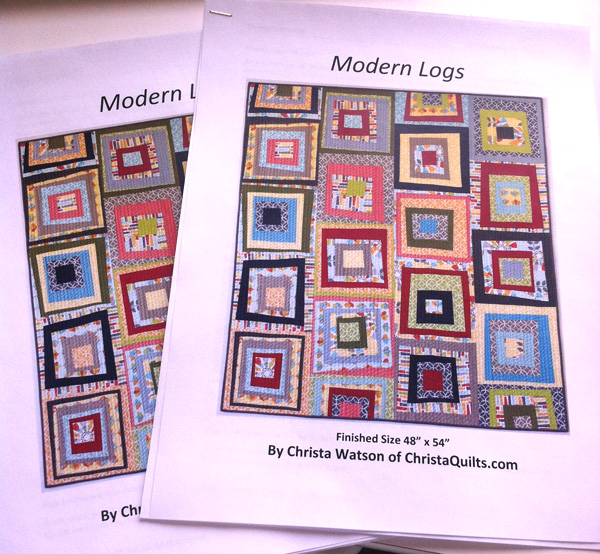
patternMy one and only print pattern can use a little help with graphics – don’t you think?

The First Steps

Like I said, I’m going the professional graphic designer route, but you certainly don’t have to! I’m also working with my friend Tina from Mod Geometry to do a little pattern testing on the side. I’ll first update and re-release all of my current PDF patterns, and finish a few that are in various stages of completion. Then I will release the print versions with sales channels to be determined later.

I’m also working with Lindsie to update the look and feel of my logo and blog. Nothing will change functionally, but we’ll work together to create some cohesive branding, which I’m really excited about.

Quilty ChevronsNow that I have the rights back to Colorful Chevrons, I can re-release it myself.

Future Goals

I guess the big pie-in-the-sky dream for any pattern designer is to have a booth at quilt market and get picked up by national distributors. While I’ll certainly consider that for the future, it won’t be the measure of my success in the short term.

For now, I’ll be happy to have professional looking patterns which I can sell to my fabulous readers, use to teach from myself, and offer to other instructors for them to teach from. I get a lot of requests to use my designs as the basis for other teachers’ classes, so If I can help them out with a ready-made pattern at an affordable price, then it’s a win-win for all of us!

Mini_patternGetting published in magazines was a great way to get my feet wet with pattern writing!

A Little Bonus

For a limited time, you can purchase any of my current PDF patterns for just 4.95! When all is said and done, I’ll offer them for the normal going rate once they are all jazzed up. So stock up now while you can!

CQ-PatternsHopefully my collection of patterns will grow over time.

 If you’ve purchased any of my patterns in the past, I’d love to hear your feedback on how I can improve them in the future. Just shoot me an email or leave your comments below.

And if you are thinking of getting into pattern design – don’t wait 10 years like I did!

Making Quilting Your Business – Marketing Your Brand

Today I wanted to wrap up a series I began earlier – How to Make Quilting Your Business. I’ve explored topics I’m familiar with such as running an online shop, to other things I’ve never tried like designing fabric. I’ve learned a lot in the process and I hope I’ve been able to share a few insights with you.

20141231_businessofquilting

The final topic “Marketing Your Brand” is something I have had to learn about on the fly. Although I somewhat agree with the thought, “If you build it, they will come,” I also agree that “location, location, location!” is important and that you have to tell “them” all about it once you’ve built it!

I am not one to shy away from sharing what I’m doing in the hopes that I can get other people to join me. Although it’s my “job” to convince others to buy what I’m selling, I don’t see it as a scary task since I love what I do so much. Many people agree that selling is selling, yet I know I could never sell what I don’t believe in. Conversely, I don’t mind telling anyone and everyone what I have to offer, if I think it will suit them. The worst they can do is say “no, thank you” and the best thing they can do is say “yes!”

20141231_boq_stash

Here are a few things I’ve done to market my brand:

Networking – In college I was required to attend (boring) networking dinners for my major at the time – accounting. The idea was to hook up with other like-minded individuals to further our prospects in getting a job by getting to know them better over dinner. I should have known then that if I thought it was a waste of my time, I was in the wrong industry!

Now when I attend quilt shows, trade shows and other sewing events, it doesn’t even seem like work. Many of my most recent opportunities have come because of meeting someone at an event or knowing a “friend of a friend.” Often times I will briefly meet someone at one event, exchange a few words with them at the next event, and finally have a good conversation the third time around. It takes time and effort to build these relationships, but don’t be afraid to get out there and meet some great people!

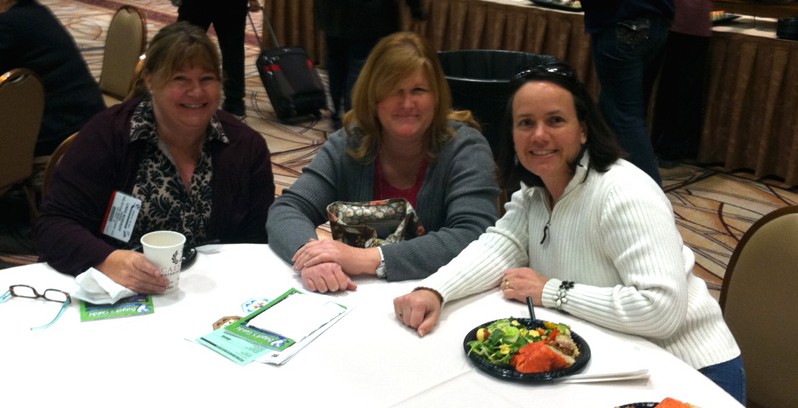
Networking with fellow quilt shop owner friends at a recent trade-show.

Cross-promoting – I am a huge fan of sharing what other people are up to in this industry. More often than not, many of them will return the favor. However, I try not to be obnoxious about it, nor do I request a quid-pro-quo. By genuinely seeking and sharing common experiences that I’m truly interested in, I’m providing valuable content to my blog readers and Instagram followers as well as building a relationship with the person I’m promoting. (Plus, it gives me an excuse to research fun topics I want to know more about!)

Invest in the Industry – I don’t just mean money. Sure, it will take resources to create and promote your business presence, both online and off. If you are selling a product, advertising is key. But even more importantly it takes time and “sweat equity” to gain traction for your business, no matter which industry you are in. Be patient, carve out a specific strategy, and take the time to map out your plan for success.

20141020_market_pin

The greatest way to stifle creativity is to be constantly worried about finances, so don’t quit your day job until you have set aside a few months’ living expenses and have established a rainy day fund.

Create Valuable Content – One of the best ways I have promoted my business is to get my work into books and magazines. I know it doesn’t pay a ton, but consider this: when I relied solely on the income from my precut store, I would pay lots of $$$ to advertise in quilting magazines, usually in the form of an ad taking up less than 1/4 page of space. Now that I’ve put on my designer hat, magazines pay me for content that splashes my name over 2-3 pages or more. Now that’s the best deal if I’ve ever seen one. 🙂

Christa's Quilt AlongI’ve also created a series of Quilt Alongs that are completely free, and they have really helped get my name out there to a wider audience. Although the quilt alongs were a ton of work, they were fun to do and provided me with tons of modern machine quilting practice. They also helped me flesh out how to write step-by-step directions which I’ve been able to turn into patterns and classes.

Take Advantage of Free Publicity – Now let me be clear here – I do not mean work for free. What I mean is if someone wants to feature you in exchange for something easy, like a free pattern you’ve already designed, or by sending in a picture of a quilt you’ve already made, I’d say yes!

So many places like to feature a roundup of specific topics or themes and your work may just fit the bill. I think the worst business mistake a blogger or quilter can make is to create a free publicity quilt just because someone asks, unless you are indeed getting compensated either in money or product, and the quilt can serve additional purposes.

Quilt Scene MagazineSpiraling Out of Control has been in a couple of quilt magazines – free publicity!!

For example, I like my quilts to do double duty. One of my latest free publicity stunts was for a show quilt of mine to be featured full-page in a magazine. I’d already made the quilt, so all I had to do was send it to the show venue a couple of weeks early.

(Note – completing quilts ahead of schedule is helpful, too!) So although I didn’t receive payment, I did get a free copy of the magazine with my name in it in exchange for sending in a project I’d already made. It did cost me postage to ship it there, but the organizers paid the return postage so I was happy with the deal.

Keep Your Branding Simple – This can be a tough one, especially in the era of social media overload. How many different names do you have? The more names you are known by, the harder it is to keep track of who you are!

christaquilts_blog

Many times it makes sense to have a brand name that is different from your first name. Just be sure to use the same brand name across all your sites: your blog, facebook, twitter, instagram, pinterest, etc. I know that’s tricky if your business name is already taken, but for those of you just starting out, keep this in mind when deciding on a name.

And don’t be afraid to change it if needed. Quilts and Treasures (bleh!) and Desert Rose Quilts (better) were earlier incarnations of my business before I finally settled on Christa Quilts. It’s who I am and what I do, so it’s easy for people to remember. I also made sure to buy up several domain names with different spellings, just in case!

Make It Easy for Others to Say Yes – You may have a fabulous idea that others are interested in and you know they will love it. However, you may fall short because they can’t conceptualize it. So make it easy for them to understand, and simple to implement. The more legwork you do, the easier it is for someone else to agree.

For example, I knew I wanted to work with Robert Kaufman as a giveaway sponsor for my last quilt along, Abacus. Instead of vaguely asking them to be a “sponsor,” I presented them with a straightforward idea: I would make the quilt in Kona solids and give away the same bundle of fabrics that I used in my quilt.

20141006_kona_giveawayA graphic that Kaufman made for me using my design sketch and their fabric bundle.

It was an easy idea for them to agree to and they even went one step further; they offered two bundles: one in my colorway and another showcasing their new 2014 solids. I quickly sketched out the quilt using the new colorway and then asked them to share it on their social media platform (see cross-promotion tip above).  They said yes, and I got a lot more followers on both my blog and instagram because of it! (See networking tip above – I only asked them to sponsor after I had already built a relationship with their brand.)

I’m sure I could go on, but this post is already pretty long, so if there’s anything else you are wondering about, please feel free to ask and I’ll do my best to answer. I love talking shop!

Click here for the start of this series.


Quilty Math Update and a Resource

Hey guys – just a quick note to let you know the Fun With Figures lecture is now up on the Modern Quilt Guild community site for members.

I also updated a couple more things on my Quilty Math page here, based on some questions and feedback I got yesterday – so thanks for your input!

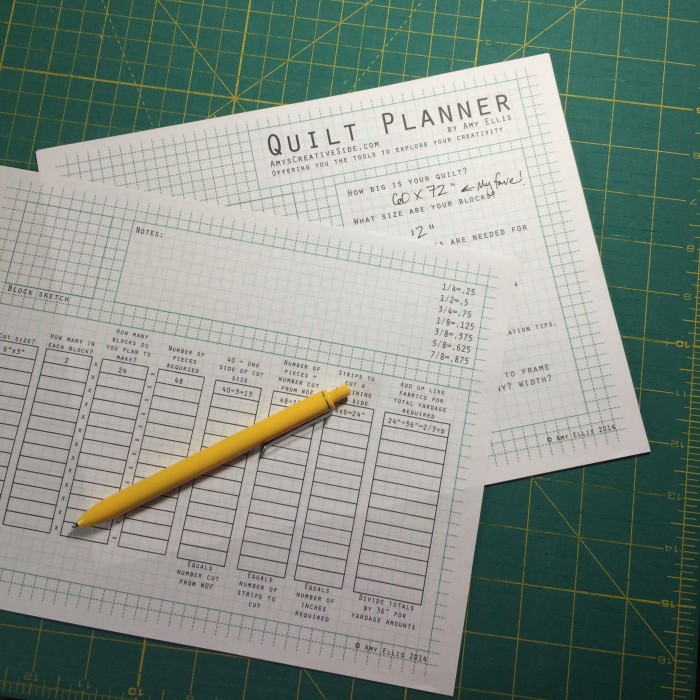
20141120_quilt_plannerQuilt Planner Image – Photo Courtesy of Amy’s Creative Side

Also, my friend Amy Ellis from Amy’s Creative side came up with this brilliant PDF worksheet packet call the Quilt Planner that helps you keep track of your numbers when calculating yardage requirements.

So get your thinking caps on and create something great!

Exciting News – Craftsy is Now an Official Christa Quilts Sponsor!

Lately I’ve been approached by a few different companies wanting to sponsor my blog. In staying true to my mission to support and promote the art of quilting, I am only saying yes to those companies whose products or services I actually use (and who I would promote anyway, but I might as well say yes if they want to throw a little $$ at me!!)

craftsy-logo

With that said, I’d like to welcome Craftsy as an “official” sponsor. What this means is that a couple of times a month I will blog about Craftsy pretty much as I have been doing in the past: with class reviews, exclusive giveaways, freebies and discounts on classes just for my followers, etc. The difference is that these posts will be clearly marked as “sponsored by” Craftsy. But they will still be my own true opinions.

I’ve always believed that writing good content will pay off in the end; so it feels like a nice pat on the back that they’ve noticed my Craftsy love and are now wanting to partner up with me. 🙂 Let the good times roll!

craftsy_love

Craftsy mini quilt pattern by Right Patterns


How to Make Quilting Your Business #12 – Designing Fabrics

Today’s business of quilting topic – designing fabrics, is one I really don’t know much about. Therefore, I’ve enlisted the help of Moda fabric designer April Rosenthal to share a few of her experiences about the whole fabric design process. All quilt & fabric images shown below are courtesy of April.

Scroll to the end for additional blog posts about this topic.

20140721_ar_fabricBest. Day. Ever. designed by April Rosenthal for Moda fabrics
I think April’s candid responses are very informative so I wanted to include them in their entirety. My questions are in bold and her responses are below.

Please tell me a little about your fabrics and the inspiration behind them.

“When I think back on being a teenager, I remember how everything was exciting. Everything was new, and being on that precipice between child and adult was exhilarating. With each new privilege, each new experience, I was eager to learn and enthusiastic about the challenges. I felt like I could take on the world and succeed.

“Best. Day. Ever! is a reflection of this enthusiasm, this can-do attitude, this excitement for life–that I try every day to remember as an adult. With beautiful, saturated color, and bold, joyful patterns, Best. Day. Ever! reminds me of all I have to be happy about–and how much is still out there waiting to be experienced. My fabrics are inspired by trying something new, taking chances, and grabbing my dreams with both hands. My goal is to make EVERY day my Best. Day. EVER!”

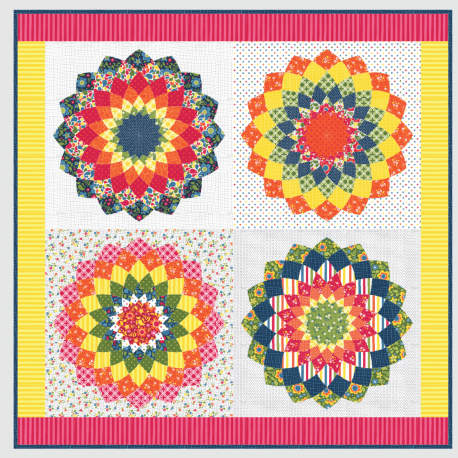
20140721_ar_dahlia

Dahlia Quilt by April Rosenthal, Prairie Grass Patterns

What made you decide to design a line of fabrics?

“Fabric design is the perfect intersection of several of my passions: color, design, and physically making with my hands. While I get a lot of satisfaction out of creating digital things like websites, there is nothing quite like holding an actual product you designed.

“Designing fabric has been a goal of mine since I began my business in 2009, and almost everything I’ve done has been with that in mind. In fact, from the moment I discovered that there were moms like me designing fabric from their home–my heart beat a little faster, and I knew that was where I needed to be. At the time, I was consumed with 18 month old twins and was feeling pretty acutely isolated and uncreative.

“Prior to children, I was crafting, sewing, and making all the time. I was online looking for inspiration and hope that I’d get back to creating someday. That desperate evening changed my life path for me! I began drawing up a business plan and quilting patterns that same week.”

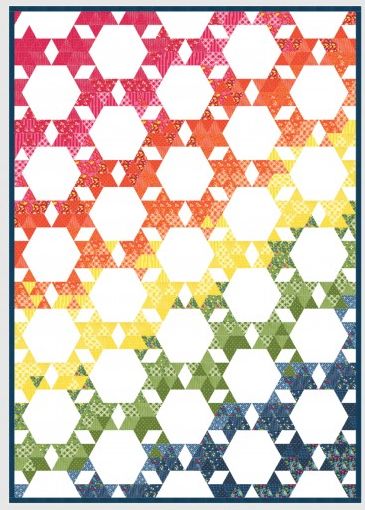
20140721_ar_modernhexModern Hex by April Rosenthal, Prairie Grass Patterns

How did you decide on working with Moda?

“Moda was the first fabric brand I noticed when I started paying attention to the different manufacturers and their fabrics. Consistently, I would pull fabric I loved from the shelves only to find Moda on the selvedge. I knew from day one that they were the company I wanted to work with, and every interaction I had with them only solidified that desire.

“I had several opportunities to design for other manufacturers, but I declined – not because they aren’t amazing companies in their own right, but because my goal was always Moda. As I became more involved in the industry, I was told I was crazy for turning down opportunities, and that designing for Moda was nearly impossible–but my dreams have always been big, and I’m willing to chase them down.”

How long did it take you from conception to completion of the line?

“I started drawing up Best. Day. EVER! in the spring of 2013. I delivered the files and swatches to Moda in late fall of 2013, and had strikeoffs in January. It was actually pretty expedited for this first line, I don’t think it usually goes that fast.”

Do you plan on designing other lines in the future?

“Yes! I have a second line in the works right now that will come out in 2015, and plan on many more after that.”

How hard is it to become a fabric designer? What skills do you need to be successful?

“At the beginning I thought, ‘How hard can it be?’ and just jumped right in by submitting a portfolio. It wasn’t accepted of course, because it really wasn’t any good. I was overconfident and pretty ignorant frankly. After being turned down I actually started researching and learning. I took art and design classes, I read dozens of books, I bought fabric just to look at how it was designed. I found fabrics that I loved and practiced creating art in those styles.

“I noticed that most fabric designers were also accomplished quilt or garment pattern designers, and so I began to learn about publishing patterns. What I learned then, and this is even more applicable now due to the economy – is that manufacturers need designers that will bring value and help sell the fabric. They need people who know the industry, who have the quilting or sewing skills to make the fabric look good, and who have the following on social media and online to drive sales. They’re not just looking for pretty pictures to print on fabric–they’re looking for someone who can bring sales to the table.”

20140721_field_guideA Field Guide to Fabric Design by Kimberly Kight is an excellent resource.

What’s your best advice for someone who wants to become a fabric designer, but doesn’t know where to start?

“Learn. Learn everything you can about the industry, about design, and color choices, and the people who are decision makers. Learn how to quilt and sew accurately, and gain skills there.

“Make yourself the complete package. Find ways to get your quilts out there in magazines, contributions to books, and shows. Share your designs online, and gain a following. In the end, it comes down to what you know how to do, how well you do it, and who knows you can do it. If it’s something you really want, be persistent.”

Anything else you’d like to add?

“One of my best resources along the way were other friends in the industry. They were (and still are!) invaluable in teaching me, and helping me avoid major missteps. There are many, many, incredible people in this industry, and they are generous with their knowledge and time.

“My advice is to make sure you make friends, and not enemies in the industry. I’m a big believer in there being enough room in this industry and in life for everyone and their dreams–I am absolutely not competing with anyone. Be happy for others when they succeed, and be generous in helping others succeed. It will come back to you. Always do your own work, be honest, and learn. You’ll get there.”

Additional Information

Check out this post by Alyssa Thomas of Penguin and Fish on How to Make a Fabric Collection. It’s a great read!

Want to know the inside scoop? Read this indepth article from Abby Glassenberg about How Much Fabric Designers Earn. It may surprise you!

Click here for the start of this series.


How to Make Quilting Your Business #11 – Getting Published

Today’s business of quilting topic, getting published, is probably one of the more “glamorous” aspects of making quilting your business. It’s the goal of many quilting bloggers and can be exciting for both the amateur and professional quilter. I’ve been published several times in magazines, and I’m currently working on a book with Martingale, so I will be happy to share a few of my experiences.

christa_quiltcon_chaming_chevronsAt QuiltCon in 2013 with Charming Chevrons – the start of my modern quilting career. And yes – I do own more than one shirt, this one just happens to be my favorite!

Background Inspiration

I came back from QuiltCon in 2013 on fire and ready to take on the modern quilting world! Although it has always been one of my goals to write about and publish my work, it wasn’t until I was inspired by the success of other modern quilters, that I actually took the necessary steps to make my goals become a reality. This is what I constantly ask myself, “What actions would you take today if you weren’t afraid of rejection or failure?”

Trust me, for every success I’ve shared publicly, there are plenty of failures and mishaps along the way! I think the key to long-lasting success is to get up, dust yourself off, and keep going. It’s worked for me so far. 🙂

So, how do you go about getting published?

Honestly, it’s as easy (or as hard) as contacting the publishing company and finding out what their submissions guidelines are, then following the steps. You need to come up with a good idea, be flexible, work well with deadlines, and be patient!

Quilty ChevronsColorful Chevrons, inspired by my original quilt, Charming Chevrons

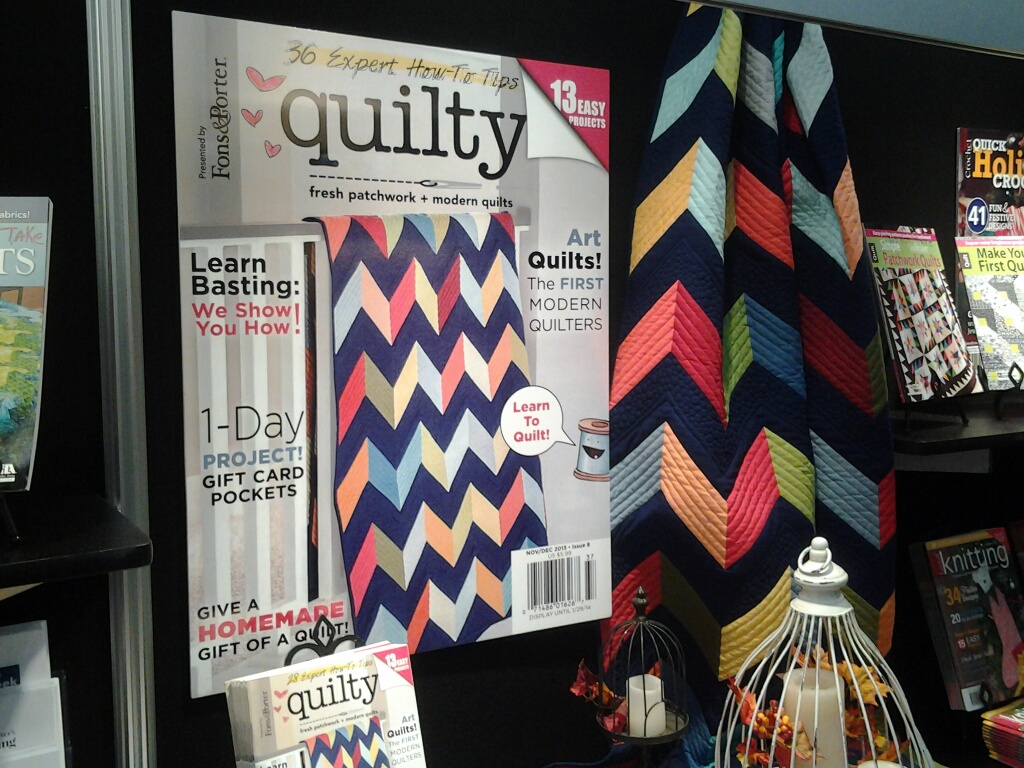
When I submitted my first design idea to Quilty magazine, I included a picture of my Charming Chevrons quilt just to show an example of my work. Well, guess what – they weren’t interested in my design submission, but they loved the chevron quilt! So I reworked it into a larger size with a fresh color scheme, and it ended up making the cover. All because I was willing to adapt. 🙂

Did I Say Be Patient?

It took me 6 months to narrow my focus and come up with a really good book proposal to submit to Martingale. Then it took another 5 months to get approval and receive the book contract. It won’t even be published until next summer, so no spoilers yet – you’ll just have to wait!

For the magazine, I first contacted them in March of 2013, received the contract in April, sent the quilt off in June, and it was published in the November 2013 issue. So yes, patience is a virtue when comes to writing a book or a magazine pattern. And my best advice? Don’t send anything without a contract. I’m speaking from experience here. 🙂

What About the Money?

The amount of payment and ownership rights vary depending on each publishing company and the length of the article/book/pattern/topic. Magazines and most compilations usually pay each contributor a one-time fee whereas book royalties are usually tied to the volume of sales. Also, some fabric companies may provide free fabrics for the projects in exchange for a mention which I think is cool.

Another perk I have discovered, is that the more I get published, the more my name gets out there, leading to further opportunities to teach, write and design. I have to admit, it is quite the ego boost to see my name in print. That’s worth it’s weight in gold, right?

herrinbone_quiltingGetting my name out there led to making my Herringbone quilt on commission for Camelot Fabrics, plus a pattern designing gig, teaching invitations, and extra publicity!

I also love the fact that once my book is published, I’ll be able to teach from it and have plenty of show and tell, not to mention at least a year’s worth of quilt show entries. 🙂

Some authors choose to go the self-publishing route, but for me that just seems like too much work. I’d rather let the professionals handle the layout, editing and distribution, so I can spend my time on the fun parts – pattern writing and quilt-making! (If you are interested in writing and publishing your own stand-alone patterns, I covered that in an earlier topic here.)

A Winning Submission

If you are wanting to get published, I would recommend starting with a magazine. There are so many of them out there, and one of them is bound to like your original design! One word of caution though – it’s bad form to submit the same idea to several different magazines at the same time, so don’t do it!

201406010_eq_artist

I design all of my quilts in EQ7, both personally and professionally.

Most designers use some sort of design software like EQ7, or Adobe Illustrator, but hand drawn sketches are also usually okay, too. Magazines prefer to start with drawings and sketches rather than actual physical quilts. If it’s your first submission, it’s great idea if you can include a picture of a finished sample of your work. Try to brainstorm a couple of different designs and match up each idea with the magazine that seems like it would be the best fit. For example, you wouldn’t submit a traditional quilt design to a modern magazine, etc. Then send off your idea(s) and forget about them for awhile.

20140610_martingaleI recently asked Karen Burns, the acquisitions editor for Martingale,  her best advice on writing a winning book proposal. Here’s what she had to say:

“Put a lot of thought into the ‘hook’ of the book, and the designs. Having 14-16 pretty quilts alone doesn’t work anymore. What makes them special? What makes people want to buy your book? What are you teaching them that they just “need” to know? Is there a technique that is used that is new and exciting? What would make the consumer want/need this book? What is different about the book, than what is out there?

 “Contact the acquisitions editor of the publisher, and work with them.  The acquisitions editors are always happy to help, encourage, and coach. Also, it is important to realize that writing a book takes a lot of work, but the end result, (a great book!) is totally worth it.”

Thanks Karen! Wise words indeed. I hope this encourages you to jump in and give it a try if you want to get published. The worst they can do is say no, and they may just say yes. 🙂

When I was doing research and talking to others about their publishing experiences, quilting instructor and author Deb Karasik said to me, “writing a book will change your life!” That statement both encourages me and scares me at the same time. But I’ve jumped on the bandwagon now, and I have a feeling it’s going to be a wild ride!

Additional Reading

Check out these additional informative blog posts about getting published:

Insider Tips on Magazine Publishing by Abby Glassenberg

Is it Worth it to Write a Craft Book? by Diane Gilleland

Click here for the start of this series.

Last Call for Fabric Clearance – We’re Shutting Down the Old Site!

But first, I need to announce my charm pack winners. Congratulations to Peg H. who won the Moda charm pack blog giveaway, and @fedewala who won the instagram bundle. Thanks so much for your input on my newsletters, too. Monday was the preferred day, so I’ll take a week off and start sending them again on a regular schedule. That works better for me, too. 🙂

Just in case you missed it, you can sign up for my weekly newsletter here.

Now for the bigger news, we are downsizing and shutting down the old website at the end of the day tomorrow, Wednesday, June 25th and everything remaining is now 50% off.

ChristaQuiltsThis is so we can concentrate our efforts on our new leaner (but in no way meaner) precut store where we sell fat quarter bundles, charm packs, jelly rolls, layer cakes, and just about any precut you can think of from all the major manufacturers. We also carry a large selection of Aurifil thread by the spool or by the bundle. It’s been so fun to seek out new precuts and new ways to use them!

APQRAnd thanks to those of you who listened and cheered me on during my interview on Pat Show’s quilting podcast yesterday. I was super nervous to go on, but she instantly put me right at ease. What a fun lady and a great host! If you missed it live, you can listen to all of Pat’s archived podcasts here, and you can subscribe to the show via Itunes (search for American Patchwork and Quilting Radio).