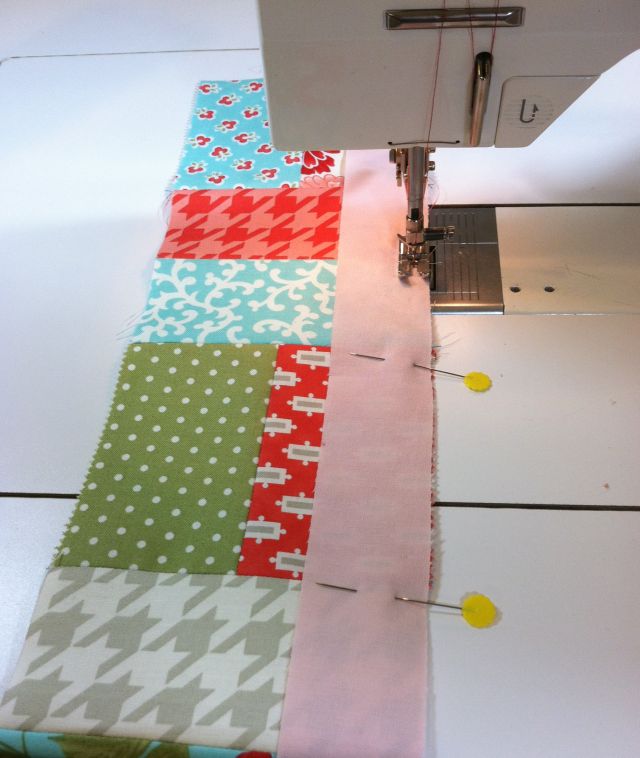
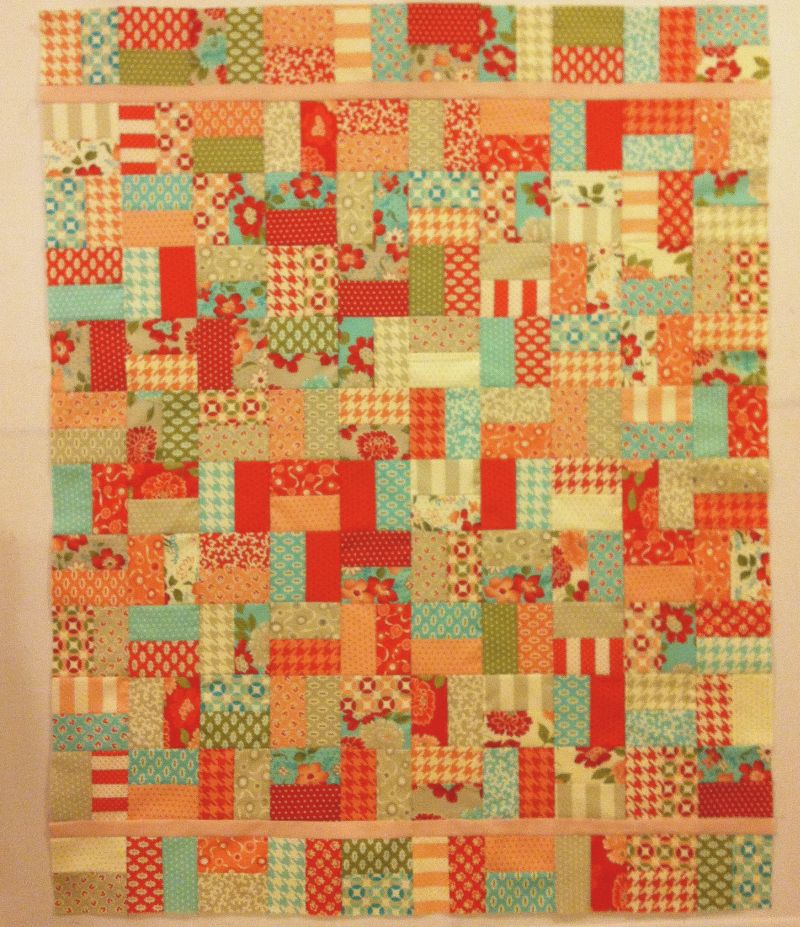
Favorite Tools #6 – Needles

Since we will be quilting our Jolly Jelly Roll quilts this week, I thought it was an appropriate time to talk about sewing machine needles. Needles are often the least expensive but one of the most important components of making a successful quilt!

If your needle is old, bent, or flawed, it will make quilting much more difficult. Often times when you think thread or tension is the problem, it may actually be your needle!
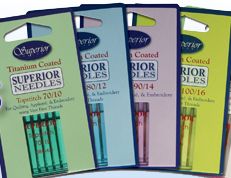
Superior Needles

My favorite needles to use for both piecing and quilting are Superior’s Titanium Coated needles. They come in a variety of sizes and work wonderfully. There are a lot of different types of needles out there – really more than you need.

The titanium needles are perfect for  sewing, piecing, machine applique, and machine quilting. They work well with metallic threads, too. So forget about having different needles for different purposes, ie: universal, ball point, sharp, or metallica needles. Just stick with the titanium topstitch needles for everything and all you have to think about is which size to use. They last much longer than most of the other brands, too.

So how do you know which sized needle to use? It depends on your thread. The titanium needles come in 4 sizes – 70/10; 80/12; 90/14; 100/16. They have a much larger eye which allows the thread to pass through with less tension and therefore fewer thread breaks.Needle Closeup
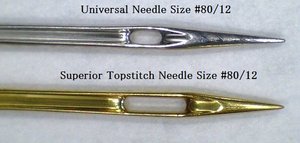
Size 70 needles are  for very fine threads such as 60 weight cotton or polyester, monofilament, #100 and silk threads. I use these with silk thread for machine applique that blends into my quilts.

Size 80 needles are for for fine threads such as 50 weight cotton or polyester. I use these for piecing quilts together and sometimes for allover stippling with cotton thread that blends into the top.

Size 90 needles are for medium threads such as 40 weight cotton or polyester. This is the also the needle I use for decorative threads and metallics. The thread does not shred!!

Size 100 needles are for heavier weight cotton or polyester threads. I’ve only used these needles once so far when I quilted with a 30 weight variegated thread. It worked like a charm with no thread breaks or skipped stitches!

I use the 80’s & 90’s most often in my everyday piecing and quilting. Since these needles last for a long time I can usually piece and quilt a medium throw sized quilt with just one needle.

I’m still not convinced that Superior Threads offers my favorite thread, however. You can read my opinion about the company here on my soapbox, but I do love their needles!
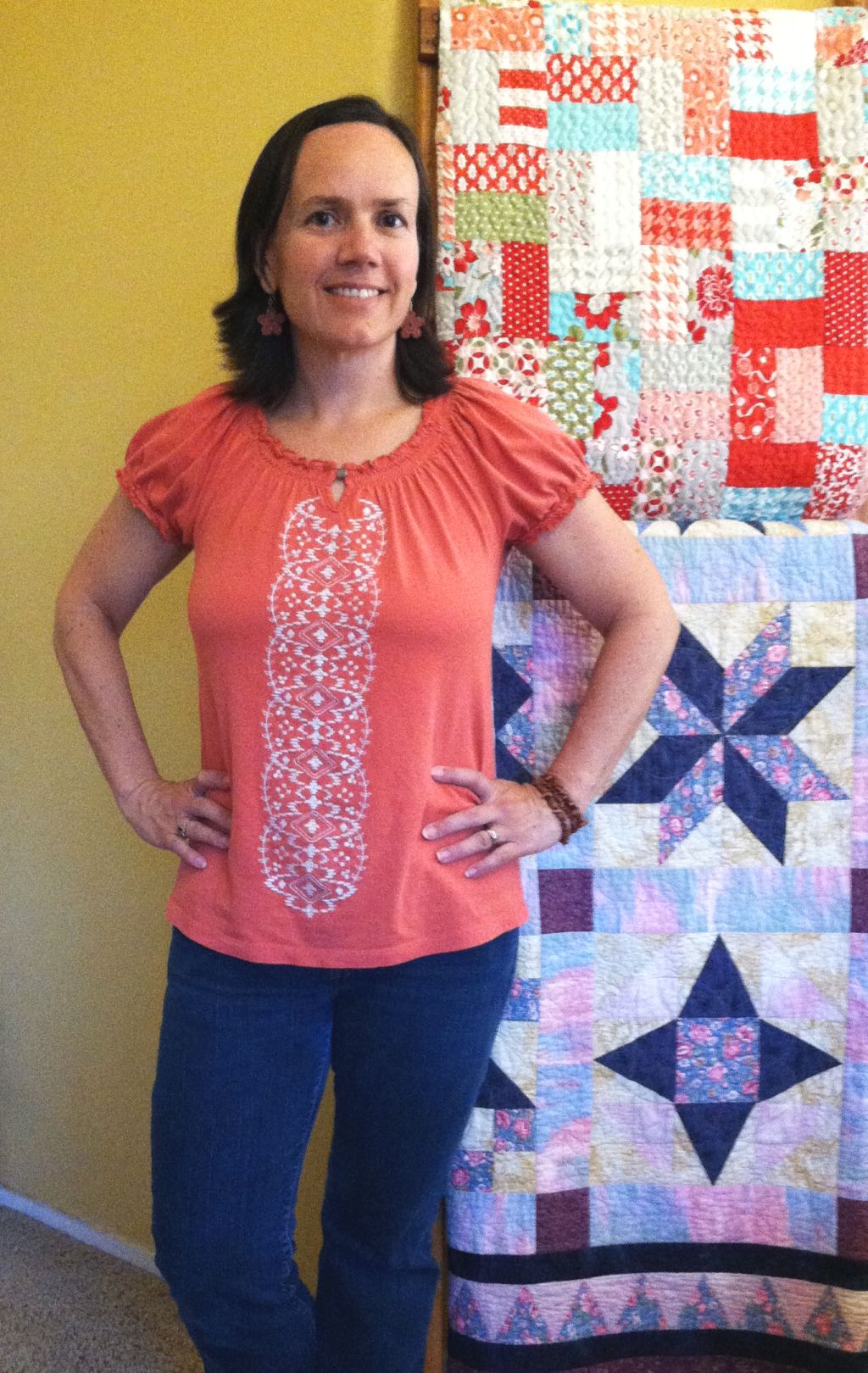
Weight Loss Week 17 – Another Milestone

20 Pounds Weight Loss

20 Pounds Weight Loss

I can’t believe I have been working so hard for so long!

It’s been 4 months, but I have finally hit the 20 pound weight-loss mark.

I lost what I gained last week plus a little bit more to reach a total of 20.2 pounds gone forever! I still have about 16 more to go.

It took me only 5 weeks to lose the first 10 pounds, but then more than double that time to lose the next 10.

One thing I can say for sure is that I’ve learned how to persevere! Here are some “before” and “during” pictures so you can see how far I’ve come.

I’ll show my progress again in another 10 pounds.

Week 1 Starting

Week 1 – The Start

First 10 Pound Weightloss

10 Pounds Gone

My favorite shirt is fitting better and I had to switch to some smaller sized jeans. Whoo-hoo!

You can also  see I’ve finished up a couple more quilts in the meantime.

My hair has grown a lot so as a little reward I’m getting it cut off again tonight.

Here are this week’s tips on how to continue to persevere and make it to the next weight loss goal. It will take awhile but  it will be worth it.

1. See yourself in pictures. Taking pictures along the way is keeping me motivated. For a long time, I had up a  “fat” picture on my fridge which made me pause every time I wanted to raid the fridge for a snack. Sometimes you can’t really tell how you look until you step back and look at those photos. Like, was I really that fat? Or, hey I look pretty good in that outfit!

2. Share With Others. If nothing else, consistently keeping up with my blog keeps me accountable. My mom has promised me a shopping trip when I get to my goal. Now she can see how hard I’m working to earn it! Plus, when I have other things to blog about, like the quilts I’m working on, it helps keep my mind off food.

Hopefully it won’t take me as long to get to the next 10 pounds….

Christa’s Soapbox Help Needed – Loralie Fabric Survey

For today’s soapbox, I wanted to try something a little different. Loralie Harris, one of the top designer brands I carry,  is now distributing her fabrics in-house again. I sell several of her fabric collections but she’s coming out with more and re-releasing some old favorites.

Since I can’t afford to buy all of them, I need help in deciding which next line to carry. The choices are Cool Cats, Nurse Central, Sew Creative, or Fast Women. Please click here to participate in an online survey and select your choice.

I will leave this survey open through Friday, August 17th. I’ll tally the responses and let you know which one got the most votes; then I’ll order it right away.

Speaking of fun new fabric lines, you can leave me a comment if there are other collections or designers you think I should carry. I love to sell fabrics I like, but some of my best selling groups have come from suggestions from my customers. Thanks in advance for your help!

Sew and Tell – Dragonfly Batik Art Quilt

I am so excited to share with you Diane’s beautiful art quilt below. She used green batik fat quarters that she got from me, and quilted with metallic thread to add the textured water and pond ripples to her piece. The dragonfly was begun in a Susan Brubaker Knapp thread sketching class and finished at home. (Some people actually finish their class projects!!) She added glittery glue to give the dragonfly some sparkle and make its wings look iridescent.

Dragonfly QuiltDiane has also been following along making her version of the Jolly Jelly Roll quilt. She finished up her homework for the week and shares her lovely jewel-toned top with us:

Jeweled Jelly Roll QuiltNice job, Diane! For those of you quilting along with my tutorial, be sure to email me pictures of your in-progress diy quilts, too. It’s such fun to see the variety.

And for those of you that want to share your work using fabrics purchased from me, I’ll send you a little thank you if I feature your finished project on my blog. You can email pictures to christa@christaquilts.com. Happy quilting!

Christa’s Quilt Along 1.4 – Backing and Basting Your Jelly Roll Quilt

Welcome to part 4 of my do-it-yourself quilt along! So far we’ve gathered our supplies, sewn the blocks, and completed our quilt tops. This week we will piece our backings and baste our quilts so that our Jolly Jelly Roll Quilts are ready for machine quilting next week!

Step 1 – Piecing the Backing

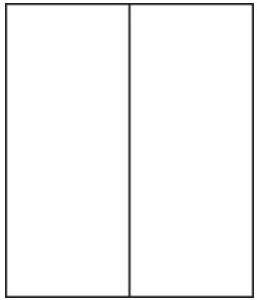
Backing DiagramIf you use one fabric entirely for your backing, sew together two lengths of fabric so that your piece is at least 5 inches longer and wider than your quilt.

For a 52″ x 52″ quilt top you would need 3 1/2 yards of fabric for the backing. Cut that into 2 equal pieces, each measuring 63″ long by 42″ wide. Sew those together on the selvedge edges with a half inch seam and you’ll get one piece that is about 63″ x 80″ – plenty of room!

I wrote up a post a few weeks ago on how to make a pieced quilt backing. With more than one fabric. You can read about that by clicking here.

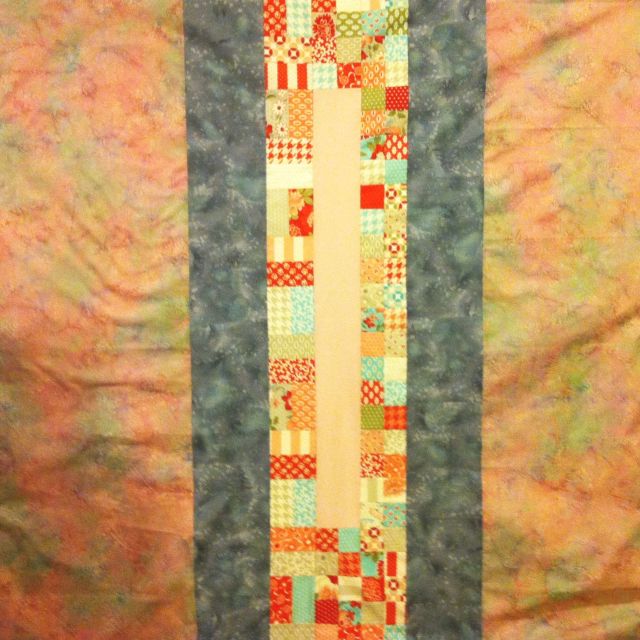
Pieced Quilt BackFor my backing, I chose to use up all of my leftover jelly roll blocks plus some other chunks of fabric, about 3 yards total, to make it a little more artistic.

I sewed two rows of leftover blocks, then filled in with strips of pink and grey fabric from my stash.

The pink on the sides is much wider so a bunch of it will be trimmed off later.

(Don’t mind the wrinkles – I finished it just last night!)

Step 2 – Layering the Quilt

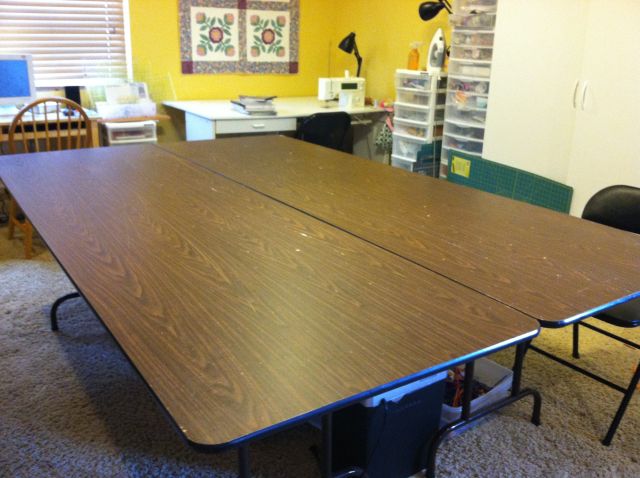
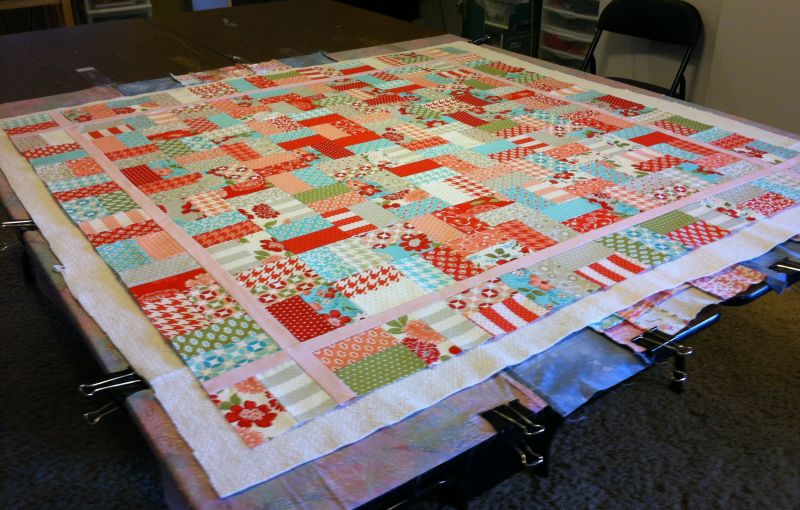
Basting TablesThe most important thing you need for successful basting is plenty of room! I have two 8-foot tables set up in my sewing room at all times. I use them for cutting and basting.

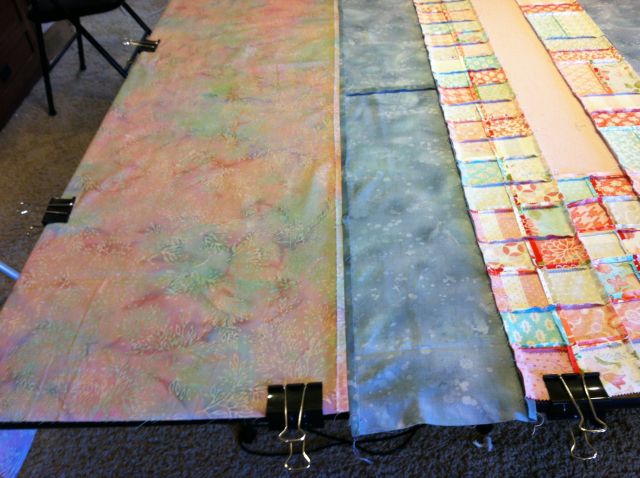
First, you need to secure your backing; this is why you want it to be larger than your quilt top.

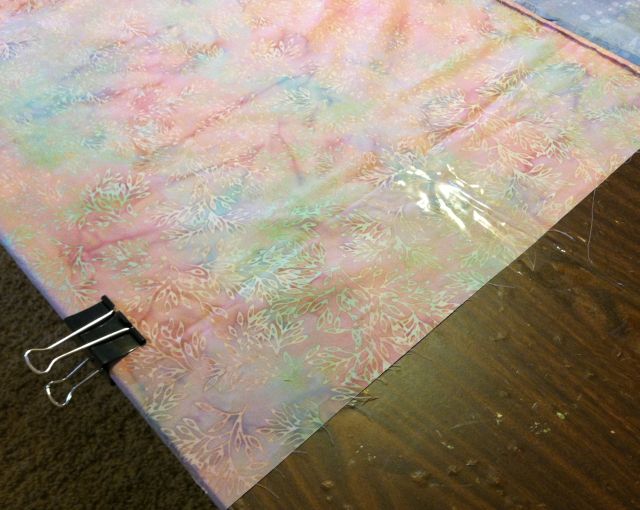
I do this by using office clips to secure the backing to the table. I use tape when the quilt backing does not reach the edge.

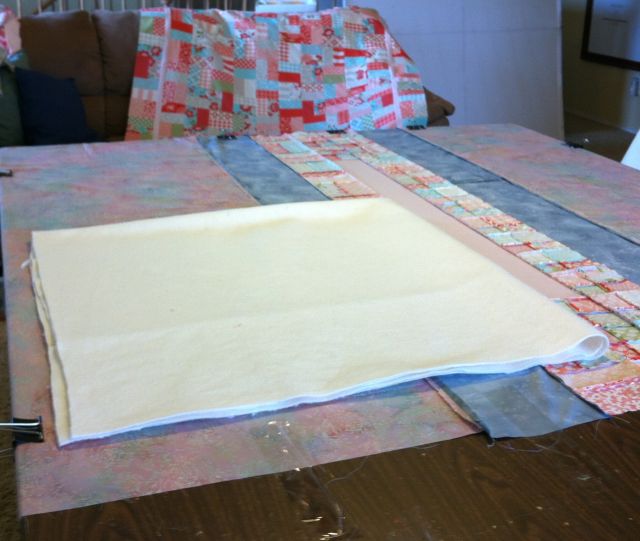
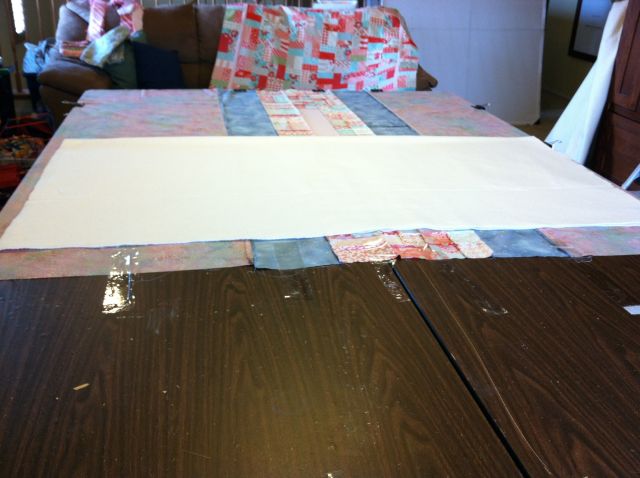
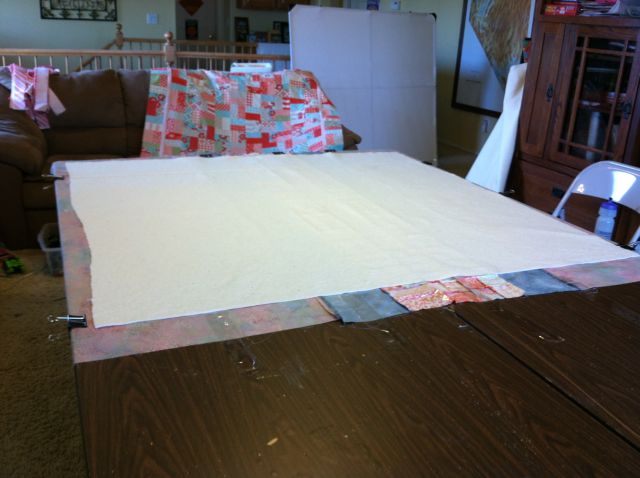
Clamp Down the BackingTape the EdgesNext, it’s time to spread out the batting. I used Warm-N-Natural cotton batting which does have a right and wrong side. The side with the flakes is the front side and the whiter side is the back side. Layer it right side up.

You can start with your batting folded up in one corner, then unfold the batting one step at a time if you are basting by yourself. Be sure to smooth it down so there are no wrinkles.

Batting 1Batting 2Batting 3You can click each of the pictures for a larger more detailed view.

Finally, it’s time to add the top! I don’t clamp down the top, but I do smooth it out and line it up as much as I can so that it is as straight and square as possible.

Layered QuiltStep 3 – Basting the Quilt

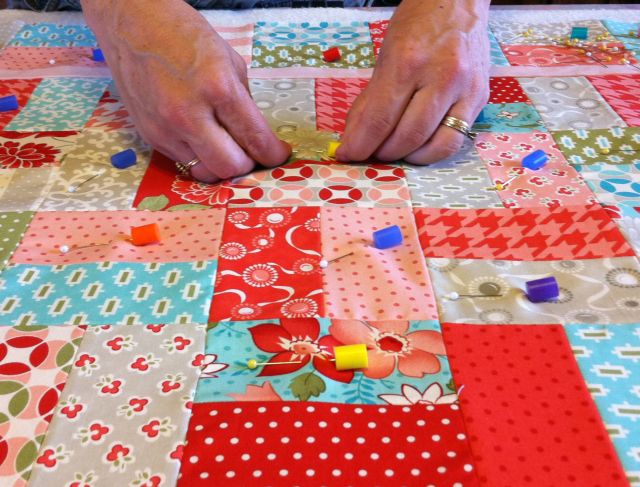
Now it’s just a matter of pinning the layers together so they won’t shift during quilting. My favorite basting tools are Pinmoor pin anchors. They are little  rubber tips that fit on the end of straight pins. You can use any types of pins with them and the pins can jab anywhere into the hard rubber piece. They last forever and are so much easier to use than safety pins.

Pinmoor BastingIt took me about 150 Pinmoors to baste this quilt in under 20 minutes. If you are not ready to buy enough for a whole quilt, start with one package and baste part of your quilt. Baste the rest of your quilt with safety pins. Then, when quilting, take note of how much easier the pins and Pinmoors are to remove and you will be converted!

Here’s a great video you can watch on how to use them, made by the makers of Pinmoors.

Next week  we will machine quilt this baby! That’s the best part of my do-it-yourself quilting tutorial; you are actually going to do it all yourself – no quilting by check here!!

Remember to send me pictures of your completed quilt tops. You can email me directly at Christa@ChristaQuilts.com. It’s “sew” fun to share!


Here is the complete Jolly Jelly Roll Quilt-Along Schedule:

Week 1 – Supply ListJolly Jelly Roll Quilt

Week 2 – Sewing the Blocks

Week 3 – Completing the Top

Week 4 – Backing and Basting

Week 5 – Machine Quilting

Week 6 – Machine Binding to Finish

Favorite Tools #5 – Batting

Later this week during my do it yourself quilt-along, we are going to be basting our Jolly Jelly Roll quilts so I thought it would be an appropriate time to talk a little bit about batting.

From my experience, the type of batting you choose can really make a difference in creating a well-done quilt. Since all of my quilts are machine quilted, I need to use battings that are easy to quilt through and are not so bulky that they won’t fit under my machine.

So far, my two favorite battings are Warm-N-Natural 100% cotton, and Pellon Legacy Wool. (Unfortunately I don’t carry these in my shop because they are too bulky to ship!)

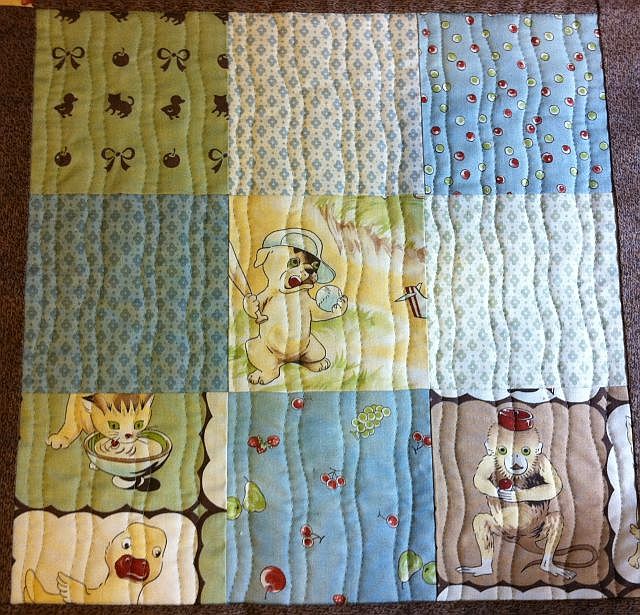
I like Warm-N-Natural because it’s very flat and relatively inexpensive. I can actually buy it buy the bolt with a discount coupon from Joanne’s for about the same price that I can get it wholesale. It does shrink up a bit, but it gives that nice antique wrinkly look when washed. Here are some machine quilting closeups using Warm-N-Natural.

Little Rascals QuiltingQuilting Warm-N-Natural

These were both densely quilted with an allover free-motion quilting design.

If I want my quilting to really pop, or if I am doing intricate quilting like feathers, wreaths or focus designs, I will use Legacy Wool batting. It’s a little more expensive but it’s very clean and white so it’s a perfect choice for quilts with lots of white backgrounds like in my Bungle Jungle quilt below. It also allows me to achieve a “faux” trapunto look if I densely quilt the background areas. The pictures below show quilts using Legacy Wool.

Quilting Legacy Wool

Faux Trapunto QuiltingThe little hands really pop! Wool has a nice loft but the background squishes down nicely when you quilt the heck out of it!

As far as polyester battings go, I’m not too fond of them as they are usually too lofty for me. I haven’t tried any of the newer blends out there like bamboo or silk yet. One batting that is next on my list to try is Quilter’s Dream Cotton.

If any of you out there have favorite battings that you like, please add your comments!

Weight Loss Week 16 – Back on the Bandwagon!

Boy I had a rough week! It started out great with a 2 pound weight loss last week, but then I got cocky, tired, busy and stressed, and things really went downhill! I ran 6 miles on Wednesday and then did the classic exercise blunder – I thought I could eat whatever I wanted that day!

Big Mistake! One day of bad eating turned into three, and one night of bad sleep and no exercise lasted for 2 more days.  I am a stress eater and once I had fallen off the wagon, it was mighty hard to climb back on.

I was nearly on the verge of giving up when I remembered that I had to have something to write about today! So at the last minute I decided to straighten up my act. I was super good on Saturday and Sunday, did a really hard workout this morning and minimized what could have turned into a disaster. I did gain .2 pounds but earlier in the week it could have been much more. My total weight loss is 19.4 pounds so far and I am so close to 20!!

So here are this week’s tips on how not to have a repeat disaster:

1. Don’t give up – no matter what! Even though my bad day turned into a bad week, I stopped it from becoming a bad month! I reevaluated my goals for this week into something achievable, as in stopping the bloodletting and getting back on track!

2. Sleep, sleep sleep! – I’ve mentioned sleep before, but that is the number one factor for me on whether I’m able to get up the next morning and start my day off on the right track. If I don’t get a good night’s sleep, it’s nearly impossible for me to function the next day and that leads to further bad habits throughout the day.

3. Be accountable! – I don’t know how many times I’ve saved myself from quitting because I have to be accountable for my goals. My workout buddies will get mad at me if I skip out on more than a day or two of exercise. And I have 15 weeks now of blogging and journaling under my belt to catalog my weight loss journey. I can’t stop now!

I sure hope this week turns out better!

Christa’s Soapbox – Blogging About Blogging #1

I’m relatively new to the whole blogging concept. I’ve had my blog up and running for almost 2 years now but it’s really just been in the last 4-5 months or so that I’ve branched out and have started following other people’s blogs. Not only does this give me interesting content to read, it helps me to improve my own writing and blog format.

Today I wanted to share links to some of the quilting blogs I’m following. My favorites are those that post new topics nearly every day. It’s fun to start off my day with a quick browsing of my favorite blogs – it makes me feel like part of a larger community!

First I’ll start off with Angela Walters’ Quilting is my Therapy. I first discovered Angela through her book, Free Motion Quilting with Angela Walters. It was such an inspiration to read! She’s way into machine quilting like I am. Even though she quilts on a long arm, her style is very adaptable to domestic machine quilting which is my first love. 🙂

Next, I found Alyssa Lichner’s Pile O’Fabric blog almost by accident. I was browsing through a bunch of links, following one after another (a sort of virtual blog tour), and was blown away by the colorful content of her blog. No wonder – she’s a graphic designer and it shows. I liked her blog so much I decided to become one of her sponsors! She offers giveaways, a beginners Quilting Series tutorial, and has teamed up with Emily Cier of Carolina Patchworks to start a Totally Groovy Quilt Along. I just may have to join that one!

I also am drawn to Jacquie Gering’s Tallgrass Prairie Studio blog. She’s another author and designer (along with Katie Pedersen) whose book, Quilting Modern, I just fell in love with! I find myself being pulled into the Modern Quilt movement because of  the clean lines design aesthetic,  improvisational piecing, and lots of open “negative spaces” for quilting.

That’s just the tip of the iceberg. There are so many that I may take another Saturday post next week to tell you about more. Happy blog surfing and please add your comments if you’ve run across any fun blogs you think I should check out!

Sew and Tell Friday – Quilts from Precuts

This week for Sew and Tell Friday, I want to share with you an adorable charm quilt that my mom made, plus a another show-and-tell from our Jolly Jelly Roll do-it-yourself quilt-along.

My mom is a very prolific sewer. She taught me how to sew, and in turn, I introduced her to quilting many years ago. She recently made this adorable quilt top from a Twirl charm pack I gave her. (When you have a mom that sews, fabric always makes a great gift!)

Twirl Charm QuiltMom used a Split 9-Patch pattern variation which just calls for 1 charm pack plus 3/4 yard of border fabric and 1/2  yard of sashing fabric. You basically sew together four nine-patches (using 36 charm squares), cut them into fours, and insert a 1 1/2″ strip of sashing in between each block and around the edges to frame it.  The borders are cut 5 inches wide (4 1/2″ finished), so I think you could use 4 more charms in the border corners and then use a leftover charm on the back for your label! Cute, huh??

Hmm… this may have to be a future tutorial…..

Speaking of quilt  tutorials, Mom is also following along making her Jolly Jelly Roll quilt top, but she hasn’t sent me any pictures, yet (hint, hint, Mom!)… However, a bunch of you have. Here’s a picture from Amy S. who’s using the Summersville jelly roll for her quilt blocks.

Summersville Jelly Roll Quilt BlocksDon’t those look yummy? I love her methodology for how she’s going to sew together the blocks. She’s going to throw the strip pairs into a bag and randomly grab 2 blocks at a time to sew together, as long as they are different fabrics. I love it – it’s going to be scrap-a-licious!

Here’s a link to the supply list if you want to grab a jelly roll and start one of these quilts yourself.  I just barely finished sewing my quilt top yesterday in time to blog about it, so I’ll give everyone plenty of time to finish up their tops before we start to quilt them.

Christa’s Quilt Along 1.3 – Jelly Roll Quilt Top

This week’s do-it-yourself-quilt tutorial will be pretty long. We are finishing our Jelly Roll quilt tops and I’m including lots of steps with photos. You can click on last week’s post here.

Step 1 – Piecing the RowsBlock Pairs

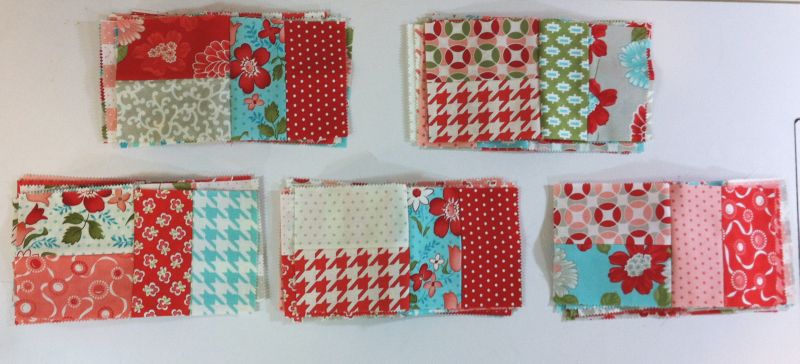
Grab 100 of your sewn blocks and pair them up into sets of 2 like this. Notice the orientation. Sew them all together so that you have 50 block pairs.

Next, sort your pairs into five stacks of ten block pairs each. This will be for 10 rows you will sew.

5 Stacks of 10 Blocks

Sew the top two pairs together and then the bottom 3 pairs together. Of course, you can shuffle them around as desired and assembly line sew all the stacks to make it quicker.

Piecing the RowsJoin these two pieces together to complete a row from each stack. Repeat to make 10 rows of 10 blocks each. They will all look the same and you will flip every other row to create the pattern. Please take this into account if you are using any directional fabrics.

Step 2 – Sewing your “IQ” (Inner Quilt)

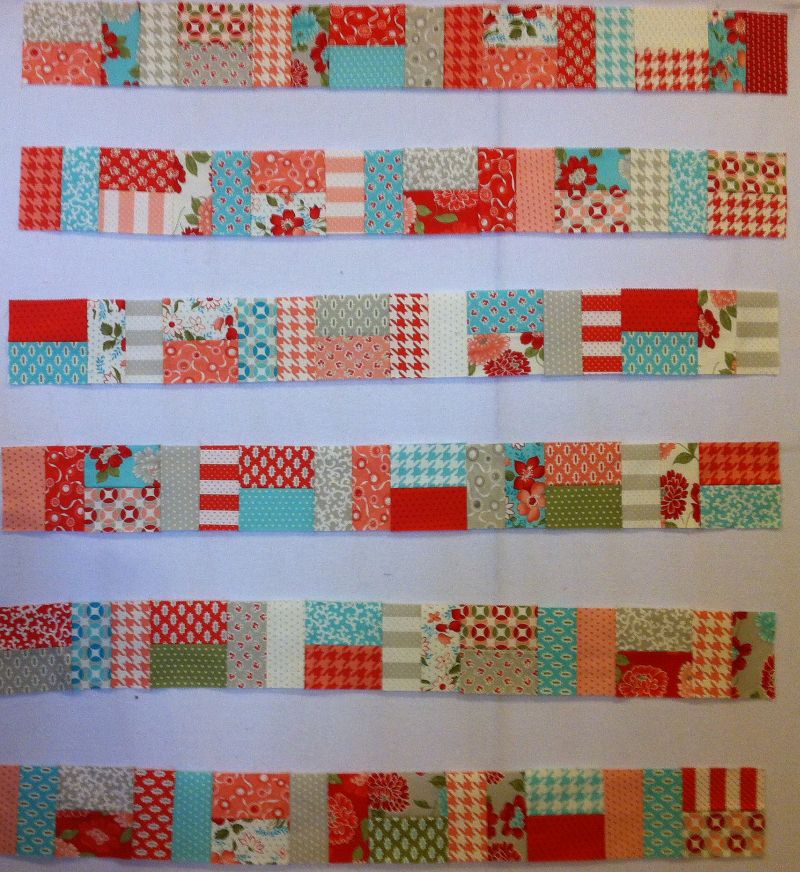
Lay out all 10 of your rows horizontally into a pleasing arrangement. Flip every other row to create a horizontal-vertical-horizontal pattern with the blocks.

Pieced Jelly Roll Strip Rows10 Rows of BlocksImplement the 3 P’s for pretty patchwork: Press, Pin, and be Precise!

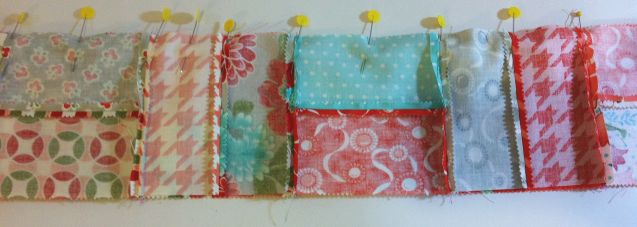
Pin Your RowsSew the rows of blocks together into groups of two. I put each row up on my design wall to make sure I don’t have the same two fabrics touching. Join rows to complete the IQ.

Join the Rows

Step 3 – Adding The Inner Solid Border & Outer Pieced Border

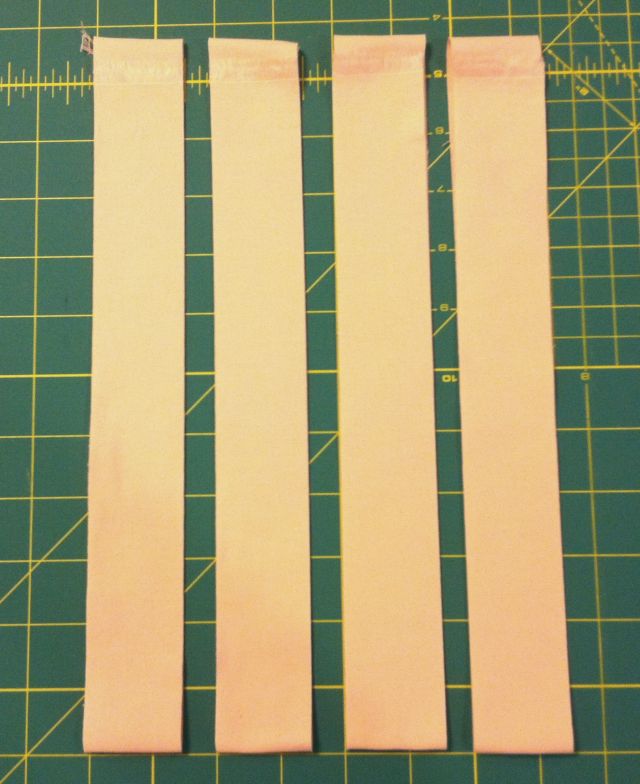
Sew together 4 more rows of 10 blocks each. Keep the same horizontal-vertical-horizontal pattern going. These strips will be for each of your borders. From your solid fabric, cut 5 – 1.5″ strips. Measure each of your rows and trim 4 of these solid strips to that measurement. Add a strip to each pieced border row on the same side so that they all look the same.

Cut 5 - 1 1/2 Inch StripsAttaching Accent StripsThe rows should measure 40.5″ unfinished. However, my rows grew to 41.5″.

That’s ok as long as they are all consistent!

Sold Strip with Pieced BordersNext, set aside 4 extra pieced blocks for each of the corners. Add a strip of 1.5″ solid to two sides of each block so that it looks like an L. Be sure to sew as shown below to make sure they are positioned carefully. If your blocks measure 4.5″ unfinished, you can trim 4 solid side strips to 4.5″. Trim the other solid side strips to 5.5″.

Adding Corner StripsBorder CornersTwo of each block will be the same.

Now it is time to sew two of your pieced borders to the top and bottom of your quilt. Flip the border strip so that your vertical-horizontal-vertical block pattern continues in the borders.Sew Top and Bottom BordersTo make the rows line up properly, flip the border strip down so you can match up the seams. Use lots of pins to keep everything lined up straight.

Match the SeamsUse lots of Pins

Corner Detail

Add corner blocks to either side of the remaining two pieced borders trips. Again, watch the rotation of your blocks.

You will notice I changed the design slightly from my original drawing.

I like the look of the solid border extending out into the edges of the blocks. I also liked continuing the alternating block pattern into the pieced borders.

Join the side rows to complete the top!

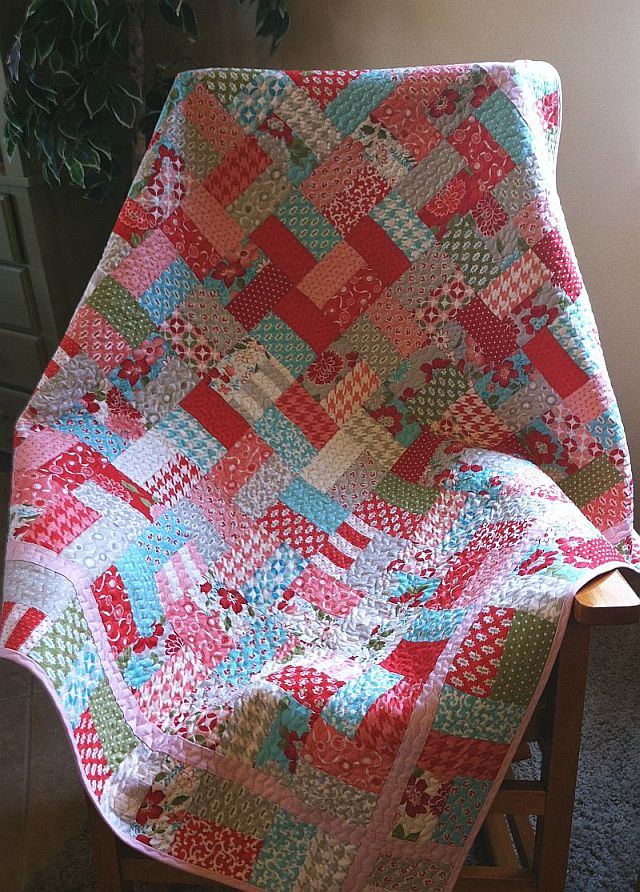
Jolly Jelly Roll Quilt TopCongratulations! You’ve now finished your Jolly Jelly Roll Quilt Top! Please email  pictures of your completed top to christa@christaquilts.com and tell me which Jelly Roll or set of fabrics you used. I’ll share your pictures before next week’s tutorial.

Next week we will prepare the backing and baste so it’s ready to quilt! You’ll need backing fabric (3.5 yards), batting (at least 60″ square), and basting pins. Here is the supply list.

I used one Vintage Modern jelly roll by Bonnie and Camille with 1 yard of Kona Cotton Solids in flesh pink for my quilt top. I will pick out my backing fabric later this week and will use the remaining blocks to add a little interest to the back of my quilt.


Here is the complete Jolly Jelly Roll Quilt-Along Schedule:

Week 1 – Supply ListJolly Jelly Roll Quilt

Week 2 – Sewing the Blocks

Week 3 – Completing the Top

Week 4 – Backing and Basting

Week 5 – Machine Quilting

Week 6 – Machine Binding to Finish