My Quilt in American Patchwork and Quilting – Featuring Fandangle

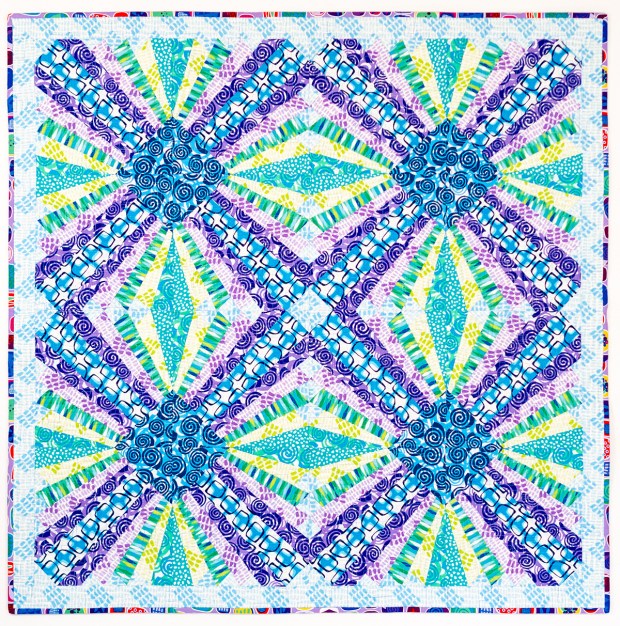
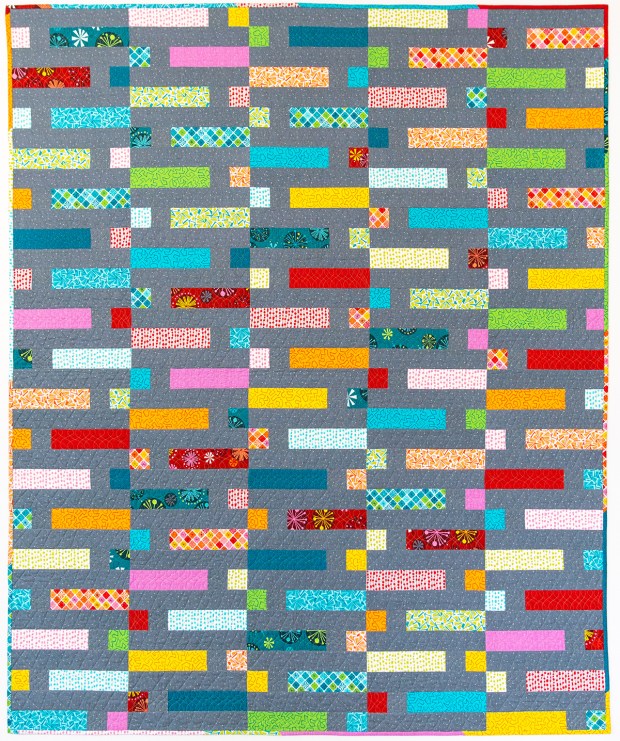
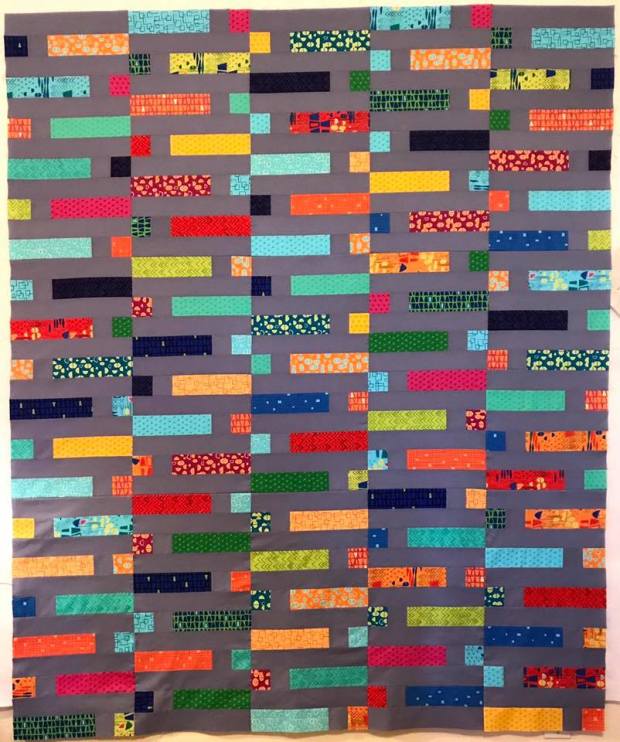
Today I’m happy to introduce you to my quilt “Out of the Box” that can be found in the December Issue of American Patchwork and Quilting. It’s made from one fat quarter bundle of Fandangle and 4 yards of white background fabric.

Out of the Box by Christa Watson

Image shared with permission from American Patchwork & Quilting® magazine.
©2018 Meredith Corporation. All rights reserved.

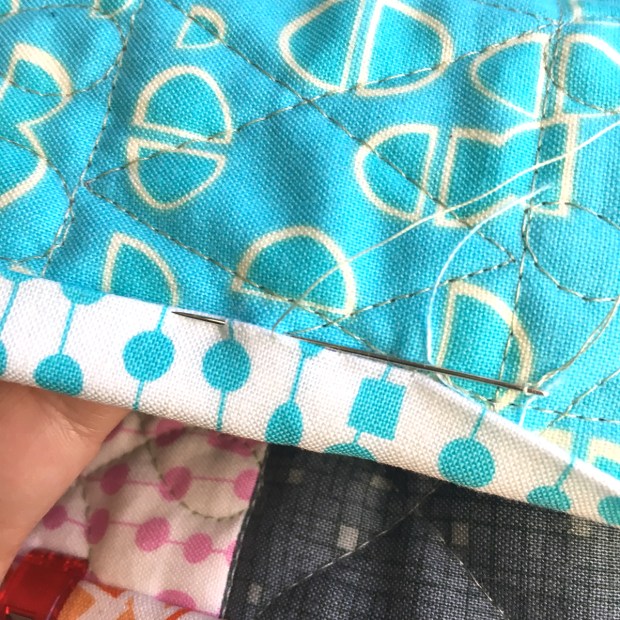
Look closely and you’ll see that I used leftover fabrics to make a scrappy binding. It’s one of my favorite ways to use up leftovers from a fat quarter bundle without having to purchase any more fabric.

Fandangle Fabric + Color Tip

All it takes is one 20 piece fat quarter bundle and a contrasting background to make this quilt. Here’s a tip when working with fabric bundles: pair them with a very light or very dark background, and you’ve got a winning combo, no matter which fabrics you choose!

Click here to purchase a 20 piece fat quarter bundle of Fandangle, while supplies last!

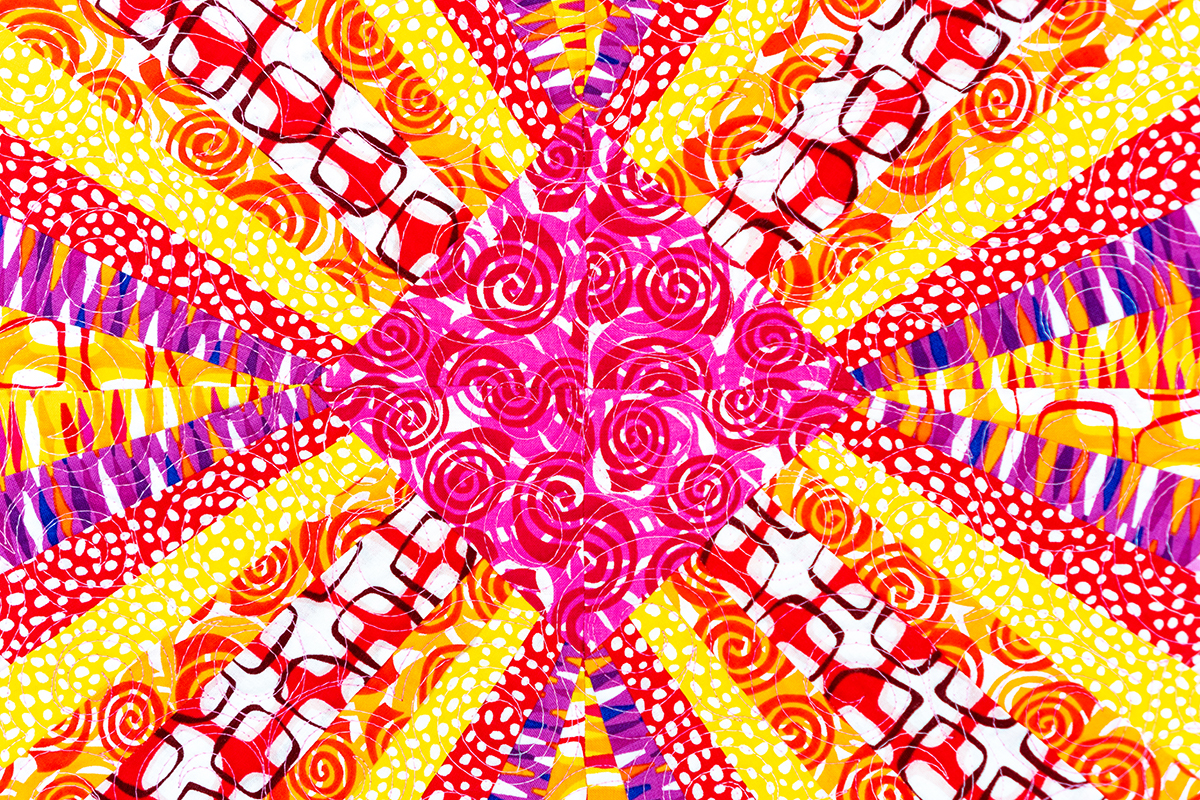
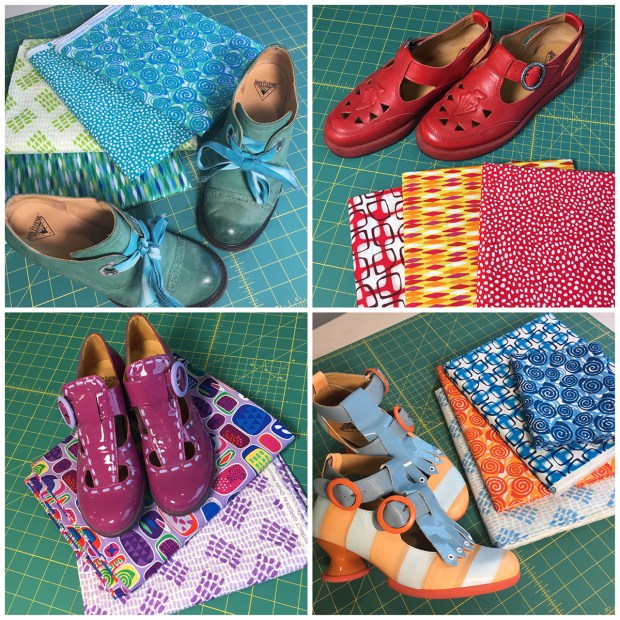
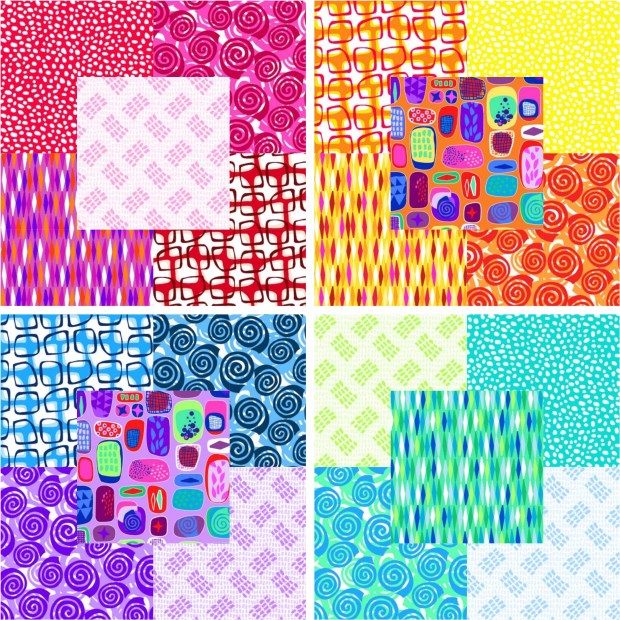
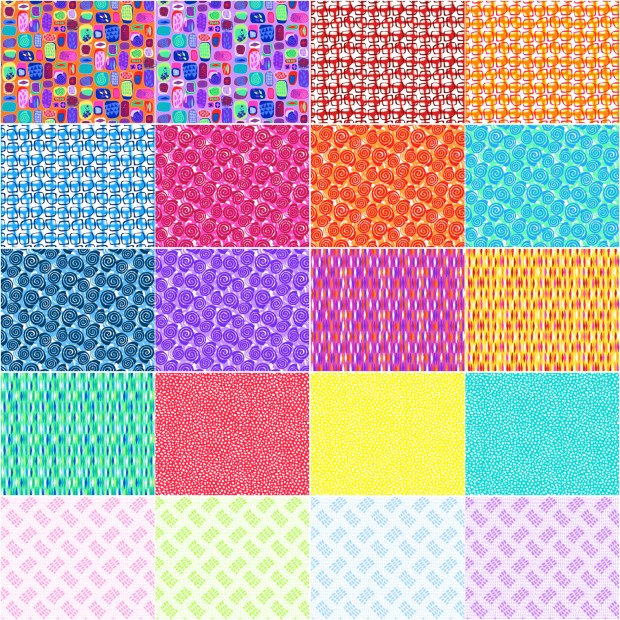
Fandangle fabrics

Fandangle is my second fabric with Benartex Contempo Studio.

Here’s what the cover of the December issue looks like which I believe goes on sale tomorrow. I’ve already received my contributor copy and am in love with several projects in the issue. This is by far one of my favorite magazines because they feature such a wide variety of techniques and styles. (And they pay designers very well for their patterns, too!)

American Patchwork and Quilting DecemberImage shared with permission from American Patchwork & Quilting® magazine.
©2018 Meredith Corporation. All rights reserved.

Quilting Plan

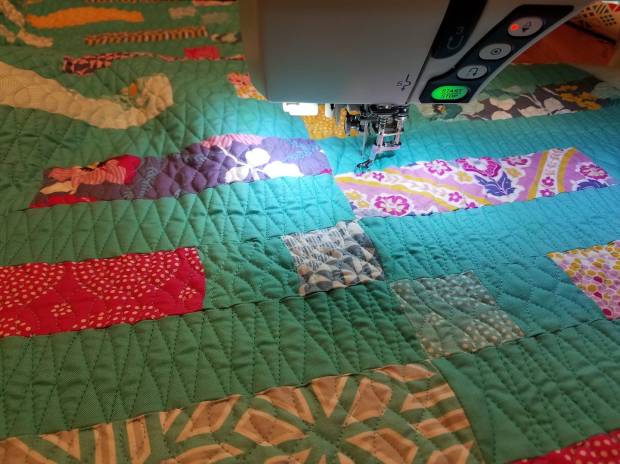
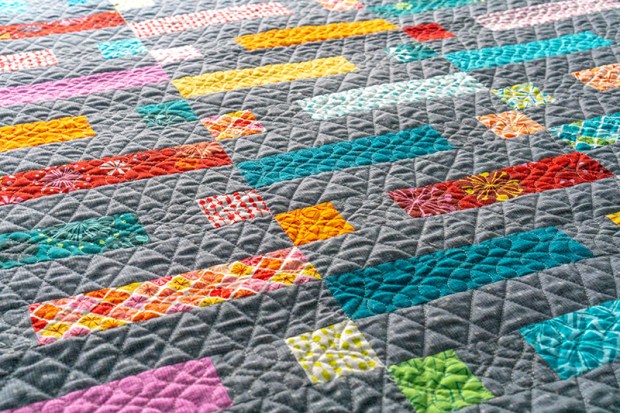
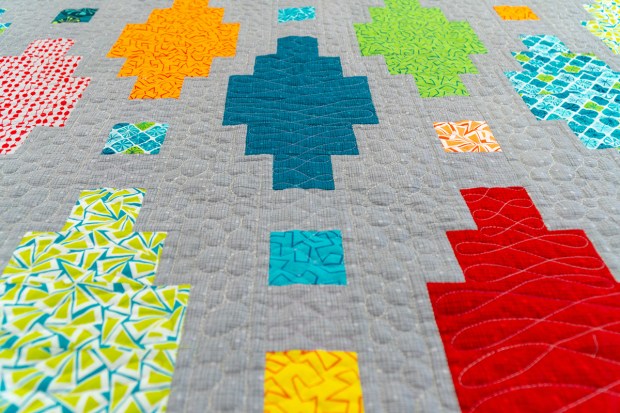
Here’s the quilting plan I created for Out of the Box, a simple wavy grid. It’s one of my go-to quilting designs that’s fast and easy to do with your walking foot or dual feed. I use the pieced seams of the quilt as a guideline for how far apart to space my lines so I can quilt the entire design without any marking!

Wavy Grid quilting plan.

I always make a quilting plan for my quilts before I quilt them.

Although the pattern includes instructions for the piecing, you can learn how to machine quilt the wavy grid motif in my Craftsy class, the Quilter’s Path, and also in my third book, Piece and Quilt with Precuts. It’s my go-to design when I’m in a hurry, and it looks great on any quilt!

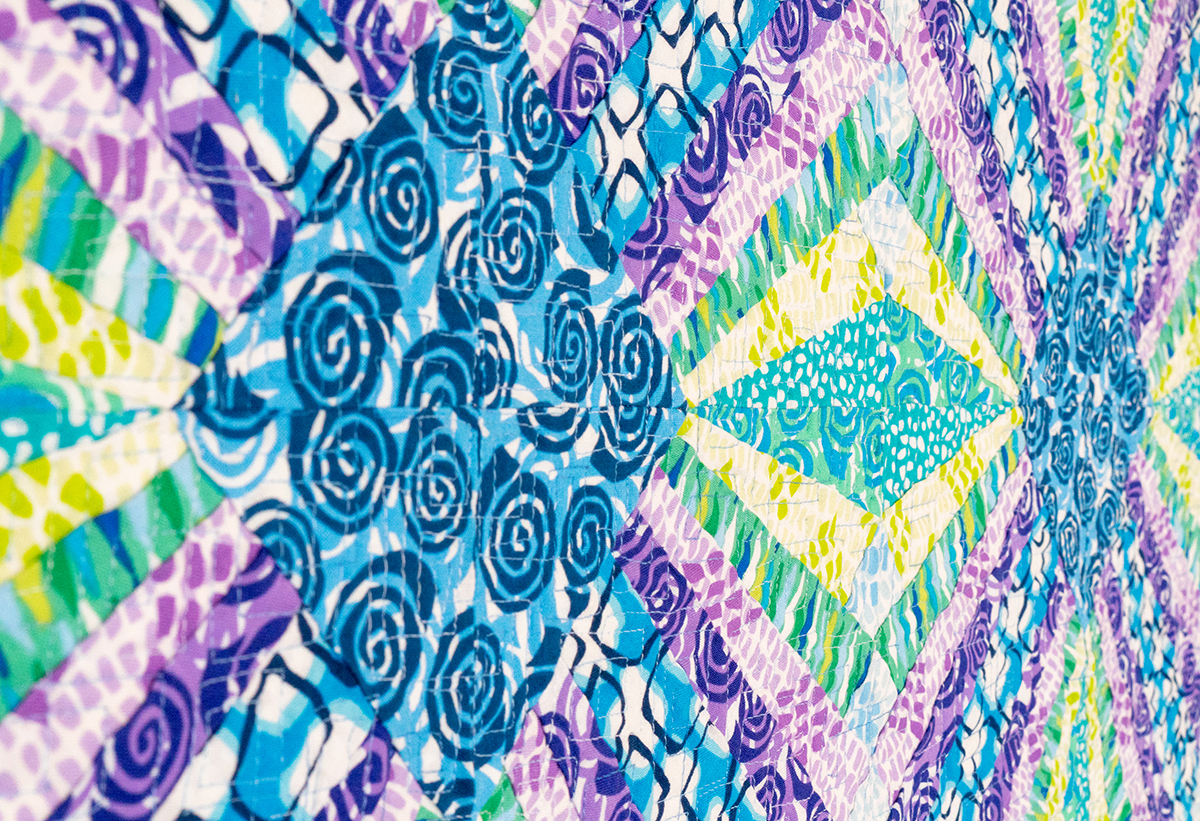
machine quilting detail by christa watsonMachine quilting detail – click the image to enlarge.

Here’s another view of the quilt where you can really see the quilting. My hubby Jason has been helping me photograph quilts in order to showcase the fast, fun, and easy machine quilting designs that I love to teach! For me it’s all about texture over perfection.

machine quilting detail

Learn how to quilt this walking foot design from my book Piece and Quilt with Precuts,
and also in my Craftsy class, The Quilter’s Path.

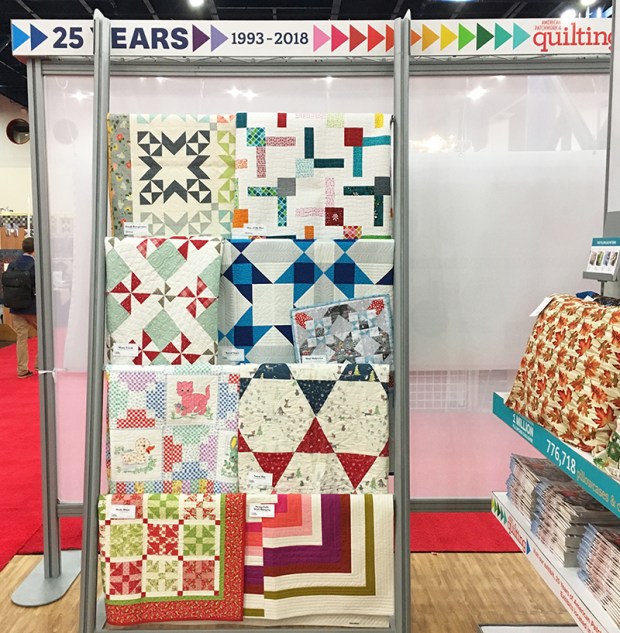
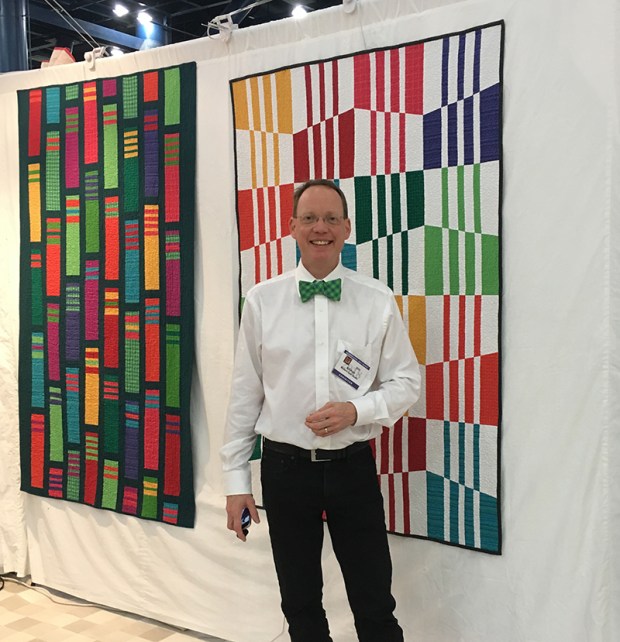
I really enjoyed making this quilt to showcase my fabrics and the best news is, it will be on display in the American Patchwork and Quilting booth at International Quilt Market in Houston, Texas next month!

When you make this quilt, be sure and tag me @christaquilts on social media so I can see what you’re doing. You can also share pics of your progress with this quilt (and anything else you make from my books, patterns and fabric) in my ChristaQuilts group on facebook!

Out of the Box by Christa Watson for American Patchwork and Quilting using Fandangle fabricOut of the box by Christa Watson, Made from Fandangle Fabric

Quick Links to Items Mentioned Above

American Patchwork and Quilting Magazine
Fandangle Fat Quarters
Online Video Class – The Quilter’s Path
My book Piece and Quilt with Precuts

Dot ‘n’ Dash Quilt Along Week 7 – Machine Quilting Part 2: Double Zig-Zags

It’s time to embellish our quilts with some fun machine quilting this week! In my book Piece and Quilt with Precuts, I’ve shared 18 different quilting ideas that you can mix and match along with the 11 projects in the book. We are going to do a little bit of mixing and matching of motifs this week!

(By the way, If you are a little unsure of your free-motion quilting skills, be sure to check out my machine quilting class on Craftsy for my best machine quilting tips and tricks!)

Dot n Dash Quilt Along

Original Dot N Dash Quilting

Here’s how I quilted the original Dot ‘n’ Dash quilt. I quilted “crazy 8’s” in the background areas, and wavy lines in the print strips. I followed a similar quilting plan to what we are doing today, but with different designs. If you’d like to follow this quilting plan, see pages 50-55 of the book.

Free-Motion Quilting Dot n Dash

Original quilting plan for Dot ‘n’ Dash – from the book.

For this week’s quilting “assignment,” we are going to play with one of the walking foot designs from another project in the book to  come up with a really fun variation. Take a look at the “Frequency” quilt on page 28 of Piece and Quilt with Precuts. You can create amazing texture by quilting “sort of” straight lines, zigging and zagging from side to side across each strip.

Quilting Modern Zig-Zags

Notice the random irregularities. Not only do they add interest to the quilt, they are fast and easy to do because there’s no marking involved and you don’t have to measure any spacing. This is MY kind of perfectly imperfect quilting!!

Frequency Quilting

See page 28 of Piece and Quilt with Precuts to practice this design.

quilting with your walking foot/dual feed

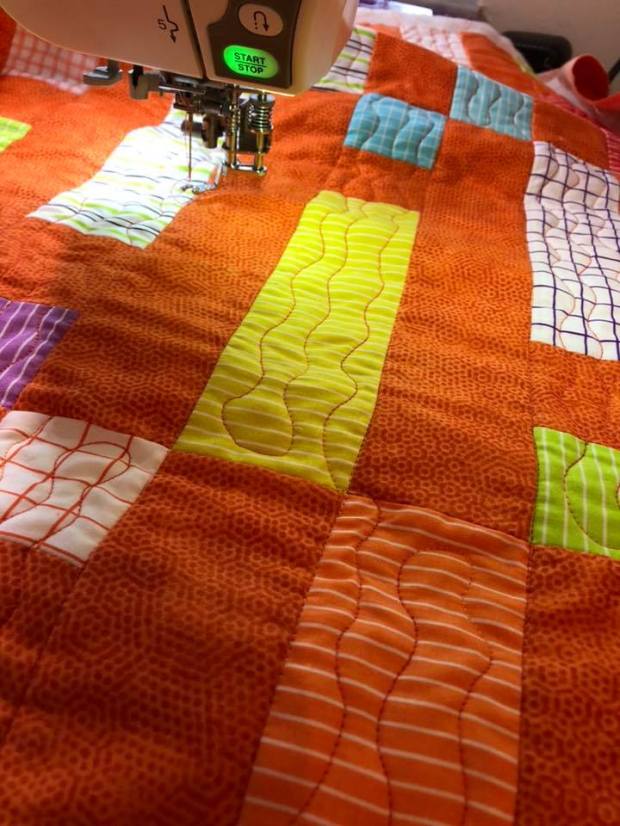
Rotate the quilt so that you are quilting each strip row from the top to bottom. Quilt a short line by eye and stop with the needle down when you get to the side of your strip. Lift the foot up and slightly rotate the quilt so that you can angle the line in the opposite direction. Keep going, quilting the irregular lines from side to side. If you have a knee-lift or hover feature on your machine, use it so that you can leave your hands on the quilt the entire time.

To prevent whiskering (wrinkles) or puckers on your quilt, quilt each row starting at the top of the quilt and working your way to the bottom each time. Just like when I stitched in the ditch last week, I’ll start on the right side of the quilt and work my way towards the center, then rotate the quilt and keep going from the center out.

Alternate Method: Free-Motion Quilting the Zig-Zags

To get started free-motion quilting, I recommend using a Supreme Slider – a slick sheet that clings to the bed of your sewing machine, and a pair of Machingers gloves that will give you a better grip on your quilt. Just remember to only use the Supreme Slider while FMQ, not walking foot quilting, so that you don’t accidentally stitch through it! (Ask me how I know….)

Tools for free motion quilting: open toe foot, gloves, supreme slider

The gloves and slider will help me control the quilt with less strain on my hands.

I’ve lowered my feed dogs and I’m quilting with an open toe free motion foot so I can better see what I’m doing. Although my machine does come with a stitch regulator, I actually prefer quilting without it. I learned without a regulator so that’s the movement I’m most comfortable with.

However, if you have a stitch regularot, give it a try and see which feels more comfortable to you – with or without. Here’s another tip I picked up from my good buddy Leah Day: try quilting both with your feed dogs up and down to see which gives you a better stitch. The nice thing about using a Supreme Slider is that it covers the feed dogs, keeping them out of the way if you decide to keep them up!

Free Motion Quilting Zig-Zags

Free-motion quilting is faster, but requires more control and lots of practice.

Did you know you can free-motion quilt short straight lines without a ruler? If they are done in short bursts, you can eyeball a straight line if you look ahead and pick a point you are trying to get to.

The reason I’m quilting this design free-motion instead of with a walking foot is that it’s faster, since I don’t have to stop and turn the quilt for each zig and zag. However, it requires more muscle control, so practice both ways first on a scrap of batting and fabric and then decide which technique is easier for you to master.

Free Motion Modern Zig-Zag Design

First pass across the quilt – zig-zags in all the gray areas.

Notice that I’m quilting modern, random zig-zags in the gray strips between each print strip (not including the small gray squares). To quilt one long continuous line without breaking thread, zig or zag over to the next gray section to quilt. If needed, it’s okay to backtrack (or quilt over a precious quilting line) in the seam to get to where you need to go.

After quilting one pass of zig-zags, I decided that I wanted to quilt another set of lines, intersecting what I had already done. I’m using the same method to quilt the random short lines, but crossing over each previous line as shown below:

Double Zig-Zags fmq

Notice how I’m quilting each row from the top of the quilt to the bottom.
I will rotate the quilt as needed to find a comfortable quilting position.

Machine Quilting Homework

Quilt all of the gray areas with a blending thread. I used the same Aurifil 50 weight gray that I used for stitching in the ditch last week. Quilt one pass across the quilt like the pictures I showed above. Then quilt a second pass across the quilt to give it more random texture.

We will tackle the print strips next week, using another free-motion motif from a different quilt in the book. It’s been fun to mix and match the designs to show how versatile they can be!

Free Motion Quilting Double Zig-zags

Divide and Conquer – quilt all of one design first before moving on to the next.

It’s Not to Late to Start!

Remember – you can jump in and make this quilt any time. Just grab a copy of the book and your favorite fabrics (strips, scraps, or stash).

Click here for the supply list and links to all of the previous posts.
Then share your progress on instagram #dotndashqal or in my Christa Quilts facebook group.

Free motion quilting double zig zags

I love yummy machine quilting texture!! Next week I’ll show you how to quilt the rest.

My Trip to Australia 2018

Now that I’m back and rested from my trip to Australia, I thought I’d share some of the highlights. I was invited to travel to Tasmania and Adelaide to teach machine quilting and it was soo amazing! I couldn’t pass up the opportunity to bring my family with me. They had lots of adventures while I was teaching, and I was able to participate with them on my days off.

Welcome to Tasmania

If you’ve never gone on a long haul flight, I have to admit it was pretty tough. It took us about 24 hours to get there with multiple layovers, one long 14 hour flight in which we had to sleep on the plane (so not fun) and of course a huge adjustment in time zones. But the hubby and kids were up for the adventure and fortunately our first day there was a recovery day so it didn’t slow us down too much.

Flights to Australia

The kids loved walking on the tarmac to board the plane on one of our connecting flights.

Sleeping on the Plane

Sleeping on the Airplane is not very comfortable!!

I had a full play day scheduled in Tasmania before I had to teach and we were able to visit a local museum and animal sanctuary. I learned a bit about the country’s history and got to cuddle with some koalas and kangaroos!

Art Piece from Tasmania

This art piece from the museum looked very quilty. I enjoyed learning about the region’s history.

Bonorong Sanctuary in Tasmania

The Bonorong Wildlife Sanctuary in Tasmania got most of their animals as rescues. Many times the mama kangaroos are killed on the roadways while carrying Joey’s (baby kangaroos) in their pouches. They raise the babies and protect other native wildlife so they can thrive.

Kangaroos in Australia

It was fun to pet & feed the kangaroos. Can you see the joey sticking out of mama’s pouch??

Jason was our designated driver and it took him a few days to recover from driving on the “wrong” side of the road, but fortunately I was able to use that analogy when teaching free-motion quilting. I told my students that It takes learning a new motor skill while both driving AND quilting, LOL!!

Driving in Australia

It took awhile to get used to the view from the “wrong” side of the street while driving!!

My students in Tasmania seemed to have a fabulous time learning both walking foot and free motion quilting. Thank goodness that “driving” a sewing machine works the same no matter which country you are in (though of course we had to pack a few plug adapters to use our electronics.)

Student work

Student work in class – I love the variegated thread!

Tasmania MQG

Souvenir from the Tasmanian Modern Quilt Guild – I’ll wear it with pride!

While I taught, the kids were able to travel to what they called “The End of the World” – the southern most tip of Australia. Really you can’t travel much further south without being in Antarctica!

Views from the End of the world

View from “the end of the world”! It wasn’t really but the kids had fun calling it that!

By the way, I loved taking notice of all the cultural and language differences between our two countries. The most interesting thing I noticed at each restaurant we visited was that they gave us a container and glasses for us to pour our own water, rather than serving us glasses of ice water and constantly refilling it. It’s actually more efficient I think, and my younger son who prefers not to have ice in his drinks was thrilled.

Water at the Restaurant

There’s a large Asian population in Australia which meant lots of yummy Asian restaurants to try!

The Lift at the airport

The word LIFT at the airport certainly takes up less space on a sign than “elevevator!”

Just for funsies, here are a couple of wording differences that the kids had fun pointing out. The first word is the Australian version, followed by what we call it here in the US:

  • Lift = elevator
  • Holiday = vacation
  • Trolley = shopping cart
  • Chips = french fries
  • Sauce = ketchup
  • Toilet = restroom
  • Take away = take-out
  • Way out = exit
  • Pram = stroller
  • Jug = pitcher
  • Biscuit = cookie

Australian Tim Tams

TimTams are the best “biscuits” we’ve ever had so we made sure to stock up!!

After our jaunt in Tasmania (with delicious food and amazing hospitality) we took a hop over to Adelaide for the next leg in our journey so I could teach at the Australian Machine Quilting Festival. I lectured and taught for 3 days straight and the most fun thing to realize is that quilters are amazing and enthusiastic, no matter where in the world I travel!

Cindy Needham, Helen Stubbings and Christa Watson at AMQF

I enjoyed chatting with Cindy Needham and Helen Stubbings from Hugs ‘n Kisses after a day of teaching. Cindy was one of those inspiring teachers who came to my guild about 10 years ago that made me realize I wanted to travel and teach, too! Helen invited me to her guild in Tasmania and it’s her sister who invited me to teach at AMQF. I love a creative quilting family!!

I taught 3 machine quilting workshops and one piecing workshop. Students worked on their versions of my Modern Logs quilt pattern and it’s one of my favorite piecing workshops to teach because everyone’s blocks turn out so differently, but are still soo amazing!

Modern Logs Workshop in Australia

I love hanging out with fun quilters worldwide!!
BERNINA Australia generously provided sewing machines in class for everyone to use.

While I taught in Adelaide, the family had even more adventures. They went bike riding out in the country, and did some rock climbing guided by my oldest son.

Watsons and Koala

This Koala knows how to pose for the camera!

We were there for a total of 12 days including travel and my daughter who is still in school diligently kept up with her homework while we were gone. I’m so glad the timing worked out for all of us to go (the older boys head out on their next life adventures this fall).

Biking in Australia

The kids had as much fun with their outdoor adventures as I did teaching!

Rock climbing in Australia

This is the one adventure I was ok to miss! My oldest son is quite the climber so he took the rest of the family on a SAFE rock climbing adventure during one of my workshop days.
I’m so glad they use LOTS and LOTS of ropes!

More Kangaroos!

More Kangaroos!

One of the highlights of the quilting festival was getting to put a teacher ribbon on my favorite quilt. Not only was I blown away by the quilt in the shape of Australia, but the maker machine quilted it herself, adding lots of wonderful texture to the surface, without overpowering the pieced design.

Australia Quilt by Barbara Kukulies
Land Girt by Sea by Barbara Kukulies – Faculty Choice Ribbon

I had such an amazing time and hope to return to Australia again someday. This was my first international teaching trip and it’s definitely made me open to teaching at other international locations, too! So if you live somewhere exotic and fun, feel free to pass my name along to your event organizer or guild. 🙂

Do you have a fun place that’s on your bucket list to visit? Leave me a comment and let me know!

Behind the Scenes: My Design Process for Fandangle

Today I thought it would be fun to share a little bit of my fabric design process for Fandangle. The line includes 6 designs in multiple colorways so I’ll take you through the design process of 3 of them. (When my first line, Modern Marks came out, I shared a bit of my process along with some some of the rejects, and that got a lot of interest. Read about  that here.)

Fandangle Fabric

Click here to get yardage and bundles of Fandangle, while supplies last.

For Fandangle, I knew that I wanted it to coordinate with Modern Marks, but still stand on its own as a separate collection. In fact, as I was working on the line, I scattered some of the in-process paper swatches onto my Modern Marks Rainbow Taffy quilt, just to make sure they’d look good together:

Fandangle and Modern Marks

If you look closely, you’ll notice that the orange, yellow and green tone on tones are not the final versions I ended up with. Read more about those “rejects” below!

Whenever I design a line, I start with a concept and a rough color palette. When inspiration strikes, I can see what I want in my head, but the hard part is technically getting that into the computer to form a proper repeat. Fortunately, I work with a fabulous stylist and graphic designer at Benartex who can help translate my ideas into reality. I thought it would be fun to walk you through the design process of three of the prints so you can see how they evolved.

Evolution of Baubles and Bits

This print was the hardest to finalize and the one that took the most work. I knew I wanted to create a fun, funky medallion that would almost read as a floral. So we started with the basic medallion shape. You’ll notice that colors and designs change quite a bit during the process. First I finalize the shapes, and then the colors. So any in-process and designs and hues are always just placeholders.

First Try:

Second Try:

Baubles and Bits in Process

Third Try:

Final Design:

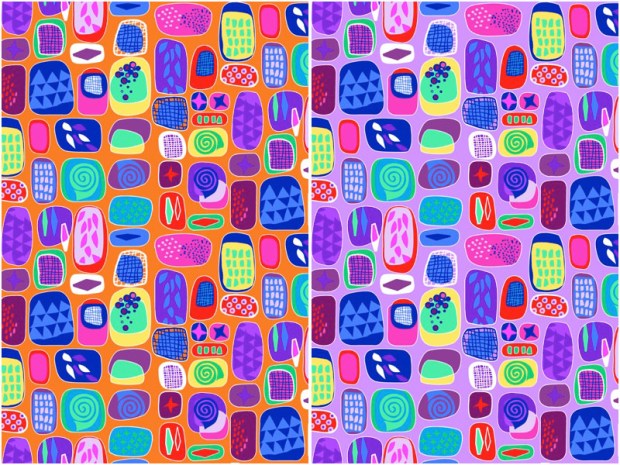
Baubles and Bits final design

Isn’t it fun to see how it evolves? Of course there were a lot of intermediate steps in between each image involving more sketches, lots of cutting and pasting, and the painstaking decisions to add or remove colors that didn’t work. Did you notice that I cut the purple? It just didn’t work this time around (although we were able to work in some nice pink and lilac). But don’t worry, purple will work its way into my fabrics in the future – I promise!!

Multiply these design and color changes by each print and color in the line and you can see what an involved process fabric design can be!

Triangle Trinkets Design Process

This print was a lot quicker to finalize. It began with a simple line-drawing sketch of my arrowheads quilting design in several different arrangements.

Original Concept:

Triangles sketches

Then we put the designs into the computer and tried different color groupings and design layouts to see what worked. The teal colorway was one of my favorites, but I thought the stripe arrangement below was too directional.

Good Color, Bad Layout:

Final Design:

Once the design was finalized, we recolored them in a dozen different colors that coordinated with the rest of the prints. It was hard to narrow it down to the final three colors I included in the line, but sadly, I knew I couldn’t include them all!

Fandangle fabric -Triangle Trinkets

Paper Cuts – the Tone on Tone Blender

This print was one I felt strongly about from the beginning. I knew exactly what I wanted but it took awhile to get there. Again, I started with a simple pen and ink sketch on paper, inspired by another one of my favorite free motion designs – jagged stipple.

Design Sketch:

The design team at Benartex wasn’t so sure it would translate well as a design, so we tried a couple other things first that I ultimately rejected. First of all, we revisited the boxes print from Modern Marks with a different take on the design.

Boxes Blender:

Boxes blender

Nice, but nope, that wasn’t it. It turned out very nice but was too close in concept to the boxes design from Modern Marks.

Loops and Strings:

blender loops

We tried something that looked like loops and strings, again based on one of my free-motion quilting designs. This print would have worked well, but it wasn’t what I wanted.

Jagged Design – First Try:

Blender print

Finally, they were willing to let me try the jagged, edgy design that I really wanted with this line. The first iteration was a little too dense for my taste, so we spaced it out to give the design a little more breathing room.

Final Tone on Tone Design:

Paper Cuts design from Fandangle

It was worth all of the time and effort we put into this print! After the design and scale were finalized, the hardest part was naming it. “Jagged Stipple” didn’t really go with the other design names inspired by the idea of ornamentation and embellishment.

So I finally renamed it “Paper Cuts” because that sounded cutesy and crafty. The irregular jagged lines reminded me of small cuttings of paper. I almost named the print “scherenschnitte” which literally means “scissor cuts” but I knew people would have a hard time trying to pronounce that word it, let alone spell it, LOL!!

Fandangle Quilt Patterns

Fandangle Quilt PatternsClick here to get PDF versions of the Fandangle Quilt Patterns
Click here to get print versions of the Fandangle Quilt Patterns

Of course, once the prints were finalized as digital images, it took me nearly as long to come up with quilt patterns to showcase the fabrics effectively. Designing quilt patterns is a very similar process for me as fabric design: I start with an initial sketch, and tweak it until it feels right. All of this work was finalized before I even received fabrics to work with. It’s a long process for sure, but I enjoy every minute of it!

Fandangle Finalized

Fandangle fabric by Christa Watson for Benartex Contempo

I hope you enjoyed seeing this peek behind the curtain of how one designer’s process evolves. I know it’s different for each and every fabric designer, but so far this process has worked very well for me. I went through a similar process described above for all six prints in the line, but it was worth it to create a collection I love!

In fact, as I write this, I’m developing additional concepts, sketches, colorways, and ideas for future fabric lines. I’m starting to get the hang of how things works which each new collection I create, and it’s been such an incredible journey. As long as you all continue to love them as much as I do, I’ll have more to share in the coming months – so stay tuned!

Dot ‘n’ Dash Quilt Along Week 6 – Machine Quilting Part 1 SITD

Can you believe we are 6 weeks in to the quilt along?! The work you all are doing is fabulous and I’m excited to get to my favorite part – machine quilting!! This week we will Stitch in the Ditch (SITD) to secure the quilt for the jazzy free motion quilting we will do later. Many times, this crucial step is overlooked, and although it’s not the most exciting part of machine quilting it’s one of the most important steps for successful free-motion quilting.

Machine Quilting Detail on Dot n Dash Quilt

Machine Quilting Detail on Dot ‘n’ Dash Quilt. Stitching in the ditch allows you to break down the quilting into sections, which makes for more successful free-motion quilting later.

My Fave Machine Quilting Supplies

First of all, let me tell you about the needles I prefer to use for machine quilting. They are from Superior Threads and are called Topstitch needles. Look at the image below to see the difference between a Topstitch needle and a Universal needle. The Topstitch has a slightly sharper point which is helpful for penetrating the fabric. But the most important feature is a slightly longer eye (the hole) so that your thread won’t shred. I love these needles so much that I use them for piecing as well.

Needle Closeup

I buy the needles in the blue package as they are most economical for my projects:

Next, the thread I use for piecing AND machine quilting is 50 weight 100% cotton from Aurifil. The 50 weight is thin, yet strong so that it will blend into your quilt. I’d rather see the overall texture of the quilting rather than the individual stitches, and quilting densely helps me mask any mistakes. After all, the easiest way to hide imperfect stitches is to surround them with more imperfect stitches!

Piece and Quilt Collection Aurifil Thread by Christa Watson

For this quilt, I’m using the medium gray #2605 from my Piece and Quilt Neutrals thread collection. (My neutrals box also includes a lighter gray and a darker gray so that you’re covered, no matter which shade of gray you like!)

Stitching in the Ditch

Whenever I do any custom quilting, I will always “anchor” the quilt by stitching in the ditch first, in key areas of the quilt. For Dot ‘n’ Dash, it made sense to stitch in the ditch between each long row. I recommend using a walking foot, or a machine that has a built in dual feed system (such as the BERNINA 770 QE that I’m using).

The nice thing about pressing seams open, is that you can actually stay in the ditch, and you don’t have to worry about switching thread colors for the low vs. high side of the ditch. Contrary to popular myth, stitching in the ditch with seams pressed open will NOT weaken your seams. I’ve been doing it for years with no problem, and I find it actually strengthens my quilts and adds more stability. (Just think about it – if stitching over a previous line of stitching would cut your threads, then you’d never be able to backtrack over a seam, right??)

Stitching in the Ditch on Dot n Dash Quilt

I use the terms walking foot quilting and dual feed quilting interchangeably.
Stitch slowly , so you can stay in the ditch as much as possible

The built in dual feed turns my 1/4″ patchwork “D” foot into a walking foot, feeding the quilt through evenly with no puckers. I recommend quilting with a slightly longer stitch length (3.0 instead of 2.5) to help compensate for any drag on the quilt. I also recommending reducing your presser foot pressure when doing walking foot/dual feed quilting (but not for FMQ).

Because you are making contact with the quilt on every stitch, this puts a lot of pressure on the quilt which can lead to tucks and puckers, especially when crossing seams. By reducing the presser foot pressure, it enables you to quilt with a lighter hand (or should I say foot?) on the quilt.

Modern Marks Quilt Backing

Look how nicely the gray thread blends into the blue Modern Marks print on the back.

When stitching long straight lines across the quilt with a walking foot, I recommend stitching in one direction only, from top to bottom, rather than going back and forth. This will keep the quilt flatter, with less torque on the quilt. Many times, “whiskering” – or lots of little creases will appear if you stitch lines back and forth.

Scrunch and Smoosh the quilt under the machine

Scrunching and Smooshing in Progress

To deal with the bulk of the quilt under the machine, I scrunch and smoosh it out of the way however I can, and only focus on one area of the quilt. I start on the right side of the quilt and work my way across the quilt, stitching one line at a time.

When I get to the center of the quilt, I’ll rotate the quilt 180 degrees and keep going from the middle to the edge of the quilt. This allows you to deal with the least amount of bulk at a time, and by the time you get to center you know that the bulk will get less and less as you quilt the other side.

Stitching in the Ditch on Dot n Dash

Detail of stitching in the ditch

Once either side of the strips has been stitched in the ditch, your quilt is fully secure to add more quilting. Note that I’m only SITD along the long rows, not in between the smaller squares. That would be too much starting and stopping for my taste! And don’t worry, even if your ditching lines veer off a little bit, you won’t notice it once you add more quilting.

Quilting Homework

Finish stitching the rows in the ditch and then get ready for free-motion quilting next week! Because we are taking our time and spending 3 weeks on machine quilting, you’ll have plenty of time to ease into it.

Dot n Dash machine quilting

Next time we quilt, all we have to do is think about smaller sections, one row at a time.

You could always stop right here and call it finished, but I can’t wait to show you how to add more yummy texture next week! Be sure and share your progress and ask questions or get any trouble-shooting help over in my Christa Quilts Facebook group, or on instagram #dotndashqal.

Click here for the start of the quilt along with supply list and links to all of the QAL steps.

Beaded Lanterns Quilt Along Part 2 – Making the Blocks (on the BERNINA Blog)

Are you having fun with my quilt alongs? I know it’s kinda crazy that I’m doing two at once (Dot ‘n Dash on my blog and Beaded Lanterns over on the BERNINA blog). But seriously, if I didn’t have deadlines for my quilting, I wouldn’t get anything done, LOL!!

Fortunately – just so you know, I actually made both quilts ahead of time since I knew I would be out of the country teaching when they were scheduled to be shared. (More about my Australia trip later, so stay tuned!)

Beaded Lanterns Blocks

Click here to purchase Fandangle precuts, bundles and yardage while supplies last.

This week over on the BERNINA blog – We All Sew – I’m sharing the process of cutting the strips and making the blocks. So head on over there to check it out!

Remember – for any of my quilt alongs, I leave the posts up indefinitely so you can always come back to them later when you have time.

Virtual Trunk Show of 63 Quilts from My Books

While I’m away teaching in Australia this week, I thought I’d share a virtual trunk show with you, so you can pretend that you are right here with me! I’m including all the quilts from all three of my books along with the book covers from each, so you can easily reference where to find them. Be sure to click the bonus links for more details about each quilt. So grab a treat and enjoy the show…

Quilts from Piece and Quilt with Precuts (2017)

Piece and Quilt with Precuts by Christa Watson

All of the quilts in this book are precut friendly and each pattern includes piecing instructions and a quilting plan with diagrams and quilting suggestions. You can mix and match pieced patterns and quilting motifs to your heart’s content!

Squiggles – Original Version from the Book

Click here for the blog post about this quilt.

Squiggles by Christa Watson from Piece and Quilt with Precuts

Squiggles Remake using Modern Marks Fabric

Click here for the Quilt Along for this quilt.

Squiggles by Christa Watson

Gridwork – Original Version from the Book

Click here for the blog post about this quilt.

Gridwork by Christa Watson from Piece and Quilt with Precuts

Gridwork Remake by Vicky Holloway Using Modern Marks

Click here for Vicky’s blog post about this quilt.

Gridwork by Vicki Holloway

Frequency – Original Version from the Book

Click here for the blog post about this quilt.

Frequency by Christa Watson for Piece and Quilt with Precuts

Frequency – Mini remake using Modern Marks

Click here to read more about this collaboration between me and Leah Day.

Mini Frequency wiht Modern Marks

S.W.A.K

Click here for the blog post about this quilt.

SWAK from Piece and Quilt with Precuts

Starstruck – Original Version from the Book

Click here for the blog post about this quilt.

Starstruck by Christa Watson from Piece and Quilt with Precuts

Starstruck remake using Modern Marks

Click here for the blog post about this quilt.

Modern Starstuck by Christa Watson

Dot ‘n’ Dash – Original Version from the Book

Click here for the blog post about this quilt.

Dot 'n' Dash by Christa Watson from Piece and Quilt with Precuts

Dot ‘n’ Dash remake using Fandangle

Click here for the Quilt Along for this quilt.

Dot 'n Dash quilt by Christa Watson

Twinkling Diamonds

Click here for the blog post about this quilt.

Twinkling Diamonds by Christa Watson from Piece and Quilt with Precuts

Windows

Click here for the blog post about this quilt.

Windows from Piece and Quilt with Precuts by Christa Watson

Kites

Click here for the blog post about this quilt.

Kites Quilt from Piece and Quilt with Precuts by Christa Watson

Arrows

Click here for the blog post about this quilt.

Arrows from Piece and Quilt with Precuts by Christa Watson

Spools – Original Version from the Book

Click here for the blog post about this quilt.

QuiltCon reject 2
Spools Remake by Hollyanne Knight Using Modern Marks

Click here for Hollyanne’s blog post about this quilt.

Spools from Piece and Quilt with Precuts

Quilts from The Ultimate Guide to Machine Quilting (2016)

Ultimate Guide to Machine Quilting

Angela Walters and I each made the same ten quilts in our own choice of fabrics and quilting motifs. There are 10 different patterns presented along with over 50 different machine quilting designs. Below are each of the 20 quilts we made showcasing different color combos and machine quilting suggestions.

Choosing Colors

Click here to read more about this quilt.

Choosing Colors by Christa Watson

Christa’s version – in rainbow order.

Choosing Colors made by Angela Walters

Angela’s version – mix it up and throw in a scrappy binding!

Swirling Butterflies

Click here to read more about this quilt.

Swirling Butterflies Wholecloth Quilt

Christa’s version – bold and contemporary.

Swirling Butterflies Angela Walters

Angela’s version – white and traditional.

Plumb Lines

Click here to read more about this quilt.

My version of Plumb Lines won 2nd Place, Modern at HMQS in 2016.

Plumb Lines Quilt

Christa’s version – free-motion alternatives to straight line quilting.

Plumb Lines Quilt

Angela’s version – peachy keen!!

Cornered

Click here to read more about this quilt.

Corned quilt by Christa Watson

Christa’s version – pretty in pink!

Cornered by Angela Walters

Angela’s version – make your friends green with envy when you learn how to quilt these motifs!

Directionally Challenged

Click here to read more about this quilt.

Directionally Challenged by Christa Watson

Christa’s Version in shades of blue with walking foot quilting and FMQ.

Directionally Challenged by Angela Walters

Angela’s version in red showing how to break down large blocks for quilting success.

Migration

Click here to read more about this quilt.

Migration Quilt

Christa’s version – grid quilting in warm earthy tones.

Migration by Angela Walters

Angela’s version – jewel box quilting with lots of negative space fillers.

Exploding Star

Click here to read more about this quilt.

Exploding Star by Christa Watson

Christa’s version using Angela’s fabrics with walking foot continuous spiral quilting.

Exploding Star by Angela Walters

Angela’s version quilted with multi-sized spirals.

fractured squares

Click here to read more about this quilt.

Fractured_Squares_Christa

Christa’s version – completely quilted with a walking foot.

Fractured_Squares_Angela

Angela’s version – having fun with improv borders!

Quatrefoil Applique

Click here to read more about this quilt.

Quatrefoil-Applique_Christa

Christa’s version – it’s a machine quilting sampler!

Quatrefoil-Applique_Angela

Angela’s version – bold and dramatic.

U-Turns

Click here to read more about this quilt.

U-Turns_Christa

Christa’s version – cool teal solids with a touch of print.

U-Turns_Angela

Angela’s version – perfect for practicing turning a corner!

Quilts from Machine Quilting with Style (2015)

Click each highlighted link below each image for more about that quilt.

Machine Quilting With Style

13 friends each remade the 12 quilts + 1 of the backings. I have included their versions, too. Photography of my quilts courtesy of Martingale and Brent Kane. Here’s the order in which they are presented in the book:

ripplesRipples, made by me

ripples_melissa

Ripples, made by Melissa Corry and her MIL Barbara

mqws_rainRain, made by me
Juried into QuiltCon 2016
Shown at MQG Exhibit at Int’l Quilt Festival

rain_drizzle_cheryl

Drizzle, made by Cheryl Brickey

color crystals.Color Crystals, made by me

colorcrystals_vicki

Color Crystals, made by Vicki Ruebel
Honorable Mention, PIQF 2015
Faculty Award, MQX New England 2016

technicolor_backing

Technicolor backing made by me

technicolorbacking_ida

Urban sunrise, made by Ida Ewing
Best Machine Quilting, Pahrump Quilt Show 2016

Little Man's FancyLittle Man’s Fancy, made by me

littlemansfancy_tina

Little Man’s Fancy, made by Tina Guthmann

staticStatic, made by me

static_quilt_lee

Static, made by Lee Heinrich

square in a squareSquare in a Square, made by me
Juried into Road to California, 2016

squareinasquare_stacy

Square in a Square, made by Stacy Cooper

focal_point

Focal Point, made by me
Juried into QuiltCon 2016

Focal Point - Chic Neutrals no lines

Focal Point, recolored in EQ7 using Chic Neutrals fabric from Amy Ellis

focalpoint_amy

Focal Point, made by Amy Garro

Lightning and backing

Lightning, made by me
Bonus backing tutorial from Martingale
Juried into Road to California 2016

lightning_leannePink, made by Leanne Chahley

Candy_PopCandy Pop, made by me
Awarded 3rd Place, Applique at DQN 2016 Quilt Show

candypop_linda

Candy Pop, made by Linda Hungerford

BrokenVBroken V, made by me

brokenv_sharon

Broken V, made by Sharon McConnell

Facets_Kona

Facets, made by me
2nd Place Modern, AQS Paducah 2016
Juried into AQS Phoenix 2016
Quilt Along Blog Series 2016

facets_kristy

Facets, made by Kristy Daum

Finals B1324.inddPearl Gray, made by me
1st Place Large, Single Maker, DQN 2016 Quilt Show

pearl_gray_alyce

Pearl Gray, made by Alyce Blyth

Click Here for Signed Copies of All 3 Books

Books by Christa Watson


Dot ‘n Dash Quilt Along Week 5 – Backing and Basting

I love quilt alongs and the best part is seeing the variety you all are making! It makes my day. 🙂
This week we are getting down to the nitty gritty and getting the quilt ready for machine quilting next week. But don’t worry, if you aren’t to that point yet, that’s perfectly fine. These quilt along posts will stay up indefinitely and you can always refer back to the intro post for links to each specific QAL step.

Dot n Dash Quilt Along

Click here for the quilt along schedule and supply list.

Preparation is Key

Getting ready to machine quilt is a little like getting ready to paint a house. The actual painting isn’t hard – it’s all the prep work (ike moving furniture and taping down the windows) that takes time and gets in the way of the fun part. So take your time to prepare the quilt and baste it and don’t feel like you have to rush this part. In fact, I always set aside a separate day for backing and basting and then give myself a little reward when my least favorite part of the process is finished!

A tip on choosing batting: if you want to hide machine quilting “irregularities” and give your quilt that antique puckered look, choose a cotton batting. If you want to give your stitches more definition and a loftier look, choose wool. I usually stay away from polyester batting because it’s very slippery and usually causes me to get puckers on the back of my quilt. Cotton and wool cling to the quilt which gives you better control while quilting.


Sewing the Backing Fabric

You want to ensure that the backing fabric is at least 3-4″ bigger on all sides of the quilt top, more if you plan to long arm quilt. The easiest way to do this is to cut two large pieces of fabric and sew them together. For example, my quilt measures 60 x 72. So If I cut 4 yards into 2 two -yard pieces that will give me one big rectangle approximately 72″ x 80″ to work with once the chunks are sewn together parallel to the selvage.

Sewn Quilt Backing

I basted this quilt at a recent teaching retreat I participated in. All you need is one table for basting – work on the middle and then the sides as needed.

Spray Basting the Quilt

If you prefer to pin baste, click here for an alternate tutorial.

My basic method for spray basting is to spray the wrong side of the top and bottom layers of the quilt outside, then bring them inside for assembly. For a slight variation of this technique, click here for my wall basting tutorial.

My favorite basting spray is 505. Be sure to shake the can before you use it and spray a little on a scrap to make sure the nozzle isn’t clogged. If the spray doesn’t flow out evenly, some of the chemical can accumulate and leave a stain on your quilt, so always test it first.

Spray Basting the Quilt

At first I tried an off brand that a friend had but I didn’t like it because it wasn’t sticky enough. Fortunately one of the other retreaters had some 505 which they let me use for my quilt!

The basting spray does not cause any problems with machine quilting, and if you notice it starting to gum up the needle at all, just wipe it away and you’ll be all set!

Lay out all 3 layers of the quilt – backing, batting, and quilt top on a large table (or design wall). Spend time smoothing out each layer with a long acrylic ruler before adding the next layer. This can take awhile but is worth it so that the quilt is nice, flat and smooth.

Quilt Basting

Notice the leftover batting – most of it will get trimmed away after basting. I like enough extra batting and backing so that I don’t have to worry about getting my quilt top perfectly centered.

You can also use the acrylic ruler to scooch any quilt blocks back into place and straighten out any wonky seams as needed. Smooth out any bubbles as needed so that the quilt is nice and flat.

The last step is to iron the quilts on both sides – front and back. This helps set the glue and allows you to work out any wrinkles one last time before you quilt. I use a hot dry iron ,with no steam. You can iron the quilt on an ironing board, or on a table to give you more room. Because there’s batting inside, the quilt acts as it’s own pressing surface.

Iron the basted quilt to set the glue

My quilt is basted and ready to quilt!

Now it’s your turn! Get your quilt basted and we’ll start machine quilting next week. We’ll have extra time for quilting since it’s my favorite part!

Show Your Work

Don’t forget to share your progress in one of 3 ways (or all of them if you like):
(1) In my Christa Quilts Facebook group
(2) On Instagram, #dotndashqal
(3) Share a link to your blog, or leave a comment about your process on this post.

Dot n Dash Ready to quilt

Trim the batting so that there’s only 1-2 inches sticking out on all sides of the quilt. This will prevent the excess from flipping under the quilt and getting caught in the machine.

Beaded Lanterns Quilt Along Part 1: over on the BERNINA Blog

This week kicks off another fun quilt along that I created to help promote my Fandangle fabric collection. Over the next 7 week’s I’ll be sharing step by step tutorials over on BERNINA’s Blog – We All Sew. We will make my Beaded Lanterns quilt – a free pattern I designed that is precut friendly.

Beaded Lanterns Quilt

Of course, all of the patterns I design would look fabulous in any fabrics you choose, but I really love the excuse to design and make quilts with my own fabric lines.

All you need is one jelly roll or Fandangle “strip-pie” plus 4 yards of background fabric. The two grays I’ve been using from the line – Confetti Crosshatch – have been so popular that they’ve already sold out of the first printing. But fortunately Benartex reprints fabrics that sell well, so more of those will be coming in October thank goodness!

Fandangle Strippie

Click here to get the Fandangle Strip-pie while supplies last.

In the meantime, you can check out my where to buy page for a list of shops that carry Fandangle. I have a note on there indicating which shops carry the full line as well as which shops sell online so you can track it down for yourself.

Click here to visit BERNINA’s blog – We All Sew.
The Quilt Along will be shared there each Wednesday. Happy quilting!

Free Pattern for Fandangle in Modern by the Yard

The latest issue of Modern by the Yard was just published by Benartex. It’s a free quarterly online magazine published to help promote their fabric collections and it always features lots of amazing designs.

Free Quilt Pattern for Fandangle

My friend Vicki from Orchid Owl Quilts designed and made this gorgeous quilt, Teal Appeal from Fandangle, which is featured on the cover. Isn’t it gorgeous?

Get the Pattern and Fabric to make teal appeal

Click here to download issue #9 of Modern by the Yard
Click here to purchase Fandangle bundles and yardage while supplies last.

The pattern includes a complete materials list and step-by-step full color illustrations. I think it’s so clever that Vicki chose the teal confetti crosshatch print as the background. I’ve really been enjoying seeing what other designers have been making from my fabrics. It’s always fun to see how folks combine the prints and really make them sparkle!

Free-Motion Inspiration

Christa Watson and Amanda Murphy

In the issue, there’s also an interview with me and fellow fabric designer Amanda Murphy about how our machine quilting designs often influence our fabric lines, so be sure to read about that, too!

There’s also a really fun block-study in the ezine called “Modern with a Twist.” Three designers are each challenged with putting  a modern spin on a traditional block and this issue’s block is the drunkard’s path.

Chris Dodsley came up with this really cool variation that showcases some of the cool-colored Fandangle prints. She even went the extra step and created a fun layout which she talks about more in depth on her blog -click here to see more.

Block Study – Drunkard’s Path

Modern Drunkard's path by Chrissie D

I hope you check out Modern by the Yard from Benartex. I love that they offer a source of inspiration to make fun things from their fabrics, and can’t wait for the next issue!