Christa’s Soap Box – Why I Quilt My Own Quilts

I’ve come a long way since I began my quilting journey so many years ago. My style has changed over the years, but my passion has not. In fact, it’s gotten stronger, the more quilts that I make! I was recently reflecting about why I do what I do and what drives me to do it! A large part of my personal quilting style is that I choose to quilt my own quilts. The reasons for it have changed over the years, and I feel like I’ve come a long way since I began.

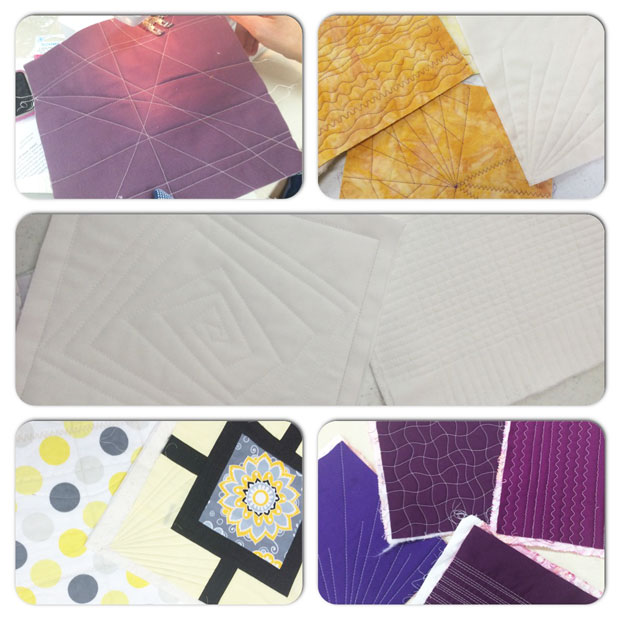
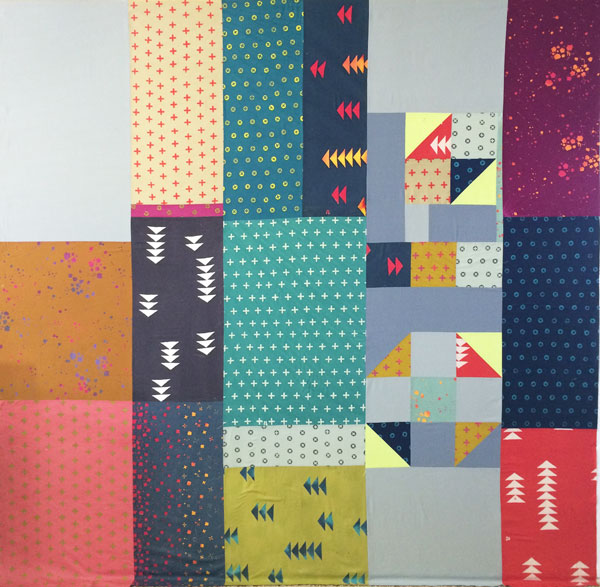
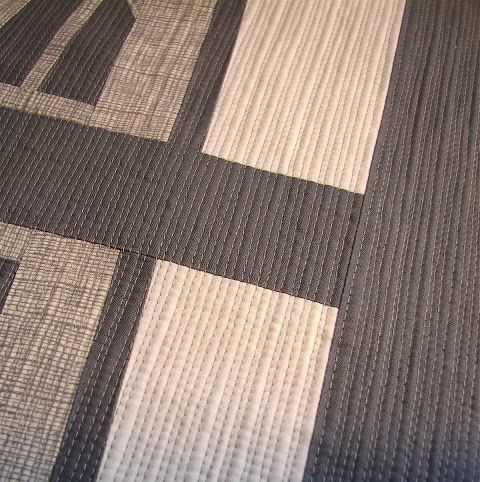
hst_textureWIP sneak peek #1 – gotta love all that texture! I used Aurifil 50 wt cotton – my favorite!

I first started off quilting my own quilts because I didn’t know any better. I just thought that’s what you did. Of course, my first couple of finished quilts were actually tied but I loved them just the same.

When I began quilting in earnest around 1994-95, most award winning quilts were still hand quilted and longarms were just coming onto the scene in a big way. I knew people who owned one and came so close to purchasing one. A friend was selling hers cheap and I thought about buying it. When I mentioned it to my mom, she agreed to loan me the money, but by the time I got back to my friend, she had already sold it to someone else.

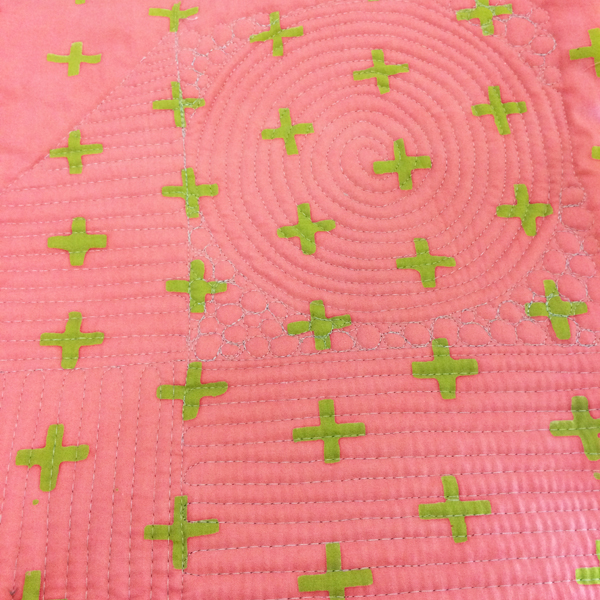
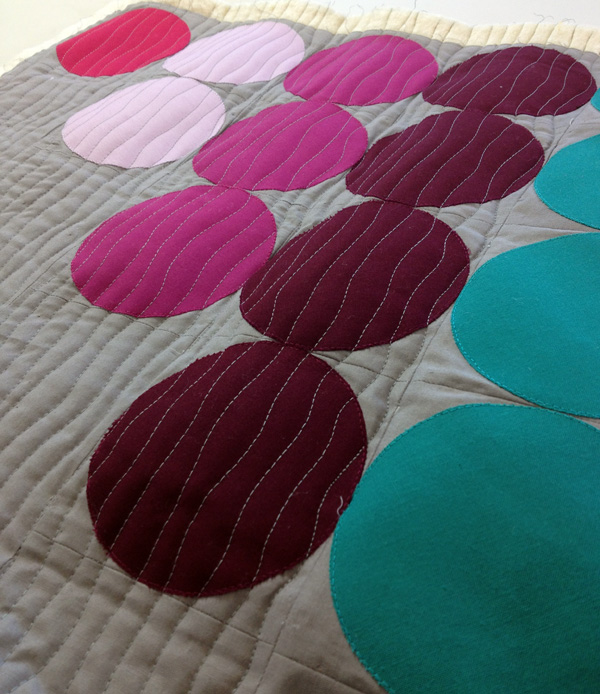
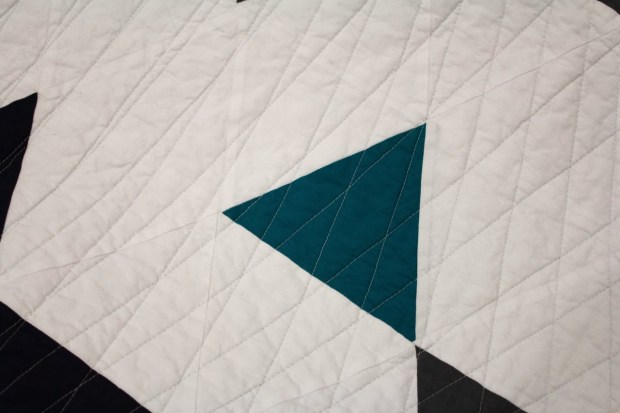
hst_spiral_backWIP sneak peak #2 – I free-motion quilted the spiral with the help of a stencil.

So I just continued to quilt my quilts because that was my only option. I will admit that I did go through a period of quilt snobbery where I thought it was cheating if you didn’t quilt your own quilt. But then I was enlightened when I realized not everyone enjoyed that process. Just as I don’t like to sew clothing or accessories and will gladly pay someone for those services,  I’ve realized that many quilters are perfectly content to do the piecing while others are perfectly happy to just quilt. What a great match!

At one time I took orders for custom quilts and even gave professional quilting a try on my domestic machine, but that was really way too stressful. I am still a recovering perfectionist so I’m much happier to make mistakes on my own quilts rather than the quilts of others. Over the years I’ve tried longarm quilting, but it’s just not for me, and I’m totally cool with that.

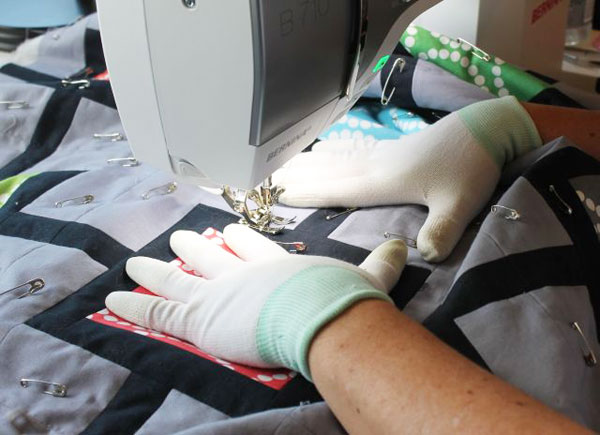
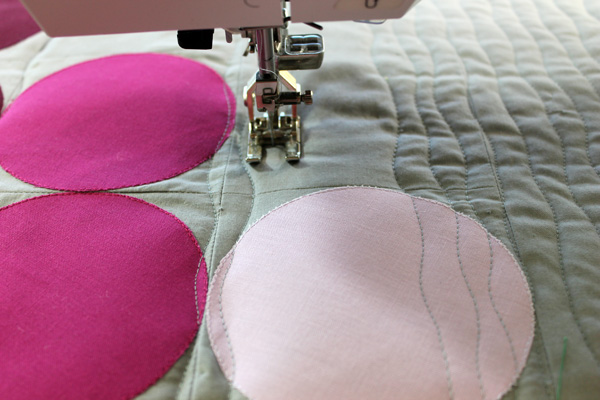
hst_straightlinesWIP sneak peek #3. I enjoy quilting straight lines, and my machingers gloves are a must!

After making quite a few quilts in a short period of time last year, I finally realized that the reason I quilt my own quilts is for the sheer pleasure of it. Instead of feeling stressed and overwhelmed that I had to a tight deadline to meet, I enjoyed every minute of it!  In fact, I had a little bit of a letdown when I had finished my quilting obligations!

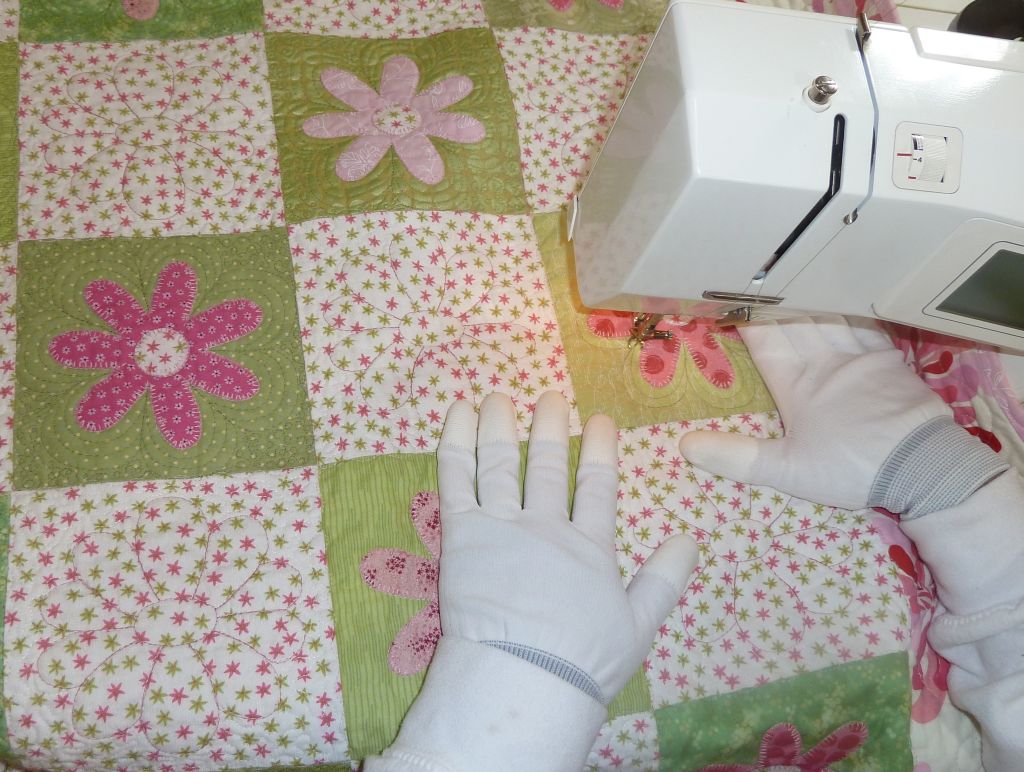
hst_back

Wip sneak peek #4 –  the pieced back is as much fun as the front! The final reveal will be shown in a future issue of Make Modern magazine. Be sure to subscribe so you don’t miss it!

For now, I will continue to enjoy the journey I’m on and share my methods with others if they want to learn. And if they decide it’s not their thing, at least they tried, right? (I can’t tell you how many things I have tried that are not for me… but that’s another post for another day!)

Christa’s Quilt Along – Abacus Week 5: Machine Quilting

Welcome to another installment of my Abacus Quilt Along! Today is when the magic happens. It’s time to machine quilt, which I think is the most fun part of the quilt making process. It took me only 1 3/4 hours to machine quilt – so fast and fun! 🙂

I’ve written several blog posts about getting started with machine quilting, including many of my favorite tips and tricks. Click here to read them all!

machine-quiltingMachine quilting wavy lines with your walking foot is super simple and fun!

Step 1 – Practice Quilting on a Scrap (1/4 hour)

I always, always, try out my quilting idea before I quilt the whole quilt. More often than not, I’m disappointed if I skip this step. What I see in my head may not translate well in fabric, so it always helps to make a small practice piece. It can be as simple as two scraps of fabric with a small piece of batting. Or sometimes I will make up a complete block using the same fabrics and thread as in the quilt.

illustration_3_abacus_quiltingOne of the biggest unknowns when machine quilting is how the quilting thread will look on a wide range of fabrics. I’d rather try it out on a smaller piece to make sure I’m happy. I think the grey Aurifil 50 weight cotton thread and uneven lines of quilting look great on both the light and dark fabrics. So now I’m ready to move onto the real quilt.

Step 2 – Quilt the Anchor Lines, AKA Stitch Near the Ditch! (1/2 hour)

Whenever I begin quilting a piece, no matter how large or small, I always start by quilting a series of anchor lines across the surface of the quilt. This helps stabilize the quilt for more quilting later. For Abacus, I stitched my wavy anchor lines right next to each of the vertical seams, moving the quilt slightly from side to side, letting the lines wobble a bit.

If the quilt is well basted, it doesn’t matter where you start. I usually start quilting in the middle, and move to the right across the quilt, stitching each line from top to bottom. Then I rotate the quilt ninety degrees and finish the other half in the same way.

Anchor-QuiltingRight now it looks like a bit of a mess, but I know from my practice piece that once all the lines are filled in, it’s going to have some incredible texture.

Step 3 – Quilting the Wavy Lines (1 hour)

I quilted wavy lines using my built in even feed. That’s the same thing as using a walking foot. I increased the stitch length slightly and moved the quilt from side to side as the machine stitched, creating the waves.The feed dogs are up as normal and I’m wearing Machingers gloves to give me a better grip on the quilt.

machine_quilt_1Once the anchor lines are quilted, I filled in the spaces between the rows with more wavy lines. I quilted a few lines on the left, then a few lines on the right, all the while aiming for a very organic (messy) looking texture. I let the number of quilted lines vary per row, and used the width of my foot as a rough guideline for spacing.

For those of you who can adjust your presser foot pressure, I set mine all the way down to zero. This really helps eliminate tucks and puckers.

machine_quilting_abacusIn the picture above, I have quilted all the anchor lines and completely filled in the wavy lines on half of the quilt. I rotated the quilt, now I’m ready to finish quilting the other side!

Voila! Quilting finished! Next week I will show you how to square up the quilt and bind it.

abacus_quilting_finishedIf you are enjoying this quilt along, please share your progress on my flicker group or on Instagram #abacusqal.

Remember, I encourage you to work at your own pace. However, if you finish your quilt (or even just the top) by November 10th, I’ll be happy to feature it on my blog in my parade of quilts! 🙂

Click here for all of the Abacus Quilt Along Tutorials.

Christa’s Soap Box – More Thoughts on Machine Quilting

Thank you all so much for your thoughtful comments on last week’s Soap Box. I love that we can have conversations about hot-button quilting issues in such a respectful manner, even if we differ in our opinions.

Thanks to the online quilting community, I know I have become more open-minded, even though I am still passionate about my ideas. I actually wrote the essay below several months ago, but didn’t have a chance to share it. Now is the time, and I’d love to know your thoughts about it, as I continue to explore my own feelings on the subject.

Machine Quilting Gloves From the archives – a baby quilt I made for a friend several years ago.

You Can Be the Quilter

I am constantly inspired by attending and entering quilts into shows, both locally and nationally. I learn so much from the judges’ comments and after I show them, I love to use them!

When I first began sharing my quilts locally, I lamented that there weren’t more quilters entering their own completed quilts for judging. It seemed like a majority of the quilt entries were quilted by the one or two professional quilters in the area.

While it was wonderful to see Teri Topper’s beautiful blocks, and Patty Piecer’s perfect points, Lucy Longarmer’s gorgeous quilting always stole the show, yet she seldom got the credit for her work. Nowadays, I’m happy to see more quilt shows sponsoring separate categories for individual entrants, and it warms my heart to see professional machine quilters earning ribbons for their beautiful work.

Over the years I’ve tried to do my part to encourage others to learn and enjoy the machine quilting process, whether their machine of choice is a long arm, short arm, or somewhere in between. This is so that when others look at their beautiful quilts and ask who the “quilter” is, they can say, “I am!”


Craftsy Review – Creative Quilting With Your Walking Foot

Can I just tell you how awesome Jacquie Gering’s newest Craftsy class is? It’s called Creative Quilting With Your Walking Foot and is truly one of the best classes I’ve watched.

20140530_creative_quiltingJacquie’s class is chock full of good tips and tricks for using your walking foot to achieve amazing machine quilted results. One of my favorite tongue-in-cheek reminders she offered is that it’s a walking foot, not a running foot! So going slow is the key to walking foot quilting success. 🙂

I’ve met Jacquie in person a few times and am currently working with her on some behind-the-scenes QuiltCon show prep. She is probably one of the most kind-hearted people I’ve ever met, and she really cares about those to whom she teaches. In this class, she’s all about sharing what she knows in such an easy-going conversational way, that you can’t help but enjoy every minute of the class.

jacquie_1Sinking Sun by Jacquie Gering – one of my all-time favorites! Image courtesy of Jacquie.

In Creative Quilting With Your Walking Foot, Jacquie makes the comparison of quilting to a good paint job: more time may be spent prepping your work than you think, but good preparation is another key to good quilting success. She echoes my sentiments that proper basting and good tools help eliminate puckers and tucks. She prefers spray basting and flat battings (hear, hear!) and one tip I picked up was that you can iron your cotton batting to help get it nice and smooth. Now why didn’t I think of that??

One of my favorite “modern” quilting textures is matchstick quilting where you literally quilt every 1/4″ to 1/8″ over the surface of your quilt. I love Jacquie’s method for achieving precise lines that add such amazing texture to her quilts! If nothing else, this class is worth it for that demo alone!

jacquie_matchstick_quiltingJacquie’s amazing matchstick quilting – one of my favorite techniques!

The Class runs for approximately 3 1/2 hours, broken up into 8 easily digestible lessons. Topics covered include walking foot basics, decorative stitches, quilting curves & text, and more! It ends with a section on quilting strategies which is super helpful for you to learn how to manage the bulk of a large quilt under the machine.

Jacquie validates many of the techniques that I like to employ in my walking foot quilting, such as using the edge of your foot as a guide and counting stitches when figuring out when to turn your work for echo quilting.

jacquie_hidden_gems

Jacquie shows how to quilt wonderfully straight lines as shown in Hidden Gems, above.

I love how Jacquie is not afraid to shy away from quilting large quilts and she doesn’t even quilt with a super-sized machine, either. She introduces several ways to add gentle curves to your quilts, and she offers tips on how to start and stop, along with what to do when you run out of thread.

I personally get excited when others finally understand just how fun quilting your own quilts can be. With this class, you can learn how to quilt all those quilts (modern or not) without feeling like free-motion quilting is your only option to achieve amazing results.

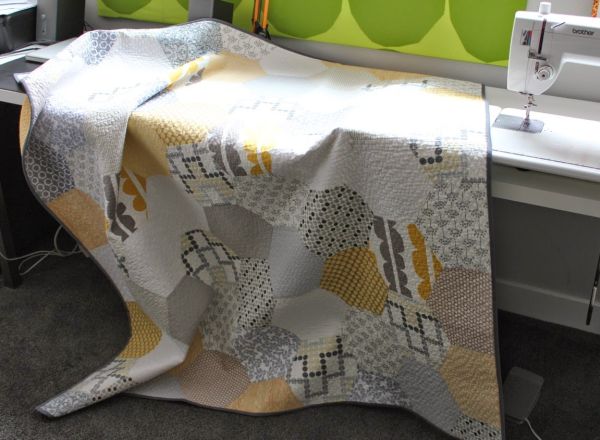
jacquie_2

Jacquie’s hexagon quilt – all done on her home machine. Image courtesy of Jacquie.

I highly recommend Creative Quilting With Your Walking Foot. In fact, I think I’ll go watch it again, just to pick up more tips that I may have missed the first time around!

Save

Christa’s Soap Box – It’s time to brag about my friends: Cory and Carolina

I’m so excited that I get to share some cool things my friends are doing. And not just because their names both happen to start with a “C” (though that is pretty cool)! Cory is my rather blogless friend, so I took it upon myself to shout her praises. I keep telling her that if she ever gets a blog, I think she’ll be an overnight success. 🙂

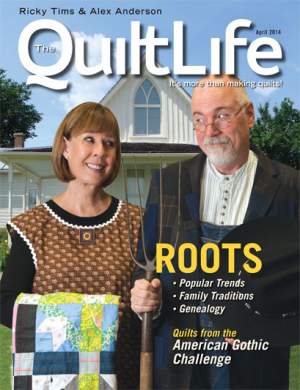
20140315_quilt_life_cover-lgCory is an amazing long-arm quilter, and one of her collaboration quilts was recently featured in the March issue of The Quilt Life magazine. The quilt is called Northwest Passage, and it’s part of an article titled “Going Dutch” written by Colleen Harvey.

Northwest Passage, Pieced by Diane Johnston

Northwest Passage, Pieced by Diane Johnston, Quilted by Cory Allender

When I first met Cory, she presented a trunk show of her amazing work to my local quilt guild, including Northwest Passage, shown above. Of course I blogged about it, and somehow, Colleen Harvey happened to see my blog post later on. She contacted me to inquire about including the quilt in her article, and I was able to help her get in touch with Cory and Diane. I just love it when things work out like that!

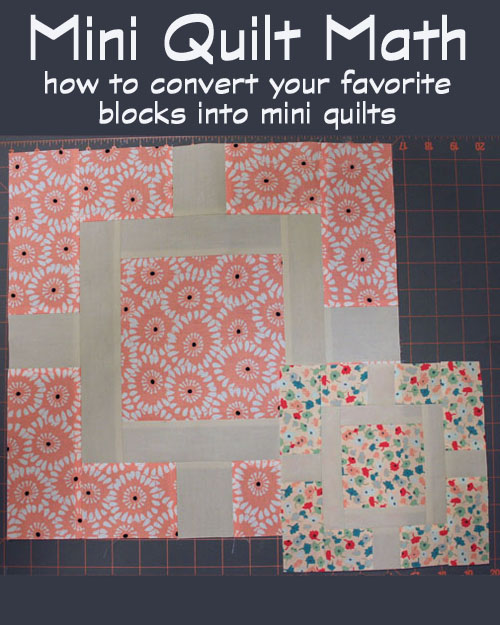
20140315_carolina_miniMini Quilt Math – a Craftsy blog post by Carolina Moore

The other good news I want to share is about my friend Carolina who is a prolific blogger. She was recently invited to be a guest blogger for Craftsy and she’s actually written two posts so far!

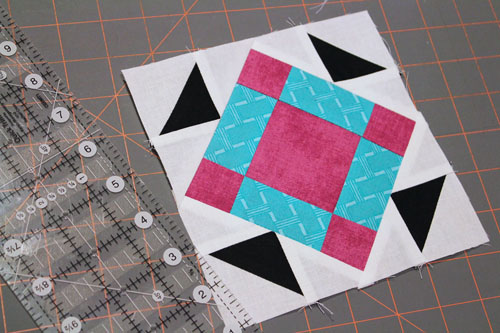
20140315_carolina_blockCarolina teaches you how to calculate the math for mini triangles, too!

Carolina loves modern quilts and mini’s and she’s created a 2-part series about math for minis. She shows you how to calculate the sizes so that you can shrink down any full-size quilt block into a mini version. How cool is that? Be sure to read part 1 and part 2 here and then give her some comment love. 🙂

How about you? What cool quilting stuff is going on in your life, or that of your friends and family? I am a self-proclaimed quilting cheerleader, so I’d love to give you a virtual pat-on-the back, too!

Sew and Tell – A Visit with Cindy Needham

This past weekend I had the great pleasure of meeting quilting diva Cindy Needham and taking a fabulous machine quilting class from her, on how to quilt heirloom feathers and backgrounds. All photographs were taken by me and shared with Cindy’s permission.

Cindy and Christa

Cindy Needham and Christa Watson at DQN Guild Meeting

Cindy’s specialty is turning vintage heirloom linens into beautifully quilted masterpieces! She is my hero because she find joys in extensively quilting her quilts and encourages others to conquer their fear of free-motion quilting. I love this quote from Cindy, shared on the back of one of her beauties:

Cindy's QuoteIt reads, “Take the time to quilt something beautiful. Your work will speak to generations to come about your passion for quilting, and give your quilt a voice to speak to those who choose to listen…” Isn’t that lovely?

Click on each of the pictures shared below to enlarge and appreciate the details!

Cindy Needham Quilting

Heirloom quilting by Cindy Needham.

Although Cindy’s quilting style is beautifully vintage, with heirloom quality stitches machine quilted on a breathtakingly small scale, I was able to learn so much from her and contemplate how I might apply her techniques to my modern quilts.

Cindy Needham Quilting

Cindy’s quilt sample. Imagine what a beautiful, modern wholecloth this would make!

In fact, during class I kept laughing to myself whenever she would show samples of her “larger scale” designs. I mentioned that her large scale is my small scale. 🙂 I think that a good way to describe the differences in motif size could be called be “Heirloom Scale” and “Modern Scale” – both equally beautiful and appropriate for their quilting styles.

Cindy's Feathers

Cindy’s Feathers

Cindy reminded us that it was okay to be “consistently inconsistent” and that perfection in quilting is over-rated. Words to live by. The sample below is one of my favorites. I love her nod to asymmetry in this piece! I think it’s a touch modern, don’t you?

Cindy Quilts

Quilting Sample by Cindy Needham

If you ever get a chance to take a class from Cindy, or listen to one of her lectures, I highly recommend it! She also has a couple of machine quilting classes on Craftsy, one of which I reviewed previously on my blog. Now I’m off to doodle… and dream sweet machine quilting dreams….

Craftsy Guest Post – Tips on Free Motion Quilting

Did you know that Craftsy has a blog? And did you know that a lot of bloggers I follow share their knowledge there? I’ve been reading Craftsy’s blog for a few months now, especially the posts related to quilting because I can always learn something new. 🙂

I was invited to contribute a post this week, writing about my favorite subject, machine quilting. Click here to read my blog entry and hopefully pick up a tip or two for yourself!

2014_cq_background_texxture

All of of the pictures I shared in the post came from tutorials and quilt alongs I’ve shared on my blog. It was fun to gather them together and use them to illustrate some of my favorite machine quilting tips.

Happy reading and quilting!

Craftsy Class Review – Quilting Big Projects on a Small Machine

Over 24,000 students have taken the online Craftsy class, Quilting Big Projects on a Small Machine so I figured I may as well join them and tell you all about it. 🙂

Quilting Big Projects on a Small Machine

Award winning quiltmaker Ann Petersen quilts her designs completely on her home machine (yay!) which is a Bernina (double yay!) and her class includes eight lessons which cover five different methods for quilting a big quilt. Total running time is approximately 4 1/2 hours and I enjoyed watching the class one or two sections at a time over the last week or so.

Reflections of a Rising Sun by Ann Petersen 2008 -40" x 40" Shared with Permission

Reflections of a Rising Sun by Ann Petersen 2008 -40″ x 40″
Shared with Permission

I quilt a lot of big quilts on my home machine and try to share the love of machine quilting with as many people as I can. I think the number one issue domestic machine quilters deal with is how to handle the bulk of the quilt under the arm of the quilt. Ann covers this and more in her fabulous class.

I think my favorite section was when Ann demonstrated how she sandwiches her quilts using basting spray and an iron to heat set the adhesive. I’ve never tried this method of basting before, but after watching this class, I’m definitely willing to give it a try!

Curves Again!-35" x 35" by Ann Petersen Shared with Permission

Curves Again!-35″ x 35″ by Ann Petersen
Shared with Permission

I thought it was very cool that during class, Ann actually demonstrates how to quilt using a real queen-sized quilt. You can see how she moves the large quilt under her little machine, and she shares a few hints on the order of her quilting. (She starts with stitching in the ditch on her borders first to keep them straight – genius!)

I learned a few new tips including why sharp (topstitch) needles are really preferred for machine quilting (rather than ball-point or universal needles). Ann confirmed my experience with polyester batting – it’s really too slippery to use when quilting on a home machine! I also appreciate that she validated another point that I love to teach – where possible, use a blending thread and match your top and bobbin colors to eliminate little “pokies” of thread showing through on either side of the quilt.

In addition to showing how she quilts a full quilt under the machine, Ann also covers several quilt as you go methods which I haven’t tried yet but have always wanted to.  I was very intrigued by Ann’s “split-batting” and “split-quilt” methods to deal with the bulk.

Modern Baby Quilt, 39" x 34" by Ann Petersen Shared with Permission

Modern Baby Quilt, 39″ x 34″ by Ann Petersen
Shared with Permission

Other valuable tutorials she covers include properly setting up your machine space for quilting, choosing the appropriate threads, and thinking about the quilting designs you’ll use before you begin.

Ann includes downloadable extra course materials as part of this class such as her step-by-step tips for spray basting, favorite tools for marking and steps for blocking a quilt.

Sunshine & Shadow - 2012 - 20" x 20" by Ann Petersen Shared with Permisssion

Sunshine & Shadow – 2012 – 20″ x 20″ by Ann Petersen
Shared with Permisssion

The questions that are asked during the class (listed on the sidebar while watching) are also very informative. There was a discussion on the best ways to handle quilting with clear polyester thread and I picked up quite a few tips from reading them.

The pictures above are just a few of Ann’s beautiful quilts, which she allowed me to share with you. To see more of her fabulous work and gain confidence with your machine quilting skills, I encourage you to register for Quilting Big Projects on a Small Machine today. You’ll be glad you did. 🙂

Sewing with Certainty – Yes, You Can Quilt It Yourself!

I love to encourage others to try their hand at machine quilting. I’ve blogged about getting started with free-motion quilting here and some of my favorite FMQ tips here.

The number one tool I like my machine quilting students to acquire costs nothing, and everyone has one of these if they know where to look:

It’s a “can-do” attitude. 🙂

Before you feel like you need to jump in and quilt elegant feathers or spend a ton of time stitching intricately quilted designs, try these tricks instead for effective, quick results:

(1) Don’t underestimate the capabilities of your walking foot.

You can add amazing texture to your quilts with simple straight (or not-so straight) lines.  I quilted Baby Bricks by marking a series of straight lines across the diagonal of the quilt and quilting them with a blending cotton thread.

Baby Bricks in Blue

Baby Bricks Quilt Along by Christa Watson

This was an effective way to quilt this quilt and it’s enough to hold the quilt together so that it’s washable and useable. However, I always like to add more quilting so I went back later and quilted many more rows in between the original lines. I didn’t mark any of the extra quilting. I simply used the edge of my walking foot as a guide.

More Quilting

(2) Try stitching “near” the ditch.

Stitching in the ditch is boring and time consuming, so I came up with a jazzier way to quickly quilt the seam lines while adding a little texture. Use a built-in decorative stitch  with your walking foot and quilt across the seam lines so you can see it. Most machines will allow you to change the stitch length or width for a variety of options.

Machine Quilting Wavy StitchesThis is such an easy way to quilt, even a child can do it! My daughter quilted her first quilt when she was just 8 years old. 🙂

(3) Try quilting gentle wavy lines with your free-motion foot and the feed dogs dropped.

For my Li’l Rascals quilt, I quilted an unmarked grid with a very thin blending thread. I started by quilting roughly parallel wavy lines all going the same way:

wavy_plaid_quiltingI then turned the quilt and quilted perpendicular to my first set of lines to create an “improv” sort of grid. I love quilting textures that don’t have to be evenly spaced!

Wavy Plaid Quilting

(4) Practice quilting on real quilts.

The best way to learn is by actually quilting on a real quilt. Don’t stress too much about perfect tension or quilting designs. Try out your idea, dive in and do it, and then give the quilt away (to charity, or a family member or loved one). The recipient will love it and they will not notice your mistakes, I promise! It’s much easier to push past your mistakes when the quilt will not be around as a constant reminder of your learning.

(5) Remember: the best machine for quilting is the one you have right now.

My friend Lacey is stipple-quilting her very first quilt! I gave her two rules when I agreed to teach her how to quilt. #1 – She wasn’t allowed to use cheap fabrics. #2 She had to quilt her own quilt. 🙂

First Quilt

Lacey is working on her very first quilt. Whoo hoo!

Lacey doesn’t have all the fancy-schmancy equipment or a drop-in table with tons of room. She purchased a very basic, used Bernina from a local dealer and she doesn’t even own a walking foot. In fact, when quoted the price for a new walking foot, Lacey’s reply was, “for that amount of money, it should be called a running foot!” 🙂

Quilting

Closeup of large stippling, also called “meandering.”

Lacey practiced on a couple of sample scraps to learn the rhythm of her machine, then she jumped right in and gave it a try on her actual quilt. She’s quilting on a larger scale, also known as meandering. She picked a bright pink thread that goes will all the colorful fabrics in the quilt. Doesn’t it look great so far?

(6) Give yourself permission to make mistakes.

The beauty of machine quilting is in the overall texture that quilting stitches add to the quilt. When you step back from your work a few feet, things look much better than when your nose is two inches away from your stitches. And when in doubt, add more quilting! The best way to hide imperfect stitches is with more imperfect stitches. 🙂

Think about it this way – if you are just beginning your journey into quilt-making, then your quilting skills will be at about the same level as your piecing skills. If you challenge yourself to quilt all of your quilts from the beginning, you can improve both techniques simultaneously, one quilt at a time!

Machine Quilting Inspiration

I love scheduling two weeks in between quilt along tutorials. That gives everyone time to work at their own pace. It also gives me a chance to highlight a few of the WIP’s that everyone is sharing on flickr and on their blogs.

Susan's Trees

Susan N – Desertsky Quilting

Today I especially wanted to give a shout out to a few gals who have already begun machine quilting their quilts.  I’ll start off with Susan from Desertsky Quilting. She whipped up 4 blocks into this cute quickie table runner. She stitched a simple outline around her trees which shows up wonderfully on the back in the photo below:

Susan's Quilting Detail

Susan’s Quilting Detail

I love Susan’s can-do attitude with her quilt. She said, “The walking foot really helped me, and I don’t know if I’ll go beyond straight lines and wavy lines with that, but it was fun, and I loved how easy it was!” It tickles me when quilters like Susan realize that you really can add extra dimension to your quilts, even with simple quilting!

She made my day with her sweet comments when she said, “Your encouragement gave me the confidence I needed and I loved every minute of it.  The quilting is my favorite part.” Me, too, Susan!!

Straight Lines

Katie’s Straight Line Quilting

Katie A. did a fantastic job straight-line quilting this adorable baby quilt made from leftover blocks. Don’t you just love the texture her quilting adds? Fantastic!

Swirls

Mara C’s Swirls

I adore the quilting that Mara (aka Simon Says Sew) is adding to the background of her trees. It looks like a blustery day in the forest, blowing up piles of snow drifts! I think Mara’s made at least 4 different Modern Tress so far. Can we say teacher’s pet? 🙂

Loops Swirls

Anne J. Loops and Swirls Quilting

Look at those fun loops and swirls that Anne J. has added to her background! Isn’t it great? She’s going for swirling snow and scattered snowflakes. I love it!

There are many more beautiful quilts that everyone is sharing. The fabric choices and color combinations are simply amazing. You can see more fabulous pics here on my flickr group.

My hope with this quilt along is that you will not be afraid to jump in and give machine quilting a try. (And don’t worry – if machine quilting’s not your thing you can still play with us and sew along!)

Background Quilting

Background Quilting for Christa’s Modern Trees

Here’s a sneak peek of my FMQ progress. I’ll give some more in-depth tutorials on background fillers when I finish quilting Modern Trees next week!