There’s been a lot of buzz about modern quilts since the debut of QuiltCon in 2013. And with my recent announcement that I’m part of the QuiltCon 2016 faculty, I thought I’d throw more of my voice into the mix. It thrills me to no end to see so many quilters embracing the modern style as they learn how to design and piece modern quilts. When I returned to QuiltCon in 2015, I noticed that elements of modernism had now been applied to the hand or machine quilting process, too.
Since machine quilting is my favorite technique, I’ll share 5 trends I’ve noticed in today’s machine quilted modern quilts:
1. Functional quilting enhances the design of the quilt without overpowering it.

Closeup of my HST quilt, which was recently featured in Make Modern Magazine.
Quilting stitches serve a functional purpose by holding the three layers of a quilt together. Over time, sophisticated quilters have learned to add an extra layer of decoration to their quilts by quilting intricate motifs onto the surface. With modern quilts, decorative quilting can be used to make the pieced design come alive, but the quilting is usually a little bit more subdued and is not the star of the show. Because many modern quilts emphasize clean lines and minimalist designs, over-the-top ornate quilting is not often seen on modern quilts.
2. Quilting motifs are often inspired by elements of graphic design.

Closeup of Optical Illusion, included as part of QuiltCon 2015
The seven basic elements of graphic design are line, color, texture, shape, size, value and space. These elements can be incorporated into modern machine quilting design motifs, too. Modern quilts often emphasize linear quilting because it adds such a textural quality to the quilt. Think irregular grids, tightly spaced lines (often known as matchstick quilting), and evenly spaced parallel lines. Thread colors, simple shapes, contrasting motif sizes and even the amount of negative space in between the quilting can all play a role in creating a successful modern composition.
Although my new book is not exclusively written to a modern audience, it does include a healthy portion of geometric quilting motifs. It’s what I’m drawn to, and what I love to quilt!
3. Asymmetrical quilting designs add depth and dimension.
Asymmetrical, “off the grid” piecing is one of the hallmarks of modern design. This idea can be incorporated into machine quilting as well. When you can see the hand of the maker in his or her quilt, I’m sure you’ll agree that a quilt doesn’t have to be computer perfect to be both functional and beautiful. Ditch the stencils and embrace irregularity to create perfectly imperfect quilts!
4. The walking foot has been reclaimed.

Spiral Quilting with a walking foot, part of my full day class on Modern Machine Quilting
No longer relegated to “stitch-in-the-ditch,” walking foot quilting is enjoying a resurgence in popularity. Using a walking foot, or built-in dual feed, quilters can do more than quilt simple straight lines. Think of gently flowing waves, organic, angular textures and continuous large-scale spirals. And don’t forget the possibilities of decorative stitches. Continuous zigzags and undulating serpentines can add drape and body to a quilt, just begging to be snuggled with!
5. Dense free-motion quilting adds incredible texture.

Detail of Swirls and Pearls free-motion quilting with geometric spirals in String of Pearls
From pebbles and swirls, to shattered lines and echoed spaces, dense free-motion work adds character to a quilt with an extra layer of composition just waiting to be explored. Contrary to popular belief, a densely quilted quilt can be soft and cuddly. Since most modern quilts are meant to be loved and used, they tend to soften up wash after wash. So don’t be afraid to quilt your own quilts, and when in doubt, add more quilting!
So – what are your thoughts about the “quilting” part of modern quilting? I’d love to know!
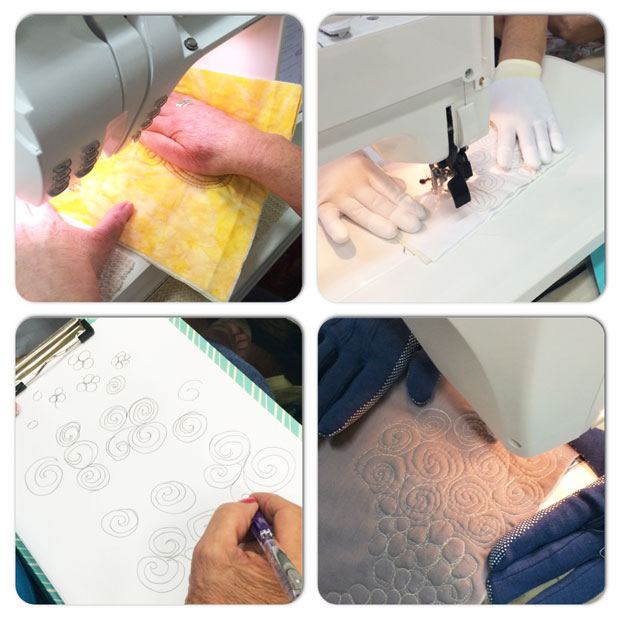 Here are a few pictures from my Modern Machine Quilting class that I taught at The Christmas Goose in Las Vegas last month. (Not to worry for those locals who are on the waiting list – I’ll be repeating the class again in October.)
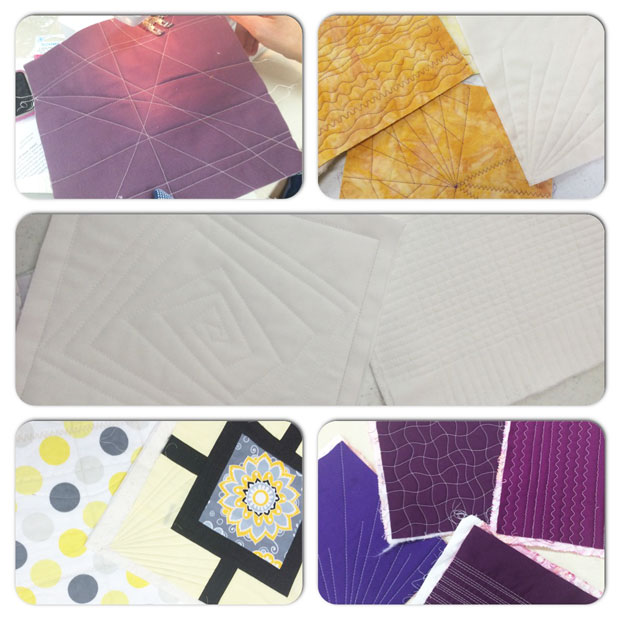 It’s amazing the textures and designs you can create with just a walking foot and some simple free-motion quilting! I organize the class similarly to how my first book, Machine Quilting With Style has been written: students start off getting comfortable quilting with their walking foot, then they move onto several of my free-motion favorites.


 Christa Quilts