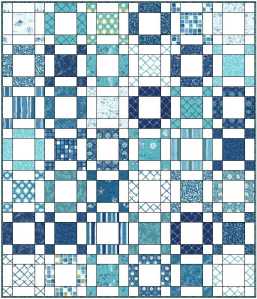
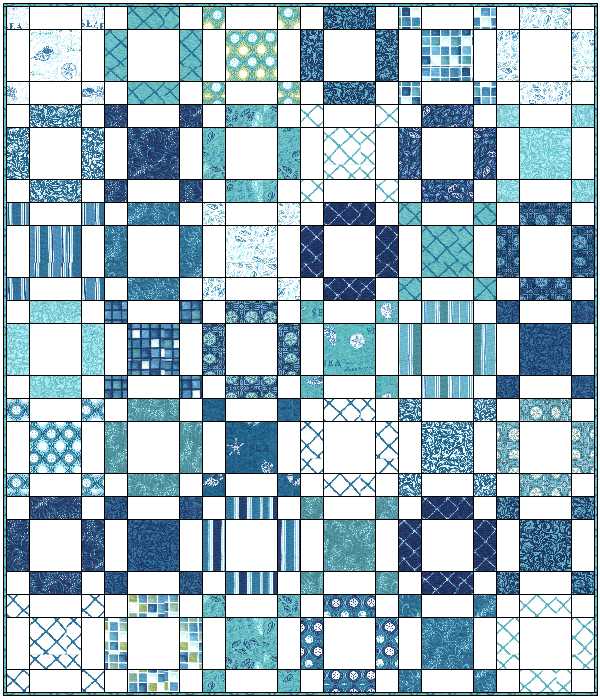
Christa’s Quilt Along 4.2 – Sea of Squares Cutting

This week we will start our Sea of Squares quilt by cutting all the pieces from charm packs: 2 light and 2 dark. I used 2 packs of Seascapes and 2 packs of White Bella Solids. As long as you have great contrast between your light and dark charms, this quilt will turn out great!
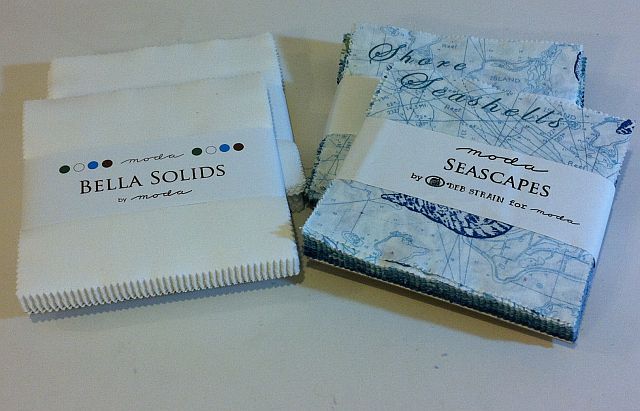
Seascape Charms

It took me just under an hour to complete this week’s homework.

Step 1 – Sorting the Squares (10 Minutes)

This seems like a very basic step, but it is important to sort all of the squares so that you cut them correctly. Of course you can make your quilt as scrappy as you like, and then you don’t need to worry as much about fabric placement.

Each block is made from 4 charm squares – 2 of the same dark plus 2 of the same light.
Let’s call them X blocks and O blocks.

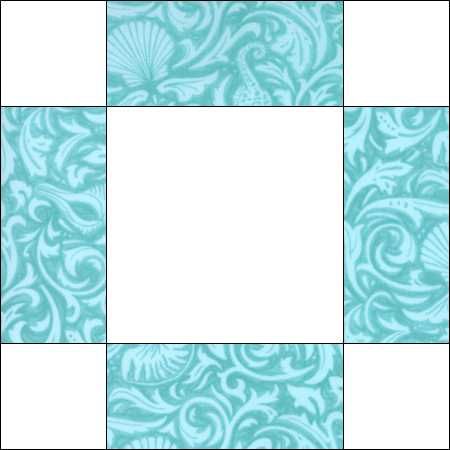
X BlockO Block


The X blocks have a dark charm in the middle with matching smaller squares in the corners. The O blocks have a light charm in the middle with matching light squares in the corners. You will be sewing a total of 21 X blocks and 21 O blocks.

Sort your 84 dark charms into 2 piles  – 42 charms for the X blocks (2 identical charms per X),  and 42 charms for the  for the O blocks (2 identical charms per O).

Dark Charms

Moda charm packs are wonderful because each comes with exactly 42 squares with the same number of duplicates per pack. (Print placement may vary depending on how it’s cut).

Sort your 84 light charm packs into 3 piles:

  1. Pile 1 = 21 white charms (whole) for the block centers.
  2. Pile 2 = 21 white charms (to cut) for the little squares.
  3. Pile 3 = 42 white charms (to cut) for the rectangles.

White Charm Squares

Step 2 – Cutting the Dark (Print) Charms (25 minutes)

From your “X” pile, pull out 1 of each charm for a total of 21 intact squares.

From the remaining 21 squares, cut them into 4 – 2.5 x 2.5 inch squares each. You should then have a total of 84 smaller squares that match the prints of the larger squares.

Dark X Block Charms

From your “O” pile, cut all of the squares in half yielding 2 rectangles each. You should have a total of 84 dark rectangles measuring 2.5 x 5 inches each.
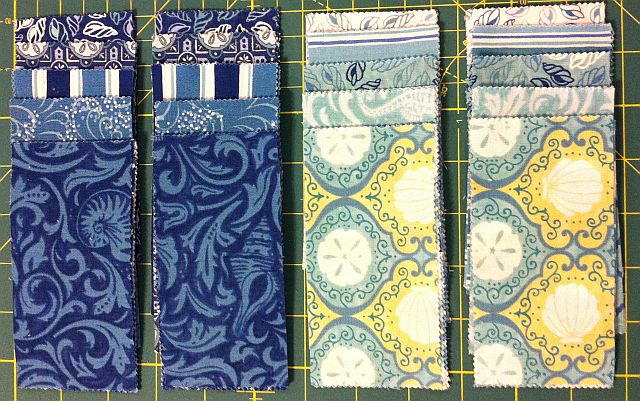
Dark O Block Charms

Step 3 – Cutting the Light (White) Charms (15 minutes)

Set aside pile 1 which is composed of 21 light squares (5 inches square).

From pile 2, cut the 21 light squares into 4 equal smaller squares each. You should have a total of 84 small light squares, measuring 2.5 x 2.5 inches each.

From pile 3, cut all 42 light squares in half yielding 2 rectangles each. You should have a total of 84 half square rectangles, measuring 2.5 x 5 inches each.

Light Charms Cutting

Light Charms: Cut Piles 1, 2 and 3

Now that your pieces are all cut out, you are ready to begin sewing the top together next week. Wasn’t that fun?

Quilt-Along ScheduleLinks are Active at the Completion of Each Step:

You can email me pictures of your progress at christa@christaquilts.com. I can’t wait to see all the variety and possibilities with this quilt!

Christa’s Quilt Along 4.1 – Sea of Squares Supply List

New to my blog? Be sure to add your email in the box on the right side bar (or scroll to the bottom if reading on a mobile device) so you never miss a new post!

Sea of Squares

Sea of Squares is the 4th in my series of do-it-yourself quilts where I will take you through all of the steps of making a quilt from fabric selection to cutting, piecing, basting, machine quilting and binding. If you follow along with me you will have a completed quilt in no time!

Sea of Squares

About This Quilt – Finished Size Approximately 51.5″ x 60″

I designed this quilt in EQ7 and downloaded fabric images from Moda to color it.

I named it “Sea of Squares” because I wanted to make a simple quilt pattern from nothing but charm squares. I used Deb Strain’s Seascapes in calming shades of blue from teal to navy to aqua, with Bella Solids in white for the background. This monochromatic color-scheme calls to mind the tranquility of the sea with the occasional whitecap of a breaking wave.

SeascapesBella Solids White


Supply List

Important! If you’d like to pick your own charms, make sure that each pack contains at least 42 – 5 inch squares. Not all manufacturers are consistent with their charms.

Each block consists of 4 charms (2 light/2 dark) so cut or purchase additional charms as needed for a bigger size. You may also use layer cakes if you want to super-size it!

Fabric

  • 2 of the same charm packs in darks or prints – 84 charms total (seascape blues)
  • 2 of the same charm packs in lights or solids – 84 charms total (solid white)
  • 1/2 yard for the binding (one of the blues in the picture above)
  • 3.5 yards for backing split into 2 equal pieces if using all the same fabric. If you prefer a scrappy backing like I do, collect assorted chunks and scraps to total this amount.
  • Batting piece measuring at least 60″ x 70″

Supplies

  • Basic sewing equipment in good working order
  • Rotary cutter with a fresh blade, ruler and mat
  • Brand new sewing machine needles
  • Neutral cotton thread for piecing
  • Decorative thread to match fabrics for quilting
  • Walking foot for straight line quilting
  • Optional – pinmoors and pins for easy basting
  • Optional – machingers gloves for smooth quilting

Quilt-Along ScheduleLinks are Active at the Completion of Each Step:

I plan on posting each week on Wednesday or Thursday depending on how my “homework” goes that week. Even though I will be sticking to the above schedule, feel free to work at your own pace.

By the way, this quilt uses the exact same fabric requirements as my previous Charming Chevrons quilt – so you can do either one, or both, depending on your mood!

Sharing is Caring

Please share your work in progress in my facebook group: Quilt With Christa . 🙂

Christa’s Quilt Along 3.9 – Finishing Charming Chevrons

Free Quilt Pattern

Be sure to sign up for my email newsletter to get a free pattern!

I’ve come to the end of my Charming Chevrons tutorial and it’s kind of sad. I really loved every minute of making this quilt! Today I will demo binding. Scroll to the end for links to the previous steps plus my announcement for my next DIY quilt-along starting next week!

Charming Chevrons Quilt

Christa’s Charming Chevrons

If you like this quilt and want to make one just like it, Charming Chevrons quilt kits are available from my shop for a limited time.

Step 1 – Trimming The Edges (10 Minutes)

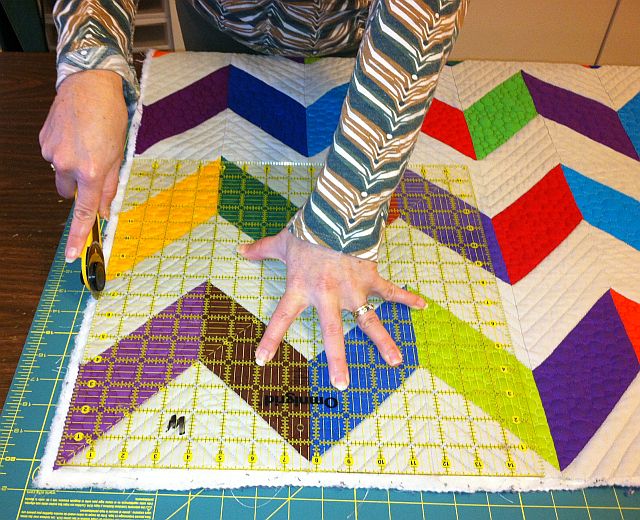
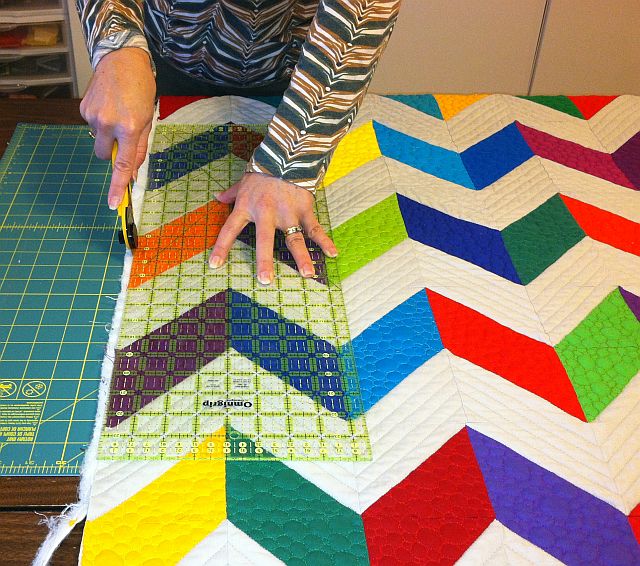
When the quilting has been completed and all of your basting pins removed, it’s time to trim the extra backing and batting and square up your quilt.

CornersEdges


Use a large square ruler for the corners and a long 6 to 8 inch wide ruler for the sides. The markings on the ruler help keep things nice and even. I use the long lines to make sure I am cutting straight.

If the quilt seems a little wavy, I will block it at the end after binding by soaking it in the washing machine, and laying it out flat on a table to dry. (I do this only if I know for sure the fabrics won’t bleed when wet – I’ve had way too many “accidents.”)

Step 2 – Making the Binding Strips (15 Minutes)

Binding 2I sew continuous double fold straight grain binding strips that I make myself.

Cut enough 2 1/4″ wide strips to go around the perimeter plus about 10 extra inches.

For this quilt I cut a total of 7 strips that measured 2 1/4″ by the width of the fabric (40″-42″).

Join the strips together on a mitered (45 degree) angle to smooth out the seam formed by sewing the strips.

Join all the strips together so that you have one continuous piece with the joined seams all going the same direction.


At the beginning of the binding, cut off one end at a 45 degree angle. Then press the binding in half lengthwise (press seam allowances open).

Angled Binding

Press Binding


Step 3 – Attaching the Binding to the Quilt by Machine (35 Minutes)

Sewing the BindingLeave a few inches of a “tail” unsewn when you begin.

Do not start at a corner, and quickly measure your binding around the perimeter of the quilt to ensure it is long enough.

Try not to end up where you have any of your seams in the corners. Adjust your start if needed.

Use a matching cotton thread in the top and bobbin and use the same thread to finish your binding (whether by hand or machine).

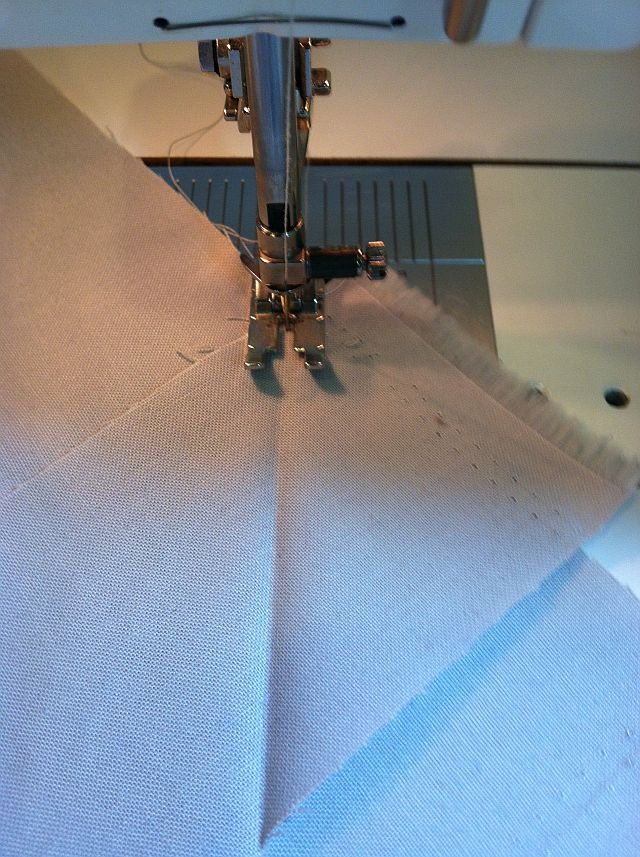
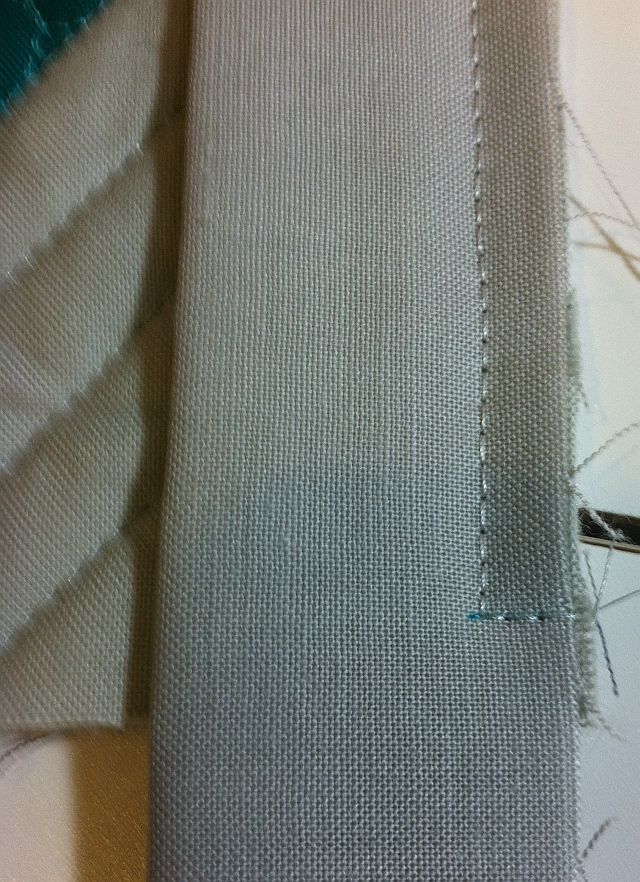
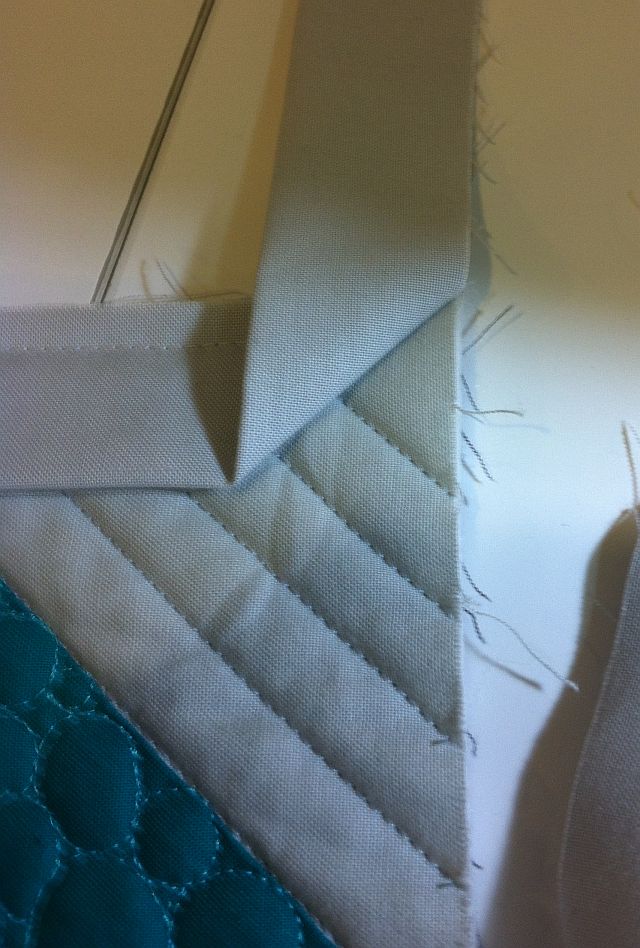
Using a walking foot, sew with 1/4″ seam allowances and stop when you reach exactly 1/4″ inch from the end of your first corner. Take the quilt off the machine and fold the corner like the pictures below. This will create nice crisp mitered corners when you fold them over.

Click on the pictures below to see a larger version for more detailed closeups.


Stop at Corner

Fold Up

Fold Down


Repeat for all corners of the quilt and leave a few inches of “tail” when you near the end.

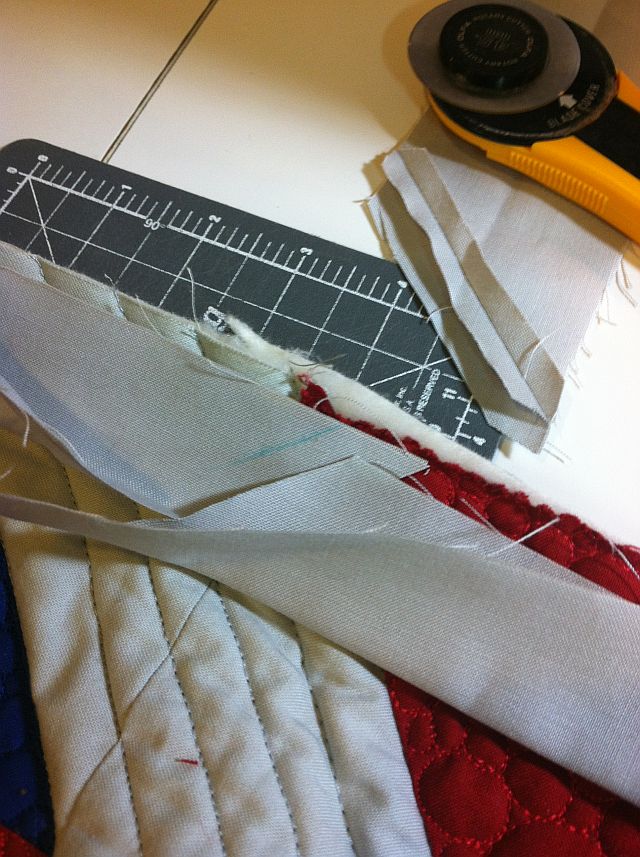
Binding EndOpen up both folded ends and with a pen, mark where the beginning meets the end.

Cut off the excess 1/2″ away from the marked line (for seam allowances) and join the two ends together.

You can see I cut off a full extra strip’s length of binding but just barely!

It’s better to have too much length than not enough!

Once your ends are joined, finish  sewing down the binding completely to the front of the quilt.


Step 4 – Hold the Binding in Place With Pins or Glue  (30 Minutes)

To baste the binding in place on back, I usually use pins and Pinmoors.  However, for this quilt, I wanted to try a glue pen to temporarily adhere the binding to the back of the quilt.  It worked like a charm and I got to see what the quilt looked like before it was done. I was even able to glue the corners in place to form a pretty miter. That will be much easier to sew!

Glue Stick


Step 4 – Finish by Hand or Machine (Hand Sewing 5 Hours)

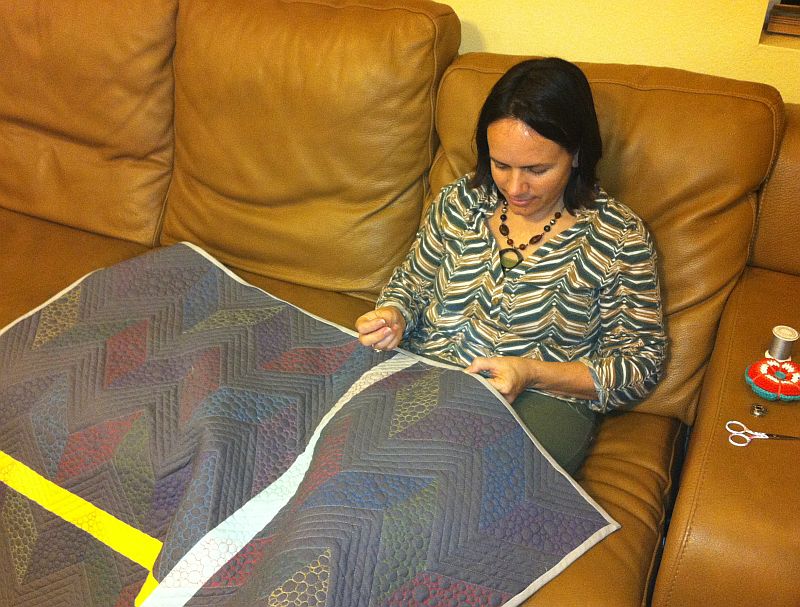
Whether I finish my binding by hand or machine, the above steps are still the same. Because I finished this quilt for QuiltCon (and possibly other quilt shows), I chose to sew by hand.  So I got nice and comfy on the couch and watched a couple movies while I stitched away.

Binding by Hand

For more info on both types of finishes, you can read my post about hand-binding and my machine binding tutorial.

Charming Chevrons Tutorials. Click the links below to go to that post.

Here are Charming Chevron’s Vital Statistics

  • Original design, pieced and quilted by Christa Watson
  • Finished size 46″ x 54″, completed November 2012
  • Finished block size 8″, 42 blocks total
  • Made from 4 packs of Kona Cotton charm squares (2 New Classic colors, 2 Ash grey)
  • Pieced backing, shades of grey with pops of color
  • Double batting (Warm-N-Natural and Legacy Wool)
  • Superior Highlights trilobal polyester in top and bobbin  for pebbles (18 colors)
  • Isacord Sterling polyester in top and bobbin for chevron outlines
  • Total piecing time: 9.5 hours
  • Marking and basting: 2.5 hours
  • Total quilting time: 28 hours
  • Total binding time: 6.75 hours

Sharing is Caring

Please share your work in progress in my facebook group: Quilt With Christa . 🙂

Paper Pieced Wreath Berry Christmas – Part 2 of 2

I’m back with the second part of my Paper Pieced Log Cabin Christmas Wreath. You can see part 1 here.

Today I will demo the rest of paper piecing the blocks, finishing the top, and machine quilting my mini-quilt to finish.

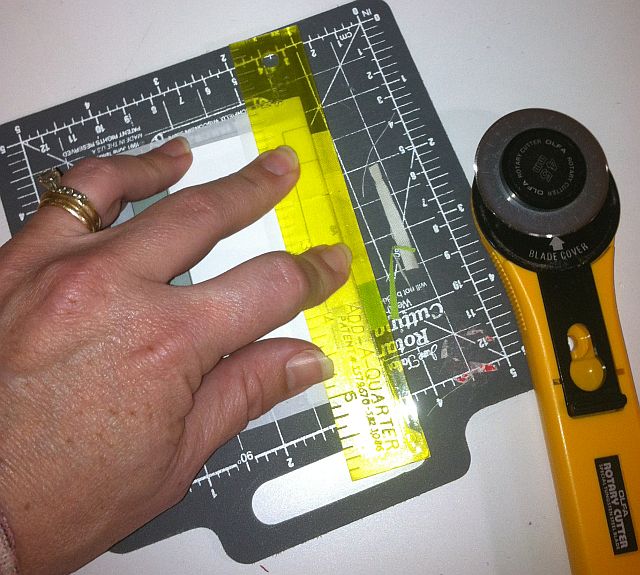
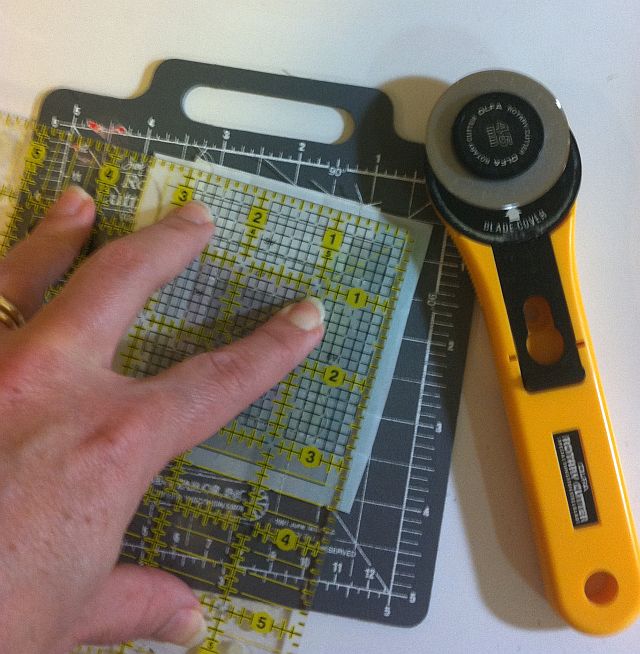
Here is a refresher of the paper piecing process from last week with a few more detailed pictures. My favorite method of paper piecing uses a straight edge and an add a quarter ruler. Be sure to click the images below for closeups.


Paper Piece 1Paper Piece 2Paper Piece 3


Paper Piece 4
Paper Piece 5

20121211_pp_6


Step 1 – Paper Piece all of your Log Cabin Blocks from Last Week

(You can download the log cabin foundations for free or you can purchase a set of printed foundations on lightweight see-through vellum paper from my store.)

  • Add your next log to a freshly trimmed side.
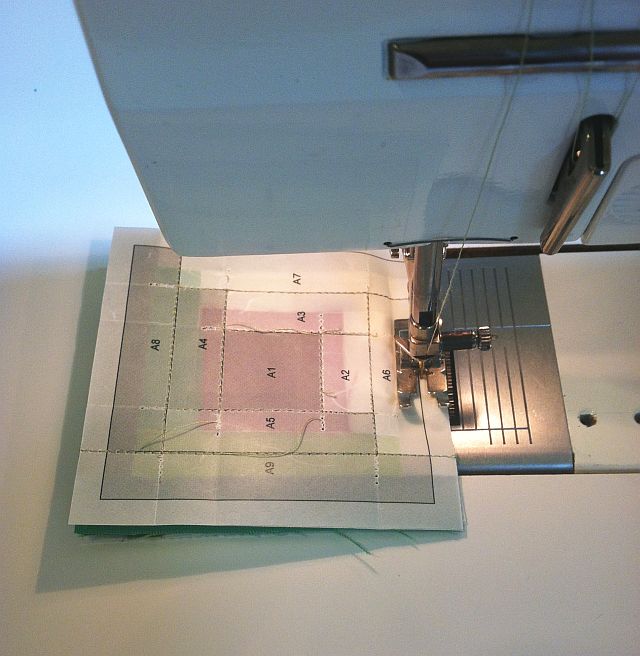
  • Flip over and sew from the paper side following the  numbered lines in order
  • Press your sewn seam with a wooden seam roller
  • Fold the paper on the next seam number that you will be sewing (use a business card or postcard as a straight edge)
  • Pull back your excess fabric, use the add a quarter inch ruler and trim the excess.
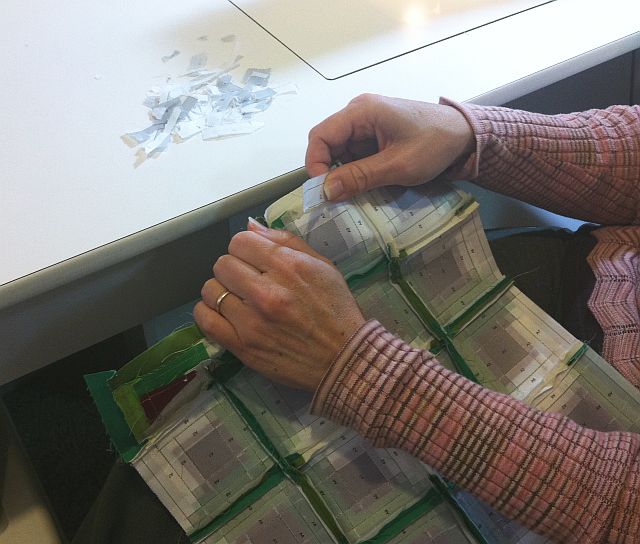
  • When all 16 blocks are sewn, trim from the paper side leaving 1/4″ seams all around

Wreath 1

Wreath 2

Wreath 3


Wreath 5
Wreath 5


Step 2 – Sew The Top

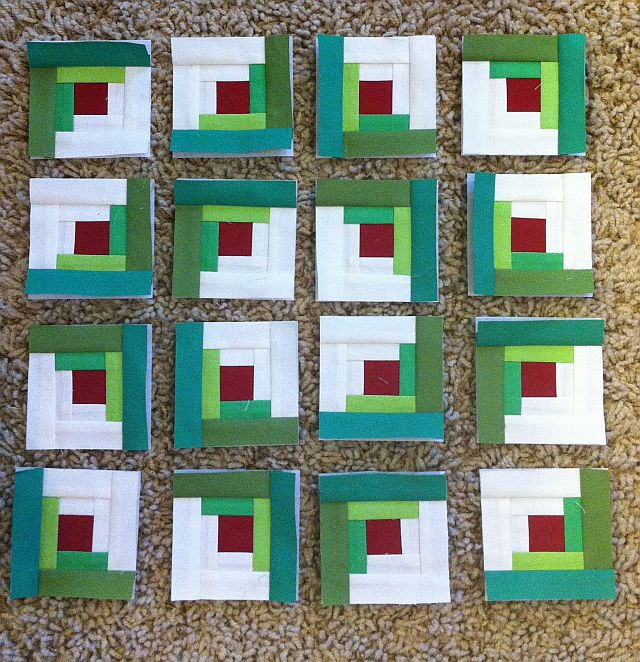
  • Lay out your 16 Log Cabin blocks so that they form a wreath shape.
  • Sew each row into pairs and then the pairs into rows of 4 blocks
  • Finger press your seams open, or press with a wooden seam roller
  • Join the rows to complete the top
  • Once the top is complete, carefully remove all the papers
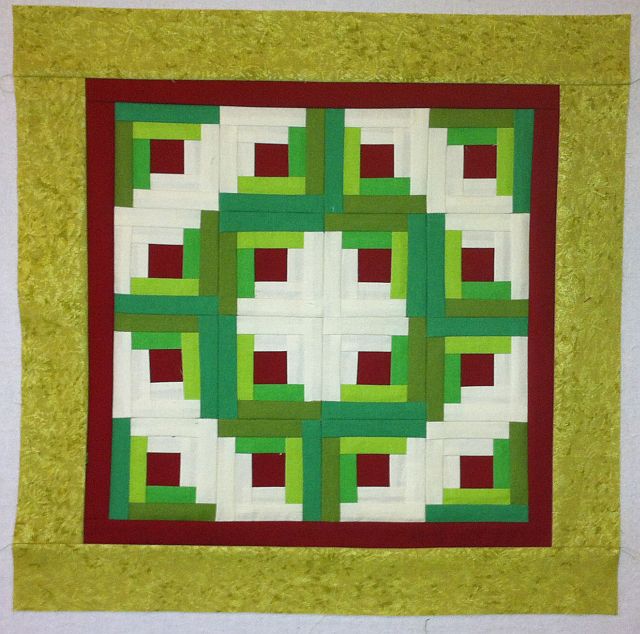
  • Add the thinner red borders to the sides and top
  • Add the wider green borders around the outside

Log Cabin Wreath

Step 3 – Baste and Quilt

I quilt everything on my regular Bernina home sewing machine and I love it!

Straight QuiltingI use Pinmoors and flat flower pins to baste all of my quilts because they are so easy to remove while machine quilting.

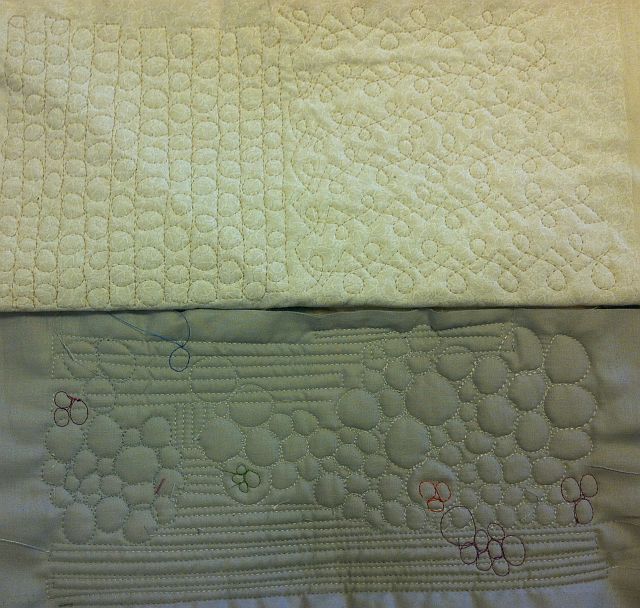
Quilting Loops

Before basting, I marked straight lines around the wreath design with a water soluble pen. Always be sure to test your fabrics for marking removal and to make sure they won’t bleed when they get wet.

I quilted the straight lines with my walking foot. Then I added double loops in the borders and smaller loops in the background with my free-motion foot.

I used matching solid red fabric for the binding. For this quilt, I tried a Sewline glue pen to keep the binding in place on the back while finishing by hand.  It keeps my binding nice and tidy!

Sewline Glue PenYou can see an in-depth binding tutorial here.

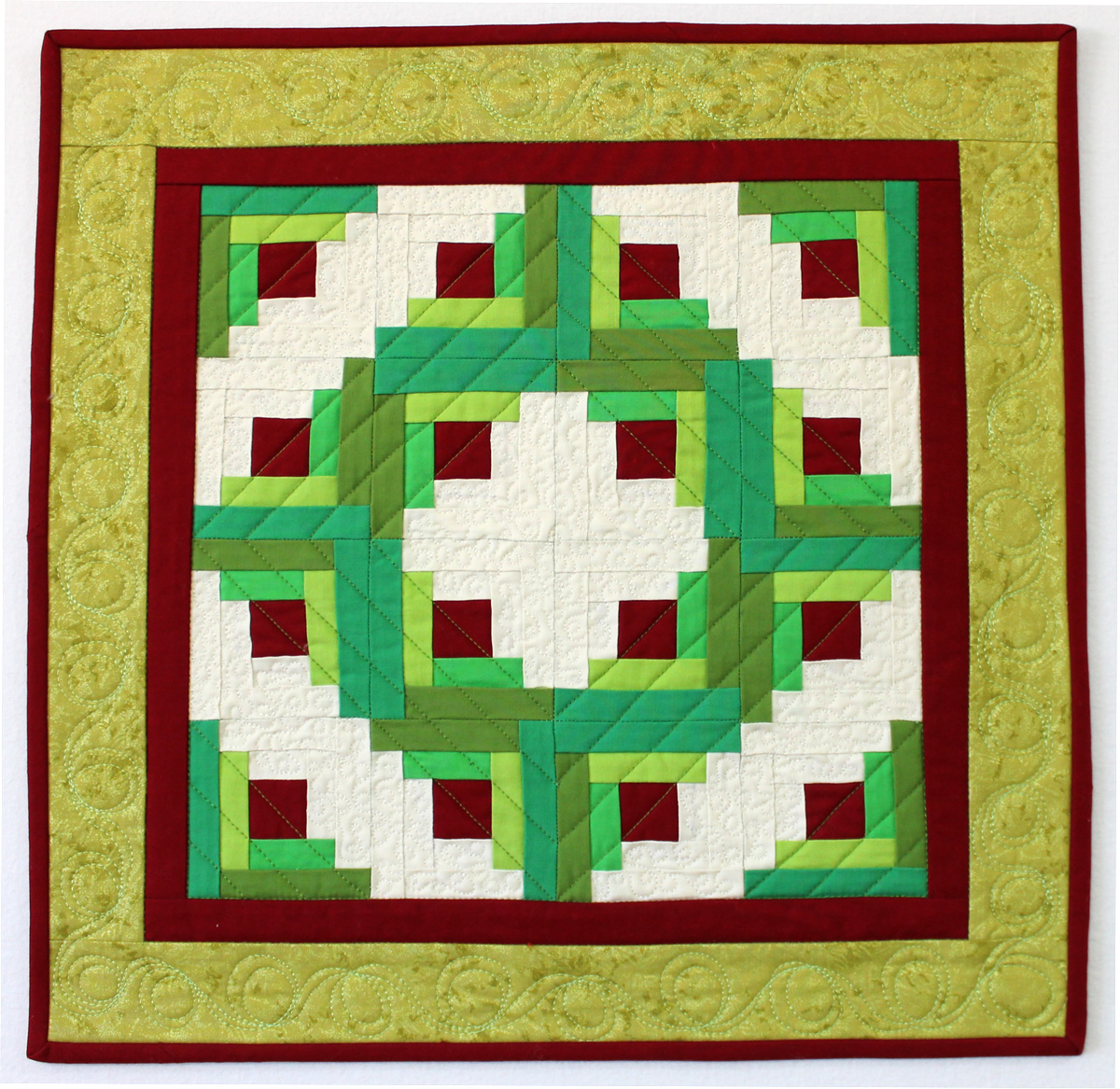
Voila! It’s finished!

Log Cabin Wreath, Pieced and Quilted by Christa Wason 18" x 18"

Log Cabin Wreath, Pieced and Quilted by Christa Watson
18″ x 18″

I have tons more ideas of what you can do with these blocks:

  • Use as the center of a larger quilt.
  • Sew a pillow, wall-quilt or table topper
  • Make more blocks for a larger throw sized quilt
  • Turn one block into a Christmas Ornament
  • Make matching placemats

That was fun. Be sure to email me pictures when you make one, too!

Christa’s Quilt Along 3.8 – Quilting Chevrons Part 2

I love quilting pebbles! I have stippled my quilts like crazy for the last 10 years, but just recently got the hang of pebbling. Jut in time,  too, as I was on stipple burnout!!

Pebble Quilting

The time it took to finish the pebbling on my Charming Chevrons quilt was a little ridiculous though – it took 23 hours!! Yes, that’s right. The pebbling took more time to do than every other part of the quilt combined. It gives new meaning to the term Quilt-in-a -Day, LOL!!

Since I don’t really expect everyone to spend that much time quilting this quilt, I will first talk about pebbling in more detail, but then give you an alternative so that you can actually finish this quilt. (But by all means do the pebbling if your heart desires – mine did!)

Step 1 – Doodle on Paper First

Just like you had to learn your alphabet before you could write, so it is with quilting any FMQ (free-motion quilting) design. When I was in kindergarten my penmanship was terrible! (And it hasn’t really improved much since!) You need to practice your quilting “penmanship”, too!

Paper Practice

If you doodle on scraps of paper every day before you begin quilting, it will help you develop muscle memory between what you are drawing with your hands and what you are stitching out on the quilt. This will form a mind body connection so that eventually you will be able quilt without thinking. Think of FMQ as drawing with your sewing needle.

Step 2 – Practice on Scraps Next

I took a few FMQ classes at Road to California 2 years ago. For most of the class, we just made practice samples. If you really want the feeling of completing FMQ on a quilt, practice on charity quilts. You will get great practice and the recipients will love your efforts!

Practice Scraps

When I began free-motion quilting, my first efforts looked pretty bad. It took a while for me to put together different combinations of fabric, thread, batting, needles and tension settings. A few quick things I learned while practicing FMQ on my Bernina:

  • Select a needle with a large hole so that the thread doesn’t shred, like Superior Topstich needles. The size depends on the thickness of your thread (size 90 for the heavier polyster thread). Change every 8-12 hours of quilting. I used 3 of them on this quilt.
  • Loosen the bobbin tension slightly.
  • Use the same thread in top and bobbin for most quilts – it hides mistakes and makes for more even tension. I used Superior Highlights polyester in a rainbow of colors.
  • Break your quilting up into sections and don’t rush the process. Although it took a long time to quilt my pebbles, it really worked out to about 33 minutes per chevron block.  Quilting one block a day is not a bad goal.
  • Use a free motion slider, quilting gloves, and bobbin washers for the best quilting combo.
  • It’s Ok to “travel stitch” over your previous lines to get into all the nooks and crannies.

Step 3 – Apply your practice to your actual quilt

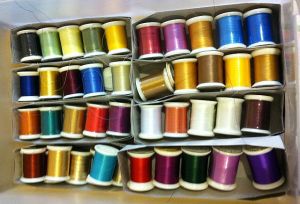
Thread DrawerFor this quilt I changed threads with every fabric color. I never could find a neutral that blended in with everything so I used a total of 18 different colors.

When I didn’t have an exact match, I used something close. It gave the quilt some interest without being overpowering.

I quilted the pebbles in sections first.

I quilted a batch of greens, then oranges, then reds, then blues, etc. This helped me from getting too bored. Usually I like to off each my stitches between thread changes. However, because I stitched over many of my quilting lines to form the pebbles, it hid most of my stops and starts. Therefore, I cheated a little and used really small “anchor” stitches at the beginning and end of each color change to avoid tying off.

Pebble Quilting

Step 4 – Alternative Quilting Motif – Loops

Loop QuiltingIf  you are not crazy like me and don’t want to spend this much time quilting your chevrons, try a simple meandering loop instead.

This is my other “go-to” design and it covers your area pretty quickly. In fact, this motif would look great quilted all over the surface if you want to skip the straight line background quilting.

Here’s a little background quilting I did using loops on an earlier quilt. Click to enlarge.

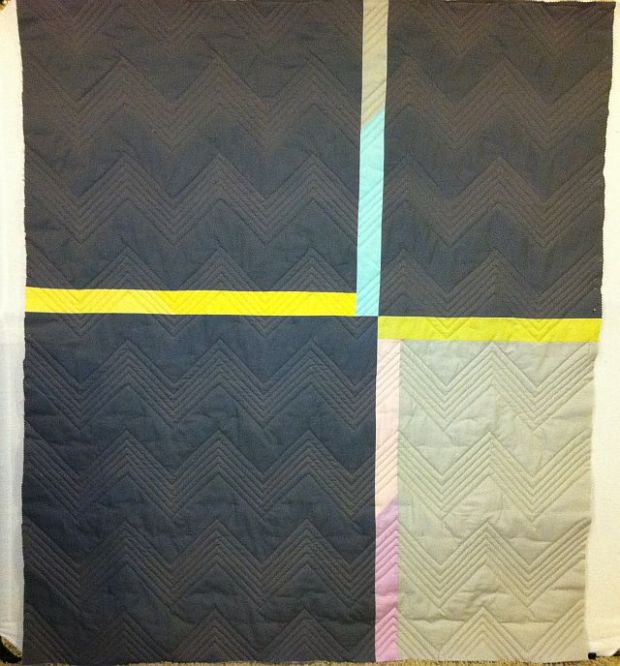
Because I used so many threads, my quilt back turned out just as colorful as the front!

Chevron Quilt Back

Other Resources

Please visit Leah Day at the Free Motion Quilting Project.  Her blog has so many in-depth tutorials on stitching particular FMQ designs. She has a video tutorial showing how to do pebble quilting and loops.

Yes, it was a little crazy to quilt that much, but honestly, I loved every minute of it! Next week it will be time to finish the binding and then I’ll start on another brand new tutorial. Isn’t this fun?? Be sure to check out my other two quilt-alongs here and here.

And, please continue to email me pictures of your Charming Chevrons quilt. I love to see how you are doing, no matter how you quilt it!

Quilt Along Schedule (Links are active once each step has been completed.)

Paper Pieced Wreath Berry Christmas – Part 1 of 2

Paper Pieced Log Cabin WreathThis is a Christmas Wreath quilt I designed and made from paper-pieced Log Cabin blocks.

Since I can’t make anything anymore without feeling the need to write a tutorial for it, here you go:

I will demo making the log cabin blocks today. Part 2 covers completing the top and machine quilting.

The finished block size is 3″. The finished mini quilt (or table topper or pillow) is 18″ x 18.”

Step 1 – Gather Your tools and supplies. These are not a necessity, but as with any project, they make the job easier!

  • Rotary Cutter
  • Wooden Seam Roller for pressing
  • Add a Quarter Ruler for neatly trimming while piecing
  • A straight edge surface such as a postcard or piece of template plastic
  • Vellum Tracing Paper to print the foundations on
  • 1/2 yard of red fabric for centers, borders and binding (or scraps to equal that much)
  • 1/4 yard of cream to tan fabric for light half of log cabin blocks (or scraps)
  • 1/2 yard total of assorted green fabric scraps for log wreaths and border
  • FQ of green for outer border
  • Size 90 sewing needles for sewing through paper foundations
  • Small scissor snips for trimming
  • Cotton Thread for piecing
  • Your choice of decorative thread for machine quilting

Step 2 – Cutting all the logs. I prefer to have everything cut out before I begin my sewing. The pieces are cut bigger and will be trimmed later. Although there are 4 sizes of  light logs and 4 sizes of dark logs, I cut only 2 sizes for each. It wastes a tiny bit more fabric, but it’s easier to keep things organized, especially if I change my mind on fabric placement.

A little note on cutting pieces to fit – measure the finished size of your pieces and add 3/4  inch to this measurement (more if working with triangles). The units used for paper piecing have the extra 3/4 inch added in already.

Fabric cuts are based on 20-22″ long strips for working with fat quarters.

From the red fabric cut (if you cut very carefully you can get it all from just one fq):Red Fabric

  • 16 – 1.75″ squares for centers
  • 4 – 1.25 ” x 16″ strips for inner borders (to trim down later)
  • 4 – 2 .25″ strips for binding (2 strips if using 42″ wide fabric)

From assorted white, cream, or tan scraps, cut 10 – 1.25″ wide Cream Fabricstrips. Cross-cut into:

  • 32 – 1.25″ x 2.25″ rectangles
  • 32 – 1.25 x 3.25″ rectangles

From assorted green scraps, cut 12 – 1.25″ wide strips. Cross-cut into: Green Fabric

  • 32 – 1.25″ x 2.75″ rectangles
  • 32 – 1.25″ x 3.75″ rectangles

From green border fabric, cut 4 – 2.25″ x 22″ strips (trim later)


Step 3 – Printing the Paper Foundations

You can download the paper pieced log cabin block pattern by clicking the image below. There are 4 per page, so you would need to print 4 pages for a total of 16 blocks. Be sure to set your printer to print the PDF at actual size, not print to fit.

Paper Pieced Log Cabin Blocks

You can print on copy paper but it is much easier to see what you are doing if you use see-through paper (vellum) instead. Cut apart your paper foundations leaving a seam allowance all around. It is printed in grey-scale so you can tell which side of the block is light and which is dark. The blocks are printed as a mirror image for this technique.

Step 4 – Sewing the Paper Pieced Log Cabins

There are a lot of pictures for this next section so I have shrunk them down in order. Just click on any picture to enlarge so you can see the details.

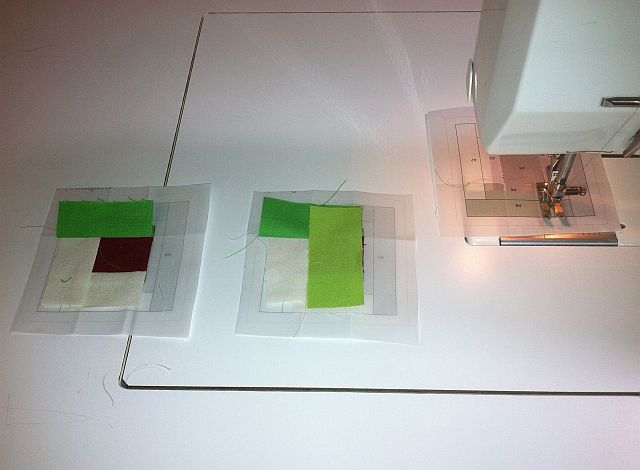
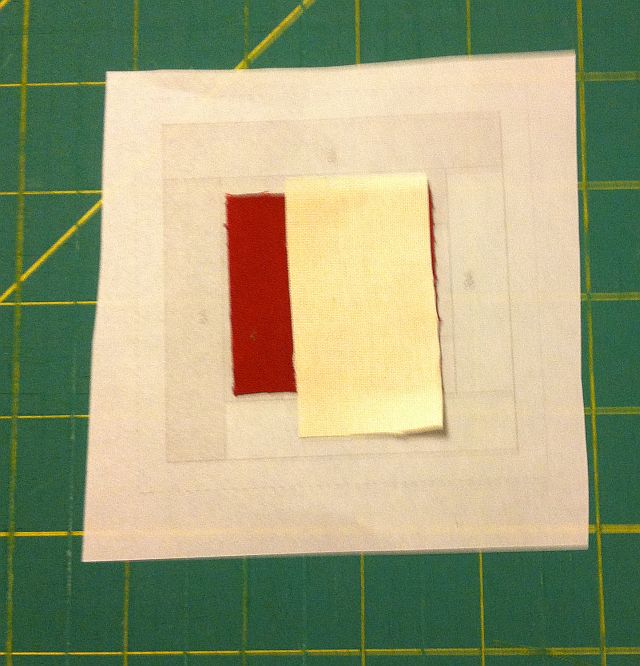
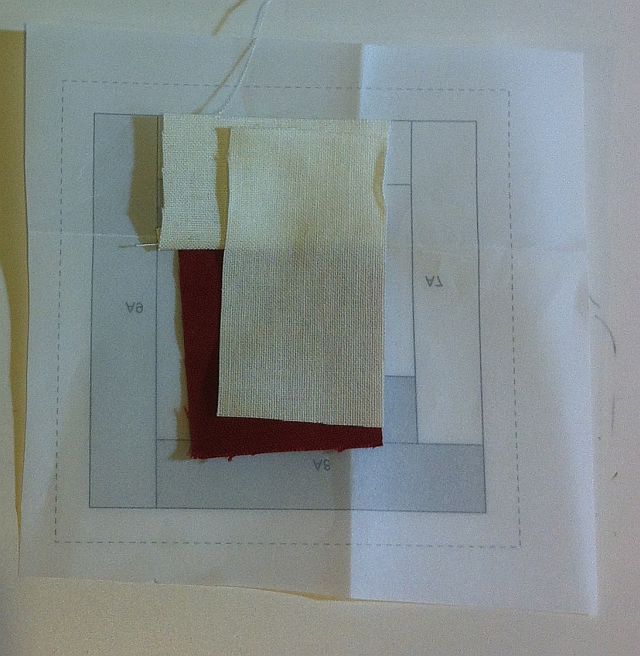
Line up your red square so that the BACK of the fabric touches the BACK of the paper. (Kind of tricky with solids – I know!) With right sides together, line up your first short white log on top of the red square, with about 1/4 inch overlapping your sewing line.

This first two pictures show the back side. You will be sewing from the front.

Log Cabin 1

Log Cabin 2

Log Cabin 3

You can see a shadow where the fabric is sticking out far enough for the seam allowance.

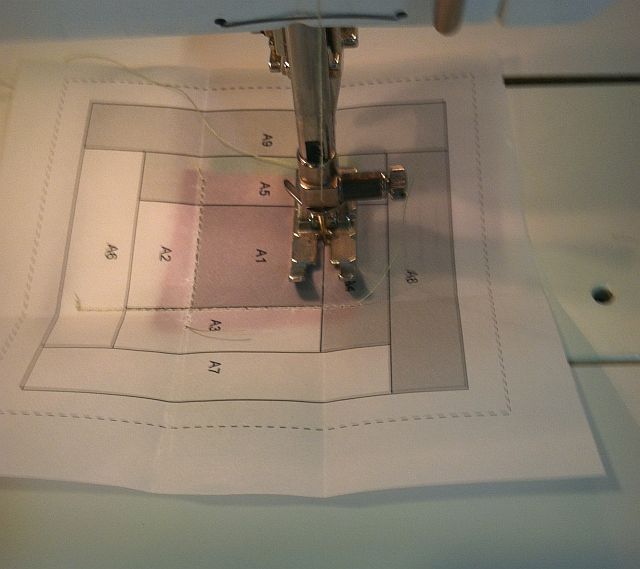
Remember to start and end 1/8 to 1/4 inch before and after the line. Use a smaller stitch length and a larger needle. Sew on the line between A1 and A2.

Log Cabin 4

Log Cabin 5

Log Cabin 6Log Cabin 7

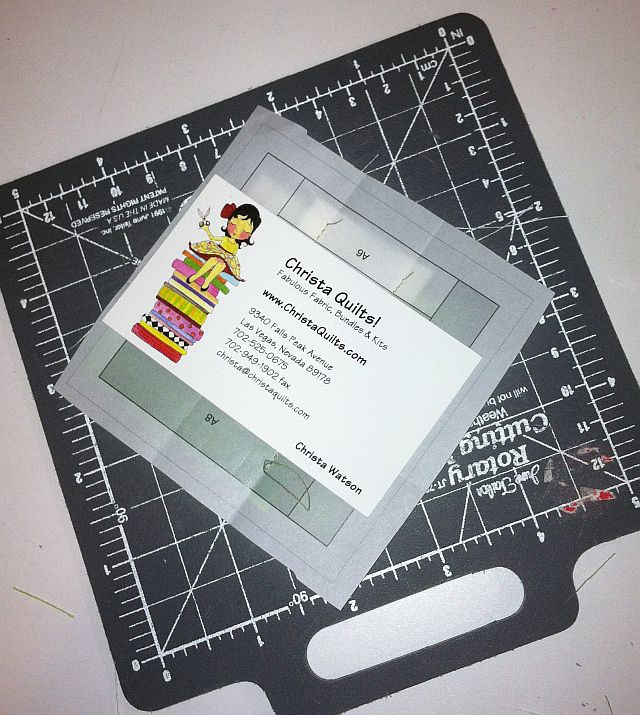
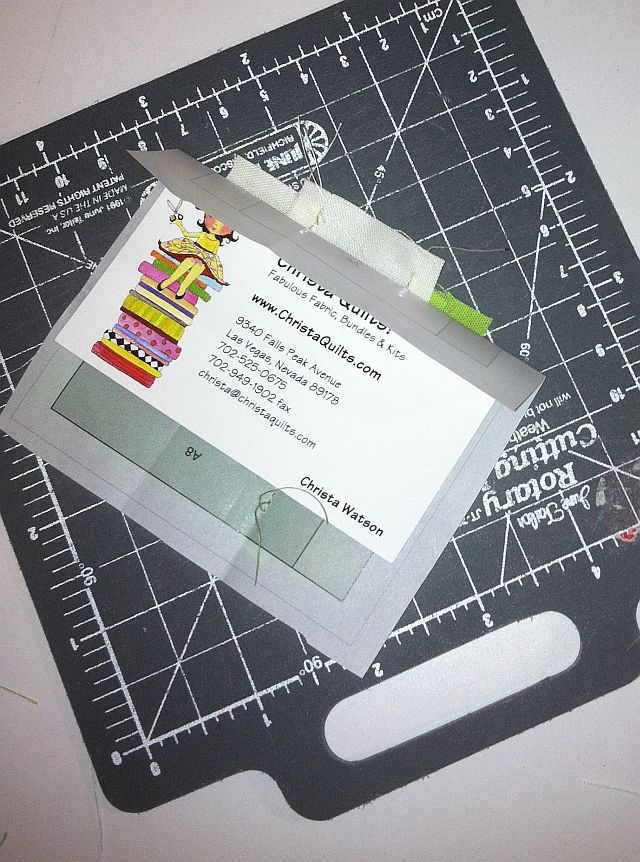
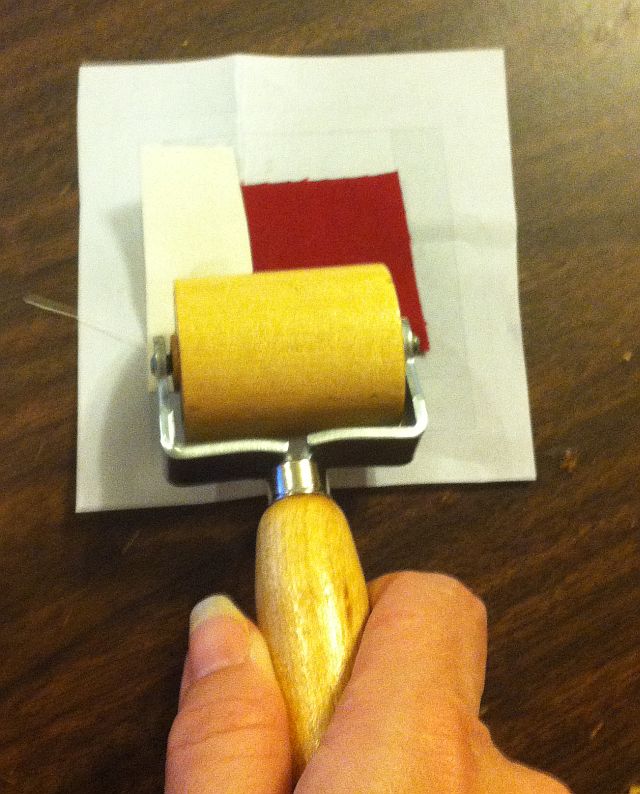
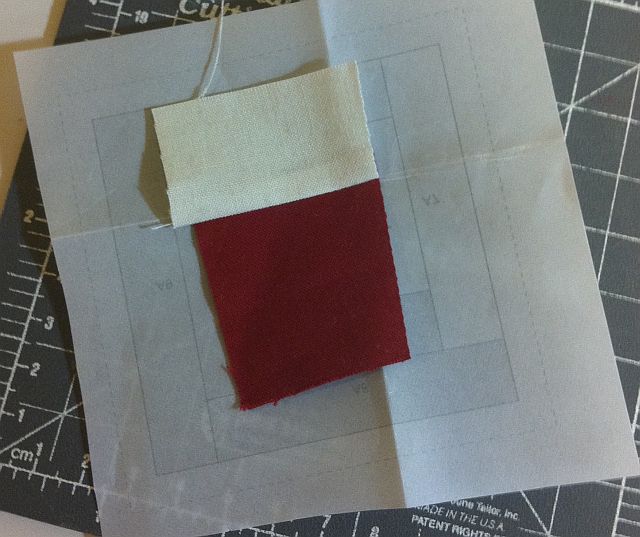
Remove the block from the machine and clip threads. Use a wooden seam roller to press the newly sewn piece to the side. Flip the block back over to the front and using a straight edge (like a business card), fold over the paper on the next sewing line (between A1 & A3).

Log Cabin 8

Log Cabin 9Log Cabin 10Log Cabin 11

The excess seam will be exposed. (You may need to tug the fabric from the paper a bit to get it to lie flat.) To trim it neatly, use the add-a-quarter ruler to create a ridge on top of your block, paper, and straight edge. Trim off the excess. Flip the block over and add your next light log along the newly trimmed edge. Sewing on the printed side, sew the next seam.

Log Cabin 12

Log Cabin 14Log Cabin 15Continue sewing in this manner until all of your logs have been added. Remember to Sew, then Press, then Trim each seam.

Once the block is complete you can trim off the excess leaving 1/4″ seam allowances.

Make your first block completely to test your process. Once you are satisfied with the results,  Repeat to make a total of 16 blocks. You can sew all of the same steps at the same time to speed up the process. When you are done with the blocks, you may remove all the foundations, or keep them on until your complete your top.

Christa’s Quilt Along 3.7 – Quilting Chevrons Part 1

As I quilted my Charming Chevrons quilt this week I realized it would be way too much “homework” to try to get it all into one post. Therefore, I’ve broken down the steps into two parts. I’ll cover the straight line quilting this week, and then the free-motion quilting (FMQ) in next week’s post.

I had so much fun quilting this quilt! Machine quilting is my absolute favorite part of making any project. I often spend much more time on the quilting than I do in piecing the top.

It took me a total of 5 Hours to quilt the straight lines.

Step 1 – Stitch in the Ditch

Probably one of the most important (and often overlooked) parts of quilting any quilt successfully is to first outline all of them major seams by stitching in the ditch. This may be the most boring  step because you can’t really see your stitches. However, it can really make your quilt “pop”, no matter what additional quilting you add to it.

Be sure to start with a brand new needle when quilting. I used a Size 90 Topstitch needle for all of my machine quilting. The longer shaft and larger eye eliminated stress on the thread passing through the needle. My quilting was smooth and trouble free!

Though I list step 1 and 2 separately, you can combine them if you wish, and do all of the quilting at the same time.

Step 2 – Quilt The Chevron Echoes

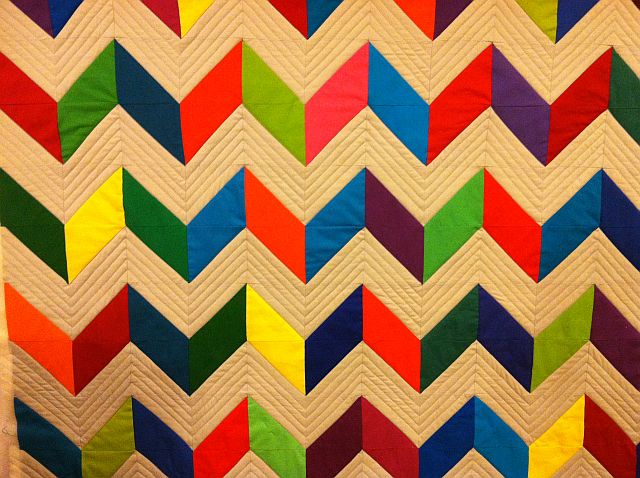
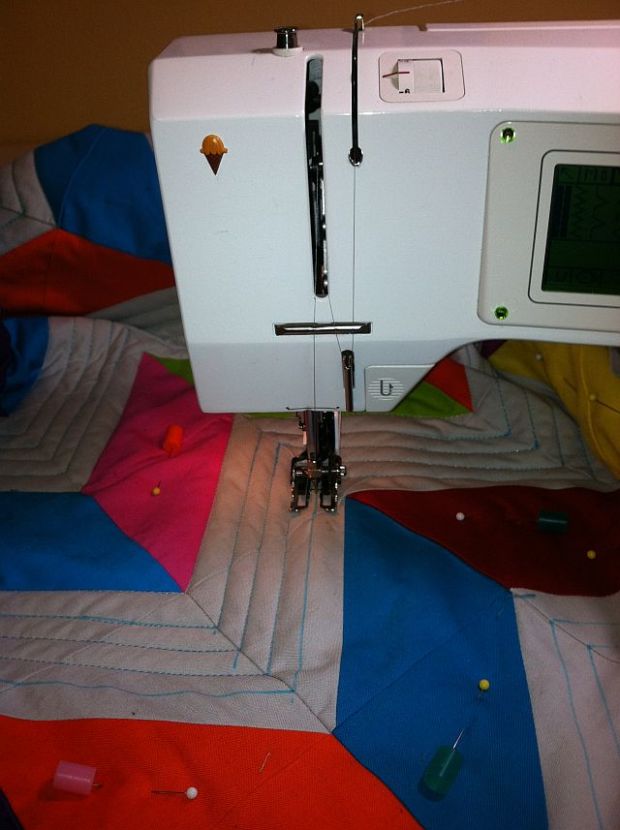
If you have marked straight lines onto your background, you can stitch them with a walking foot. I like to match my thread as closely as I can do my background so that you notice the quilting first, not the thread. I used Isacord polyester in the Sterling silver color for all of my straight line quilting. It was weighty enough to show the quilting and there were no issues with thread breaks.

Starting on one edge of the quilt, stitch one straight line at a time all the way over to the other edge of the quilt. This means no tying off or needing to bury threads. I simply started a few stitches off the quilt on either side to anchor my threads.

I started quilting in the center row of my quilt and worked my way across half of the quilt. When I got to the end I rotated the quilt and finished the other side.

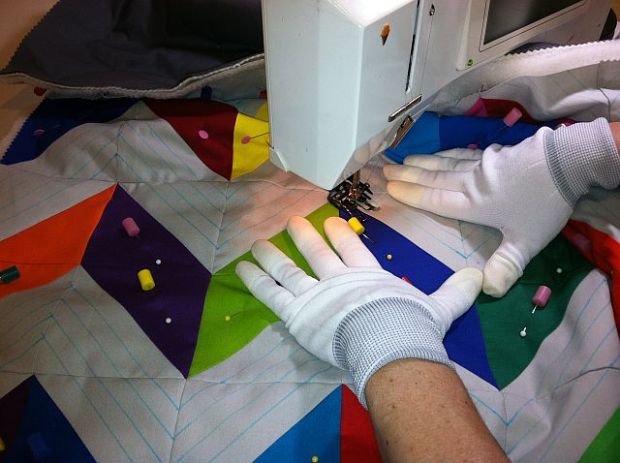
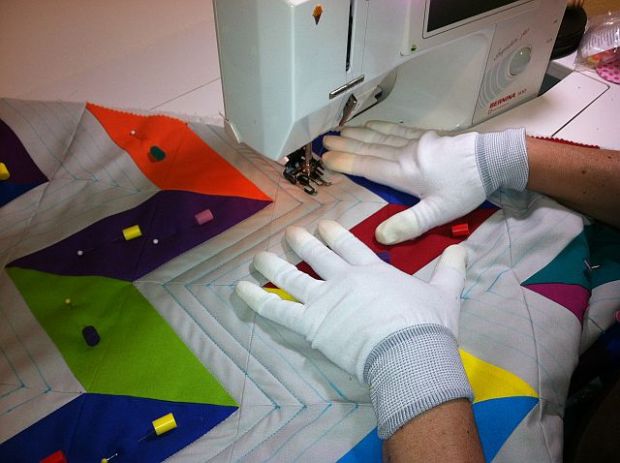
I did have to pivot each time the lines zigged and zagged so I got really good at pushing and scrunching the bulk of the quilt out of my way. The Machingers gloves helped me keep a good grip on the quilt. (They also helped keep the quilt clean from any chocolate residue left on my fingers during snack break time!!)

I removed the Pinmoors, one a time as they got in my way while quilting. Once the straight quilting was finished, I removed the rest of the pins.

Step 3 – Removing the Blue Lines

Because I like to see my work as soon as possible, I like to remove the lines immediately once I am done quilting them. One word of caution here, be sure to test your fabrics to make sure they are color fast before you spray water all over your quilt. If there are any worries about color bleeding, you can remove the lines with an aqua eraser pen or a wet toothbrush instead so you can more easily guide where the water goes.

If the blue lines resurface later, I simply wet them again, or soak the whole quilt when finished (if I know I’m not going to have any issues with fabric bleeding).

Doesn’t the back of the quilt look scrumptious, too?

Additional Ideas

If you don’t want to hassle with marking or quilting straight lines, you can quilt a wavy decorative stitch instead. It goes a little faster and you don’t have to be so precise. I used this type of quilting on my first tutorial – The Jolly Jelly Roll Quilt.

I feel very accomplished this week – how about you?

Quilt Along Schedule (Links are active once each step has been completed.)

Christa’s Quilt Along 3.6 – Marking and Basting the Chevrons

Grid MarkingAlthough basting a quilt is my least favorite “chore” of the whole quilting process, it’s a necessary step so I can get to my most favorite part which is the machine quilting. I always have better results if I take the time to properly mark and baste my quilt.

It took me a total of 2.5 hours to mark the top and prepare my quilt for machine quilting.

This doesn’t include the time it took to sew my quilt backing which took an additional 1.5 hours.

I wrote a separate pieced quilt backing tutorial where I could show off my “back art”.

Step 1 – Marking The Quilt Top (1 Hour, 15 Minutes)

If I know the design I’m going to quilt ahead of time, I will mark my lines before I baste, using a water-soluble blue marking pen. (Test ahead of time to be sure your marks will come out and that your fabrics are color-safe.)

June Tailor Grid Marker

For my Charming Chevrons, I chose to mark a set of grid lines following the outline of the chevrons. I used a June Tailor grid marker to speed up the process. I drew my lines so that they were about 1/2″ apart. I marked the top at my dining table while watching a movie with the family!

Step 1 – Preparing to Baste (30 Minutes)

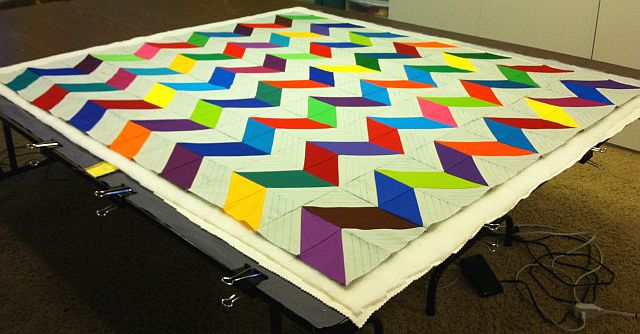
Be sure your backing is at least 3″-4″ larger than your quilt top on all sides. (Professional long-armers need even more space than this but since I know you will all be quilting your own quilts, you can get away with less space if you are careful with your layout!)

Roll of Batting

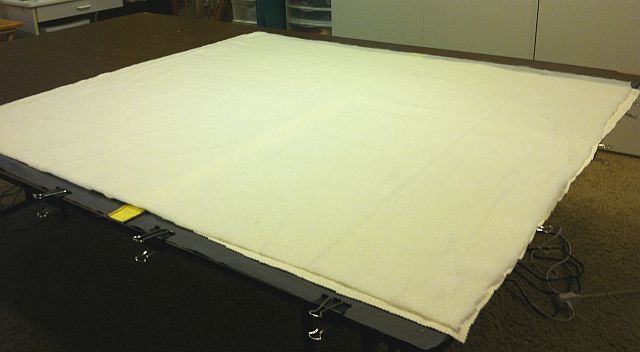
Roll out your batting if cut from a roll, and cut it a couple of inches bigger than your quilt top. If you are using a packaged batting, be sure to unfold it and air it out a day or two before you begin to remove as many wrinkles as possible.

Be sure you have a nice big area for basting. You can use the floor, your kitchen table, a couple of utility tables, or even some tables thrown together at your local library or quilt shop.

Give your backing a final pressing before laying it out. Remove any excess threads and smooth it out a flat as you can onto your basting surface. Clamp or tape down all sides of your quilt backing. I use binder clips on two sides of the quilt where the backing meets the edge of the table. I tape down the other two sides.

Layer 1 Quilt Backing

Layer 1 – Quilt Backing

Spread out your batting onto your quilt backing. Again, smooth it out so there are no wrinkles and puckers. You don’t need to clamp down the batting. For my quilt I am experimenting with a double batting. I laid down a layer of Warm-N-Natural Cotton, then a layer of Wool on top of that. I’ll let you know how I like it when it comes to quilting!

Layer 2 Quilt Batting

Layer 2 – Quilt Batting

Finally, spread out your quilt top as smoothly as possible. Since I use two tables to baste, I use the center between the tables as my reference point for where the middle is. This helps me keep the quilt top straight.

Layer 3 Quilt Top

Layer 3 – Quilt Top

Step 3 – Pin Basting (45 Minutes)

Pinmoors for Quilt BastingI mention this every time I get to this step of the quilting process, but I really love Pinmoors for basting!

They go into the batting quickly and come out super easy when machine quilting.

You get 50 per pack and it took just over 3 packs (168 to be exact) to baste my Chevrons quilt. I put one pin and Pinmoor anchor in each colored triangle and that was enough for this size quilt.

Because my batting was a little thicker, the longer flower pins worked great for getting through all the layers.

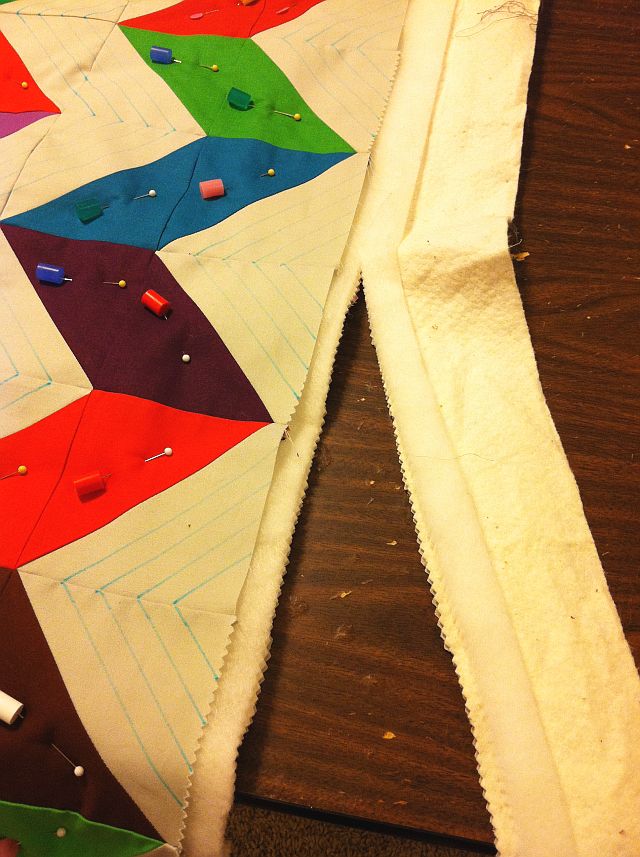
Trim the Excess

The last step before I begin quilting is to trim up the extra couple of inches around the quilt.

I don’t cut off all the excess, but I do trim it up pretty close so I have less bulk going under the arm of the machine.

I am super excited to quilt this puppy!

Be sure to email me pictures of your progress – it’s so fun to see all the variety!


Quilt Along Schedule (Links are active once each step has been completed.)

Christa’s Quilt Along 3.5 – Charming Chevrons Quilt Top

This week I assembled my Charming Chevrons quilt top made from just four charm packs. Be sure to scroll to the end of this post for links to all of the previous weeks’ tutorials. For your convenience, quilt kits are available for a limited time in 3 different colorways.

It took me a total of 3 hours to follow the steps below and finish sewing my quilt top. (I think it took longer than that just to edit the pictures and write this blog post!)

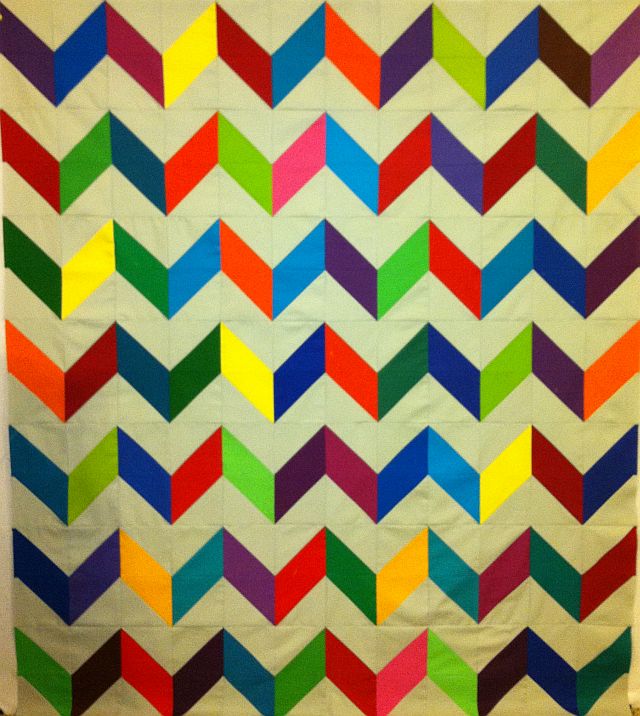
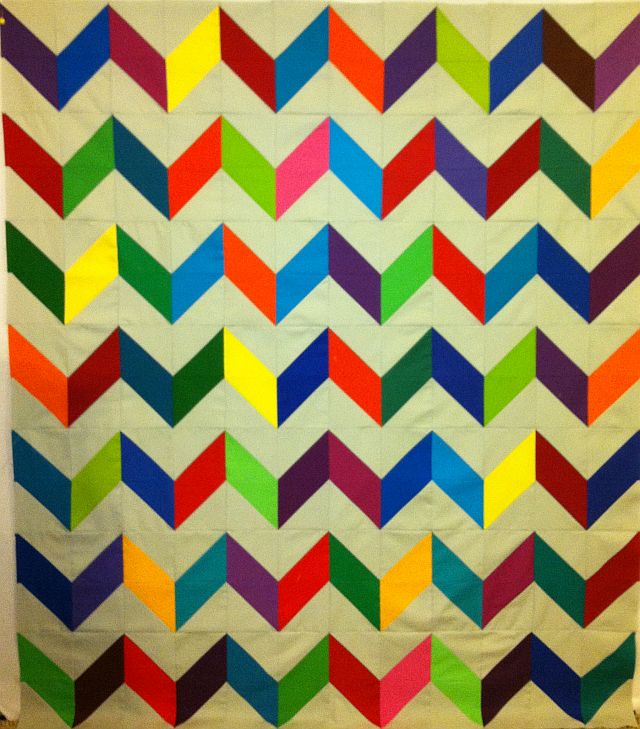
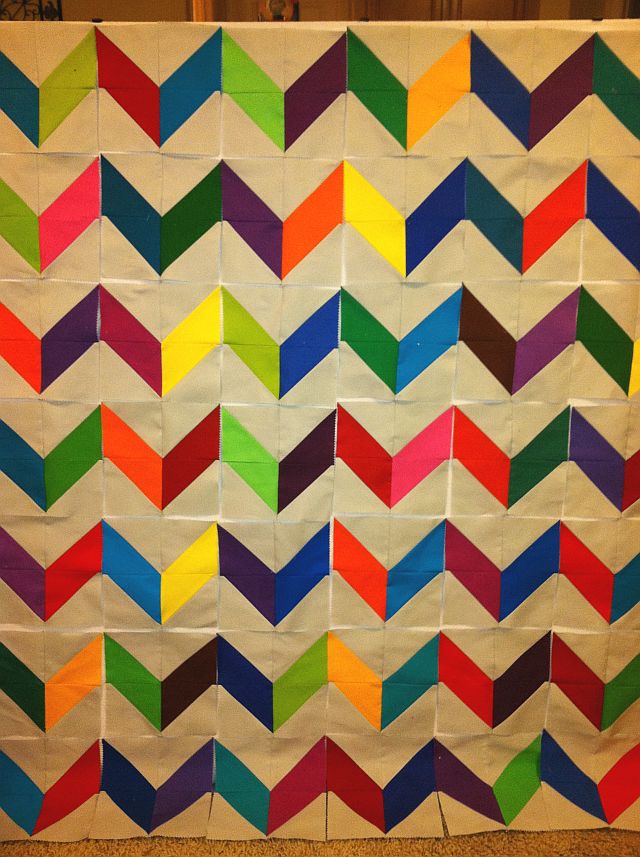
Charming Chevrons Quilt TopAnd yes, this is my actual completed quilt top, not a computer generated picture.

Step 1 – Sewing the Block Pairs (45 Minutes)

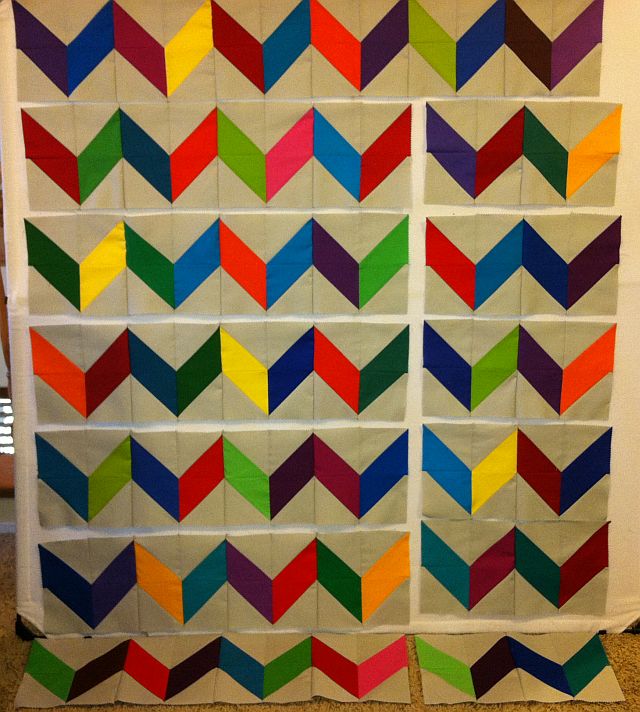
Lay out your chevron blocks in a pleasing arrangement on your design wall or other large flat surface. You will have 7 rows with 6 blocks per row for a total of 42 blocks.

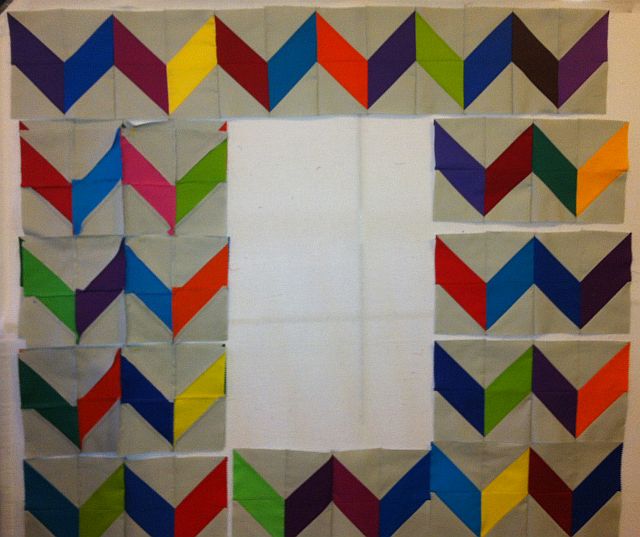
Sew each row into pairs of 2 blocks each. Each row will have 3 pairs of sewn blocks. Now you have 21 w’s instead of  42 v’s! (Yes, I’m missing a row in the picture because it wouldn’t fit on my design wall. You should still have 7 rows.)

Chevron Block Pairs

Step 2 – Sewing the Pairs into Rows (1 Hour)

Now you can sew 2 pairs of chevron blocks together in each row. You can see a “hole” in my quilt where I’ve flipped the second pair onto the first along the right side edges. I left the third pair of each row on the design wall so I can remember where each one goes as I sew.

Sewing the RowsNow that you have 2/3 of each row finished, you can add the last pair to the end of each row. Be sure to pin generously and flip over any seams if needed so that your seams lie flat.

Partial Rows

PPress The Seamsress the seams so that they are all going the same direction in each row.

Be sure that your seams for rows 1, 3, 5 and 7 are all going one way and that rows 2, 4, and 6 are pressed in the opposite direction.

You could also press them open if you prefer. This took me a little while but it was worth it.

Step 3 – Join The Rows to Complete The Quilt Top (1 Hour, 15 Minutes)

Join 2 rows together at a time, pinning at the intersections. You will then have 3 pairs of sewn rows with one row left over. Press each long seam open.

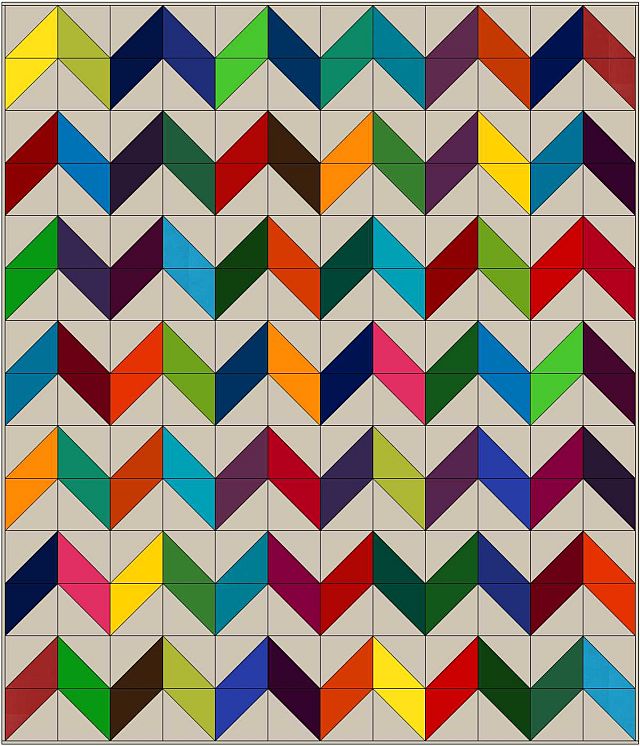
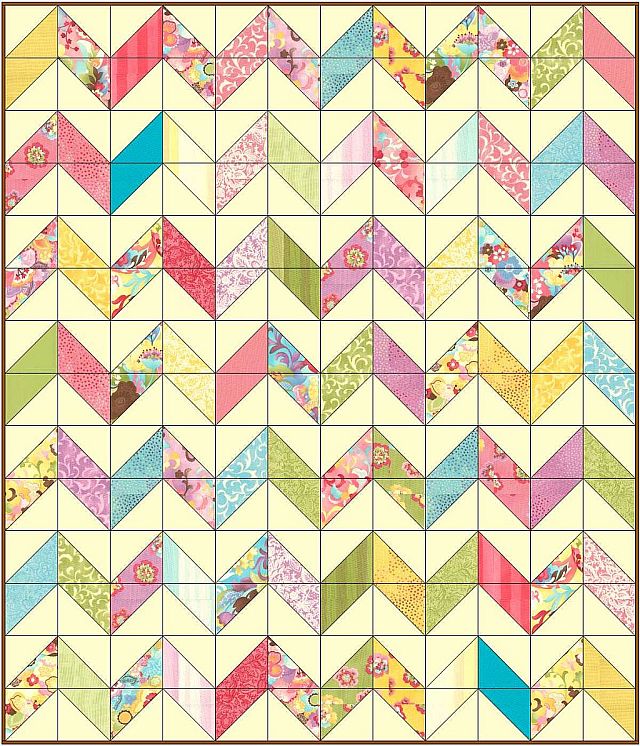
Joining The RowsNow join these last 3 seams to complete the quilt top and give it a final pressing. It’s fun to see how the actual top turned out compared to my original computerized drawing. I like the chevrons with the tips pointing down better. But you can decide either way!

Computer Design

Computer Designed Version

Finished Quilt Top

Actual Quilt Top


I’m very pleased with how my top turned out – now I can’t wait to see yours! Please email me pictures of your work in progress and I’ll be glad to share them here on my blog.

Sewing Schedule (All links will be active once each step has been completed.)

Christa’s Quilt Along 3.4 – Charming Chevrons Block Tutorial

This is the week where our Charming Chevrons quilts really start coming together! We will sew all of the blocks and start laying them out so that the top can get finished by next week. Be sure to scroll to the end of this post for the complete tutorial schedule.

It took me a total of 2 hours, 15 minutes to sew and press all 42 of my Chevron blocks.Chevron Blocks

Step 1 – Sewing the Half-V’s (1 Hour)

Each chevron looks like a V and each half of the block is a mirror image so keep that in mind while assembling your units.

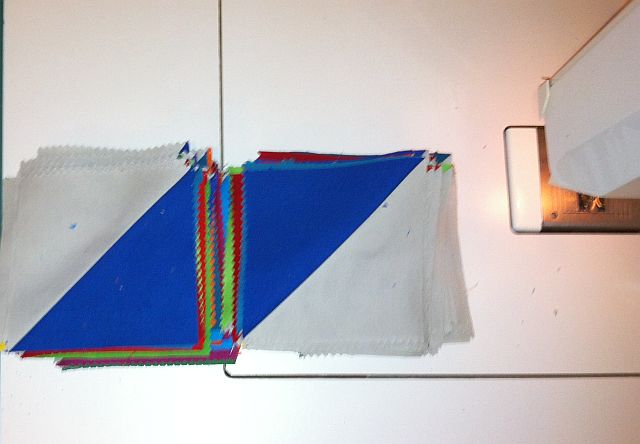
Block UnitsFirst, separate all of your triangle squares from last week  into 4 equal piles, orienting them to form a V.

Note that each half of the V is made from two triangle squares of the same fabric. You should have a total of 42 sewn triangle squares per pile.

Since each half of the block is a mirror image,  I will be sewing one half at a time.

Starting with the left half of the block – the left V – I laid a stack of units next to my sewing machine. They are oriented in the direction I will sew them. Chain piece all left V units.

Chain Piece the VsStacked Units Chain Piecing means sewing pairs of blocks with no stops.

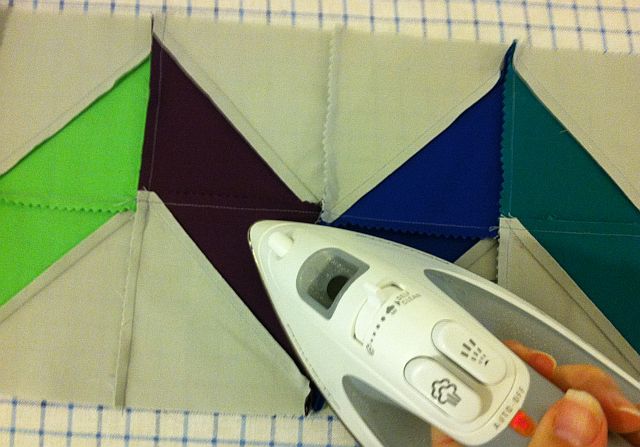
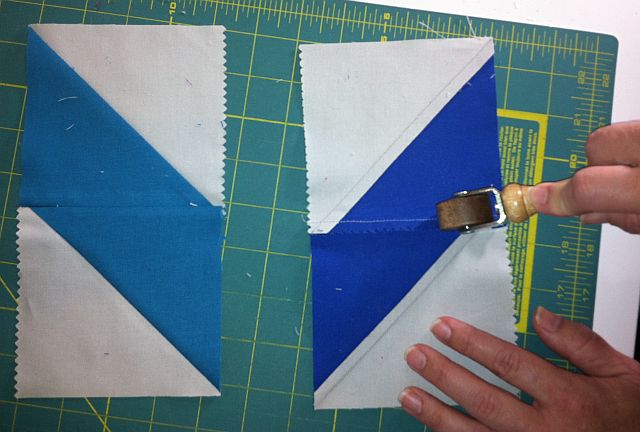
After sewing all of your left V stacks, finger press (or use a wooden seam roller) from the back and then again from the front. Press them all to the same side and repeat for all halves.

Press Front SidePress Back Side

You should have a total of 42 left V units.

Now, repeat the steps above for the other half of the blocks, the right V units. Be sure to press the right halves in the opposite direction so they nestle when sewing the blocks.

Press OppositeRight V Units


Repeat for a total of 42 right V units.

Step 2 – Joining the Halves (1 Hour, 15 Minutes)

Pin the two halves of each block together. If desired, you can flip over any seams so that they will nestle with the other side of the block – look at the pin on the far right below.

Pin the Chevron Halves

The key to sewing crisp points on these blocks  is to hit the “sweet spot” when sewing your seams. Sew from the side where you can see a little “x” made by previous seams. This is right where my pin intersects the block below.

Sew Through the X

When you have sewn all of the blocks together, press or seam-roll them again on both front and back. When finished, you will have a total of 42 blocks.

Finished Chevron BlockPress the Chevrons

Because of the way this quilt is laid out, you will want the major seams in your blocks to alternate. To do this make sure you press 18 blocks in one direction and 24 blocks the opposite direction. You’ll have 3 rows of block seams one way and 4 going the other way.

Seams Pressed Opposite

Once your blocks are complete, you can start laying them out in a pleasing color arrangement on your design wall (watch which way you pressed the seams).

Kona Solids Kit

Kona Solids Kit

You’ll notice that in my original drawings I started with the  Chevrons pointing up first. But now that I’ve laid them out, I think I prefer them as shown in the photo above with the points starting down. It’s your choice! I have kits available for all 3 colorways shown.

American Jane Kit

American Jane Kit

Coquette Kit

Coquette Kit


Sewing Schedule (All links will be active once each step has been completed.)