EQ7 Mac Migration Kit Now Available

Did you hear the good news yet? The EQ7 Mac Migration kit is now available! For those of you who already own EQ7 and are running it on a PC (or with Virtual Windows on your Mac), you can now purchase a migration kit to make the switch and run it natively on your Macintosh! Whoo hoo!

20140320_eq7_mac

We are a Mac family and I’ve always sort of felt like a black sheep using a PC. For a time, I ran parallels on my previous Macintosh so that I could use EQ7. Recently, though, I’ve just been using a cheapo clunker of a PC to get by.

Now I’m so excited that I will finally get to work on the computer I’ve been wanting. This is when having a computer geek for a hubby really pays off. He loves any excuse to buy a new computer and tinker around. So, he ordered this lovely beauty for me over the weekend:

20140320_my_mac

Isn’t that nice? He’s such a keeper! Now I’m just waiting for it to arrive so he can install my migration kit and I’ll be off and designing once again! (Does anyone else get the irony of buying a whole new computer just to run some existing software? That’s kind of how we roll around here!)

For those of you who are current Mac users, but have not yet purchased EQ7, the new stand-alone Mac software will be available soon, so stay tuned!

Ski Weekend and Nature’s Inspiration

A couple of weeks ago, the family and I had the chance to take a ski-trip with the inlaws. My MIL is a lucky gal, and she happened to run into the owner of a ski resort who was passing out extra lift tickets. So she happily agreed to bring up the extended family for a fun ski weekend!

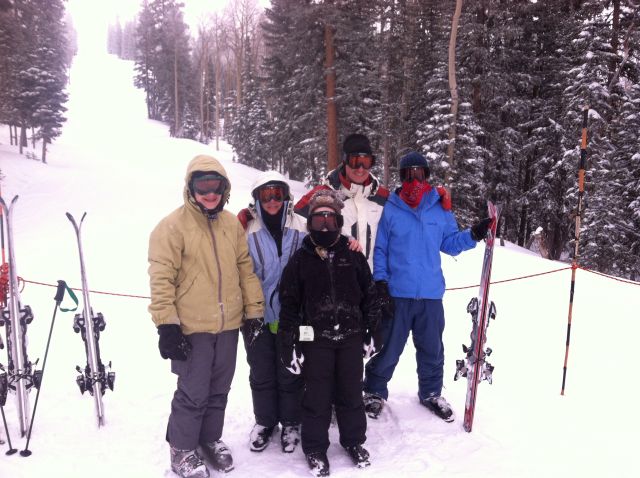
20140320_ski_2014Ski Weekend at Eagle Point, Utah 2014

We had a great time. Our first day was beautiful with sunny skies! It was our daughter’s first time skiing the “real” slopes and she had a blast. Her 2 older brothers have taught her to be fearless and by the end of the weekend, she had even tried a few intermediate slopes.

But what a difference a day makes! The next ski day was quite different – with raging snow and blowing wind, it was all we could do to bundle up and stay warm.

20140320_ski_snowA much colder day full of snow!

The snow day was still incredibly beautiful. Everything had a fresh dusting of snow and all the trees had a beautiful silvery cast. We even caught individual snowflakes and marveled at how they really did look like snowflakes!! (That’s what we get for growing up in a desert landscape!)

During the weekend, I was constantly inspired by everything I saw and want to turn these all into quilts somehow! The ski tracks on the snow looked like a modern white-on-white free motion quilting pattern.

20140320_snowMy view from the Chair Lift 

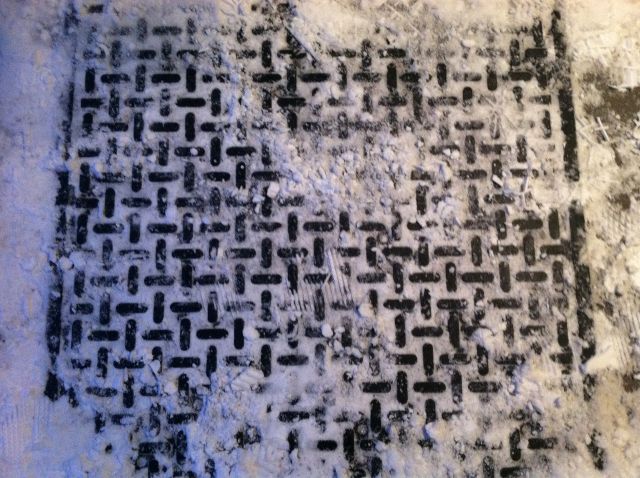
This snow-covered doormat is just itching to become a modern design:

20140320_ski_matI was even inspired by the clothes a lot of the kids were wearing. This ski outfit totally reminds me of my Spiraling Out of Control Quilt!

20140320_ski_clothesYou can always look to fashion for graphic inspiration!

I just love these simple, graphic shapes, aka warning signs:

20140320_signsJust imagine the possibilities with these simple shapes!

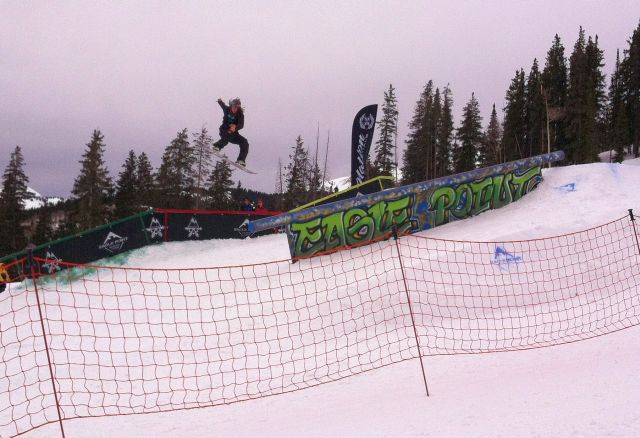
At the end of the first day, we watched a few advanced snowboarders participating in a “trick” competition. It gave me butterflies just watching these amazing skiiers perform their stunts. What an adrenaline rush it must have been for them!

20140320_ski_jumpBut when I stop and think about it, this is exactly how I feel whenever I quilt!


Christa’s Soap Box: Please and Thank You – Those are Magic Words!

I wanted to share several thank you’s to those of you who read my blog, support my store, and encourage and inspire me!

ChristaQuilts

I’ve reached a milestone with the number of people who follow me, and I couldn’t be more pleased that so many of you enjoy reading what I have to say. I started blogging 4 years ago as a way to express my feelings about quilting and record my works in progress. Over the years, it’s grown into so much more.

Christa's Quilt AlongWhen Jason and I started working together full time, our website was our focus and the blog was just an extra way to reach out to people. But now I spend more time blogging than I do selling and that’s just fine with me! Because of the support of so many of you, I’m able to spend more of my time doing what I really enjoy: writing, teaching, designing, and of course quilting.

christas-giveawaysNow here’s where the please comes in. I still have about 500 items left in my webstore that I’d like to clear out as fast as possible. It’s all on sale and we are just waiting for it to move out so we can reclaim some much needed space. So please, can you give these items a good home?

Click here to see all items on sale.

Christa and stash

Christa knew that “she who dies with the most fabric wins” but just couldn’t help cutting into her “stash.”

We are still selling precuts and thread but have been clearing out everything else over the last several months because frankly, it’s too labor intensive to manage. There are so many other fabulous full-service quilt shops that do a wonderful job, so we’d rather support them instead!

So thank you again for being the reason I blog! Many exciting things are in the works and I’ll continue to share them with you every day, as they happen. 🙂

Fabric Friday – Featuring Fat Eighths

I’m excited to bring you another version of Fabric Friday to get you inspired (and to try and encourage those of you on a fabric diet to break your fast – just kidding!!)

SphereSphere Fat Eighth Bundle by Zen Chic

Today I wanted to showcase bundles of “Fat Eighths.” These are like smaller versions of fat quarter bundles. Each piece measures approximately 9″ x 22″ which is half of a fat quarter.

april showersApril Showers Fat Eighth Bundle by Bonnie and Camille

Fat Eighths are very user friendly and are a little easier on the pocketbook, especially when you are looking to buy an entire line. They also make a gorgeous sewing room decoration, tied up in a pretty ribbon like that!

sewing boxSewing Box Fat Eighth Bundle by Gina Martin

Aren’t they just scrumptious? My String of Pearls quilt features fat eighths for the center squares. Just a small pop of color in the right place goes a long way!

Finished QuiltString of Pearls by Christa Watson

Have you ever made a quilt from a fat eighth bundle? If so – tell me about it!

How to Make Quilting Your Business #7 – Teaching Classes

Thanks for continuing to follow along with my Business of Quilting series, exploring ways that you can turn your quilting hobby into a career. Today I will share my experiences as a quilt teacher, probably one of my most favorite jobs in the industry!

FMQ

Free-motion quilting is one of my favorite subjects to teach!

I began teaching at a little local quilt shop back in 1997, which sadly is now out of business. My mom, a fellow sewing enthusiast (whom I taught to quilt) was browsing the newly opened store when the owner asked her if she had any recommendations for teachers. She replied, “my daughter would be perfect for that!” and the rest is history.

20130927_studentsStudents working on their Charming Chevrons quilts in 2013. We had such fun!

From there, I went on to teach at a larger national chain store and then regularly for my quilting guild over the years. I took little breaks from time to time as I raised my family and dabbled in other things, but I always came back to teaching. I love the personal interactions with my students and the look of joy on their faces when they proudly proclaim, “I made that!”

30140315_kathy_modern_quiltI ran into Kathy, a longtime student of mine, at Road to California. I was excited to see that she was taking an improv log cabin class from the amazing Jacquie Gering!

When I decided to get serious about blogging, that became another avenue in which to share my love of quilting, reaching hundreds (possibly thousands) more through my online quilt alongs.

I’m happy to announce that I will be teaching a regular series of classes later this summer at Quiltique (my favorite LQS). I’ve also been invited to participate in a week-long teaching event on the east coast next year. (I’ll provide more details once contracts are finalized and dates are set.)

20110925_retreat_girlfriendTeaching with a friend is fun, too! This is Stacy, one of my BQF’s (Best Quilting Friend).

All of this background brings me to a few summary points to consider when you embark on your teaching career:

  • Teach what you know, and what you are passionate about. If you aren’t loving it, neither will your students!
  • Decide whether you would like to teach your own designs, or follow someone else’s patterns. Teaching your own ideas can be very liberating, but it’s also a lot more work. Many popular designers and quilting companies usually put together a teaching curriculum you can follow when you teach their patterns.
  • Don’t be afraid to ask! If you have never taught before – don’t be afraid to apply. Quilt shops, guilds, and event planners are always on the lookout for fresh new talent, and enthusiasm really goes a long way!
  • It’s helpful if you can build up a relationship with the company you are seeking to teach for. In fact, many local quilt shops regularly hire their students to teach – what better spokesperson for a shop than someone who is already a big fan?

2014_lauraw_christaAttending workshops with well-known instructors (like Laura Wasilowski) is a great way to polish your teaching skills. Don’t be afraid to work in a different style!

  • Understand your priorities. I have to give kudos to Cindy Needham, a fabulous machine quilter from whom I recently took a class. From the beginning she told us “you are my priority!” Throughout the day, she made each of us feel special and was willing to answer any and all questions. I think every person in that class walked away feeling proud of themselves and excited to take more classes!
  • Remember that this is supposed to be fun! The teacher goes a long way towards setting the mood for the class. If you are having fun, so will your students.
  • Continue your quilting education. Take as many classes as you can, both in person and online to stay up with the latest and greatest techniques. You can always pick up tips on presentation, and learn a wide variety of teaching styles from other instructors.
  • Teaching with a buddy can be very rewarding if you don’t want to go it alone. In 2011, I team-taught with my BQF at our guild’s annual retreat. I’m the more outspoken one, so I guided the direction of the class. She’s the quiet, organized one, so she put together all of the kits and kept us on track. Together, we made a great team!

jenna_1st_quiltFamily and friends make great practice teaching subjects.
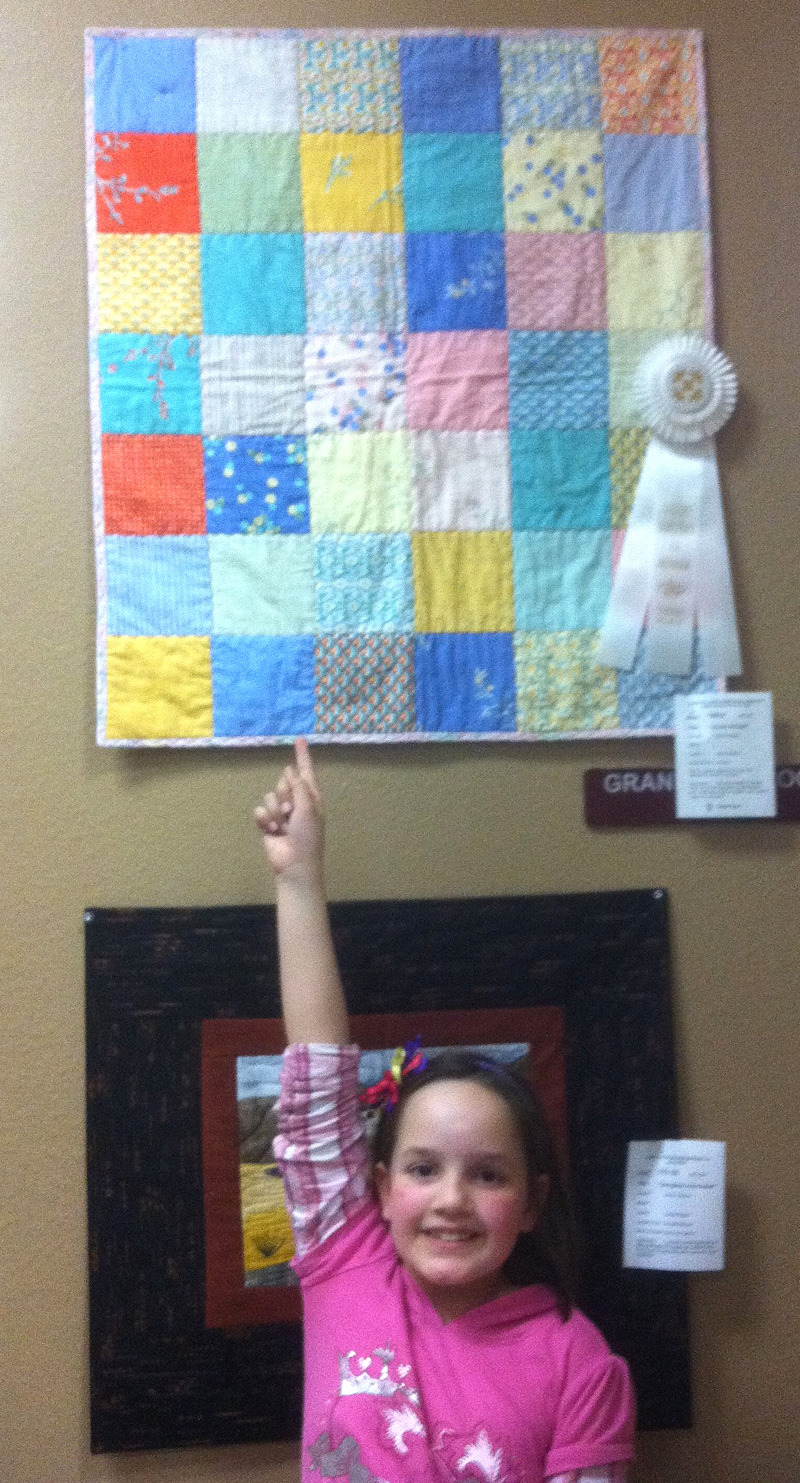
My daughter was excited to win a ribbon on her very first quilt!

I hope these ideas and my experiences can inspire you to do what you love. Even if you aren’t interested in the business of quilting, hopefully you can better understand what goes on “behind-the scenes!” Please feel free to share your thoughts and questions below so we can all learn from each other. 🙂

Click here for the start of this series.

Click here for my Craftsy blog post: Make Machine Quilting Your Business

Book Review – Quilting With a Modern Slant

It’s been awhile since I’ve done a book review but I’m excited to tell you about a new book I recently got my hands on. It’s titled, “Quilting With a Modern Slant” by Rachel May, and it includes interviews, summaries or patterns from over 70 modern quilters! Many of those profiled in the book are familiar names, while several of those featured are new to me.

To sum up, this book is one huge dose of inspiration! I love reading quilting books and spent several trips to the park and weekend vacations pouring over this book in detail.

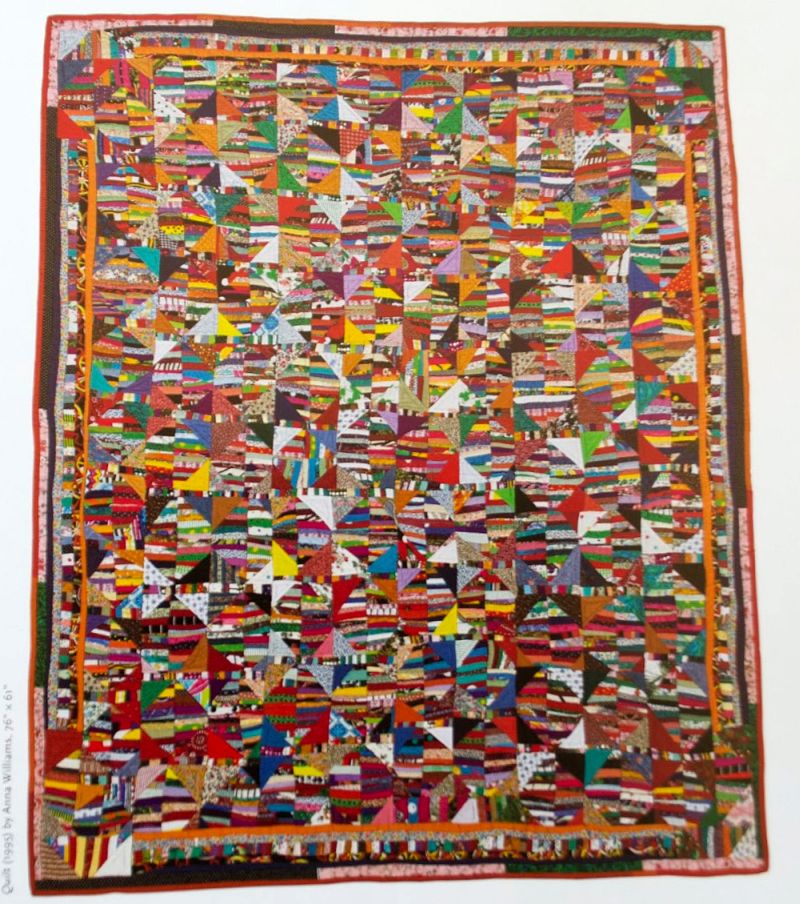
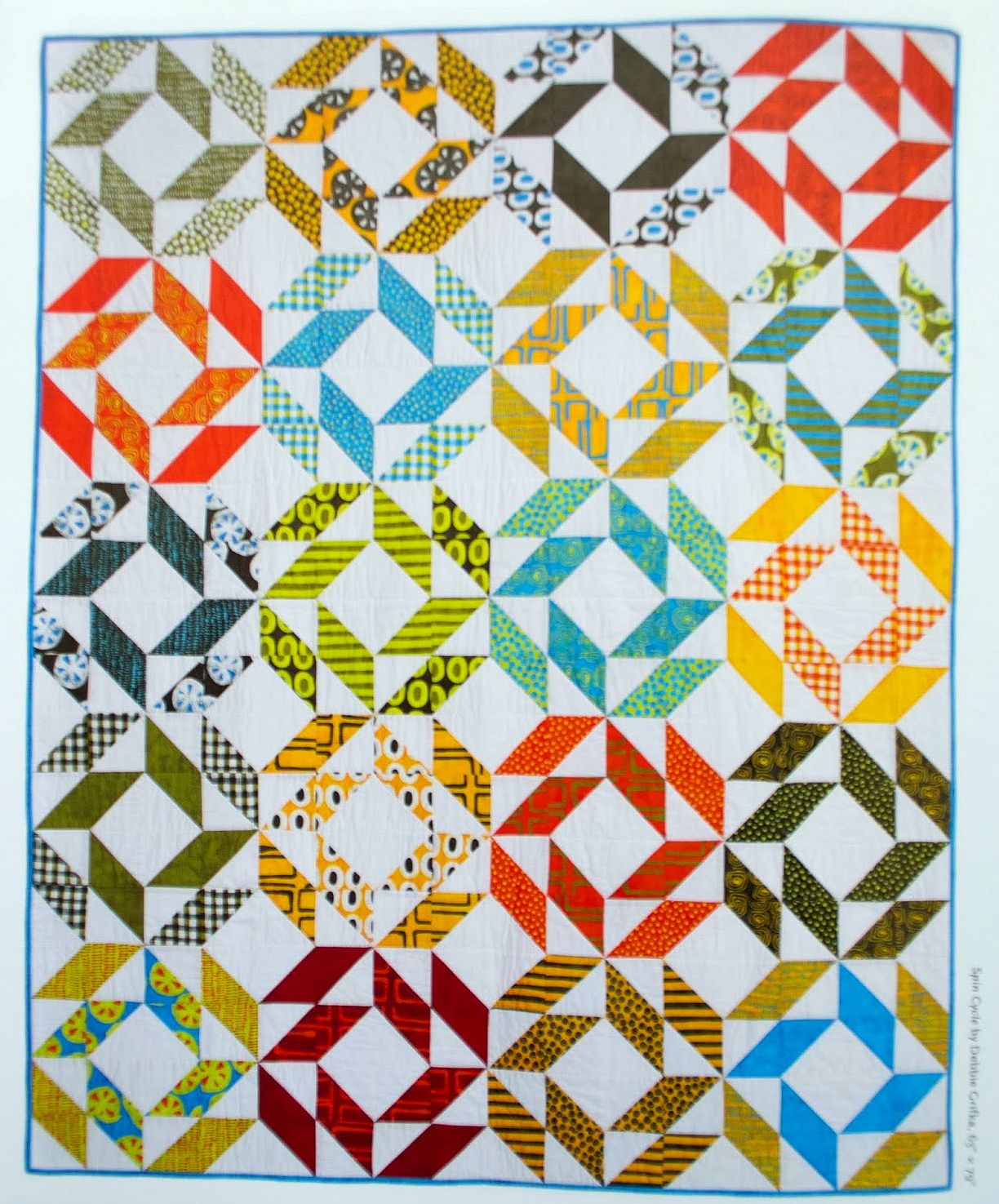
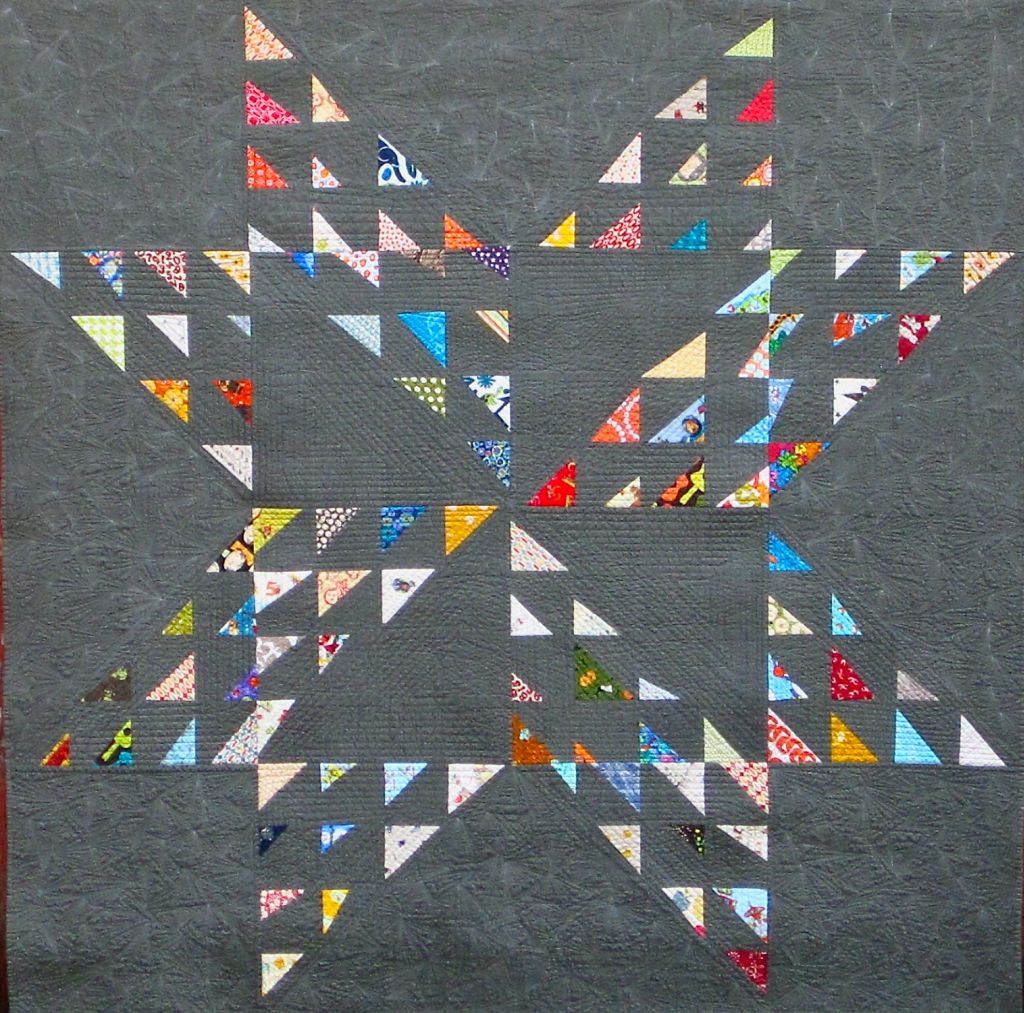
modern_slant_book_origAt over 200 pages in length, with literally hundreds of fabulous pictures to look at, this book is quite a bargain! Here are just a few of my favorite quilt images from the book:

Quilt (1995) by Anna Williams, 76" x 61"

Quilt (1995) by Anna Williams, 76″ x 61″

Cartwheels by Lee Hinerich 48" x 54"

Cartwheels by Lee Heinrich 48″ x 54″

Spin Cycle by Debbie Grifka, 63" x 79"

Spin Cycle by Debbie Grifka, 63″ x 79″

Seattle Star pieced by Katie Pedersen, machine quilted by Krista Withers, 60" x 60"

Seattle Star pieced by Katie Pedersen, machine quilted by Krista Withers, 60″ x 60″

Dropping a Stone by Victoria Findlay Wolfe, 54" x 54"

Dropping a Stone by Victoria Findlay Wolfe, 54″ x 54″

And these are just a few of the beauties shown in this fabulous book! Quilting With a Modern Slant is like your own little personal modern quilt show, and I think it’s a fabulous reference for anyone and everyone who appreciates modern quilts.

20140315_quilting_modern_slant

I will leave you with a quote from author Rachel May, “It’s my hope that the book functions as an exploration of the connections between all quilters and the stories we have to tell through what we make.

“No matter how we define ourselves, quilters forge powerful communities, in which we rely on each other for friendship, feedback, and inspiration. I’m excited about that sense of community, and what we can accomplish together.”

I couldn’t have said it better myself!

Christa’s Soap Box – It’s time to brag about my friends: Cory and Carolina

I’m so excited that I get to share some cool things my friends are doing. And not just because their names both happen to start with a “C” (though that is pretty cool)! Cory is my rather blogless friend, so I took it upon myself to shout her praises. I keep telling her that if she ever gets a blog, I think she’ll be an overnight success. 🙂

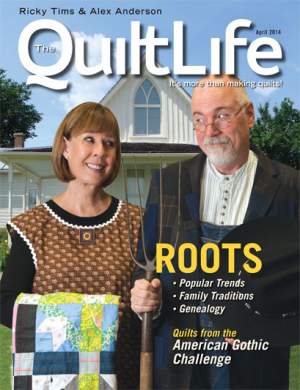
20140315_quilt_life_cover-lgCory is an amazing long-arm quilter, and one of her collaboration quilts was recently featured in the March issue of The Quilt Life magazine. The quilt is called Northwest Passage, and it’s part of an article titled “Going Dutch” written by Colleen Harvey.

Northwest Passage, Pieced by Diane Johnston

Northwest Passage, Pieced by Diane Johnston, Quilted by Cory Allender

When I first met Cory, she presented a trunk show of her amazing work to my local quilt guild, including Northwest Passage, shown above. Of course I blogged about it, and somehow, Colleen Harvey happened to see my blog post later on. She contacted me to inquire about including the quilt in her article, and I was able to help her get in touch with Cory and Diane. I just love it when things work out like that!

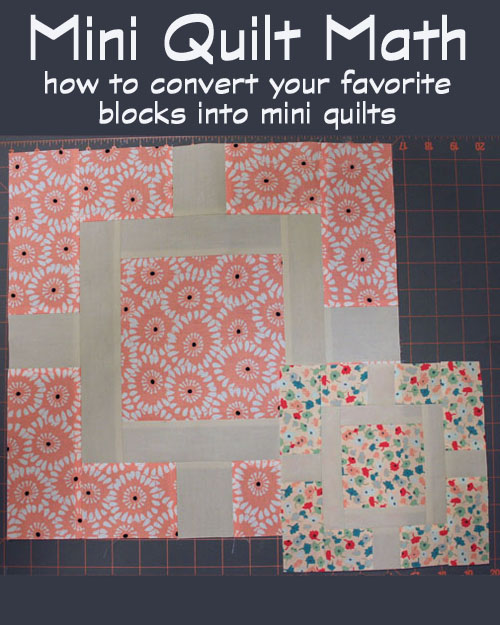
20140315_carolina_miniMini Quilt Math – a Craftsy blog post by Carolina Moore

The other good news I want to share is about my friend Carolina who is a prolific blogger. She was recently invited to be a guest blogger for Craftsy and she’s actually written two posts so far!

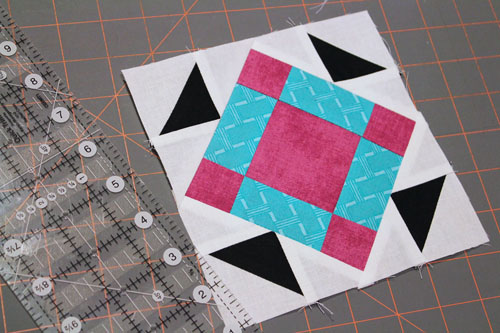
20140315_carolina_blockCarolina teaches you how to calculate the math for mini triangles, too!

Carolina loves modern quilts and mini’s and she’s created a 2-part series about math for minis. She shows you how to calculate the sizes so that you can shrink down any full-size quilt block into a mini version. How cool is that? Be sure to read part 1 and part 2 here and then give her some comment love. 🙂

How about you? What cool quilting stuff is going on in your life, or that of your friends and family? I am a self-proclaimed quilting cheerleader, so I’d love to give you a virtual pat-on-the back, too!

It’s Worldwide Quilting Day – How are You Celebrating?

It’s Worldwide Quilting Day – how are you celebrating? I hope you are enjoying the day with a bit of sewing! Or if you don’t have time to sew, maybe a little dreaming!

2014-Worldwide-Quilting-Day-250

To mark the occasion, I was honored to contribute a quilt block that will go towards supporting St. Judes’ Children’s Research Hospital. The folks over at Chili’s restaurant chain are putting together a quilt for them in honor of this “unofficial” holiday.

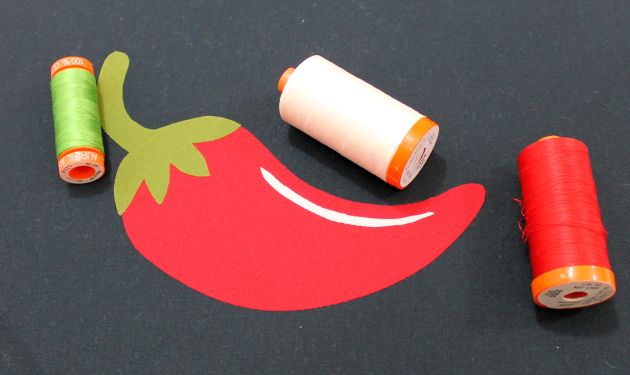
christaquilts_chiliChili Pepper block by Christa Watson, 8″ x 8″ – machine applique

Last year, Chili’s reached their goal of donating $50 million for the Chili’s Care Center and the kids of St. Jude. I think that is wonderful and I am honored to be a part of a special quilt they are making.

fabricsPicking fabrics is so fun! My finished block is a reverse image of the original picture.

I made an applique Chili Pepper block from an image I had saved in my “idea folder” waiting for something to do with it! It was fun to print off the block and find solid fabrics to match.

threadsI also enjoyed rummaging through my ever-growing stash of Aurifil threads to find the right colors for machine applique. Next to designing and quilting, machine applique ranks up there as one of my favorite go-to techniques!

Be sure to visit Chili’s blog to see the rest of the quilt blocks, made by other bloggers around the country. I’m sure you’ll recognize many of their names. Now I can’t wait to see how the quilt comes together!

Tips for Getting Started with Modern Quilt Design

My latest blog post for Craftsy has been published, and I’m rather pleased with the subject matter. It’s called 7 Tips for Getting Started with Modern Quilt Design and I really enjoyed writing it.

20140221_chevrons_backThe back of Colorful Chevrons – I think it’s more modern than the front. Tutorial here.

Suffice it to say, I had fun gathering pictures and examples of modern quilting, and emailing their makers to obtain permission to share. It was really just a great excuse to get to know more amazing designers, and this is just the tip of the iceberg! I could have included dozens more if I had the time and space to write about them.

Another “modern” backing I designed. One day I’ll make something like this for the front!

So don’t be surprised if modern quilts are all I can think about for awhile. I have to make up for lost time!

Tutorial – How To Bind a Quilt

I love making every part of a quilt, including the binding, so I thought I’d share with you my favorite method for binding my quilts. It’s called continuous length, double fold, straight of grain binding. That’s a mouthful, but it’s how I do all my quilts.

the quilt Shown is Modern X. Pattern available here.

Ready for picture overload? Here goes:
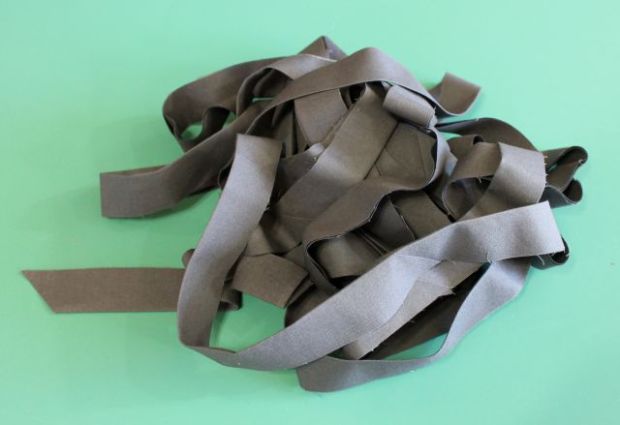
bind_0

Note: I used Kona Solid Charcoal for my binding strips with Aurifil thread #1246.

Step 1 – Calculate and cut your binding strips

bind_1Measure the perimeter of your quilt by adding the length and width of your quilt and multiplying that by 2. Then add an extra 10 inches to deal with seams and corners. For example, my quilt measures 56″ x 70″. Here’s how I calculate my binding:

56+56+70+70+10 = 262 inches needed

Next, take this measurement and divide it by 40 inches. This will tell you the number of strips you will need to cut, with 40″ of useable fabric. My number is 6.55 which I will round up to 7 strips of fabric.

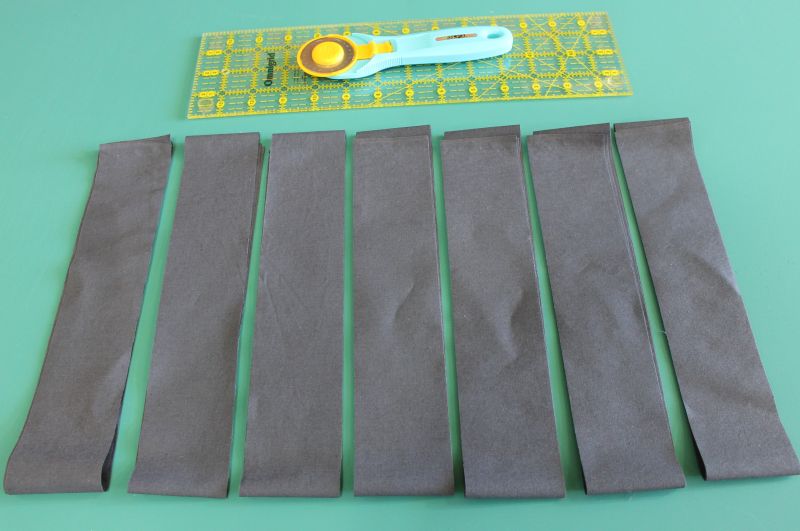
bind_2I like my binding to finish approximately 1/4″ on both front and back. Therefore I will cut my strips at 2 1/4″ wide. You can cut them wider if you prefer more of the binding to show.

I need to cut a total of (7) 2 1/4″ wide strips to bind my quilt.

Step 2 – Sew the binding into a continuous length

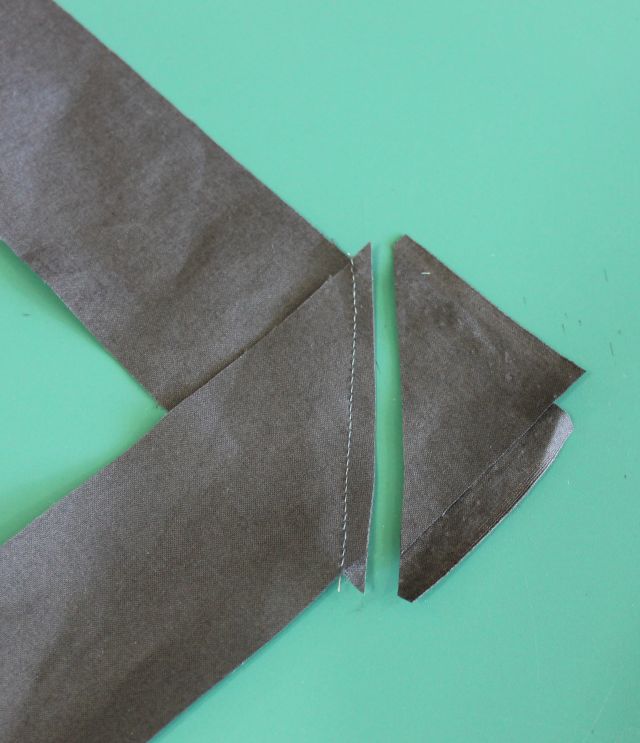
Place two strips right sides together at a 90 degree angle. Sew them together at a 45 degree angle across the diagonal. Sewing mitered seams like this helps distribute the bulk. If needed, you can draw a straight line across the diagonal, or press one of the ends along the diagonal to form a sewing line.

bind_3If you are using solid fabric like me, it will be a little trickier to keep track of which is the “right” side. You can use a pin or piece of tape to designate the right side if you like. Be sure to trim the starting edge of your binding at a 45 degree angle, too.

bind_4

Step 3 – Press the binding

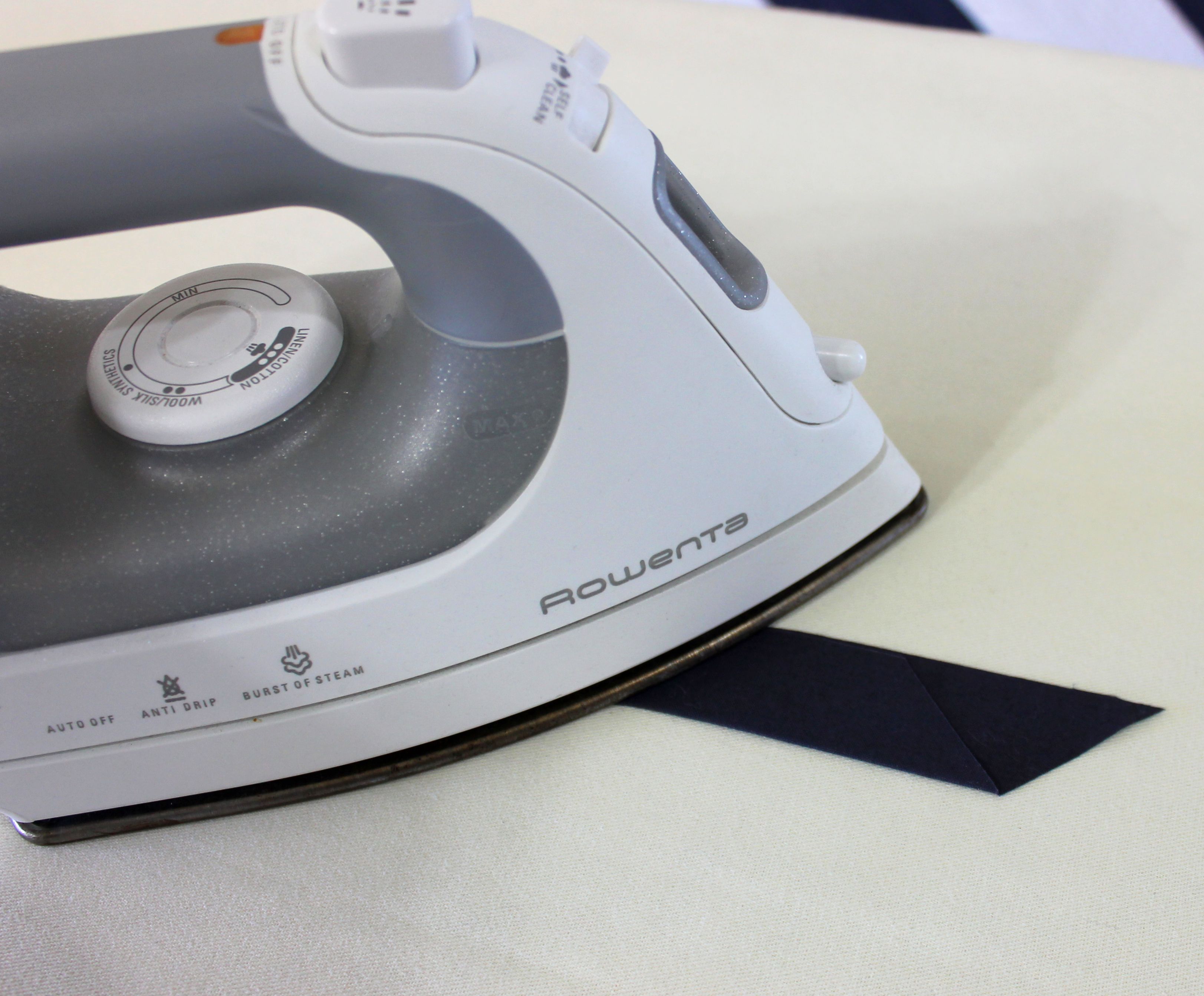
Press the binding wrong sides together along the entire length.

bind_6Step 4 – Attach the binding to the quilt

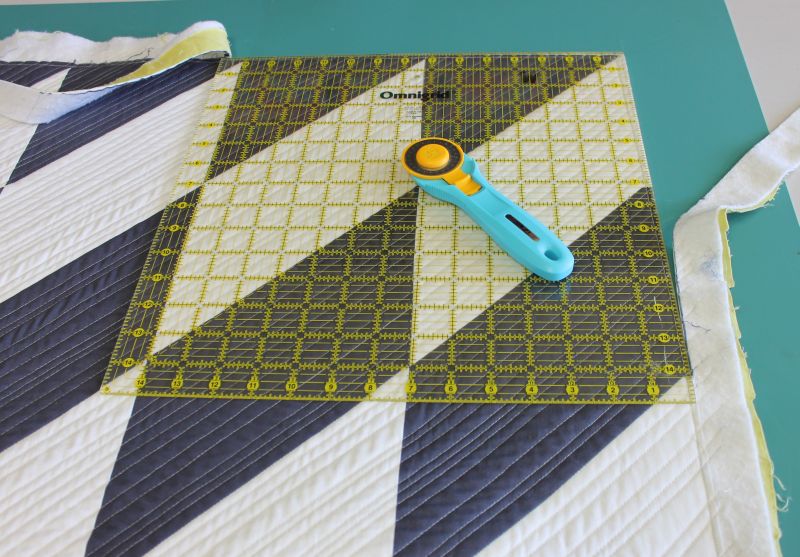
Trim off the excess backing and batting before you attach your binding. I use a large square ruler for the corners, and a long straight ruler for the sides.

bind_5Quickly run your binding along the perimeter of your quilt to ensure you won’t have any seams falling in the corners. If you do – move the binding up or down a few inches to avoid seams at the corners.
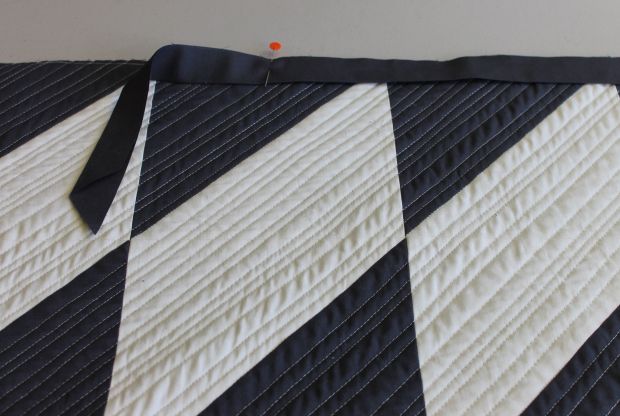
bind_7Starting at least 6″ – 8″ away from the corner, place your binding on the front side of the quilt and leave a tail of about 6″ – 8″. Line up the open binding ends with the edge of your quilt. The folded edge should be facing towards the quilt.

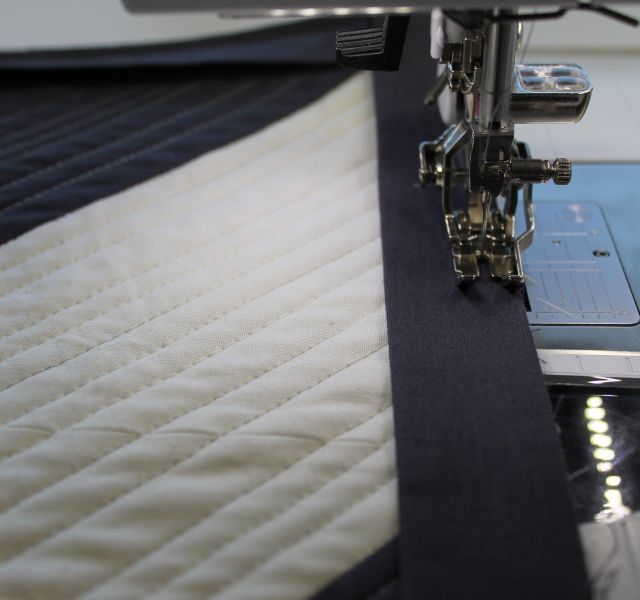
bind_8Starting at the pin shown in the previous photo above, stitch the binding onto the front of the quilt with 1/4″ seam allowance. Use a walking foot or even-feed if possible. When you get to a corner, stop stitching 1/4″ away from the corner and sew off the corner.

bind_9At this point, your corner should look like this:

bind_10Take the quilt off the machine and fold the binding up and away from the quilt as shown. Keep the edge of the binding in line with the edge of the quilt as shown.
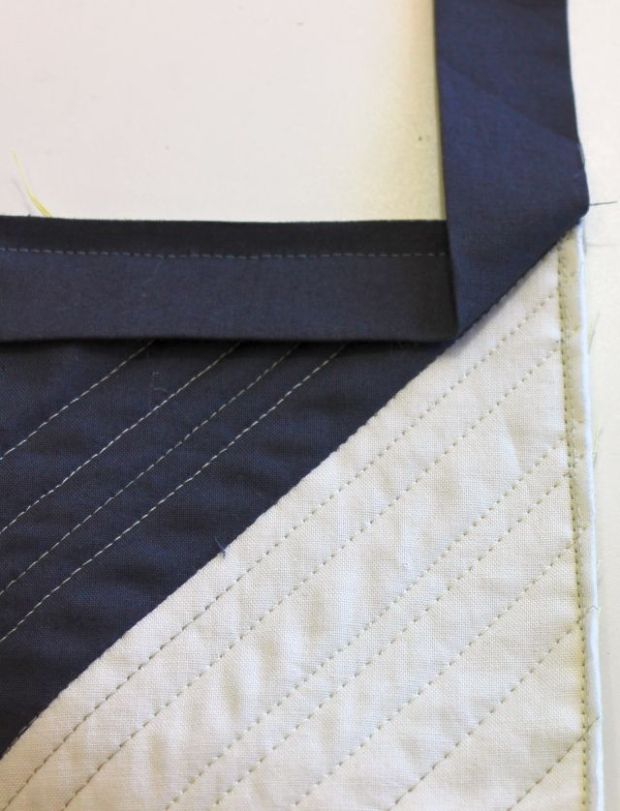
bind_11Bring the binding back down, creating a tuck of fabric underneath. This will form the miter on the front of the quilt.
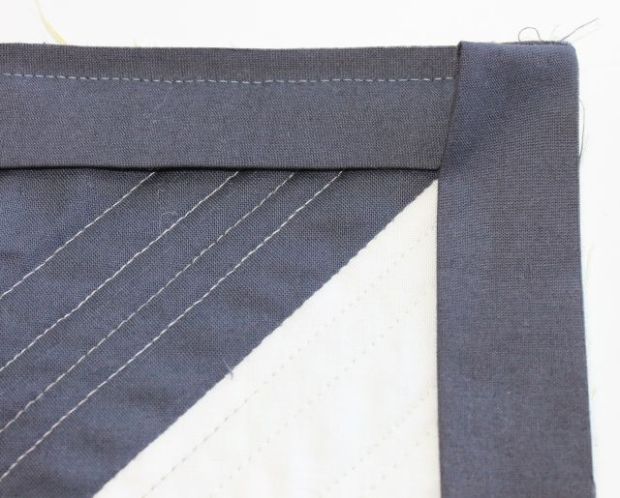
bind_12Starting from the edge of the quilt, stitch the next side of binding down until you reach the next corner and repeat this process for all four corners.

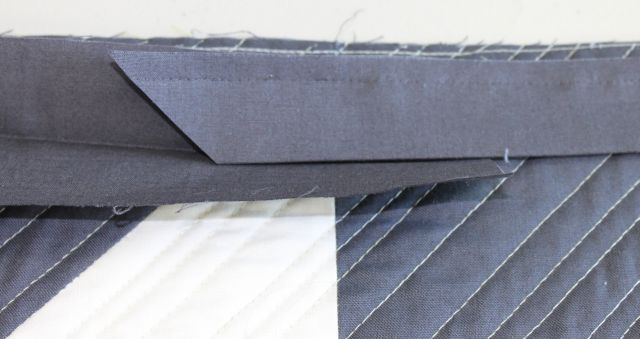
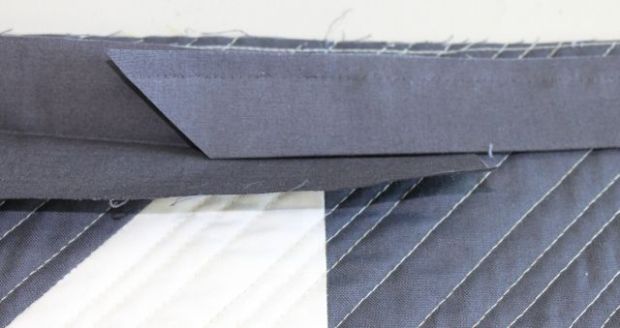
bind_13Leave an ending tail of 6″ – 8″ of binding. Trim off the excess leaving a few inches of overlap to work with. Open up the end of binding and place the beginning tail inside it.
bind_14

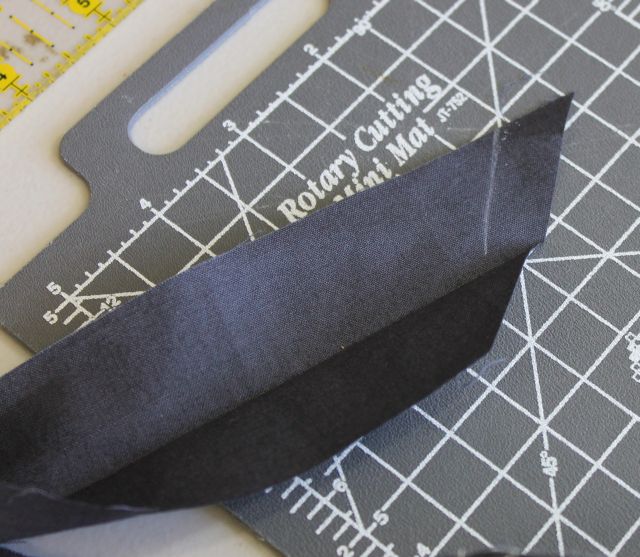
Using the cut angled end as a guide, lightly mark a line right up next to it. Then cut 1/2″ away from this measurement to account for seam allowances on both ends.

bind_15Put the two tail ends right sides together, and sew with 1/4″ seam to complete the continuous loop of binding.

bind_16Close up the binding and finish stitching it down on the front of the quilt. You are now ready to finish stitching the binding down on the back of the quilt.
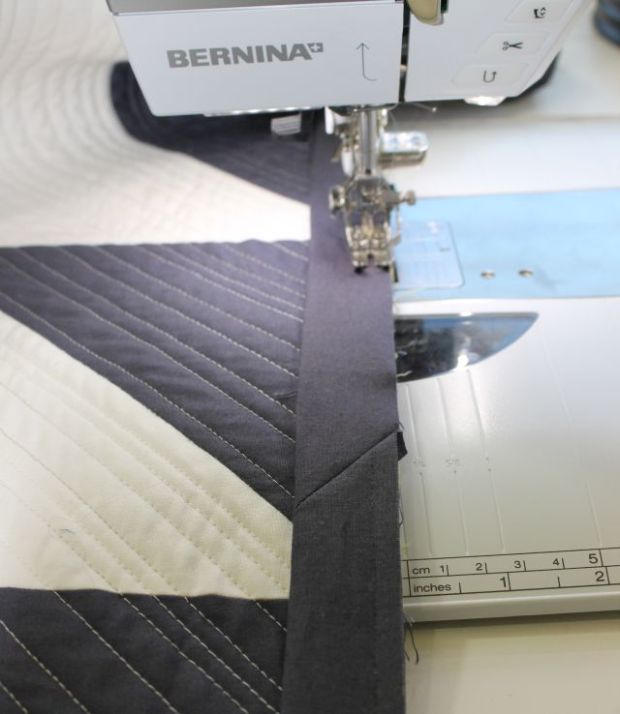
bind_17Step 5 – Secure with clips

I find it easier to completely secure the binding to the back of the quilt with clips before I begin hand-stitching it down. For a throw sized quilt it takes about 100 wonder clips to go all the way around the quilt. Pins or hair clips work well, too.

bind_18Step 6 – Hand stitch the binding on back

Put on a good movie and enjoy the relaxing process of hand work for a pretty finish.

Don’t want To Hand Stitch? machine binding tutorial Here.

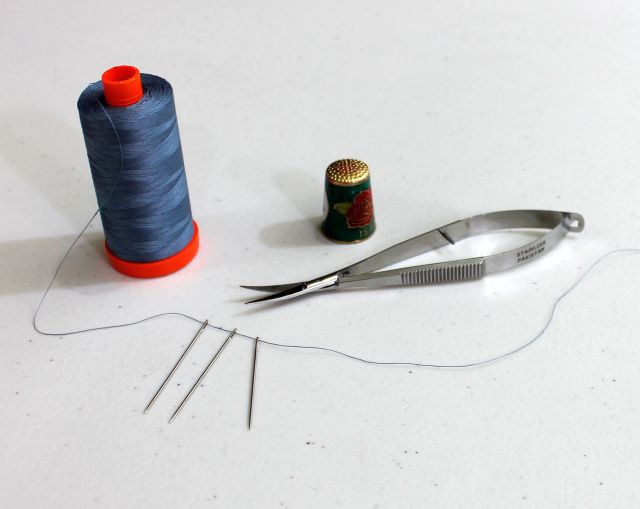
Thread several needles using the same cotton thread you used to sew on the binding. Clip off about 18″ of thread to use at a time. Wrap the thread around the needle 3 times and pull it to the end of you thread to create a quilter’s knot. You can double your thread for extra strength and durability.

bind_19I use a thimble to help push the needle through the fabric when needed.

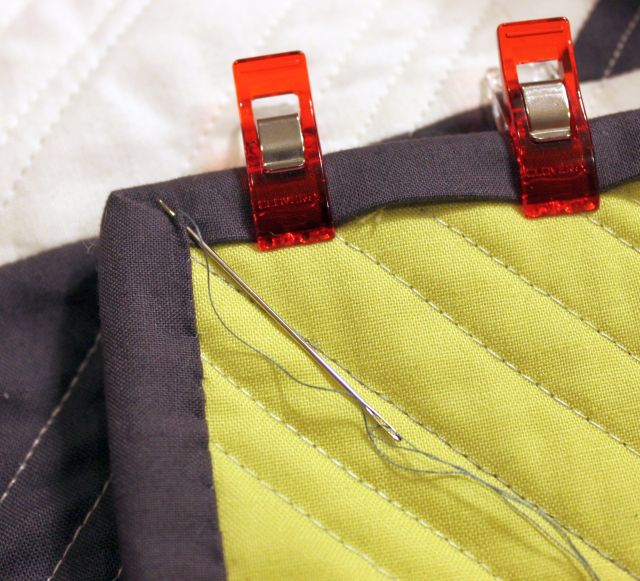
Tuck the knot underneath the binding, then grab a bite of the backing of the quilt and then a bite of the binding to complete each stitch.
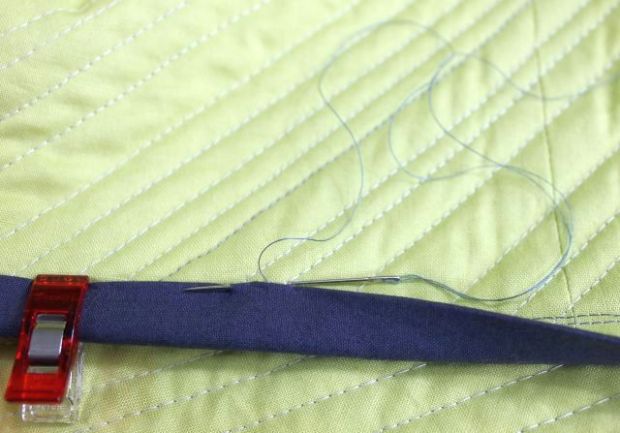
bind_20Continue forming each stitch by bringing the needle in behind each previous stitch and pushing it out ahead of the last stitch. Pull the thread slightly taut as you go.
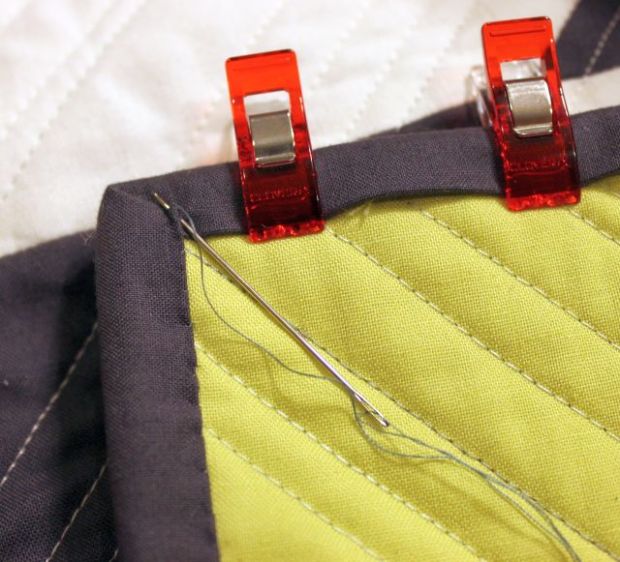
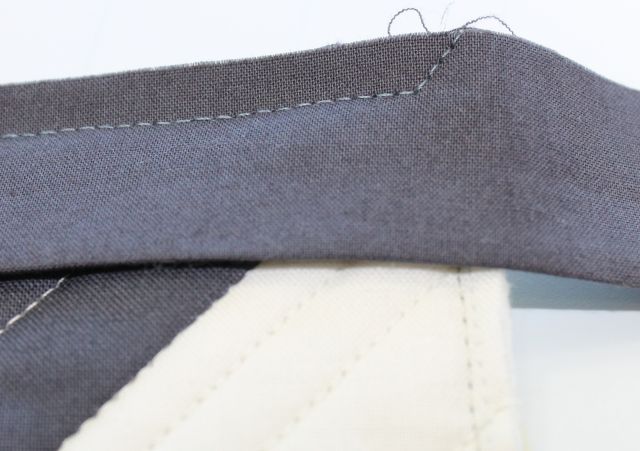
bind_21When you get to the corners, be sure to sew them closed. Take a few stitches on the back to close the miter. Push the needle through to the front, stitch the front of the miter closed, then push the needle to the back again.

bind_22When you are near the end of a length of thread, make a knot, then take a stitch through the backing and batting only, pop it through the backing and cut off the excess. Continue in this manner until you’ve sewn down the entire quilt.

Congratulate yourself on a great finish!

20140404_dqn_modern_x_2nd


Modern X Pattern is available for purchase here.