I Love Writing about Free-Motion Quilting!

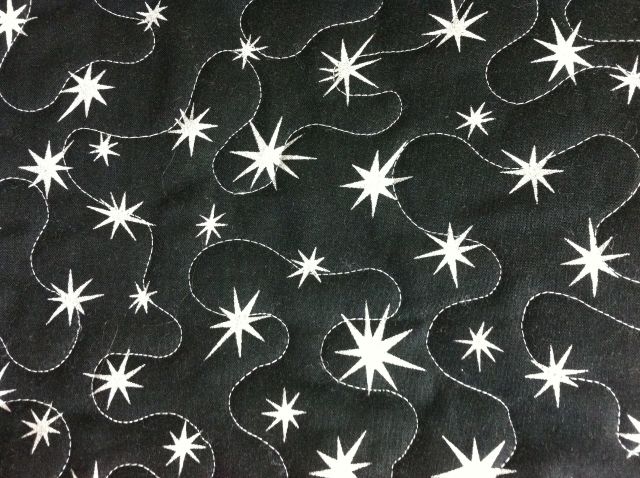
In my latest Quilt as Desired column for the National Quilting Association, I was able to explore how background fills can add depth and texture to your quilts. I love quilting textural designs that add a lot to the quilt with little to no marking.

nqaqad_fillerExcerpt from Quilting Quarterly by the National Quilting Association, Spring 2015 Issue

Speaking of NQA, you still have until April 10th to enter your quilts (especially your modern ones) into their show that will occur June 18-20 of this year. I will be teaching Modern Machine Quilting, along with two other classes and can’t wait to encourage others to give it a try.

I’ve also written a series of articles for Craftsy including tips to get you started free-motion quilting and 5 ways to trouble shoot your fmq.

As I get out there more in the world of quilting, it’s been fun to share my knowledge in different venues. Sometimes I worry that I may repeat a little bit of what I have to say. But then, it makes my day when a kind reader emails me to say, “If it wasn’t for ___ (insert name of venue or website), I never would have found you. Thanks for the tips!”

That’s truly what keeps me going! 🙂

Save 50% on Angela Walter’s Machine Quilting Craftsy Class

One of the perks I love about partnering with Craftsy is getting to pick and choose which Craftsy classes I get to watch, and then sharing information about those classes with you. But what I’m also super excited about is getting to offer exclusive discounts just for my blog readers! Whoo hoo!

20140929_angela_walters

For one week only, you guys can save 50% off of Angela Walters’ latest craftsy class, Machine Quilting: Small Changes, Big Variety. If you’ve read my blog for any length of time, you know how much I love machine quilting. I also love how well Angela’s designs work on nearly any quilt, no matter what type of machine you use to quilt them.

Angela WaltersMeeting Angela at QuiltCon in 2013 – I’m a huge fan of her work and teaching style!

I’ll tell you a quick story then get onto the review. When I met Angela for the first time at QuiltCon in 2013, I told her how much I loved the design aspect of her quilting and how I would enjoy incorporating some of her techniques into my domestic quilting. She responded by saying, “You get it! The type of machine you use doesn’t matter – it’s the design that counts.” Ever since then, I’ve been a big fan-girl. 🙂

The fact that Machine Quilting: Small Changes, Big Variety is demonstrated on a sit-down domestic machine is just icing on the cake!

Angela Walters at QuiltConAngela at QuiltCon – she can rock a feather like no other!!

Machine Quilting: Small Changes, Big Variety focuses on six basic quilting designs that anyone can learn:

  • pebbles
  • swirls
  • squares
  • feathers
  • clamshells
  • ribbon candy

By applying small changes to these “staple” designs, you really can creative a big variety of unique quilting textures. Each of the six lessons runs about 20-25 minutes each, which is the perfect amount of time for me to watch a segment while taking a break from work and eating my lunch. 🙂

I also enjoy the format of this particular class in that each of the lessons is independent of the others, so you can watch them in any order. Say for example, you want to skip pebbles for now, and get straight into watching the section on feathers or ribbon candy; you can totally do that and you won’t be behind!

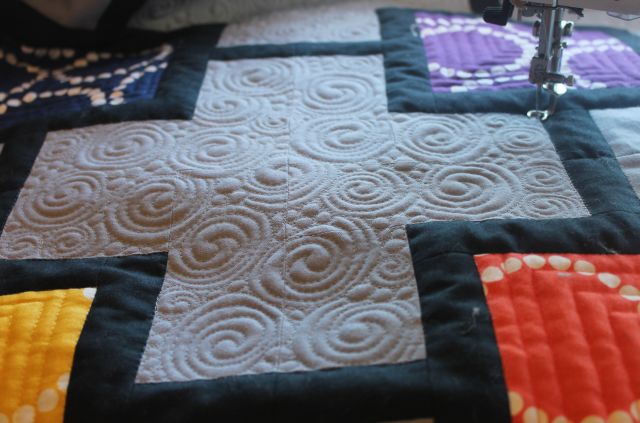
One of my favorite techniques that Angela encourages is the idea of combining designs. I’ve done that before when I quilted pebbles and swirls into the background spaces of my String of Pearls quilt:

Swirls and PearlsI call this combination of designs, “Swirls and Pearls” – it’s so effective!

Although I love being a teacher myself, I also enjoy being a student, especially when I can learn from such a warm and friendly person as Angela Walters. She’s very engaging and is also quick to respond to questions and comments during the class.

In fact, the interactive platform is one of the things I love best about Craftsy classes. The first thing I usually do when watching a class is read through all of the comments and questions that others have left before I begin each section. It gives me a good idea of what is coming up, and I can easily add to the discussion if I feel so inclined.

AW_class_projectDetail of gorgeous quilting posted by one of the students from class, Dana R.

After watching Machine Quilting: Small Changes, Big Variety, I’m sure you will be inspired to add all sorts of small changes to your quilting that will result in a big variety of textures and designs! Just imagine the endless possibilities. 🙂

Oh, and be sure to click on the “projects” section of the class to see what your fellow students are making. It’s full of delicious eye candy!

Remember, the 50% class discount is only valid for the next 7 days, so sign up now, before you miss it!

WIP Wednesday – Free Motion Quilting Frenzy

I’ve been quilting like crazy, trying to finish up quite a few projects on a deadline. The sad thing is that I won’t be able to share them for awhile, but the good news is that I can share little work-in-progress snippets here and there. (The pictures are all from my instagram feed so they are not the highest quality – but you get the idea!)

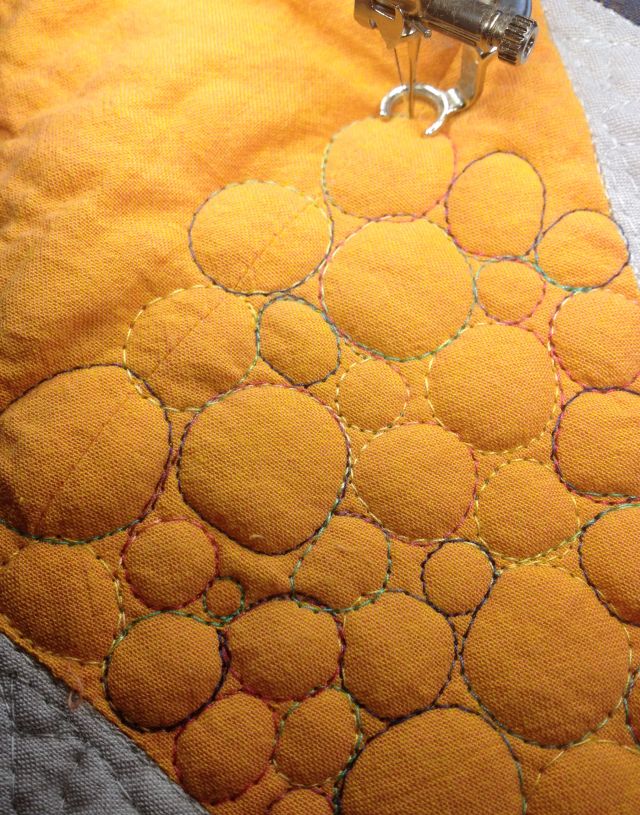
20140809_fmq_4I can get lost in pebbles! They are fun to stitch but very time consuming! I usually put on a good audio book and keep stitching until I can’t stand it or until my shoulders ache – then I take a break and do something else!

I’ve been having a blast playing around with different weights and colors of Aurifil threads as I quilt my myriad of projects. My go-to thread is the standard 50 weight cotton which blends wonderfully with any fabrics.

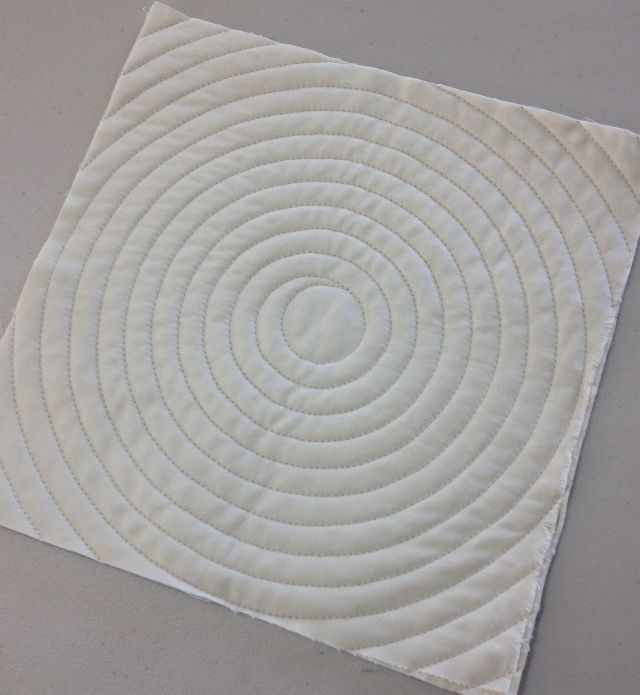
20140809_fmq_3I’m also experimenting with quilting spirals – in a slightly heavier thread – I love it!

However, I have been getting a little more daring. I usually try to match my thread colors to my fabrics but have been playing with variegated thread colors and heavier weights, too. I’m really liking the 40 weight Aurifil cotton which is just a tad heavier than the 50 weight (the smaller the number – the heavier the thread).

20140809_fmq_1Who doesn’t love a good stipple? Technically, the larger scale is called “meandering.”

I even tried some of the heavier 28 weight which adds a nice definition to the quilting. I love the Aurifil cottons because they go through my machine with ease and they don’t break! I usually use a size 80 needle with the size 50 thread and then switch to a heaver size 90 needle when dealing with the thicker threads. So far, so good.

20140809_fmq_2Loops are a great go-to design anytime. They always look good on any pattern!

I usually stick with the regular 50 weight thread in the bobbin in a similar color so that I can pack a lot of thread onto one bobbin for more non-stop quilting.

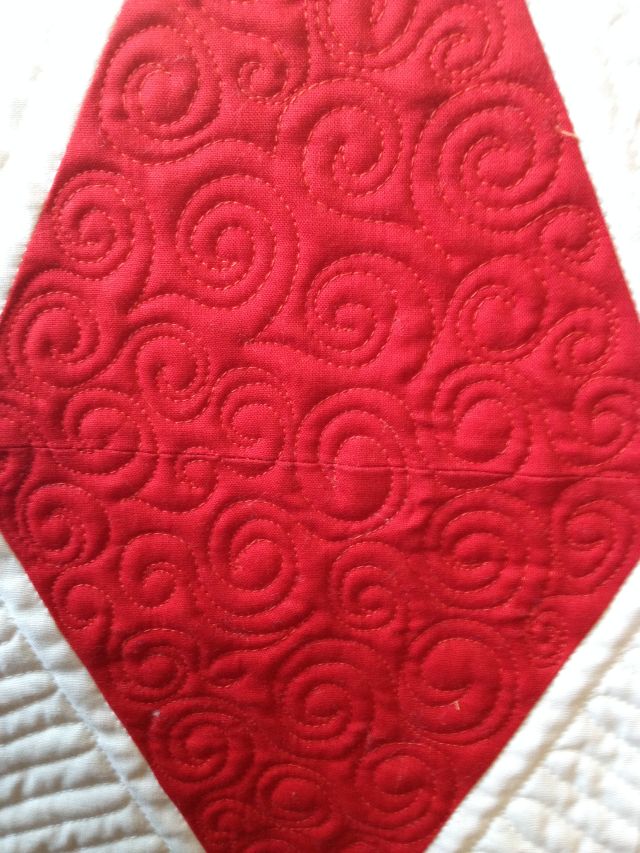
20140809_fmq_5Swirls always take my breath away. They don’t have to be perfect, either, to look good!

How about you? What are you working on this week?

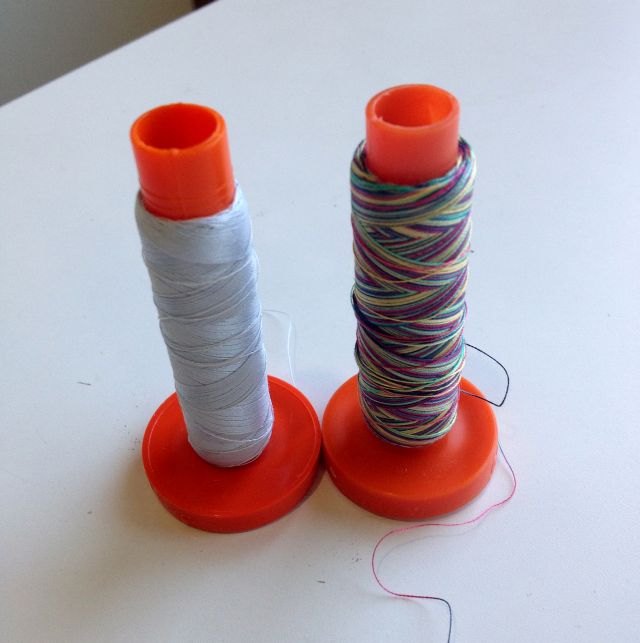
20140809_fmq_threadNearly empty spools of thread make me happy!

Quick Quilt Tips Tour – 5 Tips for Faster Quilting on Your Home Machine

Hi old friends, and welcome new ones! I’m happy to be participating in Amy Smart’s Quick Quilting Tips Tour – Round 2. Amy has gathered together several bloggers to offer some of their favorite tips for faster and better quilting. (Click here to read all of the tips shared in Round 1.)

20150529_tips_amy_smartMachine quilting is one of my great passions so I thought I would share some of my favorite tips for faster quilting on your home machine.

Tip #1 – Use Basting Spray

I am a recent convert to using basting spray and I don’t know if I will ever go back to using safety pins. While it takes me the same amount of time to spray baste as it does to pin, I save a ton of time not having to stop and remove pins while quilting.

spray_basting_0Click here for my spray basting tutorial.

Tip #2 – Embrace No-Mark Quilting

When I jumped on the modern bandwagon (after considering myself a traditionalist for so many years), the best thing I embraced was letting go of perfectionism and symmetry. This meant I didn’t have to mark all of my quilting lines anymore, or use stencils to quilt perfectly aligned motifs. What freedom!

herrinbone_quiltingThere’s nothing quite like a good random stipple to add texture to your quilts. Herringbone, shown above is one of my fastest finishes to date!

My quilting has improved because I can just doodle with my needle and thread while enjoying the improvisational nature of quilting random free-motion shapes and textures.

More TextureNone of the quilting was marked in String of Pearls – I just eyeballed the FMQ and used the edge of my foot as a guide for the straight lines.

Tip #3 – Try Quilting Designs from Edge to Edge

I love quilting lines which can start on one edge of the quilt and end on the other side. This is a huge time saver because there’s no need to bury threads when you start and stop. I quilted the uneven lines of Modern X starting on one side of the quilt, pivoting to follow the design, and then back off the other side.

straight quiltingWhen I felt like my bobbin was getting low, I switched it out so I didn’t have to worry about running out of thread halfway through a line of quilting.

(Bonus tip – since I use Aurifil 50 wt cotton for both piecing and quilting, I use up any partial bobbins on my next piecing project!)

Tip #4 – Use the Same Color Thread in Top and Bobbin

This is a huge time saver because I don’t have to hassle with my machine’s tension to keep tiny pindots of thread from poking through the top or bottom of the quilt. When I want a super-fast finish, I prefer to quilt with one blending thread color over the entire surface of the quilt so that I don’t have to stop and change threads.

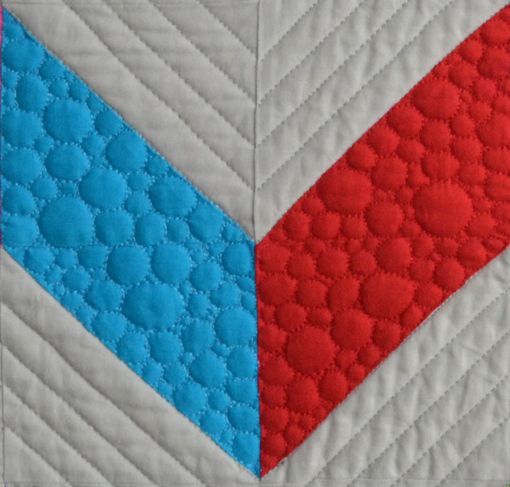
test_blockThis recent test block from Modern Logs shows how a thin neutral thread blends in to many different fabrics. It’s such a time-saver when you don’t have to switch thread colors. (I also quilted this quilt using an edge to edge design and it went so fast!)

Tip #5 – Wind Plenty of Bobbins Ahead of Time

It’s much quicker to wind a bunch of bobbins at the start of a project rather than having to stop mid-quilt for more winding. I recently upgraded to a new Bernina 710 sewing machine. One of my favorite features is the huge bobbin capacity, compared to the older machines. So if you get a ever chance to use a machine with a bigger bobbin, I highly recommend it. 🙂

Bernina BobbinsI keep plenty of bobbins on hand and use the biggest capacity bobbin I can.

I hope you’ve enjoyed my tips for faster machine quilting! Be sure to check out the other stops on the Quick Quilt Tips Tour. You just may learn something new. 🙂

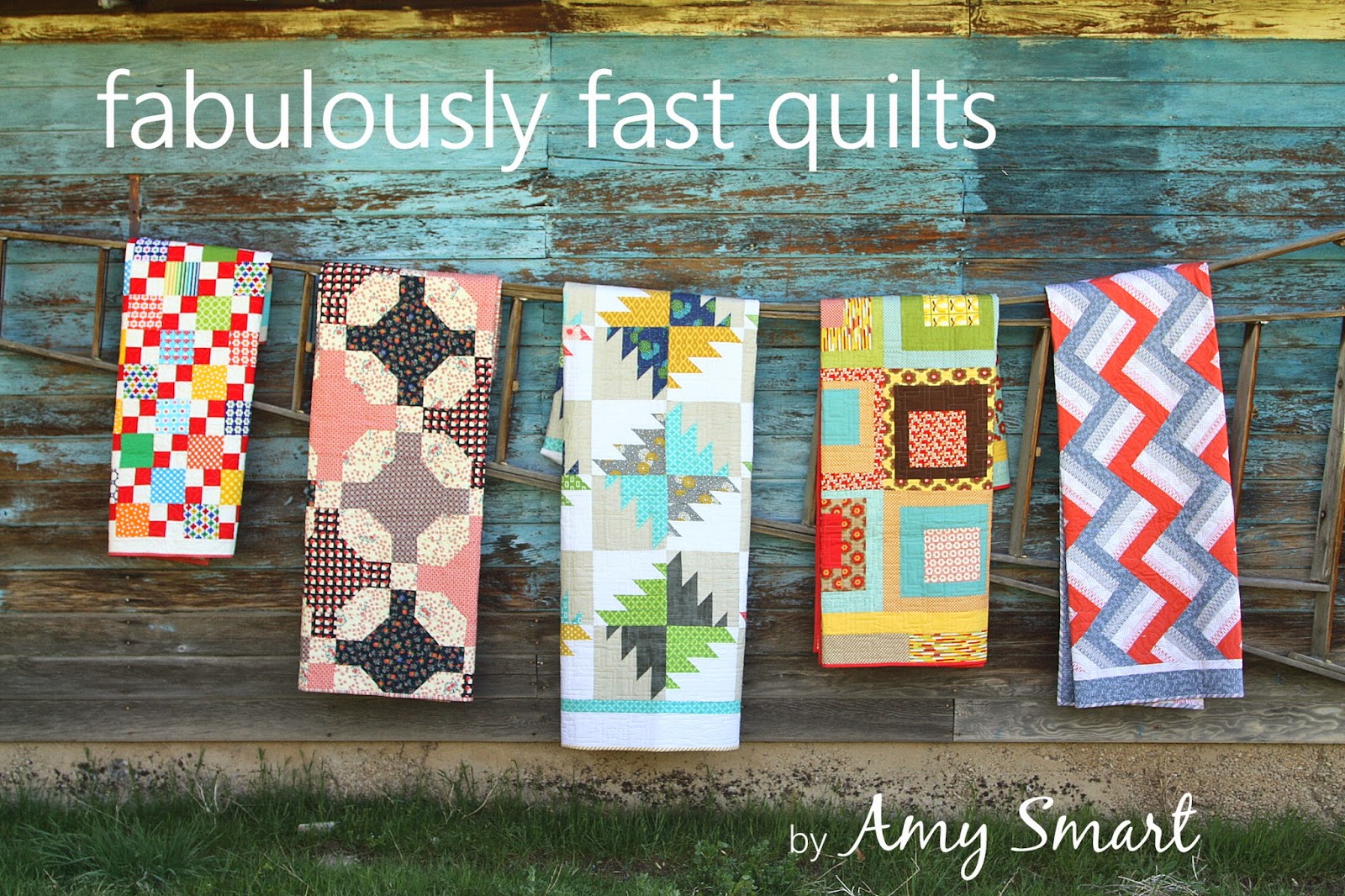
Be sure to check out Amy’s new book, Fabulously Fast Quilts. In case you missed it, I recently reviewed it here on my blog.

20140520_fabulously_fast_quilts

New around here?

Be sure to sign up for my Friendly Threads newsletter and get a free PDF quilt pattern!

Christa’s Soap Box – Learning a New Skill

I think it’s great to learn new skills, especially when it comes to quilting. After all, how do you know whether you will like something or not unless you give it a try? I recently had the chance to try painting on fabric, and even though I ultimately decided it wasn’t my “style,” it was still fun to learn a new technique!

20140401_cory_paintingChrista and Cory painting away!

My friend Cory came over recently and showed me how to use Setacolor paints to add a little life to this wallhanging I made a couple of years back (before I found modern quilting).

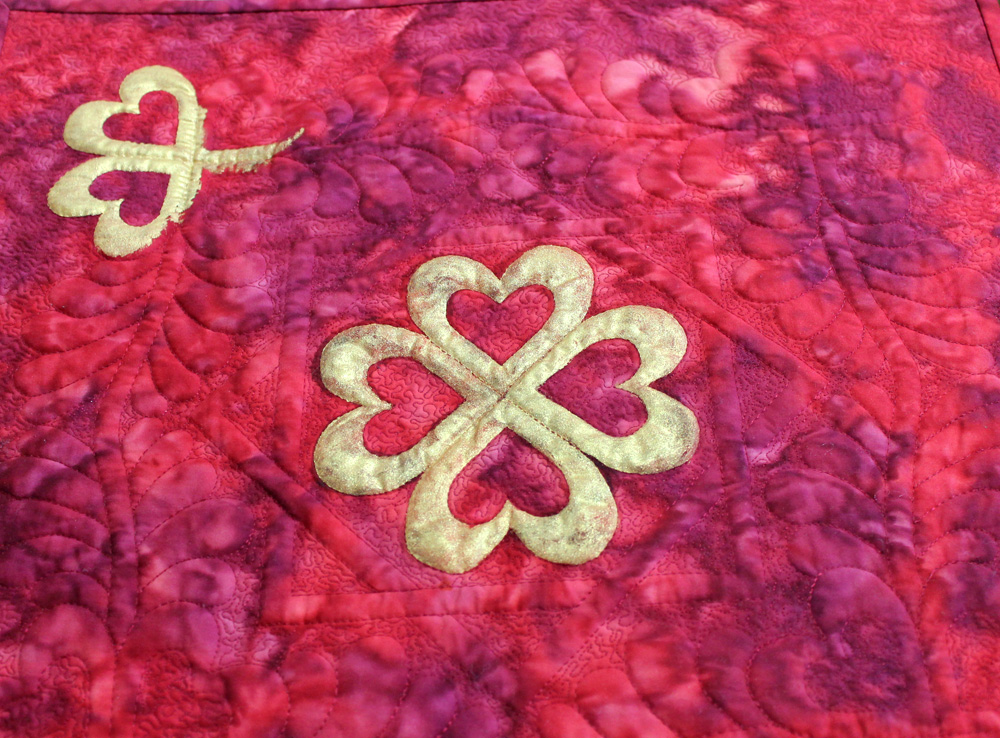
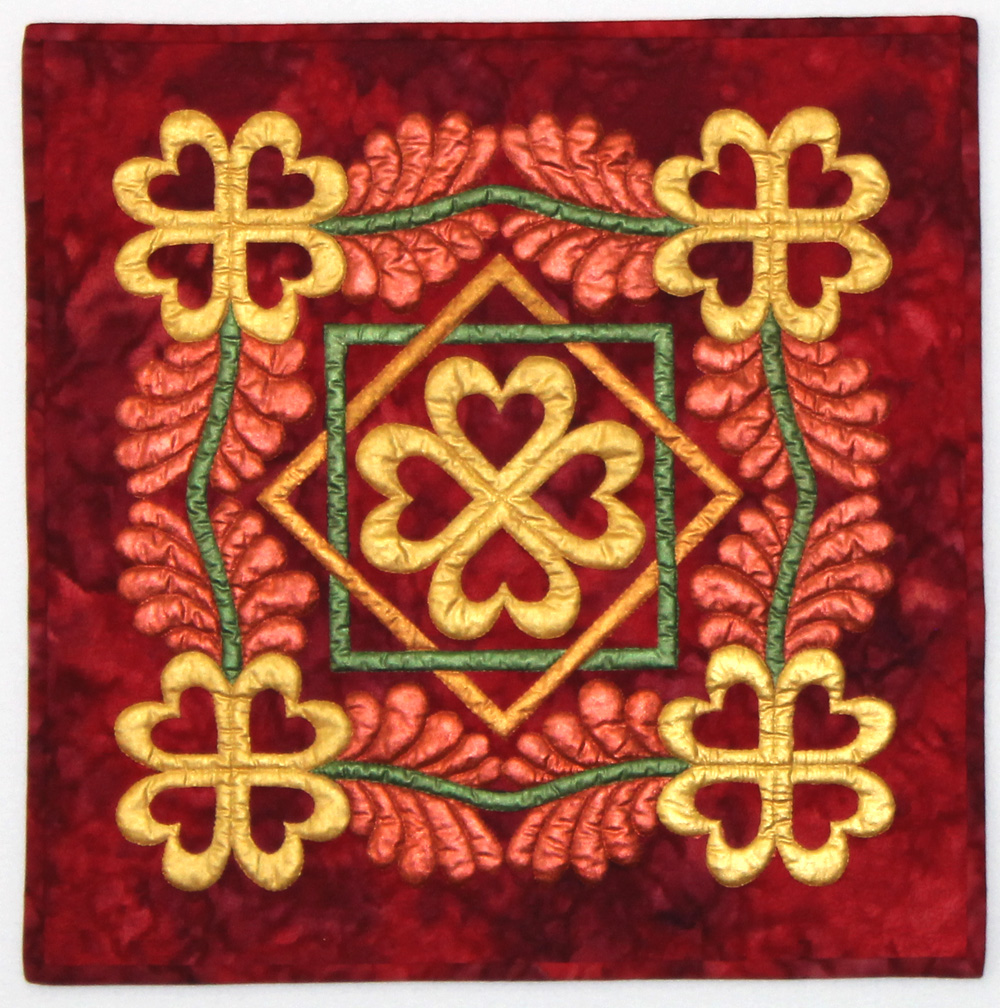
hearts_feathers_wholeclothHearts and Feathers Wholecloth. Free pattern courtesy of Leah Day.

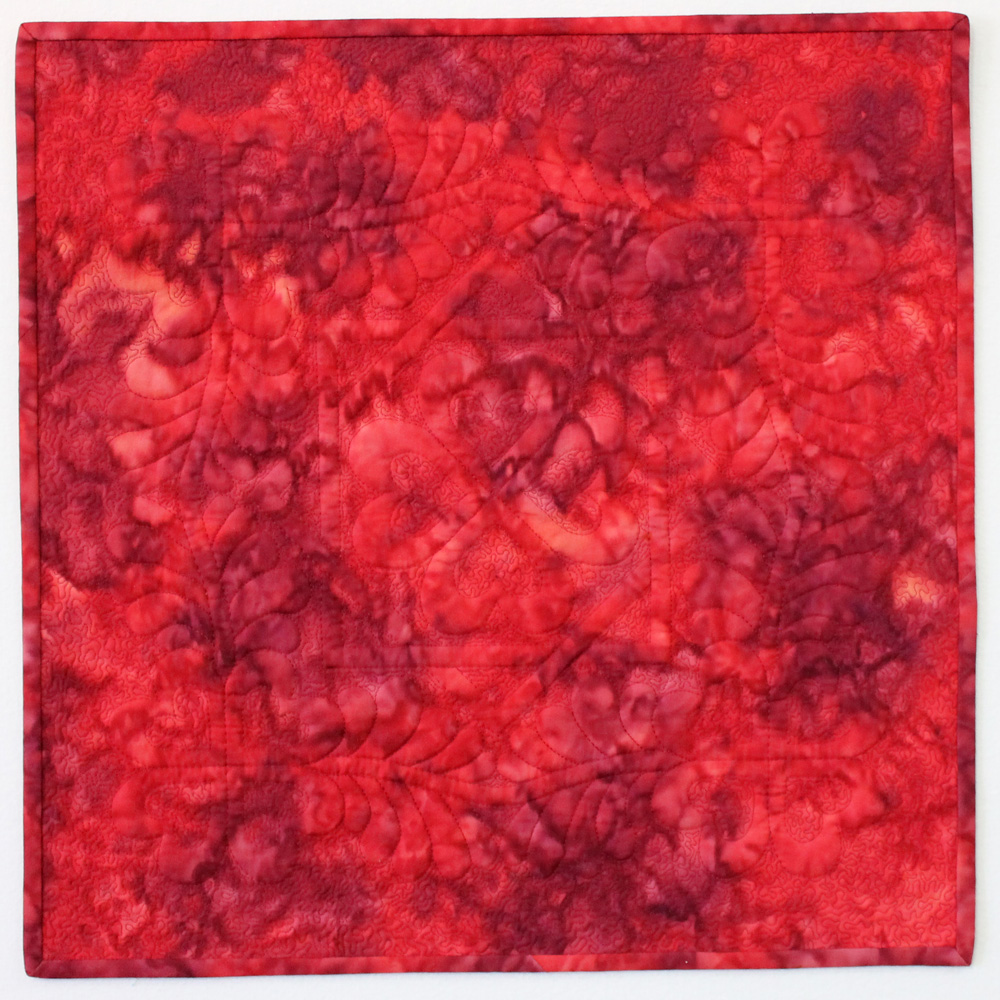
It’s a gorgeous free-motion quilting design from Leah Day. As you can see in the “before” picture above, you can hardly see the quilting. This is where my “matching threads” philosophy perhaps went a little too far.

The mottled batik fabric I used was so busy that you can’t really see the stitching. I thought about going over the quilting again with a contrasting metallic thread to make it stand out, but Cory suggested paint instead. So I figured, what they heck, I’ll give it a try. 🙂

hearts_paintingFabric Painting in Progress

It took a few coats to get a nice even application of color and it about drove me crazy trying to keep the painting inside the stitching lines, but overall, I’m pleased with how it turned out. The only thing I don’t like about fabric painting is how it makes the surface rough and scratchy rather than soft and supple (leading to my preference for modern utility quilts).

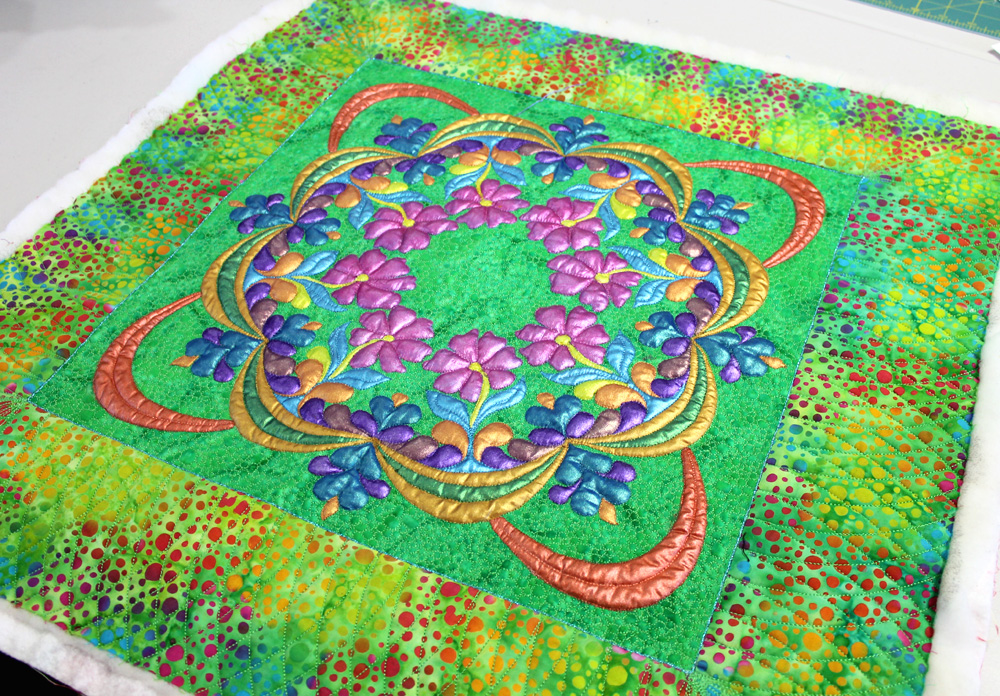
hearts_feathers_finishedAnd not to be outdone, here’s a shot of a gorgeous piece that Cory’s currently working on:

20140331_cory_paintingHave you ever tried painting on fabric? If so, what are your thoughts about it?


Techniques and Tools – Intro to Free-Motion Quilting

Welcome to Technique Tutorial Tuesday. This is a long post so sit back, relax, and read awhile!

Today I will be presenting an introduction to Free-Motion Quilting (FMQ for short). I will cover topics such as thread selection and tools needed for successful quilting, as well as starting and stopping and the density of your quilting.

I quilt all of my quilts on a Bernina machine that’s almost 20 years old. If I can do it, so can you! I hope you will give FMQ a try because I think it’s the most fun part of making a quilt!
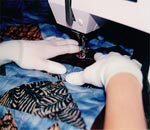
Machingers Quilting GlovesSupreme SliderTopstitch NeedlesThread


For starters, here are my 3 favorite tools for quilting:

  1. Machingers quilting gloves help grip the quilt while quilting which in turn reduces stress and tension on your shoulders. They are machine washable and breathe well.
  2. A Supreme Slider helps for two reasons: it allows your quilt to glide smoothly under the bed of the machine. It also acts as a cover for your feed-dogs so you can still have FMQ success even if you are unable to drop them.
  3. Superior Titanium Coated Topstitch needles come in several sizes according to the weight of your thread. They have a larger eye which makes them much easier to thread. They also have a longer needle shaft which helps prevent thread breaks. I use a new needle at the start of each quilt and change them about every 8-10 hours of quilting.

FMQ FootFor FMQ, you also need to use a darning foot or free-motion foot made specifically to fit your machine.

Speaking from experience, it’s best to get this straight from the dealer. The best type of foot has an “open toe” so you can see where you are stitching.


Thoughts on Thread and Tension

I love lots of quilting on my quilts but I want the quilting to show, not the thread. In order to do this, I try to blend my threads as much as possible on my quilt. I have a rainbow of colors and I don’t mind switching thread colors or weights when needed, even in the same quilt.

Auditioning Thread Choices

Auditioning Thread Choices

Quilted Thread

Light Grey for Background, Colors for Blocks


To decide on the correct thread color for a quilt, I will audition several choices and see which one “disappears”  most into the quilt. I test the thread out on a practice piece first,  to check the tension and to see how well the thread blends or stands out. Here are more tips:

  • With a thinner thread like silk or 60 weight polyester, your stitches will blend more, even if the thread does not exactly match the fabric. You can use neutrals to quilt over lots of different colors. If you want your stitches to show, use a heavier 30-40 weight cotton or polyester. A medium 50 weight cotton is a great choice for beginners because it is very forgiving and can cover a lot of area quickly without looking too “thready”.
  • Some of my favorite brands that I use are Superior Threads (in cotton, polyester or silk), Isacord (polyester), or Aurifil (cotton). Unfortunately, I have not had good results with invisible threads so I stay away from them as much as possible!
  • Use the same color thread in the top and bobbin. You don’t have to use the same weight. You can use a heavier weight on top and a lighter weight in the bobbin, or they can be from the same spool. No matter how well I balance my tension, little thread “pokies” still show through if the thread colors are vastly different.
  • If you can’t match your thread exactly to your fabric, opt for a darker thread color rather than a lighter color. A darker color will blend more; lighter colors stand out.
  • Use a “busy” backing for the lining of your quilt. This will easily hide any less than perfect tension issues or quilting mistakes. A busy back also hides lots of different thread color changes. Save the solid backings for when you want to “show off” your precise quilting, or if “thread play” is a part of your intended design.
  • To balance your tension, do not be afraid to change your bobbin tension as well as your top tension. Superior Threads has a great visual on how to balance your tension:
Thread Tension

Click to Enlarge

Starting, Stopping and Smooshing

When beginning a session of free-motion quilting, I like to use this phrase: needle down – foot down, needle up – foot up to bring the bobbin thread up through the top of the quilt. Be sure that your feed-dogs are disengaged, or covered with your stitch length set to zero.

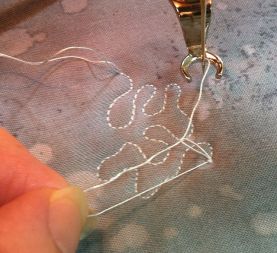
Catch Bobbin Thread

Ending Thread


Hold both thread tails lightly with your hand, then take a few tiny stitches in place to lock your threads. When you come to the end of a quilting session, you will need to end with a few small stitches, then pull up a loop of bobbin. You can either clip the threads close to the surface, or make a knot by hand and “pop” it through to the batting.

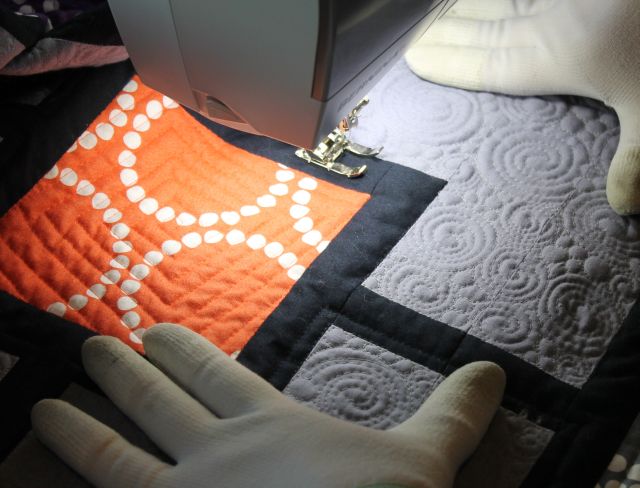
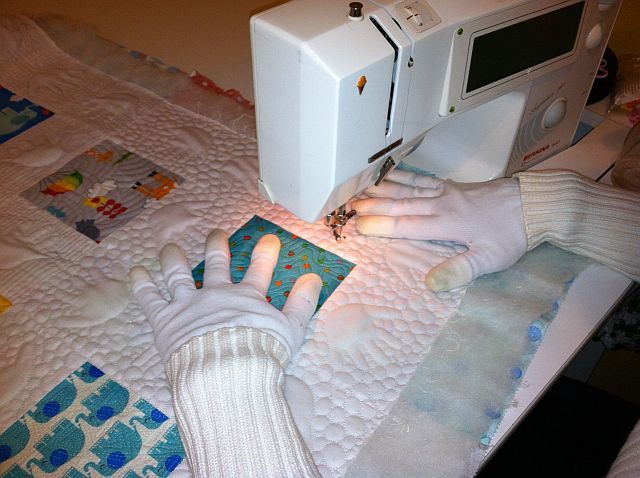
When quilting a larger quilt, I use my hands as a hoop and quilt in one  small area at a time.

Hoop Your HandsYou will want to quilt your quilts enough so that the batting will not fall apart during washing. How much more dense you quilt is a matter of personal preference. I personally think that quilts look best when all areas are quilted, but this does take some time to do.

When the bulk of a quilt gets too much to handle, I simply move and “smoosh” it out of the way. If it’s been basted properly, all of the tugging, pulling and scrunching of the quilt will not cause any problems.
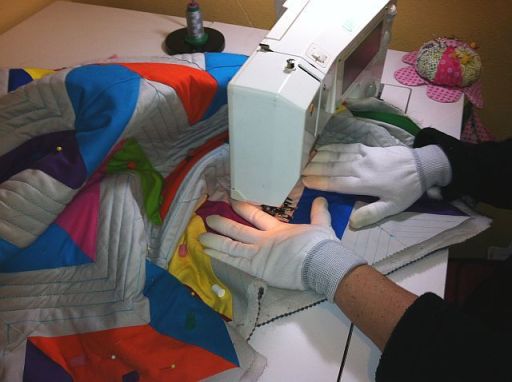
Smoosh and Scrunch

Smoosh and Scrunch

Practice, Practice, Practice!

It cannot be stressed enough: you need to practice a lot to get really good at FMQ. Make several practice sandwiches by inserting a piece of batting between two scrap pieces of fabric. It will take some time to find a rhythm that you are comfortable with. It took me a good solid year of FMQ to get to where I was happy with it.

Scrap 1

Scrap 1

Operate your foot pedal at a speed that keeps you in control of your hands and do not move your hands faster than the speed of your machine. Here’s a good rule of thumb (or foot!): if you are making tiny stitches, you need to slow down the speed of your foot pedal and increase the speed of your hands moving the practice sandwich around under the machine.
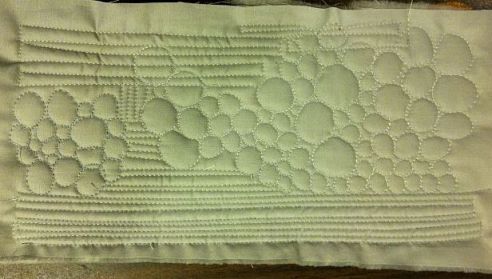
Scrap 2

Scrap 2

If your stitches are too big, you need to slow your hands down and and speed up your foot. Practice different combinations of speed between your hands and feet until it feels right. Your stitch movements should not be jerky, they should be nice and smooth.

“Handwriting Practice”

Handwriting PracticeIf you can draw it, you can quilt it! Think of your needle as an electric pen writing on a quilted canvas.

You have to practice your handwriting to know where your hand is moving on the paper. The same thing applies to FMQ with needle and thread.

You need to build muscle memory and hand eye-coordination.

The best way to do this is to draw, draw, draw. Take some time and sketch out some doodles like I did. I can sit for hours sketching out pages full of quilting designs!

Straight Line QuiltingSerpentine QuiltingThese are just a few of my favorite tips when it comes to free-motion quilting.

But do not overlook the possibilities of quilting with your walking foot, too.

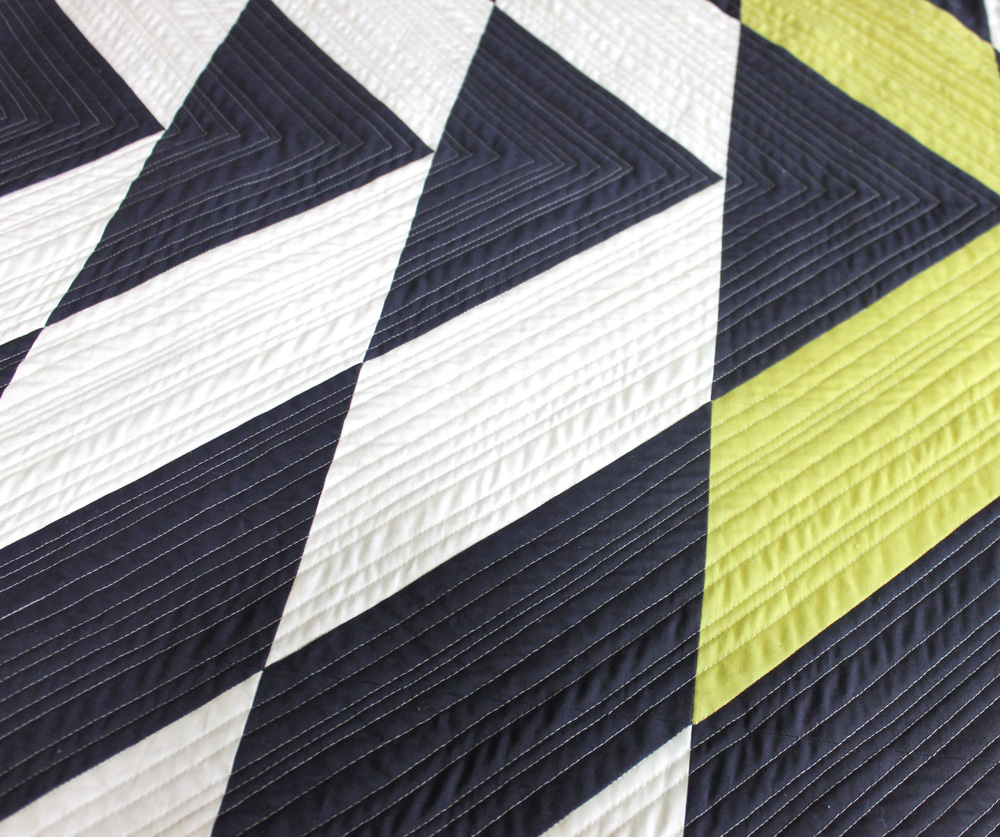
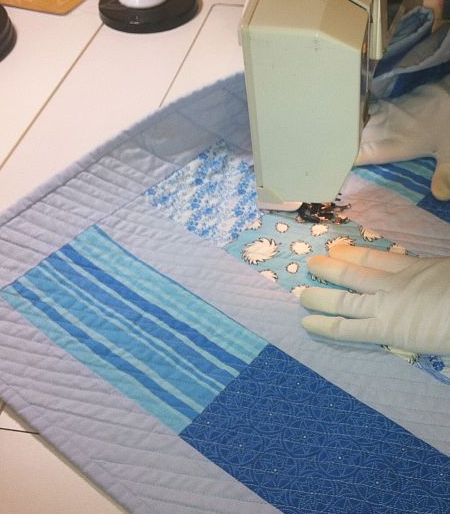
Straight-line quilting can add lots of texture, especially when quilted closely together.

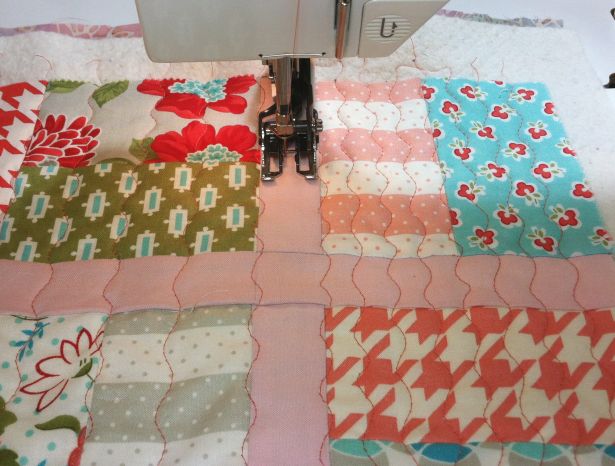
You can also add interesting designs by playing around with decorative stitches, too. The quilt below was quilted entirely with a serpentine stitch and my walking foot.

My final words are to have fun with it and don’t stress too much. Stick with it and you will see improvement over time, I promise!

WIP – Choosing Thread

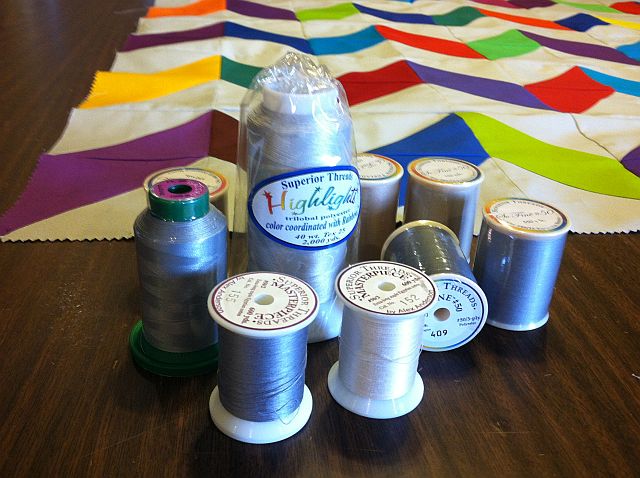
Spools of Neutral ThreadI spent a lot of time this weekend choosing thread for my current project, my Charming Chevrons quilt. I wanted to go with a neutral palette of grey or silver so I bought a bunch of different brands, weight and types to see which I like best.

I am still on the search for my favorite thread and figured the only way I would find it is by making lots of quilts and trying out different threads.

To see which thread would blend, I spread out a bunch of different colors over the top. I tried some Cotton Masterpiece,  Isacord, Superior Sew Fine #50, and Superior Highlights in shades of taupe, silver and grey to see which I liked best.

Thread Selection

It’s hard to tell from the photo above, but there was quite a variety in the neutrals! My original plan was to quilt straight lines in the chevrons with a darker blending thread and then do some pebbling in the background with silver.  I narrowed down my choices and stitched them out on a practice scrap.

Sample on Grey

All of the thread choices looked great on the the Ash Grey fabric but I couldn’t find a thread that would blend well enough with the solid colors. Also I prefer the look of the pebbling on the colors rather than straight lines. So I’m going to switch my plan – I’ll quilt straight lines on the background and then pebble the solid colors. That way the thread that shows will be a lot more interesting!

Practice Quilt SandwichI will write about which threads I finally ended up using once I start the actual quilting!

Quilt LabelOn my last finished project I began taking notes of which threads I used and how I like them.

The easiest way for me to record this was by writing it down on the label on the quilt.

I always have good results when quilting with cotton but I want to have success using polyesters, too.

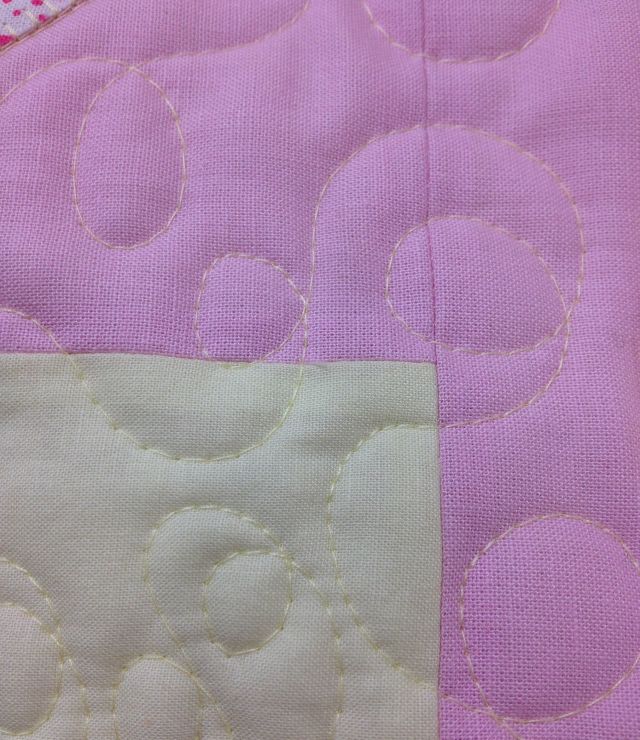
For my Pink Baby Bricks quilt I used Isacord in the cream areas and was happy with the results.

I had no breaks, no snags and I could really see the quilting.

No wonder Leah Day recommends it so highly!

Vanilla Isacord Thread

Because I love quilts with tons of quilting all over the surface, I am also learning how to estimate how much thread I will use so I know how much to buy. For my Busy Hands quilt (throw size) It took a full 1600 yard spool of thread for each of  the top and bobbin quilting. I prefer to use the same thread in top and bottom because I get better results that way.

Busy Hands Quilting

I really wanted to the quilting to stand out, not the thread, so I chose a very thin thread, Superior’s 60 weight Bottom Line for all of that quilting. The stitching looked great and it even blended it on the colored fabrics. However, I had a huge amount of thread breaks because the thread just wasn’t strong enough for my high speed free-motion quilting.

I love all of the different quilting styles out there and the quilters promoting them. Leah Day likes to be very artistic with her quilting and really show off her awesome designs. Angela Walters prefers her thread choices to blend into the background. Deb Karasik is happy to change thread colors hundreds of times on the same quilt. Cindy Needham is a Superior Threads spokesperson and has her own distinctive heirloom style.

Whether you love tons of quilting or prefer simpler designs, I think it’s important to try out a bunch of different threads and styles of quilting so you can find your own “voice”. Happy quilting!

Holy Cow I Finished!

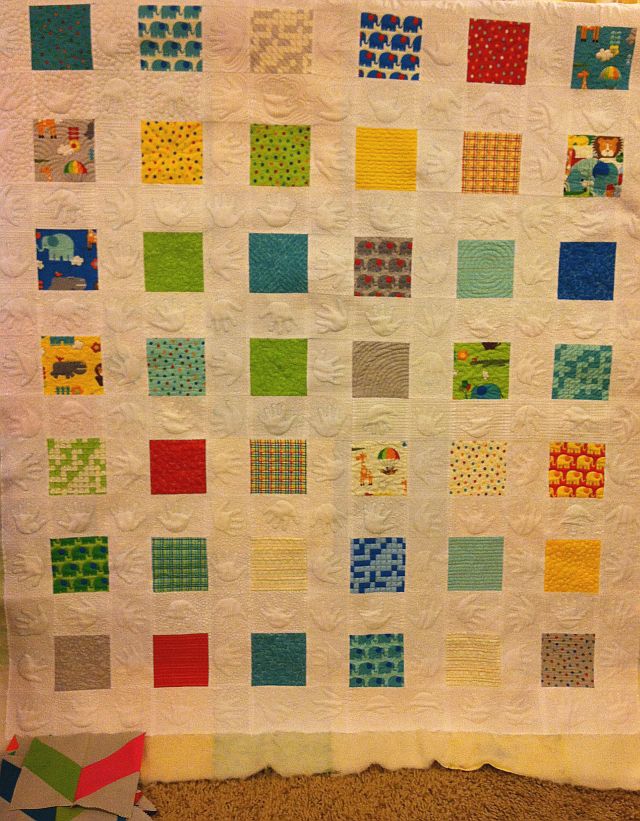
I finished quilting my Busy Hands quilt this weekend. I feel like it was quite an accomplishment because I quilted the heck out of it! This quilt is my first official “Modern Quilt” and I have to say, I enjoyed it immensely.

Busy Hands Quilt

(My poor little chevron blocks are just piled up in the corner, patiently waiting their turn on the design wall so they can get turned into my next modern quilt.)

I tend to be a little more “organized” with my piecing rather than embracing the “wonkiness” that is also a hallmark of this quilt genre. But I love modern quilts because of their bright, clear colors, bold geometric shapes and clean lines, with lots of negative space for machine quilting.

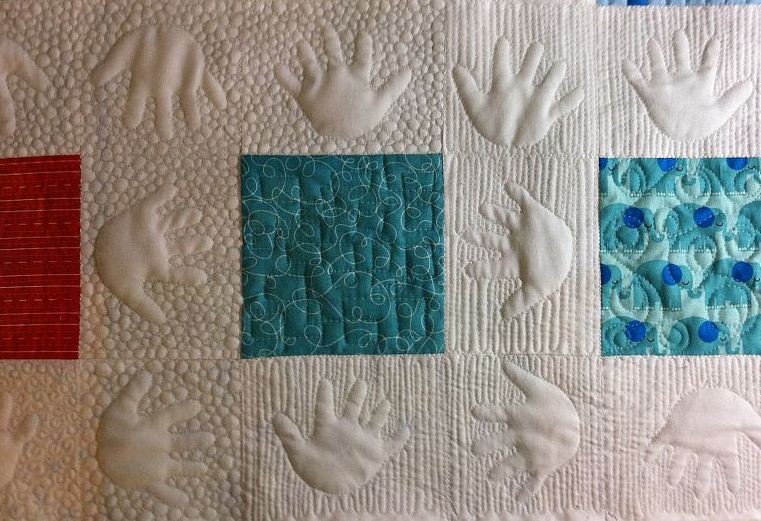
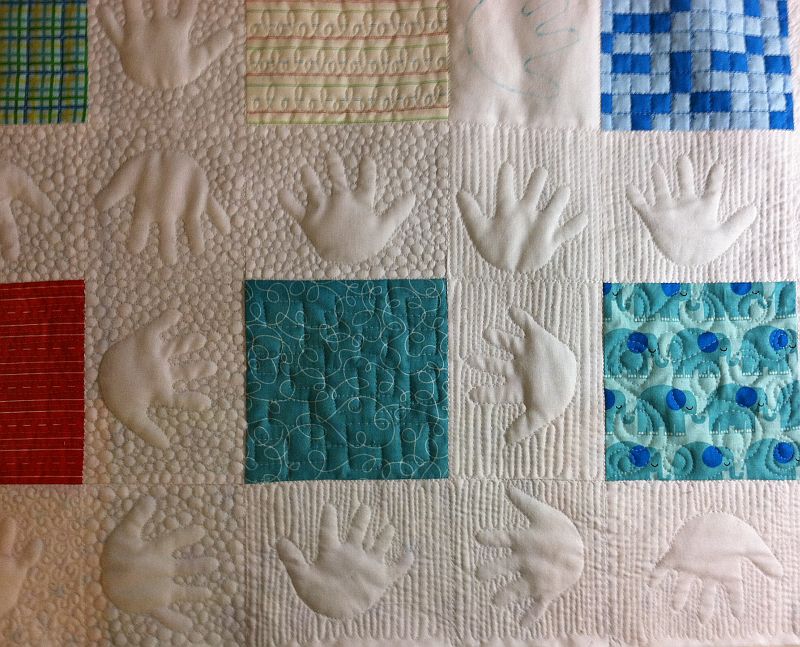
Busy Hands Quilt Detail

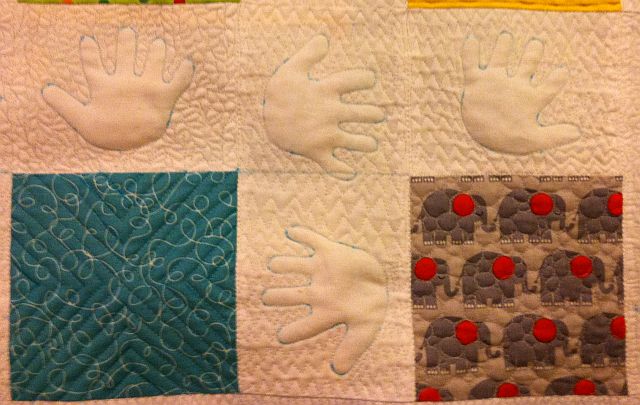
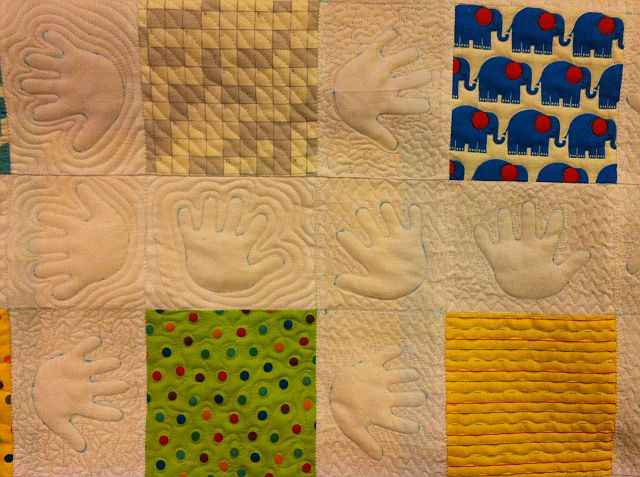
My favorite part about this quilt is all of the different free-motion designs that I tried. I originally was going to stick to one background fill but after quilting a few blocks I got bored very quickly.

FMQ Detai

One of the things I love about modern quilting is that there are no hard and fast rules, so I was free to switch up the designs whenever I felt like it. I can’t tell you how liberating that was!  I didn’t plan them ahead of time but quilted them serendipitously. I counted a total of 53 different quilting designs when all was said and done!

FMQ Detail

I still have to soak the quilt to remove all of the blue lines around the hands, then block it and bind it. I’m really toying around with the idea of trying to enter it at QuiltCon if I can complete these final steps in time. It’s a juried show and they are accepting entries through November 30th. I’ve never entered a quilt in a “big show” before so I don’t even know if it would get in, but what the heck – I might as well try. It can’t hurt, right??
FMQ Detail

Favorite Tools #9 Supreme Slider

I am in love with free-motion quilting. To me, it’s the best part of making a quilt! I find myself hurrying through the piecing process just so I can get to the quilting. So of course I love tools that make the job even easier. I first heard about the Supreme Slider when I attended a lecture on free-motion quilting from Joanie Zeier Poole nearly 2 years ago. Leah Day from The Free Motion Quilting Project highly recommends them, too!

It took me about a year to finally buy my first Supreme Slider, but I have been using it ever since for all of my free-motion quilting. It’s a piece of slick teflon plastic that rests on the bed of my sewing machine. Because it is so slick, the quilt glides over the surface of my sewing table and there is less resistance and drag on the quilt. That means less tension issues for both me and the sewing machine!

Original Supreme SliderQueen Supreme SliderI started with the regular size slider which measures 8″ x 11.5″.

This size has worked well and was a good size to start with to see if I liked it.

Once I became hooked, I upgraded to the larger 11.5″ x 17″ Queen size. This covers more surface area and is perfect for use on my drop-in table. You can see a comparison of the two sizes shown with my sewing machine below.

Supreme Slider 2 Sizes

I only use the Supreme Slider when I am doing free-motion quilting. It covers the feed-dogs so I can either drop them or leave them up, depending on the type of thread I’m using and how my machine is sewing on any particular day. However, I remove it when stitching in the ditch since the feed dogs are engaged and I don’t need to slide the quilt around as much.

When the bottom (pink side) of the Supreme Slider gets dusty (usually while waiting for me to use it again), I just rinse it off underneath the sink and pat it down dry. Then it adheres again easily to the bed of my machine.

Supreme Slider Scar

Here’s one word of caution – be sure the slider is completely “stuck” down before you begin FMQ so it doesn’t move around while quilting. I accidentally stitched through my smaller version right after I got it. It still works but it now has a permanent “scar!”

Bungle Jungle Quilt – Making Progress

I am slowly but surely making progress quilting my Bungle Jungle quilt. This is my first attempt at a modern quilt. I discovered the whole modern quilting movement just a few months ago and have truly been smitten!

Pebble Quilting

I started with just one Bungle Jungle charm pack and surrounded the charms with lots of  “negative” space so I could practice my free-motion quilting skills. I used Kona Cotton Solids in white for the background.

Cucumber Vines QuiltingI love how the pebbling turned out and I’m now learning how to quilt some swirling vines. My vines look a little more like hooks, but it’s still fun to vary the motifs.

LinesI like the textural element that quilting gives to a quilt!

Curlie-Cue SwirlsAt first I thought I would surround the little hands entirely with just one quilting motif, little curlie-cue’s.

However, after I quilted a few squares, that got old very quickly!

So to keep things fun, I’m switching quilting motifs throughout the quilt. Not only will every charm square be quilted differently, the background fills will change, too.

I’ve only finished about 4 rows of quilting so far (out of 15!) but I am enjoying the process. The key is not to rush it. I only quilt a couple of squares per day. This gives me daily FQM practice so I won’t get bored. This will be a long-term process and I won’t even attempt to record how many hours the quilting takes. But I am having fun and that’s what’s important!

Bungle Jungle Charm QuiltI think I will call this quilt “Busy Hands” not only for the cute little quilted hands, but because I am keeping my hands quite busy quilting this baby!