Favorite Tools #9 Supreme Slider

I am in love with free-motion quilting. To me, it’s the best part of making a quilt! I find myself hurrying through the piecing process just so I can get to the quilting. So of course I love tools that make the job even easier. I first heard about the Supreme Slider when I attended a lecture on free-motion quilting from Joanie Zeier Poole nearly 2 years ago. Leah Day from The Free Motion Quilting Project highly recommends them, too!

It took me about a year to finally buy my first Supreme Slider, but I have been using it ever since for all of my free-motion quilting. It’s a piece of slick teflon plastic that rests on the bed of my sewing machine. Because it is so slick, the quilt glides over the surface of my sewing table and there is less resistance and drag on the quilt. That means less tension issues for both me and the sewing machine!

Original Supreme SliderQueen Supreme SliderI started with the regular size slider which measures 8″ x 11.5″.

This size has worked well and was a good size to start with to see if I liked it.

Once I became hooked, I upgraded to the larger 11.5″ x 17″ Queen size. This covers more surface area and is perfect for use on my drop-in table. You can see a comparison of the two sizes shown with my sewing machine below.

Supreme Slider 2 Sizes

I only use the Supreme Slider when I am doing free-motion quilting. It covers the feed-dogs so I can either drop them or leave them up, depending on the type of thread I’m using and how my machine is sewing on any particular day. However, I remove it when stitching in the ditch since the feed dogs are engaged and I don’t need to slide the quilt around as much.

When the bottom (pink side) of the Supreme Slider gets dusty (usually while waiting for me to use it again), I just rinse it off underneath the sink and pat it down dry. Then it adheres again easily to the bed of my machine.

Supreme Slider Scar

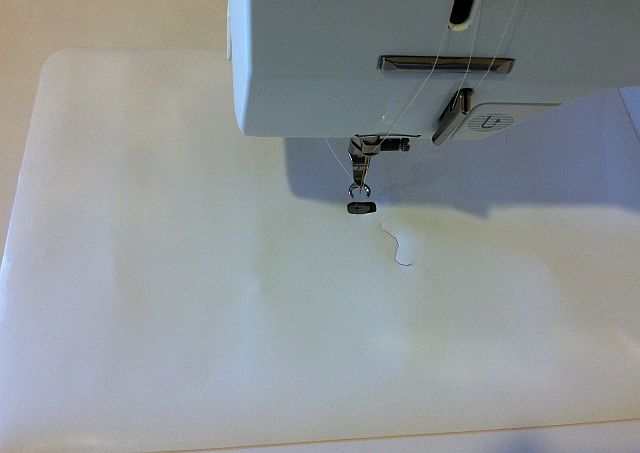
Here’s one word of caution – be sure the slider is completely “stuck” down before you begin FMQ so it doesn’t move around while quilting. I accidentally stitched through my smaller version right after I got it. It still works but it now has a permanent “scar!”

Christa’s Quilt Along 2.5 – Baby Bricks Option 1 Straight Line Quilting

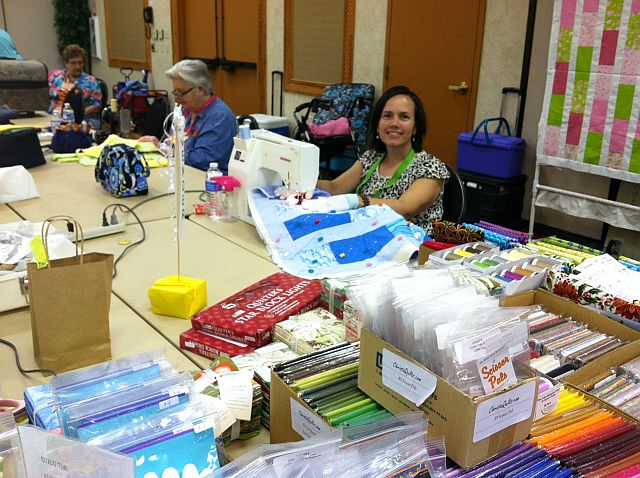
I finished up the quilting on my boy version of Baby Bricks while I was at a quilting retreat last weekend.  I brought along a few items to sell so the weekend paid for itself!

Christa Quilts!

Step 1 – Quilt the Marked Lines

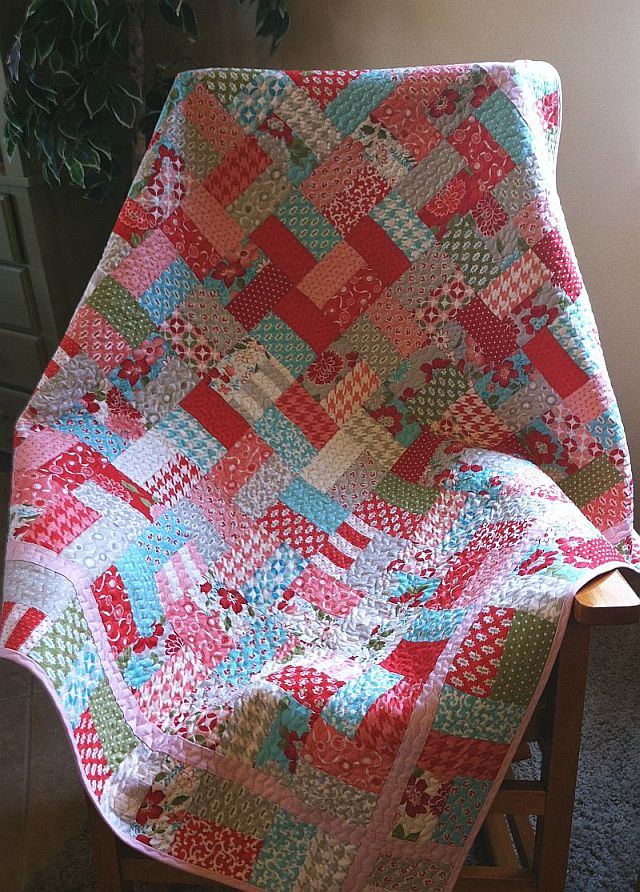
This quilt was so easy to machine quilt. It was just a matter of following the marked lines! I timed myself and it took less than 2 hours to machine quilt the top. Start with a large area for quilting so you have room for the quilt. A drop in table is best but as you can see here, I quilted this just using the surface available on the bed of my machine.

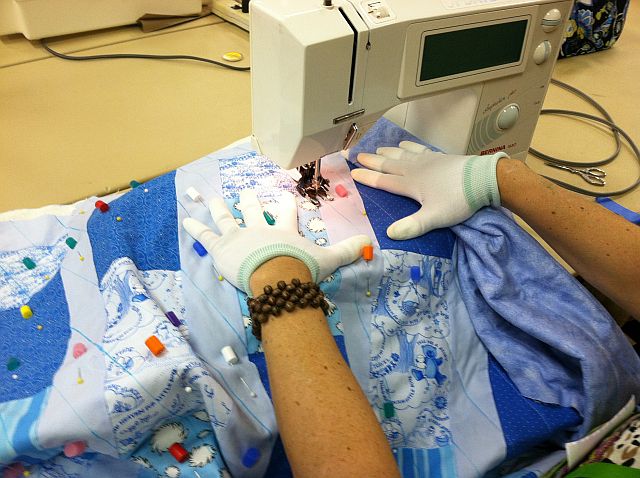
Gripping the Quilt SandwichI started on the very edge of the quilt with the first marked line. I scrunched up the quilt under the arm of the machine and used Machingers quilting gloves to grip the quilt making it easier to push through the machine.

I used a walking foot to quilt the straight lines with my feed dogs engaged. I set my stitch to a longer length (4 out of a max of 5), and quilted with 50 weight variegated light blue cotton thread on both top and bobbin. I used a new Topstitch needle, size 80/12 for the quilting.

Quilting Straight LinesI quilted about half of the quilt from one direction, turned it around and then quilted the other half. Because my marked lines ran from one edge to the other, I did not have to tie off or bury my threads. The ends will be covered by the binding so they will be secure. I left the basting pins and Pinmoors in the quilt and removed them one at a time as I quilted.

Step 2 – Remove the Markings

I used a spray bottle to remove all of the marked lines. I will soak the quilt after binding to block it and remove any excess marks. (I advocate prewashing all the fabrics first to be sure they don’t bleed. This gives me piece of mind when I completely soak it later.)

Spritzing the Quilt

It’s all quilted now and ready for binding. Next week I will show how I quilted the pink and green girl version using more advanced free-motion quilting techniques. You can use either option on your quilt, or combine them!

Finished Quilting

Here is the schedule of tutorial posts for my Baby Bricks do-it-yourself quilt along:

Christa’s Quilt Along 2.4 – Marking and Basting Baby Bricks

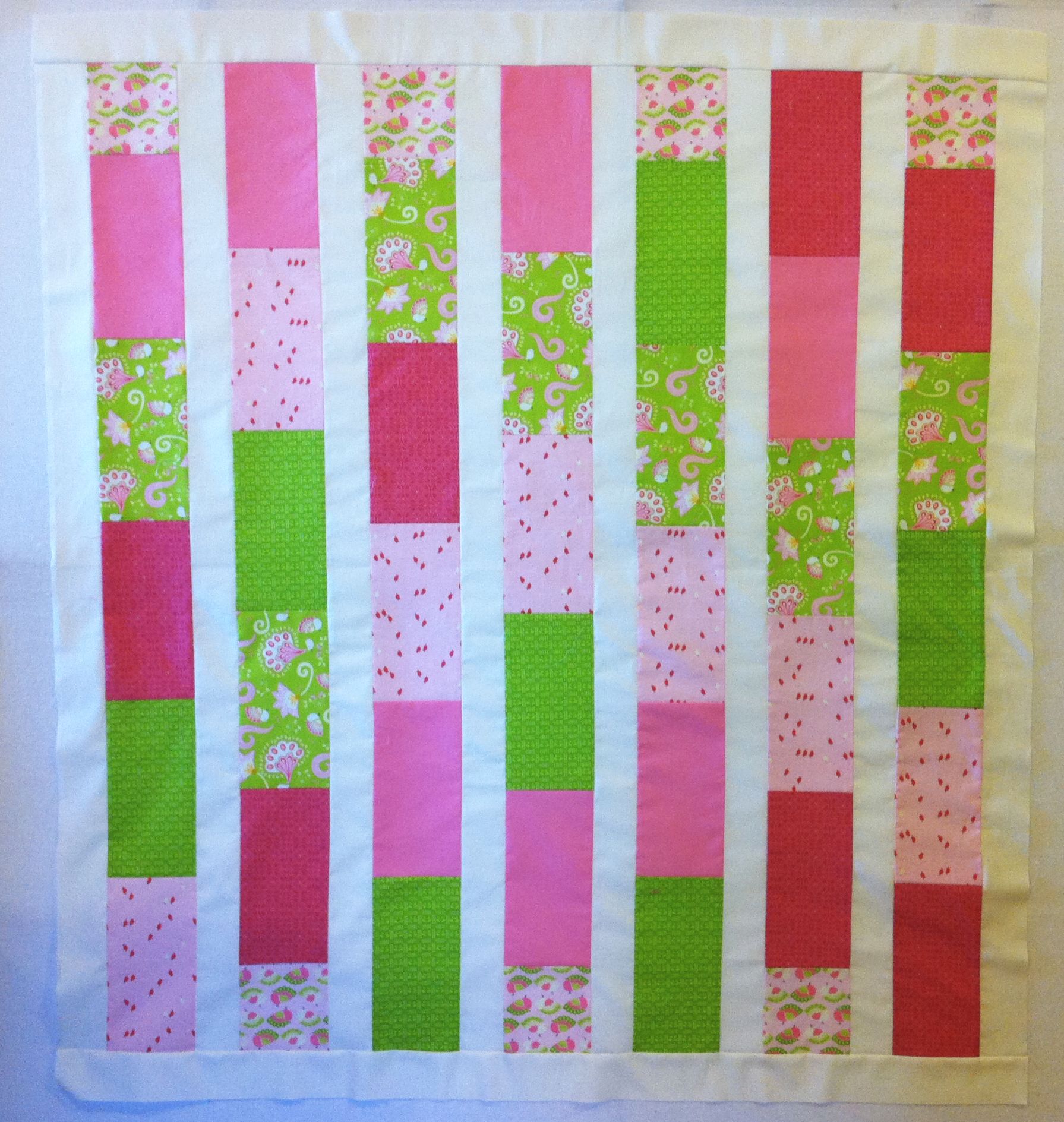
I finished the pretty pink version of Baby Bricks this week to go along with the baby blue top that I will be basting today.  (Kits are available for both colors for a limited time.)

Before I get to the most fun part of making a quilt in my opinion – the machine quilting – I’ve got to get them marked and basted! Today’s demo will be shown on the blue version.

Girl Baby Bricks

Step 1 – Marking Diagonal Lines

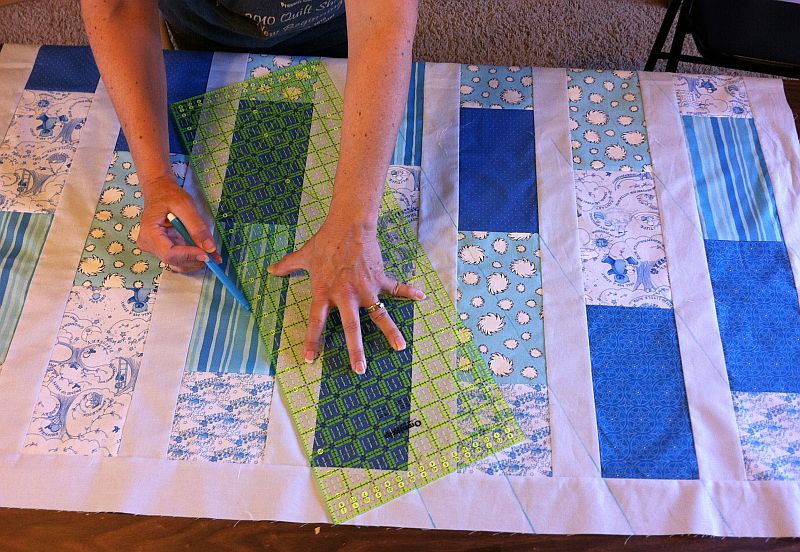
For the boy version of Baby Bricks I am going to quilt straight lines with a walking foot.  I used a water soluble blue marking pen to draw the quilting  lines. (If you are afraid of fabric bleeding or do not want to mark your quilt, you can use low-adhesive painter’s tape instead.)

Straight Lines

Using my longest ruler, I marked straight lines across the surface of the quilt. I started in one corner and drew a line from corner to corner of a rectangle brick. I extended the line so that it goes across the entire quilt including the borders. I spaced them 3 1/2 inches apart.

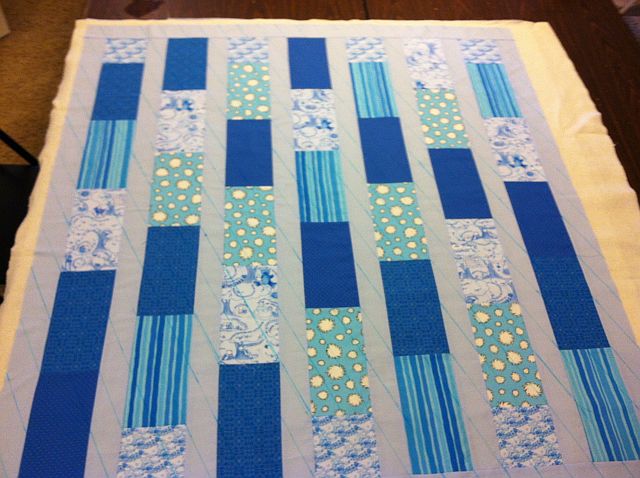
Additional Marked Lines

I added an additional line half-way in between so that the spacing of the lines is now 1 3/4″.  It took a total of 45 minutes to completely mark the top. Now the quilt is ready to baste.

Step 2 – Piecing the Backing

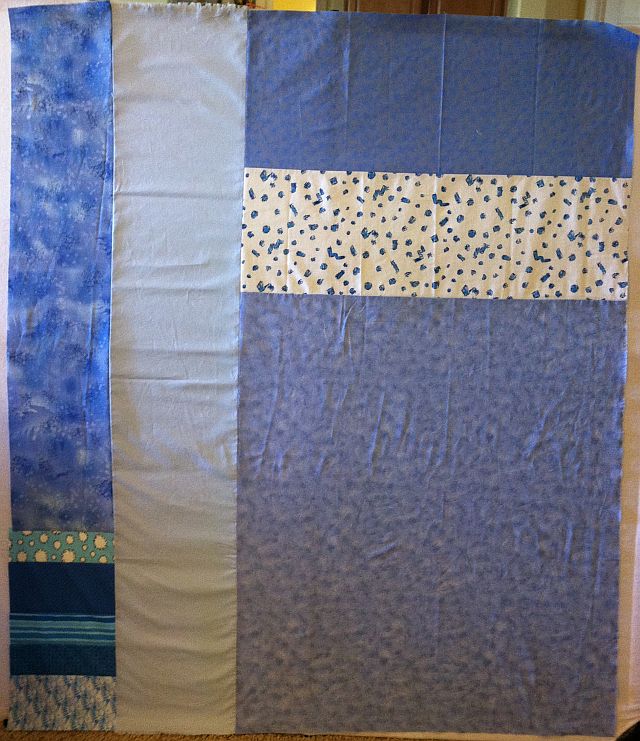
I enjoy pieced backs much more than plain ones. This satisfies my urge to go a little “wonky” with some improvisational piecing on the back. It took about 1/2 hour to sew together.

Pieced Backing

I put the back together sort of like a puzzle, adding chunks of fabric until I had a large enough piece. For this quilt I used up my the rest of my light blue solid, a few leftover bricks, and some pieces from my stash. It took about 2 yards total.

For more detail on sewing a pieced back, refer to my previous tutorial here.

Step 3 – Basting With Pinmoors

My preferred basting tools are Pinmoors and straight pins. It took about 1 hour and 100 Pinmoors to baste this baby sized quilt. You can read my previous basting tutorial here.

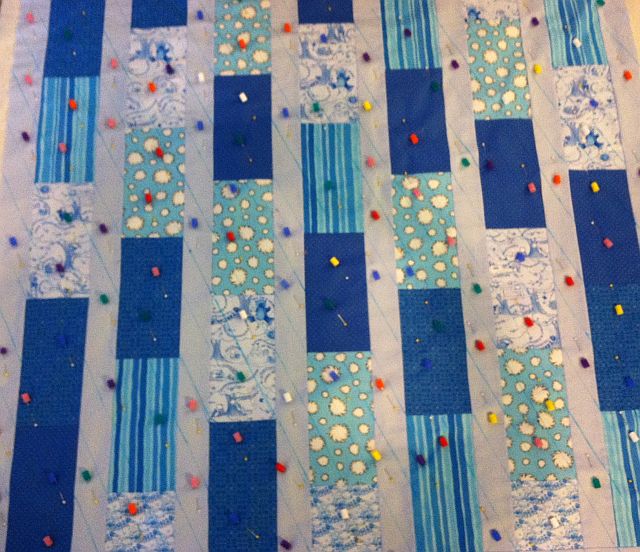
Basted with Pinmoors

I get better results when I use lots of pins and am careful not to pin through any quilting lines. It’s easier to stick the pin in the quilt and cap it with a Pinmoor, than it is to open and close lots of  safety pins. The Pinmoors are easy take out while quilting, but they stay in place until I’m ready to remove them.

I am going to take this quilt with me to my guild’s quilting retreat this weekend. With any luck, I’ll get it finished quickly and can start on the pink one.

Here is the schedule of tutorial posts for my Baby Bricks do-it-yourself quilt along:

Favorite Tools #8 – Pinmoor Pin Anchors

I love Pinmoors! These nifty little pieces of hard rubbery plastic are my favorite way to baste a quilt. I first heard about them a year ago and it’s taken me that long to try them out and see if I like them. The answer is a definite yes.

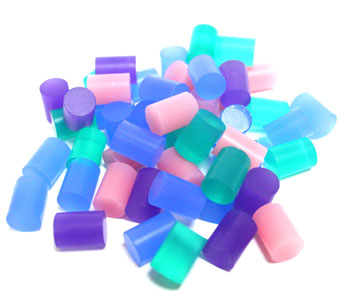
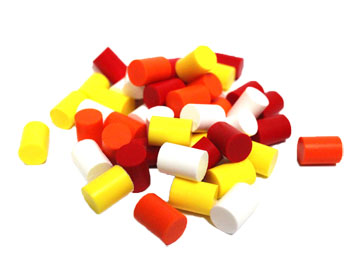
Pinmoor Jewel TonePinmoor Sunburst

Now I use them for basting all of my quilts. Both the pin and the Pinmoor rest on the surface of the quilt and are made of silicone that will last indefinitely. Here’s a picture of my Busy Hands quilt I basted, using Pinmoors:

Pinmoor Basting

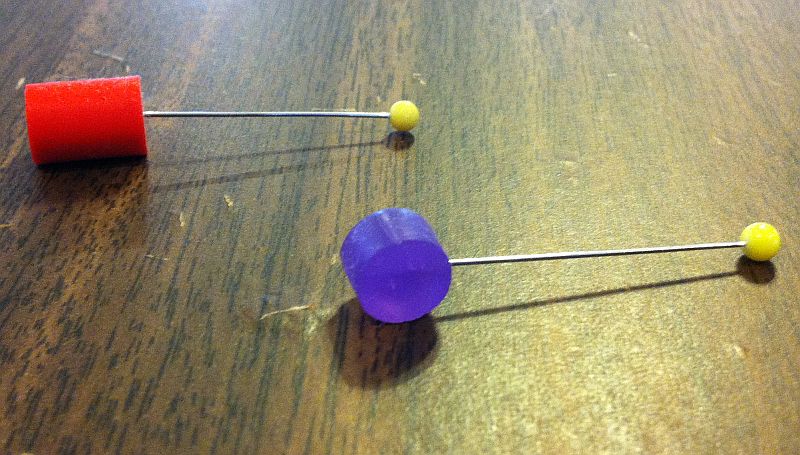
One of my customers suggested this tip to make them more economical:  cut each one in half and insert the pin into the edge. You can see a whole versus half Pinmoor below:

Half PinmoorIt takes me about 50-100 Pinmoors to baste a baby-sized quilt depending on how far apart I space them. I use regular quilting pins to pin through the layers of my quilt and cap each one with a Pinmoor. I can stick the pin anywhere into the Pinmoor and it will hold nicely.

It’s very easy to remove them while machine quilting; I just drop each piece into a bag that I keep at my table while quilting. I can separate the pins from the Pinmoors with a magnet when I’m all done and they are ready to go for next time!

Bag of PinmoorsPinmoors also come in very handy for putting on a binding. I like to pin my binding around the entire edge of my quilt then hand or machine stitch it closed.

Binding with PinmoorsFor more of my favorite tools, please see my previous post here.

Favorite Tools #7 – Acrylic Rulers

I’ve skipped a couple of weeks of blogging about my favorite tools so here are all of my previous posts so far if you want to catch up:

  1. Wooden Seam Roller
  2. Shout Color Catchers
  3. Design Wall
  4. My Toothbrush!
  5. Batting
  6. Needles

Today I wanted to mention acrylic rulers as a whole. I have tons of them and use them for all different purposes.

Acrylic Rulers

In addition to the workhorse 6″ x 12″ ruler which I use for cutting most of the pieces of my quilt, I like big square rulers  and longer rulers to help block the corners of my quilts.

I use smaller square rulers for trimming small blocks and strips. The largest ruler I could find, an 8 1/2″ x 24″ ruler is great for cutting longer border strips and trimming the sides of a quilt before applying the binding.

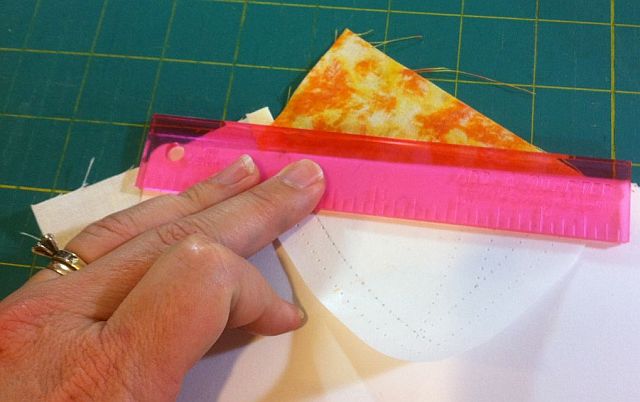
Long RulerI recently starting using a small ruler, called “add a quarter” when paper piecing. I took a class from awesome teacher and author Gail Garber. You can read my blog post about that.

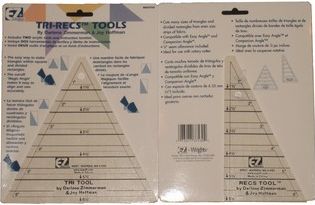
Add a Quarter RulerI don’t carry any of the larger rulers because they are too hard to ship but I guess I can start stocking up on the smaller ones. My favorite specialty ruler set is called Tri-Recs. You can make awesome triangle blocks and half-square and half-rectangle blocks from them.

Tri-Recs Tools

I used Tri-Recs when I designed one of my first quilt patterns, many years ago (and yes, it’s still waiting for me to put it in a professionally published format. For now, you can get a free version on my website).

Do you have a favorite ruler you’d like to share? I’m always on the lookout for nifty new tools!

Christa’s Quilt Along 1.6 – Machine Binding to Finish

Free Pattern

Be sure to sign up for my email newsletter to get a free quilt pattern!

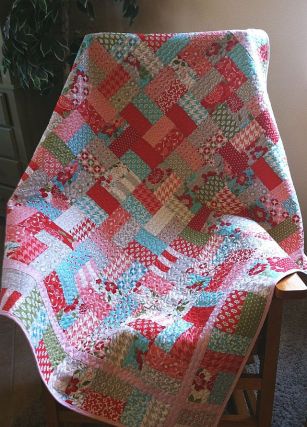
Jolly Jelly Roll Quilt Wrap Up


Here are all of the previous bog posts, if you are just now joining us:

Week 1 – Supply ListJolly Jelly Roll Quilt
Week 2 – Sewing the Blocks

Week 3 – Completing the Top

Week 4 – Backing and Basting

Week 5 – Machine Quilting

Remember, you can click on any picture to enlarge it. Now, onto the binding!

I use the same techniques to attach the binding to all my quilts, whether finishing by hand or machine.

Step 1 – Square Up the Quilt

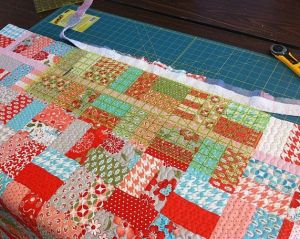
Use a large square ruler to trim up all four corners of your quilt. The square will help you achieve a nice straight 90 degree corner. Trim up all four of the sides with a longer ruler.

Square Up the Corners

Trim the Sides

Step 2 – Measure the Quilt Perimeter and Cut Enough Binding Strips

Measure the perimeter of your quilt so you know how many strips to cut.  Lay it out on your cutting mat or use a measuring tape. I folded my quilt in half to make it easier to measure. Divide your perimeter by 40 inches (the useable length of one strip).
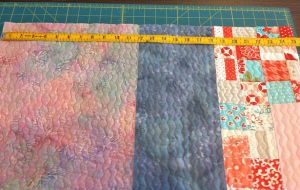
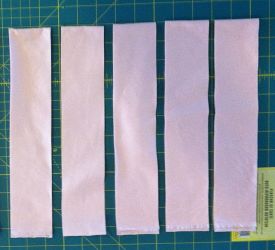
Measure the Quilt PerimeterCut 5 strips 2 1/4 Inches Wide

Round up to the nearest number of strips and cut them 2 1/4″ wide. I cut 5 strips for my quilt.

Step 3 – Make Continuous Binding

This method is called double-fold straight grain binding. Sew all of your strips together to make one continuous piece. Miter the strips by sewing on an angle to distribute the bulk of the seam. If you are using a solid fabric, be sure to sew them all together on the same side!

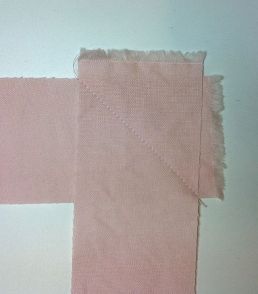
Join Binding StripsSew on an AngleYou can eyeball the seam.

Trim 1/4 inch seams to the right of your sewing line and press open.

With a small square ruler, cut off one end of your binding on a 45 degree angle. Make sure your binding strips have not been folded or pressed yet. Once the end is cut, then press your binding in half along the entire length, with wrong sides touching and right sides out.

Angle the BegninngPress Binding in HalfWatch your seams if using solid fabric!

Step 4 – Attaching the Binding to the Quilt

Begin sewing your binding to the quilt with a walking foot, leaving a tail of about 6-8 inches unsewn. Be sure to start on the side of your quilt, not at a corner and sew the binding to the front of the quilt. The folded side of your strips will be to your left. The open sides will be to your right. Use a quarter inch seam allowance and match your thread to your binding fabric.
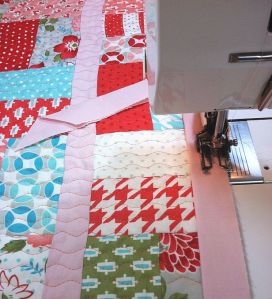
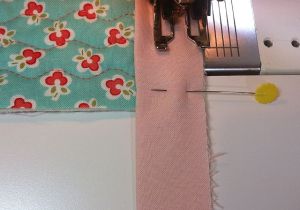
Leave a TailStop 1/4 Inch AwayWhen you reach a corner, stop sewing 1/4 inch away from the end. Mark it with a drawn line or a light pencil mark if needed. Sew off the side.

Rotate the quilt and flip the binding strip up so that it is even with the side of the quilt. Then, flip it back down, forming a “pinch” of fabric at the corner. This will be the fullness that will flip around to the back creating a nice mitered corner on the front.

Sew off the Side at 1/4 InchFlip Binding UpThen Flip DownRepeat this technique for all four corners of the quilt. When you are nearly finished sewing the binding onto the front side, make sure to leave another tail of about 6-8 inches of binding so you can join the beginning and ending binding pieces.
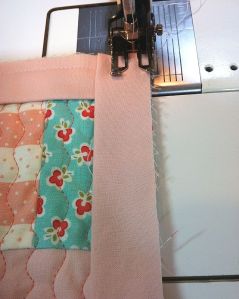
Next Corner

Leave a GapNext, you will trim and join the ends so they fit together exactly.

If you have a lot of excess binding, you can trim some off.

Open up both binding ends and nestle your beginning binding piece (the angled cut end) on top of the ending piece so that it is flat and smooth. Mark an angle on the ending piece where the beginning piece rests on it – should be a 45 degree angle. Cut 1/2 inch away from this marked line. This will take into account the seam allowances for both pieces. Make sure your binding is not twisted and that both angled cuts are parallel to each other.

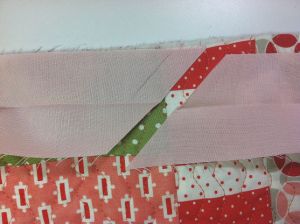
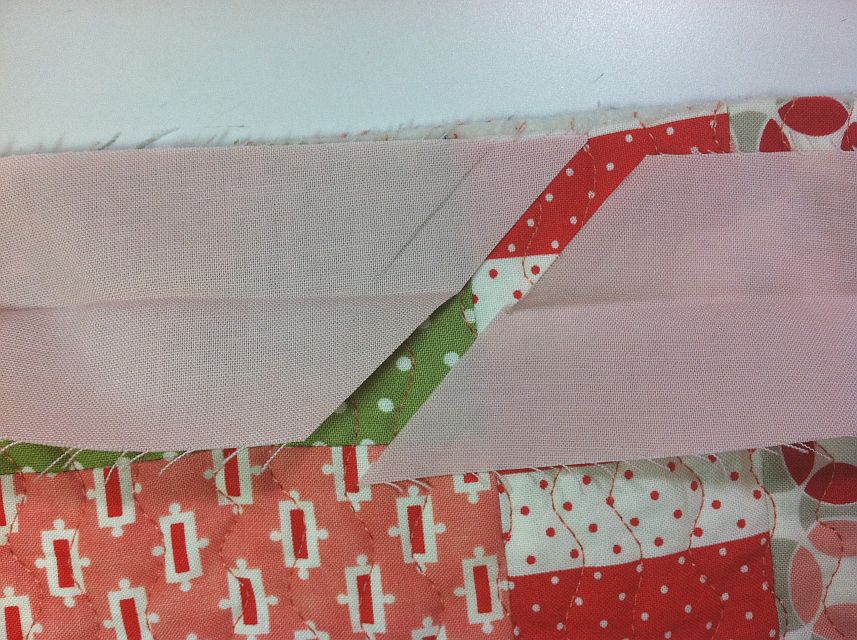
Mark the AngleCut 1/2 Inch Past Marked LineJoin the two ends by offsetting them slightly to create little tiny tips at each end. Where my pin is pointing, sew from the crevice of one triangle tip to the other, with 1/4 inch seam. Trim off the triangle tips, and press the seam open. It should be a perfect fit!

Joining the Beginning and Ending StripsFinishing the Front BindingFinger press the rest of the binding closed and complete your stitching on the front side.

Step 5 – Finishing the Binding with Decorative Machine Stitching

Pinmoors for BindingThe key to a really nice binding, whether finished by hand or machine, is to make sure it lies flat all the way around the quilt and that the corners are secure.

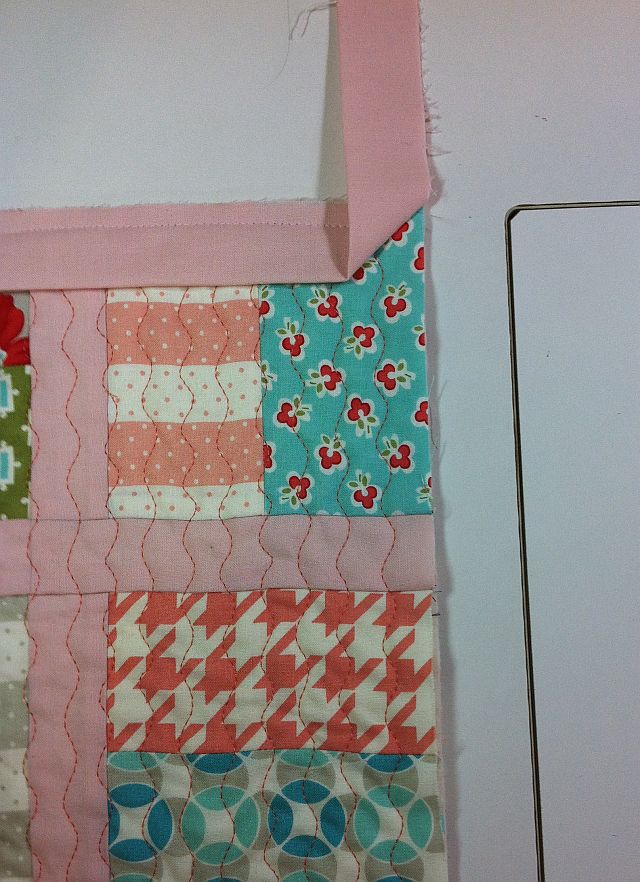
Once the binding is sewn to the front, simply fold it over to the back to stitch.  I like to use pins with Pinmoor anchors for safety to keep everything in place. Fold over the corners to create a nice miter and pin.
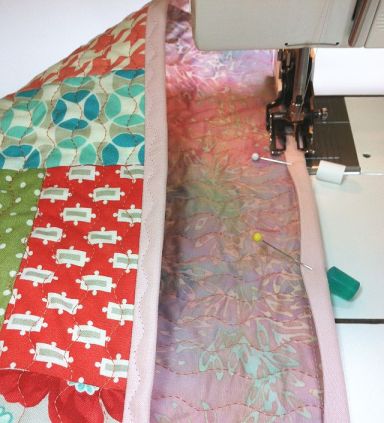
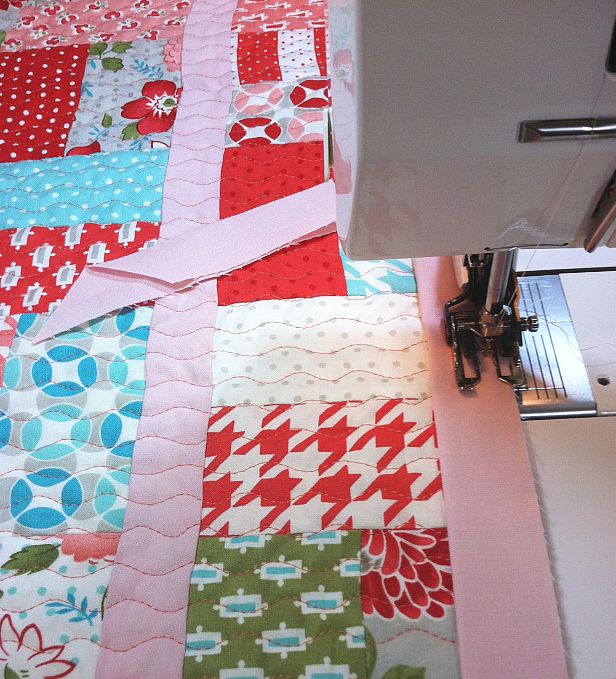
Binding by MachineI used the same decorative serpentine stitch for the binding that I used for the quilting.

You will notice I am actually stitching by machine from the back side of the quilt. This seems to give me the best results and I can control how wide the stitching is so it shows up nicely on the front.

You can see where I’ve already stitched some of the binding.

On the back, be sure to cover the line of straight stitching that was used to sew on the binding  from the front side.

The binding is just as beautiful on the backside as it is on the front. Another finished quilt!

Another Finished Quilt!

Sharing is Caring

I’d love to see your version! Please share your work in progress in my facebook group: Quilt With Christa . 🙂

Favorite Tools #6 – Needles

Since we will be quilting our Jolly Jelly Roll quilts this week, I thought it was an appropriate time to talk about sewing machine needles. Needles are often the least expensive but one of the most important components of making a successful quilt!
If your needle is old, bent, or flawed, it will make quilting much more difficult. Often times when you think thread or tension is the problem, it may actually be your needle!

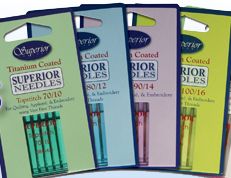
Superior Needles

My favorite needles to use for both piecing and quilting are Superior’s Titanium Coated needles. They come in a variety of sizes and work wonderfully. There are a lot of different types of needles out there – really more than you need.

The titanium needles are perfect for  sewing, piecing, machine applique, and machine quilting. They work well with metallic threads, too. So forget about having different needles for different purposes, ie: universal, ball point, sharp, or metallica needles. Just stick with the titanium topstitch needles for everything and all you have to think about is which size to use. They last much longer than most of the other brands, too.

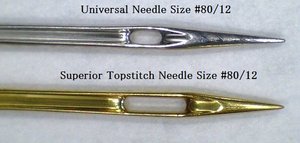
So how do you know which sized needle to use? It depends on your thread. The titanium needles come in 4 sizes – 70/10; 80/12; 90/14; 100/16. They have a much larger eye which allows the thread to pass through with less tension and therefore fewer thread breaks.Needle Closeup

Size 70 needles are  for very fine threads such as 60 weight cotton or polyester, monofilament, #100 and silk threads. I use these with silk thread for machine applique that blends into my quilts.

Size 80 needles are for for fine threads such as 50 weight cotton or polyester. I use these for piecing quilts together and sometimes for allover stippling with cotton thread that blends into the top.

Size 90 needles are for medium threads such as 40 weight cotton or polyester. This is the also the needle I use for decorative threads and metallics. The thread does not shred!!

Size 100 needles are for heavier weight cotton or polyester threads. I’ve only used these needles once so far when I quilted with a 30 weight variegated thread. It worked like a charm with no thread breaks or skipped stitches!

I use the 80’s & 90’s most often in my everyday piecing and quilting. Since these needles last for a long time I can usually piece and quilt a medium throw sized quilt with just one needle.

I’m still not convinced that Superior Threads offers my favorite thread, however. You can read my opinion about the company here on my soapbox, but I do love their needles!

Christa’s Quilt Along 1.4 – Backing and Basting Your Jelly Roll Quilt

Welcome to part 4 of my do-it-yourself quilt along! So far we’ve gathered our supplies, sewn the blocks, and completed our quilt tops. This week we will piece our backings and baste our quilts so that our Jolly Jelly Roll Quilts are ready for machine quilting next week!

Step 1 – Piecing the Backing

Backing DiagramIf you use one fabric entirely for your backing, sew together two lengths of fabric so that your piece is at least 5 inches longer and wider than your quilt.

For a 52″ x 52″ quilt top you would need 3 1/2 yards of fabric for the backing. Cut that into 2 equal pieces, each measuring 63″ long by 42″ wide. Sew those together on the selvedge edges with a half inch seam and you’ll get one piece that is about 63″ x 80″ – plenty of room!

I wrote up a post a few weeks ago on how to make a pieced quilt backing. With more than one fabric. You can read about that by clicking here.

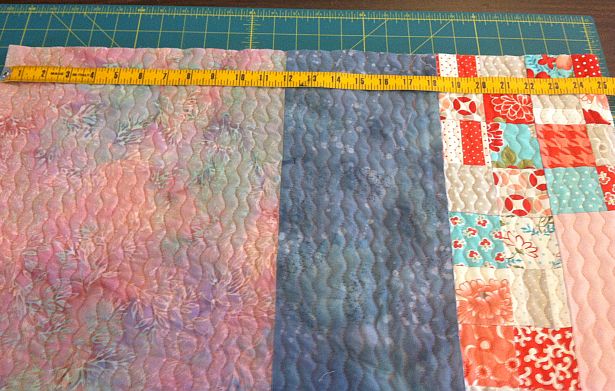
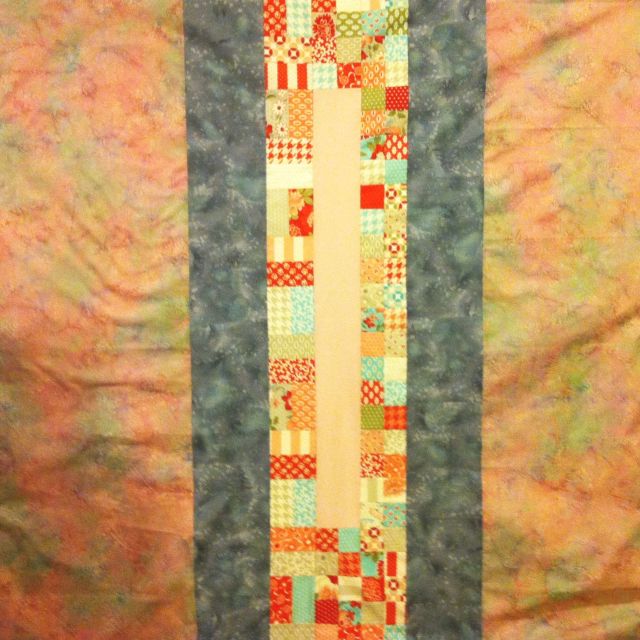
Pieced Quilt BackFor my backing, I chose to use up all of my leftover jelly roll blocks plus some other chunks of fabric, about 3 yards total, to make it a little more artistic.

I sewed two rows of leftover blocks, then filled in with strips of pink and grey fabric from my stash.

The pink on the sides is much wider so a bunch of it will be trimmed off later.

(Don’t mind the wrinkles – I finished it just last night!)

Step 2 – Layering the Quilt

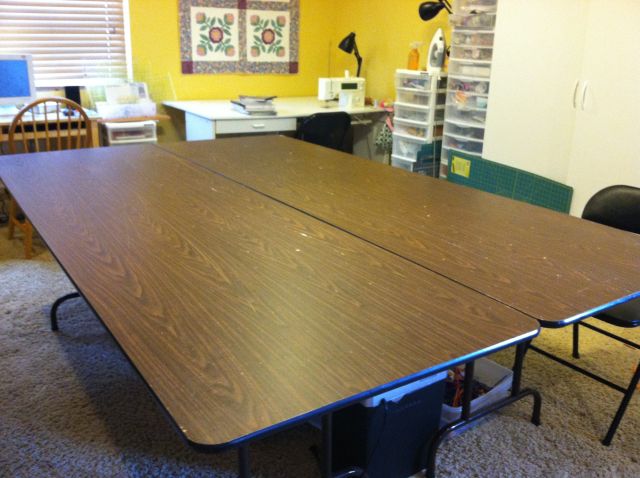
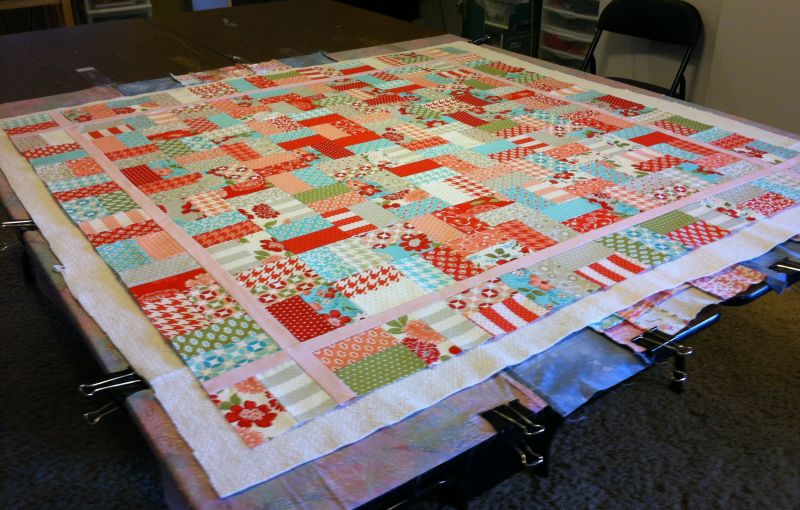
Basting TablesThe most important thing you need for successful basting is plenty of room! I have two 8-foot tables set up in my sewing room at all times. I use them for cutting and basting.

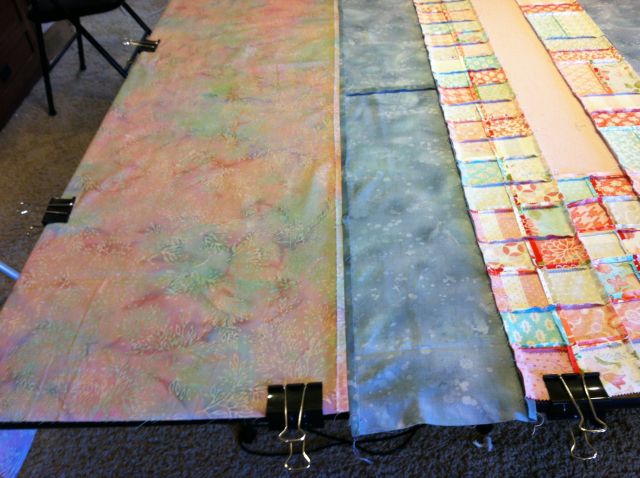
First, you need to secure your backing; this is why you want it to be larger than your quilt top.

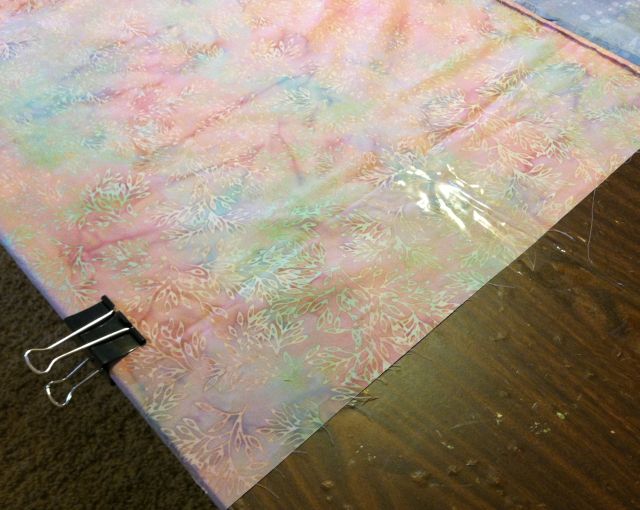
I do this by using office clips to secure the backing to the table. I use tape when the quilt backing does not reach the edge.

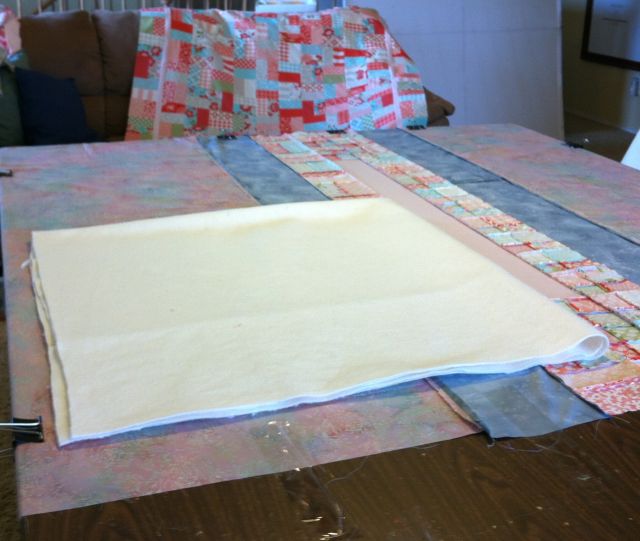
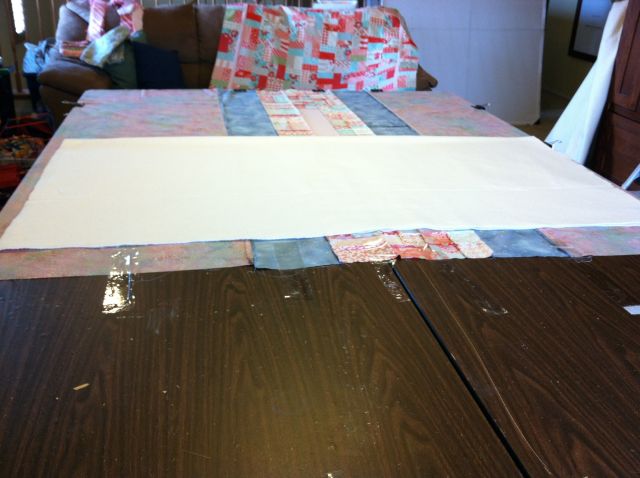
Clamp Down the BackingTape the EdgesNext, it’s time to spread out the batting. I used Warm-N-Natural cotton batting which does have a right and wrong side. The side with the flakes is the front side and the whiter side is the back side. Layer it right side up.

You can start with your batting folded up in one corner, then unfold the batting one step at a time if you are basting by yourself. Be sure to smooth it down so there are no wrinkles.

Batting 1Batting 2Batting 3You can click each of the pictures for a larger more detailed view.

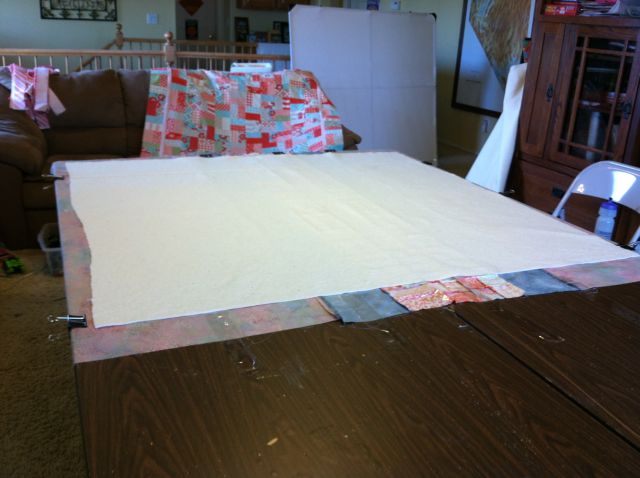
Finally, it’s time to add the top! I don’t clamp down the top, but I do smooth it out and line it up as much as I can so that it is as straight and square as possible.

Layered QuiltStep 3 – Basting the Quilt

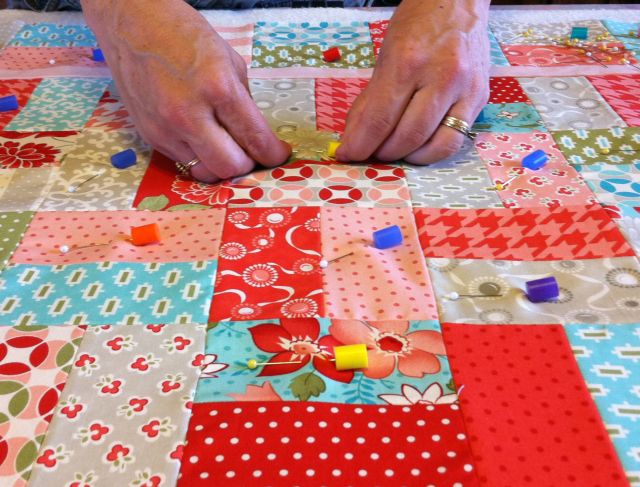
Now it’s just a matter of pinning the layers together so they won’t shift during quilting. My favorite basting tools are Pinmoor pin anchors. They are little  rubber tips that fit on the end of straight pins. You can use any types of pins with them and the pins can jab anywhere into the hard rubber piece. They last forever and are so much easier to use than safety pins.

Pinmoor BastingIt took me about 150 Pinmoors to baste this quilt in under 20 minutes. If you are not ready to buy enough for a whole quilt, start with one package and baste part of your quilt. Baste the rest of your quilt with safety pins. Then, when quilting, take note of how much easier the pins and Pinmoors are to remove and you will be converted!

Here’s a great video you can watch on how to use them, made by the makers of Pinmoors.

Next week  we will machine quilt this baby! That’s the best part of my do-it-yourself quilting tutorial; you are actually going to do it all yourself – no quilting by check here!!

Remember to send me pictures of your completed quilt tops. You can email me directly at Christa@ChristaQuilts.com. It’s “sew” fun to share!


Here is the complete Jolly Jelly Roll Quilt-Along Schedule:

Week 1 – Supply ListJolly Jelly Roll Quilt

Week 2 – Sewing the Blocks

Week 3 – Completing the Top

Week 4 – Backing and Basting

Week 5 – Machine Quilting

Week 6 – Machine Binding to Finish

Favorite Tools #5 – Batting

Later this week during my do it yourself quilt-along, we are going to be basting our Jolly Jelly Roll quilts so I thought it would be an appropriate time to talk a little bit about batting.

From my experience, the type of batting you choose can really make a difference in creating a well-done quilt. Since all of my quilts are machine quilted, I need to use battings that are easy to quilt through and are not so bulky that they won’t fit under my machine.

So far, my two favorite battings are Warm-N-Natural 100% cotton, and Pellon Legacy Wool. (Unfortunately I don’t carry these in my shop because they are too bulky to ship!)

I like Warm-N-Natural because it’s very flat and relatively inexpensive. I can actually buy it buy the bolt with a discount coupon from Joanne’s for about the same price that I can get it wholesale. It does shrink up a bit, but it gives that nice antique wrinkly look when washed. Here are some machine quilting closeups using Warm-N-Natural.

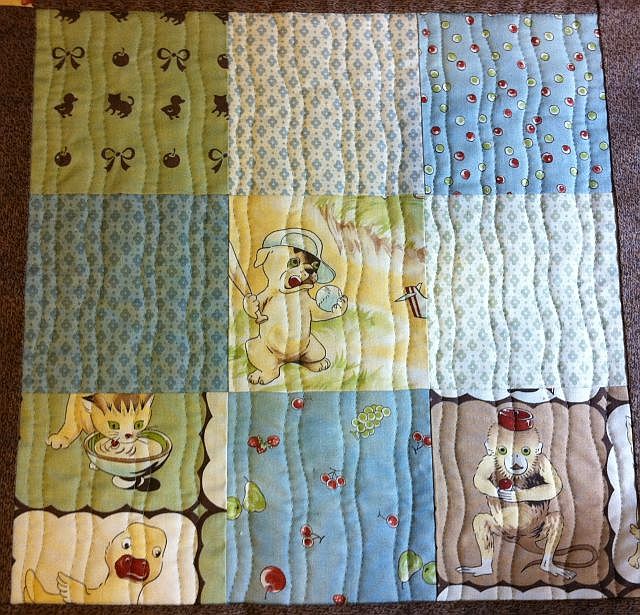
Little Rascals QuiltingQuilting Warm-N-Natural

These were both densely quilted with an allover free-motion quilting design.

If I want my quilting to really pop, or if I am doing intricate quilting like feathers, wreaths or focus designs, I will use Legacy Wool batting. It’s a little more expensive but it’s very clean and white so it’s a perfect choice for quilts with lots of white backgrounds like in my Bungle Jungle quilt below. It also allows me to achieve a “faux” trapunto look if I densely quilt the background areas. The pictures below show quilts using Legacy Wool.

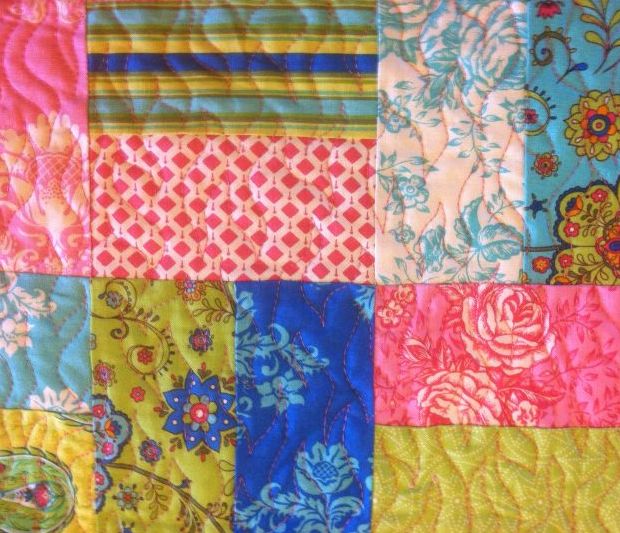
Quilting Legacy Wool

Faux Trapunto QuiltingThe little hands really pop! Wool has a nice loft but the background squishes down nicely when you quilt the heck out of it!

As far as polyester battings go, I’m not too fond of them as they are usually too lofty for me. I haven’t tried any of the newer blends out there like bamboo or silk yet. One batting that is next on my list to try is Quilter’s Dream Cotton.

If any of you out there have favorite battings that you like, please add your comments!

Favorite Tools #4 – My Toothbrush

One of my favorite tools used for quilting is my toothbrush! No, it’s not a used one, but rather a nice new clean one that I use exclusively for quilting! I actually have 2. One of them I keep by my sewing machine to brush out excess dirt and lint. ( Q-tips work well too!)

Toothbrush EraserBut my favorite use of a nice clean toothbrush is for getting out marked quilting lines.

A toothbrush works really nicely to wipe away chalk marks when using a chalk pencil. I made a Double Wedding Ring quilt for my sister-in-law earlier this year and marked all of the center motifs with a chalk pencil. I just took a little water and scrubbed with my toothbrush to get out the marks.

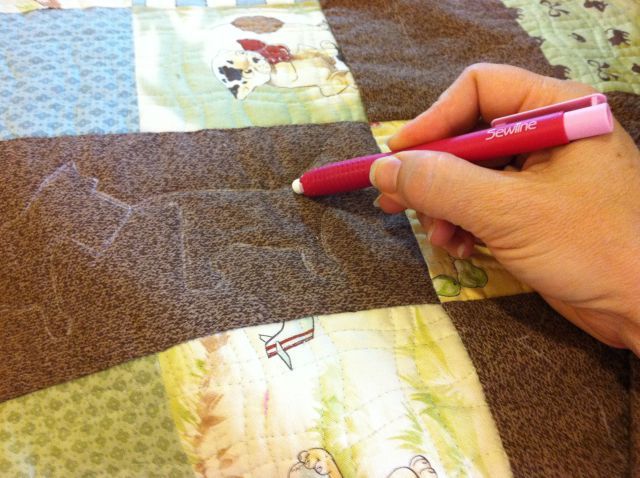
Sewline EraserThis spring I starting using Sewline marking tools. I stenciled some Scottie dog motifs with white ceramic leads on my Little Rascals charm pack quilt.

I erased the lines with an eraser pen and easily brushed away the erasures with my handy-dandy toothbrush.

Most recently, when quilting the cute little hands and background fillers of my Bungle Jungle charm pack modern quilt (it needs a shorter name!!), I used a toothbrush dipped in water to clean off all of the blue ink from a blue marking pen. With my toothbrush I was able to control where the water goes.

Toothbrush Eraser and WaterI love using my toothbrush as a tool for quilting.

I wonder what else can I find around the house that I can put to good quilting use???