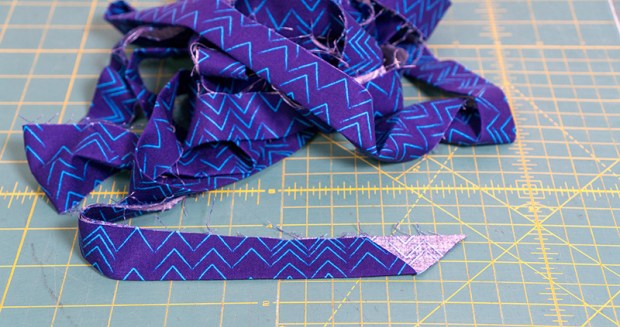
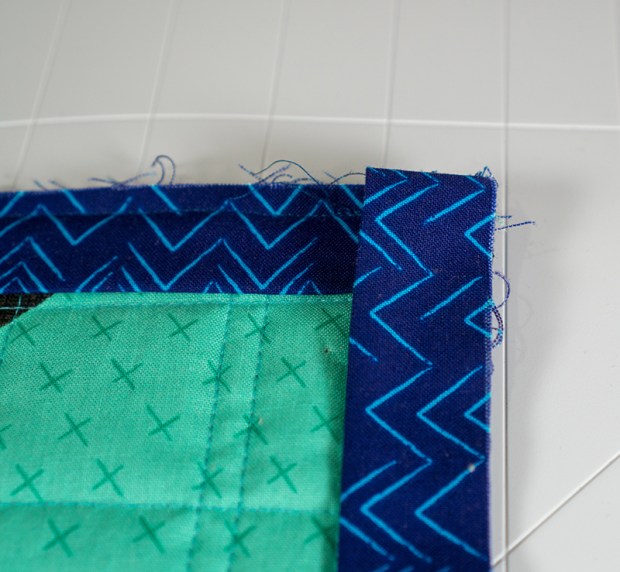
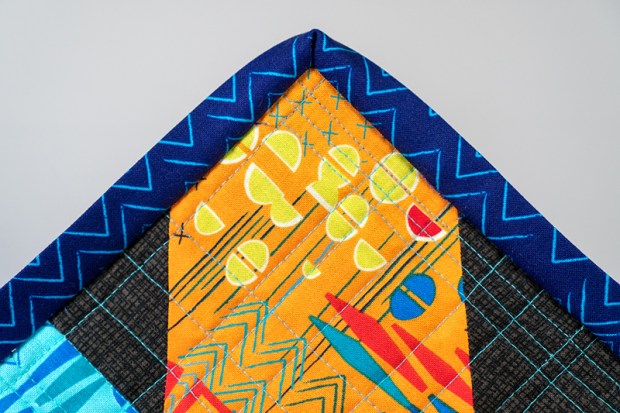
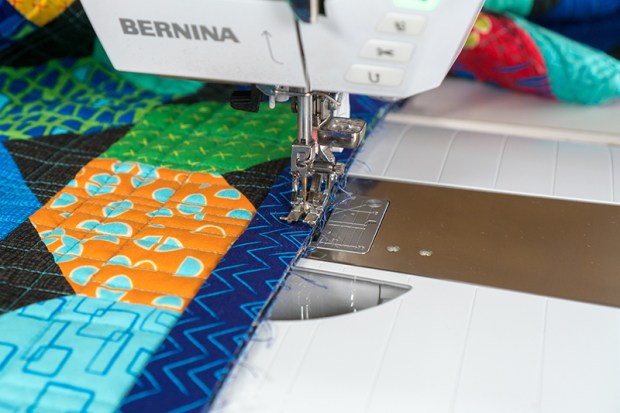
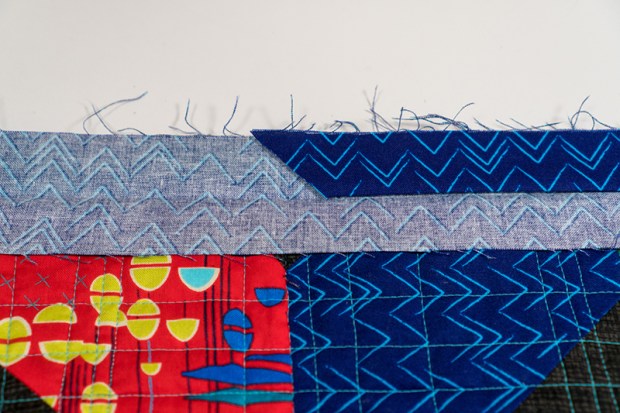
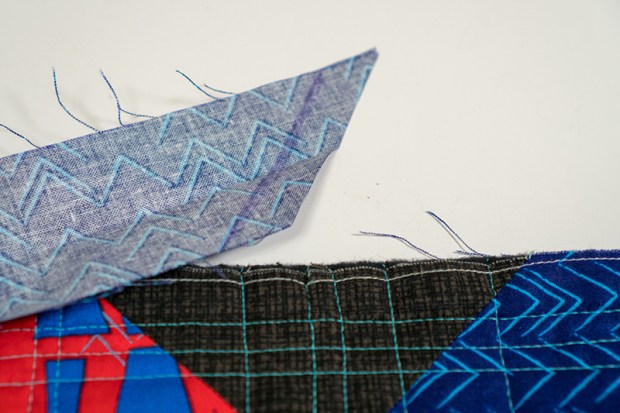
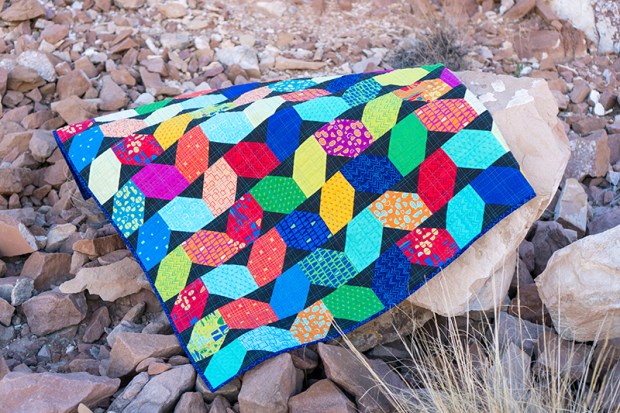
Beaded Lanterns Quilt Along Part 1: over on the BERNINA Blog

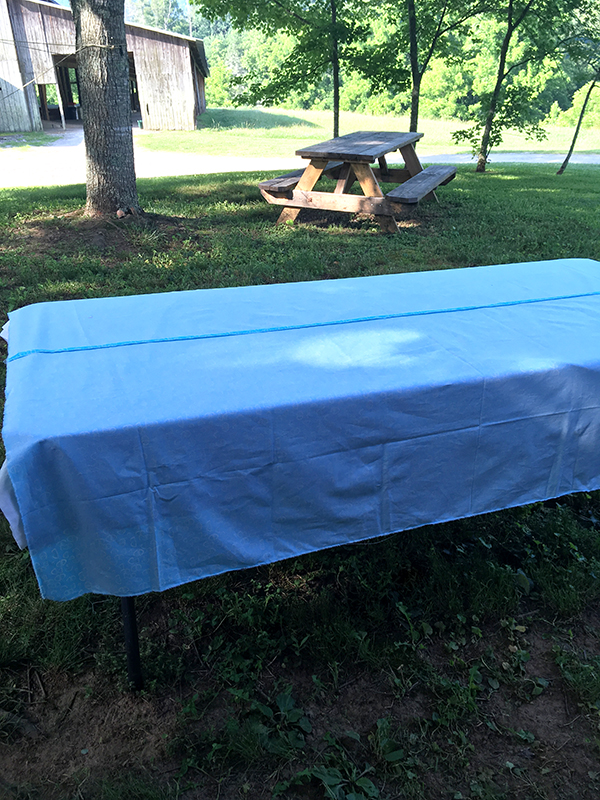
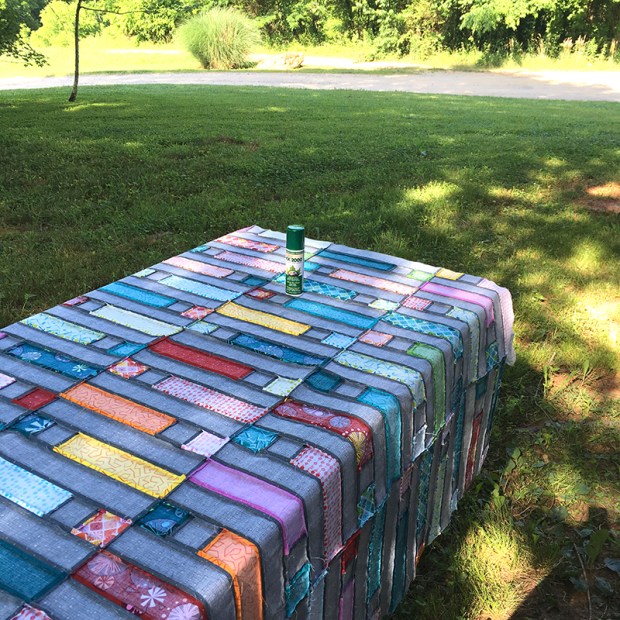
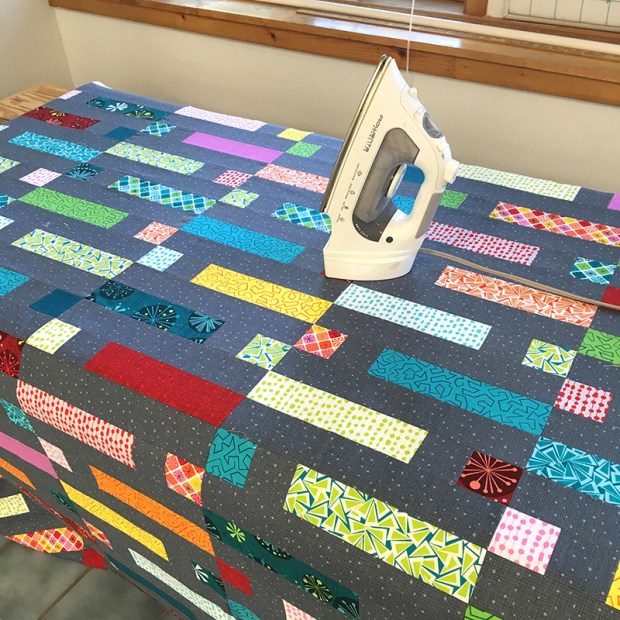
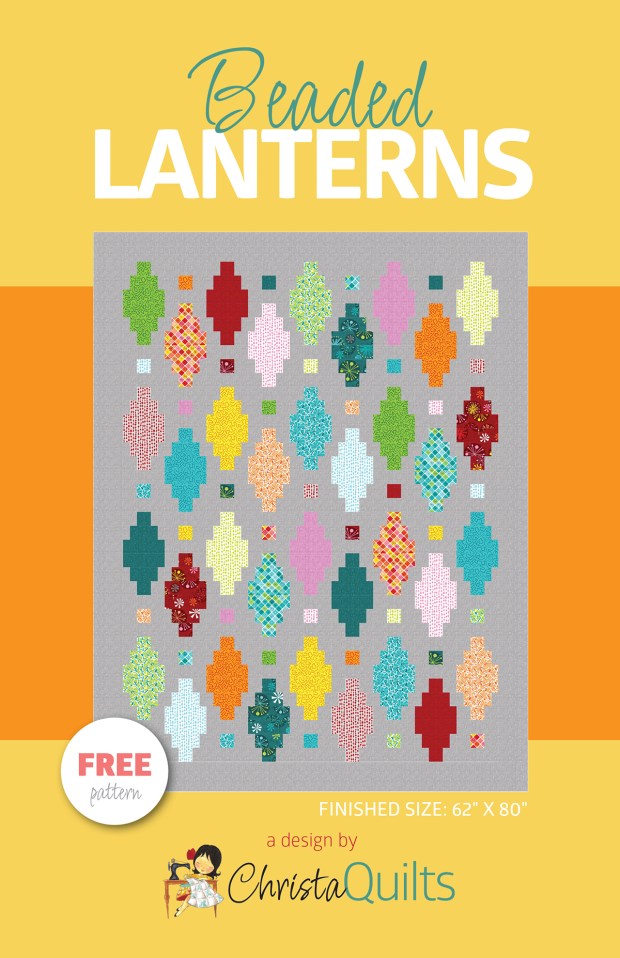
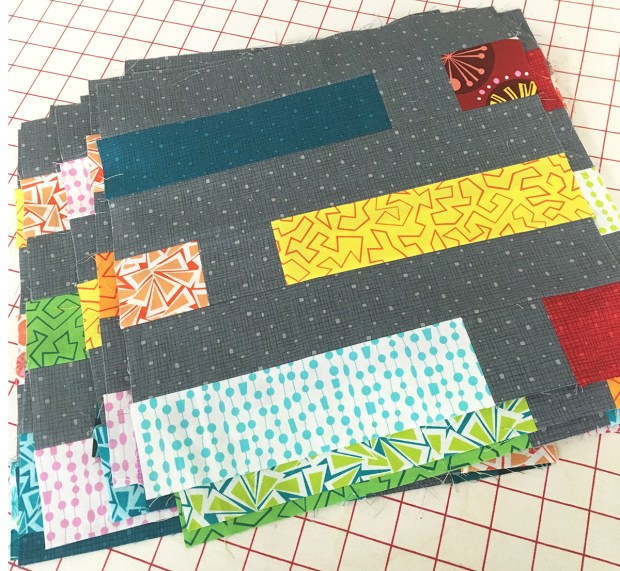
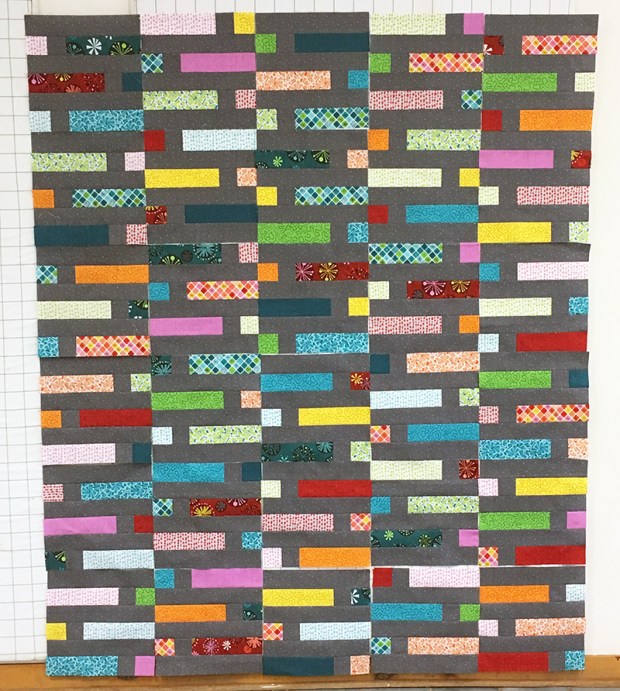
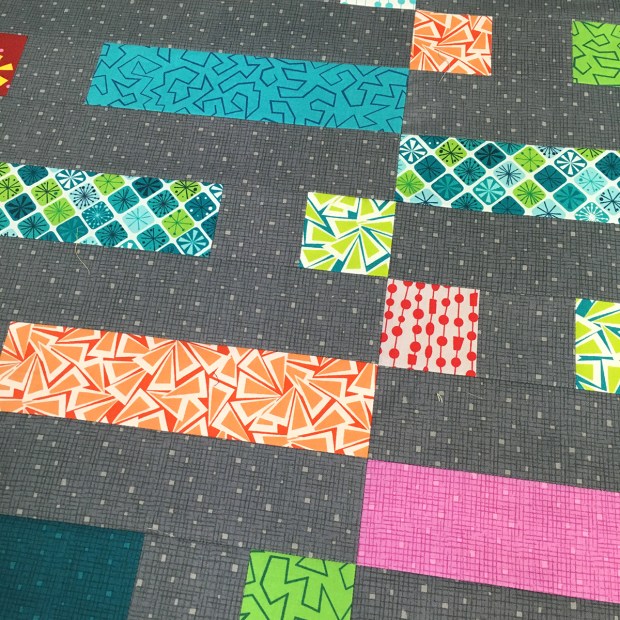
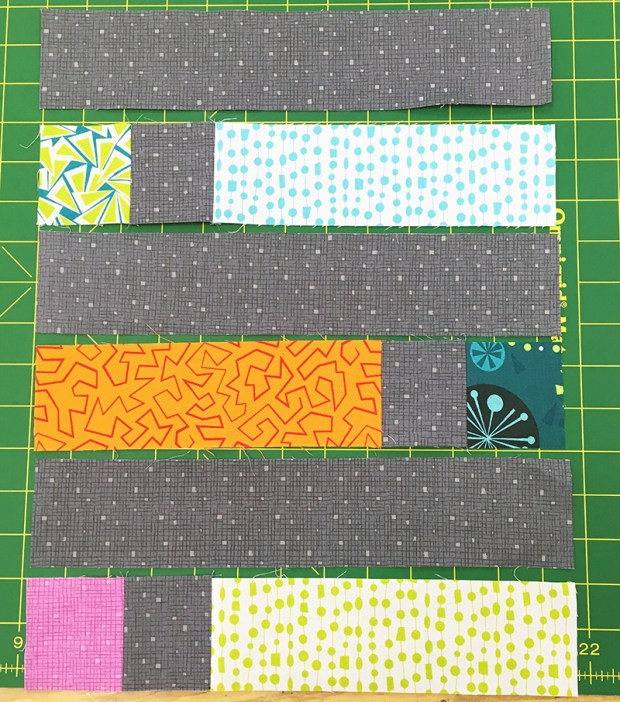
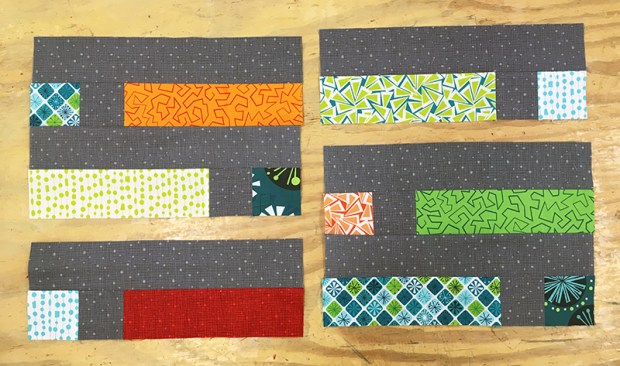
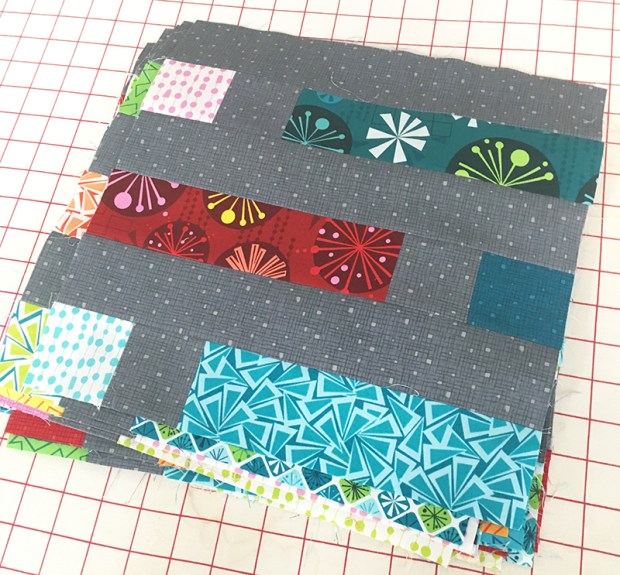
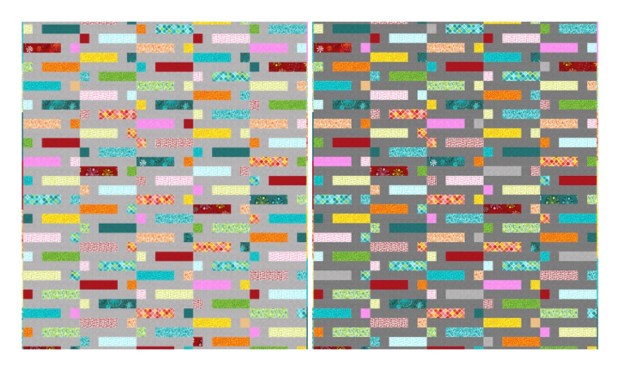
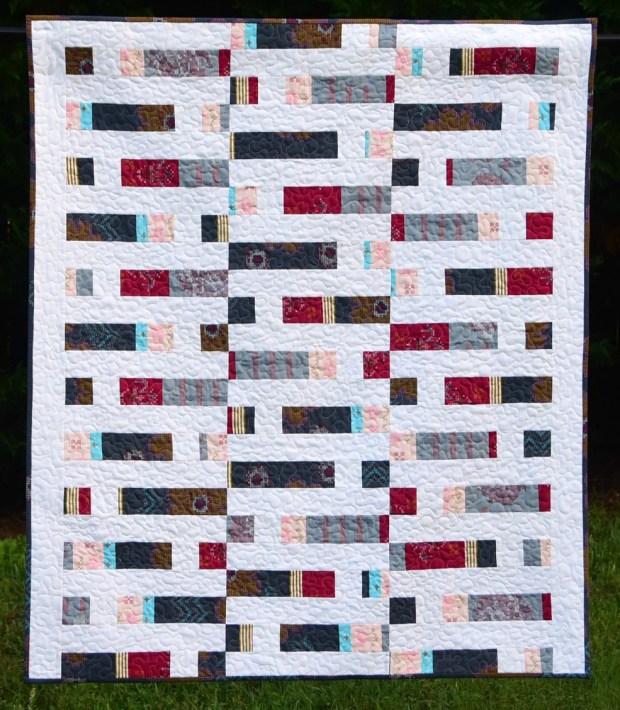
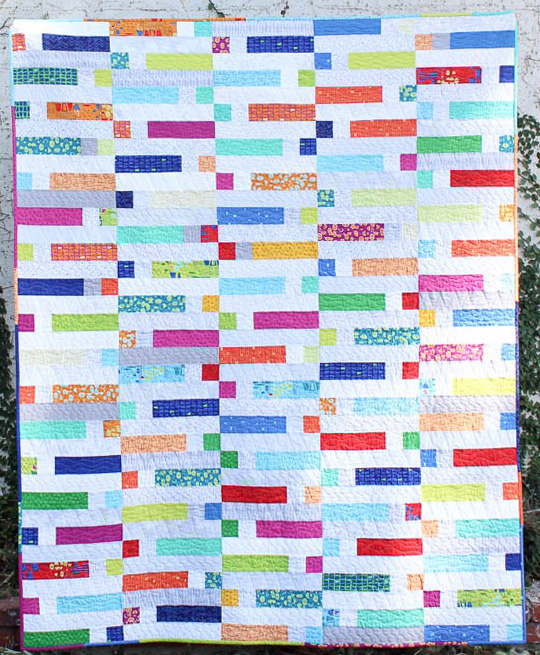
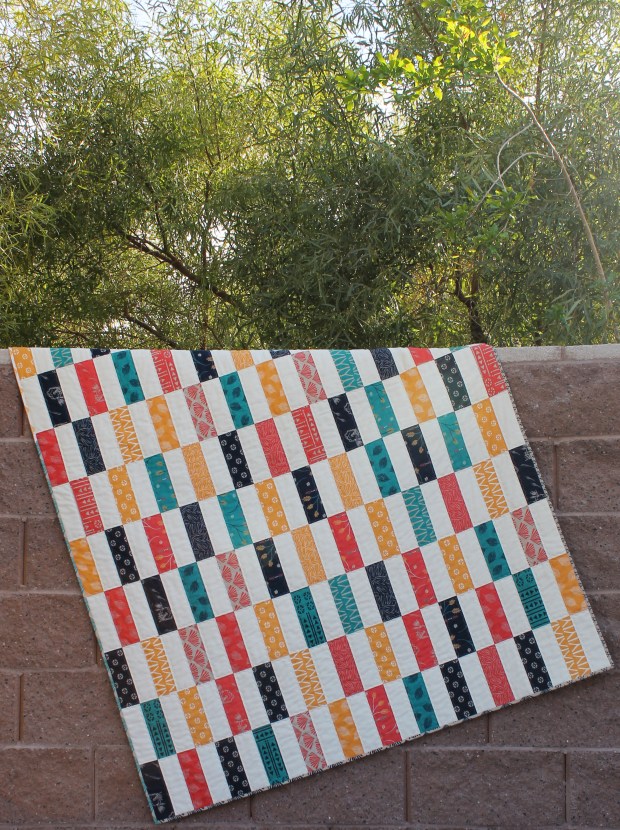
This week kicks off another fun quilt along that I created to help promote my Fandangle fabric collection. Over the next 7 week’s I’ll be sharing step by step tutorials over on BERNINA’s Blog – We All Sew. We will make my Beaded Lanterns quilt – a free pattern I designed that is precut friendly.

Beaded Lanterns Quilt

Of course, all of the patterns I design would look fabulous in any fabrics you choose, but I really love the excuse to design and make quilts with my own fabric lines.

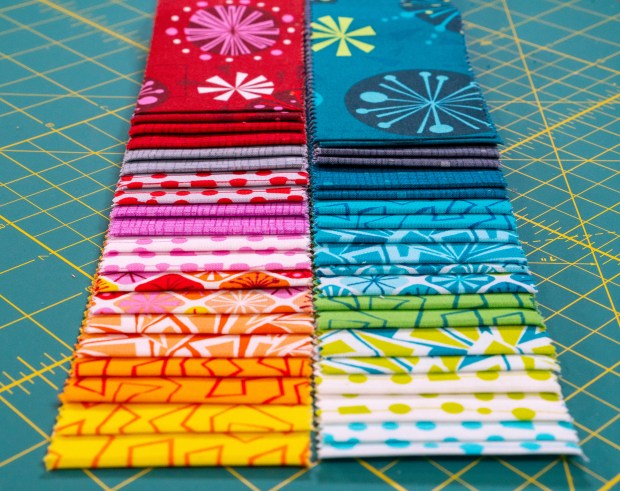
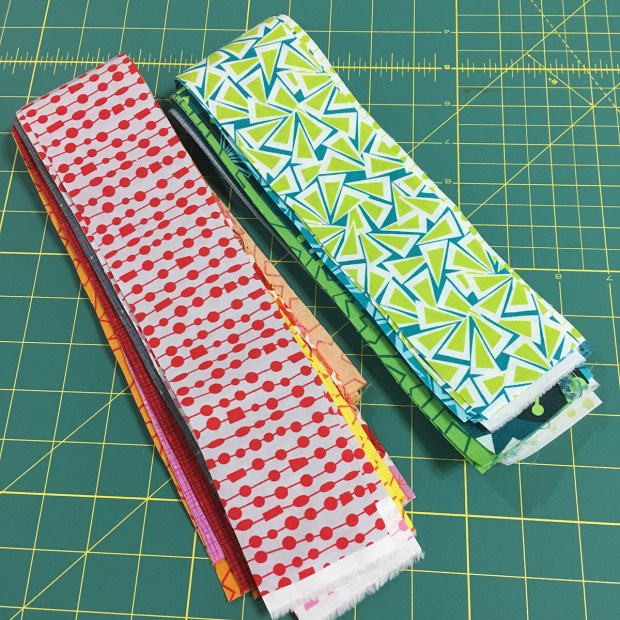
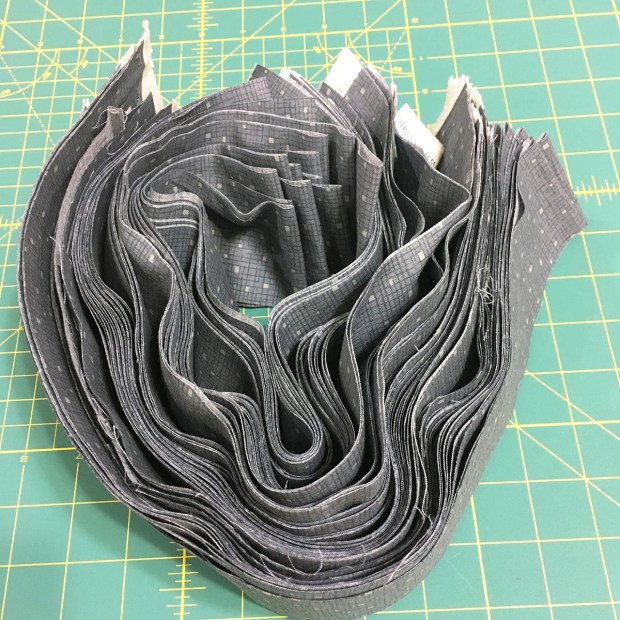
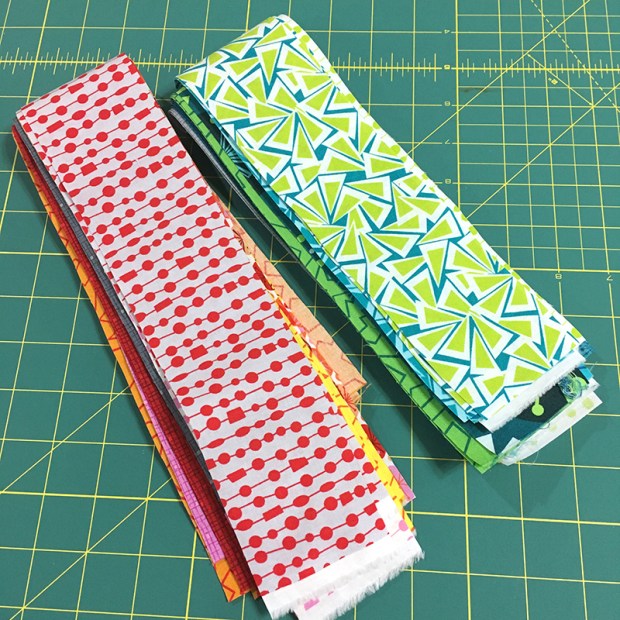
All you need is one jelly roll or Fandangle “strip-pie” plus 4 yards of background fabric. The two grays I’ve been using from the line – Confetti Crosshatch – have been so popular that they’ve already sold out of the first printing. But fortunately Benartex reprints fabrics that sell well, so more of those will be coming in October thank goodness!

Fandangle Strippie

Click here to get the Fandangle Strip-pie while supplies last.

In the meantime, you can check out my where to buy page for a list of shops that carry Fandangle. I have a note on there indicating which shops carry the full line as well as which shops sell online so you can track it down for yourself.

Click here to visit BERNINA’s blog – We All Sew.
The Quilt Along will be shared there each Wednesday. Happy quilting!

Dot ‘n’ Dash Quilt Along Week 4 – Sewing the Quilt Top

Did you finish your quilt blocks from last week? How is it going? Be sure to share your progress over in my ChristaQuilts Facebook group and/or on instagram using the hashtag #dotndashqal.

Finished Dot n Dash Quilt Blocks

Today we will be laying out our blocks and sewing them together to make the quilt top. The most important thing to remember is that each row in the quilt goes in opposite directions, so separate your blocks into two piles, A and B.

See pages 53-54 of Piece and Quilt with Precuts for specific directions.

It’s super helpful to lay out all 30 blocks on a design wall or other larger surface area. If you have a design floor or a design bed, that will work, too! Take as much time as you need to orient your blocks in the correct position with a nice color distribution of prints.

Dot 'n Dash Quilt Along

All blocks are laid out in order on the design wall, and ready to sew.
Take a picture with your camera phone to refer to as you piece the rows.

Pinning and Pressing

The key to a really nice flat quilt top is pinning and pressing. I prefer to press all seams open for the entire quilt and sew with a shorter stitch length (2.0 instead of the default 2.5.) However, if you choose to press to the side, that’s ok, too. Just be sure to press each and every seam as you go with a hot, dry iron.

Dot n Dash piecing detail

My corners match up nicely because I pressed each seam, and pinned each intersection.

Here’s a tip for managing the bulk of the quilt top while sewing and pressing: Sew the block rows together into pairs of two. Then press each pair of rows before joining larger sections together. The quilt to will shrink up a bit once it’s all joined, but you can always add more blocks or a border to make it larger if you like.

Dot 'n Dash finished quilt top made from Fandangle Fabric

My finished quilt top – ready to baste in next week’s lesson!

Take a Victory Lap!

Whenever I’m making a quilt top with blocks that go all the way to the edge (no borders), there is a chance that the edge seams could split open. To prevent this, I take a “victory lap” around the edges – sew with a larger stitch length approximately 1/8″ in from the edge of the quilt around the entire perimeter. It feels like a great way to celebrate the finished top!

Here’s what the edge stitching looks like from another quilt I recently made:

Victory lap around the quilt to secure the edges

By sewing with a larger stitch near the edge of the quilt, the stitching line will get covered by the binding. This secures the edge seams from splitting open during all of the rough handling that will occur with basting and quilting.

Jump in any time!

If you are just joining the quilt along, remember you can work at your own pace. Please don’t ever feel like you are “behind” as that’s never the case. And if you want to work ahead, that’s great, too! I’m just glad you are following along, either on your own version of the quilt, or virtually in your head!

Dot n Dash Quilt Along

Click here for the Dot ‘n Dash Quilt Along Schedule and Supply List
Click here to purchase the Fandangle Strip-pie or other precuts.
Click here to purchase a signed copy of Piece and Quilt with Precuts.

Dot ‘n’ Dash Quilt Along Week 3 – Sewing the Blocks

It’s been fabulous getting to know everyone who’s participating in the Dot ‘n’ Dash Quilt Along. I love seeing all the fabric choices you are all sharing. And getting to know everyone over in my Christa Quilts Facebook group is so much fun. If you are just joining us, grab a jelly roll of fabric & some background and you’re all set!

Dot n Dash Quilt AlongClick here to purchase yardage & bundles of Fandangle fabric.
Click here to purchase just the Fandangle Strip-pie (jellyroll).
Click here to grab a signed copy of Piece and Quilt with Precuts.

Pressing and Piecing Tips

Before we get into sewing the blocks, I’d like to share a couple of general sewing tips.
I prefer to sew with a shorter stitch length (2.0 instead of the default 2.5). This helps ensure that the seams won’t split open at the ends during sewing.

I also press ALL of my seams open. I use a hot dry iron for pressing with NO steam. (Steam can distort the blocks, and adding water to your iron is one of the easiest ways to break it!!)

Seams pressed open.

I press all of my seams open for 2 reasons: (1) it makes the blocks super flat which makes machine quilting on a home sewing machine sooooo much easier to do. And (2) I don’t have to think about which way the seams need to go from block to block so it makes joining the blocks together much, much easier.

I gently press each seam open with my fingers as then follow it up with the iron. After each seam is pressed, I press the whole block on both sides to make a flat, crisp block!

Closeup of Seams Pressed Open

I use a lot of pins when joining my blocks and I make to sure to sew a little bit slower than normal so that I don’t veer off the end of each piece while sewing.

And don’t worry if you make a hot mess while you are sewing. The image below is what my actual process looks like when chain piecing. Fortunately, once the threads are clipped between units and everything is pressed as I go, I can quickly calm this unruly chaos:

Dot n Dash sewing in progress

The instructions and tips I offer during the quilt along are just suggestions and ideas that work for me. Remember – you are the boss of your quilt, so feel free to use your own favorite methods if you are happy with them and getting good results!

Sewing the Dot ‘n’ Dash Blocks

Follow the instructions in the book on pages 52-53 to make the blocks. Take care to make both versions of the block as shown in the diagrams. They are similar and easy to confuse but the layout for both is slightly different.

Dot n Dash Block Layout

To speed things up, I’ll lay out all of the block parts in order on a mat next to my sewing machine. Because we are going for a random scrappy look, don’t overthink the fabric placement. Just try not to have the same fabric repeat in each block and you will be fine.

Stack up a whole bunch of units at once so that you can assembly line sew.

Dot n Dash blocks in progress

As you are piecing, keep the background rectangles (gray in my image above) on top as you sew. This will ensure that you are sewing the long skinny strips in opposite directions each time. This is so the blocks won’t warp or skew as you make them.

Also, use pins if needed to ensure that your pieced units and gray strips match up on both ends. If for some reason they are not the same size, you can trim them down, but be sure that all units are the same length so your blocks will go together correctly.

Dot n Dash Blocks in progress

Notice how the units in the A & B blocks go in different directions. Be sure to pay close attention to the block assembly diagrams in the book and make the correct number of each.

For those of you making Dot ‘n Dash with the light gray Fandangle fabric kit, here’s what your finished A block may look like:

Dot n Dash Block light gray

Once you’ve finished piecing all 30 blocks (15 A + 15 B), give them a final press if desired and admire your pretty handiwork!

Homework

Finish sewing all of the blocks. Then share pictures of your progress in my facebook group and/or on instagram #dotndashqal. I love to see how you are doing!!

If you are blogging about your progress, be sure to add a link to your blog post in the comments below so we can all head over there and cheer you on!!

Finished A Blocks for Dot n Dash QAL

Don’t you just love a pretty stack of finished blocks??

Click here for the Dot ‘n’ Dash Quilt Along Schedule and Supply List.

Dot ‘n’ Dash Quilt Along Week 2 – Cutting the Fabric

Welcome to week 2 of the Dot ‘n’ Dash quilt along. In case you missed it, click here for the QAL schedule and supply list. And don’t worry – if you are starting late, there’s plenty of time to catch up! The quilt along posts will stay up indefinitely so you can work at your own pace.

Dot n Dash light or dark backgroundMy Dot ‘n’ Dash design is based on 2 1/2″ precut strips.
It looks great with any fabrics and contrasting background.
The pattern is in located in my book Piece and Quilt with Precuts.

Today we’ll dive in and start cutting. The best thing about working with precuts is that a lot of the cutting has been done ahead of time, so we can get this quilt top finished fast!

We will be following the cutting instructions on page 51 of Piece and Quilt with Precuts.

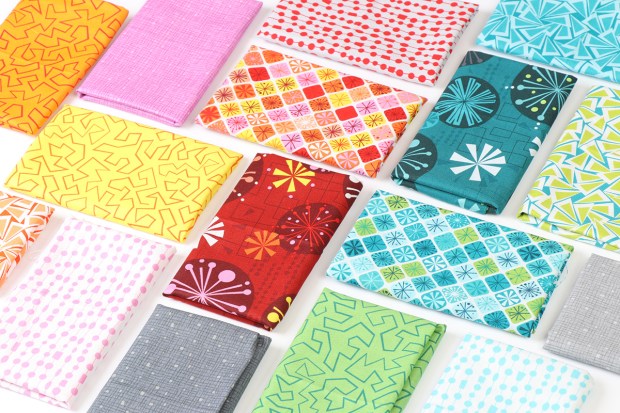
Fandangle Fabric by Christa Watson

I love a pretty pile of cut fabric stacks, don’t you?

Step 1 – Cutting the Strips

If you are working with a jelly roll (strippie, rollup etc.), double check the width of your strips to ensure that they are exactly 2 1/2″. If they aren’t, you can compensate by cutting your background strips the same width.

Because I made my quilt before the precuts were available in stores, I cut my own strips from yardage, so they don’t have pinked edges. But you can mix and match straight cut strips and pinked edge strips in the same quilt with no problem. Most precuts strips measure 2 1/2″ from edge to edge (the “peaks”) but if they don’t, you can always “fudge” the seam allowances if needed.

Strips of Fandangle Fabric

I cut 2 strips from each of the 20 Fandangle prints to get the total of 40 strips needed for the quilt. The leftovers will make a fun scrappy binding!

You can also cut strips from fat quarters that measure 18″ x 21″. Just cut twice as many (80 instead of 40). If you want to work with scraps, make sure that each print scrap is at least 10″ long and that each background strip is at least 13″ long.

Dark grey strips for background
Choose a contrasting light or dark fabric for the background.

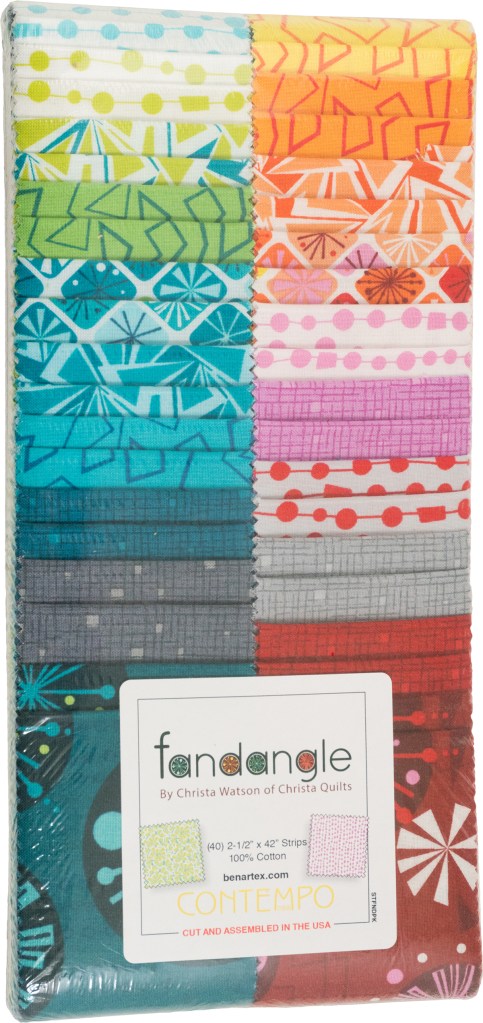
To save time in cutting the background, you can select a jelly roll made from all of one light or dark fabric. Or you can cut your own like I did. If you are working with a Strip-pie of Fandangle (that’s what Benartex calls their Jelly Rolls), you’ll notice that it includes 2 strips of dark gray and 2 strips of light gray.

Fandangle Strippie by Christa Watson of Christa Quilts

Click here to get the Fandangle Strip-pie which include 2 strips of each fabric in the line.

You can pull out the grays and set them aside for something else and you’ll still have enough fabric for the quilt top. Or you can include either the light or dark gray in the blocks. (Just use whichever one is NOT the same as your background.)

Step 2 – Subcut the Units

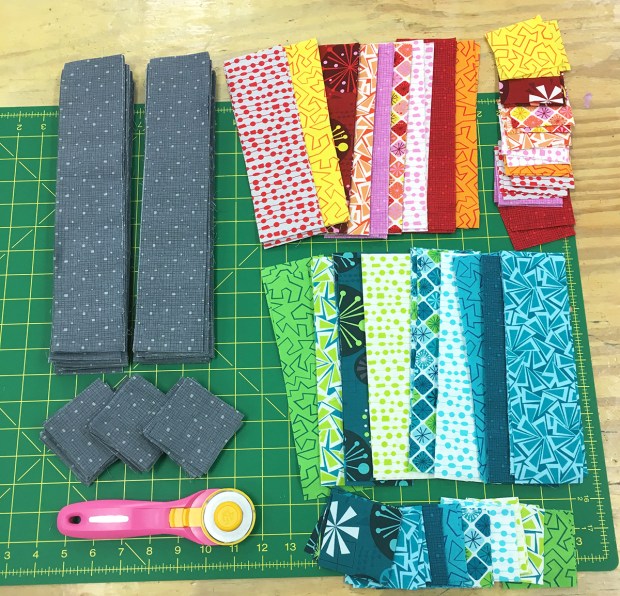
Fandangle fabric subcut units for Dot 'n Dash qal

Follow the instructions on page 51 of the book to cut the print strips and the background strips into smaller squares and rectangles. I recommend putting on some nice music or an audio book while you work and have yourself a little cutting  party!

Just remember to measure twice, cut once and use a smaller acrylic ruler to trim the strips into smaller units. Line up the lines on your ruler with the lines of your mat for accuracy and cut with most of the fabric held underneath the ruler.

Homework – Get Ready to Sew!

Finish cutting your strips into units and clean your sewing machine so you’re ready to start piecing next week. Oil your machine (if needed, according to manufacturer’s instructions) and change your needle. Select the thread you’ll use for piecing.

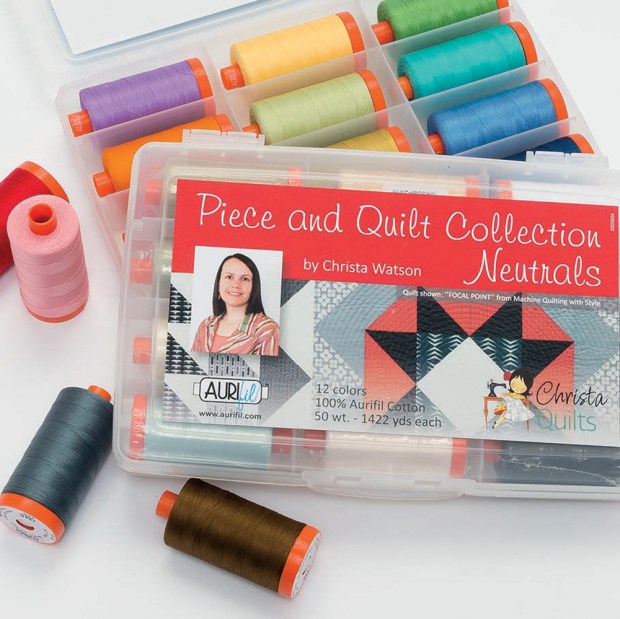
Piece and Quilt Collection Aurifil Thread by Christa Watson

Might I recommend a blending thread from my Aurifil Piece and Quilt Collections??

Aurifil is strong, yet thin, and it won’t take up any bulk in the seams. If you are working with 50 weight thread for piecing (my favorite), I recommend a size 80/12 Sharp or Topstitch needle. For crisp seams and straight stitches, you want a nice pointy needle with a hole that’s appropriate for your thread size.

My favorite needles are Titanium Coated Topstitch needles from Superior Threads. I actually use them to piece and quilt so one 5-pack will be plenty for this project!

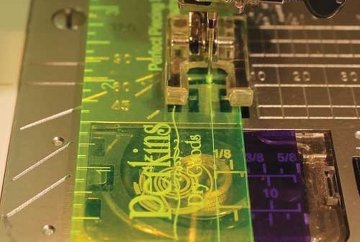
If your machine has a 1/4″ patchwork foot I recommend using one. If not, you can set a perfect seam guide with the help of this nifty tool from my friend Celine Perkins.

Perfect Piecing Seam Guide

For bonus points, do a seam test to check your seam allowance accuracy: Sew two 2″ wide scrap rectangles together and press, then measure the width. If the unit doesn’t measure exactly 3 1/2″ wide, adjust your seam allowance until it does.

Remember: Sharing is Caring

Don’t forget to share this week’s progress and let us know how it’s going. Share pictures of your pretty piles of cut fabric over in my Christa Quilts Facebook group, and/or on instagram #dotndashqal.

See ya next week – same bat time, same bat channel!!

Dot n Dash Quilt Along

Click here for the Dot ‘n’ Dash Quilt Along Schedule and Supply List.

Dot ‘n’ Dash Quilt Along Week 1 – Schedule and Introductions

Welcome to Dot ‘n’ Dash Quilt Along where we will make an entire quilt together from start to finish.

Dot n Dash Quilt AlongThis remake showcases Fandangle, my second fabric line from Benartex.
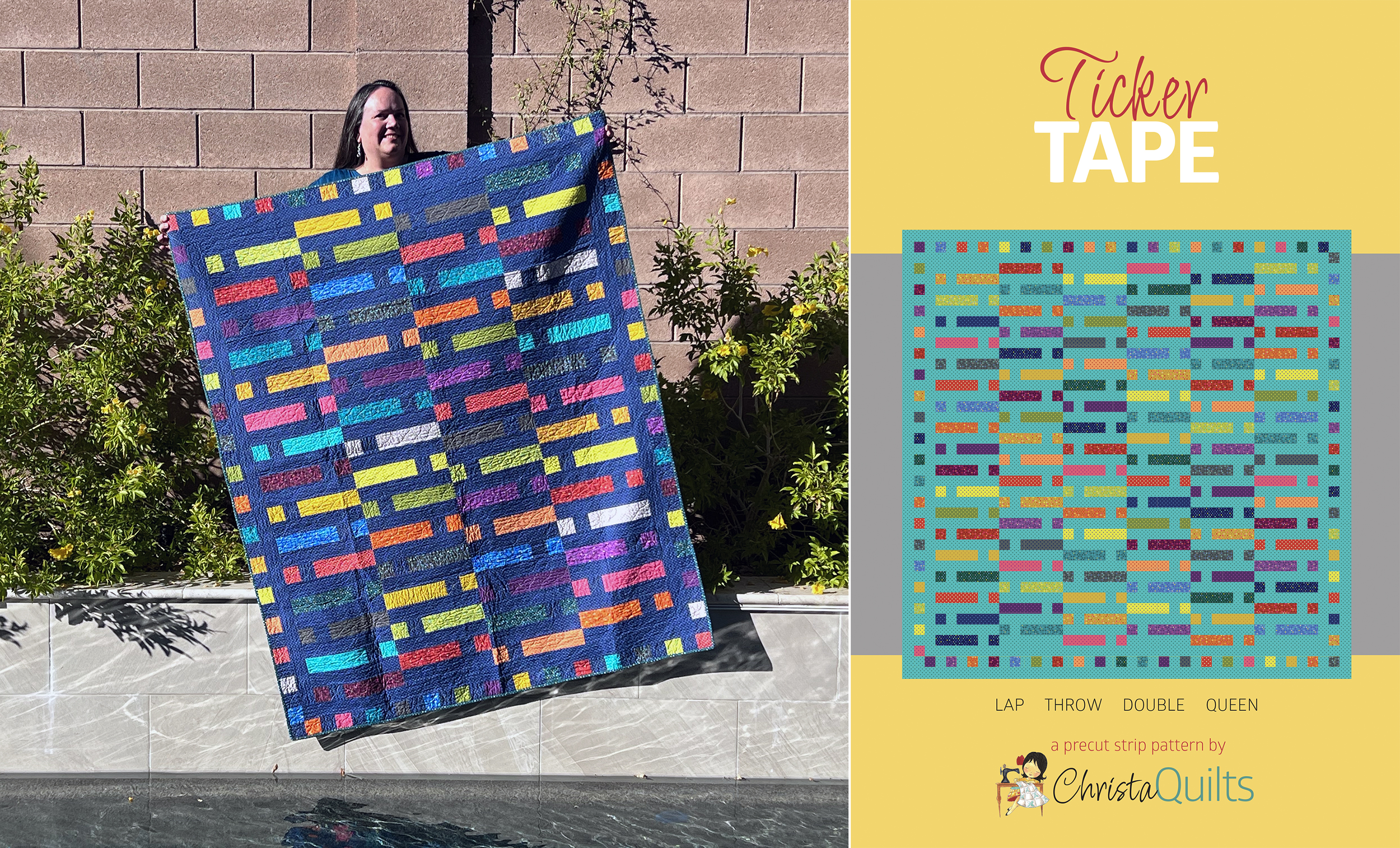
Please note: I have updated this design to be a stand alone pattern called Ticker Tape. Click here to get the Ticker Tape PDF pattern.
The newer version is made from my Dazzle Dots fabric line from Benartex. I’m excited to share my gift of quilting knowledge with you during the quilt along. I don’t just want to teach you how to piece a fun quilt, I also want to help you quilt it, too! So without further ado, here’s the quilt along schedule that we’ll follow over the next 8 weeks. All posts will go live on Fridays which will be a great start to your weekend! Links will go live each week as we quilt along so bookmark this page so you can refer back to it time and again as needed.

Dot ‘n’ Dash Quilt Along Schedule

Week 1 – Schedule, Supply List and Introductions (You are here!) Week 2 – Cutting the Fabric Week 3 – Sewing the Blocks Week 4 – Completing the Quilt Top Week 5 – Backing and Basting Week 6 – Quilting Part 1 – Stitching in the Ditch Week 7 – Quilting Part 2 – Quilting Double Zig-Zags Week 8 – Quilting Part 3 – Free Motion Quilting Double L’s Week 9 – Binding

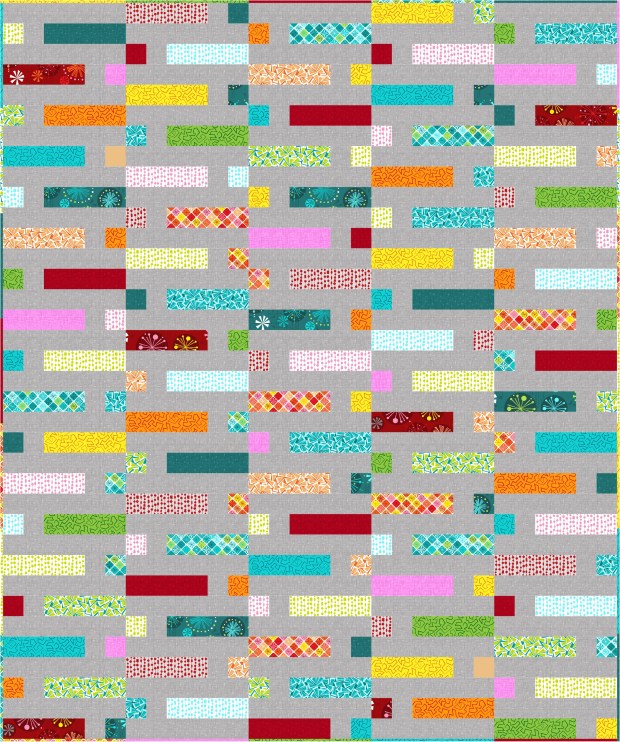
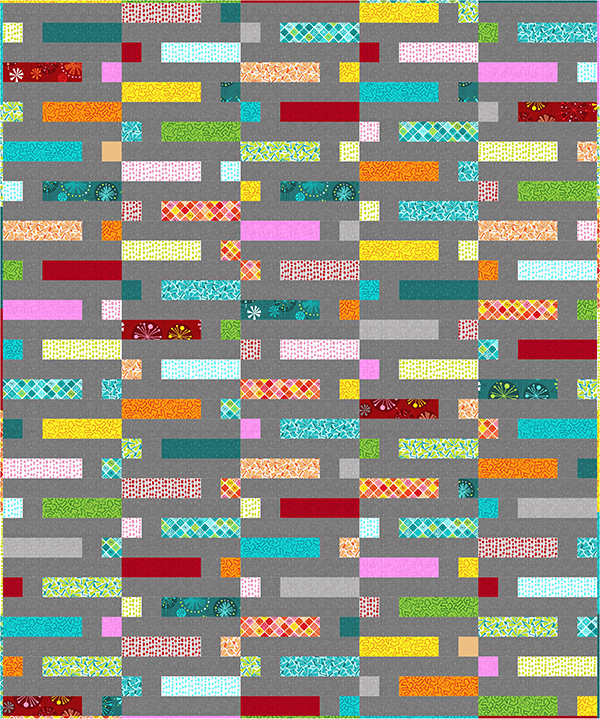
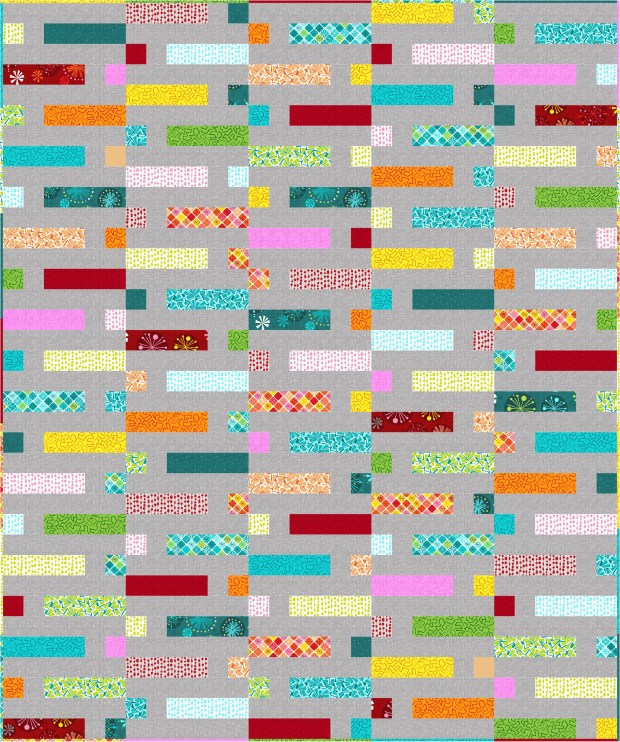
Dot ‘n’ Dash with light gray background recolored in EQ8
Remember – you can use any fabrics you like to make this quilt. Choose a jelly roll of your favorite prints and pair them up with a contrasting background: light gray, dark grey, black, white, or any other color you like. It will be fun to see all the variety!

Materials List

Fandangle Strip-pie

Here’s a list of everything you’ll need to make this quilt:
  • The Quilt Pattern – Ticker Tape
  • One jelly roll (or 40 precut 2 1/2″ strips of assorted prints – includes binding)
  • 3 yards of background fabric (or a light colored jelly roll – all one fabric, or a mix is ok)
  • 4 yards of backing fabric
  • 67″ x 79″ piece batting (I recommend natural fiber like cotton, wool, or silk)
  • Rotary cutter with fresh blade and mat
  • Long 24″ acrylic ruler for cutting strips, shorter ruler or square for cutting smaller pieces
  • Thread for piecing (I recommend 50 weight Aurifil cotton in a neutral color)
  • Thread for machine quilting (1-2 large spools depending on the density of your quilting)
  • Sewing machine in good working order with 1/4″ seam allowances
  • Walking foot (or dual feed) and free motion foot to fit your machine
  • Brand new needle to match your thread (size 80/12 for 50 weight thread)
  • Sewing notions: thread snips, pins, dry iron for pressing, etc.
  • Optional: Machingers Gloves and Supreme Slider
  • A “can-do” attitude because this is going to be fun!
Fandangle fabric by Christa Watson for Benartex Contempo

You can either use precut strips, or select yardage to cut your own!

This Week’s Homework – gathering and Sharing

Did I mention there will be homework each week? But don’t worry – it’s the fun kind!! This week, gather your material and supplies, share pictures of the fabrics you’ll be working with, and introduce yourself over in my ChristaQuilts Facebook group, or on instagram using the hashtag #dotndashqal. Part of the fun of any quilt along is getting to know each other and cheering each other on. So feel free to share pictures of your sewing space and be sure to interact with each other as we go. If you want to blog about your process, you can share a link to your blog post in the comments so everyone can check it out! Fandangle fabrics for quilt along

I can’t wait to see the fabrics everyone chooses. Even if you choose the same fabric as me, your quilt will still look totally unique!

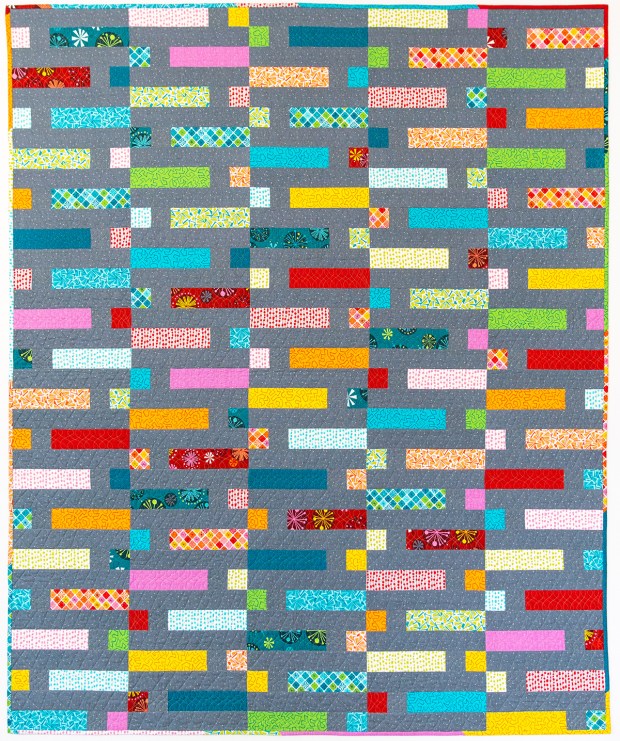
And remember, it’s okay to work at your own pace. If you want to work ahead or need more time, that’s perfectly fine. Just remember to share as that’s half the fun! I’ll meet you back here next week where we’ll dive into cutting. I can’t wait!! Dot n Dash quilt by Christa Watson

Dot ‘n’ Dash Finished Size is 60″ x 72″ but can easily be made larger.

Dot ‘n’ Dash Quilt Along Begins August 17

Are you ready? The Quilt Along for Dot ‘n’ Dash kicks off next week on Friday, August 17th!

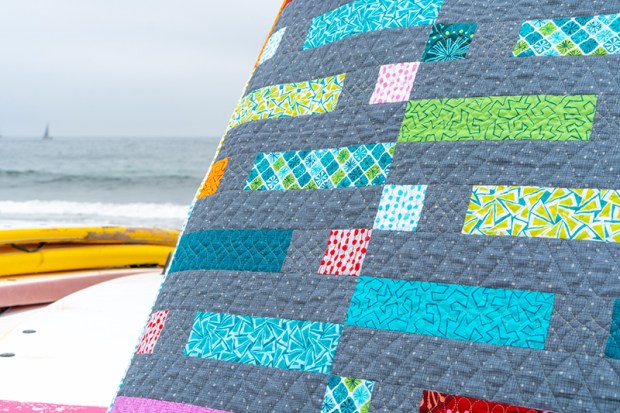
Dot 'n Dash quilt by Christa Watson

We had fun photographing the finished quilt at the beach.
Dot ‘n’ Dash Finished Size 60″ x 72″

On that date, I’ll share the complete quilt-along schedule and there will be plenty of time to gather your materials, share the fabrics you’ll be working with and get to know everyone else who’s participating.

Kits Available for a Limited Time

Dot n Dash with Fandangle Light Gray

I’m offering two versions of the Dot ‘n Dash Quilt Kit – with either a light or dark grey background. Both will look fantastic, but I only cut a limited number, so grab one before they’re gone!

And don’t forget to grab a copy of my book, Piece and Quilt with Precuts for the instructions you’ll need to follow along.

Click here to purchase the Dot ‘n’ Dash Quilt Kit while supplies last.

Dot n Dash quilt with Fandangle Dark grey

You’ll notice in my finished version I didn’t include any of the light gray strips in the blocks as shown above. I think it looks great either way. There’s enough fabric that you can customize it however you like!

Materials List

Click here to get coordinating yardage of Fandangle

I can’t wait to cheer you on as we make this quilt from start to finish. I’m going to cover all the basics from cutting, to pressing and piecing to sewing the backing. And then we’re going to baste, quilt and bind it. So if you follow along each week, you’ll have a finished quilt by the end of the quilt along!

Machine Quilting detail on Dot n Dash

I’m excited to teach you two fun new quilting designs based on the designs in my book!
Click here to get your signed copy of Piece and Quit with Precuts, shipped asap.

And not to worry if you join later: you can work at your own pace, and the quilt along posts will stay up indefinitely! To follow along, make sure you are subscribed to my blog so you get an email each time a new post have gone live.

(To subscribe – add your email in the box on the side bar on the right. If you are viewing this from a mobile device, you’ll need to scroll ALLLL the way to the bottom of the screen to find the subscribe box.)

Machine Quilting on Dot n Dash

Be sure to join my Christa Quilts Facebook group to share pictures of your quilt in progress, and use the hashtags #fandanglefabric and #dotndashqal on instagram to share your work!

Save the Date – Next Quilt Along for Dot ‘n Dash Launches in August

Earlier this year in my Facebook group we were discussing the idea of doing another quilt along this summer/fall. Well guess what – after organizing my schedule for the remaining year, I have room to squeeze one in and I’d love for you to join me!

Dot ‘n Dash recolored in Fandangle Fabric
Dot 'n Dash Quilt

Starting on August 17 and each Friday for several weeks (to be determined) we’ll make my Dot-n-Dash quilt pattern from my book Piece and Quilt with Precuts. The best thing about this quilt along is that many of you already have the book from my previous Squiggles quilt along.

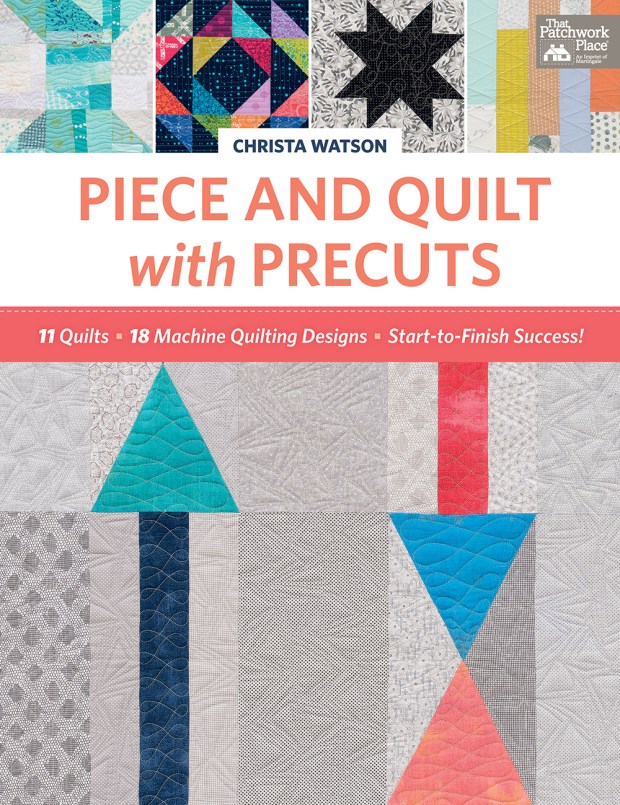
Piece and Quilt with Precuts by Christa Watson

If you haven’t yet grabbed a copy of the book, you can get a signed one here! The other best thing is that just like my previous quilt alongs, we’ll make the whole quilt from start to finish.

I’ll be re-making my version of Dot-n-Dash using my brand new Fandangle fabric and am offering kits for a limited time. Click here to pre-order your Dot-n-Dash Fandangle kit and I’ll ship it out as soon as the fabric arrives – hopefully by the end of June/early July.

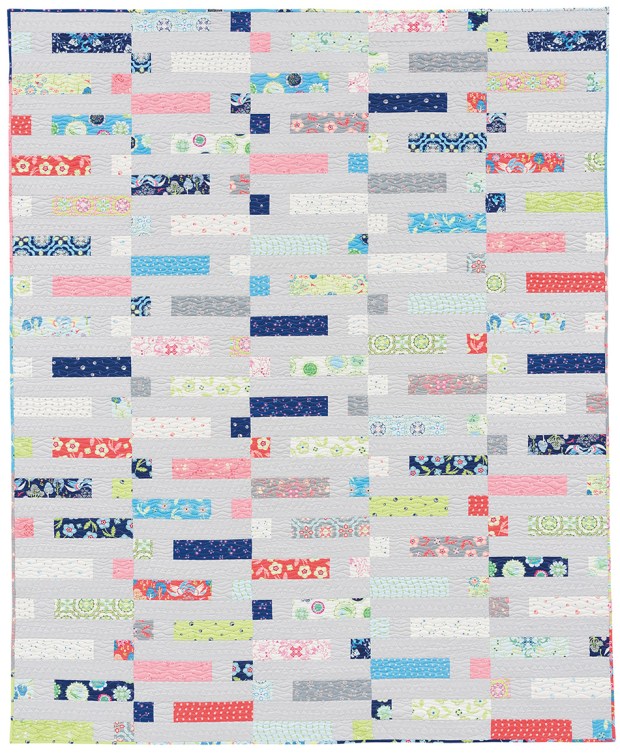
Original Dot ‘n Dash from the Book

Dot 'n' Dash by Christa Watson from Piece and Quilt with Precuts

Above is the original version made by me as shown in the book. Check out these other fabulous versions that friends of mine have made. I just love seeing the same pattern made in a variety of fabrics!!

Dot ‘n Dash made by Cheryl Brickey

Cheryl Brickey Dot n Dash from Piece and Quilt with Precuts

Dot ‘n Dash made by Laura Piland

Laura Dot 'n Dash

Dot ‘n Dash made by Kristin Esser from Modern Marks

Dot n Dash by Kristin Esser

Materials List for Dot ‘n Dash

I’ll be posting the complete schedule on Friday, August 17 but in the meantime, here’s what you need to get started:

  • A copy of Piece and Quilt with Precuts
  • One jelly roll (or 40 precut 2 1/2″ strips of assorted prints – includes binding)
  • 3 yards of background fabric (or a light colored jelly roll – all one fabric, or a mix is ok)
  • 4 yards of backing
  • 67″ x 79″ piece batting

Click here to get the optional kit made from Fandangle fabric.

Fandangle Fabric Strips

I can’t wait to dive into these! I cut my own strips using sample yardage, but the Strippies (Jelly Roll Strips) will be precut and neatly packaged by the manufacturer.

Share Your Work in Progress

I’ll be posting weekly stepouts of my progress with the quilt along with some bonus tips as I make the quilt. I’d love for you to share your progress so I can cheer you on, too. You can do that in several ways:

  1. In my Christa Quilts Facebook group
  2. On Instagram #dotndashqal
  3. Leave a comment and include a link to your own blog or social media images

Dot 'n Dash Quilt

I can’t wait to make this quilt and hope that you’ll join me!

Click here to get the optional kit made from Fandangle fabric.

Whether you’re a brand-new quilter or have been creating for a long time, I’d love for you to join me in this journey! Be sure to sign up to receive an email each time a new blog post goes live by entering your email address in the box on the right hand side-bar (or scrolling ALLLLLL the way down to the bottom of the page if viewing this on a mobile device.) I can’t wait to get started!!

Simple Strips Quilt Along Revisited – Make a Quilt from Start to Finish

Last year I hosted a really fun quilt along as part of my BERNINA Ambassador obligations. (It’s a fun gig by the way – I travel the country letting folks know how much I love my machine which is something I did anyway before I became it became “official.”) So today I thought it would be fun to revisit the quilt along for those of you who are new to my blog, or missed it the first time around.

Simple Strips Quilt Along

Links to the Simple Strips Quilt Along

The quilt tutorials are all hosted on the BERNINA blog at We All Sew and they’ll be there indefinitely, so you can make this quilt on your own schedule, any time you want. Just click the hotlinks below to get each set of instructions for this quick and easy quilt!

Week 1 – Materials List and Cutting
Week 2 – Pieced Quilt Top Tutorial
Week 3 – Wall Basting Tutorial
Week 4 – Decorative Stitch Machine Quilting
Week 5 – Machine Binding Tutorial

I made this quilt before I started designing fabric and it works well with any fabrics you choose, whether coordinated or scrappy. Fabric selection is super simple too – it just requires 20 strips (or 1/2 of a jelly roll) of print fabric and the same amount of background/light fabric.

Simple Strips – Modern Marks

Simple strips recolored with Modern Marks

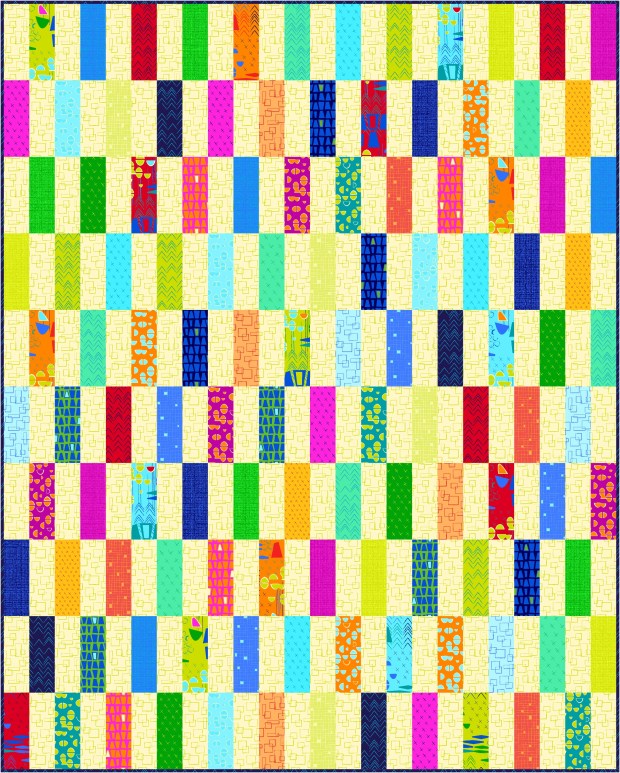
And just for fun, I wanted to see what it would look like recolored in MY fabric – because as a fabric designer, I wish I had time to make ALL the quilts in my prints, LOL!! The recoloring shown above uses a bundle of the Modern Marks prints plus 1 1/2 yards of the cream/lime Boxes print for background and 1/2 yard of the Navy Herringbone for binding.
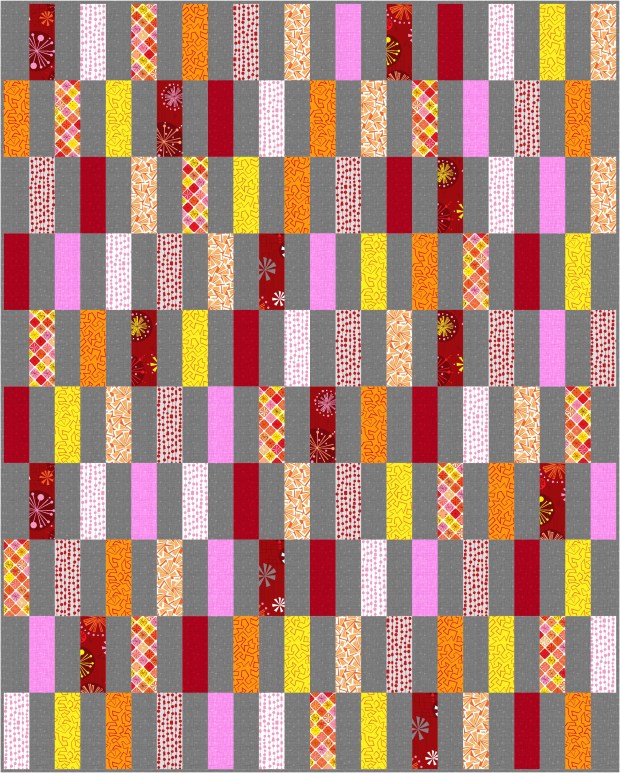
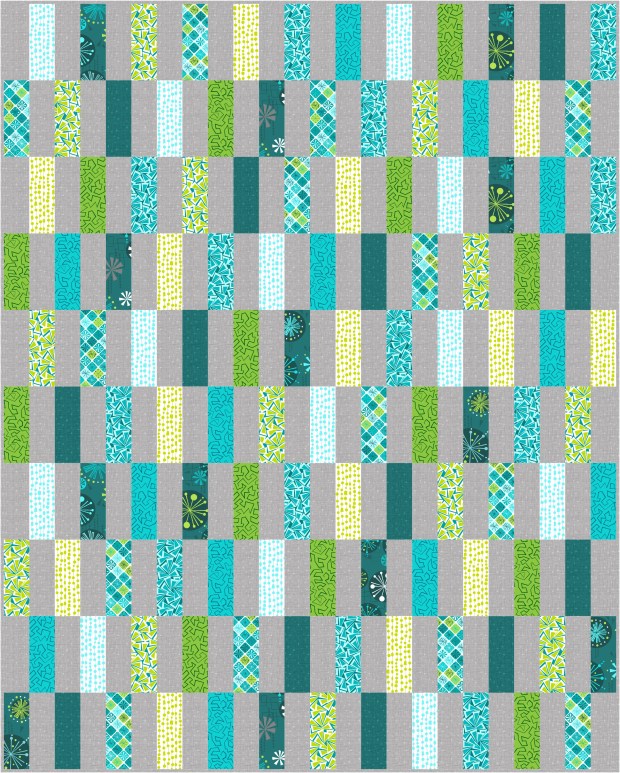
Here’s what it looks like recolored in Fandangle, my newest fabric collection. I thought it would be fun to separate the warms and cools for a more curated look:
Simple Strips – Fandangle Warm and Cool

Simple Strips in Warm colorway of Fandangle

This coloring can be made from a fat quarter bundle of Fandangle in warm plus 2 yards of Confetti Crosshatch dark gray for the background and binding.

Simple Strips Fandangle Cool

This coloring can be made from a fat quarter bundle of Fandangle in cool plus 2 yards of Confetti Crosshatch light gray for the background and binding.

Although the instructions for Simple Strips are written using precut 2 1/2″ strips, you can totally make your own bundles from your stash, scraps, or even fat quarters.

Do You EQ? (Bonus Download)

Here’s a bonus for those of you who like to work with Electric Quilt software:

Click here to get the Simple Strips EQ download file to resize or recolor this quilt. (It only works if you have the software installed on your computer.) Because I don’t have all the time in the world to make all the quilts, recoloring them virtually gives me the satisfaction of seeing what it would look like “in the cloth!”

Sharing is Caring

Remember, if you make this quilt or any of my designs for that matter, I’d love to see them! You can email me pics to christa@christaquilts.com, include a link to your own blog or social media in the comments, share pics in my ChristaQuilts Facebook group or tag me @christaquilts and #christaquilts on Instagram.

I hope you enjoy making this quilt!!

Squiggles Quilt Along Week 7 – Quilt Binding Tutorial

I’ve been thrilled to see all of the fabulous versions of Squiggles that you all are making. Some of you have already finished, others have made more than one version, while others are just beginning. Just remember – I’ll leave the blog posts up indefinitely, so you can make this fun quilt on your own schedule!

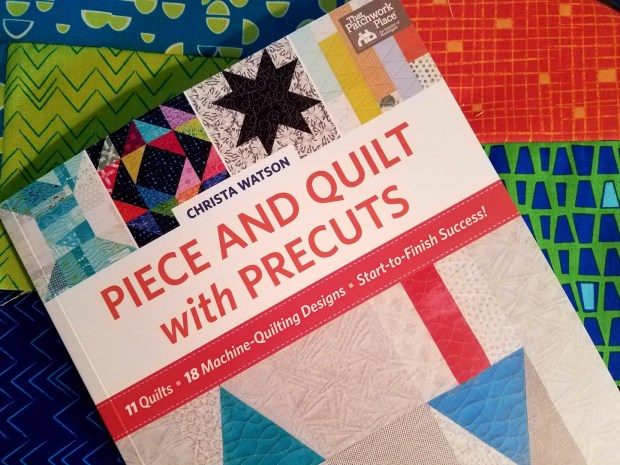
Piece and Quilt with Precuts

Step by Step Binding Tutorial

This is the same method I use for all of my quilts.

Step 1: Trim the Quilt

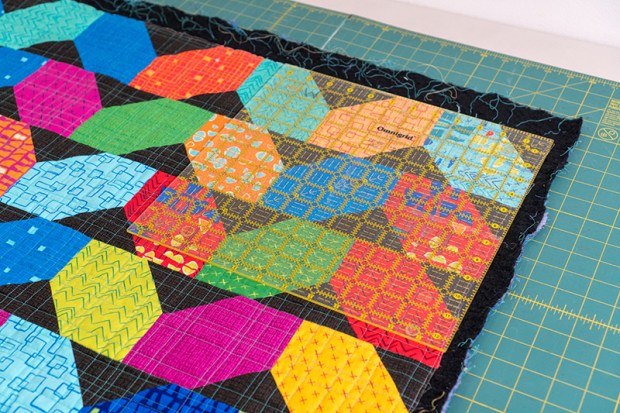
Trim the extra batting and backing flush with the edge of the quilt top.

Binding Square up the Corners

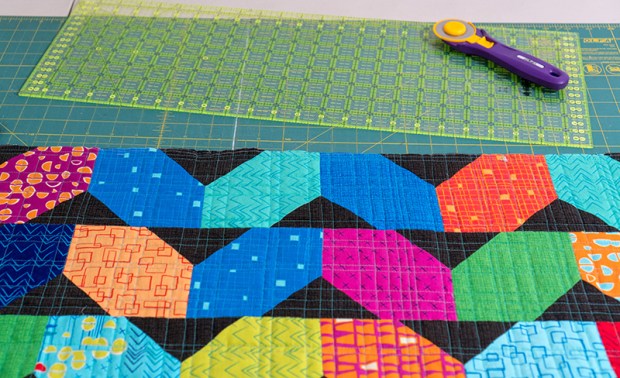
I like to use a large square ruler for the corners, and a long acrylic ruler for the sides.

Binding Trim the Sides

Step 2 – Make the Binding

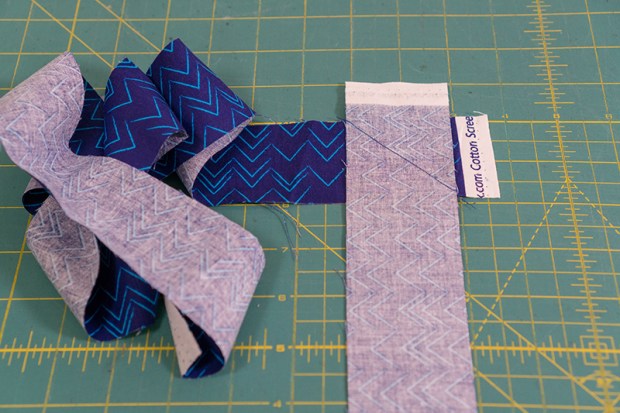
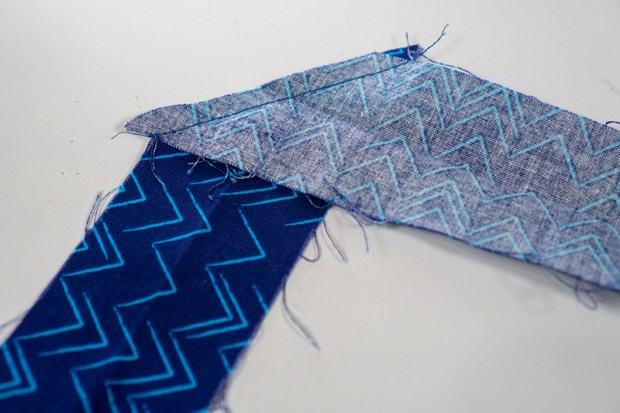
Lay out two binding strips so that they overlap at a 90 degree angle. Mark a diagonal line on the top strip from corner to corner, where the corners overlap. Pin in place if needed.

To figure out how many binding strips you need to cut, add 10″ to the perimeter of the quilt (length of all 4 sides of the quilt). Then divide that number by 40″ to get the number of strips to cut. For the Squiggles quilt, the number of strips to cut is listed on page 15 of the book.

Tip: most patterns suggest to cut the binding strips 2 1/4″ to 2 1/2″ wide. However, I’ve recently began using 2″ strips and I like it much better. The narrower strips allow me to get a tighter finish, and both sides of the binding end up the same size.

Sewing the Binding

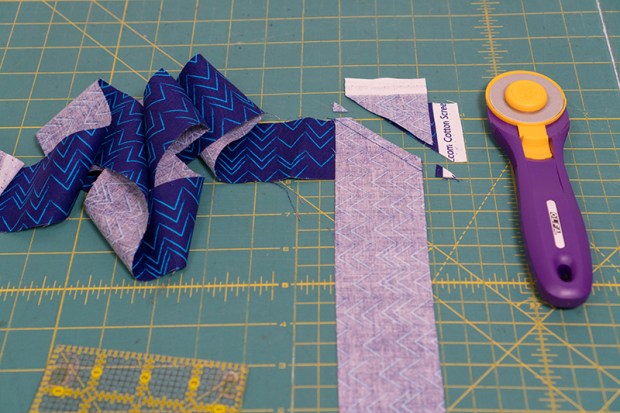
Sew on the drawn line and trim excess to 1/4″. Trim off the “dog ears” – the triangle tips, too. Join all of the strips the same way and press seams open. This will distribute the bulk of the seam when it’s attached to the quilt.

Join Binding Strips

Trim the beginning of the binding strip at a a 45 degree angle and press the entire length of binding in half, wrong sides together. Be sure to trim the starting edge first, before you press it in half.

Finished binding, ready to sew

If desired, fold up the binding, or roll it up until it’s ready to attach to the quilt.

Step 3 – Attach the Binding to the Quilt

Attaching the binding

Start attaching the binding on the side of the quilt, not at the corners. Line up the open edges of the binding to the trimmed edge of the quilt and leave about 8″-10″ of the tail hanging off. This will allow plenty of room for attaching the two ends later.

Place a pin in the binding and quickly “walk” it around the quilt’s perimeter to ensure that none of the pieced seams will land in the corners. Adjust the binding as needed and start sewing at the pin, using 1/4″ seams.
Binding 1/4" mark

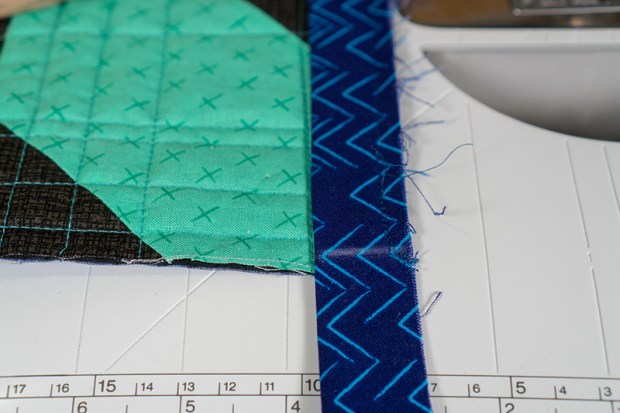
When you reach the corner, stop sewing 1/4″ away from the corner. Mark a line if needed to get an exact measurement. Then sew off the side or corner of the quilt.

Folding the binding corner

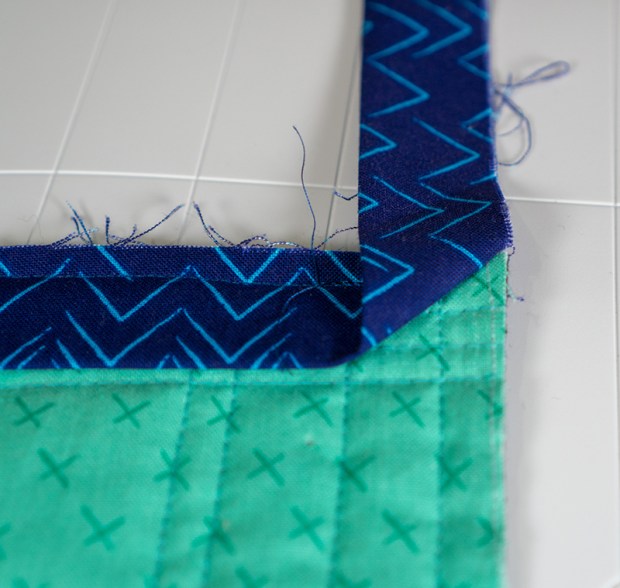
To get a perfect miter in the corners, fold the binding up and away from the corner. Ensure that the right side of the binding aligns with the edge of the quilt.
Mitering the binding

Fold the binding back down, leaving the excess in the corner. Make sure the top of the fold lines up evenly with the top edge of the quilt. I called this the “funky fold.”
Grasp the top and bobbin threads and carefully sew down the next side of the binding. It will be thick at the corner where all of the bulk is.
Binding Corner

Once you sew a little ways, check the front of the quilt. It should form a nice crisp miter at the corner if you’ve lined everything up correctly.

Attaching the binding

Continue sewing down all 4 sides of the binding, taking care to get nice crisp miters at the corners. When you get close to the starting point, leave several inches between the starting and ending point of the binding, so you have room to attach the two ends of the binding.

Step 4 – Secure the Ends

Open up the end of the binding and place the start of the binding (the angled cut end) on top of it. Be careful that the strips don’t shift.

Matching up the binding

Open up the beginning binding “tail” (below), and notice that the angled end runs in the opposite diagonal direction in which it was folded. Mark a line on the uncut strip, following the direction of the cut end.

Matching up the binding ends

Measure and cut 1/2″ away from the marked line. This will add the amount needed for seam allowances on both ends of the binding.

Trimming the ending tail

Match up the binding right sides together and make sure it doesn’t get twisted. Pin the binding, offsetting the triangle tips by about 1/4″ and sew with 1/4″ seams to close the binding. This will create a hidden join that is smooth, with no bumps.

Join the binding ends.

Finger press this final seam open (it’s hard to get an iron in there at this point), and pin the un-sewn binding to the quilt, easing in any fullness. Attach this last bit of binding to the quilt, overlapping the starting and ending stitches.

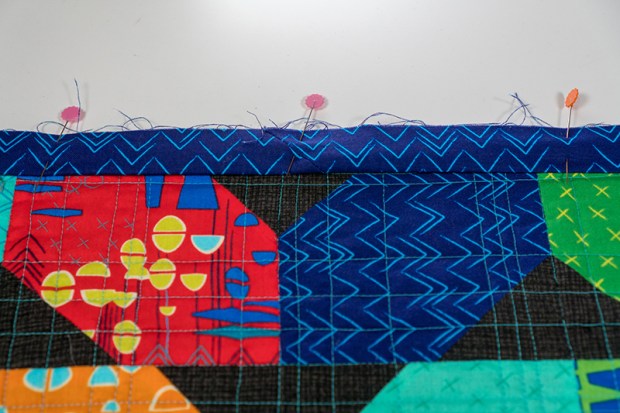
Pin the binding in place

If desired, press the binding away from the quilt with a hot dry, iron. This will help the binding wrap around to the back of the quilt much easier.

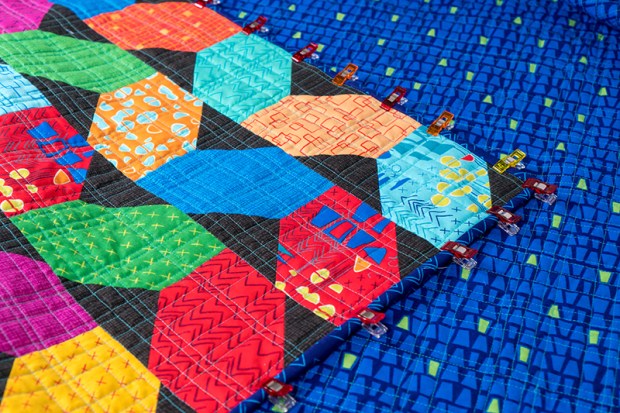
Secure the binding to the back of the quilt with pins or binding clips. When you get to the corners, fold them in opposite directions and clip in place.

Secure the binding with Wonder Clips

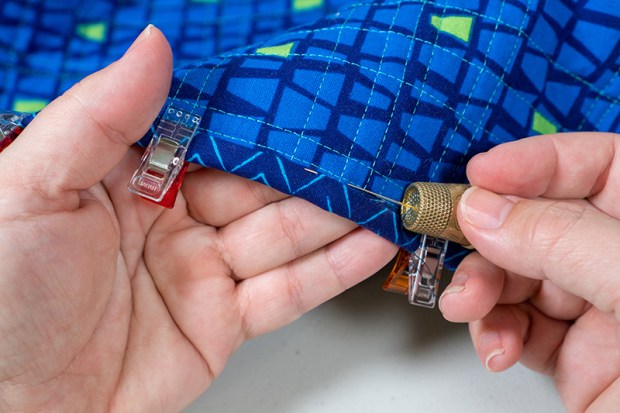
Finish with small hand stitches on the back side. I use a single  16″ – 18″ length of Aurifil thread in a color that matches the binding. I use a thimble to push the needle through and sew from right to left, with the bulk of the quilt away from me. I’ve noticed that some quilters prefer to sew the oppoiste direction with the quilt toward them, and that’s okay, too – whatever works for you!

Of course, you can finish the binding by machine if you prefer, but I love the slow pace of hand stitching while I relax and cuddle with the quilt.

Binding by hand

Here’s a quick bonus video of me hand-stitching  the binding on another quilt:

Step 5 – Share, Share Share!

I hope you enjoyed this tutorial! You are welcome to share on pinterest or your favorite social media (with attribution). I hope that binding doesn’t seem so scary and feel free to mix it up with your favorite binding method.

This concludes the quilt along tutorials – next week I’ll share some finished pics of Squiggles, taken in the desert behind my neighborhood. Be sure and share your progress and finishes with me on instagram #squigglesqal or in my ChristaQuilts Facebook group. I love seeing them!!

Squiggles Quilt by Christa Watson

Click here to get an autographed copy of Piece and Quilt with Precuts.

Click here for links to all of the Squiggles Quilt Along blog posts.

Squiggles Quilt Along Week 6 – Machine Quilting Tips

This week we get to my favorite part of any quilt – the machine quilting!! For Squiggles, I quilted it with my walking foot. I always recommend starting off with walking foot quilting for beginners because it really is no-fail quilting. In the book, I show you how to quilt organic, squiggly lines with the walking foot, for the original version made from Pat Sloan’s The Sweet Life charm packs:

Machine Quilting Ideas

Squiggles Quilt from Piece and Quilt with Precuts

The original version of Squiggles: pattern & quilting instructions available in my latest book.
Click here to get your signed copy of Piece and Quilt with Precuts.
Click here to purchase The Sweet Life charm packs seen above, while they last.

If you’d like to quilt fun, fast and easy squiggle lines, follow along in the book on page 19 to see the instructions and quilting plan for Squiggles

Another quick and easy way to finish this would be to quilt a wavy grid, following the directions for “Gridwork” on pages 26-27. Check out a closeup of the wavy grid quilting below:

Gridwork quilting with a walking foot

For my Squiggles remake from Modern Marks fabric, I wanted to try out a different design that I mention briefly in the book on page 21 as a “make it your own” idea.  Rather than quilting wavy lines, try quilting irregularly spaced “straight-ish” parallel lines to create a random crosshatch grid.

Random crosshatch quilting

I chose a highly contrasting Aurifil thread in Jade so that it would show up on the busy prints.
The thread is from my Piece and Quilt Collection – Colors.

Random Crosshatch Quilting Tips

Here are a few tips on how I approached quilting the second version of Squiggles:

Machine Quilting Squiggles

I always start quilting on the right hand side of the quilt and “scrunch and smoosh” the bulk of the quilt as I go. First I make one pass across the quilt in both directions to anchor the quilt for more quilting later. This breaks up the quilting, secures it in place, and allows me flexibility on how densely I want to quilt it.

Start and end off the quilt

I try to choose designs that allow me to start and end each line of stitching off of the quilt in the batting. Then I don’t have to tie off all those pesky threads!! For best results when using walking foot/dual feed quilting, try to stitch in one direction rather than stitching the lines up and down or back and forth across the quilt.

It will help prevent puckers or “whiskering” that looks like little creases caused by the shifting of the fabric. I make one pass across the quilt from right to left, quilting “anchor” lines depending on how wide the blocks are. Then I rotate the quilt when I reach the middle, and keep on going to the other side.

Use gloves to move the quilt

I wear Machingers gloves to help grip the quilt and give me a little more power when I push the quilt through the machine. I also use my hands as a hoop and only focus on the area I’m quilting between my hands. It’s not a very larger area, so I re-position my hands and the quilt A LOT while quilting, and that’s ok!

For the random crosshatch, some of the “anchor” lines will be in the ditch, while some of them may be randomly to the side of the ditch. Below are three different ways that I mark or randomly quilt straight lines across the quilt:

Marking With a Washable Pen

Marking Straight Lines

Use an acrylic ruler and washable marking pen to mark guidelines if needed. I used a combination of marking and eyeballing when quilting my straight-ish lines. Mostly I changed it up so I could dry out several different methods. Hey, what I can I say? I’m always experimenting!

Painter’s Tape

Use Painter's Tape as a Guide

Painter’s tape is one of my favorite marking tools! I can place it at random intervals, using my long acrylic ruler to keep the lines straight. The best part about quilting random lines is that I can stitch along both sides of the tape to quilt 2 lines at a time!

Bonus tip: rather than putting the needle next to the tape, put the edge of your quilting foot next to the tape. It will space the lines out a little wider, and you won’t accidentally stitch through the tape!!

Walking Foot Guide Bar

Using a guide bar for quilting

You can also use a guide bar to follow along a seam line, or previously quilted line. Just decide how far apart you want your lines, and adjust the width of the guide bar appropriately.

Notice that I’m using the BERNINA dual feed rather than a walking foot. My machine has a built in mechanism that attaches to the back of a specialty “D” foot, giving me more options of which foot I can use. It acts just like a walking foot and performs the same function. I also like using an open toe so I can see exactly where the needle is stitching.

Machine Quilting Random Crosshatch

Here’s what Squiggles is looking like after a few random passes across the quilt in both directions.

Keep on Quilting!

Walking Foot Quilting

Continue quilting randomly spaced liens both horizontally and vertically across the quilt until you are happy with the spacing. The hardest part is knowing when to stop!!

Machine Quilting Random crosshatch

Click here to purchase a Squiggles Quilt Kit made from Modern Marks fabric.

And just remember, if you aren’t happy with the way it looks, just keep quilting. When I had only quilted a few lines on the quilt, I honestly wasn’t sure if I would like the end result, and the thread really stood out like a sore thumb. However, once I added more lines, all of the sudden, I couldn’t see any of the imperfections, and I love the amazing texture that was created!

Remember to share your progress!

Part of the fun of any quilt-along is seeing all of the variety everyone is making. Check out my ChristaQuilts group on Facebook to cheer on your fellow quilt-alongers and post pics of your WIP’s (works in progress). You can also tag me on instagram @christaquilts and #squigglesqal.

The next post will go up in 2 weeks, giving everyone a chance to catch up on their progress!
Click here for the previous Squiggles Quilt Along tutorials.