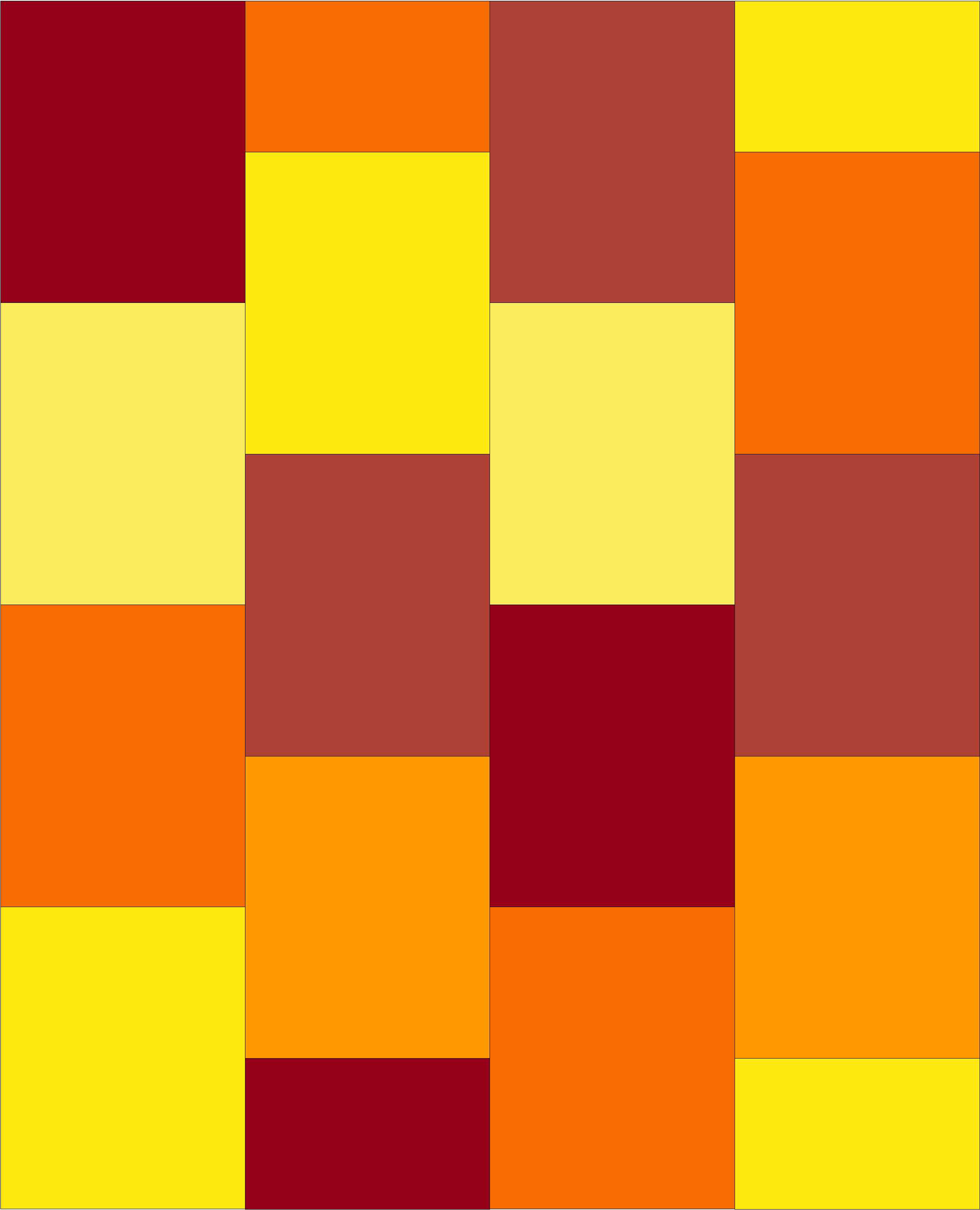
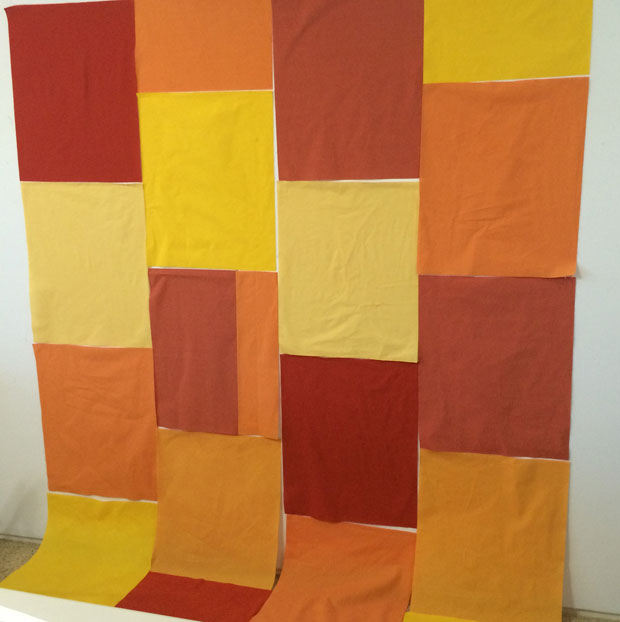
MQWS Blog Hop Day 11 – Facets

If you love the fabrics in Facets, be sure to sign up for my weekly email newsletter, and get a free pattern showing them in a different way. (Of course you can choose your own fabrics, too!)

Facets – The Background Story
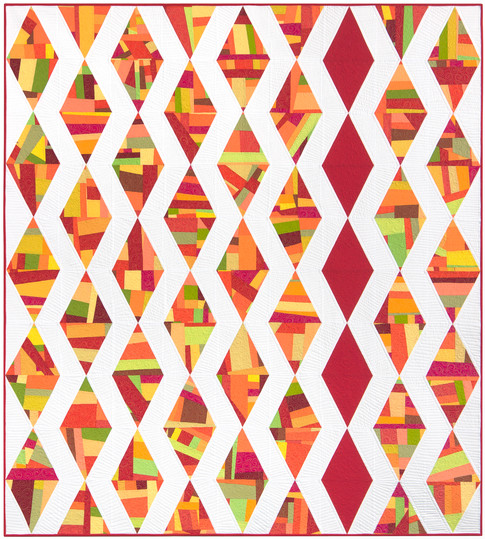
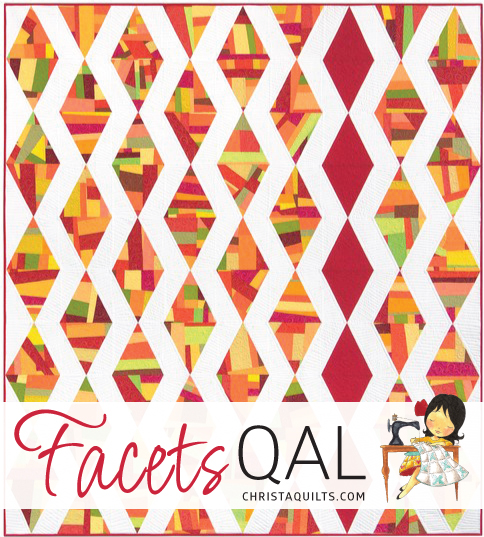
Facets_KonaFacets 63″ x 70″ by Christa Watson. Photo courtesy of Robert Kaufman.

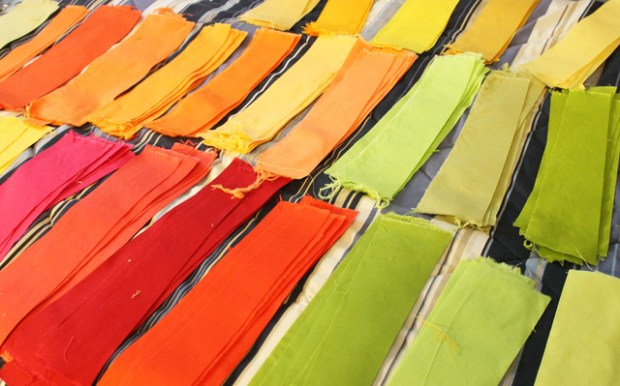
I love coordinated scrappy quilts and improvisational piecing, yet I’m more of a “structured improv” kind of gal. I like to randomly sew together a bunch of scrappy goodness, then create order and structure from the chaos. For Facets, I chose 28 Kona Cottons in warm reds, oranges, and yellows, with some green thrown in for good measure. The palette reminds me of crisp juicy apples!
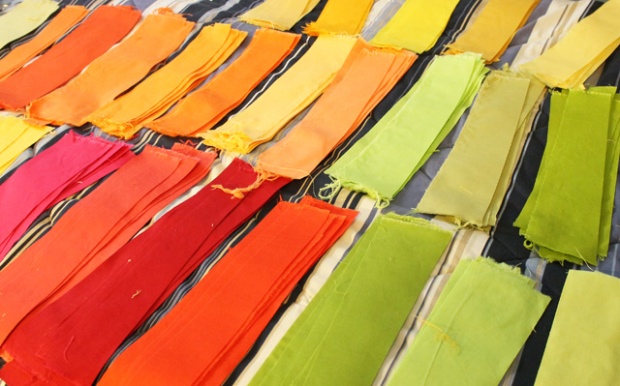
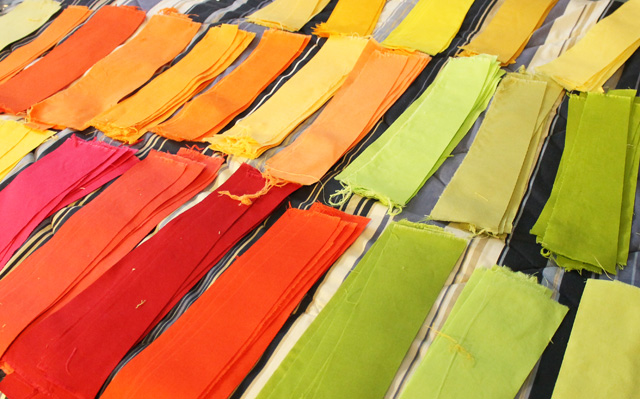
facets_stripsIt was such fun to cut up these fabrics into smaller chunks to play with!

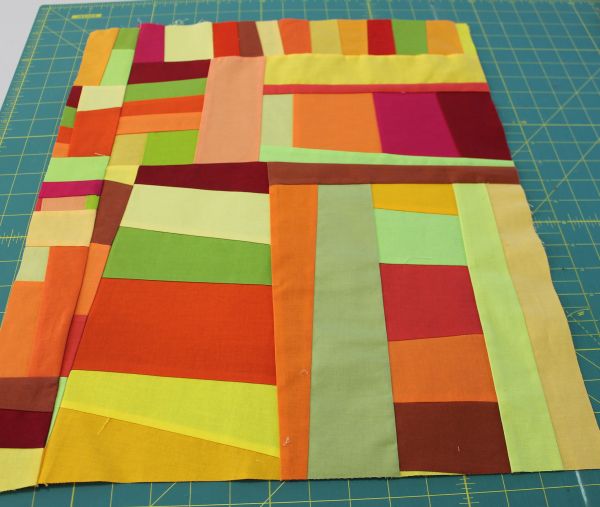
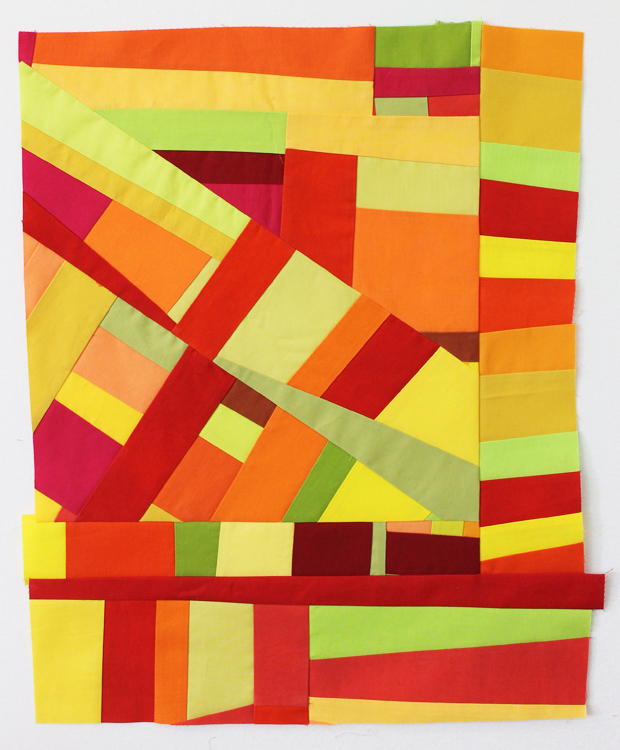
It was very liberating to create my own crazy-pieced fabric to work with:

crazy pieced yardageRandomly sewing bits of fabric together is very therapeutic!

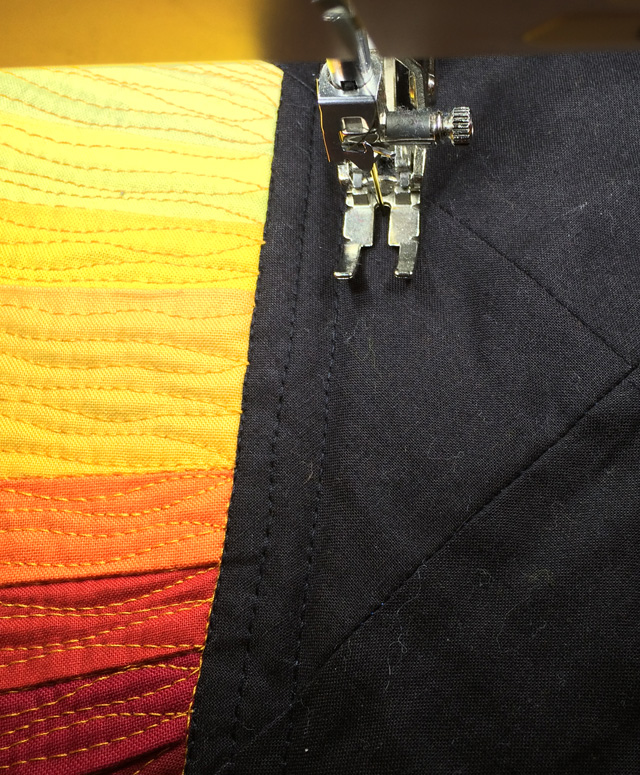
I really went to town with the machine quilting on this one. I used both walking-foot quilting and free-motion techniques when quilting Facets. Whenever I quilt, I like to think about the logical sequence of steps I take before starting. That way, it doesn’t seem too overwhelming.
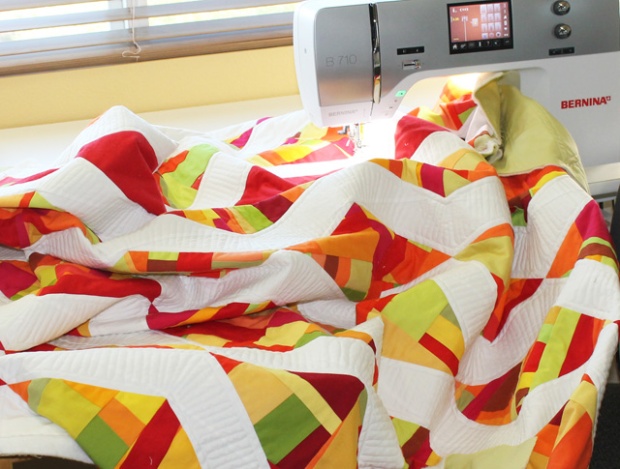
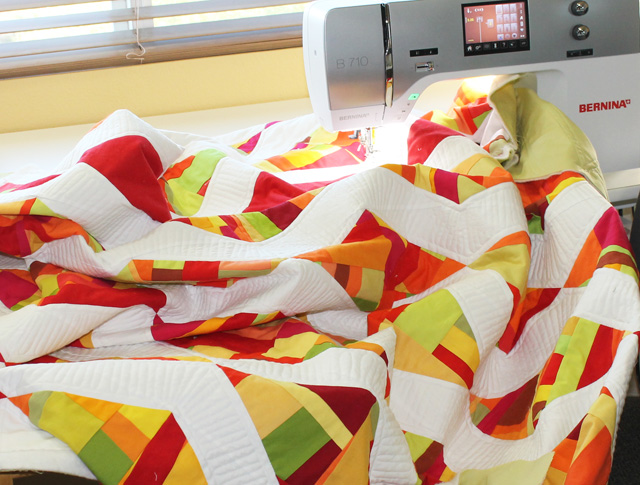
facets_quiltingUsing my “scrunch and smoosh” method for dealing with the bulk while quilting. There’s an extra table under there which helps hold up the weight of the quilt.

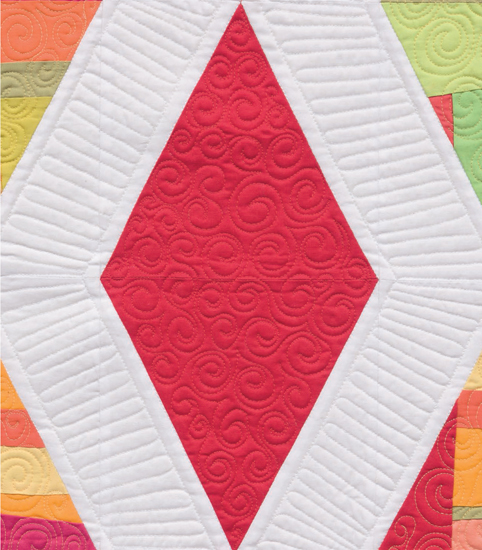
I love quilting swirls, and combining them with switchbacks really creates a lot of movement.

Finals B1324.inddPhotography by Brent Kane.

A Bit More – and a Bonus Giveaway!

I was stoked when Robert Kaufman decided to add this grouping to their designer palette series this fall. Coming in October, you’ll be able to get your hands on the Christa Watson Designer Palette in fat quarters, ten squares, charm squares, and roll-ups! You can create a quilt just like mine, but of course it will still be different because of the improv element. 🙂

What makes this quilt modern – offset grid layout, improvisational piecing, geometric design with high contrast and graphic impact, exclusive use of flat solids, bold, bright color palette, design goes all the way to the edges, organically quilted machine quilting.

Time for me to complete – 47 hours from start to finish, including the improv piecing.

How would you like to get your hands on a fat quarter bundle of my designer palette?
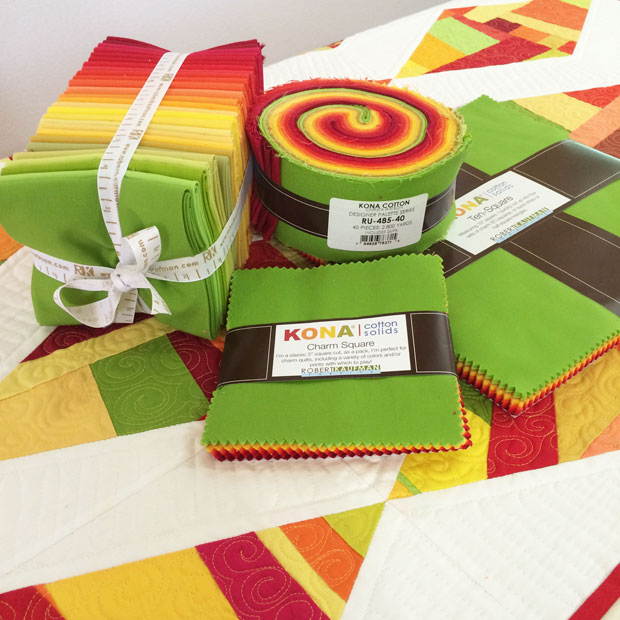
Christa Watson Designer PaletteThe Christa Watson Designer Palette – available at quilts shops everywhere in October!

To enter the giveaway for a 28 piece fat quarter bundle of my favorite Kona colors, just comment letting me know whether you’ve ever tried improv piecing and what you think about it. I’ll draw a winner at the end of the day on Sunday and announce their name on Monday, Sept. 28th.

And remember, don’t forget to vote for your favorite quilt for my QAL in January! Since I know you are dying to ask – yes, Facets is MY favorite quilt from the book. 🙂

Quilting Inspiration from kristy daum

kristy_header

I think my favorite part of this blog hop is seeing all of the amazing quilts from my talented friends! Kristy Daum from St. Louis Victorian and I have been online friends for awhile and finally got to meet up at QuiltCon earlier this year. You may remember Kristy’s amazing pixelated quilts featuring David Tennant as Dr. Who and the lovely Benedict Cumberbatch as Sherlock.

Now Kristy has knocked it out of the park with her version of Facets. I really love it when others really take an idea and make it their own! It was fun watching her instagram sneek peaks, and her final reveal today will take your breath away.

Pop on over to Kristy’s blog to see her version of Facets.

Teri’s Take

teri_header

The amazing Teri Lucas from Terificreations shared a sneak peak of some Facets blocks on the Generation Q website earlier in the week. She chose to use solid pieces of fabric and did some killer quilting on them! Like me, she prefers to quilt on a home-sewing machine and she is one talented lady!! She’s one of those that I can talk quilting with all day long!

So far we’ve only met in person once, and I can’t wait to see her again at the next event. She’s always so thoughtful and encouraging – just the type of quilty friend you want in your corner. Teri is offering a book giveaway on her site. While you are there, be sure to browse around, and check out her amazing quilting!!

Head over to Teri’s blog to enter her giveaway.

Visit The Quilting Gallery

quiltinggalleryMichele Foster is the brilliant name and voice behind the highly popular website the Quilting Gallery. We first met online when I was an advertiser on her site, many moons ago. We have turned that business relationship into a really great friendship and I hope someday soon that we can meet up in person. I mean, if you are like me, you can always use another BQF (best quilting friend), right?

Michele blogs and shares so much inspiration about what’s happening in the quilting community, and she’s has written very nice things about my book over on her blog today. She even scored extra points with me by saying that Facets is her favorite quilt, too! In addition to being a prolific quilter, Michele is an amazing designer and hosts lots of fun clubs on her site. As part of her stop, she’s generously including a fun giveaway of her own. 🙂

Visit the Quilting Gallery blog and enter to win a membership to Michele’s mini quilting club!

Click here for the complete blog hop schedule.

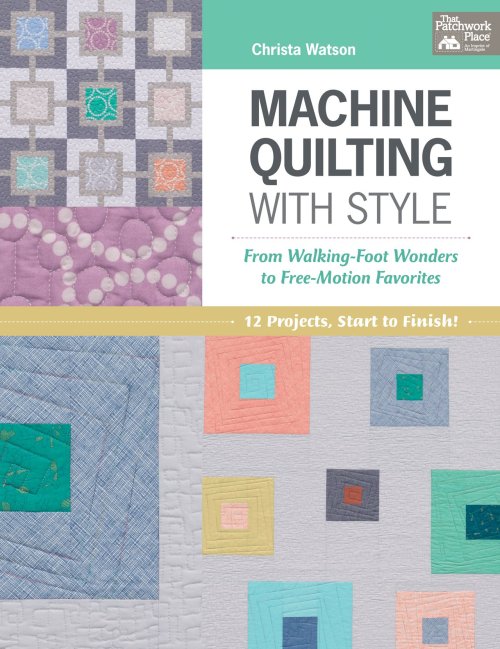
Click here purchase your autographed copy of Machine Quilting With Style.
MQWS Blog Hop Day 8 – Static

On yesterday’s giveaway post I asked everyone which was their favorite quilt so far. It was so fun to read the responses! I was a little worried when I wrote the book, that not everyone would resonate with each pattern from Machine Quilting With Style. But I have been overwhelmed by the positive responses. There truly is something for everyone in this book, as evidenced by your answers – so thanks for your input!

Static – The Background Story

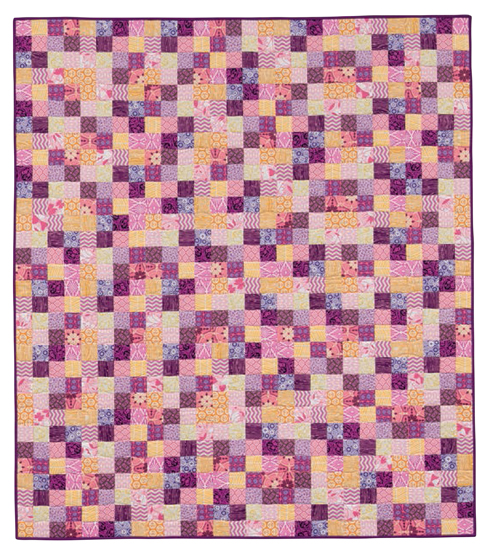
Pixelated quilts (those forming an image from tons of tiny squares) have been all the rage in modern quilting circles the last couple of years. Static is my tongue-in-cheek attempt to get in on this trend. Being the non-artist that I am, and not being able to come up with an amazingly complex design – I attempted to recreate “static” – a repeating block pattern that looks like nothing but chaos. I even posed the question – do you see an image in the static? 🙂

Finals B1324.inddStatic 56″ x 64″ by Christa Watson. Photography by Brent Kane.

I really did enjoy picking out the fabrics for this quilt, happy shades of pink, purple and yellow from the True Colors collection by Free Spirit. The quilt contains lots of small squares, but strip piecing made the blocks go together fairly quickly. Although the individual blocks look random, there’s actually a method to my madness when I pieced the quilt!

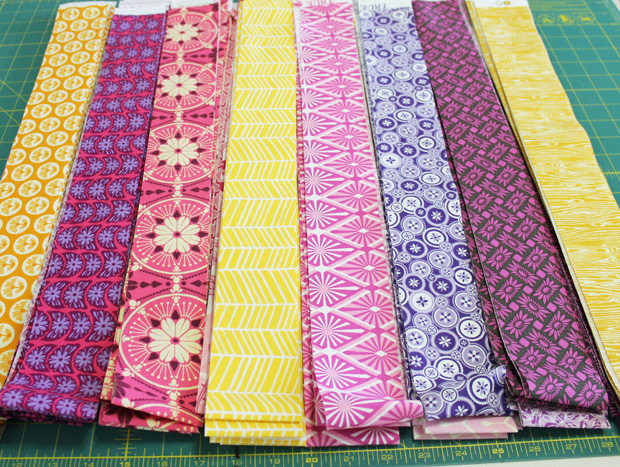
static_strips


Some of my Static strips. I chose 16 different fabrics – such fun!

For the machine quilting, I really had to fight hard to overcome the urge to quilt this one to death! I wanted to have at least one quilt that a very beginner quilter could have immediate success with. It’s quilted completely with a walking foot and I use my favorite method of stitching “near the ditch” rather than in it. The job goes much quicker and is a lot more forgiving this way. I also like the wavy effect that the quilting gives to some of the blocks, even though they are all pieced totally straight.

static_quiltingQuilting “near” the ditch is so much easier than stitching “in” the ditch!

A Bit More

What makes this quilt modern: Although Static is a pretty traditional design, I still chose to incorporate a few modern elements: bold, geometric prints, sharp angles with hard edges, minimal design, walking foot quilting, no borders.

Time to complete: 26 hours from start to finish (mostly piecing and pressing).

A Fresh Quilt from Freshly Pieced

My friend Lee Heinrich from Freshly Pieced can put together fabulous color combinations like no one else! I adore the fabrics she chose for her version of Static, which makes a seemingly simple design come to life. Lee has an eye for color and she’s an amazing pattern designer, too!

freshly_pieced


I was so happy when Lee, Katie and Faith released their first book, Vintage Quilt Revival, with much success. Lee wrote me the kindest note ever after I participated in her blog hop. She said she’d return the favor when it was my turn for a book, and true to her word, she’s knocked it out of the park! I love the extra touch she added to the quilt, to truly make it her own!

Head on over to Freshly Pieced for tons of eye candy and quilty inspiration!

Eye Candy from Esch House Quilts and Gen Q Magazine

Another fabulous designer friend of mine is Debbie Grifka from Esch House Quilts. She’s been super involved in the modern movement almost from the beginning, was an instructor at the inaugural QuiltCon and is a prolific pattern designer, too!

esch_house


Pop on over to Debbie’s blog for her thoughts on the book (we really do have similar tastes),  and while you are there, you may want to look around for awhile. I mean just look at the sleek, modern quilts pictured in her website header above. Every time I see a quilt of Debbie’s, I’m so inspired to make more!

gen_q


Generation Q is one of my favorite modern quilting magazines! It’s a bit edgy and fun and the designs they share in each issue always resonate with me. Plus, the magazine has tons of well-written articles, so there’s more to read and look at than just pretty pictures. I was honored when they chose me to represent “I am Gen Q”  in their latest issue. Be sure to grab a subscription to Generation Q magazine and check it out!

IamgenqI Am Gen Q is written by Scott Hansen, who was an earlier stop on the hop.

Scott (who was an earier stop on the hop) and Teri (who’s coming up later this week) both chose to remake some blocks from one of the quilts in the book. Be sure to pop on over to the Gen Q website to see which quilt they chose. You will be blown away by their versions – so completely different yet amazing in their own way. I love it when designs look great in any fabrics!

Be sure to enter the Generation Q giveaway!

Click here for the complete blog hop schedule.

Click here purchase your autographed copy of Machine Quilting With Style.

EQ Row Along Starts September 1st

Do you enjoy making row quilts? Some blogger friends of mine are hosting a row-along in September and I invite you to join them! You do NOT have to have Electric Quilt software to join.

EQ-Seasons-RAL-Button

Here are the Details:

Doesn’t that sound fun?


Paper Pieced Quilt Along #7 – Pieced Backing

I love a good pieced backing! There’s something about creating a secondary composition on the back that makes me giddy. Of course, you don’t have to make a pieced backing, but what follows are brief instructions for how I made my backing for the Paper Pieced Quilt Along:

backingdiagramThe backing design is interesting to stand on it’s own as a quilt top, too!

This backing finishes at 68″ x 84″ which is exactly 4″ bigger all around than my quilt top. That’s cutting it close, so if you’d like a bigger backing, just add more rectangles or make them slightly bigger.

Yardage needed – 18 assorted fat quarters (18″ x 22″ each). Note: solids tend to be a slightly wider useable width so they are closer to a true 18″ x 22″. Print fat quarters may result in less useable yardage. To use up scraps, feel free to piece sections together to get the desired rectangle sizes.

Trim 14 of the fat quarters to 17 1/2″ x 21 1/2″. Trim the remaining 4 fat quarters to 17 1/2″ x 11″

backingsquares

Lay out the rectangles on a design wall or other large surface, into a pleasing color arrangement.

Sew 4 rectangles together on their short ends to make the first and third pieced columns. Sew 3 rectangles and two half-rectangles on either end to make the second and fourth pieced columns. To reduce bulk, press all seams open.

Join the columns to create the pieced backing. Once the quilt is basted, trim off some of the excess fabric and batting around the quilt top.

backingpiecedPieced backing after it has been spray basted and trimmed.

It’s ok if the sides don’t look even at this point. Once the quilt has been quilted, it will be squared up.

Once your backing is finished, you are ready to baste your quilt in preparation for machine quilting. Have fun creating your own unique backing!

Click here for all of the Paper Pieced Quilt Along tutorials.


Paper Pieced Quilt Along #6 – Sewing the Top

I have a simple method I employ when sewing nearly all of my quilt tops. I lay out my blocks on a design wall, join them into rows, and sew the rows together to complete the top. For this lesson, I’ll share a few tips on how I make that go more smoothly. (Visit my Paper Pieced QAL page for links to all previous tutorials.)

finished_blocks I chose to leave this picture uncropped so that you can see I usually have several things happening on my design wall at the same time.

Step 1

First I throw up the blocks on my design wall. Although I will place the blocks into position, I don’t care too much about the color balance yet. I constantly refer to a picture or printout of my design so I can lay the blocks out in the correct position.

Step 2 (not shown)

After I have laid out all the blocks and background squares, I will play around with the arrangement until it feels right. For this quilt, I had just a few pops of light green and a couple of darker colors purposely out of order to give a little interest. I made sure to balance those out a little when I chose my final layout.

Step 3

sewthexHere’s another thrifty hint: I tend to use up leftover colored cotton bobbins in my piecing.

I take a picture with my camera phone and then begin sewing individual rows, two blocks at a time. As I joined the blocks, I pressed all of the joining seams open. I also pressed each row of blocks open to reduce the bulk.

Tip: use the seam line intersections as a guideline when matching points. For the sides of the block, I sewed just a few thread widths narrow of the intersection between the two seams shown above. When matching up blocks point to point, I pinned generously and sewed through the “x’s” that were formed by intersecting seams.

Step 4

I sewed all of the block rows individually, pressed each open, and put it back into position on the design wall. Then I sewed together two rows, pressed them and put them back on the wall.

block_rowsI made 5 sets of 2 row pairs, then joined those into 2 sections of 4 rows and 6 rows. Finally I joined the rows together to complete the quilt top.

Step 5 – The “Victory Lap”

Once the top is complete, I will secure the perimeter edges by sewing 1/8″ in from the edge of the quilt top, around all 4 sides. Someone jokingly referred to this as the “victory lap” on instagram and I got a kick out of that!

edge_stitchingStay-stitch around the perimeter to secure the edges for basting and quilting.

Now, we are ready to baste! Remember to share your work-in-progress on my Facebook group: Quilt With Christa, or on Instagram #paperpiecedqal.

Copyright and Permission Granted

I am very happy to share my knowledge with you free of charge during this quilt along. However, this information is for your personal use as a loyal reader of my blog. Please do not make copies of any part of this quilt along to distribute it to your friends. If you’d like to tell them about it, simply share my QAL site link with them and encourage them to come on over and join us: ChristasQuiltAlong.com

If you’d like to share links to my site on Facebook or on your own blog, that is great, too!

At the conclusion of the quilt along, I will be happy to edit down all of the content and turn it into a pattern for sale, so that others can use my pattern as a teaching aid in the future. 🙂

Check out the Bee Hive – A Fun, Free Year Long Block of the Month

I love it when my quilty, bloggy friends do cool stuff. Have you visited my friend Alyce from Blossom Heart Quilts? Not only is she a recurring writer for Make Modern Magazine and awesome pattern writer, she’s a generous designer as well.

20150110_beehvie

For all of 2015, she’s put together a fun, free BOM (Block of the Month) program that anyone can follow along with. It’s called The Bee Hive and she’s featuring not just one, but two block tutorials each and every month!

20150110_beehive_block_tictactoe

January’s first block of the month features this awesome tic-tac-toe block!

Here’s how it will work:

The first block of the month will feature a unique 12″ finished block design by Alyce, that when laid out side by side forms a secondary design. Then, the second block of each month will be designed by a host of talented guest designers. Alyce’s blog will be the place to go to keep up with all of the tutorials.

20150110_beehive_tictactoeI love the modern, graphic look of these tic-tac-toe blocks set together!

I will be the guest designer for April and I’ve included the complete schedule below. Just think, if you follow along all year, you’ll have 24 finished blocks! As with any quilt along, you are welcome to work at your own pace and join in anytime. 🙂

The Schedule

January 12 – Tic Tac Toe
January 26 – Kristy from Quiet Play

February 9 – Chainlink
February 23 – Janice from Better Off Thread

March 9 – Houndstooth
March 23 – Jane aka Quiltjane

April 6 – Spinwheel
April 20 – Christa from Christa Quilts

May 4 – Busy
May 18 – Angie from Gnome Angel

June 1 – Bunting
June 15 – Anne from Play Crafts

July 13 – Abacus
July 27 – Jess from Elven Garden Quilts

August 10 – Homebase
August 24 – Joshua from Molli Sparkles

September 7 – In The Middle
September 21 – Jennie from Clover and Violet

October 5 – Magic 8 Ball
October 19 – Diane from From Blank Pages

November 2 – Alpine
November 16 – Melissa from Ms Midge

December 14 – Treasure Hunt
December 28 – Finale

When you do join the fun, Alyce has created a hashtag so you can share your blocks on social media: #thebeehivequilts. I can’t wait to see what everyone makes!

Abacus Show and Tell

Half the fun of hosting a quilt along is seeing all of the different quilts. Here are a few of the awesome variations that you guys shared via instagram (#abacusqal), flickr (christasquiltalong) and email!

For those just joining my blog, click here for all of the Abacus Quilt Along tutorials.

Elizabeth QuiltElizabeth aka Catskill Quilter with her rainbow colored version.

Elizabeth BibsElizabeth even made matching bibs. How cute!

sluslcaySusan C. (slusclay on instagram) chose blue, green, and purple solids for her version. She did a fantastic job on the quilting!

Susan Farm QuilterSusan aka farmquilter chose a darker grey background for her top. I love it!

sconehead1Sconehead1 changed up the bead count and used an awesome background!

sewstitchingcute_1

Sewstitchingcute incorporated Cotton & Steel prints into her pretty piece! She also put the quilt on an angle and quilted more circles in the background. Isn’t that great?

Joanne-P_2Joanne P used batiks and made it her own with an extra bead and borders!

This quilt along was so fun and I can’t wait to do another in the spring!

Christa’s Quilt Along – Abacus Week 6: Binding

Free Quilt Pattern

New to my blog? Be sure to sign up for my email newsletter to get a free pattern!

Binding

I have really come to love hand binding my quilts. There’s nothing better than curling up on the sofa with some mindless TV and hand stitching for awhile. However, for those of you who prefer a quicker finish, be sure to check out my machine binding tutorial.

And now, it’s onto binding! It took me a total of 3 hours to bind Abacus.

TrimmingStep 1 – Trim the Quilt and Prepare the Binding (1/4 hr)

I use a large square ruler to square up the corners flush with the edge of the quilt. I use a longer ruler to trim up the sides. Be sure you have 1/4″ of background left around the edges of your beads so they don’t get covered up by the binding.

I love the look of a freshly trimmed quilt, ready to bind!

quilt-trimmedTo calculate the length of binding needed, take the perimeter and add 10 inches:

32+32+32+32+10 = 138

Divide this number by 40 to get the total number of binding strips needed. 138/40 = 3.45 which I will round up to 4 strips. Cut them 2 1/4″ wide.

Join your strips together by sewing mitered seams. Place them right sides together, perpendicular to each other with a little bit sticking off on both sides. You will be sewing a diagonal seam indicated by the black line below:

binding_1Note: if you are working with solids, take care to know which side you are working with! You can put a pin to indicate which is the front or back side of the strip.

Trim off one end at a 45 degree angle and press the binding, wrong sides together along the length. This is what it the binding strips should look like when trimmed and pressed:

binding_2

Step 2 – Sew the Binding to the Front of the Quilt (1/2 hour)

Start with the trimmed end and stitch with a 1/4″ seam, leaving a tail of about 6″ dangling off the quilt. When you near a corner, make a crease indicating the edge of the quilt underneath. Stop sewing exactly 1/4″ away from the crease and sew off the end at an angle.

binding_3To fold the miter on each corner, lift the strip up and away, parallel to the quilt. Bring it back down upon itself, even with the edge of the quilt, creating some bulk. I call this the “funky fold.”

binding_4Continue sewing from the corner you just folded, all the way around the quilt, mitering each corner as you go.

When you get close to the end of the quilt, leave another tail of about 5″ – 6″.

Join the ends together by opening the beginning tail with the angled edge and placing it on top of the ending tail with the untrimmed edge. Draw a 45 degree line on the untrimmed end. I’ve drawn a black line on the photos below so you can see that more clearly. Cut 1/2″ away from the drawn line. Use a small ruler with a 45 degree angle for an accurate cut.

binding_5

Pin the beginning and ending tails together and sew with a 1/4″ seam, offsetting the edges by 1/4″ (see that little triangle peeking out below). You may have to scrunch the quilt out of the way to make room. Finger press the seam open, fold the binding in half again, and finish sewing the binding to the front of the quilt.

binding_6Step 3 – Pin or Clip the Binding in Place to Sew (1/4 hour)

With an iron, press the binding away from the quilt on the front. This creates a crease making it easier to fold over the binding and sew in place by hand or machine.

binding_7Fold over the edges and hold in place with pins or clips. My favorite are the Clover Wonder Clips in packs of 100. I prefer to clip the whole thing in place so it’s ready to sew, and I place them pretty close together so I can quickly use up a whole bag of clips!

binding_8

Don’t forget to fold the corners in place and secure with a clip. They will automatically create a nice pretty miter on the back – aim to line up the two corner edges so the miter is right in the middle of the corner.

Step 4 – Finish by Hand (2 Hours)

I forgot to take pictures while sewing the binding down by hand. I guess I was enjoying myself too much. Click here for another hand binding tutorial which basically outlines the steps above with hand stitching closeups.

Congratulations on a great finish!

Abacus-Finished-for-Blog

Click here for all of the Abacus Quilt Along Tutorials.

Sharing is Caring

Please share your work in progress in my facebook group: Quilt With Christa . 🙂


Christa’s Quilt Along – Abacus Week 5: Machine Quilting

Welcome to another installment of my Abacus Quilt Along! Today is when the magic happens. It’s time to machine quilt, which I think is the most fun part of the quilt making process. It took me only 1 3/4 hours to machine quilt – so fast and fun! 🙂

I’ve written several blog posts about getting started with machine quilting, including many of my favorite tips and tricks. Click here to read them all!

machine-quiltingMachine quilting wavy lines with your walking foot is super simple and fun!

Step 1 – Practice Quilting on a Scrap (1/4 hour)

I always, always, try out my quilting idea before I quilt the whole quilt. More often than not, I’m disappointed if I skip this step. What I see in my head may not translate well in fabric, so it always helps to make a small practice piece. It can be as simple as two scraps of fabric with a small piece of batting. Or sometimes I will make up a complete block using the same fabrics and thread as in the quilt.

illustration_3_abacus_quiltingOne of the biggest unknowns when machine quilting is how the quilting thread will look on a wide range of fabrics. I’d rather try it out on a smaller piece to make sure I’m happy. I think the grey Aurifil 50 weight cotton thread and uneven lines of quilting look great on both the light and dark fabrics. So now I’m ready to move onto the real quilt.

Step 2 – Quilt the Anchor Lines, AKA Stitch Near the Ditch! (1/2 hour)

Whenever I begin quilting a piece, no matter how large or small, I always start by quilting a series of anchor lines across the surface of the quilt. This helps stabilize the quilt for more quilting later. For Abacus, I stitched my wavy anchor lines right next to each of the vertical seams, moving the quilt slightly from side to side, letting the lines wobble a bit.

If the quilt is well basted, it doesn’t matter where you start. I usually start quilting in the middle, and move to the right across the quilt, stitching each line from top to bottom. Then I rotate the quilt ninety degrees and finish the other half in the same way.

Anchor-QuiltingRight now it looks like a bit of a mess, but I know from my practice piece that once all the lines are filled in, it’s going to have some incredible texture.

Step 3 – Quilting the Wavy Lines (1 hour)

I quilted wavy lines using my built in even feed. That’s the same thing as using a walking foot. I increased the stitch length slightly and moved the quilt from side to side as the machine stitched, creating the waves.The feed dogs are up as normal and I’m wearing Machingers gloves to give me a better grip on the quilt.

machine_quilt_1Once the anchor lines are quilted, I filled in the spaces between the rows with more wavy lines. I quilted a few lines on the left, then a few lines on the right, all the while aiming for a very organic (messy) looking texture. I let the number of quilted lines vary per row, and used the width of my foot as a rough guideline for spacing.

For those of you who can adjust your presser foot pressure, I set mine all the way down to zero. This really helps eliminate tucks and puckers.

machine_quilting_abacusIn the picture above, I have quilted all the anchor lines and completely filled in the wavy lines on half of the quilt. I rotated the quilt, now I’m ready to finish quilting the other side!

Voila! Quilting finished! Next week I will show you how to square up the quilt and bind it.

abacus_quilting_finishedIf you are enjoying this quilt along, please share your progress on my flicker group or on Instagram #abacusqal.

Remember, I encourage you to work at your own pace. However, if you finish your quilt (or even just the top) by November 10th, I’ll be happy to feature it on my blog in my parade of quilts! 🙂

Click here for all of the Abacus Quilt Along Tutorials.

Christa’s Quilt Along – Abacus Week 4: Basting

Good news: Abacus is now available as a stand alone pattern for just $4.95! Click here to purchase. (You don’t need the pattern for the quilt along, but I know many of you would prefer to print it off and keep by your sewing machine.)

abacus_quilting_finished

Basting is probably everyone’s least favorite part of the quilt-making process, and I think I know why. Recently I helped my friend make a small baby quilt and we basted it on her kitchen floor because she didn’t want to scratch up her table. What an awful process! I would never do that again, LOL!!

spray_basting_5Tables are the best for basting – use one, two, or your kitchen table – just not the floor!

Yes, it takes up a lot of room to baste on a table, and in my friend’s case, you may not want to scratch up your table. I suggest getting some plastic folding tables like those above that can be stashed in a garage or closet. Or keep some large pieces of cardboard to protect your kitchen table if needed. You don’t need a huge table – you can move the quilt around as needed, but please, get up off the floor! 🙂

For today’s basting tutorial, it took me a total of 1 1/4 hours to safety pin baste the three layers. Click here for my tutorial on spray basting (outside or in a well ventilated room – on a table!)

Step 1 – Prepare your batting and Backing Fabric (1/2 hour)

You want to make sure there are about 2-3 extra inches of backing and batting around all 4 sides. My quilt top is 32″ x 32″. Therefore my batting should about least 34″ x 34″ and my backing should be about 36″ x 36″.

table_baste_1Dining Room Table Basting – Checking to see that my backing is bigger than my top.

If using cotton batting, give it a quick press to work out any wrinkles. You want the quilt sandwich to be as flat as possible. Also, starch your backing fabric before you baste to make it extra slippery. This will come in handy when machine quilting.

Step 2 – Pinning the Quilt (3/4 hour)

Lay your backing right side down on a table. Tape down the edges of the quilt with masking tape or painter’s tape. You can also use binder clips if your table isn’t too thick. You want the backing to be secure but not taut. Only tape down the backing, not the other layers.

table_baste_2All 3 layers ready to go for basting! I will smooth out the wrinkles next.

Lay your batting on top of your backing. Get someone to help you if possible, so you can lay it down smoothly. Add your top, right side up. Before pinning, take a few minutes to smooth out the layers with your hands or a long ruler.

table_baste_3Using a ruler to smooth out the wrinkles and align the rows into place.

Starting anywhere on your quilt, drop a bunch of safety pins on the top to work with. I recommend using size 1 nickel plated safety pins. I left them open from the last quilt so they are ready to go. The usual recommendation is to pin about 5″ apart. However, I find that I get fewer tucks and wrinkles when I pin closer, about 2″-3″ apart. For this quilt I only pinned in the background sections, not in the circles.

table_baste_4Pin an entire section, then go back and close the pins. This quilt was small enough that I pinned the entire top before closing the pins. A Kwik Klip comes in really handy for this. Click here to see how to use one.

Work you way across the quilt, pinning one section at time. When the quilt is fully pinned, remove the tape and check the backing to make sure you haven’t pinned in any tucks. Then trim off some of the extra batting and backing so there’s less bulk under the machine.

table_baste_5Now you are ready to quilt! There, now,  that wasn’t too bad, was it? Remember, I encourage you to work at your own pace. However, if you finish your quilt (or even just the top) by November 10th, I’ll be happy to feature it on my blog in my parade of quilts! 🙂

Click here for all of the Abacus Quilt Along Tutorials.