It’s time for another quilt along – whoo hoo! Be sure to head over to my Quilt Along page for links to any of the quilt alongs you may have missed in the past! Who’s ready to make Bling with me???
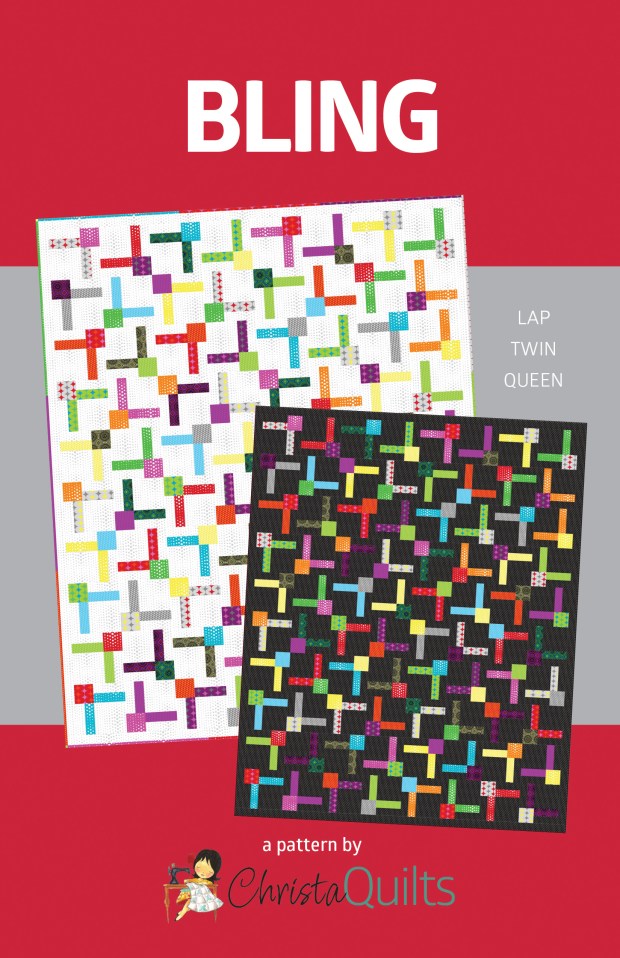
You can make this fun colorful quilt using 20 fat quarters + 4 yards of background fabric. Make it with a rich black background as shown above, or a crisp white as shown below. For other fun color combos – check out my Bling Color Inspiration post.
All you need to join this quilt along is a copy of the quilt pattern and a can-do attitude! I will be showing how to make the Twin size in this quilt along, but you can make any of the sizes listed in the quilt pattern.
The links below will go live as each part is posted. Bookmark this page and refer back to the schedule anytime in the future to work on this quilt at your own pace. The first part – cutting will begin next week on Monday, July 20th, so gather your supplies and get ready to sew!
If you’d like to share your progress, and get extra help from me and other quilt along enthusiasts, be sure to join my ChristaQuilts Facebook Group. It’s a great way to stay motivated! In fact, once you gather your supplies, be sure to share pics of the fabrics you’ll be working with. The best part of any quilt along is seeing how varied all of the quilts turn out to be!
So who’s in??? All you have to do is follow right here on the blog each week as I post the next step. I’ve even got a few videos of the machine quilting when we get to that part – I can’t wait!
When the quilting is finished on your Optical Illusion quilt, or whatever quilt you happen to be making, just the final step of binding is left. I’d like to show you in words, pictures and videos how to bind a quilt. Let’s dive right in.
Finished Optical Illusion Quilt, 67″ x 88″
If you’re still working on your Optical Illusion quilt, no worries! This will be here when you’re ready for it. You can scroll to the bottom for links to all of the steps.
The first thing to decide is whether you want to make the binding from just one fabric or you want to make it scrappy.
Which way you go is just a matter of personal preference, as there is not a right or wrong decision.
Step 1 – Calculate and cut your binding strips
A well-written quilt pattern will tell you how many binding strips to cut, but it’s handy to know how to figure it yourself. To determine the length of binding you’ll need, add up the length of the four sides (known as the perimeter) and then add 10″. The extra 10″ is for the seams and gives you a little insurance.
For example, Optical Illusion finishes at 67″ x 88″. This would be the math:
67+67+88+88+10 = 320″
You’ll need 320″ of binding. We use 40″ as the standard width of useable fabric from selvage to selvage, so from each cut across the fabric, we will get 40″ of binding. So we divide 320″ by 40″ to see how many strips to cut.
320″/40″= 8 strips
Just as a side note, if you ever divide by 40 and get something like 6.49, round up to get the number of strips. If you got 6.49, you’d round up to 7 because you’d need 7 strips.
How wide should your binding strips be cut? It’s a matter of personal preference. Most of my patterns, including Optical Illusion, give 2-1/4″ as the cut width for binding strips. But over the past few years, I often cut my strips 2″ wide and sew them to the quilt with a scant 1/4″ seam allowance. If you’re a beginner, it may be a little easier to cut binding strips at 2-1/4″ wide.
Step 2 – Sew the binding into a continuous length
To join the strips with mitered seams, place two strips right sides together at a 90 degree angle. Sew them together across the diagonal as shown. Join all of the binding strips into one long piece.
Trim the seam allowances to 1/4″ and press the seams open.
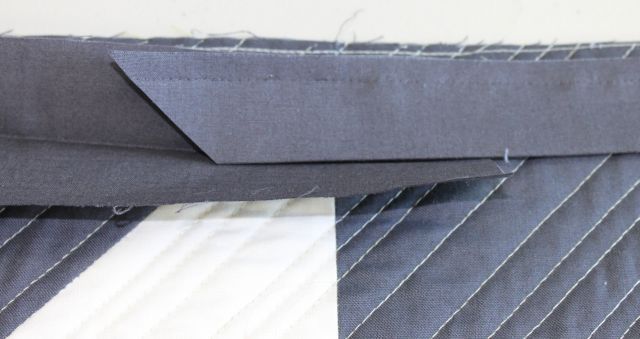
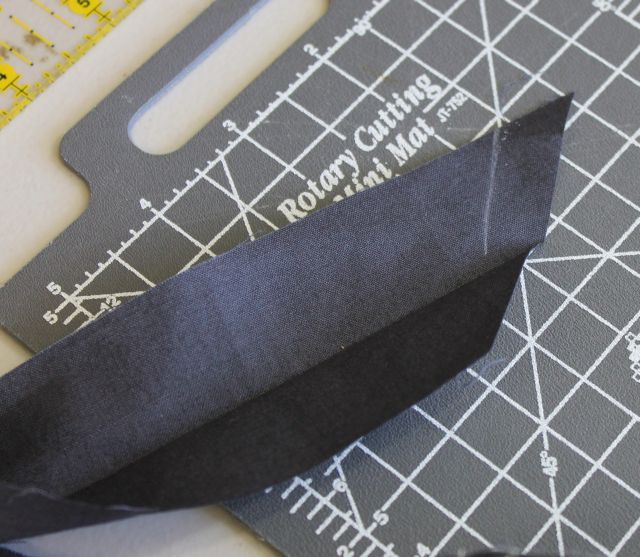
Trim one end of your binding at a 45 degree angle as shown above. This will be the starting end.
Step 3 – Press the binding
Press the binding wrong sides together along the entire length.
Step 4 – Trim the quilt and walk-around
Trim off the excess backing and batting before you attach your binding. I use a large square ruler for the corners, and a long straight ruler for the sides.
Quickly do a “walk-around” by running your binding along the perimeter of your quilt to ensure you won’t have any seams falling in the corners. If you do – move the binding up or down a few inches to avoid seams at the corners.
Step 5 – Attach the binding to the quilt
Please note: These instructions are for sewing binding to the front of the quilt and then sewing it by hand on the back to finish. If you prefer to bind completely by machine, see this video. Or:
Now back to Step 5: Attach the binding to the quilt
Starting at least 6″ – 8″ away from any corner, place your binding on the front side of the quilt and leave a tail of about 6″ – 8″. Line up the raw edges of binding with the raw edges of your quilt. The fold should be toward the quilt.
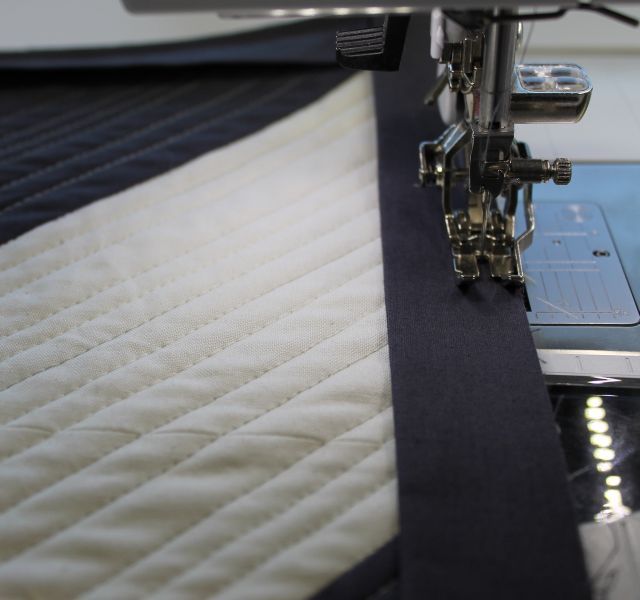
Attach a walking foot or even-feed foot or use a dual-feed setting on your machine. Starting at the pin as shown, stitch the binding onto the front of the quilt with a 1/4″ seam allowance.
As you come to a corner, stop stitching 1/4″ before you reach the corner and sew off the corner at a 45º angle.
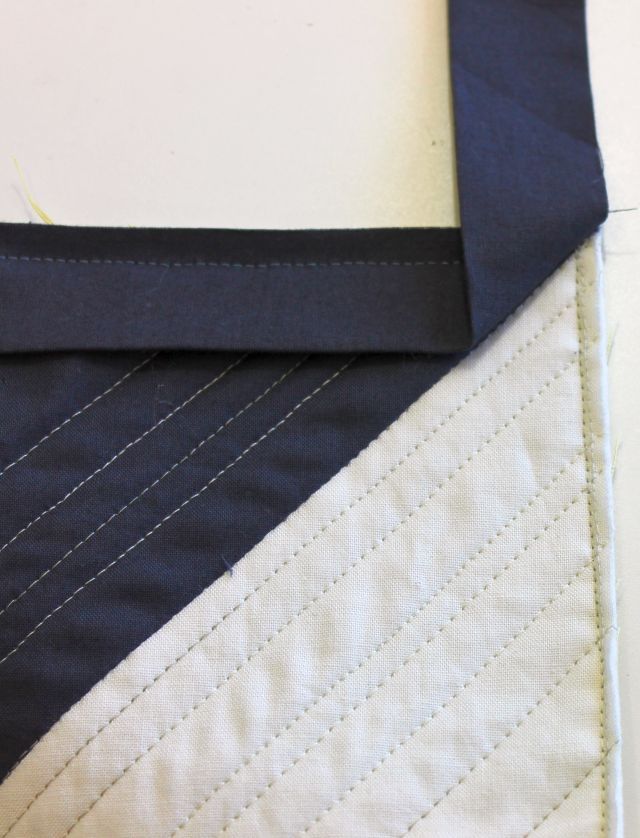
It will look like this. In order to miter the corner, fold the binding up and away from yourself. Keep the raw edges of the binding in line with the raw edges of the quilt as shown.
Next, fold the binding back down toward yourself, creating a tuck of fabric underneath.
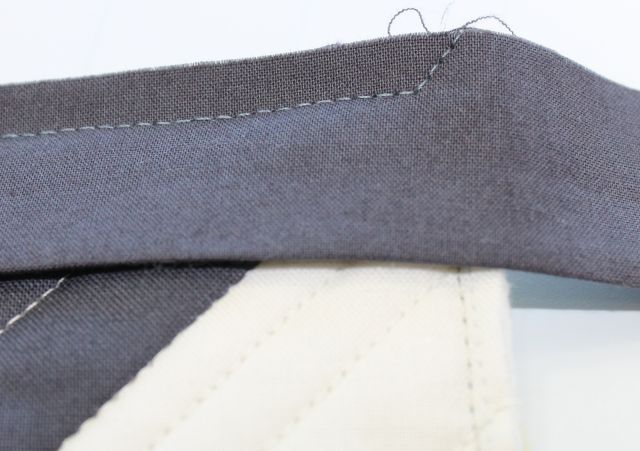
The fold will form a little triangle that stands up off the quilt.
The fold will form a little triangle that stands up off the quilt; later it will form the miter on the quilt front. Now the quilt goes back under the machine.
Starting from the edge of the quilt, stitch the next side of binding down until you reach the next corner. Repeat this process for all four corners until you approach your starting point. STOP when you’re about 8″ away from where you began.
Trim off the excess, leaving a few inches of overlap to work with. Open up the end of binding and place the beginning tail inside it.
Using the cut angled end as a guide, lightly mark a line right up next to it. Then cut 1/2″ away from this measurement to account for seam allowances on both ends.
Put the two tail ends right sides together, and sew with 1/4″ seam to complete the continuous loop of binding. Finger press the seam open.
Sew that last part of the binding to the quilt. Now the binding is attached all the way around the quilt.
Step 6: Sew the binding down
The next step is to fold the binding to the back of the quilt and sew it down by hand. I love using binding clips all round the edges to hold it down. Here’s the only picture I got of my binding Optical Illusion:
Above is a sample I made for my in-person quilting classes. Notice that I used a blending thread so that you don’t see the imperfections.
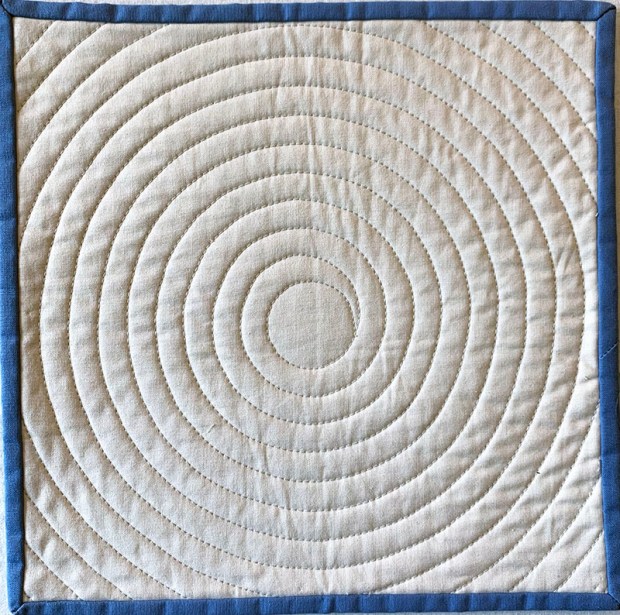
Below is the sample I quilted for you on video this week so you can see how the process works. I quilted with black thread on white fabric which shows ALLL the imperfections, LOL!!
For my Optical Illusion quilt, I used a black/white thread from my Aurifil Variegated thread collection. I love using 50 weight cotton thread for both piecing and quilting, because I’m able to use any leftover bobbins when piecing my next quilt!
Click the image below to watch my spiral quilting video tutorial on my YouTube channel. It’s just over 9 minutes long and will demo how to quilt the basic spiral.
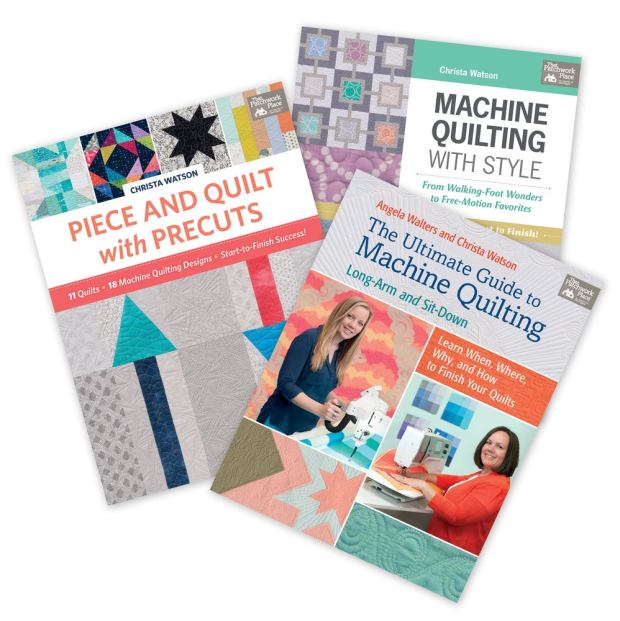
If you’d like to learn how to quilt additional spirals, be sure to grab a copy of my machine quilting books.
In my first book, Machine Quilting with Style, I show how to do the basic spiral, plus a wonky spiral variation. Then I expand on that with overlapping spirals in The Ultimate Guide to Machine Quilting. Finally, I teach how to quilt a continuous square spiral in my third book, Piece and Quilt with Precuts.
All 3 of my books are currently on sale for just now on sale for just $19.95 each until they sell out!
So grab 1 (or all 3) today! And who knows – you may find a completely different design you want to quilt on your version of Optical Illusion.
Remember to share your version of Optical Illusion in my ChristaQuilts Group on facebook. I love seeing everyone’s progress and the variations with all the different fabric colors are amazing!!
Welcome to Part 4 of the Optical Illusion Quilt Along! You’ve made it through the piecing, so congratulations! Now we come to what may not be your favorite part of the process: prepping the backing and batting, and basting the layers together in preparation for quilting.
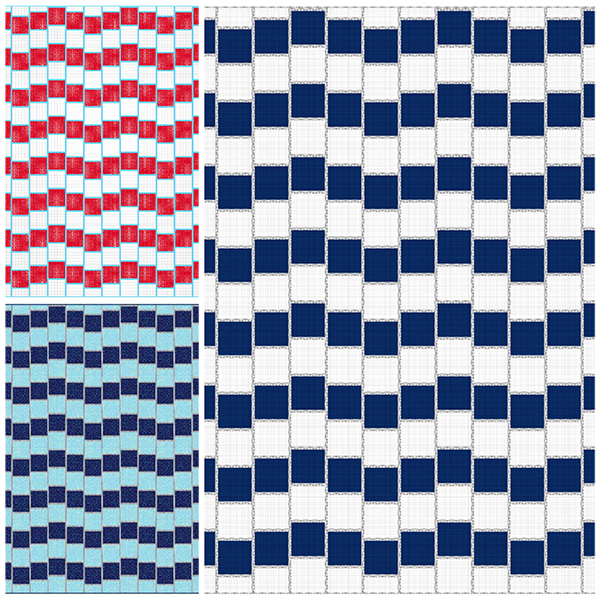
Above is one of the alternate colorways for Optical Illusion. You can make something similar with red, light blue, and white fabric from my online shop.
But if you’ll let me guide you through the next steps, I’ll share some tips to make it less painful and move you along to the quilting that much sooner.
Prep the Batting
The most important step in basting a quilt is to ensure that the batting and backing are several inches larger than the quilt top all the way around.
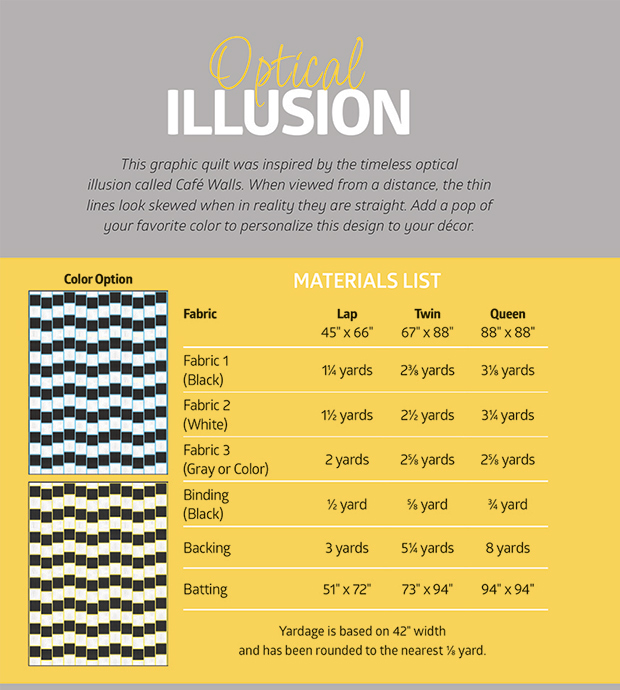
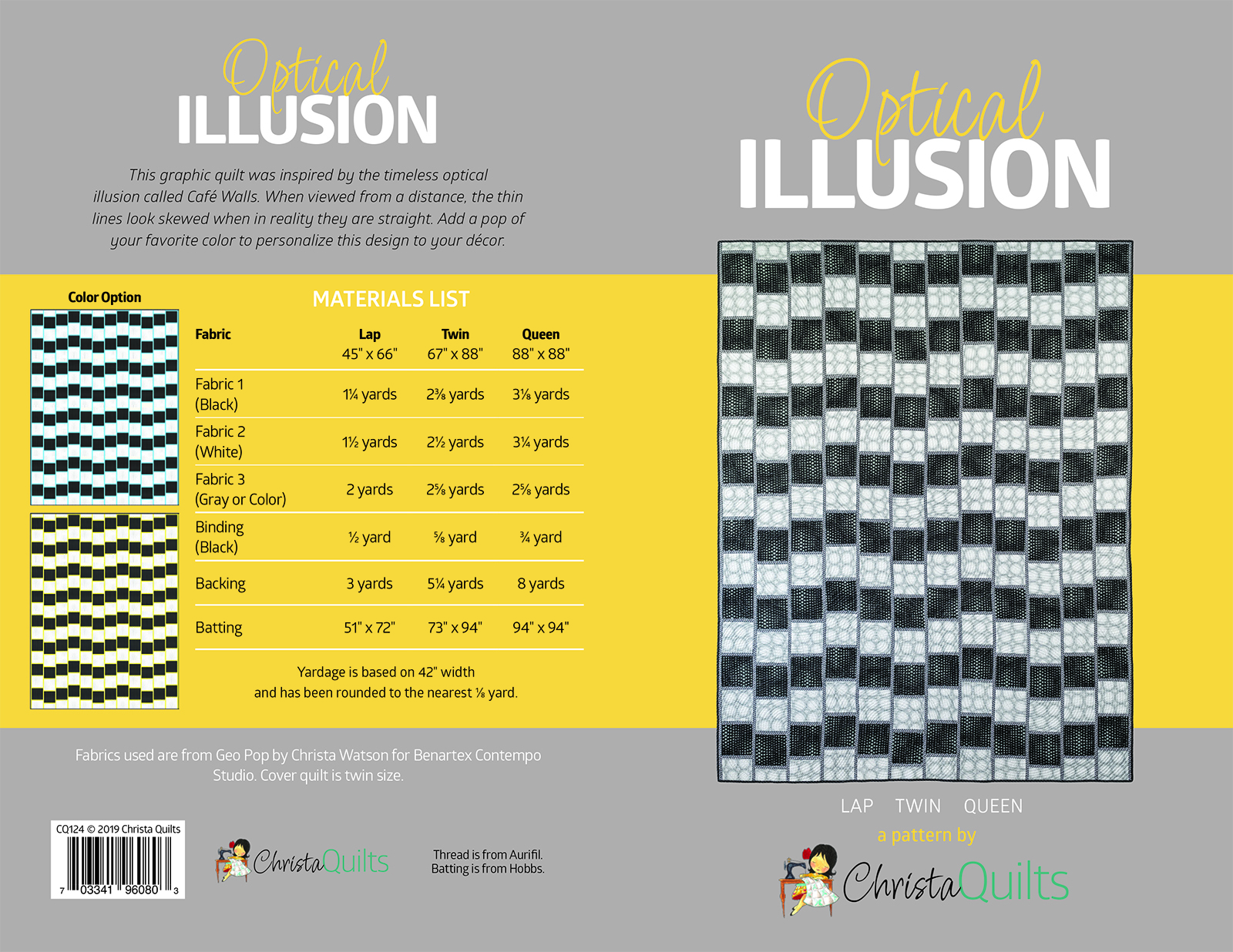
If you look at the back of the pattern, you’ll see that for the batting size, I have added 6″ to the length and width of the quilt top. For example, the lap-size top is 45″ x 66″. The batting needed is 51″ (45″ + 6″) x 72″ (66″ + 6″).
Example of measuring batting from a previous Quilt Along:
The batting should be several inches larger than the quilt top all the way around.
For me, the easiest way to measure the batting is to buy a roll of it, then unroll it across the width of the quilt top and roughly trim off the amount I will need. In the photo above, I’m using Hobbs Tuscany cotton/wool batting which is one of my favorites.
It’s 90″ wide and folded double on the bolt. So after I trim off a chunk from the bolt, I’ll lay the quilt top out and trim off several inches from the top of the batting. I save those chunks to make practice quilt sandwiches later.
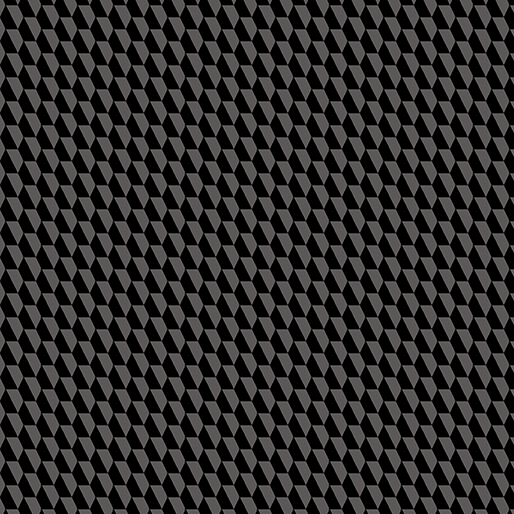
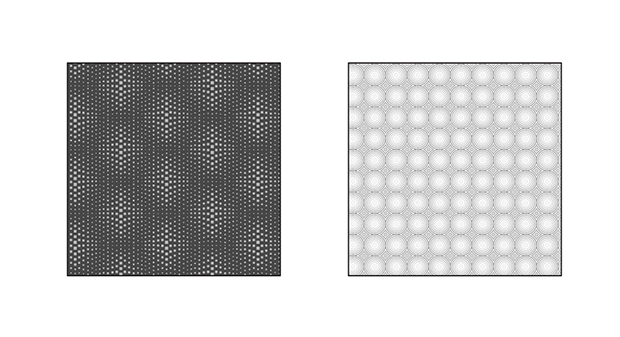
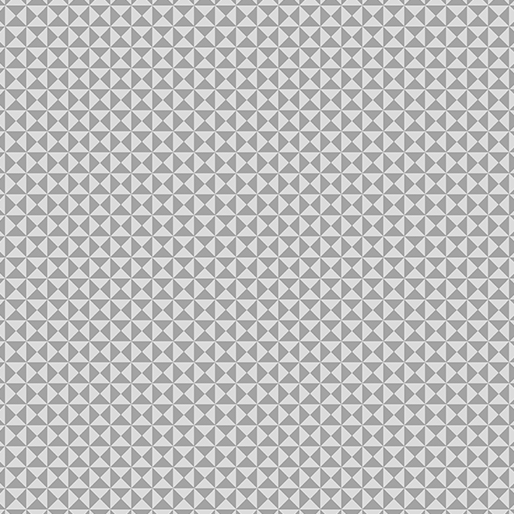
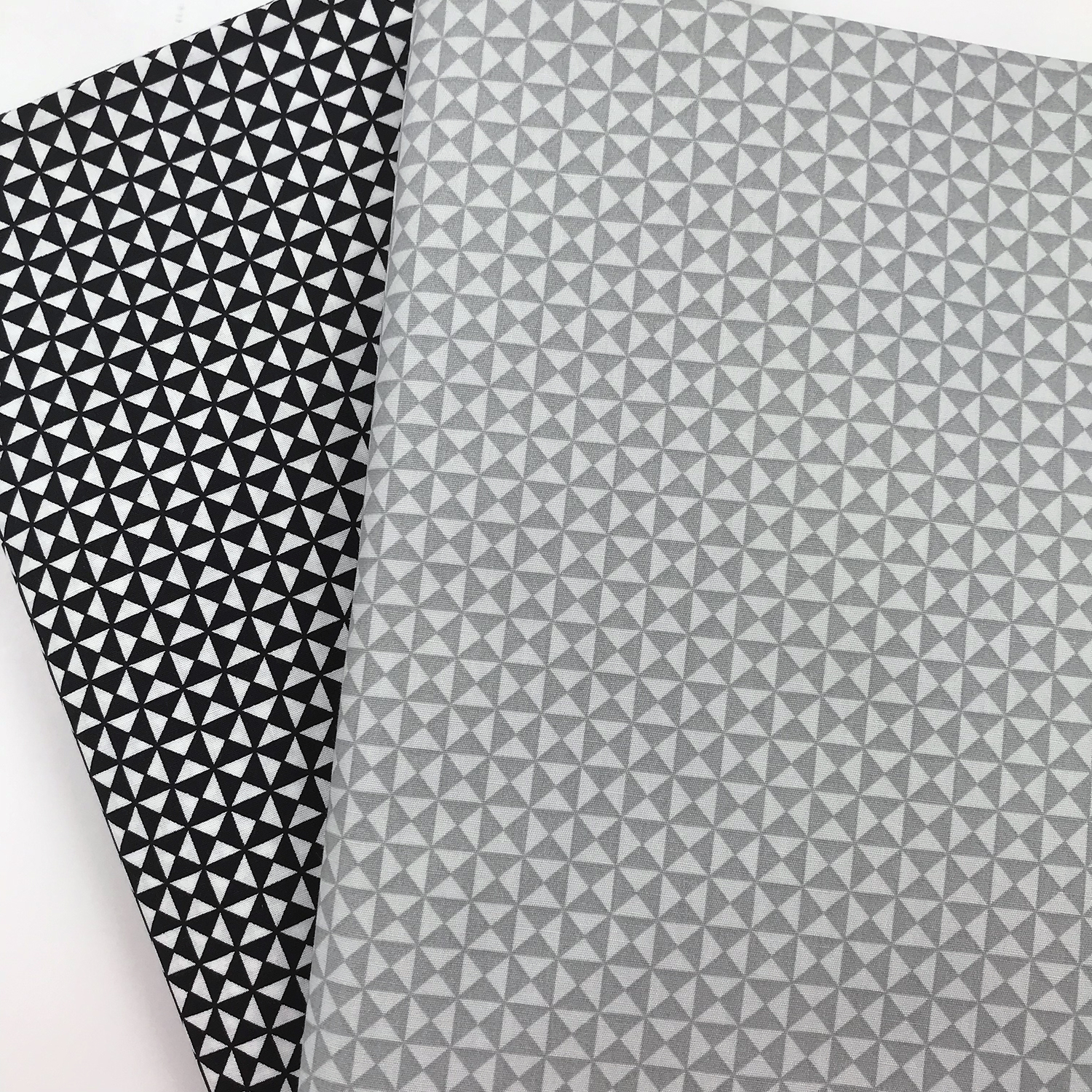
Geo Pop Tiny Hex in black by Christa Quilts for Benartex/Contempo
Piece your backing so that it is a few inches larger than the batting size given on the back of the pattern.
For example, for the lap size, I would cut my three yard piece of backing fabric in half crosswise. This gives me two pieces about 40″ x 54″. I need backing a bit larger than 51″ x 72″.
Backing, pieced horizontally.
I’ll sew the two pieces together for a backing that’s roughly 54″ x 80″. The seam will be horizontal across the quilt.
Now you are ready to baste!
Basting the Layers: Quick Overview
I baste using my design wall and 505 basting spray. I make sure my batting and batting are bigger than my quilt top and I trim away some of excess after it’s been basted. I spray the top and backing outside separately, then assemble all the layers on my design wall, taking care to smooth each layer as I go.
Once everything looks nice and flat, I’ll roughly trim the edges so that only and inch or two remain around all 4 sides. I cut off as much extra as I can to prevent it from tucking under the back and quilting the quilt to itself!!
The final basting step is to iron the quilt on both sides to set the glue and smooth everything out one final time.
I didn’t have a chance to take pictures of this process while making Optical Illusion, but here are links and tips from previous quilt alongs.
And if you have any more specific questions, you can alway post pics and ask questions in my Christa Quilts Facebook Group!
Next week I’ll include a video showing spiral walking foot quilting practice to get you ready for the most fun part of making this quilt!! I can’t wait!!
Spiral Quilting on Optical Illusion can be done with a Walking Foot or Dual Feed system.
Welcome to Part 3 of the Optical Illusion Quilt Along! I hope you are enjoying your fabric choices and feel confident in your cutting and sewing skills. Now I’m excited for you to start sewing the quilt top. It’s easy and fun!
If you haven’t already, please go through your pattern and highlight or circle the number of units to make for your size on pages 3 and 4. You’ll be so glad you did.
Begin with Step 1 on page 3 of your Optical Illusion pattern. Remember to sew with the gray on top for each sashed square. If you do, you’ll automatically alternate the direction in which you’re sewing, which helps prevent your strips from warping.
I press all of the seams open on this quilt. Whether you press seams open, to the side or toward a specific fabric is up to you. The seams don’t have to match up with anything, which is one of my favorite things about this design.
Continue with each Step as given in the pattern, referring carefully to the diagrams in the pattern for each unit. I use sticky notes to label each little pile of units as I finish them.
When you’ve completed all the Steps, move on to Sewing the Rows on page 5.
Sewing the Rows
As I am making the rows, I keep them oriented horizontally so they match the diagrams. Be sure and notice that there are different diagrams for the Lap Size than for the Twin and Queen size. It will help to circle the diagram for your size!
Label the rows with their letters to help you stay organized.
When your rows are finished, give yourself a high five!! Great job!
Quilt Top Assembly
Moving on to Quilt Top Assembly: In last week’s post, I mentioned alternating your sewing direction by keeping the long skinny strips on top. This will be helpful as you assemble the top.
The layout diagram below is included in the pattern. Refer to pages 6 and 7 of the pattern for more info as you assemble, including a method for trimming. Use your design wall to stay organized, or snap a quick picture on your phone for a helpful reference point as you progress.
I pin generously during this process. I match and pin at each end, at the middle and at several points between. Remember to sew with the skinny strip on top each time so that your sewing direction will automatically alternate.
TIP: If you have a row or a sashing strip that is longer than its neighbors, sew with the longer strip on the bottom, next to the feed dogs. This helps to ease in the fullness.
Press the quilt top gently to wrap up the piecing.
SEW A VICTORY LAP!
When the quilt top is complete, you’ll want to “stay-stitch” the edges by sewing across the top and bottom of the quilt. Do this about 1/8″ away from the edge on the top and the bottom so it will be hidden when you add the binding. Just a note: When you make a quilt with borders, you can skip this step since the borders will stabilize the edges instead.
Congratulations! Your Piecing is complete.
Next week we’ll cover how to prepare your backing and batting, and how I baste a quilt. Here is the back of the pattern with info that you’ll need. Click the image for an enlarged view.
You know how much I enjoy machine quilting. Just a few more weeks and we will quilt walking foot spirals—I can’t wait!! Being able to finish your quilt on your own sewing machine because you’ve built the skills to do it is a great feeling. You’re going to love it!
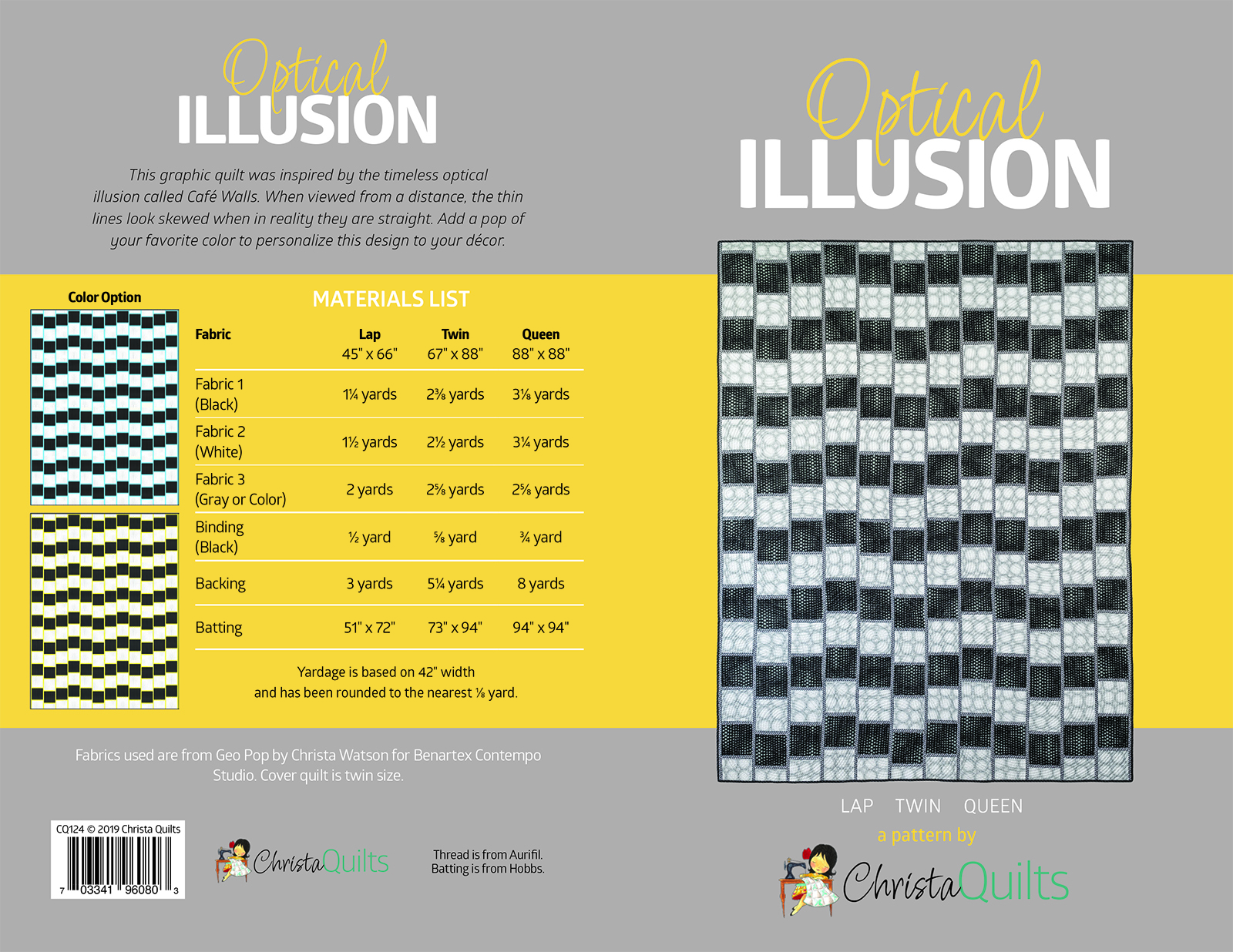
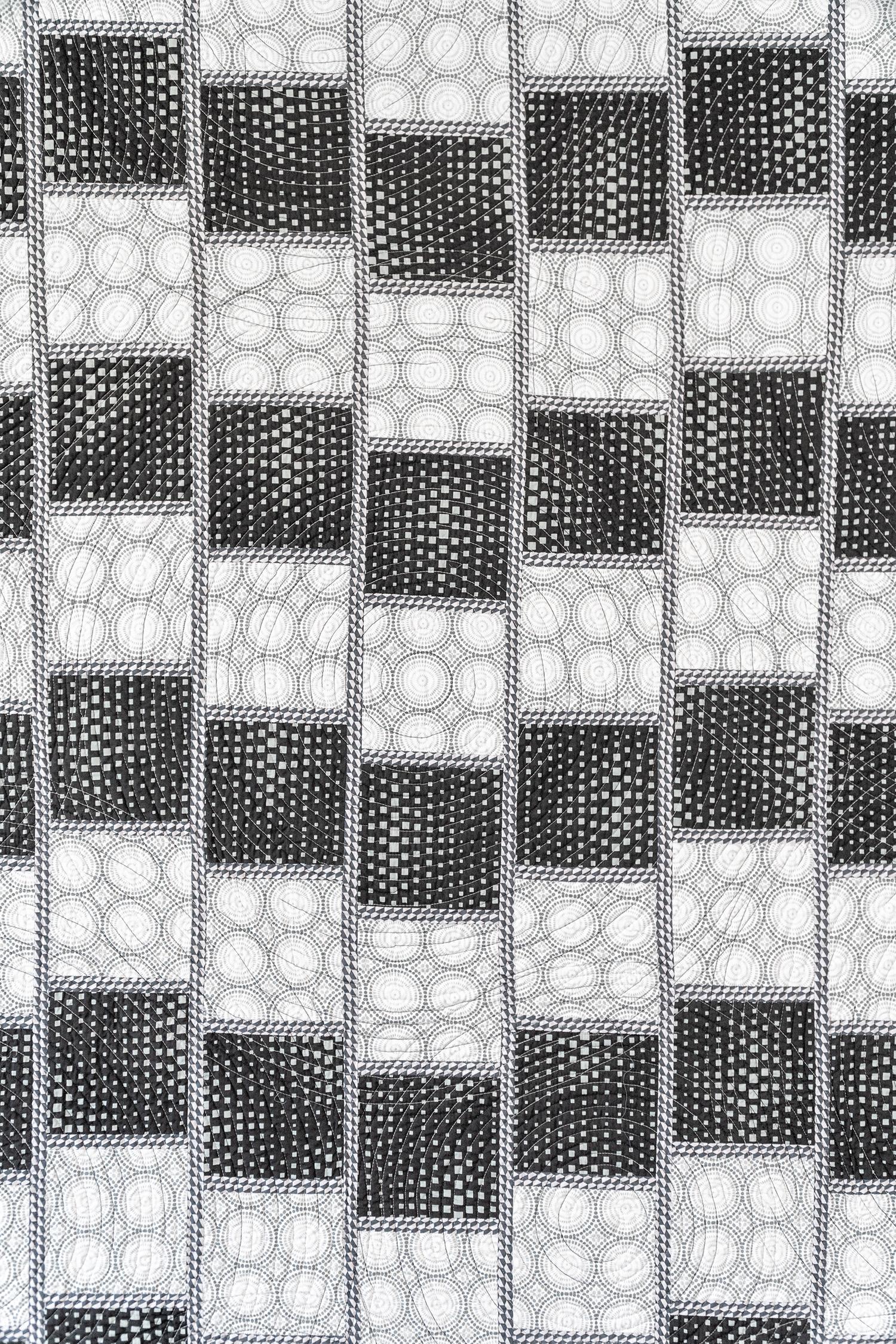
Cutting out the fabrics to make Optical Illusion is pretty straightforward. Just follow the cutting instructions on page 2 of the Optical Illusion Quilt Pattern. You can reference my previous post on choosing fabric color combos that will work. For my version I used highly contrasting black and white for the squares with gray for the long skinny strips.
Before cutting, I highly recommend starching your fabric. This will keep the smaller skinny strips from stretching out of shape and will give body to your pieces as you handle them. I like to use inexpensive starch from the grocery store. I spray one side of my fabric and iron from the opposite side. Then repeat for the other side. It works like a charm!
Cutting the Squares
When cutting the squares, the easiest way is to first cut strips from your fabric, then subcut those strips into the square sizes as indicated in the pattern. If you are using a directional fabric like I did, you can choose to have the print always running in the same direction, or let it be more random. The choice is completely up to you depending on the look you want.Still need the Optical Illusion pattern? Get a printed version or get the instantly downloadable pdf. Refer to the quilt pattern for the number of squares to cut for your size.
When it comes to cutting the rest of the units that are a slightly different size (for the starting and ending rows), be sure to label them to keep the sizes organized. I’m constantly referring to my pattern for unit size and placement so I keep everything in the right spot!
Cutting the Skinny Strips
When you are cutting out long skinny strips, you’ll either need to piece together shorter lengths of fabric to get a long enough piece or you can rotate your fabric and cut them parallel to the selvage so that there aren’t any seams. This is the method I recommend in the quilt pattern.
Cut long strips parallel to the selvage.
You can fold your fabric into about four layers by shaking it out so it hangs straight, then folding it in half, and half again parallel to the selvage. If your folded length of fabric is longer than the width of your cutting mat, I recommend getting another cutting mat and another ruler so that you can line things up along the entire edge.
Once everything is cut, you are ready to start sewing your pieces together next week! Feel free to take your time, or work ahead. The choice is up to you and you are the boss of your quilt!
Are you ready to join me for the adventure of a lifetime? Or at least a fun sewing escapade over the next several weeks? I’m excited to guide you as we make my Optical Illusion quilt from start to finish. All you need is a copy of the Optical Illusion quilt pattern and a can-do attitude!
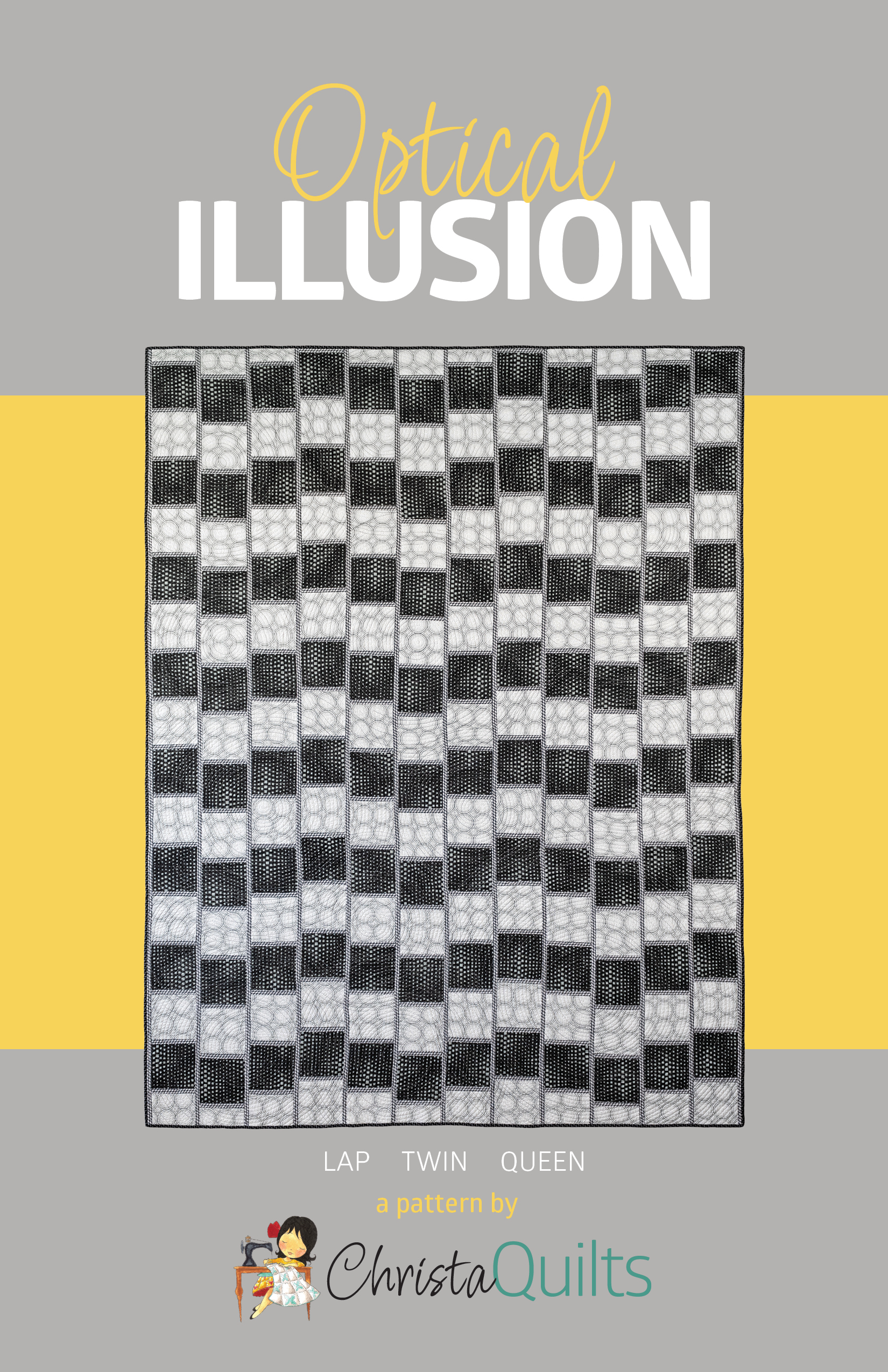
Optical Illusion made from Geo Pop, 67″ x 88″
Scroll this image to see the lines move!
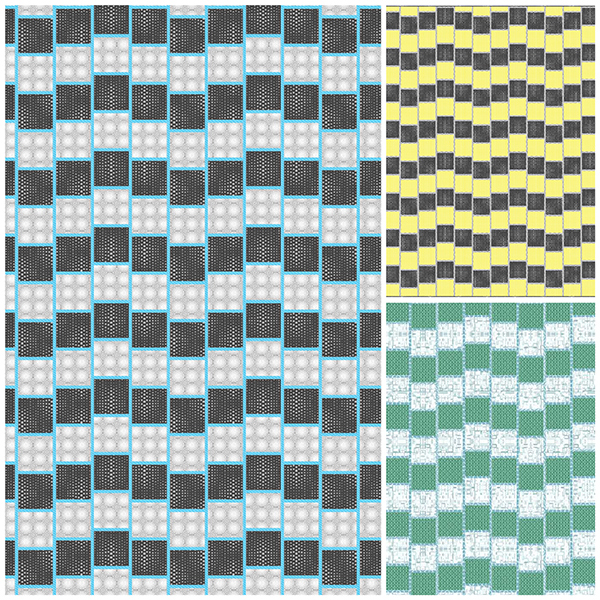
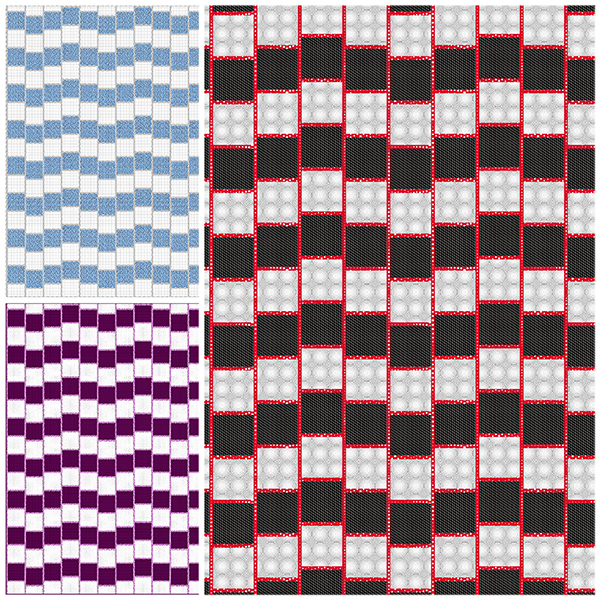
My original version was sewn up in bold black, white and gray from my Geo Pop fabric line. I had requests to see how it would look in other colorways, so thank goodness for EQ8 software which allowed me to quickly recolor lots of fun combinations!
I made some of them into quilt kits which you can pick up if you desire, or just use them as a color guide and pick something similar from your stash.
Color Play: Choose Light, Medium and Dark
The trick to making the design work is the interplay of the values. Value is just the lightness or darkness of a fabric compared to its neighbors. For this design to work you need three fabrics that read as light, medium and dark.
So take a look at these color combos and scroll your screen up and down to see the illusion of the lines waving back and forth. Pretty trippy right?
The illusion works because the medium fabric is ALWAYS used for the skinny strips whereas the light and dark color combos are used for the squares.
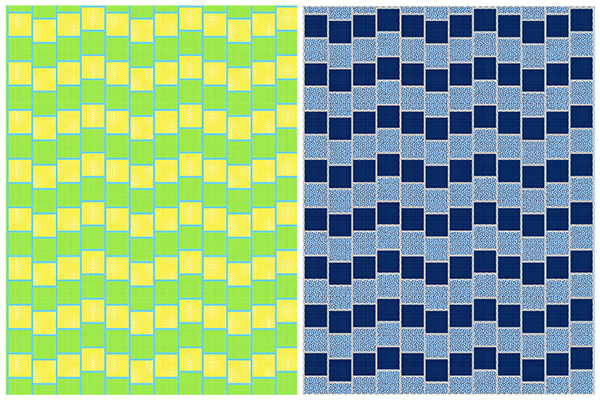
Here’s another group of colors that also showcases the illusion with some interesting color combos:
Solids, or fabrics that read as a solid look best for the bold, graphic design, but that doesn’t mean you can’t use prints. Just be sure you choose something that is mostly one color or color family per print. Here’s another color grouping that works well:
Remember, for best results, use the lightest and darkest fabrics are for the squares, with the medium for the skinny strips. To test the value of your fabrics, take a picture set on gray scale from your camera phone. Then you can easily tell which should be classifued as light, medium or dark.
That’s a dozen different combinations that WORK! (Many are available as kits for the Quilt Along.) I have no idea why our brains read it this way, but it sure is cool, don’t ya think??
Now…
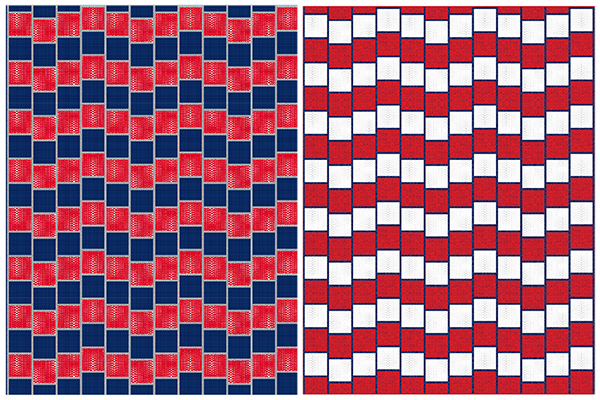
Watch what happens when the skinny strips are LIGHTER or DARKER than the two colors in the squares. It creates too much contrast and doesn’t give the illusion.
These 4 colorways above and below still make a nice looking modern quilt, so don’t despair if your color combos don’t work exactly as you thought. Part of the fun is learning new things, right??
For further discussion and some more examples, check out this video from my Facebook Live “Ask me Anything” series. Click the image below to play. It’s just under and hour and I go through color combinations as well as other quilty tips and advice asked by the audience. (I do these live sessions each wee k and have started posting them on YouTube so be sure to subscribe!)
In my examples, I’ve used mostly prints that read as one color for the best results. But don’t worry—the modern quilt design looks cool whether the illusion works or not!
Optical Illusion Supply List
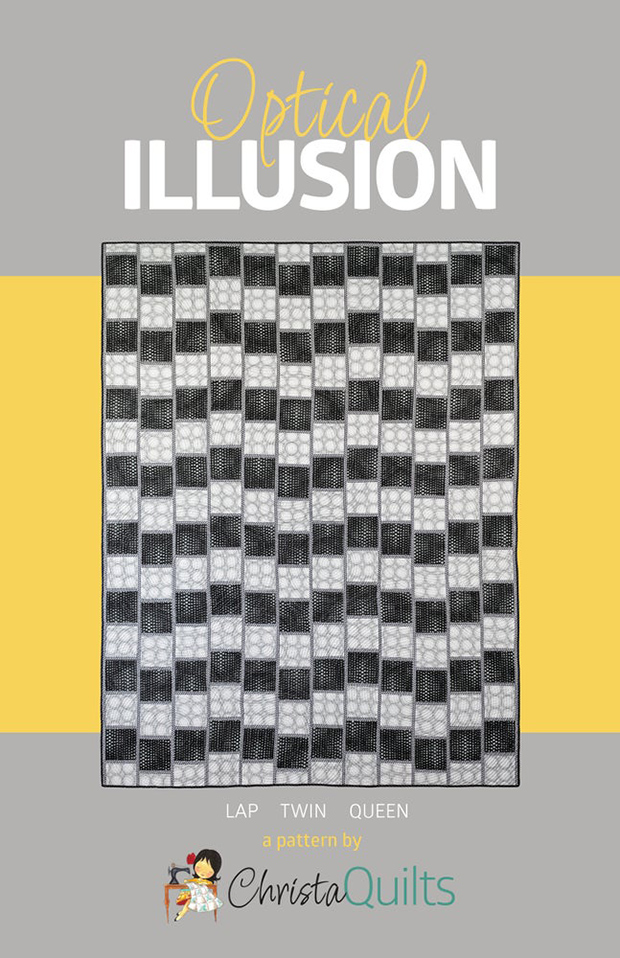
Start thinking about the colors and fabrics that you would like to use, and gather up the needed supplies. The quilt pattern comes in three sizes. Click the pattern image below to expand.
Here’s what you need for the Twin size quilt top (67″ x 88″), which is what I made:
I can’t wait to show you how to quilt the walking foot spiral design!
Quilt Along Schedule
The links below will go live as each part is posted. Bookmark this page and refer back to the schedule anytime in the future to work on this quilt at your own pace.
If you’re an Instagram junkie (like me!), please tag me at @christaquilts and use the hashtag #opticalillusionquilt so I can see what you are doing and cheer you on!
If you’d like to ask questions or need additional help, please participate in my Christa Quilts Group on Facebook. It’s a great place to encourage your fellow makers and get additional ideas for fabric choices and a quilting plan!
Sign up for Email Notifications
Be sure to enter your email address in the box on the sidebar of this blog. If you are viewing this on your phone or tablet, scroll aaaaaaaallllllllllllll the way down to the bottom of the page to find the email address box.
I’m super excited about my next quilt along which will kick off on May 19th with a complete sewing schedule and supply list. Every time I share my Optical Illusion quilt, I love how many people ask for the quilt pattern. I’ve also had numerous requests for a quilt along, so I was finally able to work it in to my schedule, yippee!
Several years ago, my family and I were out to dinner and I saw this really cool optical illusion on the back of a kid’s menu. As with most things whenever I see an interesting design, I wonder to myself, “can I make a quilt out of that??” The design was called “Cafe Walls” and here’s a public domain image of it:
Cafe Walls Optical Illusion
So I began to design in EQ8. It took awhile to get the proportions right and I decided that for an interesting quilt, I preferred the lines to run vertically rather than horizontally.
Once I was happy with my design, I made a version of it from solid fabrics, to try out the idea. It actually hung in QuiltCon back in 2015 and I had sooo many requests to turn it into a quilt pattern, but was so overwhelmed with other deadlines at the time that I had to put it on the back burner for awhile.
I did manage to get it into an issue of a magazine, that is sadly no longer in print, and then I kept putting off the editing and rewriting I needed to release on my own. Since then I’ve seen several different design variations, so it’s fun knowing I’m not the only one who thought this would make a fabulous quilt!
The original version of Optical Illusion Hung at QuiltCon in 2015
Finally, the timing was right to recreate the quilt and pattern when I released my fourth fabric line, Geo Pop for Benartex. I included a lot of black and whites in this colorful collection and knew I wanted to do something special with them!
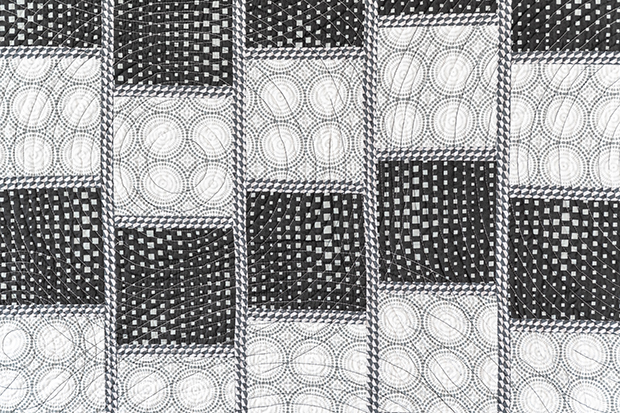
As you can see from the detail pic below, I only needed one black fabric, one white fabric, and one gray fabric to create the design. The biggest test for me was to see if the illusion would still work using prints – and I’m thrilled that it does!!
So I really hope you’ll join me for this quilt along to make your own version. Here’s a hint as you start thinking about colors: It doesn’t have to be strictly black and white. But you need good contrast between the lightest color (white), the darkest color (black) and the medium color (gray) to make the illusion work. And the further back you stand, the more you will see the illusion.
Next week I’ll post the full supply list and quilt along schedule, and we will actually dive into making the quilt starting on Tuesday, May 26. So that gives you plenty of time to start gathering your supplies.
Get the Optical Illusion Quilt Pattern
For now, grab a copy of the quilt pattern or optional kit and be sure to sign up to get an email whenever there’s a new blog post. You can do that by entering your email address in the sidebar if you are viewing this on a computer. Or scroll AAALLLLL the way down to the bottom of this post if viewing on your phone.
If you really ant to see the illusion in this quilt, scroll up and down to see the lines wiggle!!
Next Week: Choosing Fabrics
In addition to posting the schedule next week, I”ll dive into sharing some tips and trips for successful fabric combos. The quick answer is that you want very good contrast between light, medium, and dark, with fabrics that read as one color. I’ll go in depth with this more next week with good and not so good examples of successful fabric combo’s. See ya then!
Now we come to everyone’s least favorite part of quilt-making: the basting! But if you take it one step at a time and prepare the layers of the quilt properly, this part will be a breeze, and you’ll be on to quilting in no time.
The Batting Should be Several Inches Larger that the Quilt Top
The most important step in basting a quilt is to ensure that the batting and backing are several inches larger than the quilt top all the way around. Sometimes I can get away with less If I’m careful.
For me, the easiest way to measure the batting is to buy a roll of it, then unroll it across the width of the quilt top and roughly trim off the amount I will need. In the photo above, I’m using Hobbs Tuscany cotton/wool batting which is one of my favorites. It’s 90″ wide and folded double on the bolt. So after I trim off a chunk from the bolt, I’ll lay the quilt top out and trim of several inches from the top of the batting. I save those chunks to make practice quilt sandwiches later.
For my backing I used the same gray Hourglass print that I used for the background because I really like it! The busy print will help hide any quilting imperfections!
Refer to page 7 of the Block Chain quilt pattern for how big to cut your backing pieces. The backing should be a few inches larger than both the quilt top AND the batting so you have plenty of room for basting. The extra will get trimmed off later. I like to sketch out a diagram of my quilt backing so I know how to piece it together.
For my size quilt (69″ x 69″) I want to piece together a square that’s approximately 76″ – 80″ square. Once I trim off the selvages, the width of the diagram below will be about 80 wide. I can cut my backing (4 1/2 yds total for this size) into two equal pieces, about 80″ each (2 1/4 yds x 36″, rounded down an inch). I sew my backing together with 1/2″ seam and press the seams open.
Time to Baste!
I didn’t take step by step pics when I basted this quilt. However, I used my fast and easy spray basting technique that I use on each and every quilt. You can click here for a step by step photo tutorial of the process, or click the image below for a speedy YouTube video of the process (on my Infrastructure quilt:
My favorite part of making any quilt is machine quilting it and I can’t wait to share some video snippets on how I actually quilted this quilt!! It’s a modern, geometric design that is fast, fun and easy to do! So join me again next week, and don’t worry if you aren’t to that point yet. I’ll keep these quilt along tips on my site indefinitely so you can refer to them any time you need to!
What a week it has been since we began! I know that many of you are home sewing and I hope this Block Chain quilt along is just what you need to make something beautiful when the world is in a bit of chaos! This week we will be sewing our chain blocks using the 5″ charm squares + black accent fabric.
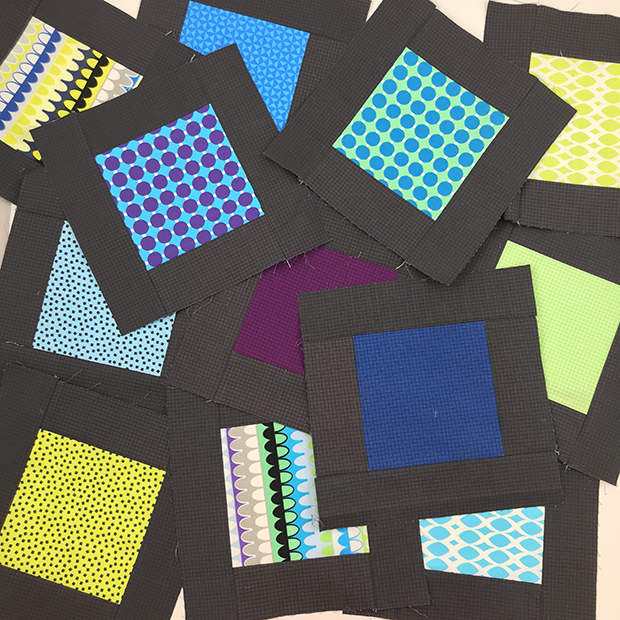
Follow the Block Chain pattern instructions on page 2 to trim down your black strips, and sew the center units shown above.
For the next step, I used the hourglass fabric in gray for my contrasting background because I love the texture, but I think it would look super cool with the black/white print also.
Continue with the pattern instructions on pages 3-5 to sew as many blocks as you need for your size. The contrast around the center squares really makes them pop!
Tip: when sewing all of the complete blocks above, I like to chain piece as much as possible. That means sewing all of the same unit to all of the blocks, one right after the other without clipping threads in between. I prefer to sew with a shorter stitch length (2.5 instead of 3.0) and press my seams open for nice, flat blocks.
Sewing with a shorter stitch length also hides the piecing thread so it doesn’t poke through in between the seams. I used my neutrals thread collection for piecing this quilt because they blend into all of the different colored fabrics.
LOOKING AHEAD TO NEXT WEEK:
Next week we will start sewing our blocks into the quilt top. Just remember, you can work at your own pace, faster or slower as you wish. I’m here to cheer you on each step of the way!



























 Christa Quilts