Designer Sampler – Free Quilt Block Tutorials for You from Benartex

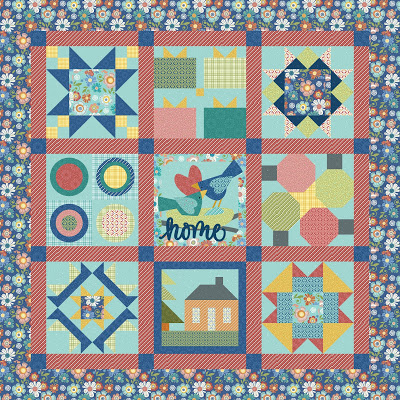
One of the fun things I love about designing fabric for Benartex is being able to express myself creatively through fabric. I also love getting to know their other fabric designers and see the amazing things they make! Recently Benartex pulled together a fun collaboration to create this fun sampler quilt. Each block was designed by one of nine current fabric designers who participated, and there are instructions to make each block as well as the full quilt over on the Benartex blog.

Benartex Designer Sampler in Solids

Designer Sampler in Solids
Click here for the Sampler introduction
Click here for finishing instructions

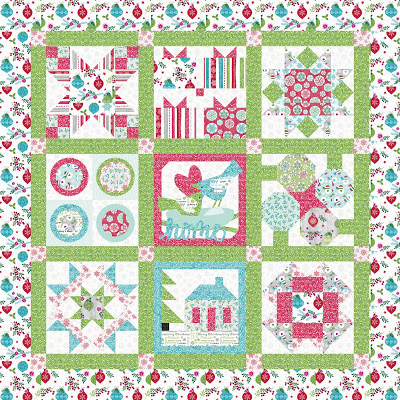
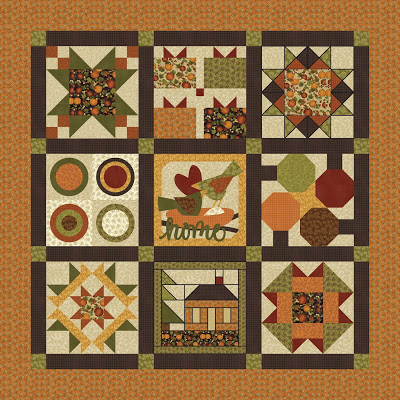
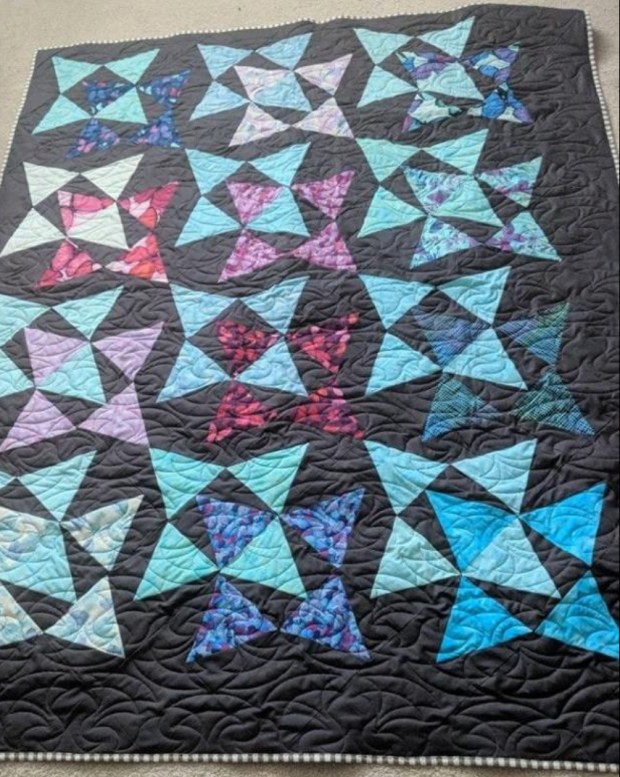
As an inspiring bonus, the folks over at Benartex recolored the sampler quilt using each designers’ latest fabric line. Links to each block and fabric collection are below each image:

Jackie Robinson Festival of Roses

Click here to see Jackie Robinson’s “A Festival of Roses” collection
Click here for instructions to make Jackie’s Rose block

Amanda Murphy Thankful

Click here to see Amanda Murphy’s “Thankful” collection
Click here for instructions to make Amanda’s Octablock

Nancy Halvorson Home Grown

Click here to see Nancy Halvorsen’s “Home Grown” collection
Click here for instructions to make Nancy’s Home block

Cherry Guidry Hearty the Snowman

Click here to see Cherry Guidry’s “Hearty the Snowman” collection
Click here for instructions to make Cherry’s Hearty Gifts block

Modern Quilt Studio Warp and Weft

Click here to see Modern Quilt Studio’s “Warp and Waft” collection
Click here for instructions to make Bill & Weeks’ Jawbreaker block

Ann Lauer Catitude Christmas

Click here to see Ann Lauer’s “Catitude Christmas” collection
Click here for instructions to make Ann’s 8-Pointed Star block

Cheryl Haynes Harvest Berry

Click here to see Cheryl Haynes’ “Harvest Berry” collection
Click here for instructions to make Cheryl’s Pumpkin House block

Paula Nadelstern Piece and Joy

Click here to see Paula Nadelstern’s “Piece & Joy” collection
Click here for instructions to make The Big T block designed by Stephanie  Sheridan

Christa Watson Abstract Garden

Click here to see Christa Watsons “Abstract Garden” collection
Click here for instructions to make my Sunshine block

Isn’t it fun to see how unique a quilt looks made up in different fabrics? This is a great way to experience the variety of colors and styles that Benartex offers. Now I want to make them all!!

Tutorial: How to Build a Design Wall for Quilting

When we moved into our new home, the highest priority for me was getting my quilting studio up and running since quilting is my full-time job. I’ve had many people asking me how I built my design wall in my old house, so when we created it again in the new place, I took step by step pictures so I could tell you all about it in detail. So here goes:
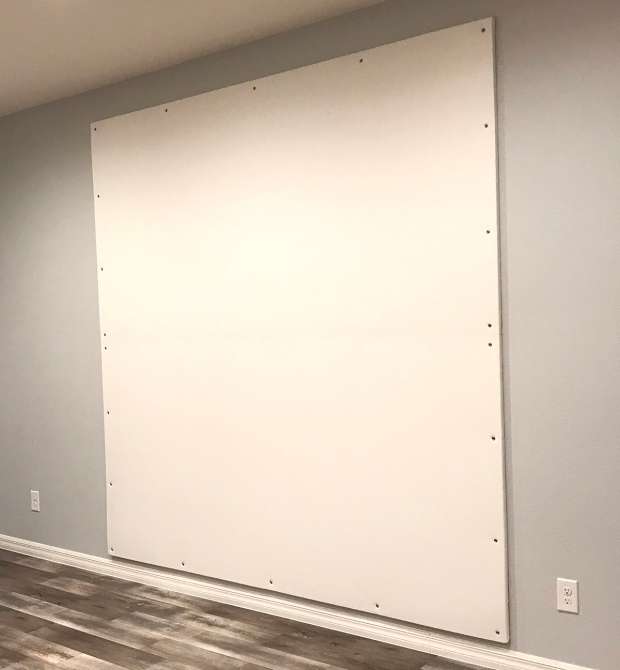
Design Wall built by Christa Watson and hubby

My design wall does double duty – I also use it for flat quilt photography.

Materials to Build a 96″ x 96″ Quilt Design Wall

Two Foam Core Insulation boards, 4′ x 8′ each. You can always cut them down if it’s too big. These are available from Home Depot or other home improvement stores. Be careful handling them as they are very fragile and can dent and break easily. When Jason and I purchased them, we had to look through all of them on display to find the nicest, newest looking boards.

Design Wall Boards

Getting the boards home in our SUV was the hardest part of the job! Fortunately they just barely fit in the back of the car with the seats down.

California King Size White flannel flat sheet. Because the design wall is square, you want as much extra room as possible to wrap around the edges. I found a 108″ x 108″ sheet set from Bed, Bath and Beyond. It was easier to purchase the whole sheet set rather than just the top sheet, so I just donated the fitted sheet and pillowcases. You’ll want to iron it ahead of time to get out all of the wrinkles. I did not prewash because I didn’t want it to shrink up.
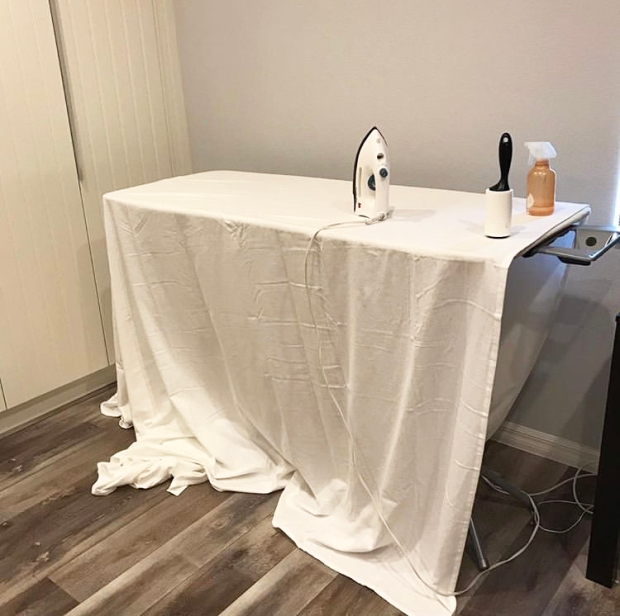
White flannel sheet for design wall

Be sure to iron out the wrinkles as much as you can.

Supplies: washers, screws, duct tape, screwdriver, level and a staple gun. This design wall is very light weight and attached directly to the wall so no crazy equipment is needed. We used regular 2″ long screws with washers to hold them in place. A level comes in handy, too.

Tools and supplies to build a design wall

Not pictured: duct tape, level, and a hand-held screwdriver.

Step 1 – Tape the Insulation Boards together

The boards we bought have writing on one side, and a silver reflective surface on the other side. We chose the silver side to be the front so that none of the writing would show through on the front. It’s also easy to pin into.
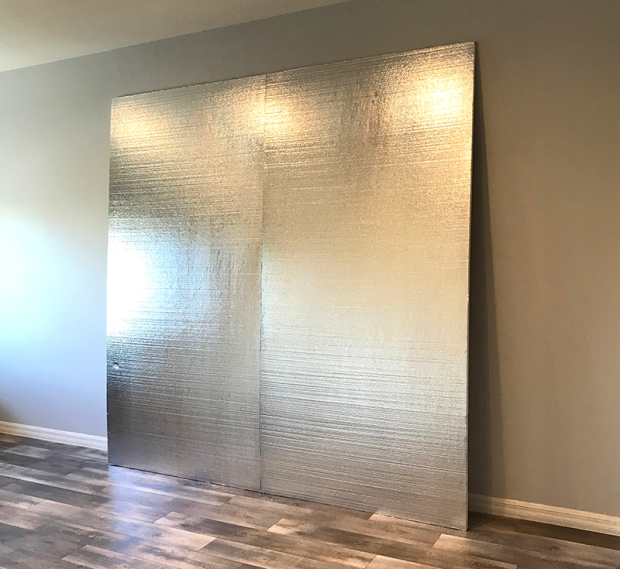
Foam Board Front

One of the boards had a small dent on the front which we didn’t see. Fortunately, it didn’t show up at all, once we covered them in flannel and attached to the wall.

I thought it was funny that the boards say they are specifically for craft projects. I don’t remember that writing the last time I made a design wall for my other house over 5 years ago.
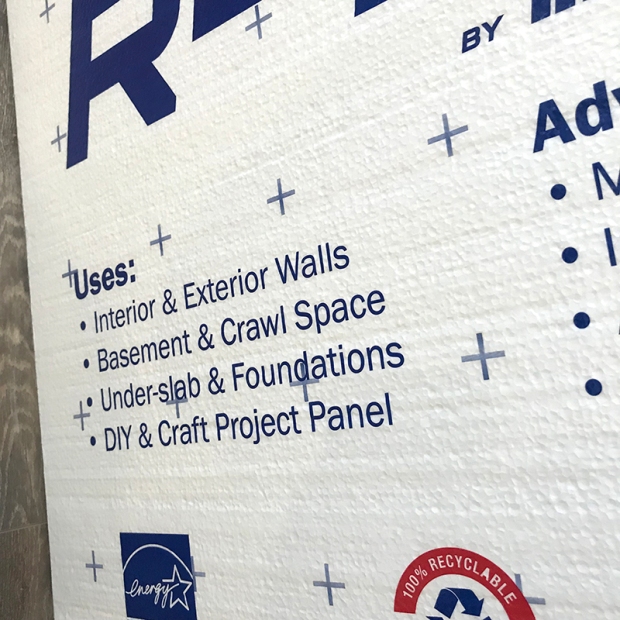
Foam Insulation boards writing

We started off by taping the boards together on top of a couple of tables and barstools pushed together at the right height. But then we realized you could do this on a hard floor as well. My previous studio was carpeted so we needed to do everything on a flat table. This time around, the studio floor worked well for all of the other steps.

Jason taped the back middle seam with duct tape as far as he could reach. We had to be careful handling it because it wanted to fold along the seam. At this point, it’s not very stable, but big and awkward.

Taping the insulation boards together

Step 2 – Cover the Boads with A Flannel Sheet

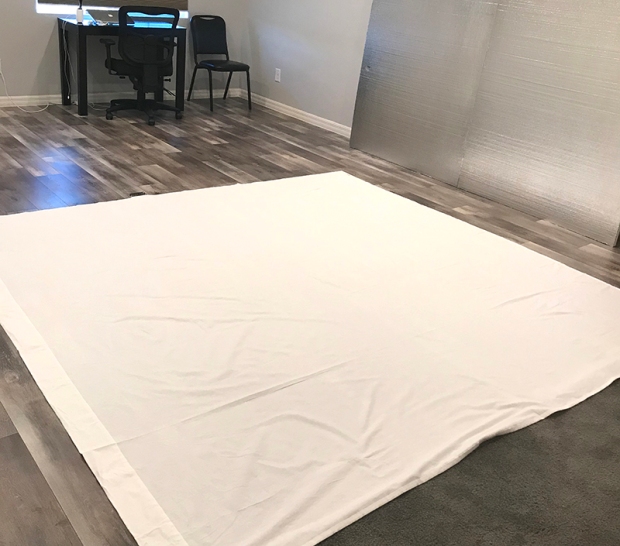
The reason I chose a flannel sheet is that it’s lightweight, gives an even surface, and fabric and quilts will stick to it. I also think it looks much nicer and cleaner than batting and I can still pin into it if needed. We laid the flannel sheet on the floor first, and then gently laid the taped boards wrong side up on top of it.
Flannel

There was just barely enough width on the floor for the sheet and boards because we installed a floor plug in the middle of the room where my sewing machine goes. It’s important to have a flat work surface when doing this part so it doesn’t dent the foam. I didn’t worry about the top seam in the sheet since it would be wrapped around to the back side.

When this is hung, the seam will be horizontally in the middle so that one board basically sits on top of the other. That will make the seam on the front side less noticeable and will give the whole structure more stability once it’s attached to the wall.

Design Wall in Progress

Very smoothly and carefully, we wrapped the excess flannel around the boards, 2 sides at a time.
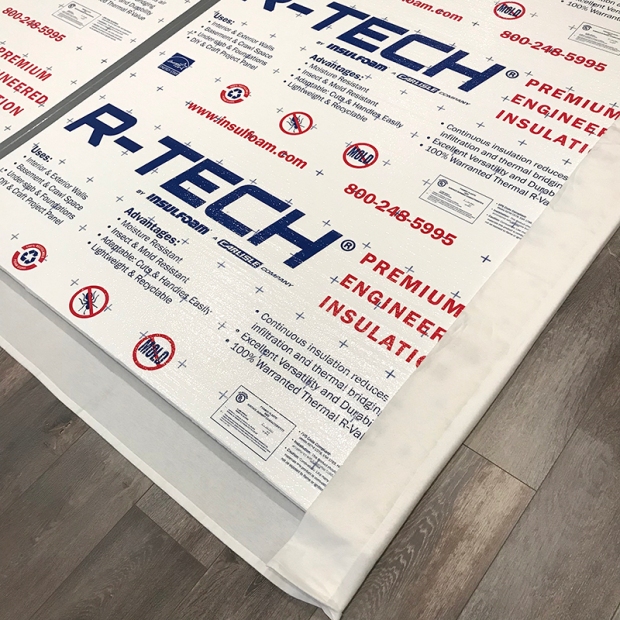
Wrapping the board in flannel

First we stapled the “top” and “bottom” sides and then the edges, very close together.  Jason discovered that he had to put a little bit of pressure while using the gun and staple straight down, otherwise the staples would come out easily.

Stapling the sides

After a few staples, Jason drew a straight line so that he could pull the edges taught and even and line up the staples about 5″ or so from the edge. Keeping a little tension on the sheet was important so that it would be smooth and tight across the surface and not sag.
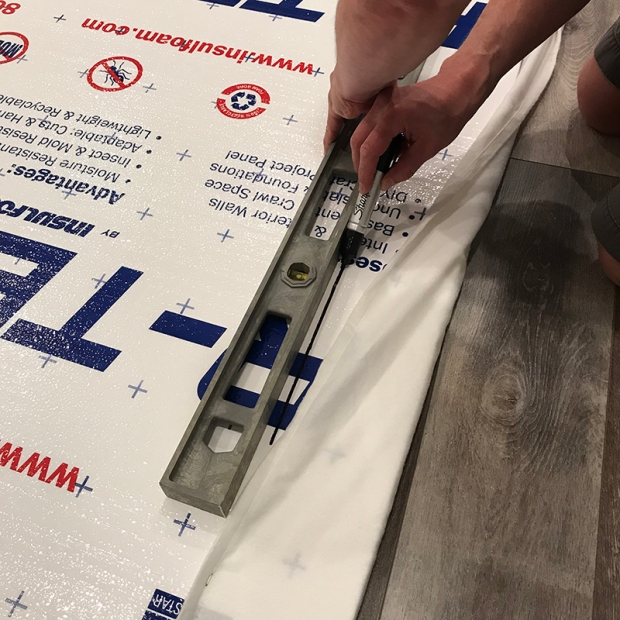
Level for marking

The corners were a bit bulky so I tried to fold them over as best as I could so that it was smooth and tight around the corners. We used lots more staples here. I probably could have cut some of the bulk from the corners, but didn’t want to risk it in case we had to redo something. Fortunately we didn’t and the bulk of the flannel was smooshed flat against the wall, once everything was attached.

On the sides with corners, Jason stapled a few in the middle, then the corners, then worked his way in sections to even out any of the stretch in the flannel.

Lots of Staples in the Corners

We added lots and lots of staples to secure the flannel.

Step 3 – Attach the Design Boards to the Wall

We measured where we wanted to hang the design wall – centered halfway across the room and in between two plugs on the wall. We wanted it 5″ from the floor so we found a box that height that we used to rest the design wall on while we gently nudged it into place.

My job was to carefully hold the design wall against the wall while Jason attached it into place with screws. He used a measuring tape and level to ensure that it stayed straight and square while attaching.
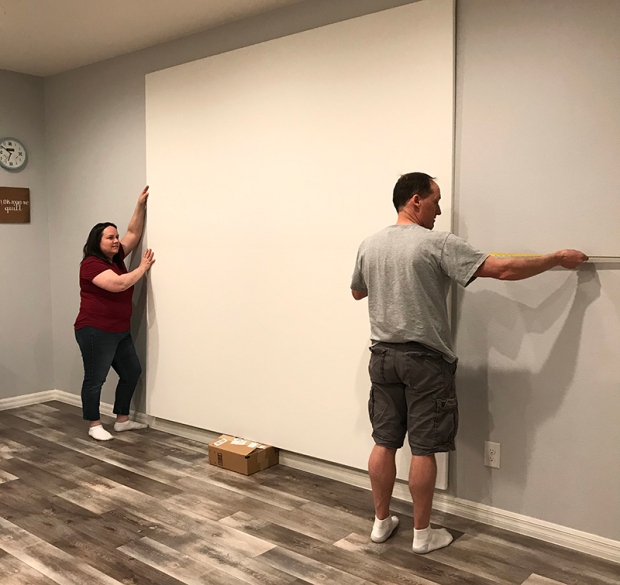
Measure

Jason measured 1 1/2″ away from the edges using a washable marking pen. Then he screwed the screws directly into the wall with a regular screwdriver, making a hole in the flannel that was covered by the washer. The washer gives a decorative element and also prevents the screw from digging into the foam.
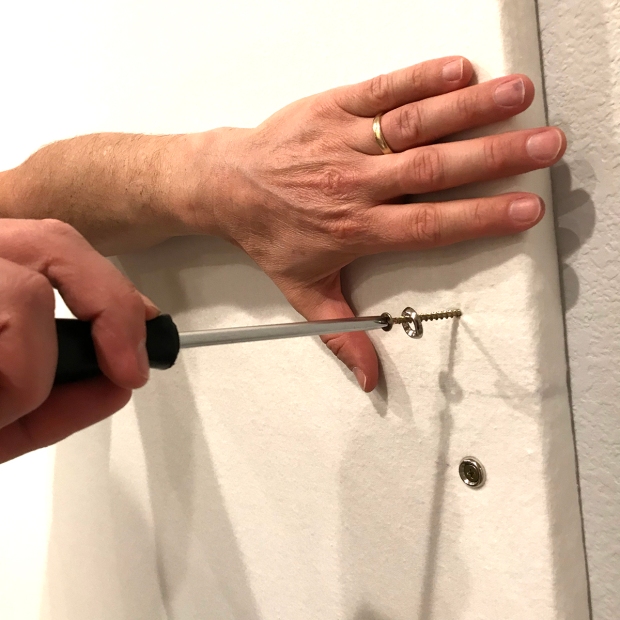
Attaching the screws in the design wall

First Jason attached two screws on either side, where the boards meet up in the middle. This would be the two top corners of the bottom foam board. Then he attached screws in the upper corner of the design wall, and then in the lower corners.

Attaching Top Screws

Then he attached 2 more screws in the lower corners of the first design board – so 8 screws and washers to secure the boards to the wall, holding down all 4 corners of each foam board.

Attaching side screws

We attached a total of 14 screws and washers, evenly across the top and side edges. Here’s what it looks like with all screws attached. You can see the faint line where the boards meet up in the middle, but that softens up over time and will be mostly covered by quilts anyway.
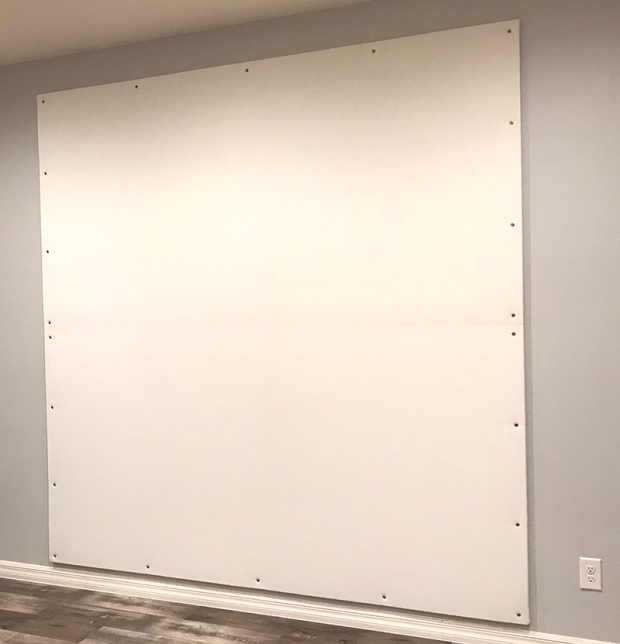
Finished Design Wall

I added a recent quilt finish to the wall to give my room a pop of color that I really love! Now I’m ready to make and photograph more quilts for your viewing pleasure!!

Christa Watson Quilt Studio

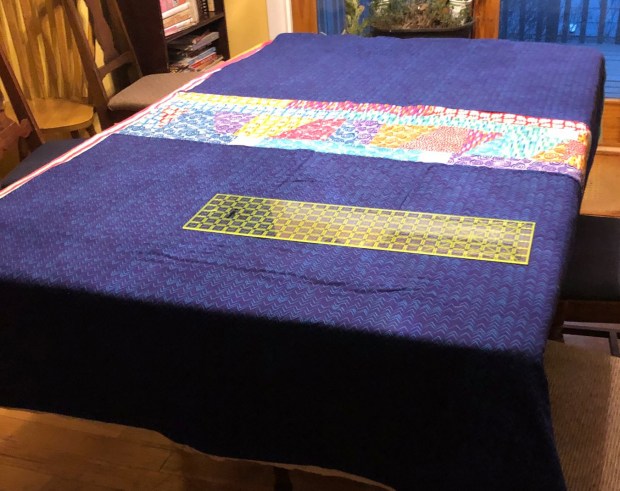
The quilt on the wall is my Color Weave Quilt Pattern

I hope you enjoyed this tutorial and peek into my sewing room. Because I know you’ll ask – my sewing table is one I purchased from a dealer over 20 years ago. Sadly the dealer is no longer in business and I can’t remember the brand of table it was! But I’m in the process of finding a new table with a built-in side section that forms an L shape – giving me more room to hold up the quilt. So be on the lookout for more sewing room updates, and more fabulous quilts!

Blooming Wallflowers Week 10 – Binding to Finish

Can you believe we’ve come to the end of the Blooming Wallflowers quilt along? I’m so excited to see all of your finishes and encourage you to continue working at your own pace, even if you finish weeks (or months) later.

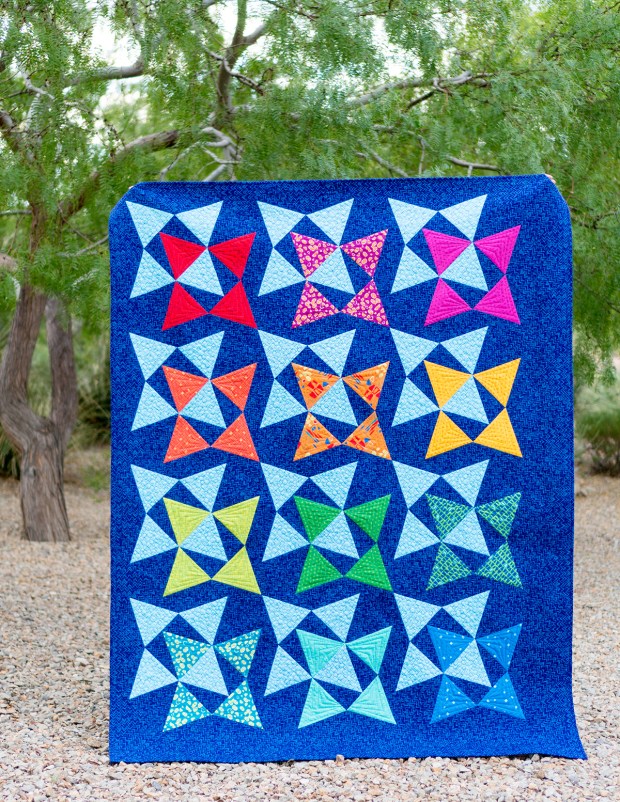
Blooming Wallflowers quilt

I was literally finishing the hand binding of this quilt on the way to quilt market last fall, so I didn’t get any pics of my binding in progress. However, I’ve written several other binding tutorials, and my process is exactly the same, no matter which quilt I’m making. So choose your favorite method – hand or machine, and enjoy this last step of the process!

Modern Marks binding strips

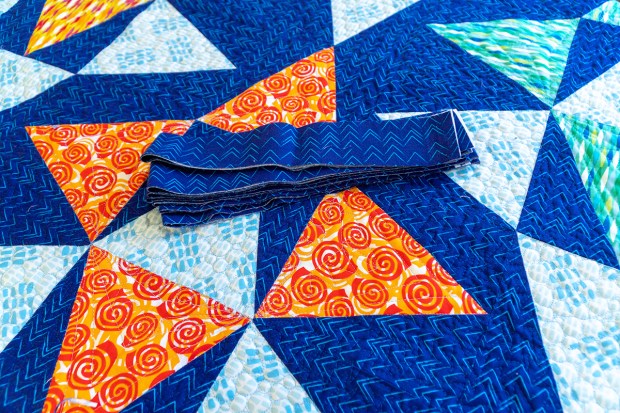
I cut matching binding strips from my Modern Marks Navy Herringbone print.

Here’s a bonus tip for binding: I like to cut my strips out at 2″ wide and attach them with an exact 1/4″ seam using my BERNINA dual feed (which acts like a walking foot but I can use skinnier feet on it). This gives me a precise finished binding of 1/4″ and it’s even on both the front and back. Many times, I like to use the same background fabric as the binding so that it looks like the design is floating on the surface, rather than being interrupted by a contrasting fabric.

Here’s Blooming Wallflowers hanging in my booth at quilt market last November, along with the other quilt patterns I made to showcase my Abstract Garden fabric.

Christa Watson Abstract Garden

My booth with Benartex at fall quilt market in Houston, November 2018
Other quilts shown are LatticeWork and Geese in the Garden.

And just for fun, below the is the original Blooming Wallflowers quilt I made a couple of years earlier for a quilt magazine to promote my first line, Modern Marks. As you can see, this quilt is fun to make no matter which fabrics you choose!

Blooming Wallflowers in Modern Marks

Blooming Wallflowers Modern Marks

The Modern Marks Navy Herringbone print is one of my all-time faves!

I hope you’ve enjoyed making this quilt with me. And if you are worried about having quilt-along withdrawal, stay tuned for the next quilt along, coming soon!! It features a brand new quilt that I haven’t shared on the blog yet, and I’m sure you’ll love it just as much!

IMPORTANT LINKS

Dress Sewing Journey Part 1

It’s been awhile since I’ve shared my sewing journey in real time, so while I’m working on some projects behind the scenes that I can’t show you, I’ll share my process in learning to attempt to sew a dress. I’ve always wanted to learn to sew clothing, and now that I have my own fabric, I’m even more inspired to make something to wear from it!

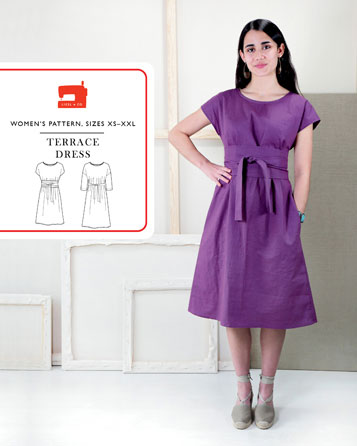
Terrace Dress by Liesl & C0

My first real attempt will be to try the Terrace dress from Liesl and Co. It looks like an easy enough pattern and I’ve met Liesl several times and think she’s an amazing clothing designer. My goal is to sewing clothing made from my fabrics that I can wear at quilt market and other industry events, so I’m ready to dive right in.

I also picked up the Palmer/Pletsch Complete Guide to Fitting which is full of great info on how to alter patterns to fit. The basic premise is that you “tissue fit” the pattern, meaning making alterations in the pattern itself before you begin sewing.

Guide to Fitting

I know that this will be a huge learning curve for me, and I plan to make several practice versions of the dress, a so-called “wearable muslin” until I get it right. For my first attempt, I’m going to use Crossmarks in pink from my Modern Marks line. I figure that if it doesn’t turn out well, I can always throw the fabric back in my stash, right??

Modern Marks Crossmarks Pink

So far I’ve printed out the basic pattern onto paper and taped it together and chosen a size that mostly corresponds to my measurements. I could just dive in and cut out the fabric, but the Fit guide recommends tracing it onto soft tissue paper to adjust. So that will be the next step. I’ll keep you posted in real time and let you know how it goes!

Terrace dress pattern pieces

Home Update – My Dream Sewing Room!!

It’s been awhile since I’ve shared a home update because I’ve been working on some other behind the scenes quilting projects (new fabric, new patterns, new book, etc…) But I was able to catch my breath this weekend, get organized and take a few pics of my new sewing studio. It’s not completely finished as it still needs a few quilts on the walls for decoration, but it’s fully functional and is the dream space I’ve always wanted.  So let’s take a virtual tour, shall we?

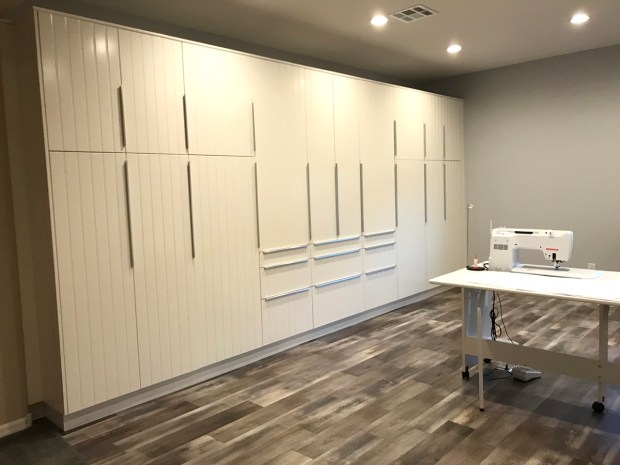
My Ikea Cabinets!!

Christa Quilts Sewing Room

The cabinets are from the Ikea kitchen department.
The floor is laminate from a local flooring center.

The most important part of my space is storage. I am definitely not a pack rack, but I still prefer to keep my messes behind closed doors so that the rest of the space appears nice and tidy. I was thrilled to be able to get wall-to-wall cabinets installed at a price that didn’t break my budget. I used Ikea’s kitchen services to plan and purchase stock cabinets in various sizes to fit the space. I was able to customize them with snazzy door fronts and handles, and I spent hours upon hours figuring out the right configuration of shelves, bins and drawers to hold everything I needed.

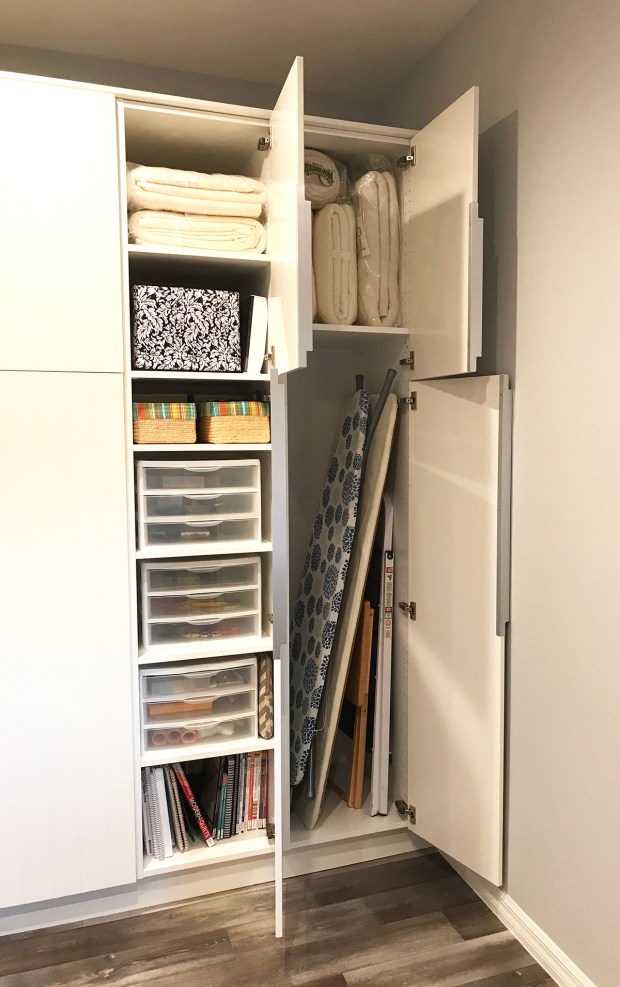
Here’s What’s Inside:

Christa Watson Sewing room

Starting on the far right of the tall cabinets, I knew it would be super important to keep a step ladder to reach the upper cabinets. I was thrilled that they were able to install the cabinets so that the one “permanent” shelf was above the door line in this cabinet. This allows the space under the shelf to be long enough for my ironing board and big board to fit. Inside the rest of the unit is a combination of shelves at different heights, with plenty of storage drawers and bins.

Christa's sewing room thread storage

I keep my thread and other supplies in hidden pull out drawers that I could customize for height. This area works perfect to store all of my thread. The cabinets are 24″ deep so I wanted to ensure I could maximize the space and reach everything. It took a quite awhile for me to come up with the right configuration, but I’m pleased with the results.

Fabric Storage in Christa's Sewing Room

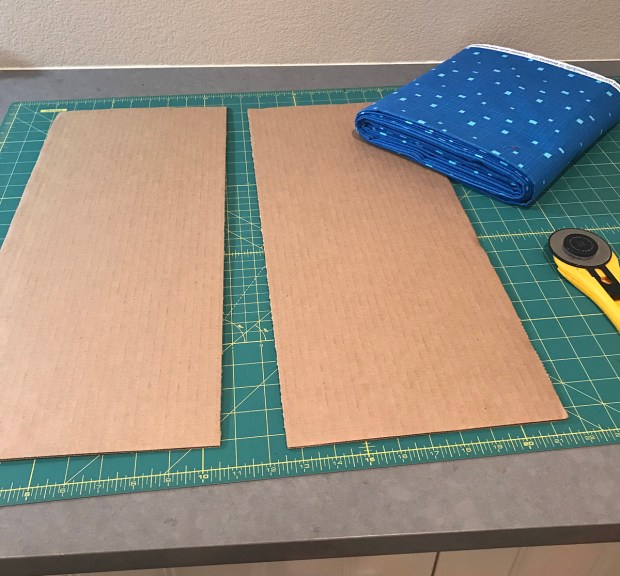
The center section is for fabric storage and quilts in progress. As you can see, there’s quite a bit of empty space which means I have plenty of room for growth! I honestly don’t keep a lot of UFO’s and I recently gave away a lot of my stash that I realized I simply don’t use. Because the cabinets are so deep, I found thin cardboard sheets that I could cut in half to measure 9″ x 22″.

Fabric Storage

It took me many hours to refold all of my fabric onto thin pieces of cardboard.

These thin “bolts” are basically twice the length of the popular comic book boards that many quilters use for stash storage. I’ve kept about 5 yards of every fabric I’ve designed for my own personal stash and it’s exciting to watch it grow!

Christa's Sewing Room

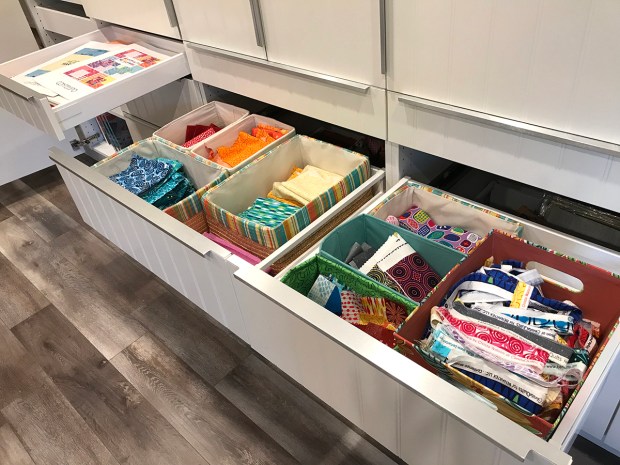
I’ve organized my scraps into smaller bins by color, which is how I’ll most likely use them. The other drawers hold other misc. stuff so that everything has a place to go!

Ruler Storage

This is one of my favorite drawers – I configured it so that there was enough room to hold my biggest rulers standing straight up. They are held in place by several wooden ruler racks that line the bottom of the drawer. They key is to maximize every inch of this space!!

Christa's sewing studio

The very left cabinets hold fat quarter bundles and kits for sale along with my patterns and books for sale. I even wanted the trash tucked away behind closed doors so that the entire space stays tidy. To the left is the hallway and a half-wall that leads to the downstairs on the other side. My husband’s office is the open door on the left and the 2 kids’ rooms are to the right, (not shown) behind my sewing room.

I’m happy to still  have a pony wall to drape  large pieces of fabric that I’m working with!! Eventually we’d like to replace the half-wall with a decorative stair railing to open up the hallway a bit more. The king sized white flannel sheet is waiting to be used in my design wall, and the pink Modern Marks fabric has been washed and will be an experiment in sewing clothing made from my fabric. (I’ll post more about that later if all goes well!)

Christa's Sewing Room

You can just barely see the corner nook area peeking out in the far right of this photo.

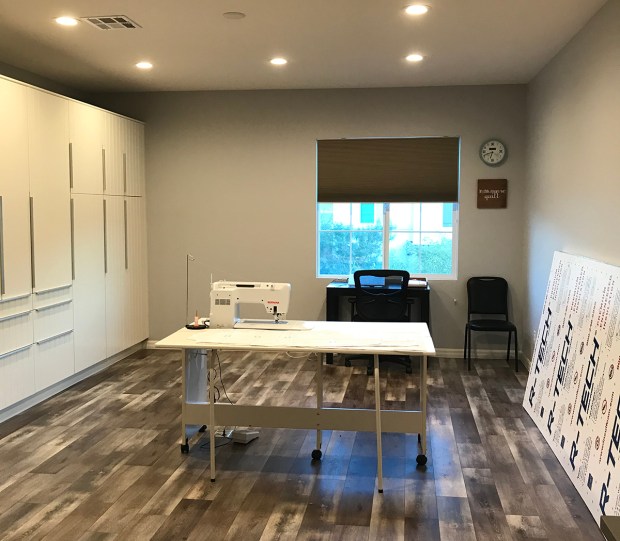
Here’s what the space looks like on the wall opposite the cabinets. Those big foam core insulation sheets will become my design wall and I have a nice window to look out of while I’m working at the computer. We installed a floor plug in the middle of the room so that I could set up my sewing table without having cords running across the room.

I still need to purchase a nicer office desk and I’m looking to replace the sewing table with one that’s a bit larger with an attached side table. I also need to add color to those walls in the form of quilts, but one step and one project at a time, right??

The Bonus Area

Christa's Sewing Space

Now I just need to add quilts on the walls and a cozy side chair to this area.

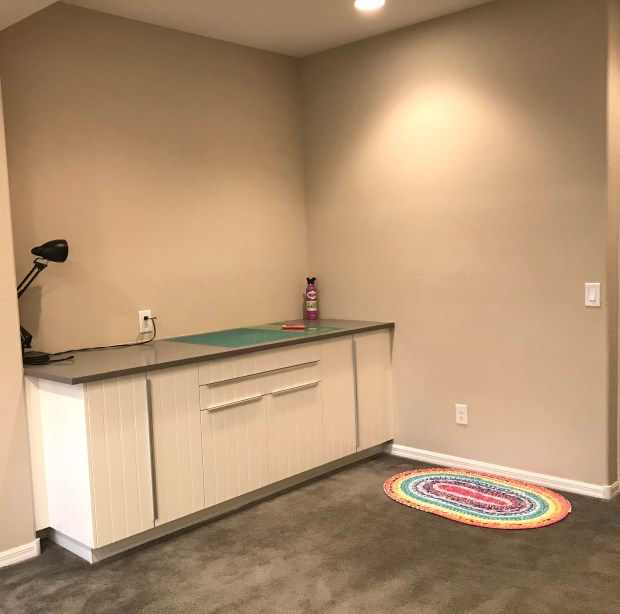
My space has a bonus corner nook which serves as my cutting and packaging station. I was able to pull the cabinets a few inches away from the wall, and get a custom width counter top that extends to 30″ (rather than the standard 26″) to give me enough room for cutting. I was also able to lower the cabinets by an inch since I’ve very short. This space is much more ergonomic compared to the table top height I was using before.

Christa's Sewing Room

My shipping materials fit in the shelves underneath so that whenever someone orders some of my fabric, or one of my patterns, it’s super quick and easy to fulfill their order! I love having plenty of room to roll out a bolt of fabric and cut yardage quickly and easily as well as cutting smaller pieces for my own quilts.

I hope you’ve enjoyed this tour of my new workspace and I can’t wait for the exciting new things I’ll be creating here!!

Christa's Sewing Room

My mom got me a cute wooden plaque that says “In this room we quilt.”
The quilt themed clock was a Christmas gift from Moda.

Blooming Wallflowers Week 9 – Quilting Inspiration

Can you believe that we are almost at the end of the Blooming Wallflowers quilt along? But not to worry, I have more inspiration coming your way! Next week we will bind our quilts to finish. But in the meantime, check out the fabulous quilts being made and shared in my Facebook group. Everyone featured today wins a free PDF pattern of their choice for sharing!

Gina S Blooming Wallflowers Quilt

I love how Gina S. Chose soft watery batiks for her version and paired it with a black background. She finished it off with a textural allover quilting design and that binding is to die for!!

Abbie B Blooming Wallflowers

Abbie B. recently finished her quilt top and I love her yellow background, don’t you? Remember, you can work on any of my quilt alongs at your own pace, and on your own schedule. 🙂

Free Motion Quilting Practice Lynn L

Lynn L. gets bonus points for practicing her free motion quilting on a test piece before diving into her quilt. This is one of the recommendations I make in all of my classes.

Abstract Garden and Modern Marks pieced backing by Lynn L

Above is Lynn’s fun pieced quilt backing, made from yardage of Modern Marks Navy Herringbone plus Abstract Garden leftovers. I love it!!

Machine Quilting detail by Laina L on Blooming Wallflowers

Laina L. is following the quilting plan as shown in the Blooming Wallflowers quilt pattern. Isn’t she doing a fantastic job on her pebble quilting??

I don’t know about you, but seeing everyone’s progress inspires me to want to quilt today!!!

IMPORTANT LINKS

Check out The Quilter’s Negative Space Handbook!

This year, one of my goals is to learn more about modern design. It may seem ironic since I am after all a fabric designer, pattern designer and I design a lot of machine quilting motifs, too. However, I feel that my design skills could always improve, so I was thrilled when I got a chance to ready Sylvia Schaefer’s fabulous new book, The Quilter’s Negative Space Handbook.

Negative

I don’t have much need for pattern books, but I love books that can teach me more about design principles, with plenty of interesting things to say. Sylvia’s book does just that! She walks you through several exercises on how to apply negative space (the space between or behind the focal point of the design) to your quilts.

My Starting Example – Out of the Box

Out of the Box by Christa Watson for American Patchwork and Quilting using Fandangle fabricOut of the Box by Christa Watson

I had actually been working on ways to make my quilts more interesting and so reading this book has really broadened my understanding. For example, take a look at my quilt “Out of the Box” above, which features my Fandangle fabric line. I’ve been tweaking the design of this quilt and have considered remaking it with a much more modern, minimalist approach in a limited color palette.

Tire Tread design

My new and improved design after adding negative space to the quilt.

My new arrangement looks like “tire tread” which is very appealing to me. It’s a little more funky and “out there”, but I’m actually very excited about it! As a pattern designer, the updated design may not be as commercially viable, but the more I design things for public consumption, the more I want to balance that out with “just for fun” quilts that explore design concepts more fully.

Syvlia’s book has given me the tools to do just that! She walks you through a series of exercises to apply some basic design concepts to your quilts. This has opened up a whole new world to me, because up until this point my design process was really more like a stab in the dark and every now and then I’d hit what I call a design jackpot!

Sylvia explores all sorts of design techniques in her book, and I can already tell I’ll use it again and again for reference when designing future work. One concept I haven’t fully explored but which she covers beautifully is the idea of varying the scale of your blocks in the same quilt. Here’s an example excerpt from the book in which she explains this concept:

Example from Quilter's Negative Space Handbook

Although I’m mainly interested in the design concepts Sylvia explores in The Quilter’s Negative Space Handbook, she also includes 8 fully developed patterns so that you can make your own version of the quilts in the book. I think this is a great way to explore modern quilting for those who want to make a knockout quilt but don’t yet have the confidence to come up with their own unique design.

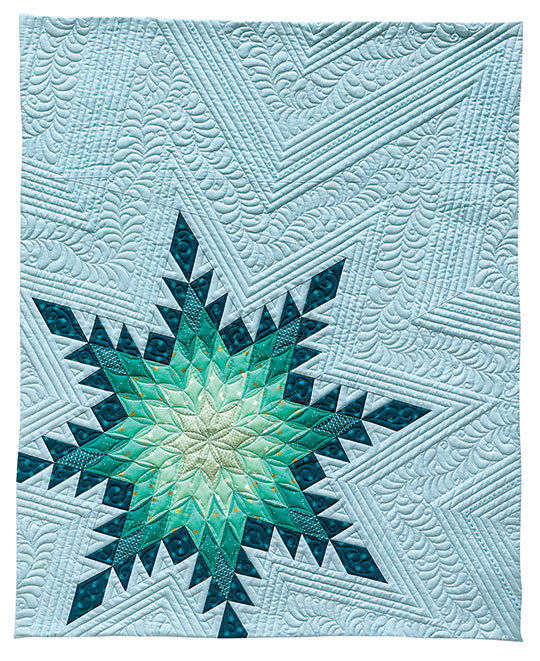
Icy Feathered Star by Sylvia Schaefer

Sylvia’s Icy Feathered Star – She even did her own quilting on it, which I love!!

One of my favorite quilts from her book is the Icy Feathered Star. Not only does she give you the full quilt pattern and ideas to explore how to offset your design, there’s plenty of eye-candy with beautiful machine quilting throughout the book. Sylvia’s quilts are great examples of how she incorporates modern machine quilting as well as modern piecing. (Ya gotta love those traditional feathers used in a modern way!)

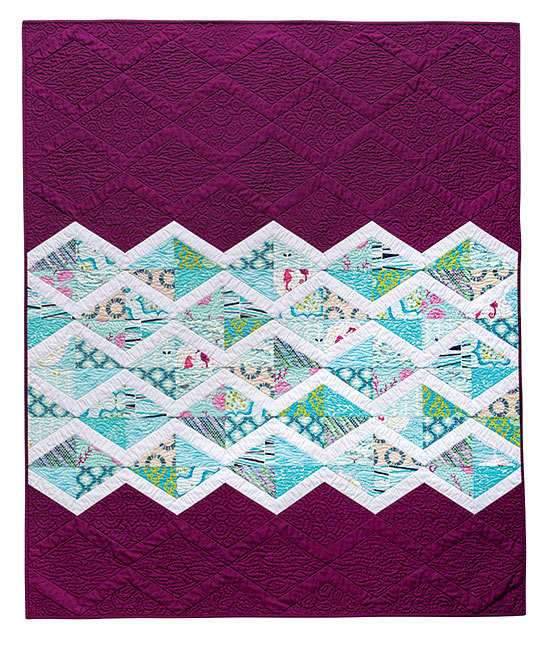
Row-of-Diamonds by Sylvia Schaefer

Another fabulous quilt pattern from the book – Row of Diamonds

The biggest thing I learned from Sylvia’s book is that effective design in modern quilts happens when thought is put into fabric and color placement, using established principles of design rather than being completely random. I have to admit that most of my successful “modern” quilts have happened through pure trial and error. But now that I understand why and how negative space design principles work, I’m very inspired to apply these concepts to my future work.

This book is incredibly thorough and even includes a section at the end on thinking about fabrics, quilting designs, plus tutorials on foundation paper piecing methods, curved piecing, improv piecing and more.

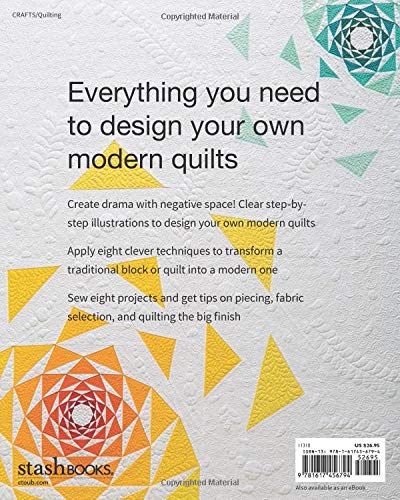
Negative Space Handbook Back Cover

Click here to get your copy of the Quilter’s Negative Space Handbook – I hope you’ll enjoy it as much as I did!


Blooming Wallflowers Week 8 – Machine Quilting Part 2

How is your Blooming Wallflowers quilt coming along? Some of you have completely finished while others are just getting started and that’s perfectly fine. I love to encourage everyone to participate at their own pace. In cased you missed it, click here for quilting part 1 including 4 short You-Tube videos showing exactly how I quilted the blocks.

Blooming Wallflowers made with Abstract Garden and Modern Marks

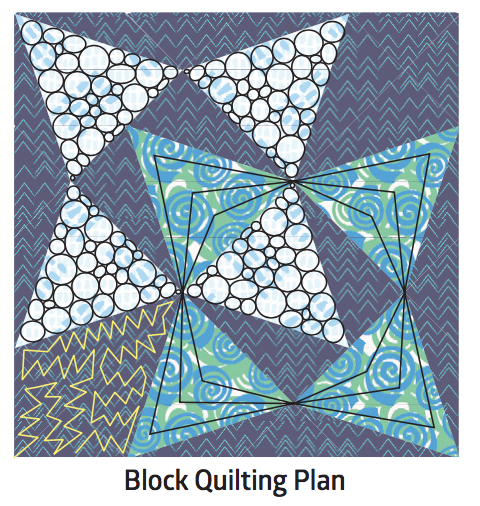
Today I’ll go over how I quilted the background using one of my favorite filler motifs – jagged stipple. In the quilting plan below, I quilted jagged stipple in the background areas after all of the blocks were quilted. I love filling in a quilt this way: as long as you can trace an unbroken line around your quilt, you can quilt the design continuously without any starts and stops.

Blooming Wallflowers Block Quilting Plan

Quilting all of the blocks first is what I call “anchor quilting” which means that the quilt is secure and won’t shift as I scrunch and smoosh it under the machine to finish up the rest.

I recommend practicing drawing out the design freehand on a blank sheet of paper, and even quilting a practice block to get a flow for the design. The jagged stipple is very forgiving and is basically a series of abrupt jaggedy lines going in every direction.

Machine Quilting Jagged Stipple

I quilted Jagged Stipple on a larger scale for my Improv Squares Quilt Pattern.

There’s really no wrong way to do it! In fact, I love the jagged stipple design so much, that it inspired one of the prints from my previous fabric line – the “Paper Cuts” print from Fandangle.

Fandangle Fabric Paper Cuts

Click here to get yardage of the paper cuts print from Fandangle.

Here’s another short video showing how I move back and forth and all around to quilt this design. I especially love the look of texture on texture when I quilted the jagged lines on top of the navy blue Herringbone print from Modern Marks.

Because I’m using a matching blue Aurifil thread (from my Piece and Quilt Collection – Colors), it’s hard to see the actual stitching, which is usually a good thing so you won’t see all of the wobbles and bobbles as I quilt.

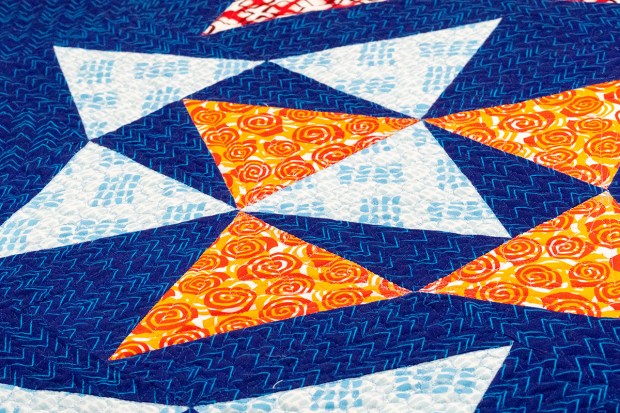
Here’s a detail shot where you can just barely see the quilting. I like quilting textural designs on busy quilts because I want my quilting to enhance the quilt rather than being the star of the show!

Blooming Wallflowers quilting detail

So give this fun design a try – whether you quilt it on this quilt or another WIP (work in progress).

IMPORTANT LINKS

Blooming Wallflowers Week 7 – Machine Quilting Part 1

Now we get to my absolute favorite part of the quilt-making process – machine quilting!!! I’m breaking this section into 2 posts so you’ll have plenty of time to get ‘er done! And thanks to all of you who keep sharing your progress, no matter what step you are on. It’s so inspiring to see all of the fantastic Blooming Wallflowers out there!! Remember to scroll to the end of this post for links to all of the quilt along steps and other important info.

Blooming Wallflowers Quilting

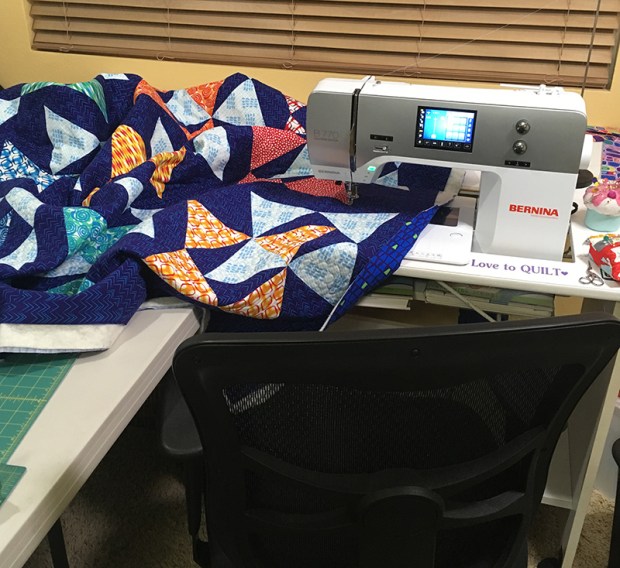
Above is my sewing machine setup. I have a drop in table so that my sewing machine lies flush with the table. I’ve also put another table to my left, forming an “L” so that the quilt has plenty of room and won’t fall off the table. I’ll sit in the chair and scrunch and smoosh the quilt out of the way as I quilt.

Make a Quilting Plan

I always have a plan when I’m going to quilt a quilt. That way there are no surprises and I can enjoy the quilting process. Here’s my basic quilting plan that’s included in the Blooming Wallflowers quilt pattern:

Blooming Wallflowers Block Quilting Plan

I’m quilting 3 different designs: chevrons in the print triangles, pebbles in the light blue triangles, and jagged stipple in the background. I can quilt all of the triangles per block at once without stopping; then I’ll go back and quilt the navy blue background later. I used a light blue thread from my Aurifil Piece and Quilt collection Neutrals on the triangles, and will use a darker blue thread from my Colors collection for the background.

Free Motion Quilting Blooming Wallflowers

Here’s what the back side of the quilt looks like after quilting all of the triangles. I always use the same color thread in top and bobbin so that if there are any tension issues, it won’t show. I don’t mind seeing the quilting on the back of the quilt. In fact, I actually like how it shows up!

Notice how my actual quilting deviated slightly from the plan. I decided to quilt a few more lines in the chevrons, and I embellished the chevrons with an extra row of pebbles and some zig-zags to jazz it up a bit.

Step by Step Quilting Videos

Here are a few short videos of me quilting the blocks so you can see how I did it. Be sure to enlarge the screen for a better view:

First, I stitched in the ditch very carefully around one light blue triangle.

Then I filled in the light blue triangle with pebbles. I’m using a thicker ruler foot because I’m doing the pebbles and ruler work all at the same time.

Next, I used a special acrylic ruler to quilt straight line chevrons. I didn’t worry about the lines being equal in distance or hitting the points exactly. I don’t actually love doing ruler work because it’s a little too fussy for my taste. But I’ll use it to quilt straight lines as long as they don’t have to be exact.

Once the chevrons were quilted, I embellished one section with free-motion zig-zags. I quilted each section of triangles (the Abstract Garden prints and the light blue background) in one pass, with only one start and stop for the whole block.) In other words, I did all of the pebbles in one triangle and then went straight into the chevrons.

To start and a line of stitching, I take about 6-8 teeny tiny stitches and then start quilting normally. When I’m done, I end with 6-8 teeny tiny stitches to hold it in place and cut off the excess threads. Starting and stopping in a seam makes it less noticable.

Next week, we’ll quilt the background! I recommend trying out the quilting designs on a scrap of fabric and batting first, before applying them to your quilt.

IMPORTANT LINKS

Tips on How to Plan Your Quilting, Sewing Room Update

Hi all – I’ve been super quiet on the blog this week because getting my new sewing room up and running has been an all-consuming process! For those following the Blooming Wallflowers Quilt Along, the next post will be up soon, I promise!!

Plan Your Quilting

In the meantime, be sure to check out this informative post about planning your quilting. I shared it over on my buddy Amy Smart’s blog at Diary of a Quilter. It’s an inside look to how I plan my quilting. This will be helpful for those of you quilting along with me, or wishing to figure out how to plan your own quilts!

This week I’m getting my Ikea Sewing room cabinets installed and I can’t wait until they are finished! They are actually from their custom kitchen department but they will work wonderfully for my space! The whole unit will have covered doors with sleek handles so that I can keep the mess out of sight.

Sewing Room Ikea Cabinets

Once the cabinets are finished, the flooring will be installed and then I can start moving my sewing stuff into the space. I can’t wait to share the final reveal! I have to say that working with Ikea, and their authorized partner Traemand installation has been wonderful. There have certainly been hiccups along the way, but they’ve handled everything with such professionalism that I would highly recommend them! Here’s hoping I have room for all my stuff, LOL!