Work in Progress – Feathered Chevrons Quilt Top

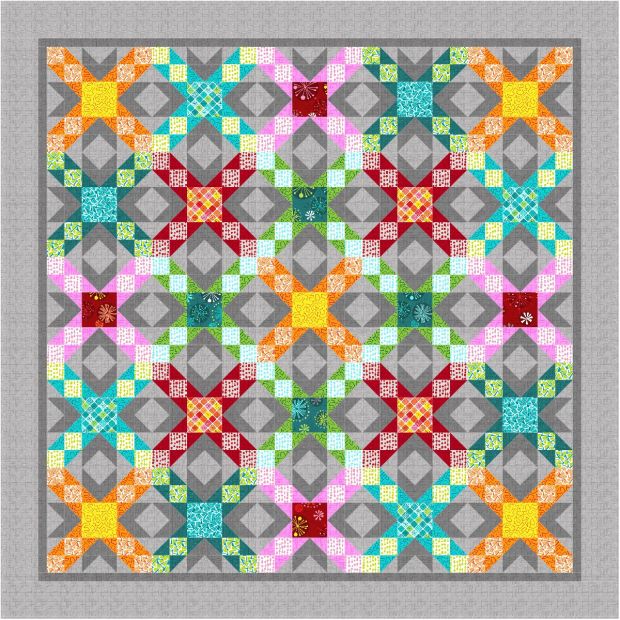
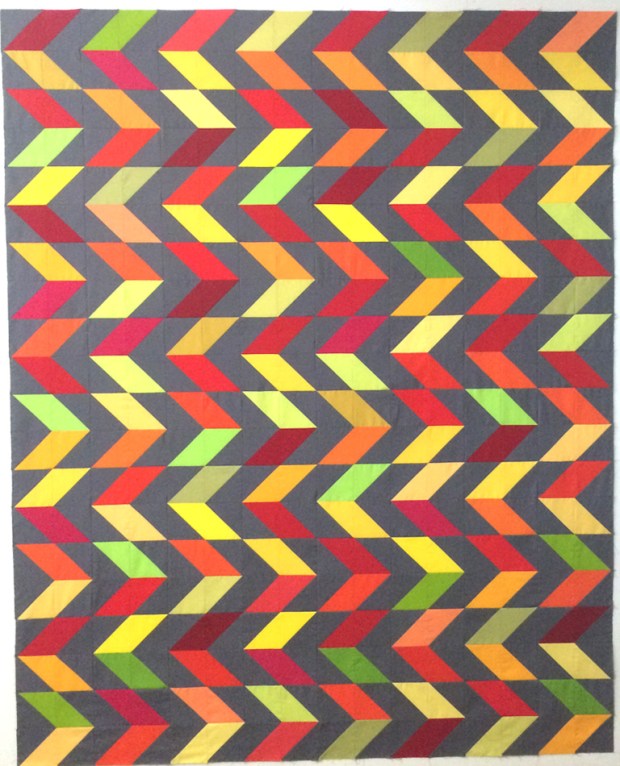
It’s been awhile since I’ve been able to share a work in progress quilt. I’ve been mostly working on behind the scenes projects for upcoming magazine and book projects. However, I’m excited to let you know that I’ve been working on a new quilt called Feathered Chevrons.

feathered chevrons

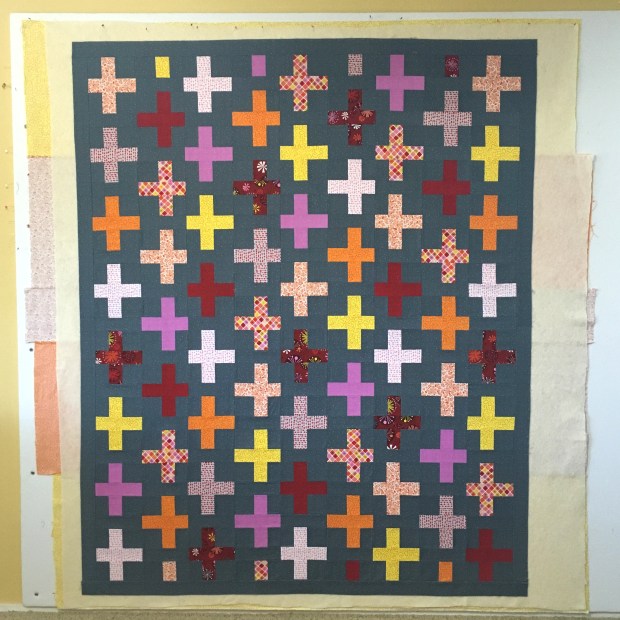
Feathered Chevrons Quilt top – 64″ x 80″ shown on my design wall

This is an updated version of my Charming Chevrons quilt which was my first modern quilt and published pattern. I’ve included the layout (shown as an EQ7 illustration) for Feathered Chevrons in the Charming Chevrons Pattern because I knew I would eventually get around to making it!

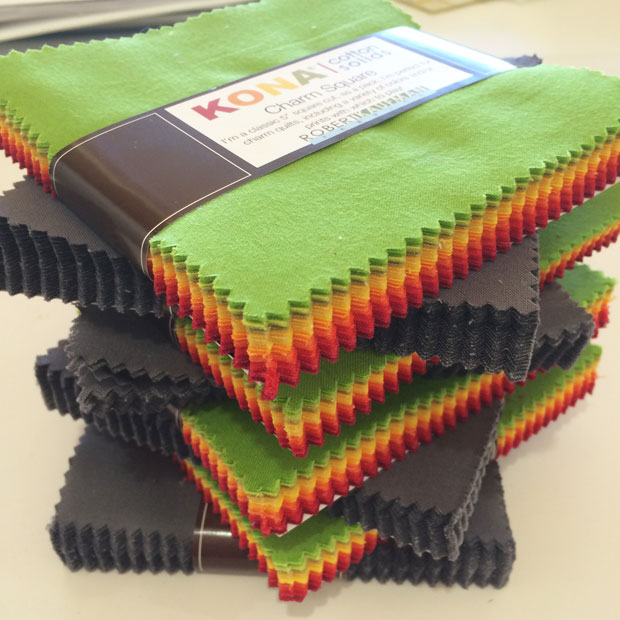
feathered_chevrons_precuts

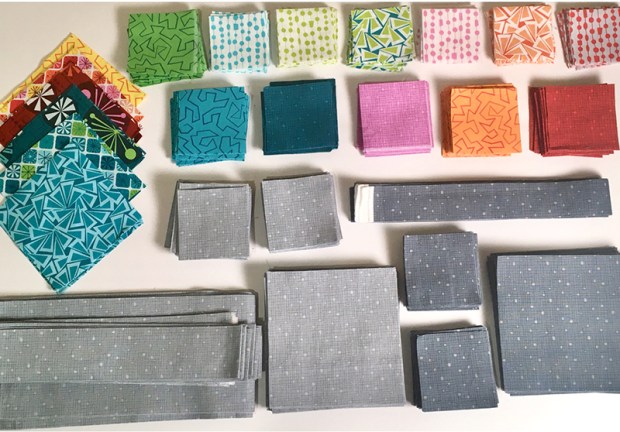
I used 4 charm packs of my Christa Watson Palette of Kona Solids for Robert Kaufman, along with 4 charm packs of Kona Coal for this version. You could easily make it from a layer cake (ten square) pack of each fabric as well.

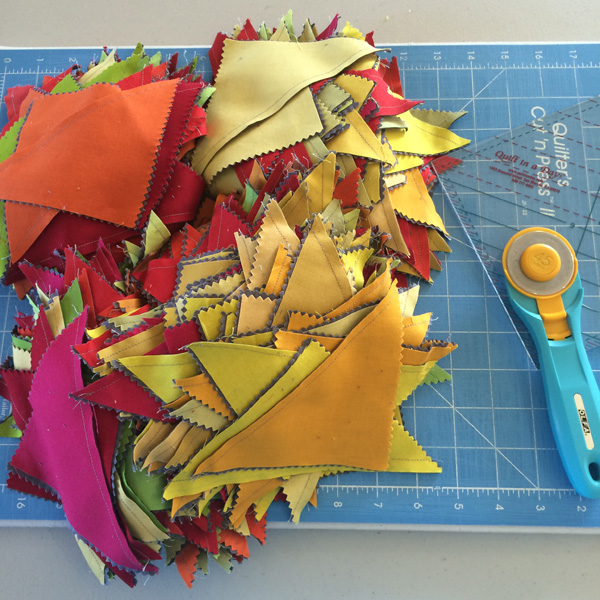
hsts

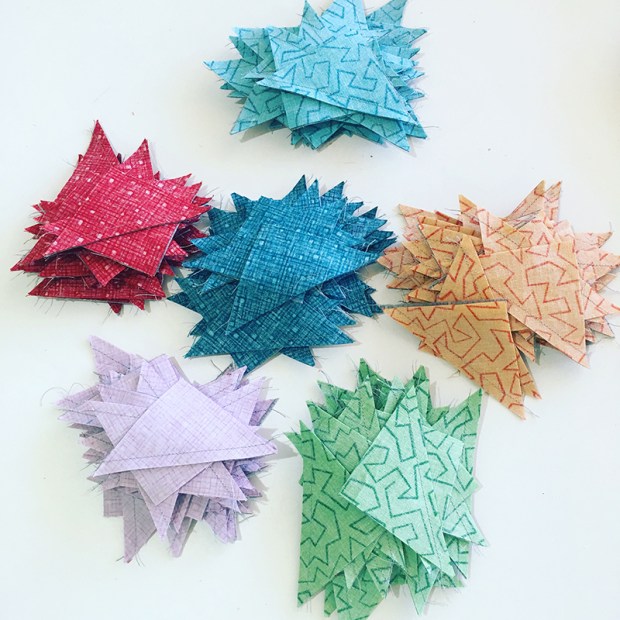
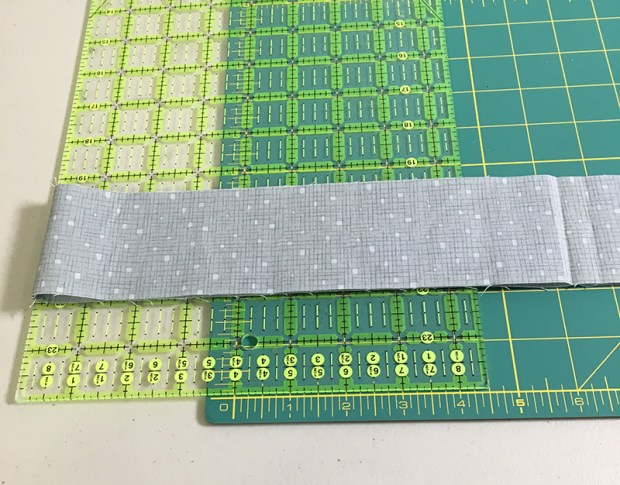
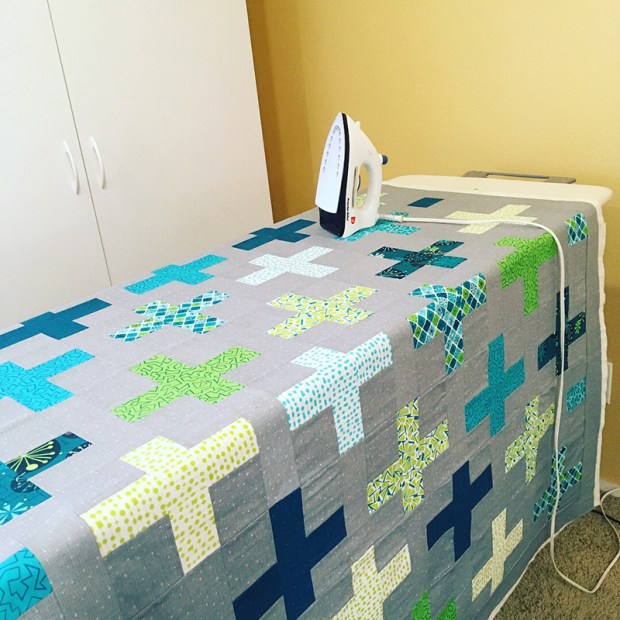
To make the triangle trimming process go more quickly, I used the quilt in a day triangle square up ruler. It allows you to trim up the triangles while they are still folded, and then press.

sewing_blocks

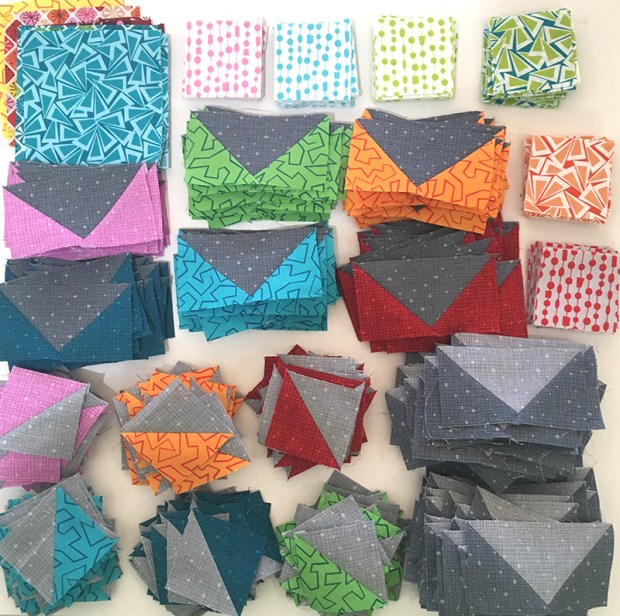
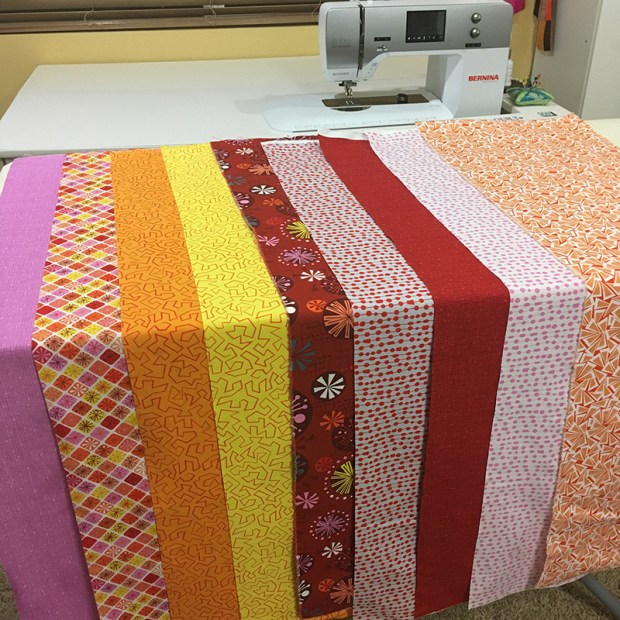
I enjoyed mindless chain piecing while sewing the blocks together, listening to audio books and quilting podcasts as I sewed. I try to assembly line the process as much as possible when working on my quilts: I trim all the blocks, do all the pressing and then all the sewing again. The hardest part is not getting distracted by other projects!!

batting

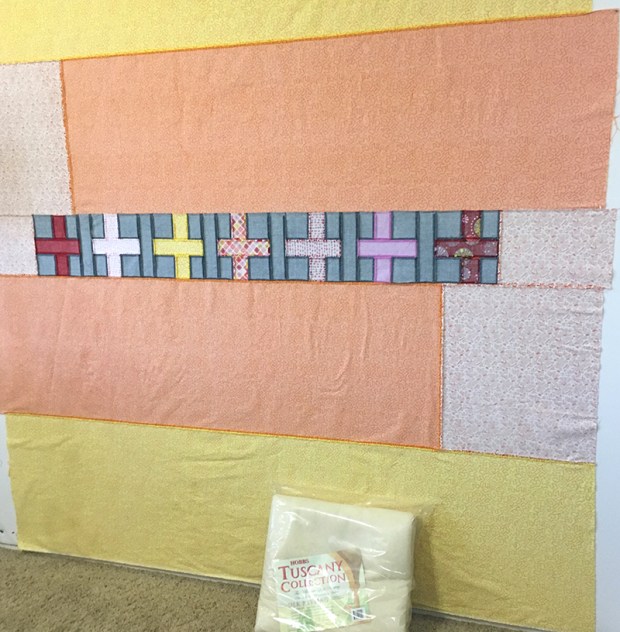
I used my design wall to help measure out the amount of batting I would need. I’m actually going to quilt this with a double layer of batting: 100% Cotton on the bottom layer to provide stability and drape, then Wool for the top layer (shown above) to add loft and really allow the machine quilting to pop.

In the next post, I’ll share my machine quilting process. I’m going to apply the principles of domestic machine quilting that I teach in both of my books. I use the same processes no matter how big the quilt is, or what the final design will be. 🙂

CharmingChevronsCover

Click her to purchase a print pattern of Charming Chevrons.
Click here to purchase a PDF pattern of Charming Chevrons pattern.

Pattern Writing Series – Hiring a Graphic Designer

I am enjoying being part of Cheryl Brickey’s Pattern Writing Blog Series over at Meadow Mist Designs. Today I wanted to include an extra post as part of the series, on the subject of hiring a graphic designer to help create patterns. In a nutshell, this is the one step that allowed me to make pattern design a reality rather than just a “someday” dream. I previously blogged about hiring Lindsie to do my branding redesign and now I consider her a very valuable member of my team!

patternwriting

To decide whether you want to enlist in the help of a graphic designer, ask yourself these two questions: How good are your graphic design skills? What is your time worth?

If you are comfortable with graphic design, and enjoy that aspect of pattern design, you may want to go ahead and do it yourself. Likewise, if you want to invest in the time it takes to learn or if you plan to do graphic design for others, it may be worth it to learn.

However, if you are like me and your time is limited, it may be more cost effective to hire that part out.  My graphic designer Lindsie can get done in an hour what I would struggle with for about 4-5 hours, and I can definitely say that her one hour rate is cheaper than my 5 hour rate! (Contact her if you are interested and she can work up a reasonable quote for you.)

DBLlogo2016In fact, here’s a rule of thumb for any aspect of your business – hire out what you don’t like or what someone else can do more efficiently, and save the work that only YOU can do, or that you WANT to do.

Here’s how it works: I send over a rough sketch of what I want, called a “transcript” and Lindsie sends back proofs. We may do several rounds of proofs until everything is just right, then I sign off on it and she sends me the finals, formatted per my printer’s specifications.

Since I’ve now been published in books and magazines as well as self-publishing my own patterns, I’ve learned the pattern process is basically the same: you create 3 separate “piles” – (1) a pile of words, (2) a pile of pictures, and (3) a pile of rough illustrations. Then the graphic designer magically pulls them all together into a beautiful finish!

book-editing

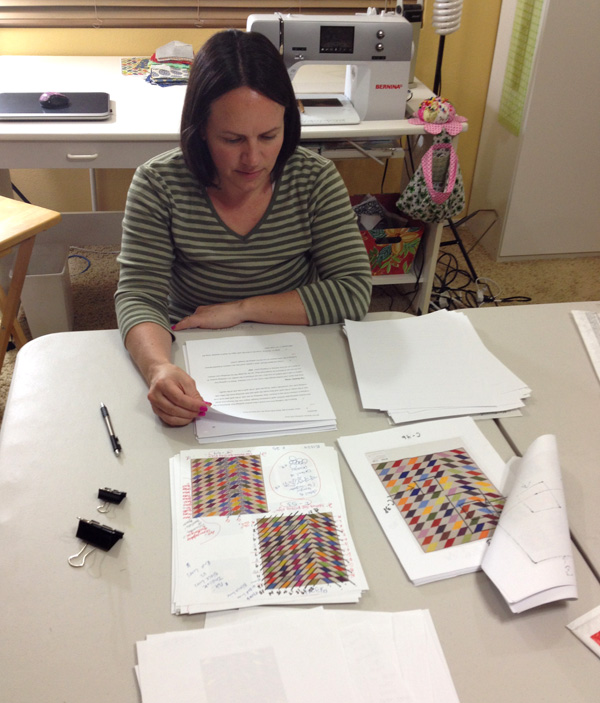
Proofing the first set of “piles” for my book Machine Quilting With Style

When I am working with a magazine or book publisher, they edit and publish the work in addition to the graphic design and layout. However, when I am producing my own patterns, I act as editor and publisher. The simplest way to show the graphic design and layout that Lindsie does for me is to show you a few examples of before and after pics.

Here’s the “before” of the very first pattern I designed, Charming Chevrons. With my non-existent graphic design skills, I simply copied and pasted the picture of the quilt onto a blank white piece of paper for the cover. It’s utilitarian but not very exciting, the fonts are boring, and there’s no branding to speak of.

original_cover

Here’s the cover that Lindsie designed for me which includes both versions of the quilt I’ve made. Notice the logo, fonts and colors all look great and work with the quilts. It’s much more dynamic and exciting to look at. When we finalized this first pattern, I literally had tears in my eyes!

CharmingChevronsCover

Graphic designers usually charge by the hour and it took about 10 hours for her to create the first pattern because we had to establish a template and a cohesive look. However, now that we know what we are doing, my current patterns only take her about 4-5 hours to knock out. It would probably be even quicker, except that I like to see more in-process drafts, and I tend to make a lot of changes as we go. It’s how I roll. 🙂

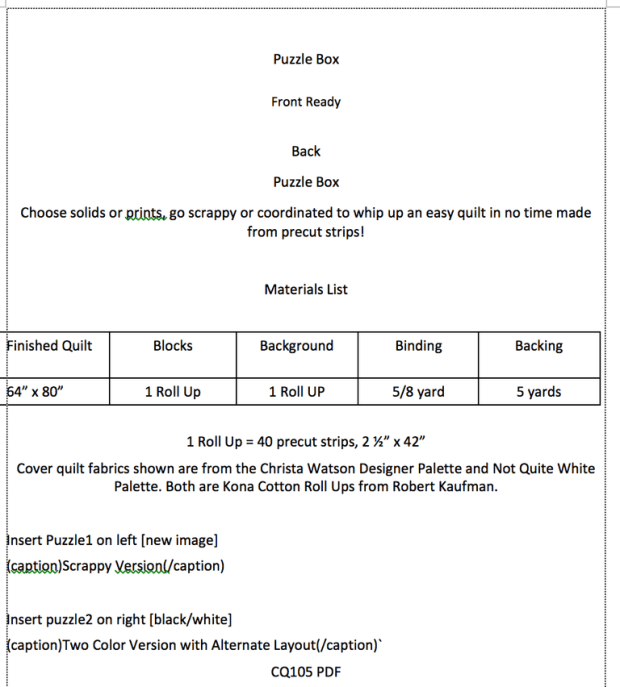
Here’s my draft of the back cover of Puzzle Box (my free quilt pattern). Notice that it’s very bare bones, with a few notes about formatting. I’ll send over drafts of the images I want to include as a separate file, and we use dropbox to share the files back and forth.

puzzlebox_transcript

Here’s the final, jazzed up version:

PuzzleBoxBackCover

Doesn’t this look so much nicer than what I did?? Worth. Every. Penny!

Here are a couple of pages from my Modern Logs pattern. For the piles of “rough” illustrations, I will either send over a jpeg I drew in EQ7, a chicken-scratch drawing on paper, or a photograph.  Lindsie works her magic, explodes diagrams when needed and generally pretties them up so what I envision in my head comes out perfect on paper! Again, notice the cohesive fonts and colors – all part of my branding!

page 2 proof

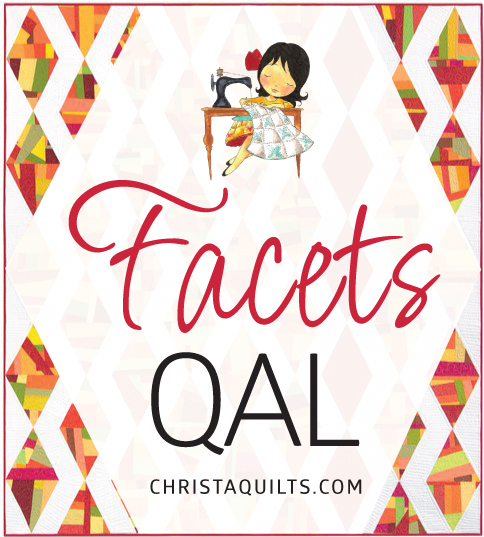
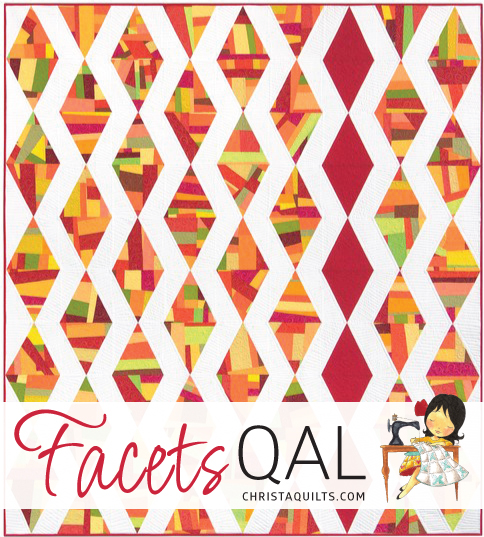
In addition to creating graphic design and layout for my patterns, Lindsie also helps me whenever I need a logo or any illustration. She recently created the image for my Facets Quilt Along from these instructions: use the photo of my quilt and put the words Facets Quilt Along on it. I liked the first image below, but told her it wasn’t quite right – I wanted to see more of the quilt.

FacetsQAL1

Below is the final image I am using, and it only took her 15 minutes to create both!

FacetsQALbig

I’m just barely scratching the surface with this topic, but I hope it’s enough to at least get your feet wet and to assure you that it is well worth the effort to hire the services of a professional, especially if that’s the only thing standing in your way.

Currently I have self-published 4 printed quilt patterns and 6 PDF’s. I have plans to do more, but I have a couple of book projects I need to finalize and get out of the way first!

Christa’s Quilts – Woven Ribbons

Woven Ribbons and is quickly and easily made from just two Kona Solids Skinny Strips. I used the 2014 Kona Colors and Black, but it would look fantastic in your favorite solids or prints.

woven ribbons


Woven Ribbons by Christa Watson, 45″ x 63″

I created Woven Ribbons to go along with my profile feature in Issue 9 of Make Modern Magazine. I wanted to create a modern design with a very minimalist, graphic feel that was easy to make from precuts.

photo3

I quilted wavy lines (seaweed) with switchbacks. These are two free-motion designs from my book Machine Quilting With Style. It’s fun to combine designs together in other quilts!

Although I love to quilt the heck out of my quilts, I prefer to choose designs that are simple to execute, don’t need marking, and do NOT require perfection to look great!

wavy lines quilting

Tip for quilting with bright colorful fabrics – use a variegated thread!

I quilt all of my quilts with Aurifil cotton thread and chose 50 weight black #2962 and 50 weight Marrekesh #3817 for this quilt. These colors allowed the design to shine, without overpowering the quilt. I used a cotton/poly batting in black since it’s such a dark quilt.

woven ribbons

I love how the black background causes the other colors to pop!

Woven Ribbons Stats

  • Made by Christa Watson; designed in EQ7
  • Finished size 45″ x 64″; completed November 2015
  • Pieced and quilted on my BERNINA 770
  • Materials: Kona Skinny Strips – 2014 Colors and Black; Hobbs 80/20 black batting
  • Aurifil Thread: 50 weight #3817 Marrekesh and #4241 Very Dark Grey
  • Quilting design – Seaweed (wavy lines) and Switchbacks (back and forth curves)
  • Received 3rd place ribbon in Modern, Small category at DQN 2016 Quilt Show.

3rd place modern

You can find Woven Ribbons, along with 14 other fabulous projects in the current issue of Make Modern Magazine. It’s a digital download which means you can save it on your computer forever!
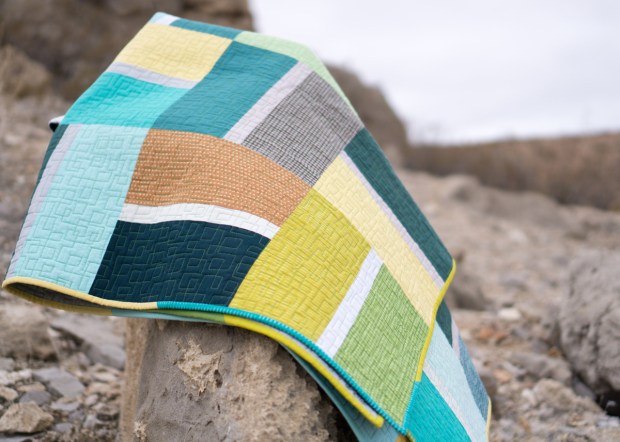
issue9_cover

This is my second pattern with Make Modern, and I’m sure it won’t be my last!
Happy Thanksgiving and a Blogiversary Sale!

Happy Turkey Day everyone! I started my blog on Thanksgiving Day in 2010 and I have so much to be thankful for over the past 5 years. You can check out that first blog post here.

Christa Quilts Family Thanksgiving Race 2010


My first blog picture, from 2010. We’ve all gotten a bit older since then (and hopefully wiser.)

In celebration of this blog-i-versary and to ring in the official holiday shopping season, I’m offering free US shipping on signed copies of my book (with reduced int’l shipping) and 25% or more off of all PDF patterns. This sale will last through Monday, November 30th.

Machine Quilting With Style

4collage_patterns


Thanks for your continued support!

Click here for more information about my patterns and books.

Four of My Quilt Patterns Are Now Available in Print

Thanks to those of you who have been with me for awhile, following along with my journey into pattern creation. It has literally taken me 10 years to finally make the plunge into pattern design. I began with 4 of what I thought would be my most popular designs, and started in January to take the necessary steps to get them into print.

4collage_patterns

I’ve also researched the best ways to get them to you all and here’s what I have come up with:

I chose these outlets to start as that’s what I feel I can manage right now. So far, so good. I’m already getting good traction and I’m sure I’ll add more distribution networks as I grow. I’ve received a nice re-order from Moda/United Notions, which means that local quilt shops are starting to carry them, which is super exciting! Of course, I don’t know which shops, so if you see them “out there in the wild” please let me know. Please feel free to recommend them to your favorite quilt shop, too!

Now, the next step is to start on the next batch of patterns. As always, stay tuned!

Christa’s Soap Box – I’m Jumping Off the Deep End With My Patterns

After literally 10 years of going back and forth on whether I wanted to design and write individual quilt patterns, I’ve finally come to a decision – I’m going to do it! For real! 🙂 I’m jumping on the bandwagon, diving in head first, or whichever metaphor is appropriate for what I’m doing, LOL!

If you’ve followed me for any length of time, you’ll know that the best way for me to accomplish a given task is to blog about it. So guess what? I’ve decided to take you along with me on this journey as I go from concept to completion.

CQ-PatternsThese cover shots are ok – but there’s no branding!

The background leading up to this decision:

I’ve seriously wanted to do patterns forever but never thought I had the skills to successfully sell my own patterns. I can do all the math and come up with the designs, but the idea of creating a professional looking layout was a huge roadblock for me. It hasn’t stopped me from releasing a limited number of self-designed PDF patterns, but I wasn’t ready to get serious about pattern design until now.

At first I thought I’d learn how to do everything myself, take some online courses, and read a few books on how to create a professionally looking layout. But you know what – I tried that and found that it’s just not fun for me. In the end, I’ve decided to hire a graphic designer (hi Lindsie!) to do that part for me, so I could concentrate on what I love best: designing, writing, and making quilts.

It hit me like a ton of bricks when I realized this is the same reason people hire others to do their machine quilting. Those graphic designers are probably rolling their eyes at me thinking, “but it’s so easy” – the same way I’m out there trying to encourage others, “but machine quilting is so fun!” I will machine quilt in my sleep if I have to, as long as I can avoid having to illustrate and layout my own patterns, LOL!!

patternMy one and only print pattern can use a little help with graphics – don’t you think?

The First Steps

Like I said, I’m going the professional graphic designer route, but you certainly don’t have to! I’m also working with my friend Tina from Mod Geometry to do a little pattern testing on the side. I’ll first update and re-release all of my current PDF patterns, and finish a few that are in various stages of completion. Then I will release the print versions with sales channels to be determined later.

I’m also working with Lindsie to update the look and feel of my logo and blog. Nothing will change functionally, but we’ll work together to create some cohesive branding, which I’m really excited about.

Quilty ChevronsNow that I have the rights back to Colorful Chevrons, I can re-release it myself.

Future Goals

I guess the big pie-in-the-sky dream for any pattern designer is to have a booth at quilt market and get picked up by national distributors. While I’ll certainly consider that for the future, it won’t be the measure of my success in the short term.

For now, I’ll be happy to have professional looking patterns which I can sell to my fabulous readers, use to teach from myself, and offer to other instructors for them to teach from. I get a lot of requests to use my designs as the basis for other teachers’ classes, so If I can help them out with a ready-made pattern at an affordable price, then it’s a win-win for all of us!

Mini_patternGetting published in magazines was a great way to get my feet wet with pattern writing!

A Little Bonus

For a limited time, you can purchase any of my current PDF patterns for just 4.95! When all is said and done, I’ll offer them for the normal going rate once they are all jazzed up. So stock up now while you can!

CQ-PatternsHopefully my collection of patterns will grow over time.

 If you’ve purchased any of my patterns in the past, I’d love to hear your feedback on how I can improve them in the future. Just shoot me an email or leave your comments below.

And if you are thinking of getting into pattern design – don’t wait 10 years like I did!

Make a Modern Mini Quilt with My Mini Churn Dash Pattern

I’ve jumped on the mini quilt bandwagon with one of my latest finishes, Mini Churn Dash. I actually made it over the summer, but I’m able to share it with you now that it’s been published in the latest issue of The Quilting Quarterly by the National Quilting Association.

Mini-QADI was actually able to use this mini for two features in the magazine – the pattern on how to make the mini quilt, and my regular recurring column, Quilt As Desired.

Mini_patternI used a few fabrics from Bonnie & Camille’s Miss Kate line, generously provided to me by Moda Fabrics. I had so much fun making this mini!

I wanted to keep both the quilting and the binding in scale so I reduced my quilting stitch length and I finished it with 1/8″ binding rather than the standard 1/4″. It really wasn’t that hard to do. I used single-fold binding strips that were only 1 1/4″ wide and sewed with 1/8″ seams.

mini_bindingI love using Wonder Clips for binding my quilts. The more clips, the better!

In case you missed the magazine issue, you can purchase the individual pattern here.

I’ve been enjoying seeing quilts made with churn dash blocks and am so glad I was able to combine two trending ideas, mini’s and churn dashes into one quilt. If you are inspired to make your own Mini Churn Dash, I’d love to see it! You can share a picture with my via email, on my flickr page, or on Instagram with the hashtag “minichurndash.”

Christa’s Quilt Along 4.9 – Sea of Squares Binding by Machine

Machine Binding

Today I am going to show you a quicker way to bind your quilt – by machine. Sometimes when I am in a hurry (like this week trying to finish all my quilting tasks before heading off to QuiltCon), a machine binding is just what I need!

It took me a total of 2 hours to bind this quilt using my home sewing machine. I love how it looked outside today with the quilt against the cloudy sky. A cool juxtaposition…

Sea of Squares Finished

Step 1 – Trim Your Quilt (10 Minutes)

Before binding, you want to start with a nicely trimmed edge, flush with your quilt. I don’t leave any batting peaking out. My method ends up with a fully stuffed, flat binding.

Using a large square ruler, I trim up all 4 corners first. If anything is out of alignment, I gently tug it back into place. Then I trim up all the sides with a long ruler.

Trim Corners FirstTrim the Sides


By starting with trimmed corners, I can match up the cutting lines so that things stay straight (as possible). You can throw your trimmings away or recycle them as pillow stuffing. 🙂

Step 2 – Calculate the Length of Binding Needed & Cut Strips (10 Minutes)

My favorite binding is called double fold straight grain binding, and it is super easy to make. You start off with strips of fabric, cut them on the straight of grain, then fold them in half twice to get the double fold. It holds up well especially on quilts that get a lot of use.

Measure the Perimeter

First, measure the perimeter of your quilt and add on 10 inches for corner folding, seams and “insurance.” In this case, my Sea of Squares quilt measures 50″ x 58″. It shrunk about 2 inches due to the intensity of the quilting on it.

I need a total length of 226 inches (50+50+58+58+10). If I divide this by 40 inches (the length of a fabric strip), I end up with 5.65 strips which I round up to 6 binding strips needed for this quilt. I cut all my strips 2.25 inches wide.

Binding Strips

Cut Six 2.25″ Wide Strips

For those of you sewing along using one of my Sea of Squares kits, binding fabric is included.

Step 3 – Sewing the Binding Strips Together (5 Minutes)

Join all of your binding strips into one long piece. Sew the ends on a mitered angle so that the bulk of the seam will be distributed more evenly. Be sure to cut one end of the binding on the same 45 degree angle. Fold the strips wrong sides together and press along the length with a dry iron.

Sew Continuous StripsFirst Fold

Before attaching to the quilt, I will pin part of the binding to one side, starting somewhere in the middle. Loosely walk the binding all the way around the quilt to ensure there will not be any mitered seams falling on the corners of your quilt.

Step 4 – Attaching the Binding to the Quilt (30 Minutes)

Sew from the front.Whether finishing the binding by hand or machine, this part is the same. Using coordinating or matching thread in top and bobbin, sew the binding to the front side of the quilt.

Starting with the binding on the angled end, leave a few inches of unsewn “tail” and use quarter-inch seams.

Be sure that you are sewing with the raw edges of the binding and the raw edges of the quilt in the seam. These will be covered with you flip your binding to the back.

You may wish to add a few pins to secure.

When you near a corner, be sure to mark a line 1/4″ away from the corner. Stop sewing at this line, then turn your quilt 90 degrees and sew off the edge.

Stop 1/4 inch from end.

Sew perpendicular to edge.


Flip the binding strip to create a 45 degree angle, pinch the excess, and then fold it back down. This creates the excess fabric allowing for a nice miter on both front and back of the quilt. Begin sewing the next side starting at the corner of your quilt. Repeat for all 4 corners.

Flip binding up.Flip binding down.


Leave about 6 inches of tail when you finish sewing. This will be joined next to create a continuous binding.

Step 6 – Joining the Ends Together (5 Minutes)

This is probably the trickiest part of the whole binding process. You want the ends to be joined with a nice miter seam that does not give any extra slack.

Leave a Tail

Open the Blunt End


Open both tail ends. Place the angled tail on top of the blunt tail and draw an erasable line along the edge of the angled tail where it meets the blunt end. You will need to account for both seam allowances, so cut 1/2 inch away from this line, keeping the 45 degree angle.

Trace the Angle

Now join the two ends together with 1/4″ seam. Use pins if needed and offset each of the triangle tips by about 1/4″. Finish attaching the binding to the front of the quilt.

Cut 1/2 inch wider.Pin ends and sew.


Step 7 – Binding by Machine (1 Hour)

I have a tendency to pull on my binding as I’m sewing, stretching  it and creating a wavy edge that needs to be blocked. By pinning first, this can eliminate most of the stretching.

Pin Binding

There are several different ways you can finish stitching the binding on by machine. For example, you can stitch in the ditch from the front side but only if you are absolutely sure you are catching the binding on the backside, too. You can stitch using straight lines or decorative stitches. Just sew slowly and be sure to catch the corners as you go around the quilt. A decorative stitch can hide a lot of mistakes!

For Sea of Squares I chose to use a reverse blanket stitch (similar to the regular blanket stitch I used for my machine applique table runner). The stitching won’t line up perfectly on the back but if you use a blending thread it won’t matter too much.

Sea of Squares Binding

Often times I have finished by quilting a decorative stitch from the backside, too.The picture below shows the binding I did on my first quilt-along, the Jolly Jelly Roll Quilt. I used one of my favorite stitches on my machine, a wavy serpentine stitch.

Jolly Jelly Roll QuiltI hope you have enjoyed following along as I made my Sea of Squares Quilt. I learned a lot from it and I encourage you to give this quilt a try. If you are currently working your way through your own version of Sea of Squares, I’d love to see it! You can share photos of your work in progress on my flickr group: Christa’s Quilt Along.

Here is a picture of the back of Sea of Squares, showing all that machine quilted texture.

Backside of Quilt


Complete Quilt-Along Schedule for Sea of Squares
Click any of the links below and follow along at your own pace.

Sharing is Caring

Please share your work in progress in my facebook group: Quilt With Christa . 🙂

Christa’s Quilt Along 4.8 – Sea of Squares Extra Quilting

Can you believe this quilt is almost done? Next week I will show you how to bind it by machine. The following week I will start all over with another brand new quilt-along. Here’s a hint for my next quilt: it requires 1 Jelly Roll and a 1 1/2 yards of background.

Extra Quilting

This week I added tons more quilting to my Sea of Squares quilt. I spent an extra 7 hours gleefully quilting along, adding loads of texture with straight slightly wonky lines using my walking foot. If I had planned ahead I would have quilted about an hour a day for 7 days. Instead, being the procrastinator I am, I did it all in one day, but it was still fun!

Step 1 – Quilting the Sash Rows (1 Hour 45 Minutes)

First I started with what was easy. I quilted parallel lines all going the same direction through all of the skinner sash rows. I worked my way across the quilt, one row at a time, flipping the quilt when there was too much bulk under the machine.

Quilt Parallel Lines

Step 2 – Quilting the Rest of the Rows (5 Hours, 15 Minutes)

Now it’s time to fill in the rest of the space. I quilted the rectangles with lines running perpendicular to the previous quilting lines. For the big squares I alternated directions. I quilted the print squares all one direction, and the solid squares the other way.

Quilt Perpendicular Lines

It was cold that day so I bundled up while quilting!

I wanted to try out the continuous reverse feature on my machine. I can push a button once and it will sew backwards until I push it again to stop (and I don’t have to keep my finger on the button). So I would quilt one line of quilting, then push the reverse button and quilt a line backwards without having to turn the quilt all the way around. It was great!

Reverse Quilting

It took about 1000 yards (2 spools) of thread just for the top. I used the same color in a thinner weight for the bottom so I wouldn’t run out of thread.

Quilting this quilt was very liberating for me. I did not mark the quilting lines because I wanted to add a touch of modernity to the quilt with more organic-looking texture. Once I let go of my perfectionist tendencies and got into the “waviness” of the lines, it set me free to enjoy the process. Jason is always telling me to go bold and let out my inner artist. So now I’m giving you the same permission!

Quitling Makes the Quilt

Be sure to take a look at my flickr group so that you can see the wonderful quilts being made by everyone else. And if you are working through any of my quilt-alongs, I’d love to see your progress!

In fact, Judith shared her version of Sea of Squares in beautiful brown and cream. Notice the wonderful quilting she did with wiggly lines across the surface and quilting motifs in the blocks. I love it when you can really make your quilt your own. Nice job, Judith!

Judith's Sea of Squares

Please share your pictures here:

http://www.flickr.com/groups/christasquiltalong/


Quilt-Along ScheduleLinks are Active at the Completion of Each Step:

Sharing is Caring

Please share your work in progress in my facebook group: Quilt With Christa . 🙂

Christa’s Quilt Along 4.7 – Machine Quilting Sea of Squares

For today’s post I will be showing how to quilt this quilt with a walking foot and straight lines. This is enough quilting to hold the quilt together and give it some definition. It took me a total of 5.5 hours to quilt this part of the quilt

I will be adding more quilting to my quilts because one of my quilting mottos is, “Quilt the heck out of it!” I will show that optional extra quilting next week.

Thread Choice

Thread ChoiceFor this quilt, I would like my quilt to have some definition but I don’t want the stitches to stand out too much. I selected a little bit heavier weight thread – a 40 weight polyester with larger quilting needle (size 90) to go with it.

I wound my bobbins with the same color but in a lightweight 60 weight polyester. I chose a cream thread because there is so much white in the quilt. The cream will blend into the white but It’s not quite as “stark” as white so it won’t be too bright against the blue fabrics.

Warm UpStep 1 – Warm Up Session (15 minutes)

It’s a good idea to practice on a scrap quilt sandwich first, even when quilting straight lines.

This way you can check tension, stitch length, and thread color before you begin.

Step 2 – Anchor Quilting (1 Hour, 15 Minutes)

Before you get into any fancy-shmancy quilting, it’s a good idea to “anchor” your quilt first by quilting a few of the major seam lines. This will help stabilize your quilt. While doing this anchor quilting, you want to stabilize your quilt in all four directions. Think of this as a large grid across the top of your quilt. I can quickly and easily pull out the pinmoors as I quilt.

Begin Quilting

With the quilt laid out horizontally, I started quilting on one edge of the quilt. Using my walking foot as a guide, I stitched about 1/4 inch away from the ditch. I used a slightly longer stitch length and quilted continuously in one long row from the top of the quilt to the bottom. Because the lines go all the way across the quilt and the edges will be covered by the binding, I did not need to lock my stitches or tie them off.

Anchor Quilting

When I got the the end of this first line of quilting, I “scooted”  over a whole block width to the right (leaving less bulk under the machine). I quilted 2 more rows in the same manner.
Don’t quilt the very edges of the quilt yet; you can do that at the end.

Next, it was time to rotate the quilt 180 degrees and quilt some anchor lines on the other half of the quilt. Again, I quilted them about 1 block width apart. Now the quilt has been quilted in 2 directions. By the way, I love the Machingers quilting gloves because they provide a good grip on the quilt while moving and squishing it under the machine.

Anchor Stitching

It’s time to rotate the quilt 90 degrees and quilt all of the vertical anchor lines now. Again, start in the middle and quilt about 3 rows, one block width apart. Then rotate the quilt completely and finish off the other side.

The quilting is now ready to be finished.

Step 2 – Stitching all the Vertical Lines (1 Hour, 45 Minutes)

I like the “stitch near the ditch” pattern so much that I am outlining every seam about 1/4″ away from the center. I’m not too worried about whether my lines are perfectly straight so I didn’t worry about marking. My other quilt motto is, “Finished is better than perfect!”

Quilting Vertical Lines

Now I can start in the middle of the quilt and quilt all of the vertical lines halfway across the quilt edge of the quilt. When there is too much bulk under the machine, I rotate and finish the other side of the quilt.

Step 3 – Quilting all the Horizontal Lines (2 Hours, 15 Minutes)

This section took a little longer because there were more rows to stitch. Again, I quilted half of the lines going one way, then rotated the quilt to stitch the other half.

Quilting Horizontal Lines

On the very last row which was near the edge of my quilt, I actually quilted 1/2″ away from the seam line rather than 1/4″. This is to take into account the seam allowance which will be covered by the binding.

Edge Quilting

This is now enough quilting for this quilt, but as I said at the beginning, I will add more. Join me next week to see how I finish the rest of the quilting.

If you’d like to try something a little jazzier than just straight lines, why not play around with the decorative stitches on your machine?

Wavy Quilting

The picture above shows me quilting my Jolly Jelly Roll Quilt which was my first DIY Quilt Along. I used a wavy serpentine stitch which would also work well for Sea of Squares!


Quilt-Along ScheduleLinks are Active at the Completion of Each Step:

Quilt Kits are available from my shop for a limited time in these two colorways:

Apple Jacks

Apple Jacks

Sea of Squares

Sea of Squares