Bling Quilt Along Part 5 – Binding to Finish and Ta-Da It’s Done!!

Have you been enjoying following along to make Bling? Scroll to the end for links to the entire quilt along. This week we will be binding our Bling to finish it up!

Bling Quilts with Geo Pop

Roundup of binding tutorials

Because I pretty much bind my quilts all the same way (either by hand or machine), I have a LOT of binding tutorials that I’ve shared over the years. So here are 3 for you to try – use whichever method you like best!

Bonus Binding Tips

When I first began my binding adventures, I cut my strips 2 1/4″ wide. However, that meant that if I attached my binding with 1/4″ seams, it would be bigger on the back than the front. So over the last couple of years, I’ve started cutting my strips 2″ wide and that gives me a more even finish on both sides.

To avoid ending up with a seam in the corner, I will roughly “walk” my binding around the quilt and if any seams fall in the corners, I will adjust the whole binding by and inch or two before I start sewing. If worse comes to worse and I STILL get a seam on the corner, I’ll simply cut off part of the binding and sew a new seam to move it!

Homework

Finish quilting and binding your version of Bling and share it in my ChristaQuilts Facebook Group. I can’t wait to see your fabulous finish!

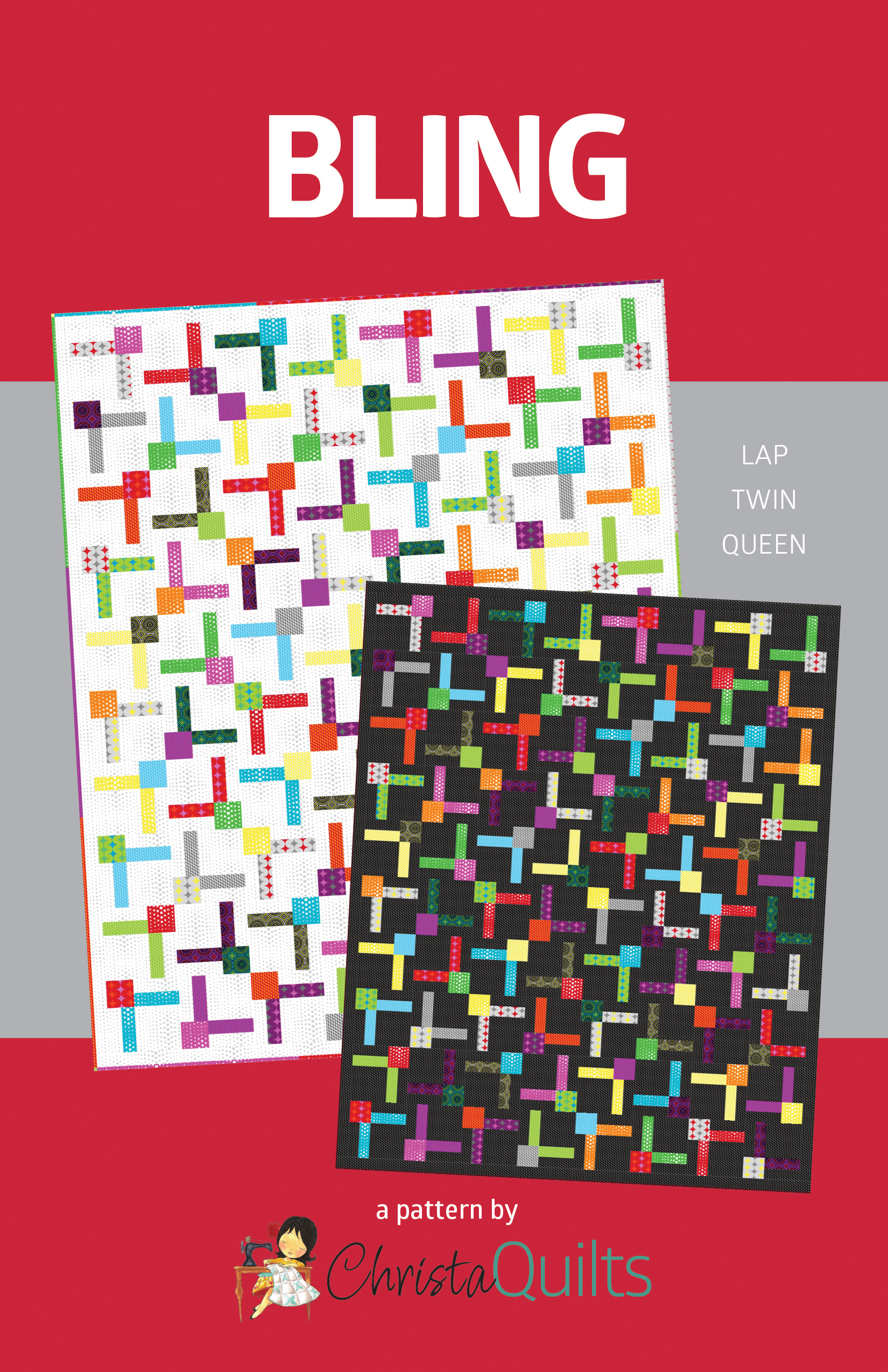
Bling Quilt Pattern by Christa Watson

QUILT ALONG LINKS

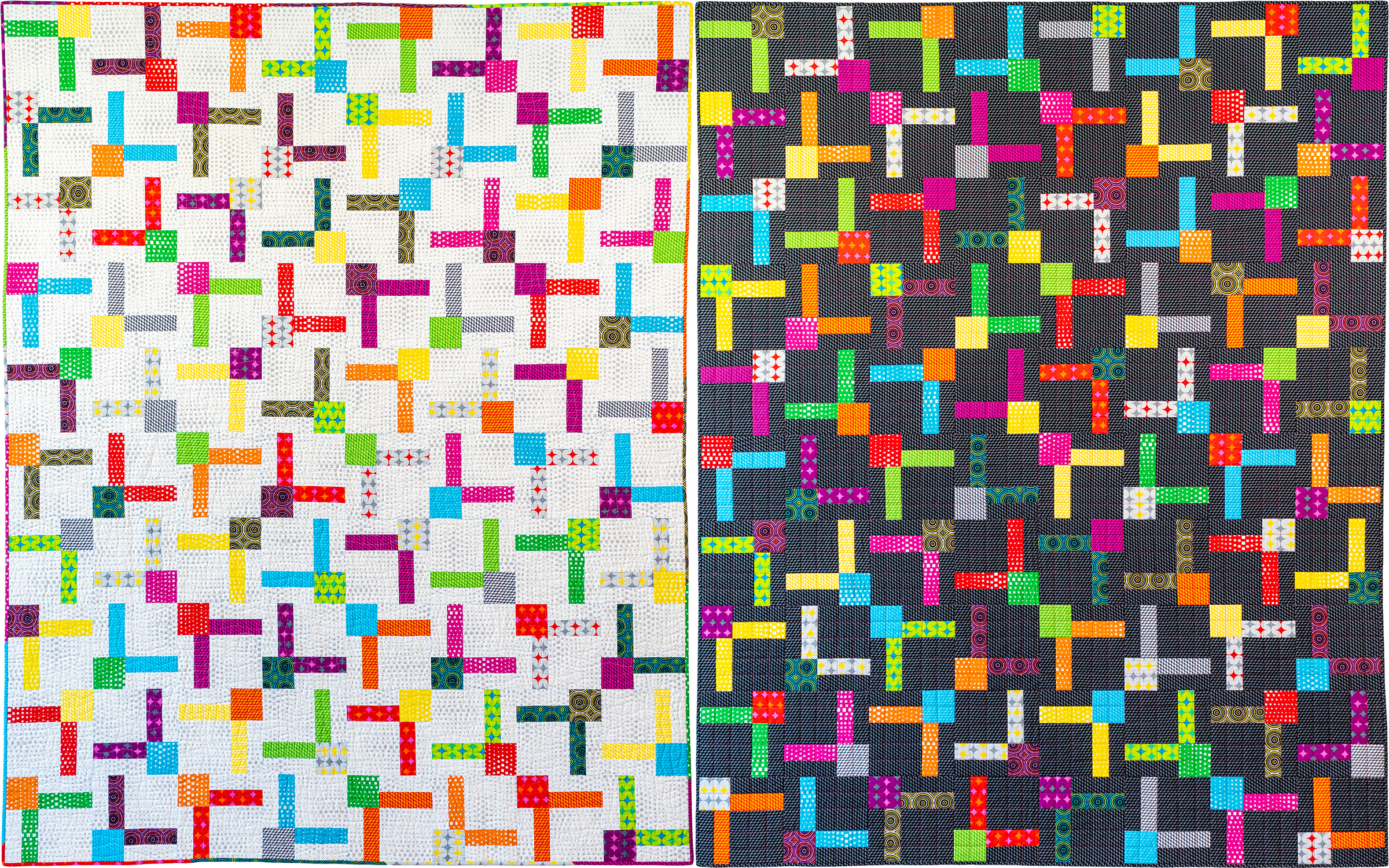
Bling Quilts White or Black

Bling Finished Stats

  • Finished size: 67″ x 83″
  • Designed using Electric Quilt 8 software
  • Pieced and quilted by Christa Watson on my Bernina 770QE
  • Fabric collection: Geo Pop by Christa Watson for Benartex
  • Pattern: Bling  by Christa Watson
  • Batting used: Hobbs Cotton/Wool
  • Thread used: Aurifil 50 weight cotton in black/white variegated and bright pink
  • Quilting designs: wavy grid (white) and straight line grid (black)
  • Completed: May of 2019

Modern Logs Quilt Along Schedule and Supply List

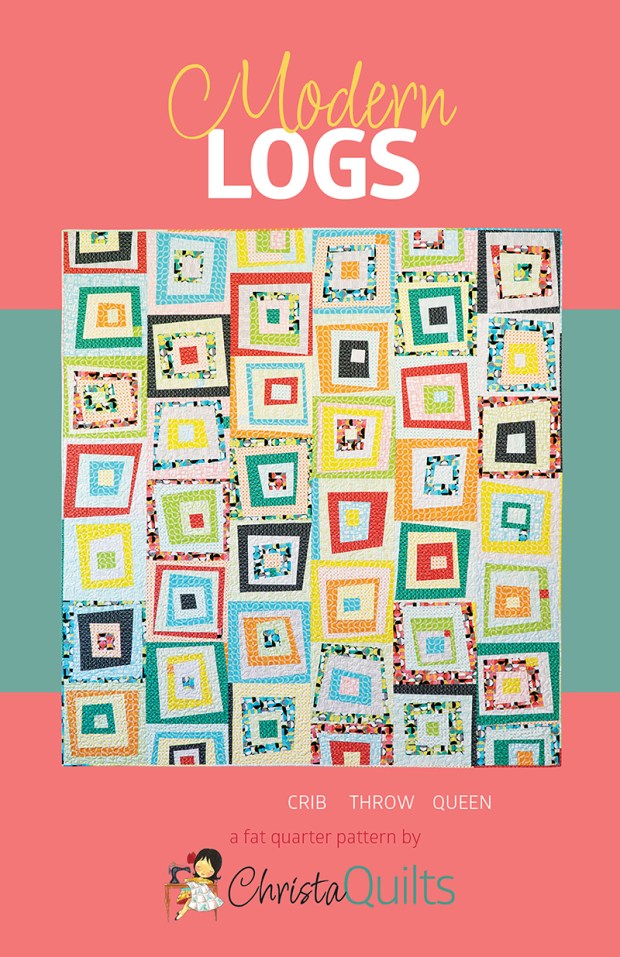
Modern Logs has been one of my most requested quilt alongs ever and I’m so excited for it to begin! To get you ready, I’m sharing the full supply list and schedule today; then next week I’ll include a bonus post on choosing fabrics. The QAL will kick off on Wednesday, September 2nd.

For a limited time, I’m offering Modern Logs Quilt kits in all 3 sizes including the pattern!

Click here to get the Modern Logs Quilt Kit while supplies last.

Modern Logs: Scrappy Improv Front and Back

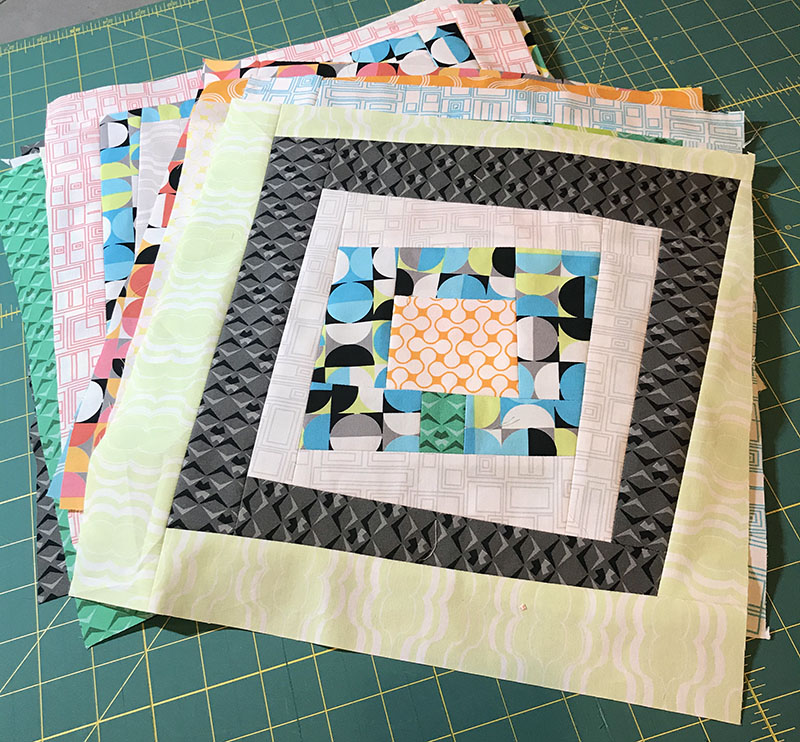
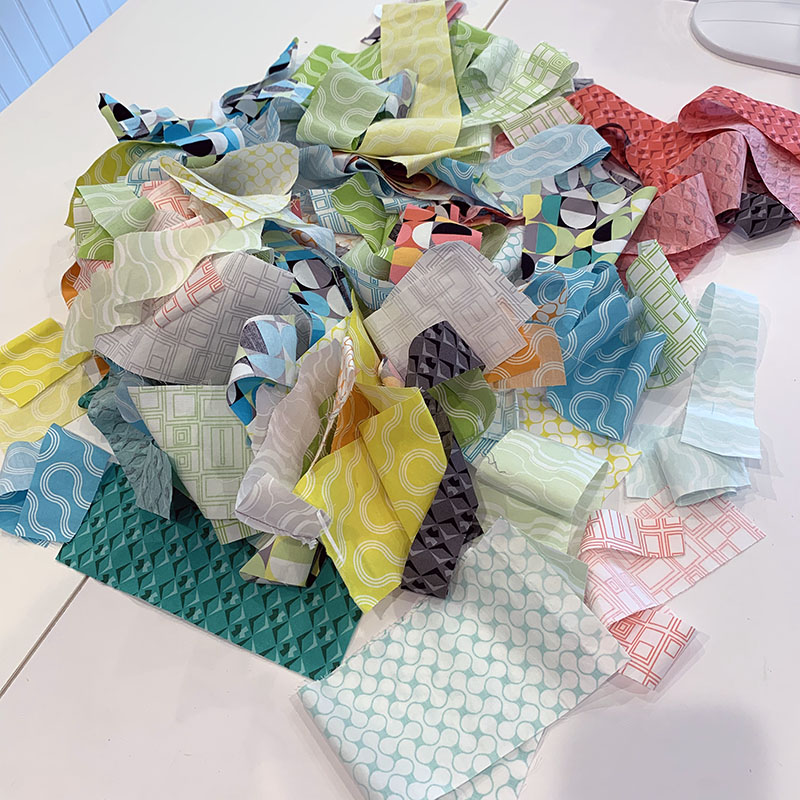
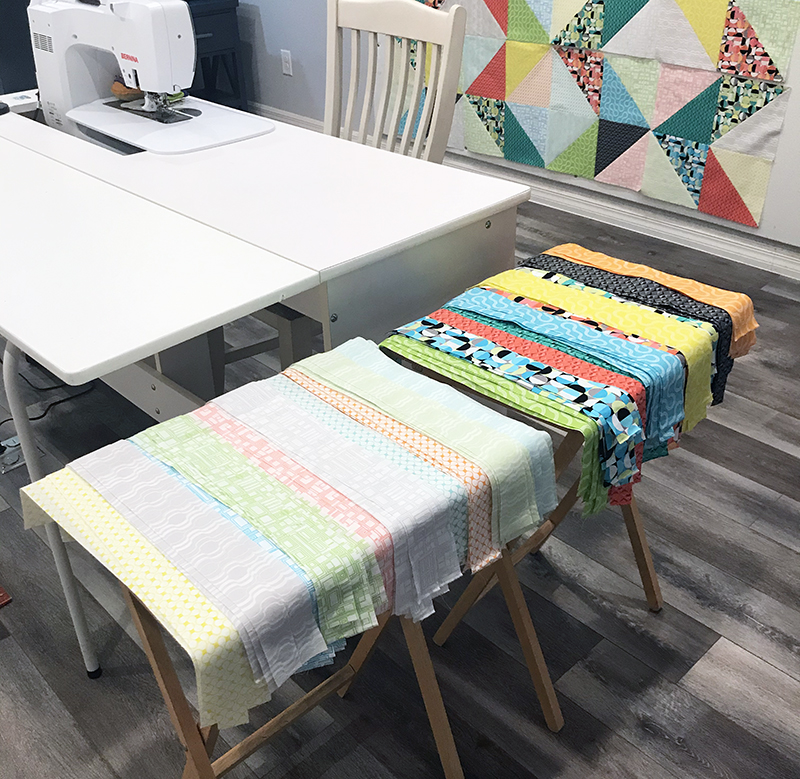
As part of the quilt along, I’ll include bonus tips and tricks on how to make a pieced backing if you so desire. But I’ll include a tutorial on sewing a regular back if that’s your preference too. For my Throw size, I paired up a couple yards of the Good Vibes Gumballs print with my leftover strips plus a few other pieces from my scrap stash.

Pieced Quilt Backing

I love using up lots of leftover scraps on the back. It’s a unique piece of art every time!

Modern Logs is the perfect pattern to learn a little bit of improv piecing, but in a structured way. I continued that theme by using up as many scraps as I could on the back. Although it’s a bit of improv, there’s a method to my madness that keeps everything under control.

Modern Logs Pattern and Materials List

Modern Logs Quilt Pattern

Click the image above to enlarge for details.

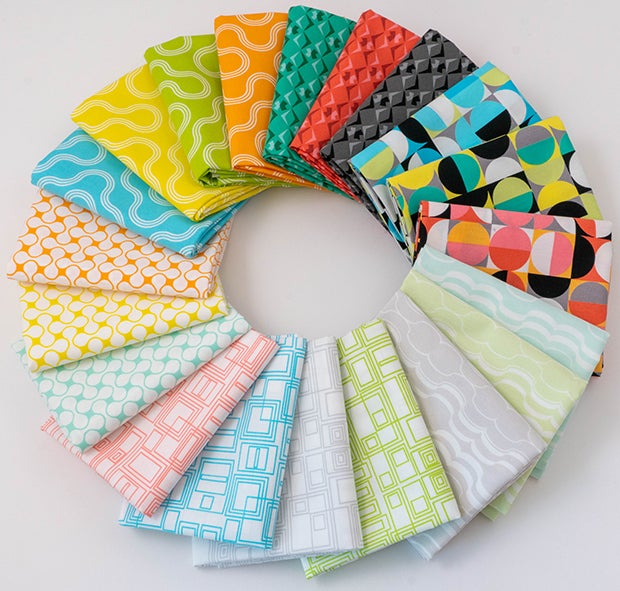
This quilt is really easy to chose fabrics for. All you need is an equal number of lights and darks. You can select fat quarters as shown in the pattern above (10 of each light/dark for crib, 20 each light/dark for throw and 30 each light/dark for queen). Or you can use leftover precut strips and other scraps. Pretty much any cut of fabric will work, and no two quilts will end up looking exactly the same.

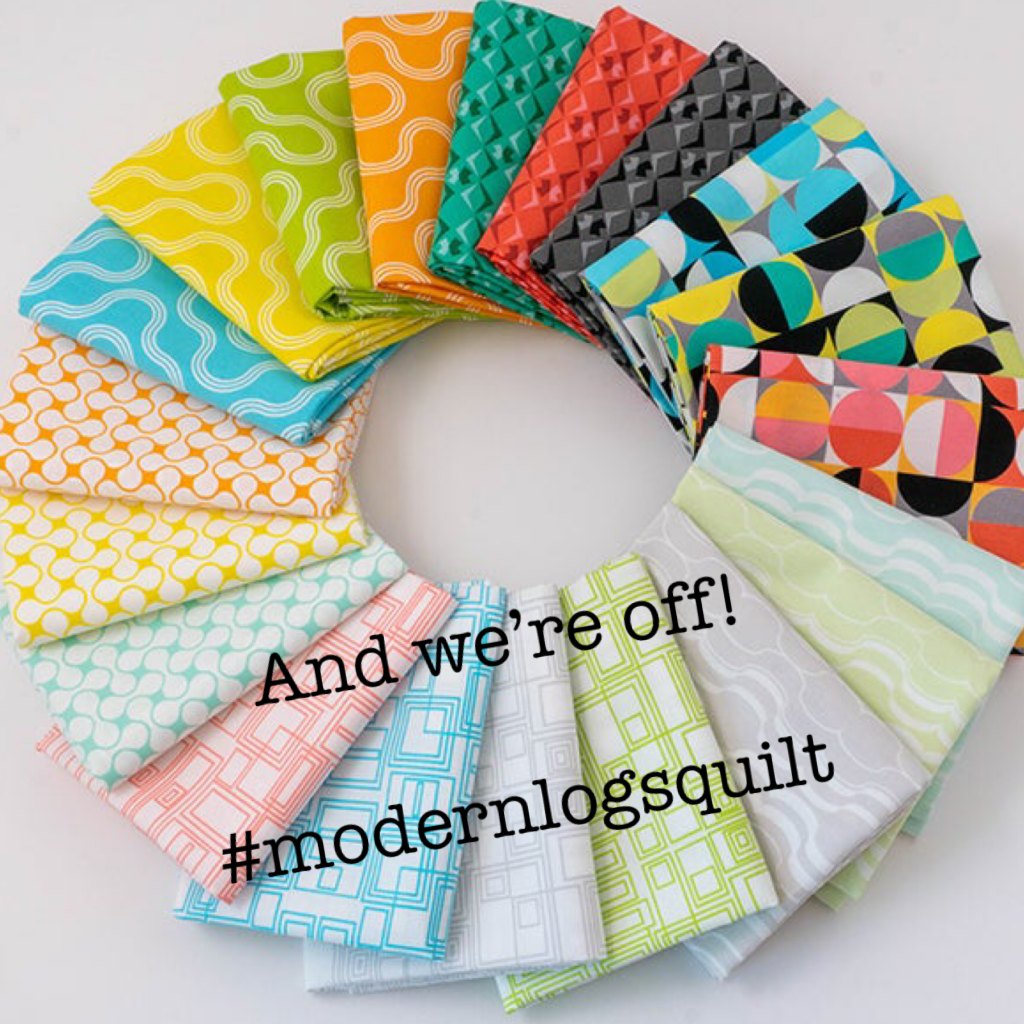
Good Vibes fat quartersClick here to view all Good Vibes fabrics.

I’m using Good Vibes fat quarters for my quilt shown above, and I’ll be using duplicates so that I have enough fabric for the larger size. But this pattern is extremely flexible in which fabrics you choose (more about color selections next week).

Other Recommended Supplies

  • Sewing machine in good working order. We will do an easy free-motion quilting design, so make sure you have a free-motion foot to fit your machine. Of course I love my BERNINA 770 QE with its wider throat space and lots of bells and whistles.

BERNINA 770QE

Click here to see all the features I love on my BERNINA 770QE

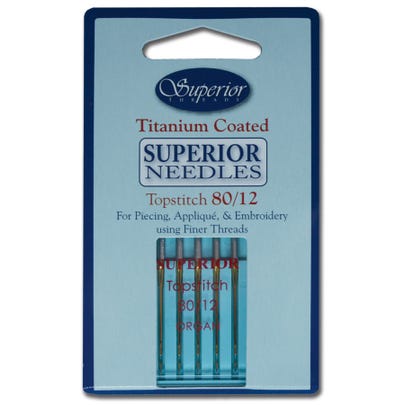
  • Brand new sewing needles. Always, clean, de-lint and oil your machine before starting a new project, and change the needle. My favorite needles are Superior Titanium Coated needles, size 80/12. I use these for both piecing and quilting:

Superior Threads Needles

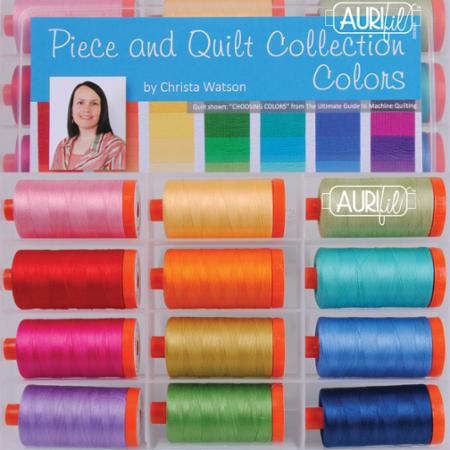
  • Quality thread for both piecing and quilting. My preference is Aurifil 50 weight 100% cotton. This pairs well with my favorite needles above. And if you piece and quilt with quality cotton thread, your quilt will NOT get stiff when you quilt it. I’m using my Piece and Quilt Collection Colors for the entire quilt:

Piece and Quilt Aurifil thread by Christa Watson

Click here to view my favorite threads and supplies.

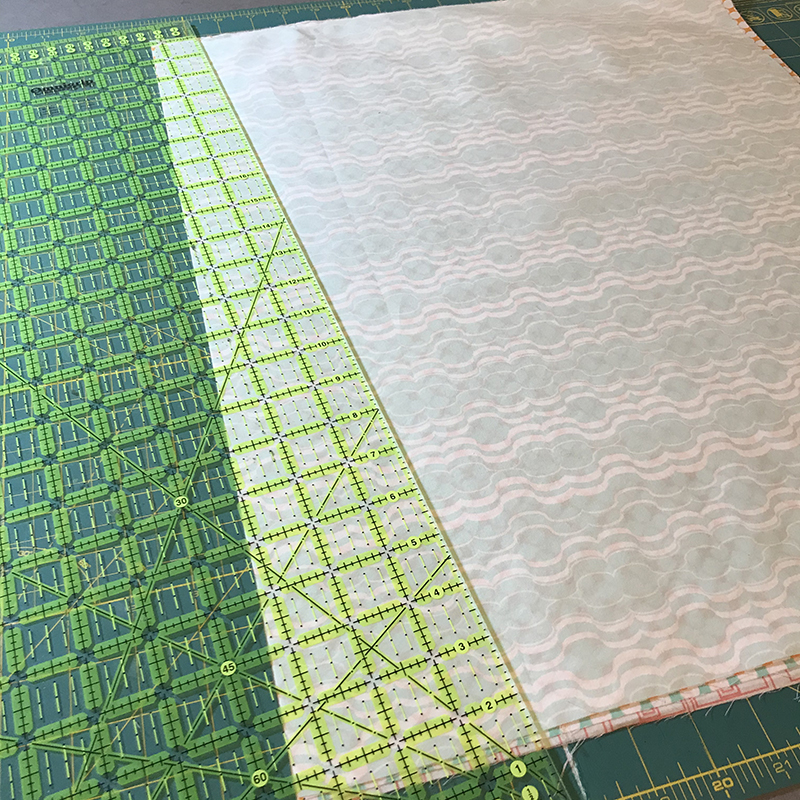
  • Acrylic rulers: 6″- 8″ wide by  24″ long ruler, and 12 1/2″ x 12 1/2″ square ruler. These rulers will really come in handy. I use the long ruler for cutting an entire length of a fat quarter. The square rulers are for squaring up your blocks so they are all a consistent size.

Modern Logs Quilt Along Schedule

The links below will go live as each part is posted. Bookmark this page and refer back to the schedule anytime in the future to work on this quilt at your own pace. So gather your supplies and get ready to sew!

Modern Logs by Christa Watson

Get your Modern Logs Pattern and Supplies below:

Modern Logs Quilt Detail

Bonus Help!

For any questions, sharing your progress, and bonus help and support of your fellow makers, be sure to join my ChristaQuilts Group on Facebook. You can also share your makes on social media using #modernlogsquilt.

Want to get notified each time the quilt along step is posted? Enter your email address in the sidebar to automatically follow my blog. This can be found either to the right of your screen on a computer or laptop. Or scroll allllll the way down to the bottom of this page to see it on your mobile device.

I can’t wait to see what YOU create!!!

Bling Quilt Along Part 4: Machine Quilting Option 2: Wavy Grid

This week I’m super excited to give you additional options for machine quilting your Bling quilt. I quilted both of my versions with two different walking foot quilting designs. Last week, I shared my basting tutorial along with option 1; and I wanted to add one more plug for pressing your seams open:

When you press your seams open, not only will the quilt lie flat and make it much easier to quilt, but you wan’t get any “shadowing” of the seams, which is when a darker fabric shows up under a lighter fabric seam. The darker fabric always goes to the darker side, and the lighter fabric always goes to the lighter side.

But here’s a bonus tip when working with lighter background fabrics such as in this version of Bling: be sure to clip off any excess darker threads underneath so you don’t see them from the front of the quilt. If this does happen, you can always use a needle or tiny crochet hook to grab any pesky threads that show underneath the quilt top.

Machine Quilting Wavy Grid

To recap both both machine quilting options mentioned in the Bling quilt pattern, check out this short video below which shows me quilting wavy lines on the white version and a straight-line grid on the black version:

Check out more fun tutorials on my YouTube channel.

The basic idea for either quilting plan is to “divide and conquer” – quilt one pass of lines in both directions all the way across the quilt. Then quilt additional passes across the quilt until you like the density. You can do this with straight lines, or irregular wavy lines. I’ve even used a decorative stitch on my sewing machine using the same process!

Choosing Thread

For the white version of Bling, I went with a more subtle thread than the hot pink I chose for the black version. I like to take a picture of the thread I’m using on the quilt so I can document it to know which one I used. This black/white/gray thread is included in my Variegated Thread Collection from Aurifil. 

I prefer to quilt with 50 weight, 100% cotton thread from Aurifil.

1st pass across the quilt

So let me break it down for you a little bit in photos. In the first pass across the quilt, you can barely see any quilting. I’m quilting an organic wavy line “near” the ditch rather than “in” the ditch and it really blends in. The lines are really widely spaced apart, in between each of the block rows.

Click the image above to enlarge. Can you spot the quilting lines?

To quilt wavy lines, my machine is set up for regular straight line stitching, but I gently move the quilt from side to side to form the organic looking wavy lines.

2nd pass across the quilt

The next quilting pass is roughly through the center of the blocks. I use the seam lines as a guide for where to quilt. The wavy lines are fast and easy to quilt because you can eyeball where you are going and the lines don’t have to be perfectly spaced.

It helps to have a large work surface and a drop in table to hold the weight of the quilt.

The wavy lines are actually must faster, and it’s my go-to design when I’m in a hurry! In fact, by quilting wavy lines “near” the ditch, instead of “in” the ditch, it’s a great choice when your ditches (seams) don’t line up perfectly.

Quilt in both directions

To keep the wavy grid as evenly spaced as possible, you will want to quilt in both directions – horizontally and vertically with each pass. Just rotate the quilt in the direction you need to go!

Now the yummy quilted texture is starting to appear!!
Just remember, the more lines you quilt, the less your imperfections will show!

use the seamlines as a guide

Here’s a really good example where you can see how I lined up the wavy lines with the pieced seams in both directions. The block design is a little off center so the lines aren’t all evenly spaced, but that’s hardly noticeable. This allows me to avoid marking because much easier to eyeball the wavy lines rather than straight ones.

Keep Quilting more lines!

By the time I’m finished, my lines will be quilted about 3/4″ to 1″ apart in both directions. This is completely a personal preference and it’s up to you how dense you’d like to quilt. Just remember, if you are using natural fiber materials (ie cotton fabric, cotton thread, cotton batting), the quilt will NOT get stiff the more you quilt it. And the more you love it, use it and wash it, the softer it will become!

I eventually lost track of how many passes I quilted, but I kept going until I liked the results!

Additional QAl resources for Bling

Bling Quilt Along Part 2: Sewing the Quilt Top

How are your Bling quilt blocks coming along? Be sure to see the end of this post for links to the introductory post and QAL schedule if you are just getting started!

Bling Blocks

I love a stack of freshly pressed blocks!!

If you are following along and arranging the blocks as shown on the pattern cover, you’ll want to sew your sets of bling blocks into 4’s like my pics below.

Geo Pop Bling

Geo Pop Bling blocks with Op Squares white background

At this point, don’t worry where each fabric goes. I think it’s more fun to let the blocks be random than trying to overthink it too much.

Geo Pop BlingGeo Pop Bling blocks with Tiny Hex Black background

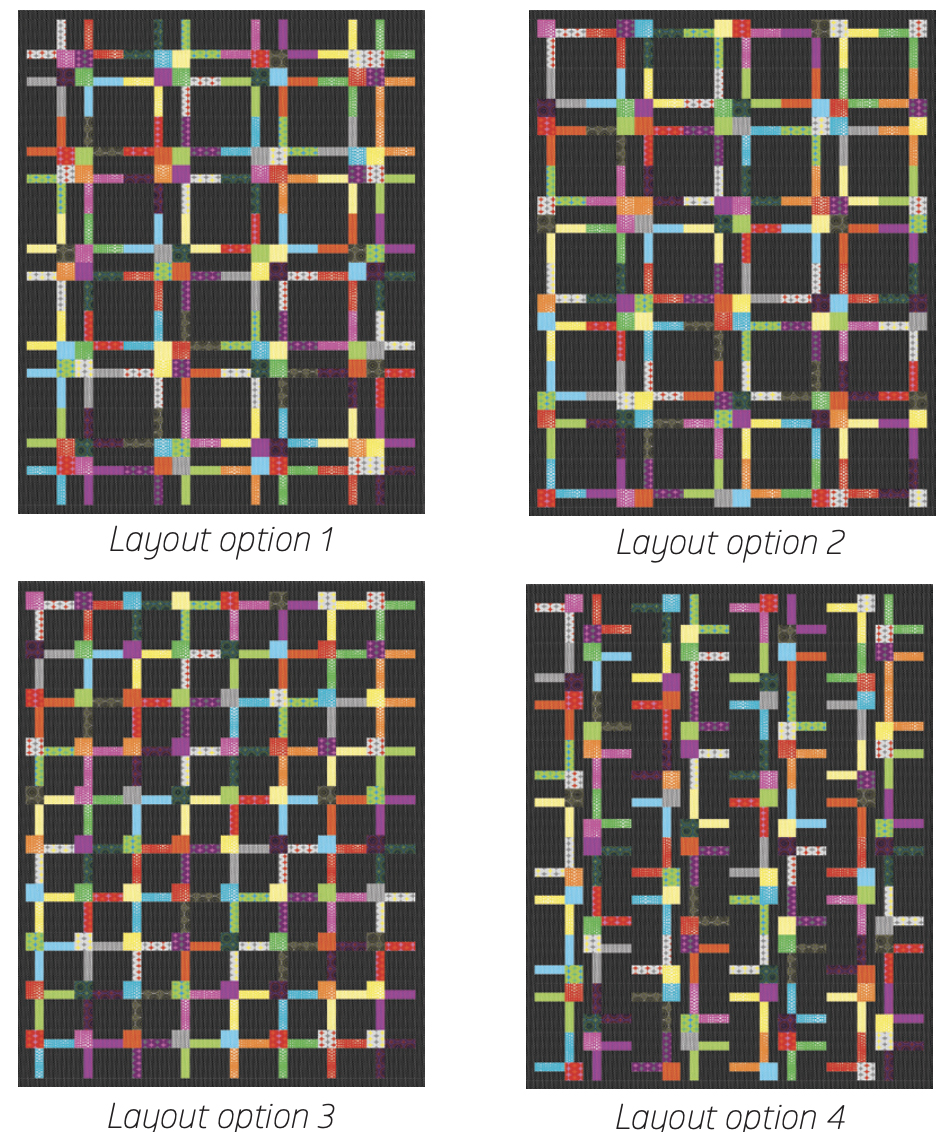
In the Bling quilt pattern, I’ve given 4 more layout ideas for you to explore if you wish. There are plenty more iterations you can try depending on how much you rotate each block!

Bling Alternate layouts

Sewing “Homework”

Your homework this week is to finish your blocks and sew them into larger groupings of 2’s or 4’s, then sew those into rows. If you get that far and are feeling gung ho – go ahead and finish up your “flimsy” (aka unquilted top).

Bling Quilt Top in Progress

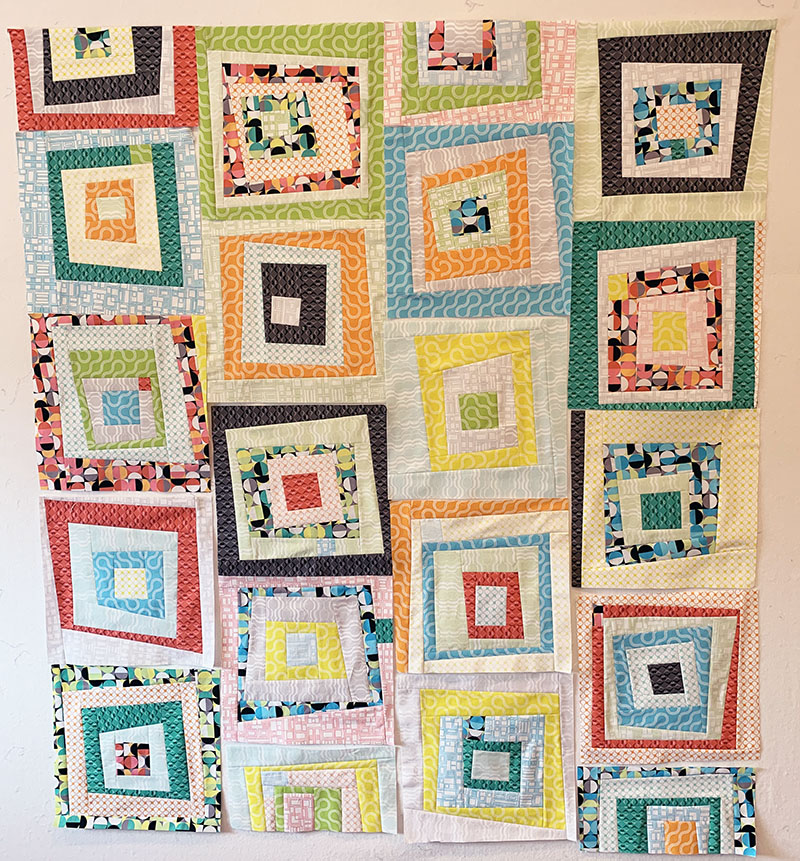
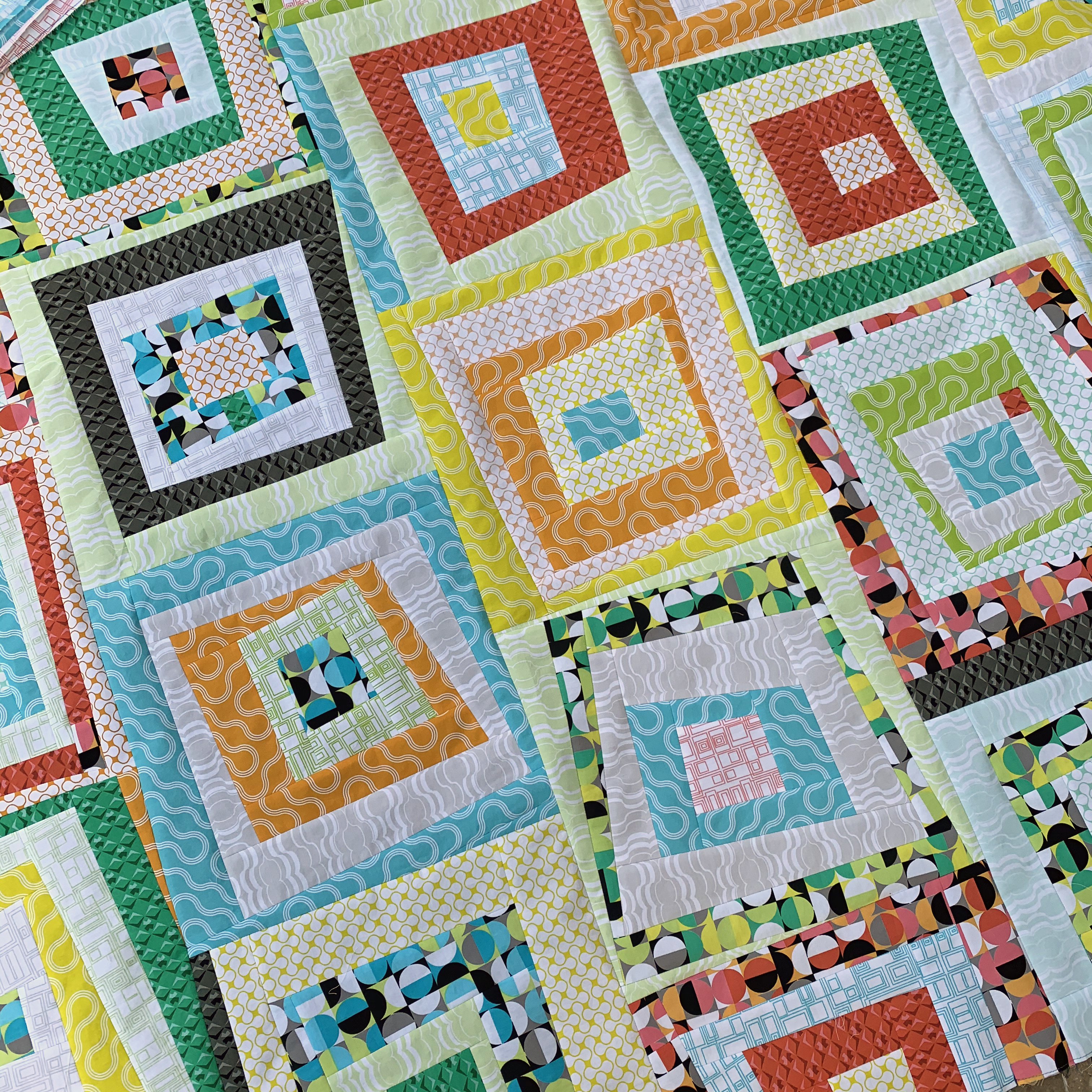
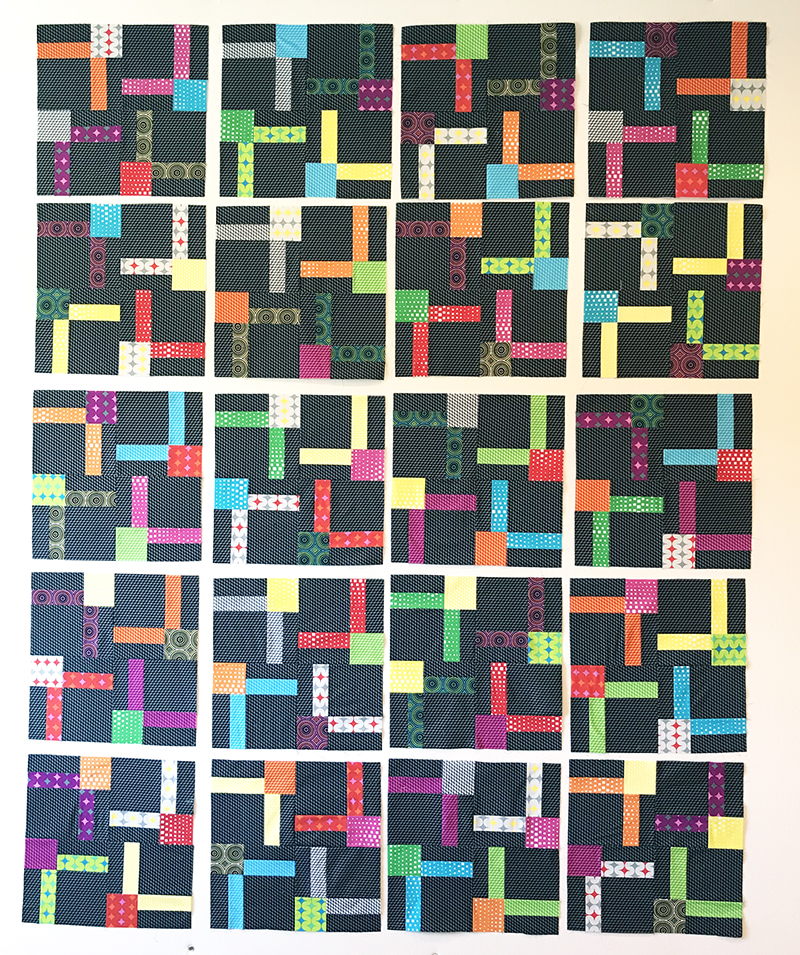
In the versions above and below, I’ve sewn my blocks into random groups of four according to the orientation on the front pattern cover. I’m using my design wall to lay out the larger blocks into a pleasing arrangement.

Black Bling Blocks

Bonus Tips!

I try to speed things up as efficiently as I can. I’ll chain piece by sewing pairs of blocks together without clipping threads in between, and I give myself plenty of room to work. I’ll also take a pic of my final layout with my phone so I can refer to it as I sew each row.

Bling Blocks in progress

I’m enjoying see the progress of those who share on instagram (#blingquilt) and in my ChristaQuilts facebook group!

Helpful Links

Bling Quilt Along Part 1: Cutting and Sewing the Blocks

It’s Bling quilt along time – whoo hoo!! This quilt is so fun and fast to make you’ll want to sew more than 1! We will move through this quilt along quickly – but just remember, these posts will stay up indefinitely, so you can refer back to them anytime.

Bling Quilts with Geo Pop

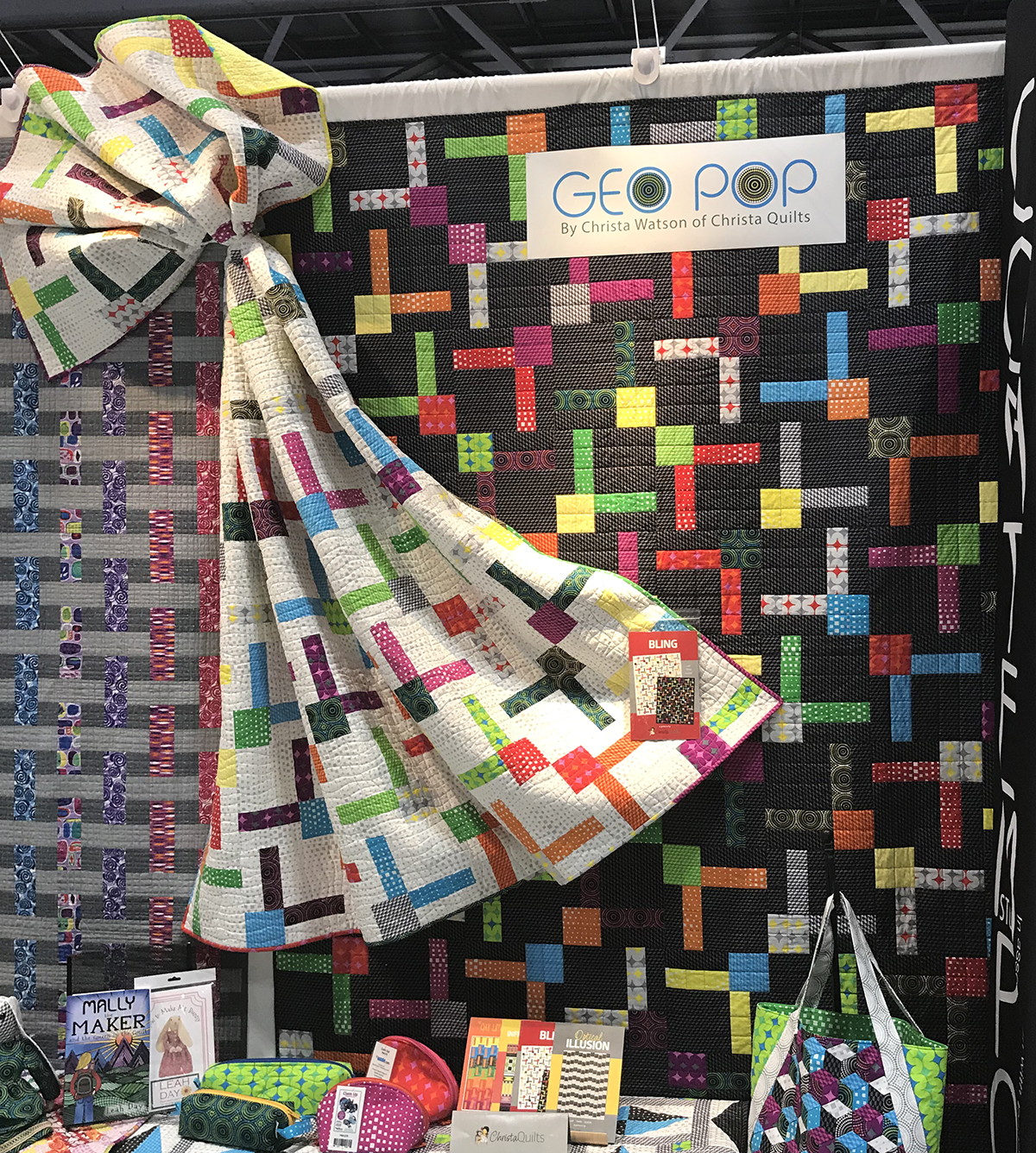
Bling on display in my Geo Pop quilt market booth a few seasons ago.

Whether you want to follow along and make this quilt IRL (in real life) or just virtually in your head, I’m excited to share tips and tricks over the next 5 weeks that will help you make better quilts, no matter which quilt pattern you are sewing. So let’s get started!!!

Bling Cutting Options

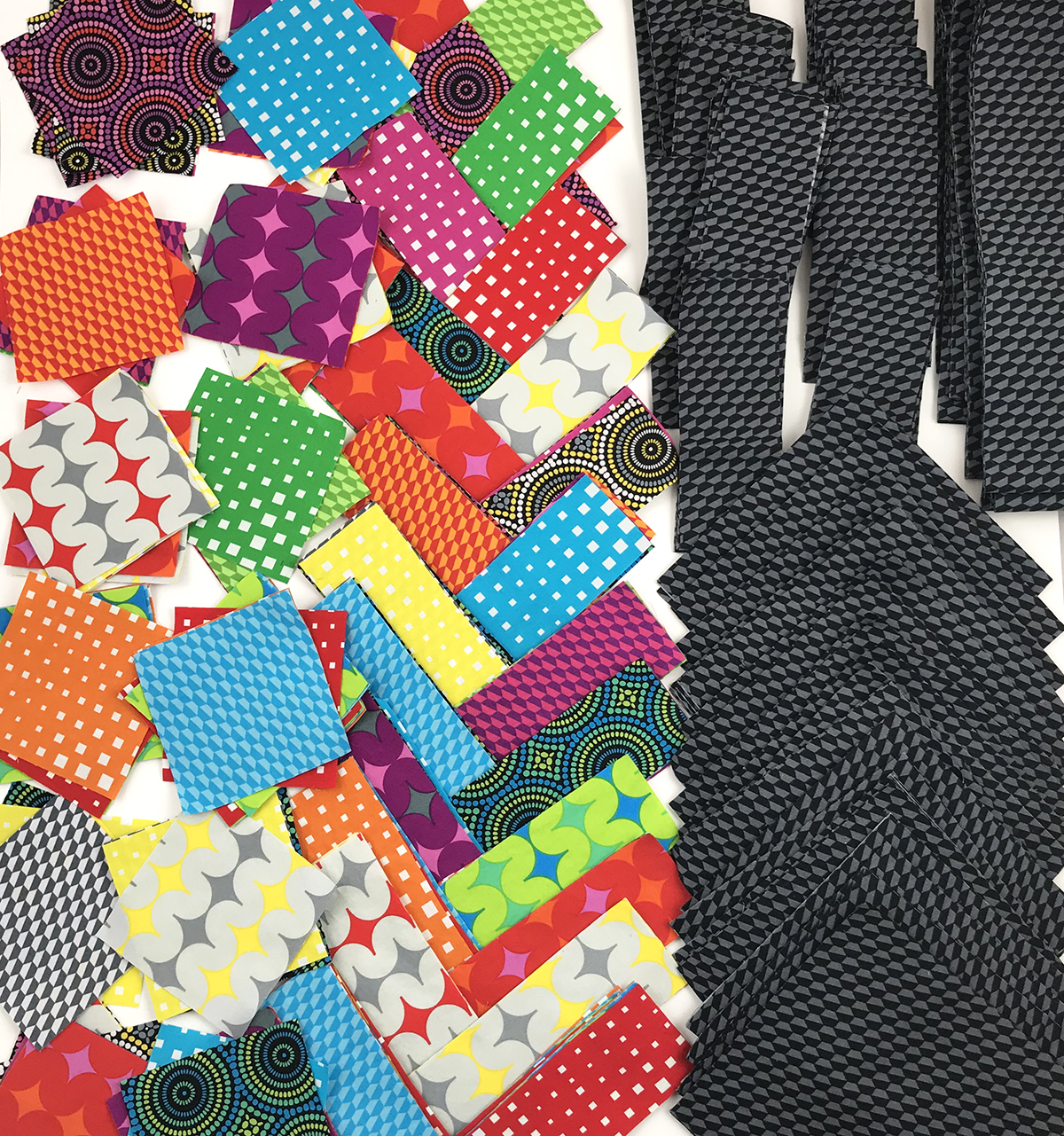
Geo Pop fabric for Bling quilt by Christa Watson of Christa Quilts

Above is all of the cut units for Bling made from Geo Pop with Tiny Hex black background.

Start by cutting your fat quarters into subunits as listed in the Bling quilt pattern on page 2. I’m making the twin size, but follow along by cutting the number of units as indicate for your size (lap, twin, queen).

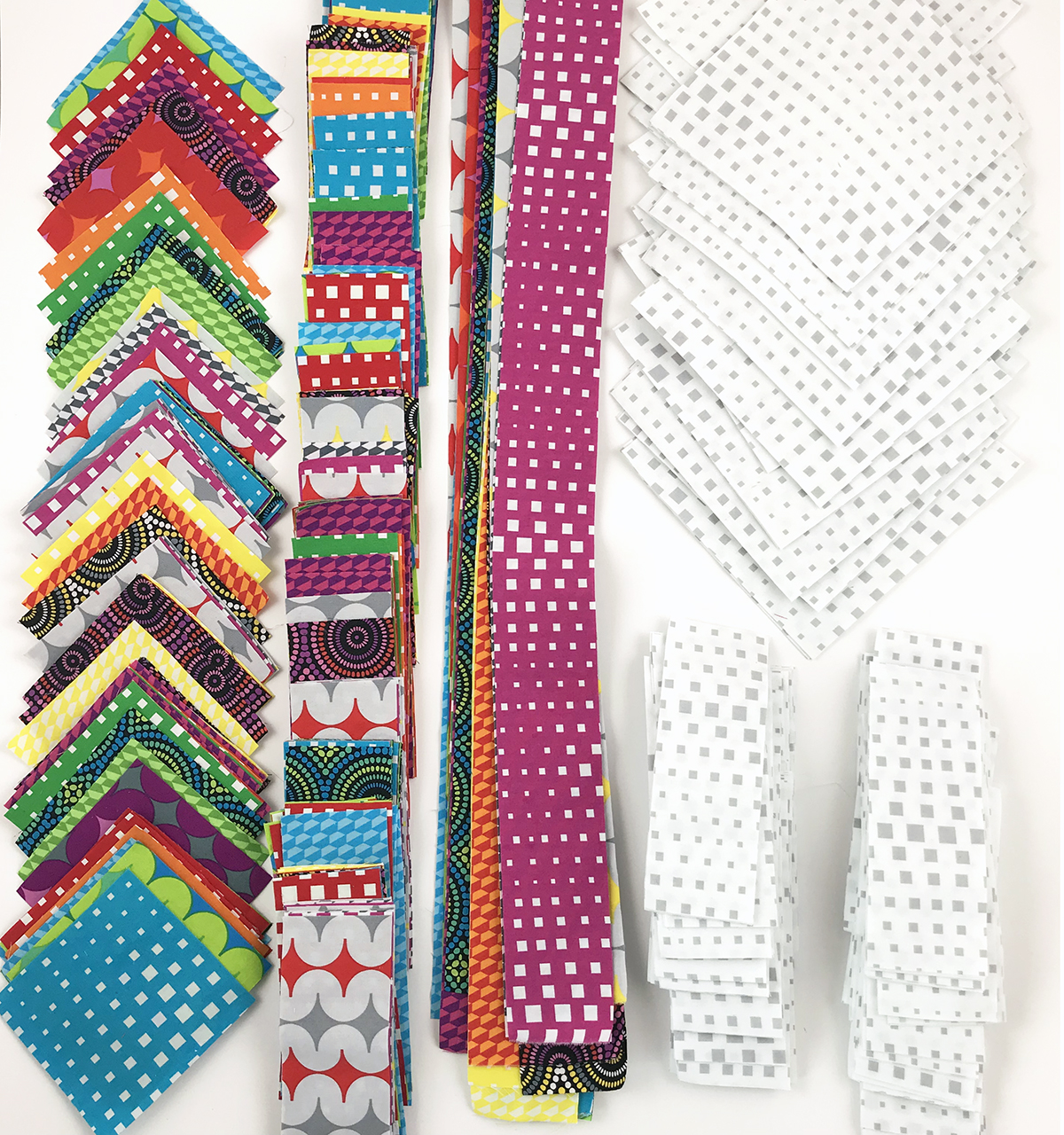
Below is all of the cut units for Bling made from Geo Pop with Op Squares white background.

Geo Pop Fabric for Bling Quilt by Christa Watson

You can use all of the same background fabric as shown in my pictures above, or you can go scrappy if you wish (see other color ideas here). Just remember to cut out the correct number of total pieces as listed in the pattern for your size.

Bling in Good Vibes

For example, if you want a scrappy background version shown above, you can cut out each block background from a different low volume print. In my example, I used half yard bundles of Good Vibes in low volume and saturated prints to get this look, but you could use up lots of scraps this way, too.

Be sure to pair up the “legs” of your block units if you want them to match (but they certainly don’t have to). You can even mix up the backgrounds within each block to go “super” scrappy, too. Just remember – the choice is up to you because you are the boss of your quilt!

Thread Options

I prefer to sew with a shorter stitch length (2.0 instead of 2.5) and press ALL seams open so my blocks lie nice and flat. Sewing with a shorter stitch also prevents the seams from splitting open, and it makes it harder to see the thread in between the seams.

Aurifil Thread and Geo Pop fabric

I used up lots of leftover thread in making these quilts. I prefer to piece and quilt with Aurifil 50 weight cotton, and I used up lots of leftover bobbins since this was such a colorful quilt!

I used lighter colored piecing threads for the version with the white background, and darker threads for the version with the black background. Aurifil Thread and Geo Pop Fabric

Whenever I’m making a scrappy, colorful quilt, I’l try to use up as many spools as possible that just have a little bit of thread left on them.  Who says you have to use the same exact color of thread throughout? I love finishing up a spool of thread – don’t you??

Block Sewing Options

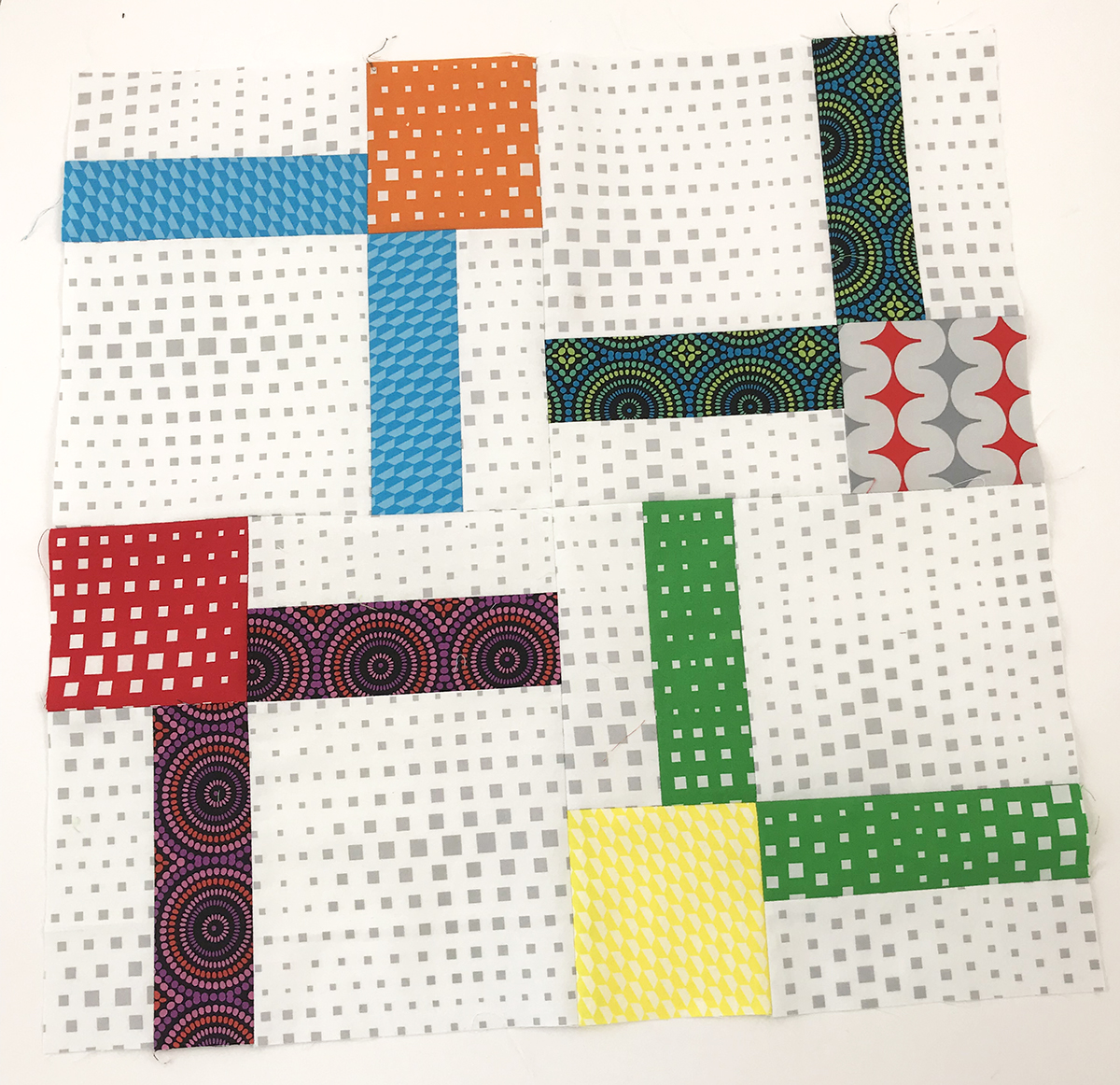
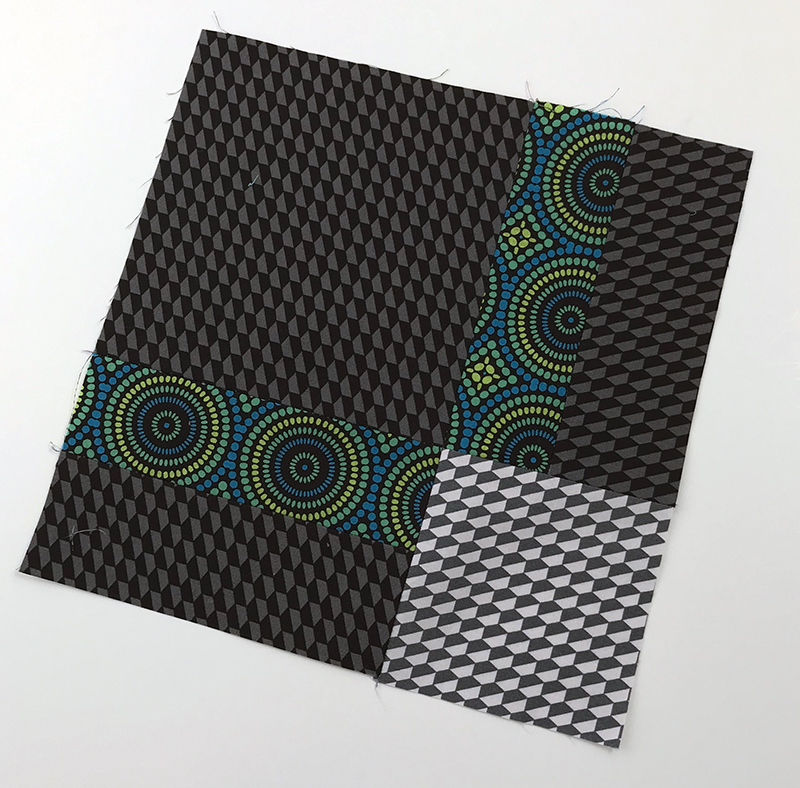
Follow the pattern instructions on pages 2-3 to create the basic Bling block below. I recommend sewing one block first, to make sure it turns out correctly, then chain piecing a whole bunch of units at once for speed and efficiency.

Bling Block

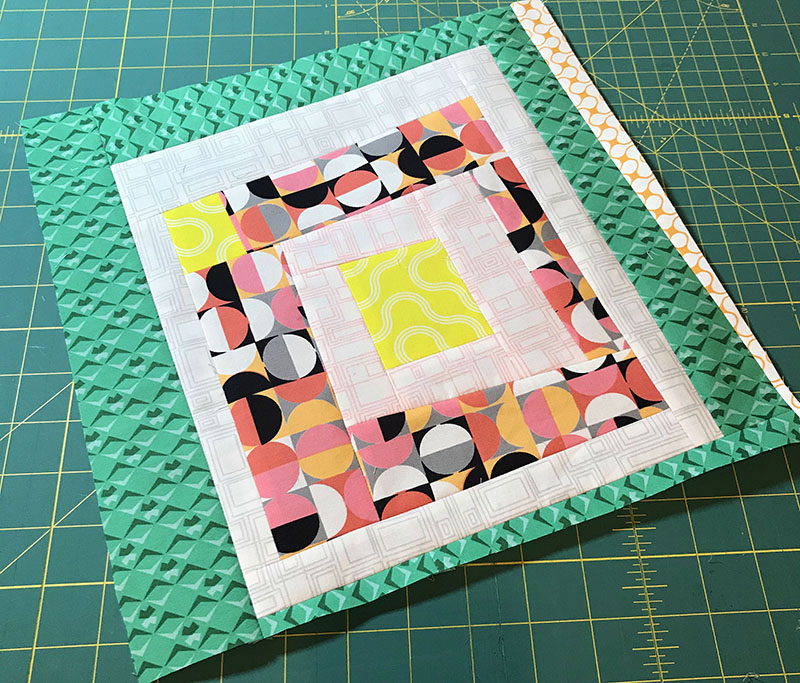
The fun part about making this block is mixing up the different fabric combinations. There’s no right or wrong way to pair them up. Just go for it and don’t over think it!!

Below is the back side of one of my blocks with those nice flat seams. This will make quilting sooooooo much easier, because the quilt top will be smooth and flat in the end.

Bling Block White

If you’d like to be a bit adventurous, here are a couple of bonus ideas on how you can sew your block units:

In the option below, I’ve rotated the position of the rectangle units.

Geo Pop Bling

Here’s what the blocks above will look like (in the white version) if you repeat this option throughout the entire quilt. The math and number of blocks is all the same, but what a huge variation one small change will create!!

Bling Alternate Blocks

Here’s another option to try: go super scrappy by using 3 prints in each block, rather than 2. Again, there’s not much thinking involved in this change.

Sew all of the rectangle units first (see the Bling pattern, page 2) and then decide if you want to make coordinating or super scrappy blocks. Or maybe a mix of both!

Geo Pop Bling

You can also try the other extreme: using all of the same print for the main part of the block!

Isn’t it fun to have choices????

Bling block same fabric

Whichever way you choose to sew your blocks – they will look fabulous!

Homework: Sew all of the Bling Blocks

Quilty “homework” is the best kind of homework!! Now that you have several options to try, work on sewing all of your Bling blocks this week. Don’t worry if you fall behind – just work on a few blocks a day, and you’ll have them done in no time!

Bling Blocks

Remember, I’m here to help and cheer you on – even after the quilt along is over. Check out the resources below to help enhance your quilt along experience:

Additional Resources

Bling Quilt Along Supply List and Schedule

It’s time for another quilt along – whoo hoo! Be sure to head over to my Quilt Along page for links to any of the quilt alongs you may have missed in the past! Who’s ready to make Bling with me???

Click here to get the optional Bling Quilt Kit while supplies last.

Bling Quilt - Geo Pop Fabric by Christa Watson

You can make this fun colorful quilt using 20 fat quarters + 4 yards of background fabric. Make it with a rich black background as shown above, or a crisp white as shown below. For other fun color combos – check out my Bling Color Inspiration post.

Bling Quilt with Geo Pop fabric by Christa Watson

All you need to join this quilt along is a copy of the quilt pattern and a can-do attitude! I will be showing how to make the Twin size in this quilt along, but you can make any of the sizes listed in the quilt pattern.

Bling Quilt Pattern by Christa Watson

Bling Quilt Pattern by Christa Watson

QUILT ALONG SCHEDULE

The links below will go live as each part is posted. Bookmark this page and refer back to the schedule anytime in the future to work on this quilt at your own pace. The first part – cutting will begin next week on Monday, July 20th, so gather your supplies and get ready to sew!


Quilt in Progress on Design Wall

Share Your Work

If you’d like to share your progress, and get extra help from me and other quilt along enthusiasts, be sure to join my ChristaQuilts Facebook Group. It’s a great way to stay motivated! In fact, once you gather your supplies, be sure to share pics of the fabrics you’ll be working with. The best part of any quilt along is seeing how varied all of the quilts turn out to be!

So who’s in??? All you have to do is follow right here on the blog each week as I post the next step. I’ve even got a few videos of the machine quilting when we get to that part – I can’t wait!

How to Bind Your Quilt, Optical Illusion Quilt Along Part 6

When the quilting is finished on your Optical Illusion quilt, or whatever quilt you happen to be making, just the final step of binding is left. I’d like to show you in words, pictures and videos how to bind a quilt. Let’s dive right in.

Optical Illusion Quilt

Finished Optical Illusion Quilt, 67″ x 88″

If you’re still working on your Optical Illusion quilt, no worries! This will be here when you’re ready for it. You can scroll to the bottom for links to all of the steps.

binding-scrappy-OI-christa

The first thing to decide is whether you want to make the binding from just one fabric or you want to make it scrappy.

binding one color OI christa

Which way you go is just a matter of personal preference, as there is not a right or wrong decision.

Step 1 – Calculate and cut your binding strips

A well-written quilt pattern will tell you how many binding strips to cut, but it’s handy to know how to figure it yourself. To determine the length of binding you’ll need, add up the length of the four sides (known as the perimeter) and then add 10″. The extra 10″ is for the seams and gives you a little insurance.

For example, Optical Illusion finishes at 67″ x 88″. This would be the math:

67+67+88+88+10 = 320″

You’ll need 320″ of binding. We use 40″ as the standard width of useable fabric from selvage to selvage, so from each cut across the fabric, we will get 40″ of binding. So we divide 320″ by 40″ to see how many strips to cut.

320″/40″= 8 strips

Just as a side note, if you ever divide by 40 and get something like 6.49, round up to get the number of strips. If you got 6.49, you’d round up to 7 because you’d need 7 strips.

bind_2 christa

How wide should your binding strips be cut? It’s a matter of personal preference. Most of my patterns, including Optical Illusion, give 2-1/4″ as the cut width for binding strips. But over the past few years, I often cut my strips 2″ wide and sew them to the quilt with a scant 1/4″ seam allowance. If you’re a beginner, it may be a little easier to cut binding strips at 2-1/4″ wide.

Step 2 – Sew the binding into a continuous length

bind_3 diagonal seam christa

To join the strips with mitered seams, place two strips right sides together at a 90 degree angle. Sew them together across the diagonal as shown. Join all of the binding strips into one long piece.

Trim the seam allowances to 1/4″ and press the seams open.

bind_4 trim end 45º christa

Trim one end of your binding at a 45 degree angle as shown above. This will be the starting end.

Step 3 – Press the binding

bind_6 press christa

Press the binding wrong sides together along the entire length.

Step 4 – Trim the quilt and walk-around

Trim off the excess backing and batting before you attach your binding. I use a large square ruler for the corners, and a long straight ruler for the sides.

bind_5 trimming christa

Note: the quilt above is Moder X – patern available here while supplies last.

Quickly do a “walk-around” by running your binding along the perimeter of your quilt to ensure you won’t have any seams falling in the corners. If you do – move the binding up or down a few inches to avoid seams at the corners.

Step 5 – Attach the binding to the quilt

Please note: These instructions are for sewing binding to the front of the quilt and then sewing it by hand on the back to finish. If you prefer to bind completely by machine, see this video. Or:

Click to see a blog post about binding by machine.

Now back to Step 5: Attach the binding to the quilt

Starting at least 6″ – 8″ away from any corner, place your binding on the front side of the quilt and leave a tail of about 6″ – 8″. Line up the raw edges of binding with the raw edges of your quilt. The fold should be toward the quilt.

Attach a walking foot or even-feed foot or use a dual-feed setting on your machine. Starting at the pin as shown, stitch the binding onto the front of the quilt with a 1/4″ seam allowance.

As you come to a corner, stop stitching 1/4″ before you reach the corner and sew off the corner at a 45º angle.

It will look like this. In order to miter the corner, fold the binding up and away from yourself. Keep the raw edges of the binding in line with the raw edges of the quilt as shown.

Next, fold the binding back down toward yourself, creating a tuck of fabric underneath.

The fold will form a little triangle that stands up off the quilt.

The fold will form a little triangle that stands up off the quilt; later it will form the miter on the quilt front. Now the quilt goes back under the machine.

Starting from the edge of the quilt, stitch the next side of binding down until you reach the next corner. Repeat this process for all four corners until you approach your starting point. STOP when you’re about 8″ away from where you began.

Trim off the excess, leaving a few inches of overlap to work with. Open up the end of binding and place the beginning tail inside it.

Using the cut angled end as a guide, lightly mark a line right up next to it. Then cut 1/2″ away from this measurement to account for seam allowances on both ends.

Put the two tail ends right sides together, and sew with 1/4″ seam to complete the continuous loop of binding. Finger press the seam open.

Sew that last part of the binding to the quilt. Now the binding is attached all the way around the quilt.

Step 6: Sew the binding down

The next step is to fold the binding to the back of the quilt and sew it down by hand. I love using binding clips all round the edges to hold it down. Here’s the only picture I got of my binding Optical Illusion:

binding clips

Click here to see a video of how I sew my binding down by hand.

Congratulations on finishing strong! And thank you for quilting along with me!

Optical Illusion Pattern Cover spread

Click here to get the Optical Illusion pattern in paper format.

Click here to get the Optical Illusion pattern as a pdf that you’ll download instantly to print yourself.

Optical Illusion Quilt Along

Click on each part you’d like to see.

  1. Part 1: Cutting for Optical Illusion
  2. Part 2: How to Make the Blocks
  3. Part 3: How to Sew the Quilt Top
  4. Part 4: Prepare Backing, Batting and How to Baste the Layers
  5. Part 5: Machine Quilting

Machine Quilting Tutorial: How to Quilt a Continuous Spiral (Optical Illusion Quilt Along Part 5)

I love it whenever we get to the machine quilting part of any quilt along! In case you missed it, click here to view all previous Optical Illusion Quilt Along posts. Today, I’m showing how to quilt the continuous spiral design.

Machine Quilting Continuous Spirals

Above is a sample I made for my in-person quilting classes. Notice that I used a blending thread so that you don’t see the imperfections.

Below is the sample I quilted for you on video this week so you can see how the process works. I quilted with black thread on white fabric which shows ALLL the imperfections, LOL!!

Machine Quilting Continuous Spirals

For my Optical Illusion quilt, I used a black/white thread from my Aurifil Variegated thread collection.  I love using 50 weight cotton thread for both piecing and quilting, because I’m able to use any leftover bobbins when piecing my next quilt!

Christa Quilts Variegated Thread

Click here to get my Aurifil Variegated Thread collection

Spiral Quilting Video Tutorial

Click the image below to watch my spiral quilting video tutorial on my YouTube channel. It’s just over 9 minutes long and will demo how to quilt the basic spiral.

If you’d like to learn how to quilt additional spirals, be sure to grab a copy of my machine quilting books.

In my first book, Machine Quilting with Style, I show how to do the basic spiral, plus a wonky spiral variation. Then I expand on that with overlapping spirals in The Ultimate Guide to Machine Quilting. Finally, I teach how to quilt a continuous square spiral in my third book, Piece and Quilt with Precuts.

Get My Books on Sale – Just $19.95 Each

Machine Quilting Books by Christa Watson

Click here to get my books on sale for just $19.95 each, while supplies last.

All 3 of my books are currently on sale for just now on sale for just $19.95 each until they sell out!
So grab 1 (or all 3) today! And who knows – you may find a completely different design you want to quilt on your version of Optical Illusion.

Optical Illusion Detail

Optical Illusion Quilt Detail

Optical Illusion Quilt

Remember to share your version of Optical Illusion in my ChristaQuilts Group on facebook. I love seeing everyone’s progress and the variations with all the different fabric colors are amazing!!

FOR MORE ABOUT THIS QUILT ALONG

How to Prepare Your Quilt Backing, Batting and Basting – Optical Illusion Quilt Along Part 4

Welcome to Part 4 of the Optical Illusion Quilt Along! You’ve made it through the piecing, so congratulations! Now we come to what may not be your favorite part of the process: prepping the backing and batting, and basting the layers together in preparation for quilting.

Above is one of the alternate colorways for Optical Illusion. You can make something similar with red, light blue, and white fabric from my online shop.

But if you’ll let me guide you through the next steps, I’ll share some tips to make it less painful and move you along to the quilting that much sooner.

Prep the Batting

The most important step in basting a quilt is to ensure that the batting and backing are several inches larger than the quilt top all the way around.

If you look at the back of the pattern, you’ll see that for the batting size, I have added 6″ to the length and width of the quilt top. For example, the lap-size top is 45″ x 66″. The batting needed is 51″ (45″ + 6″) x 72″ (66″ + 6″).

Example of measuring batting from a previous Quilt Along:

The batting should be several inches larger than the quilt top all the way around.

Click here for the Block Chain Quilt Along shown above.

For me, the easiest way to measure the batting is to buy a roll of it, then unroll it across the width of the quilt top and roughly trim off the amount I will need. In the photo above, I’m using Hobbs Tuscany cotton/wool batting which is one of my favorites.

It’s 90″ wide and folded double on the bolt. So after I trim off a chunk from the bolt, I’ll lay the quilt top out and trim off several inches from the top of the batting. I save those chunks to make practice quilt sandwiches later.

Prep the Backing

I used Geo Pop Tiny Hex in black for the backing. Get Geo Pop Tiny Hex for your backing. 

Geo Pop Tiny Hex in black by Christa Quilts for Benartex/Contempo

Piece your backing so that it is a few inches larger than the batting size given on the back of the pattern.

For example, for the lap size, I would cut my three yard piece of backing fabric in half crosswise. This gives me two pieces about 40″ x 54″. I need backing a bit larger than 51″ x 72″.

Backing, pieced horizontally.

I’ll sew the two pieces together for a backing that’s roughly 54″ x 80″. The seam will be horizontal across the quilt.

Now you are ready to baste!

Basting the Layers: Quick Overview

I baste using my design wall and 505 basting spray. I make sure my batting and batting are bigger than my quilt top and I trim away some of excess after it’s been basted. I spray the top and backing outside separately, then assemble all the layers on my design wall, taking care to smooth each layer as I go.

Once everything looks nice and flat, I’ll roughly trim the edges so that only and inch or two remain around all 4 sides. I cut off as much extra as I can to prevent it from tucking under the back and quilting the quilt to itself!!

The final basting step is to iron the quilt on both sides to set the glue and smooth everything out one final time.

I didn’t have a chance to take pictures of this process while making Optical Illusion, but here are links and tips from previous quilt alongs.

I spray outdoors but assemble the layers indoors.

Click here for a step-by-step photo tutorial of how I spray baste my quilts.

If you’d prefer a video, watch my video quilt basting tutorial instead. The video below was made as part of my Infrastructure Quilt Along.

See the same process on my Color Weave quilt. I love sharing a  few different photos and tips, which sometimes helps!

And if you have any more specific questions, you can alway post pics and ask questions in my Christa Quilts Facebook Group!

Next week I’ll include a video showing spiral walking foot quilting practice to get you ready for the most fun part of making this quilt!! I can’t wait!!

Optical Illusion Detail

Spiral Quilting on Optical Illusion can be done with a Walking Foot or Dual Feed system.

For More about this quilt along

How to Sew Optical Illusion Quilt Top – Quilt Along Part 3

Welcome to Part 3 of the Optical Illusion Quilt Along! I hope you are enjoying your fabric choices and feel confident in your cutting and sewing skills. Now I’m excited for you to start sewing the quilt top. It’s easy and fun!

Do you need a kit? The black, white and gray version is still available!
(Pattern is included with the kit.)
Do you need the pattern?
Get the paper pattern. 
Get the pattern instantly as a pdf.

If you haven’t already, please go through your pattern and highlight or circle the number of units to make for your size on pages 3 and 4. You’ll be so glad you did. 

Begin with Step 1 on page 3 of your Optical Illusion pattern. Remember to sew with the gray on top for each sashed square. If you do, you’ll automatically alternate the direction in which you’re sewing, which helps prevent your strips from warping.

I press all of the seams open on this quilt. Whether you press seams open, to the side or toward a specific fabric is up to you. The seams don’t have to match up with anything, which is one of my favorite things about this design.

Continue with each Step as given in the pattern, referring carefully to the diagrams in the pattern for each unit. I use sticky notes to label each little pile of units as I finish them.

Optical Illusion Quilt Detail

Get the quilt kit for Optical Illusion. while supplies last!

When you’ve completed all the Steps, move on to Sewing the Rows on page 5.

Sewing the Rows

As I am making the rows, I keep them oriented horizontally so they match the diagrams. Be sure and notice that there are different diagrams for the Lap Size than for the Twin and Queen size. It will help to circle the diagram for your size!

Label the rows with their letters to help you stay organized. 

When your rows are finished, give yourself a high five!! Great job!

Quilt Top Assembly

Moving on to Quilt Top Assembly: In last week’s post, I mentioned alternating your sewing direction by keeping the long skinny strips on top. This will be helpful as you assemble the top.

The layout diagram below is included in the pattern. Refer to pages 6 and 7 of the pattern for more info as you assemble, including a method for trimming. Use your design wall to stay organized, or snap a quick picture on your phone for a helpful reference point as you progress.

Optical Illusion LayoutI pin generously during this process. I match and pin at each end, at the middle and at several points between. Remember to sew with the skinny strip on top each time so that your sewing direction will automatically alternate.

TIP: If you have a row or a sashing strip that is longer than its neighbors, sew with the longer strip on the bottom, next to the feed dogs. This helps to ease in the fullness.

Press the quilt top gently to wrap up the piecing.

SEW A VICTORY LAP!

When the quilt top is complete, you’ll want to “stay-stitch” the edges by sewing across the top and bottom of the quilt. Do this about 1/8″ away from the edge on the top and the bottom so it will be hidden when you add the binding. Just a note: When you make a quilt with borders, you can skip this step since the borders will stabilize the edges instead.

Congratulations! Your Piecing is complete.

Next week we’ll cover how to prepare your backing and batting, and how I baste a quilt. Here is the back of the pattern with info that you’ll need. Click the image for an enlarged view.

Optical Illusion Pattern Cover spread

You know how much I enjoy machine quilting. Just a few more weeks and we will quilt walking foot spirals—I can’t wait!! Being able to finish your quilt on your own sewing machine because you’ve built the skills to do it is a great feeling. You’re going to love it!

Optical Illusion Detail

WHERE CAN I FIND MORE INFO ABOUT THIS QAL?