Win It Wednesday From Benartex – Your Chance to Win my Fabric and Patterns!

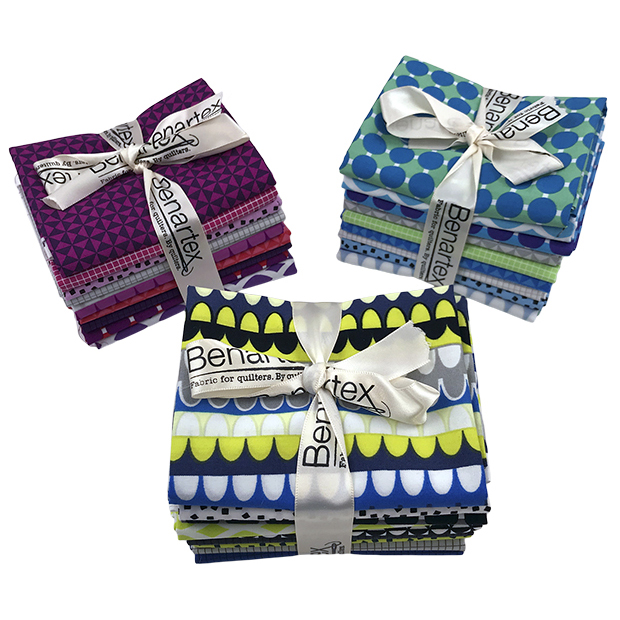
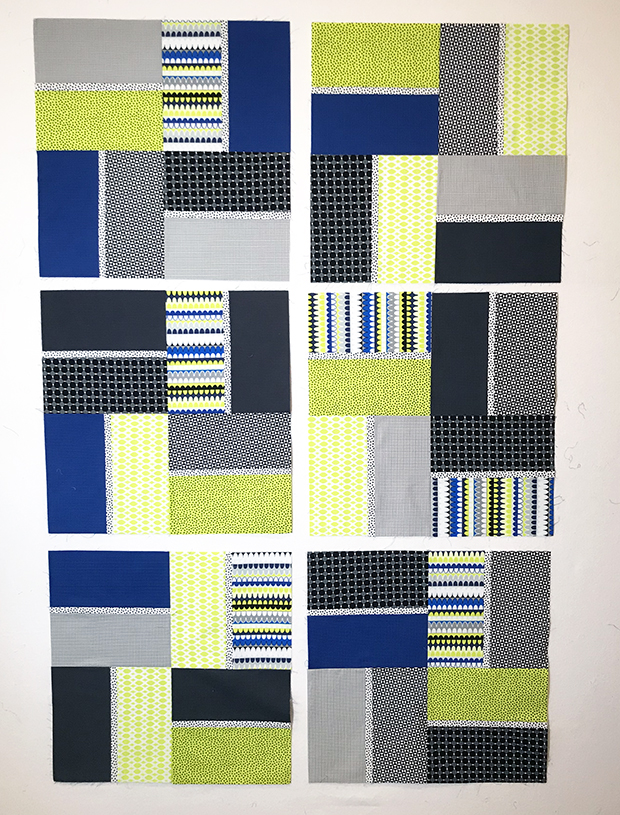
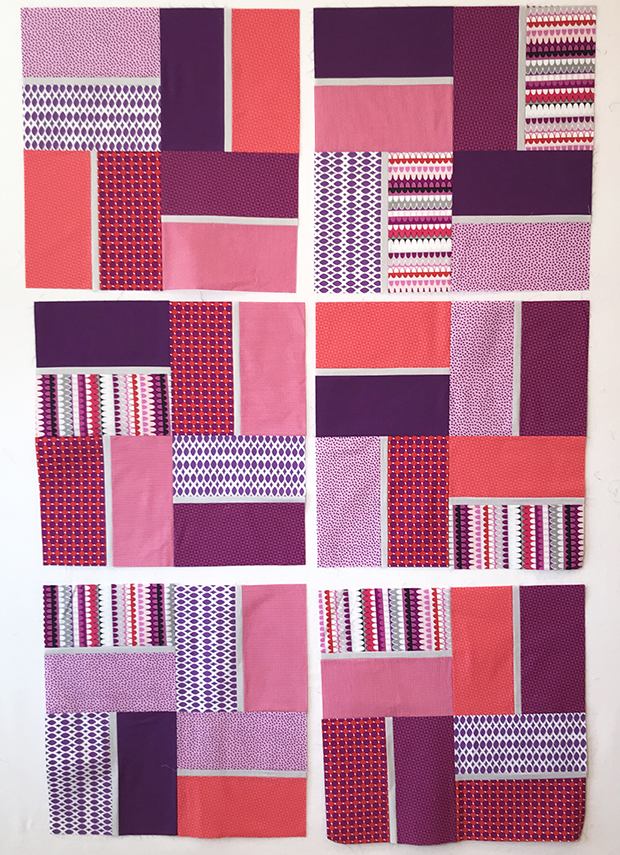
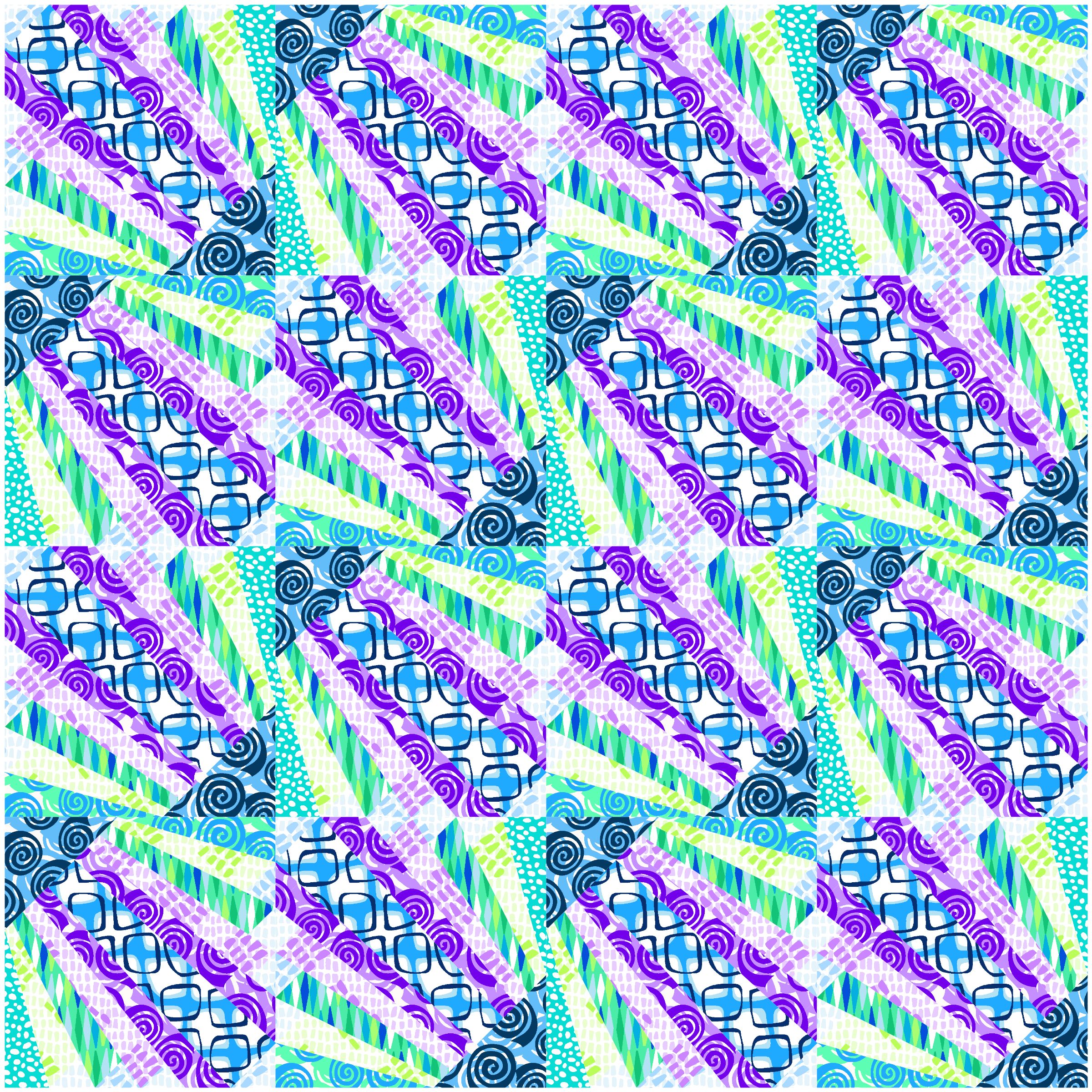
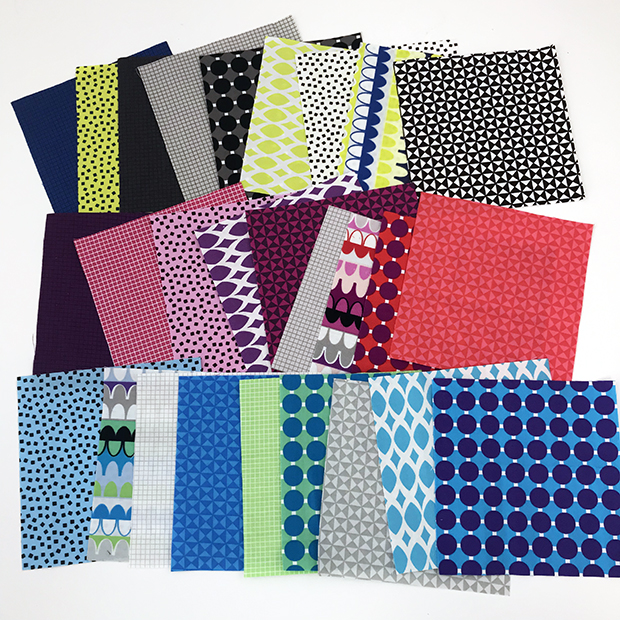
This week, Benartex is promoting my new Gridwork fabric on their social media channels. Along with that, they run a weekly Win-it Wednesday promotion. Today is your chance to win a fat quarter bundle of Gridwork + 2 of my quilt patterns made from it.

Gridwork by Christa WatsonClick here to get fat quarter bundles or yardage of Gridwork.

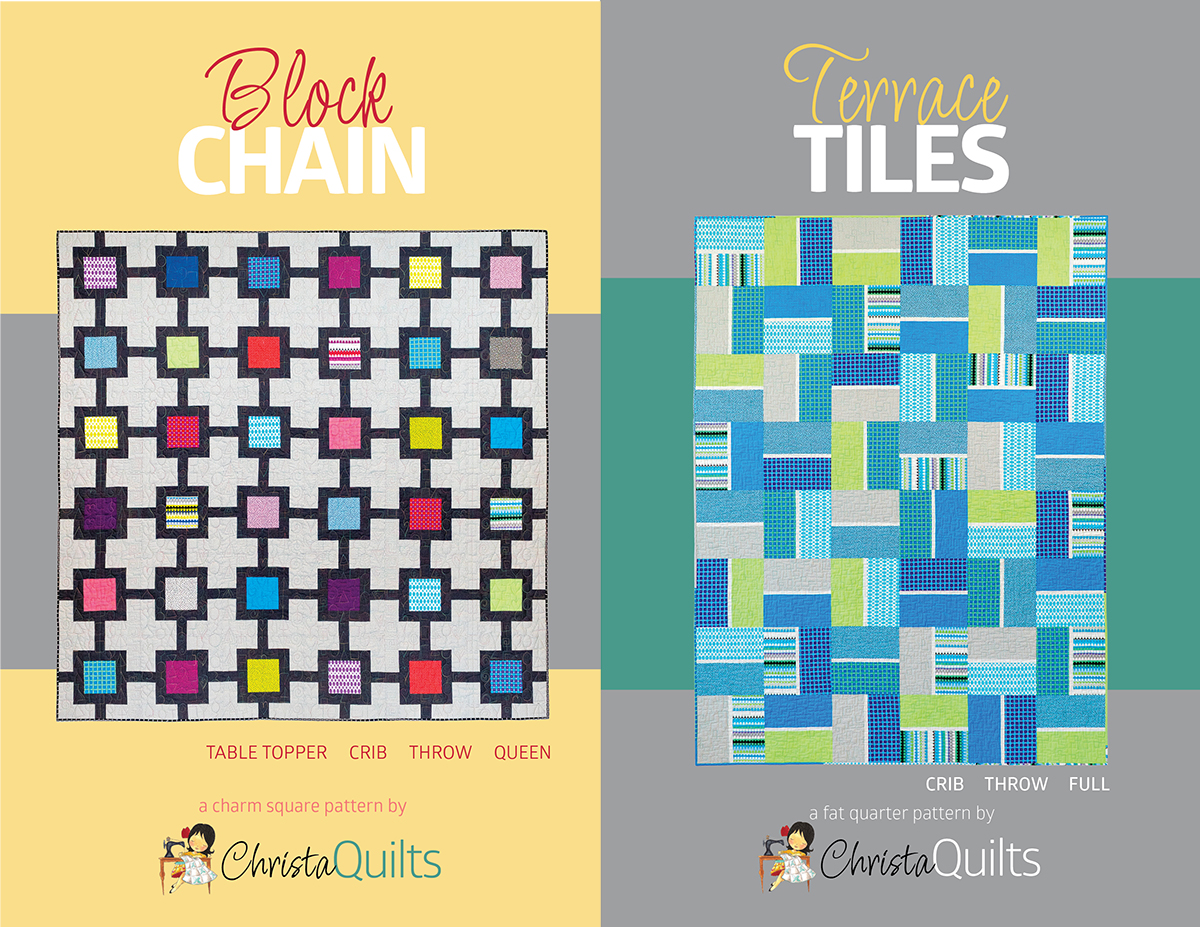
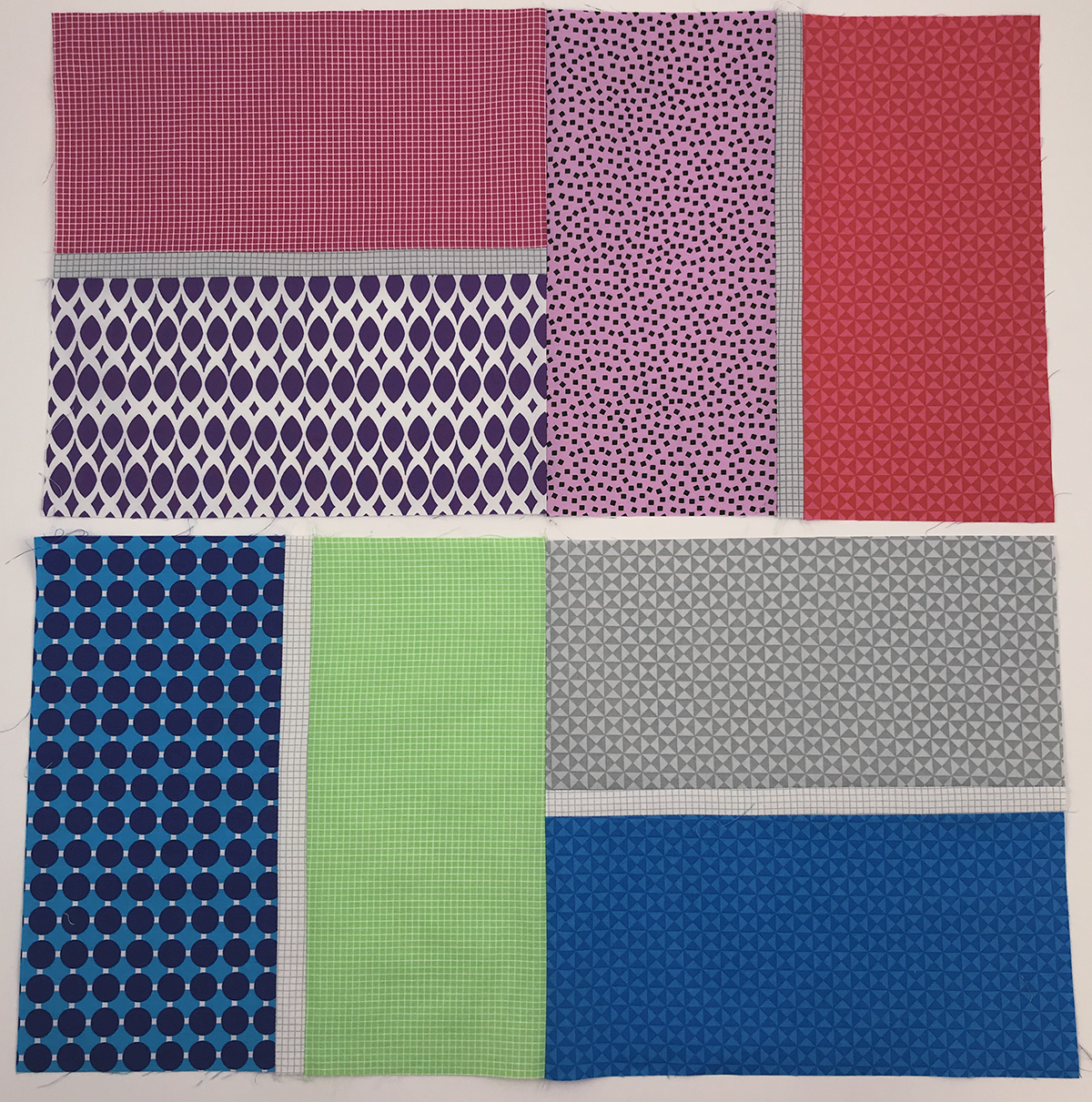
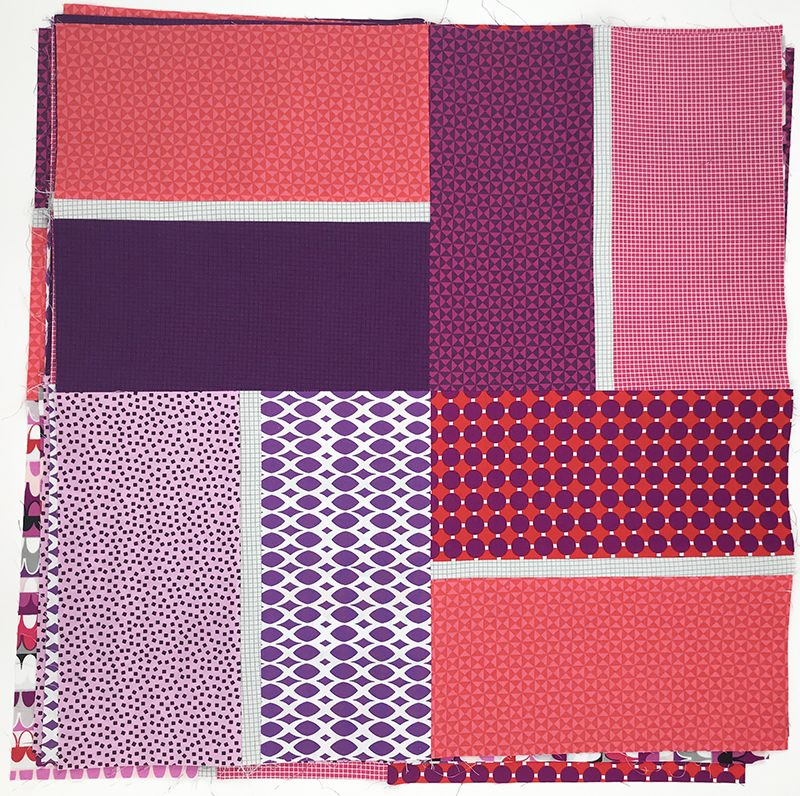
3 lucky winners will each win one of the color ways: Amethyst, Breeze, or Citron along with my Block Chain and Terrace Tiles quilt patterns.

Christa Quilts Patterns

Click here to get my quilt patterns – printed paper version.
Click here tog et my quilt patterns – PDF download version.

To enter, head over to @benartex_fabrics on instagram and leave a comment there. You must follow both Benartex and me @christaquilts on instagram to win. Contest is open until Tuesday, February 18th at 11:59 pm EST. Three winners will be announced on Wednesday, February 19th on the Benartex social media account.

Good luck and happy sewing!

Pieced Primrose Quilt Along Week 6 – Basting

And now we come to everyone’s least favorite part of making a quilt – basting!! But really, if you just set aside the time to do it’s not that bad! Here’s what both versions of Pieced Primose look like up on my design wall that also doubles as my basting area. Read on for helfpul ways to tackle this part of the quilt-making process. It’s easier than you think!

Pieced Primrose Quilts Basted

Get the Pieced Primose kits here – in cool or warm, large or small.

Because I wanted to include all 10 warm or cool fabrics from Abstract Garden in both colorways of Pieced Primrose, I used 9 fabrics for the blocks, and then the multicolor print “Raised Beds” for the backing and binding. The wall size kit includes the backing; for the larger size you’d need 6 yards of either color.

Abstract Garden by Christa Watson Raised Beds

Click here to get yardage of the Raised Beds print from Abstract Garden

I’ve basted my quilts many different ways over the last few years, and I try to share as much about the process as I can. So take a look at the different tutorials below from prior quilts I’ve made. I’m sure one of them will make your quilting life easier!!

Spray bastinG Video Tutorial

Click here (or the image below) for my spray basting video tutorial.

This is the first full-fledged basting tutorial I’ve created for my YouTube channel. I filmed and edited it while making my Infrastructure quilt. In reality it takes about an hour to do, but with the magic of edting, you can watch on super speed which only takes about 7 minutes. Too bad I can’t baste that quickly in real life, right??

Spray basting photo tutorial

Here’s the step by step process shared in my video above, but will still photos on my Modern Puzzle quilt made from Jelly Rolls.

Click here for my spray basting tutorial using a design wall.

Wall Basting Quilt Tutorial for Modern Puzzle Free Quilt Pattern

Table basting photo tutorial

If you don’t have a dedicated design wall, no problem! You can still do my spray basting method using a table. It’s the method I used when making my Improv Squares quilt:

Click here for my table basting tutorial.

Spray Baste

Safety Pin Basting Tutorial

Finally, here’s the way I USED to baste my quilts until about 5-6 years ago – using safety pins! It’s still a good method if basting spray isn’t your thing.

Click here for my safety pin basting tutorial.

Basted

If you have another method you prefer, feel free to share you tips or links in the comments for others to see. Until next week – happy piecing and basting!!

LINKS AT A GLANCE

Click the links below for supplies needed to make this quilt:

Next Week – Machine Quilting Ideas for Pieced Primrose

Swirls quilting

Making of Terrace Tiles Part 4: Machine Quilting & Binding

Today I’m excited to share some machine quilting tips and videos for all 3 versions of my Terrace Tiles quilts. My thought is why make one quilt when you can make 3 in almost the same amount of time, right?? LOL!!

Choosing Thread colors

Aurifil Variegated Thread by Christa Watson

The variegated thread color above is actually a combo of red, white and blue but it looks pink and purple when quilted on the Amethyst quilt!

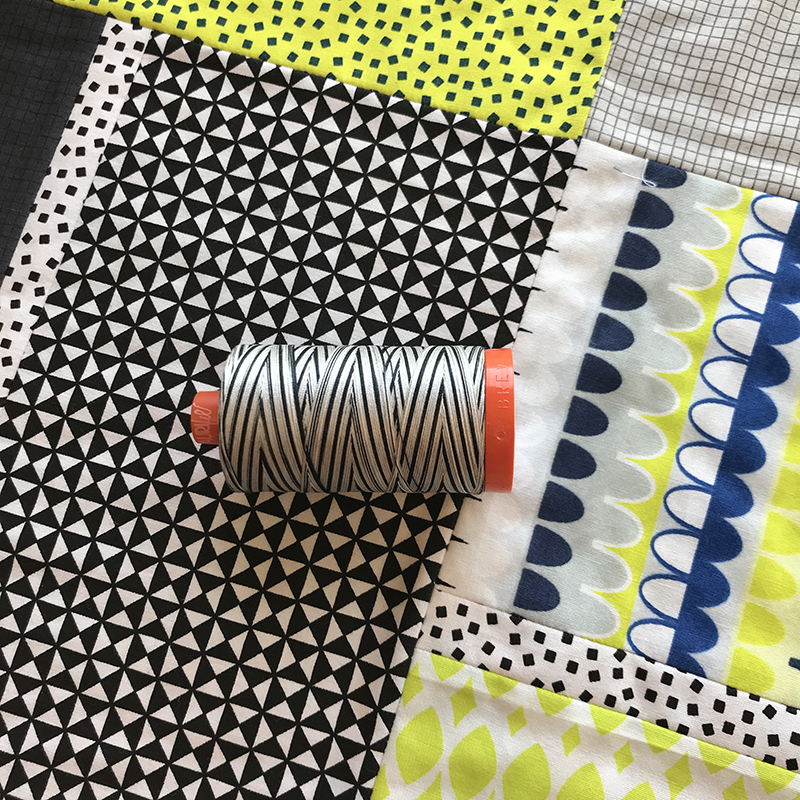
Because these quilts are so bright and colorful, I decided to quilt them using 3 different colors from my Aurifil Variegated Thread Collection. I’ve really been enjoying quilting with them because they add a bit of whimsy and sparkle to my busy quilts! Whenever I pick colors, I audition the thread by placing the spool on top of the fabrics to see how it will blend in.

Aurifil Variegated Thread by Christa Watson

Variegated thread on the Breeze colorway in progress!

It’s often surprising how well a thread will blend in even if the colors aren’t an exact match to the fabric. I normally use the same color it top and bobbin and don’t worry about whether or not the same colors will line up perfectly – that’s an impossible task. But with the variegated colors, any imperfections are hard to see and that makes for stress free quilting!

Aurifil Variegated Thread by Christa Watson

The black and white will add an extra dimension to this modern color palette!

Choosing the Quilting Designs

Because I was in a hurry to make these quilts for quilt market last fall, I didn’t have a whole lot of time to finish them. I pride myself on quilting my own quilts because (1) that’s my favorite part and (2) I’m a little bit of a control freak. So I knew I had to choose designs that would look great and wouldn’t take too much time.

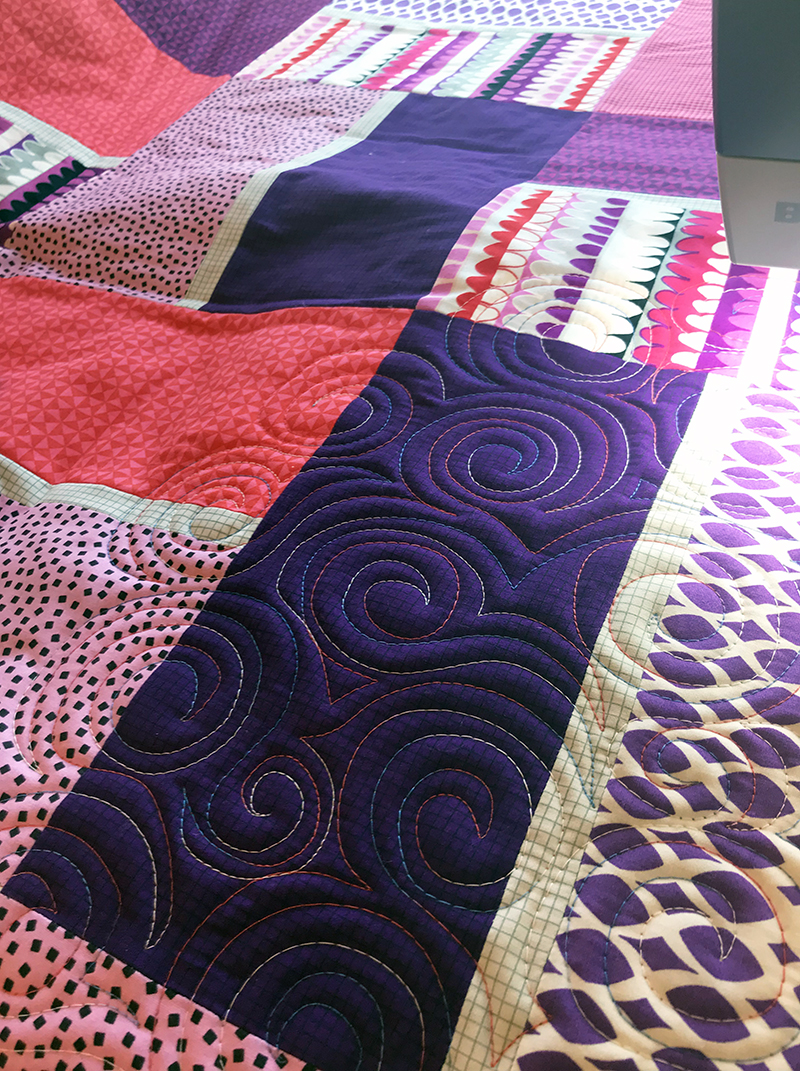
free motion swirls

Swirls in progress on the Amethyst colorway. Don’t stress about the imperfections!

Also, I wanted these quilts to do double duty. Not only do they showcase my Gridwork fabric and Terrace Tiles quilt pattern, they also are examples of 3 different motifs I teach in my machine quilting workshops: Swirls on the Amethsyt colorway, Boxes on the Breeze colorway, and Jagged Stipple on the Citron colorway.

modern free motion

Boxes on the Breeze colorway is one of my favorite modern machine quilting designs.

The fastest and easiest way to finish a quilt with free motion is to choose one design and quilt it from edge to edge across the quilt regardless of the pieced quilt design. It’s also a forgiving way to hide wonky or irregular seams. Just focus on one block at a time, and before you know it, the whole thing is finished! Another way to speed up the process is to quilt the motifs on a larger scale, because that takes up more space in less time.

Jagged stipple by Christa Watson

Jagged stipple is my modern, angular version of it’s traditional cousin, smooth curving stipple.

Just to give you an idea of how fast these designs are to stitch out, it took me about 3 hours to quit swirls on the baby size Amethyst version, 5 hours to quilt boxes on the throw-sized Breeze version, and 2 hours to quilt jagged stipple on the baby sized Citron version. Although the Citron quilt is the same size as the Amethyst, jagged stipple is a much looser design than swirls, so it was a bit faster.

Scrunching and Smooshing the Quilt

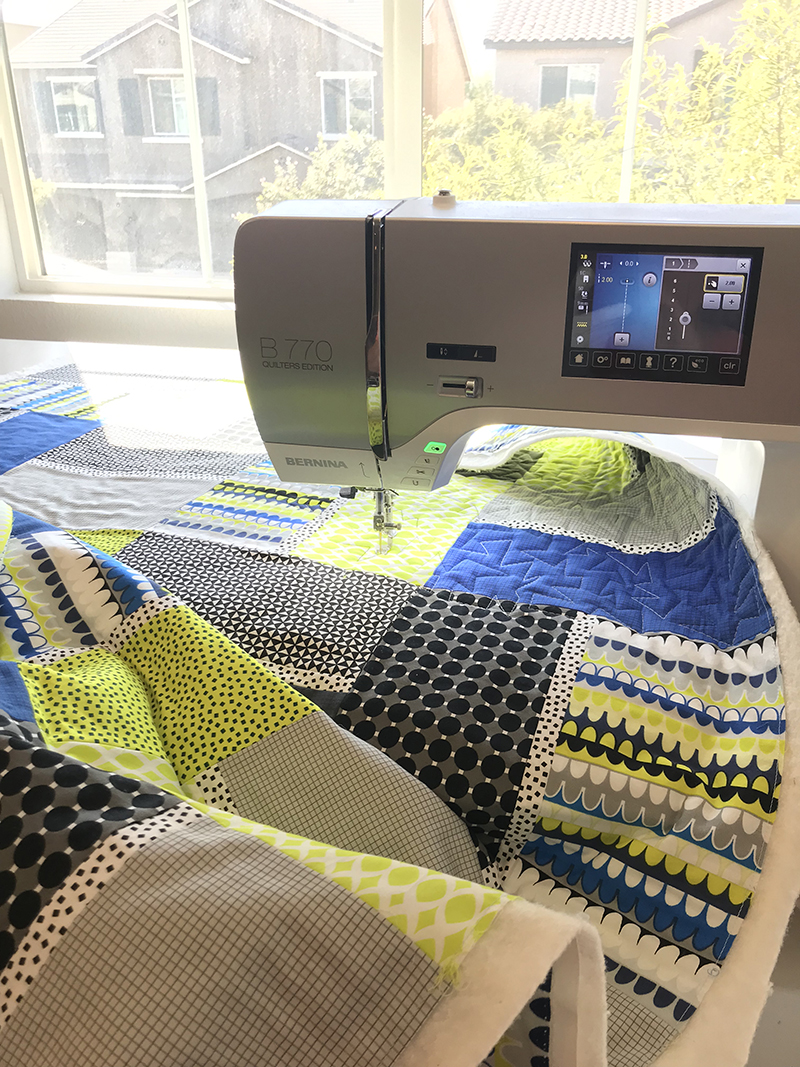
Because I do everything on a sit down machine, it’s important to control the weight and bulk of the quilt. I still have yet to find the perfect quilting table, so this is what my hacked together set up looks like below:

Christa Quilts Studio

I got this table for a song 20+ years ago and sadly I don’t even remember the brand!

My sewing machine is flush with the bed of the table so it can hold most of the weight. It’s pushed against the wall so the quilt won’t fall off the back of the table. Most of the bulk is to my left, and I’ve placed a TV tray forming an L shape to hold more of the quilt as I scrunch and smoosh it through the machine. I also have a comfortable ergonomic chair that I can roll around easily.

Christa Quilts Studio

A larger throat space on my machine makes a huge difference when managing the bulk!

On a bright sunny day I like to look out the window which gives me lots of natural light while I’m sewing and quilting! When the quilt falls into my lap, I just scrunch and smoosh it out of the way as needed while I quilt.

I hope this helps you overcome your fear of free motion when choosing and allover textural design like this. The key is to fill in all the spaces, so your eye doesn’t notice any of the imperfections.

See it on Video!

Here’s a YouTube video I made showing me actually fee motion quilting each quilt. The video is just under 8 minutes and it’s packed with tips as I quilt each of the 3 quilts shown above. I’m stitching in real time with the volume on my machine so you can see and hear what it looks like “in real life.” Notice how much I stop and reposition my hands:

Scrappy Binding

gridwork fabric scrappy binding

Sew the leftovers together randomly for a fun, scrappy binding!

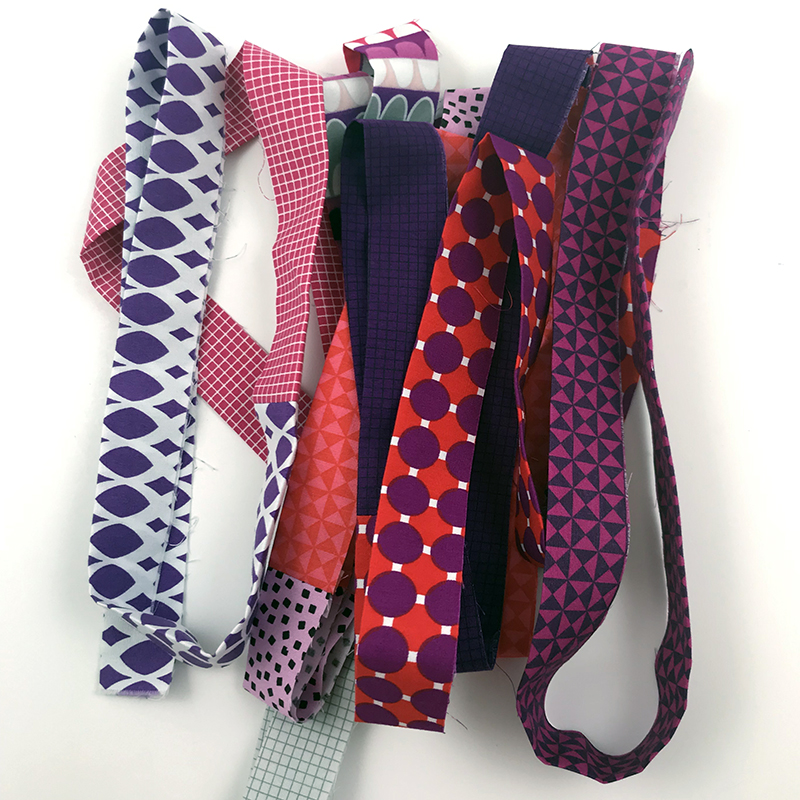
I love a scrappy binding, especially when making quilts from fat quarters. For Terrace Tiles, you just use up the leftovers and piece them together randomly to carry the colorful chaos all the way to the edges of the quilt.

scrappy binding gridwork fabric

You can join the ends on an angle or edge to edge!

I prefer to cut my binding strips 2″ wide so they finish nice and narrow and are even on both sides. I press each of the seams open to reduce bulk and make sure the binding  is long enough to go around the entire quilt with a few inches extra.

gridwork scrappy binding

Another great thing about scrappy binding  is you can always add more strips!

Although I prefer the look of hand binding, machine binding is a great way to finish fast! Here are my two favorite ways to bind, either by hand or machine:

Remember, if you make your own version of this quilt, please share. You can use #terracetilesquilt on instagram, or you can share your progress in my ChristaQuilts Facebook group. I’d love to see it!!

Terrace Tiles by Christa Watson

LINKS AT A GLANCE:

Click here for the making of Terrace Tiles, Part 3
Click here to get the Terrace Tiles quilt pattern – paper version
Click here to get the Terrace Tiles quilt pattern  – PDF version
Click here to get the Terrace Tiles quilt kits + Gridwork by the yard
Click here to get my Aurifil thread collections: colors, neutrals, or variegated
Click here for my binding tutorial (on a previous quilt)

Come See Me (and my Quilts) at QuiltCon 2020 in Austin, Texas!

QuiltCon, put on by The Modern Quilt Guild is absolutely my favorite quilting event to attend! It’s taking place this year in Austin, Texas February 20-23 and I can’t wait!!

QuiltCon 2020

The first modern quilt show and conference took place back in 2013 and I’ve attended each and everyone one since. It’s a can’t miss event for me and this year I’m especially thrilled to taking classes, doing some meet’n greet events, and sharing my quilts on the show floor and in several vendor’s booths.

Meet ‘n Greets on Friday and Saturday

I’m thrilled to be invited for a couple of meet ‘n greets with quilt shops who will be selling my fabrics, books and patterns at the show. So please stop by and say hi, show me what you are working on, and get some tips and tips on machine quilting or modern design:

Loving Stitches Booth #545 on Friday Feb 21, 1-2 PMQuiltCon Meet'n greet

Click here to visit Loving Stitches’ website online!

HoMESTEAD hearth Booth #404 on Saturday Feb 22, 10-11 aM

Homestead Hearth Quiltcon

Click here to visit Homestead Hearth’s website online!

The LearninG Never Stops

I’m excited to be taking a whole slew of design classes from a couple of my talented friends, Heather Black of Quiltachusetts and Daisy Aschehoug of Warm Folk. I love gettin to be a student at the show this year because my quilting education is always a work in progress!

I’ll also squeeze in several lectures and I’m excited to check out the awards ceremony and other social events throughout the show. Let me know if you’ll be in attending any of these events:

Christa's QuiltCon 2020 schedule

My Color Weave Quilt is in The Show

I’m thrilled that my Color Weave quilt will be hanging in the judged part of the show this year. I entered it into the American Patchwork and Quilting Challenge category with the theme of “stripes” for this year. I can’t wait to see how others interpreted that idea!Color Weave Quilt

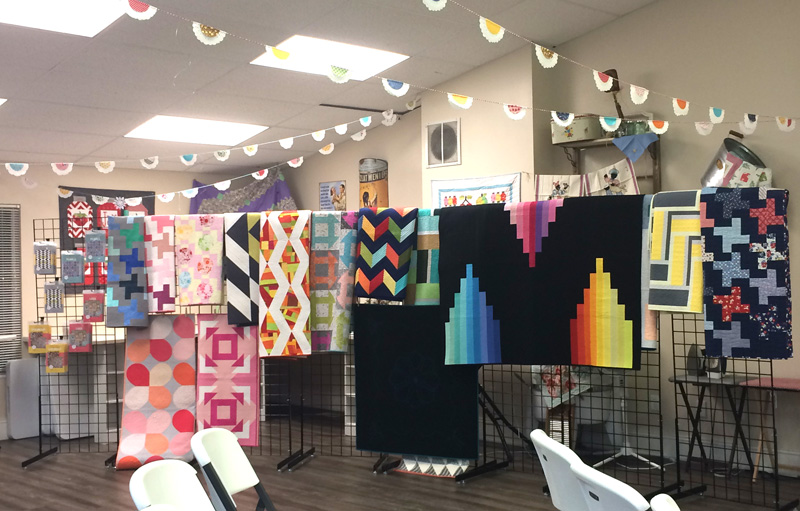
Several of my other quilts will be on display in the Homestead Hearth booth, Loving Stitches booth and also the Hobbs batting booth. I love loaning them out so they can help decorate the vendor booths and also so they can be seen by a wider audience.

Christa QuiltsSome of my quilts that will be on display in vendor booths throughout the show.

Be on the lookout for Bling, Block Chain, Optical Illusion, Infrastructure and several more! If you’ve ever been to a national quilt show before, I’m sure you’ll agree that the quilts hanging up in the booths are just as fun an inspiring as those in the show!

So if you are planning to attend let me know – I’d love to see you! And if you’ll be watching all the action at home, check out the Instagram hashtag #quiltcon for some amazing inspiration from the show. Now it’s time to start dreaming about the quilts I’ll make for next year’s show……

QuiltCon 2020

Pieced Primrose Quilt Along Week 5 – Quilt Top Assembly

How are your Pieced Primrose blocks coming along? Did you check out some of the optional layouts from last week’s post? This week will be pretty straightforward as we sew the blocks and add borders to complete the quilt top.

Pieced Primrose Quilt Pattern

Quilt Top Assembly

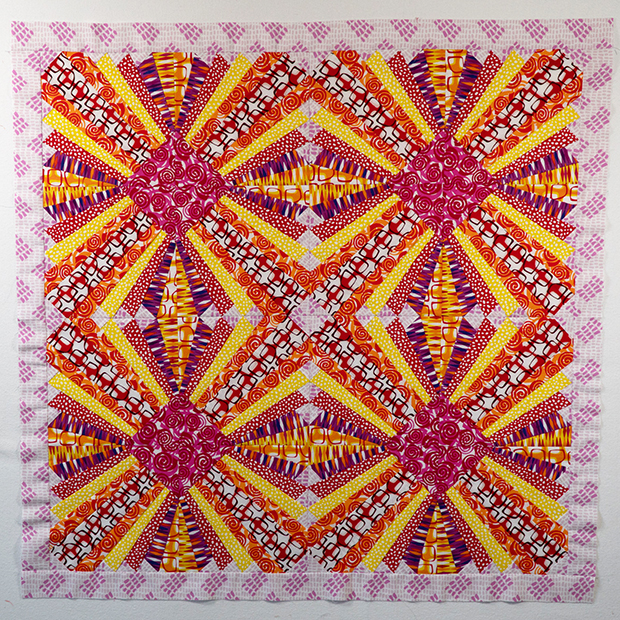
For my cool and warm versions of the quilt, I’m doing the standard layout as shown on the cover of the Pieced Primrose Quilt pattern above. It’s the same basic layout whether you are making the smaller wall size, or the larger throw size.

First I sewed all of the foundation pieced blocks into larger 4 block units. The trick is to rotate the blocks so they look like the image below and sew 2 rows of 2 blocks each . Because of the bias edges on the blocks, you want to hand them carefully and use pins to ensure the edges match correctly.

Although the block seams are pressed to the side during block assembly (due to the foundation paper piecing process), I press the larger block seams open so they will lie flat.

Large Primrose Block – Warm Colorway

Pieced Primrose Blocks Warm

Large Primrose Block – Cool Colorway

Primrose Block Cool Large

For the wall size quilt you will be making 4 of these larger blocks. For the throw size, you will be making 20 of them. Just remember that you can always change up the size of your quilt by adjusting the number of blocks that you sew.

Click here to get the Pieced Primrose kit in warm or cool, wall or throw size.

Pieced Primrose Throw Size Layout

Pieced Primrose Quilt

Adding the Borders

Although the pattern gives you the correct measurements to cut for the borders, I always recommend measuring your quilt top first. It can shrink or grow depending on how accurate your seam allowances are.

The best advice is to measure both sides and through the middle, then cut your side border strips to this length. After the side borders are sewn, measure again with the borders attached and cut the top and bottom borders to match.

Wall Size Finished Top – Warm
Pieced Primrose Warm
Wall Size Finished Top – Cool

Pieced Primrose Cool

Next week we will baste our quilts and get them ready for machine quilting. So if you are still sewing your blocks together, don’t worry – you still have plenty of time! Remember to share your progress on instagram #piecedprimrose quilt or in my ChristaQuilts Facebook group.

LINKS AT A GLANCE

Click the links below for supplies needed to make this quilt:

Making of Terrace Tiles Part 3 – Sewing the Top, Backing and Basting

My Terrace Tiles quilt pattern is quickly becoming a favorite because it is so fast and fun to make!! Last week I shared some tips on piecing the quilt blocks. Now it’s time to finish the quilt tops and get them ready for quilting.

Terrace Tiles in Gridwork Citron Colorway
Citron Terrace Tiles Quilt

You can either arrange all the blocks on a design wall or other flat space; or you can sew them together into larger sets of 4 blocks like I did to speed up the process.  I’m not worrying about block placement at this point. The more random the better!

I’ll take a little bit of time to arrange them in a pleasing order, but I won’t overthink it.

Terrace Tiles in Gridwork Amethyst Colorway

Terrace Tiles Quilt Amethyst Colorway

I don’t worry too much if the blocks get a little wrinkly at this point. I’ve used spray starch on the fabric before I cut it which gives the blocks a tendency to wrinkle when handled. But that’s ok – once the top is sewn up and basted they won’t be as flimsy or prone to wrinkling. I also press each seam as I go to keep my blocks as flat as possible.

Terrace Tiles in Gridwork Breeze Colorway

Terrace Tiles Quilt Breeze colorway

I made the Amethyst and Citron quilts in the smaller crib size. For the Breeze colorway, I wanted to make it in the bigger throw size with more blocks.

Once the blocks are assembled into the quilt top, I take what’s called a “Victory lap:” I sew about 1/8″ around the edges with a longer stitch length to secure the edge seams from splitting open. If the quilt has borders, then you don’t need to worry about that step.

Prepping the Backing

The crib size calls for 2 yards of backing so that you can piece part of it if needed. However, you can get away with less fabric if you measure and baste carefully. As long as the backing is a couple of inches bigger than the quilt top on all sides, you’ll be ok. Below the backing just barely covers the finished quilt top on the left and right, but it’s still enough, thank goodness!

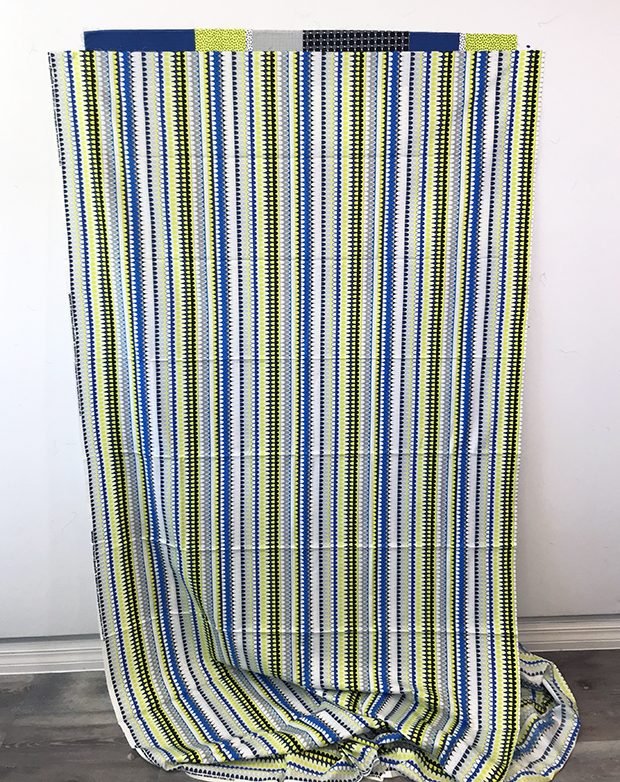
Gridwork backing fabric

Click here to get coordinating Arches Stripe fabric for backing.

I’ll make sure to pull up the backing from the floor so that it covers the entire quilt top; then I’ll trim off the extra fabric, and press it with starch before I baste.

I also like to take a picture of the batting with the quilt I so I can remember which one I used.

Quilt batting

Basting the Quilt

I like to set up a table in my back yard and apply 505 basting spray to the wrong side of the top and backing. It’s much easier to spray the top and backing separately and it uses less spray than spraying the batting instead. Below I’m basting the throw sized quilt so it requires a larger backing.

505 basting spray

After spraying outside, I bring the top and backing inside and assemble them on my design wall, one layer at a time.

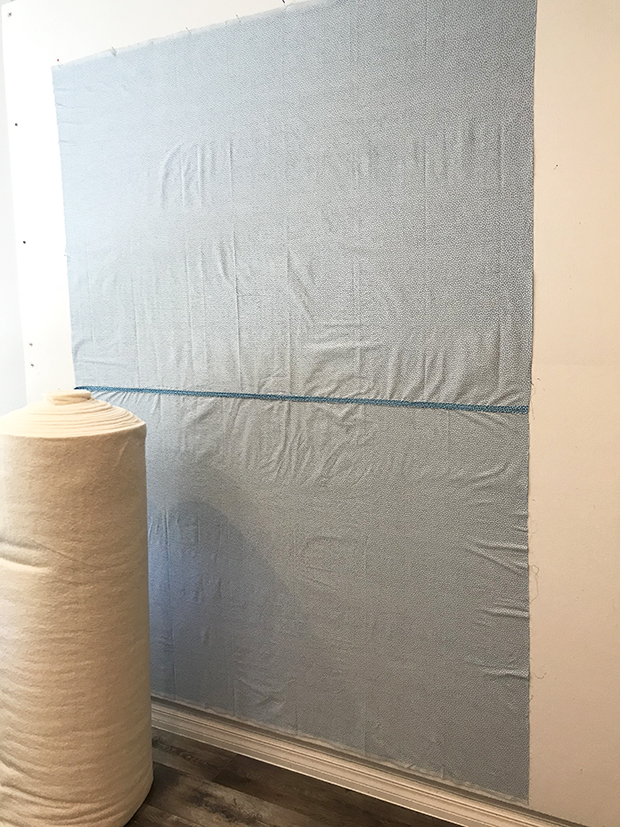
Below, you can see how I pieced the backing for the throw size in the Breeze Colorway: two 2-yard pieces of the blue Hourglass fabric with a horizontal seam in the middle. Don’t worry too much about the small wrinkles – those will get ironed out at the end once the layers are assembled.

Quilt Batting

Click here to get the blue Hourglass fabric for backing of the Breeze Terrace Tiles quilt.

I prefer to work with Hobbs batting on a roll so I’ll roll out just enough batting to cover the top plus a few inches, then cut if off the roll and trim off the extra after it’s all basted. I smooth out one layer at a time on my design wall: backing, then batting, then quilt top.

A long acrylic ruler is handy to smooth out each layer. I use a separate one just for basting, since it tends to get sticky from the basting spray.

Quilt basting
Click here to get the Circle Grid fabric in purple/red for the backing of the Amethyst quilt.

Above is the Amethyst quilt after basting. I’ll trim off the extra batting and backing fabric so that there’s only about 1″ sticking out on all sides for quilting. That way the excess won’t accidentally get tucked under itself while quilting!!

The final step (not shown) is to iron the front and back of the basted quilt with a hot dry iron. This presses out any wrinkles and helps set the glue so things don’t shift while quilting.

Next week I’ll share some pics and videos the machine quilting I did for each quilt, so stay tuned!

Terrace Tiles by Christa Watson

LINKS AT A GLANCE:

Click here for the making of Terrace Tiles, Part 2
Click here to get the Terrace Tiles quilt pattern – paper version
Click here to get the Terrace Tiles quilt pattern  – PDF version
Click here to get the Terrace Tiles quilt kits + Gridwork by the yard

Pieced Primrose QAL Week 4 – Block Finishing, Choosing Layouts

I know that last week’s foundation paper pieced tutorial was quite intense, so this week I wanted to give you some extra time to finish sewing your blocks. Last week I shared the steps using the cool colorway of my Abstract Garden fabric. Now here are more pics of the warm colorway:

Pieced Primrose Quilt Blocks

Remember to piece as many blocks as you need for the size you are making. The primrose block is constructed from 3 units per block: the A & B foundation sections (full sized paper template to photocopy is included in the quilt pattern), and the corner triangle unit:

Paper Pieced Primrose Blocks

Once all 3 pieces are sewn, then you can trim up the block to the proper size, including the seam allowances. When you tear off the paper is up to you. Some people like to tear off the paper once each block is sewn; others like to wait until the entire quilt top is sewn before removing the paper. But if you use a shorter stitch length while sewing, that will perforate the paper, making it easier to remove.

Pieced Primrose Warm Block

Design Layout

Due to space constraints, the Pieced Primrose quilt pattern includes one basic layout, made by sewing 4 blocks together into one larger Primrose block. If you choose to make this layout, be sure to rotate 4 blocks so that they look like this, then make the number of larger blocks listed in the pattern:

Warm Primrose Blocks

Here’s the same layout for the cool colorway blocks:

Pieced Primrose blocks cool colorway

Alternate Layouts

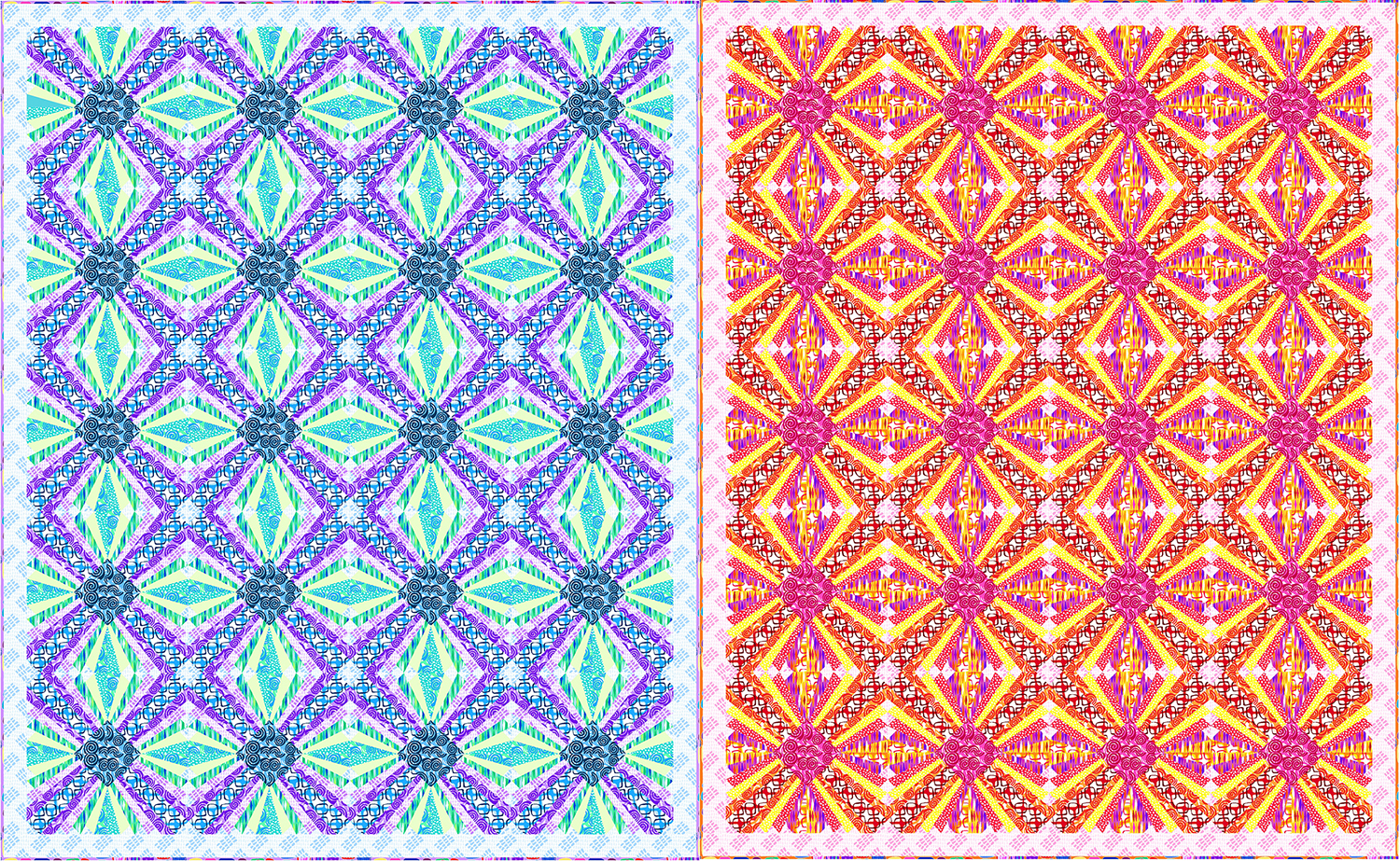
I had fun rotating the blocks in EQ8 software and coming up with these different layouts. They are all based on the smaller throw size, but can be adapted to the larger size, too:

Pieced Primrose Alternate Layout

Pieced Primrose Alternate Layout

Pieced Primrose Alternate Layout

Pieced Primrose Alternate Layout

To make any of the layouts above, simple rotate each individual block to create the new design. This is just a small sampling of what you can do, and some designs read busier than others. But once you blocks are finished, spend time playin around with different rotations of the blocks and take pictures with your phone when you find one or two that you like!

This Week’s Homework:

Finish sewing all of your blocks and then assemble them into larger 4 block units if you get that far. Next week will sew all the blocks together and add borders to complete the quilt top. Just remember, work at your own pace and come back to any of the blog posts you need for a refresher as you make your quilt.

Pieced Primrose Blocks

Larger Primrose Blocks in the Warm and Cool Colorways of Abstract Garden
Kits are available in both colorways.

LINKS AT A GLANCE

Click the links below for supplies needed to make this quilt:

Making of Terrace Tiles Part 2 – Piecing Tips for Sewing the Blocks

Welcome back to part 2 of Terrace Tiles quilts from my Gridwork fabric line. I’m excited to let you know that I’m now offering kits to make all 3 colorways of this quilt in two different sizes each!

Terrace Tiles by Christa Watson

Click here to get Terrace Tiles kits in Amethyst, Breeze, and Citron

Click here to catch up on part 1 and think of this as a shortened version of my quilt alongs. You can bookmark this post and come back to it when you are ready to make YOUR version of Terrace Tiles.
Terrace Tiles Quilt Block from Gridwork by Christa Watson

Amethyst Colorway of Gridwork Fabric.
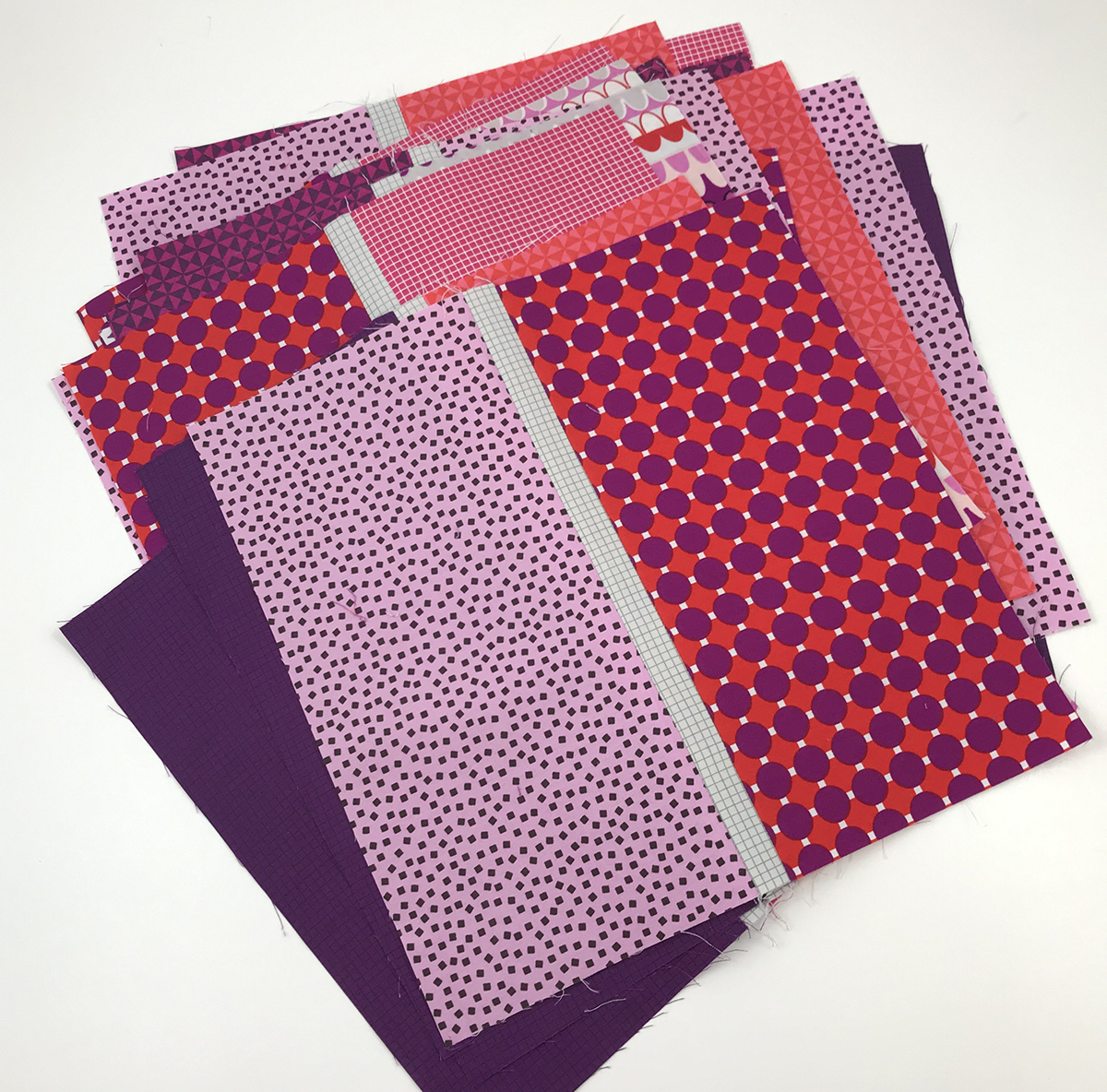
Click here to get it by the FQ, 1/2 Yard or Full Yard Bundles

The quilt blocks for Terrace Tiles sew up really fast! This is by far one of the quickest quilts you can make, which was good for me since I sewed all 3 of them in a hurry for quilt market last fall. I could have just made one version of the quilt, but I really wanted to showcase all 3 colorways of my Gridwork fabric line. So 3 quilts it is!!

Terrace Tiles Quilt Block from Gridwork by Christa Watson

Breeze Colorway of Gridwork Fabric
Click here to get it by the FQ, 1/2 Yard or Full Yard Bundles

For the making of this quilt I wanted to share piecing tips just as much as quilting tips. Because I make all of my own quits from start to finish, the piecing can really impact the quilting and I like to make things as easy as possible so I can enjoy the entire process from start to finish.

Terrace Tiles Quilt Block from Gridwork by Christa Watson

Citron Colorway of Gridwork Fabric
Click here to get it by the FQ, 1/2 Yard or Full Yard Bundles

Tip #1 Sew with a shorter stitch length

When you use a smaller stitch length it does two things: (1) It secures the seams so that there’s less of a chance that the edges will split apart while handling. (2) It also helps hide the thread so that you don’t see it poking through the seams. The default stitch length on my BERNINA is 2.5 so I turn the stitch length down to 2.0 whenever I’m piecing blocks for a quilt.

Gridwork Fabric

Pairing up fabrics in each block is half the fun!!

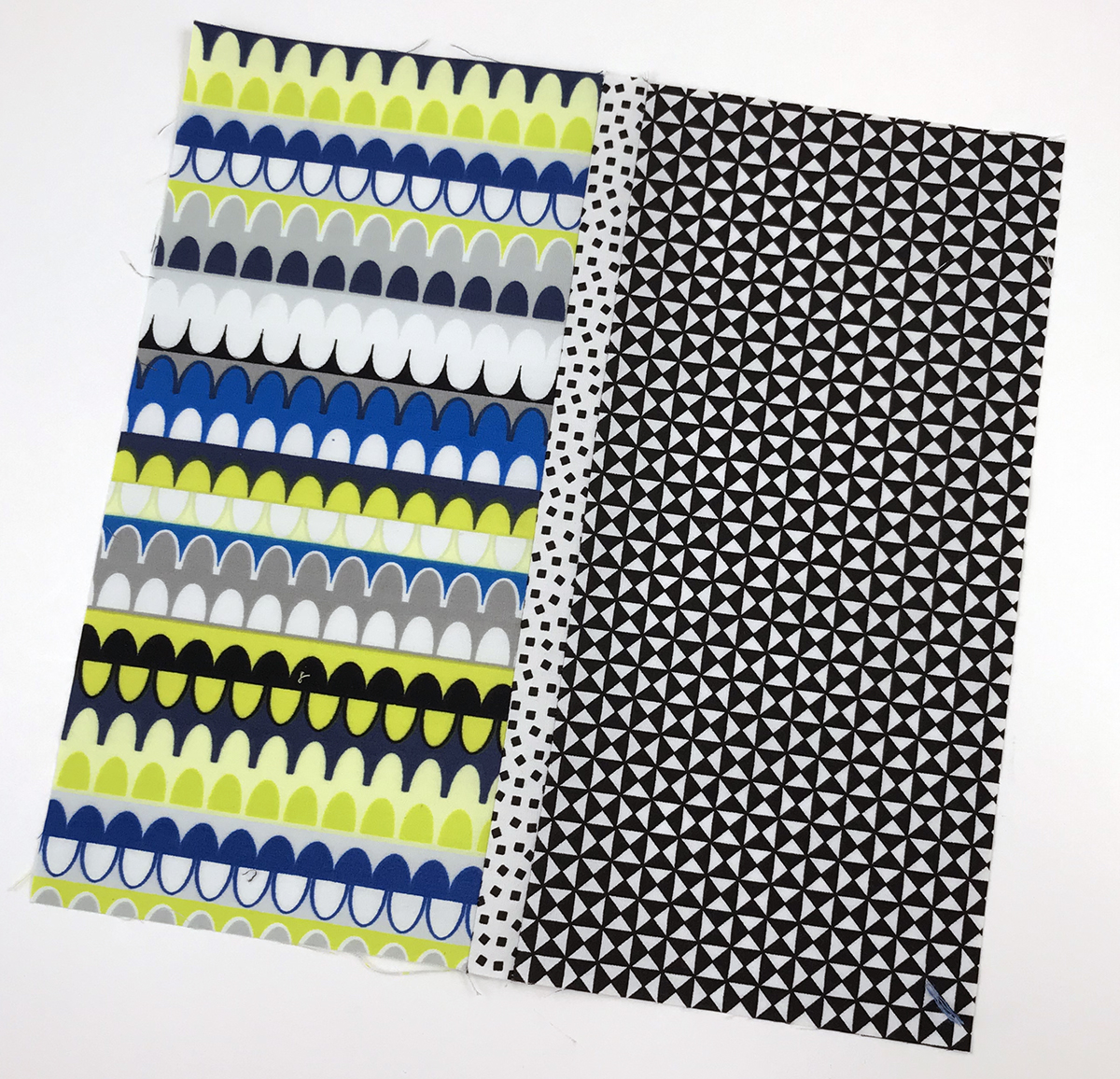
Tip #2 Sew with the Long Skinny Strip on Top

Any time you are working with pieces that are longer than a few inches, they have a chance to bow or warp out of shape as you stitch because of the action of your sewing machine and the feed dogs. So if you can sew each set of units in opposite directions, this will help compensate and ensure that your blocks stay nice and square.

An easy way to automatically switch sewing directions is to sew with the skinny center rectangle on top when you are making the Terrace Tiles blocks. It’s also easier to handle the cut pieces this way, too.

Gridwork fabric

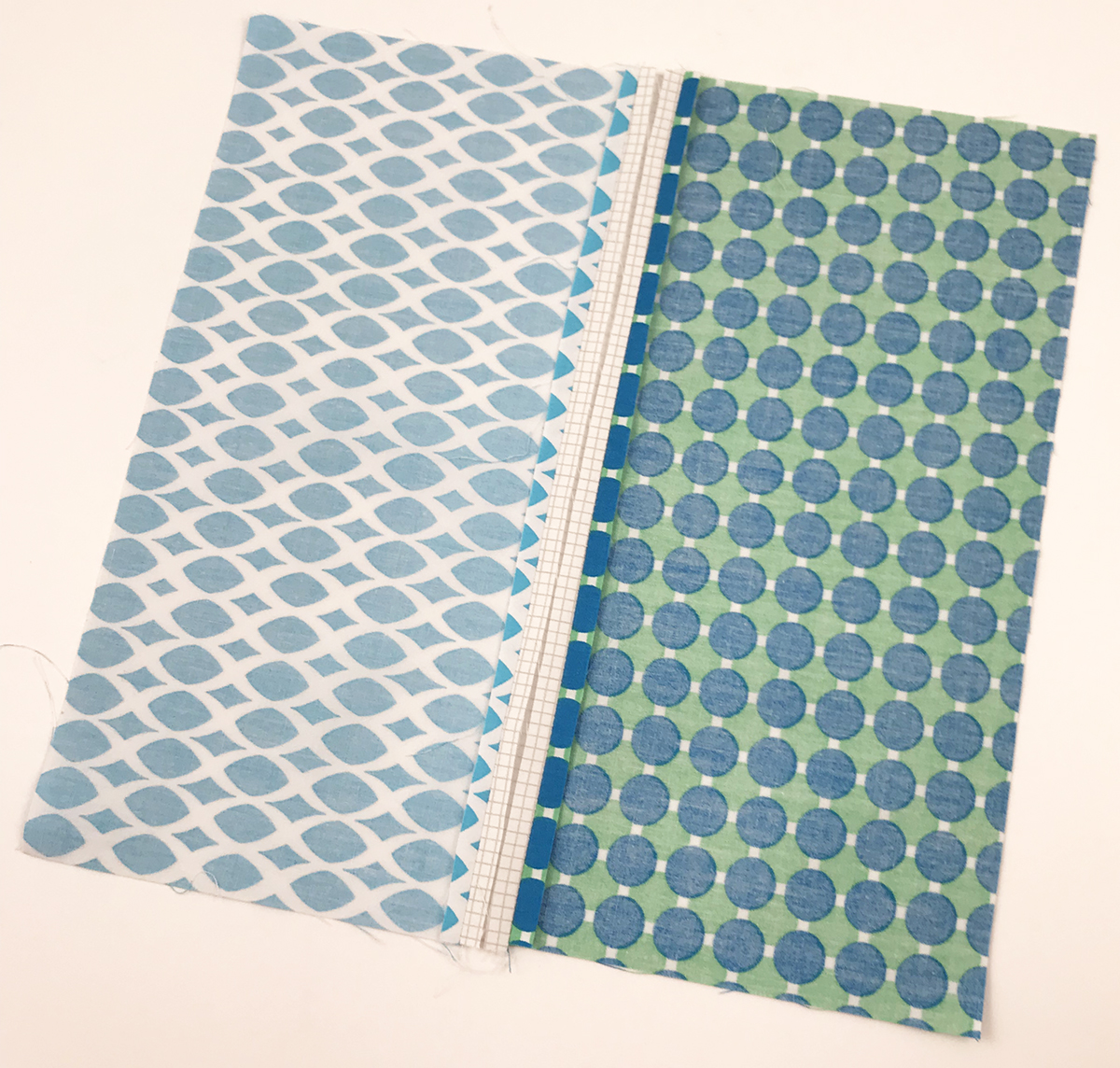
Seams pressed open = flatter blocks!!

Tip #3 Press Seams Open

I press the seams open so that the blocks will lie as flat as possible. This is super important especially when quilting on a home sewing machine because it will help eliminate friction and drag on the quilt while shoving it through the machine.

The less bulky you make your seam joins, the easier time you’ll have when your machine easily glides over the block intersections. And contrary to popular myth, you CAN still stitch in the ditch. In fact, it’s much easier to actually stay in the ditch and see what you are doing when your seams are pressed open.

Gridwork

The more fun prints, the better!!

Tip #4 Sew Blocks into Larger Chunks

To keep things random, I like to sew all of the blocks together into pairs and chain piece as I go. The only rule is I try to make sure each pair has 4 different fabrics. I like to press my seams as I sew each pair, so there’s less to press later and everything stays nice, flat and square.

Block Pairs

Pairs of blocks from the Amethyst and Breeze colorways.

Once all the pairs are sewn, you can choose to sew them into rows, or sew together into sets of 4 and then into larger rows. Because this is supposed to be a scrappy looking quilt, I don’t overthink it. I try to not have the same fabrics touch each other, but there will usually be a repeat of the print in the larger 4 patch design and that’s ok with me.

Terrace Tiles Blocks

Citron Terrace Tiles Blocks

Tip #5 Pin and press for success!

I press every seam as I go, and pin generously whenever I’m sewing together two pieces of fabric. It helps prevent the pieces from stretching and I especially pin where the seams come together. I get better joins this way, and of course I remove the pins as I sew.

Below is how I pin: with the pins perpendicular to the fabric. I pin next to each intersection on both sides rather than right where it’s sewn (so it doesn’t split apart). This is also the orientation in which I feed the blocks under the machine:

Pinning

In the next post, I’ll show how I assembled these finished blocks into the quilt tops and prepped the quilts for machine quilting, so stay tuned! And honestly, it’s not much more work to make 3 quilts than it is to make 1 and I enjoy every step of it!

Terrace Tiles Blocks

Breeze Terrace Tiles Blocks

Links at a Glance:

Click here for the making of Terrace Tiles, Part 1
Click here to get the Terrace Tiles quilt pattern – paper version
Click here to get the Terrace Tiles quilt pattern  – PDF version
Click here to get the Terrace Tiles quilt kits + Gridwork by the yard

Terrace Tiles BlocksAmethyst Terrace Tiles Blocks

Join the Club at My Girlfriend’s Quilt Shoppe!

I’m always excited to tell you when my quilting friends are doing cool things! Did you hear about the new online club being run by My Girlfriend’s Quilt Shoppe? They contacted me about offering a giveaway for this fun club to one of you – so read to the end for details!

My Girlfriend's Quilt ShopBut first, I have to tell you a little bit more about them. The shop is owned by talented friend Kris Thurgood. (Many of you also know her twin sister Kim of Kimberbell designs). Well, I first got to know both Kim and Kris over several years at quilt market and we had an instant connection. I love supporting women in business and especially love meeting powerhouse entrepreneurs that are go-getters in the quilting community.

Christa's Quilts

Some of my quilts on display at My Girlfriend’s Quilt Shoppe in 2017

A couple of years ago, Kris invited me out to teach at her shop in Utah and I had the most amazing time!! Of course the students were fabulous and the location was amazing! But even better was assistance I received while teaching. Just a month prior I had dislocated my elbow by trying to be a little too ambitious at the climbing gym (that’s another story for another day). To make a long story short, I ended up teaching one handed and everyone was so fabulous to help me pitch in and fold up my quilts for me and drive me around where I needed to go.

If you’d like to see a fun little blast from the past, check out these two videos that Kim and her staff shared about my visit from 2017. It’s a sneak peek into what it’s like to take a class from me:

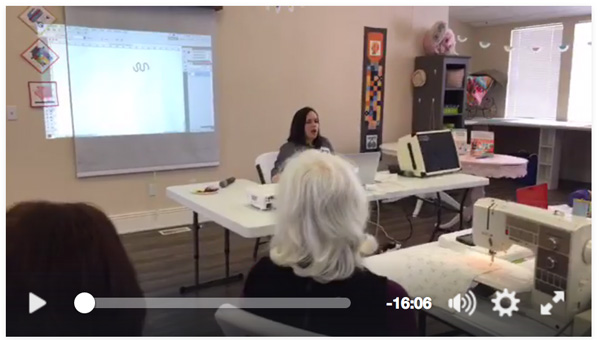
Facebook live with Christa Watson at My Girflriend's Quilt Shoppe

Facebook live with Christa Watson at My Girflriend's Quilt Shoppe

Over the years, My Girlfriend Quilt Shop has carried a few of  my books and patterns in their shop. But the best news is, I just found out that they are getting my Gridwork fabric line in next month. So if you are local to the area – be on the lookout for that!

Gridwork Charmpack

Be on the lookout for my Gridwork fabric coming soon to My Girlfriend’s Quilt Shoppe!

Anyway, all of this is to say that Kris and her staff are one of the reasons that I love being a part of this industry – we help each other out while inspiring our fans and customers to be the best quilters they can be!!

So now – onto the giveaway!!

My Girlfriend's Quilt Shoppe

My Girlfriend’s Quilt Shoppe is going to give away a membership to their exclusive club to one of you. All you need to do to enter is answer this question in the comments section of THIS blog post. Which of these topics is your favorite to explore: piecing, quilting, serging, machine embroidery, longarm quilting, software, wool, or hand embroidery?

The club will encompass all of those topics and more. Click here to read full details about what’s included with your membership.

My Girlfriends have also included a courtesy membership for me so I can be a part of the club, too! I think it’s going to be such a fun place to be and hope you’ll consider joining, even if you don’t win the giveaway!

I’ll pick a winner on Monday morning January 27, and will notify the winner via email. So good luck and happy quilting!!

My Girlfriend's Quilt Shoppe

My Girlfriend’s Quilt Shoppe in Logan, Utah – January 2017

Foundation Paper Piecing Tutorial

Please note, this tutorial shows an earlier version of my updated Party Time Quilt Pattern. However the techniques are exactly the same. Notice how there are 3 separate sections you’ll need to create for each block. Just follow my step-by-step tutorial below and you can adapt this process to any foundation paper pieced (FPP) design you can think of!

Paper Piecing with Christa Watson

Preparing the Paper Foundations

One of our quilt along participants, Michelle Hanus recommends folding all of the sewing lines (the dark lines on the pattern) before piecing. That will make it easier to rip off the papers later on. Thanks for that great tip, Michelle!

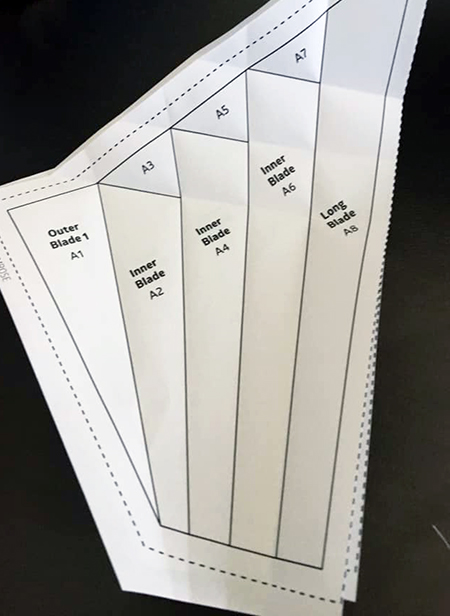
After photocopying the master template (one for each block you are making), roughly cut apart the two FPP sections (A and B), leaving a little bit of space around the dashed lines – those are your seam allowances for the outside edges of the blocks.
Foundation Paper Piecing

Above  is what the master template looks like. In the examples below, mine look slightly different because I was working from a draft before I finalized the pattern for printing.

I highly recommend making one test block out of scrap fabrics following the steps below. Then, once you understand the process, you can sew multiple blocks at the same time with your chosen fabrics. You can even chain piece the same sections if desired – just know that you’ll use a little bit more thread in the process, but that’s ok.

Fold, Trim, Sew and Press (FTSp)

This process might seem very awkward because it’s different then what you are used to with regular piecing. I’ve heard it described as dancing like Ginger Rogers – backwards and with high heels! But if you just follow the same “dance” steps each time, you’ll have no problems getting precise results every time!

Position the First Piece Into Place – A Units

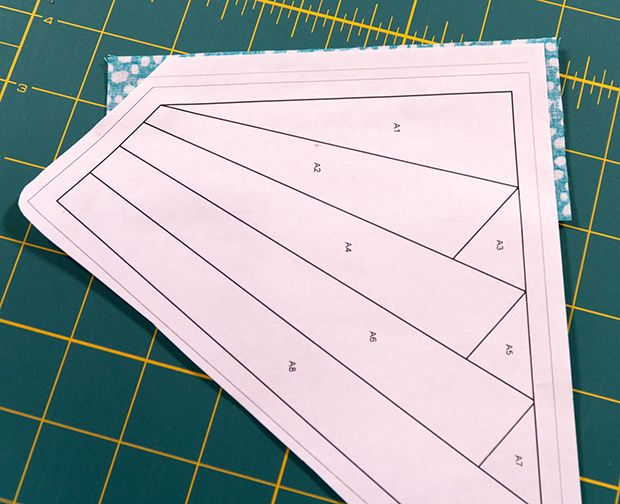
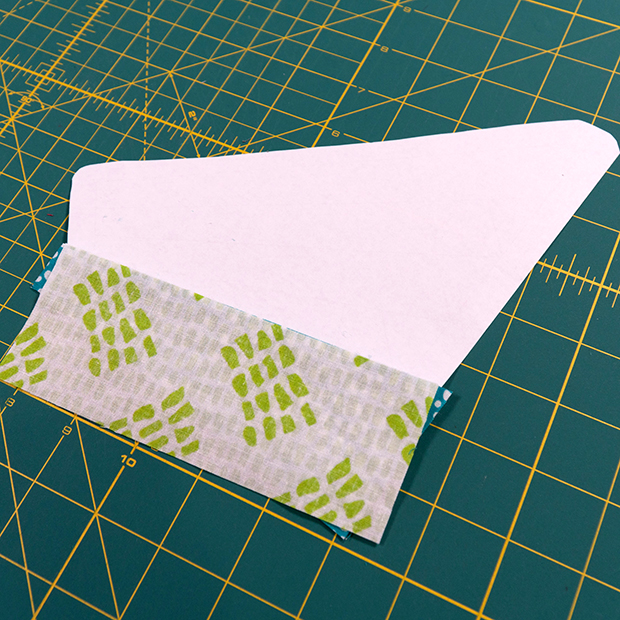
To begin, line up the wrong side of your A1 fabric piece underneath the A1 section so that there is fabric sticking out on all sides of the A1 unit. To keep it from shifting, you can pin it or add a dab of glue from a glue stick to keep it in place.

A rectangle works much better than a long skinny triangle so that you can ensure coverage of the entire piece. You will be sewing on the paper side with the printed lines facing up, just like the image below:

FPP by Christa Watson

Step 1 – Fold

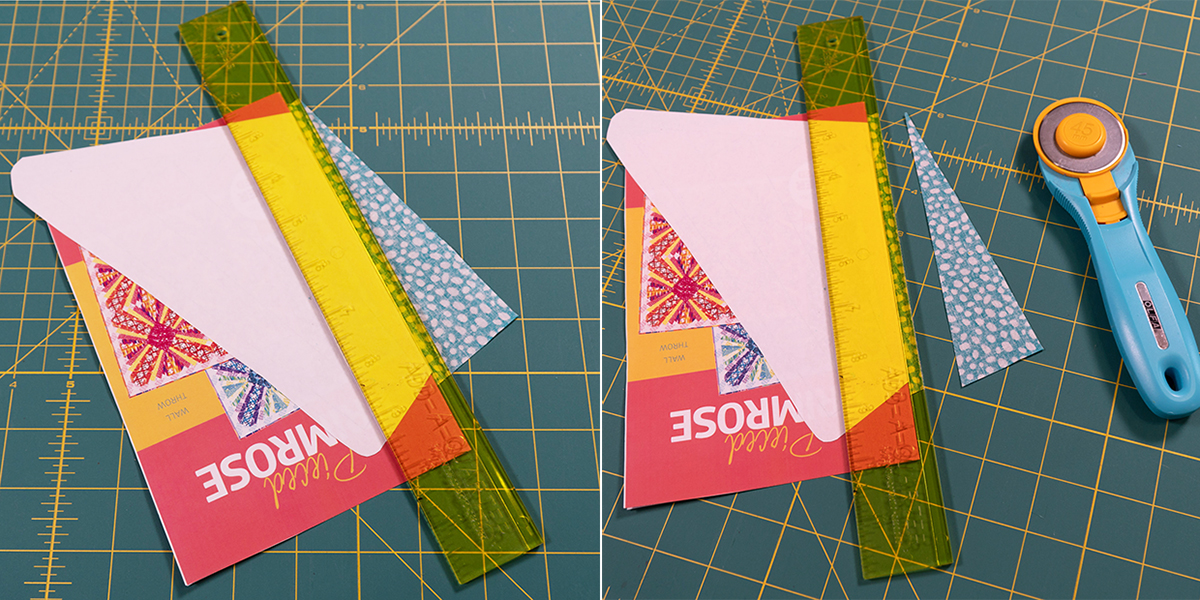
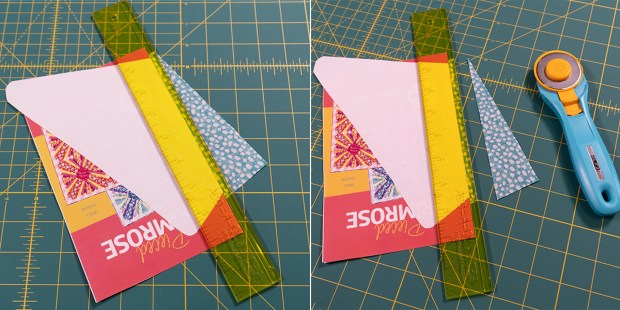
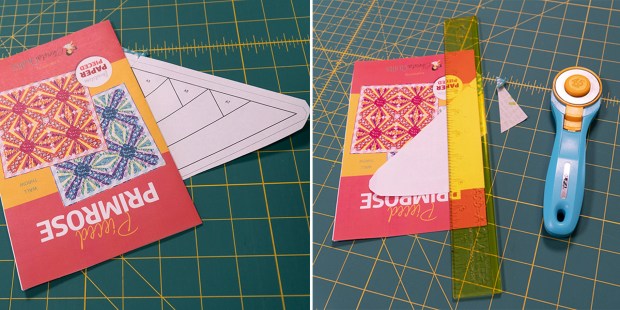
Position a piece of cardstock (such as the pattern cover, or an index card) on the first line that you will sew (the line between A1 and A2 above). A piece of thin, rigid plastic works, too!

Fold the paper template over the piece of cardstock, exposing the extra fabric underneath. Remember that the wrong side of the fabric will be touching the blank side of the paper each time.

Paper Pieced Primrose

Step 2 – Trim

Keeping the fabric, cardstock, and paper template in position, place the Add a Quarter ruler on top with the lip securing everything in place. This will add 1/4″ seam allowance beyond the fold line.

Trim the excess fabric with a rotary cutter.

Doing it this way ensures that the long skinny triangle is positioned at the correct angle for sewing.
Pieced Primrose Quilt

Step 3 – Sew

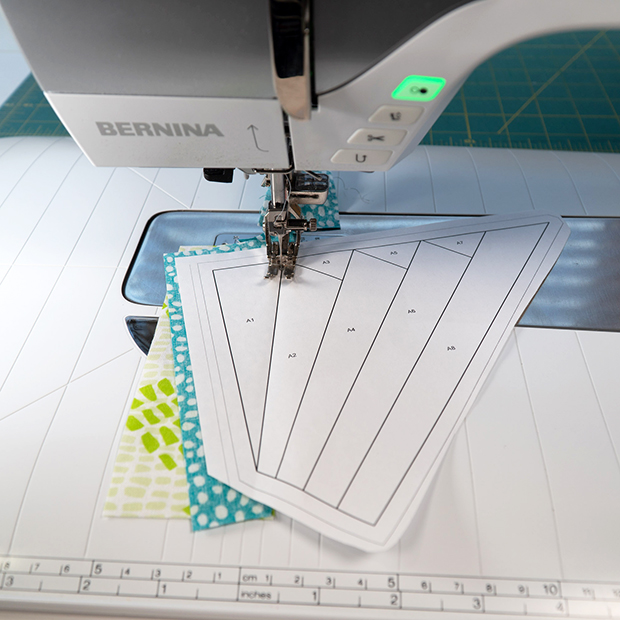
On the non printed paper side, line up the freshly trimmed edge of piece A1 with the edge of piece A2, with the fabric right sides together. Align the raw edges ensuring that the A2 piece is long enough to cover the entire A1/A2 line plus 1/4″ seam allowances on both ends.

FPP by Christa Watson

Lower your stitch length so that it will perforate the paper, making it easier to tear off later. My default is 2.5 so I turn it down to 2.0 or even 1.8. Use a brand new needle for best results.

Sew from 1/4″ before the A1/A2 line to 1/4″ after the printed solid line to ensure you have seam allowances on both sides of the marked line.
Foundation Paper Piecing

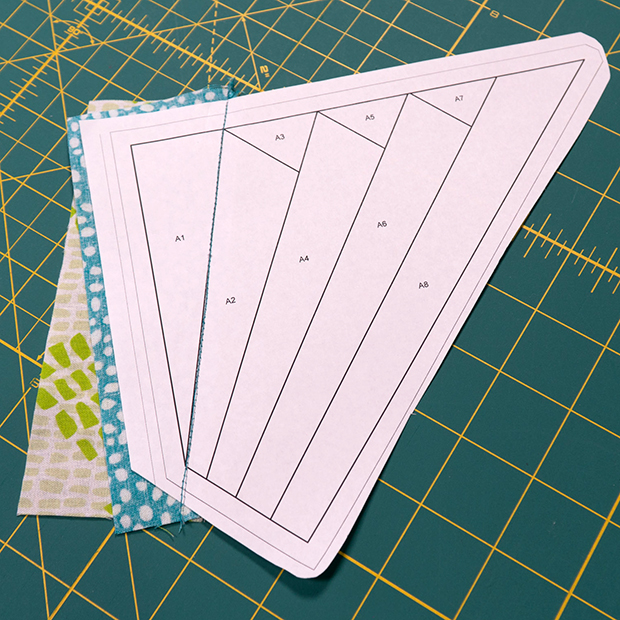
Here’s what my piece looks like after sewing the first seam. It’s ok to go slightly beyond 1/4″ if needed. I do this especially when chain piecing multiple blocks at the same time.
Foundation Paper Piecing

Step 4 – Press

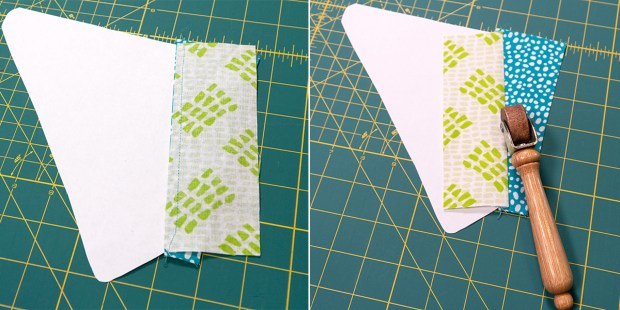
Open up the A2 piece so that both fabrics are right side up. With a wooden seam roller, press the the seam from the front of the fabric. This is easier to do for each step than using an iron.
Foundation Paper Piecing

repeat The Dance over and over until the unit is complete
A3: Fold and Trim

Reposition the cardstock again along the next line. For this example, it’s the very short line between A2 and A3. Click the image below to enlarge if needed.

Fold the paper template over again. Use the Add a Quarter ruler to add the 1/4″ seam allowances and trim the excess with a rotary cutter.

Tip: if the paper is stuck to the fabric, you can lift it away (gently) from the seam as needed.
Foundation Paper Piecing

A3: Sew

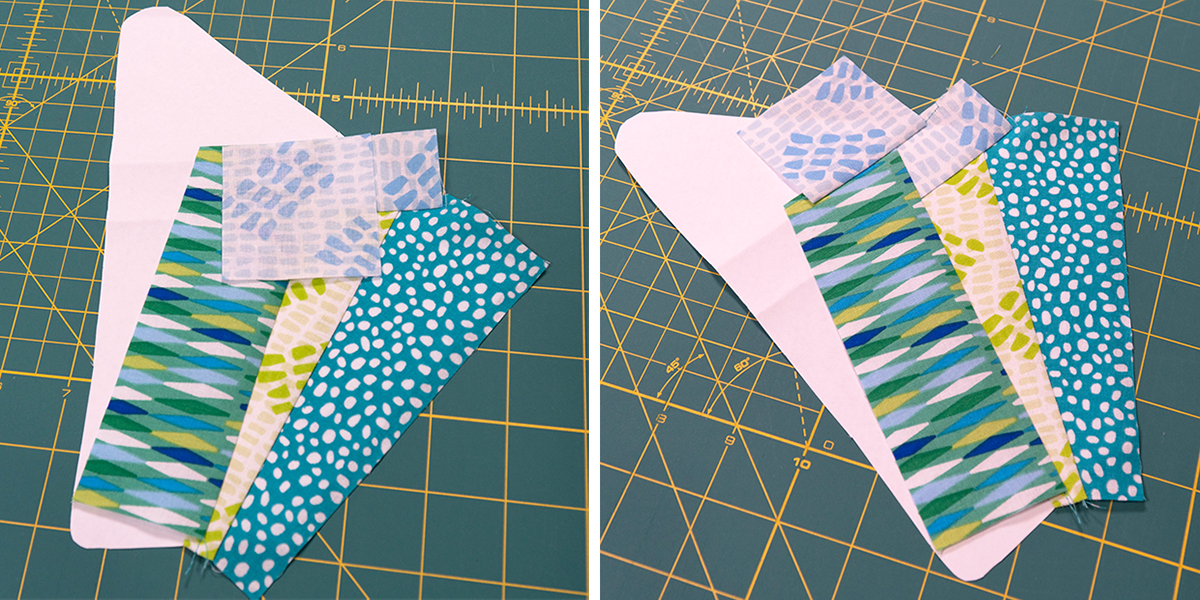
Sew the next piece in the same manner as before. Align the A3 edge to be sewn with the freshly cut edge. In the example below, the small blue square does not need to take up the entire space of the trimmed A1- A2 edges.

Position the fabric square in the middle of the area to be sewn as shown below. Flip the whole unit over if needed and hold it up to the light to ensure that the fabric square will cover the full line between A2/A3 plus seam allowances.
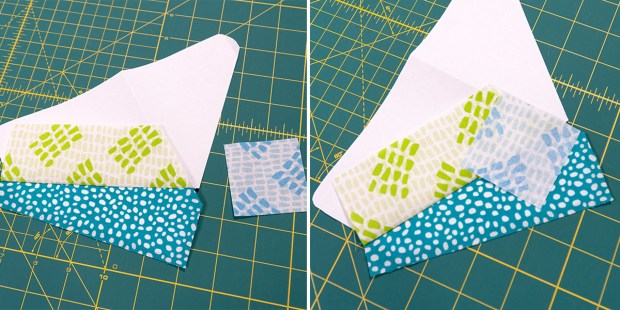
Foundation Paper Piecing

Below is what my unit looks like after sewing the line between A2/A3. It’s ok if the sewn line is slightly longer than 1/4″ on both sides. If you are worried about the seam coming apart at the ends, you can backstitch at either end.
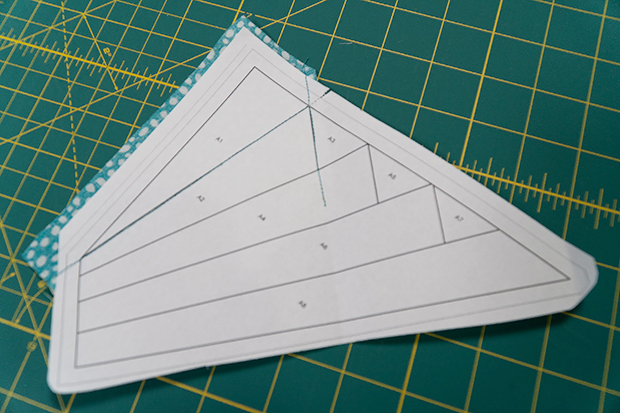
Foundation Paper Piecing

A3: Press
A4: Fold

Repeat the prior steps: open up the A3 piece and press from the front with the wooden seam roller. Then fold over the next line (A2/A4) using the cardstock or other thin, hard edge for stability.
Foundation Paper Piecing

A4: Trim

Repeat the same step as before: use the Add a Quarter ruler to add 1/4″ seam and trim the excess.

Fold the paper template back into position and flip the paper over again so that you can see the proper angle to align the next piece (the green A4 rectangle).

Pieced Primrose Quilt

A4: Sew

Line up the A4 rectangle right sides together. Flip the paper over and sew on the line between A2/A4 with 1/4″ extra on either end of the drawn line. Below is what this next step looks like:

Pieced Primrose

A4: Press
A5: Fold and Trim

Repeat the same steps over and over again: press the green A4 rectangle (below left), fold the paper back (not shown), trim the excess (below right).

Foundation Paper Piecing by Christa Watson

A5: Sew and Press

Align the A5 square (light blue), sew the seam and press from the top.
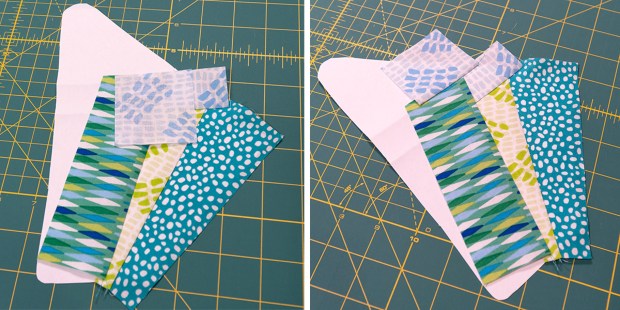
Foundation Paper Piecing by Christa Watson

A6 and A7: Fold, Trim, Sew and Press!

Fold the paper, trim the excess, Sew A6 (light purple), press A6 (below left).
Fold, trim, sew, and press the A7 unit (light blue square, below right).
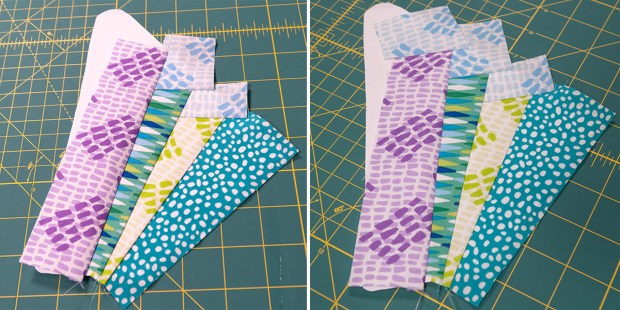
Foundation Paper Piecing by Christa Watson

A8: Fold, Trim, Sew and Press

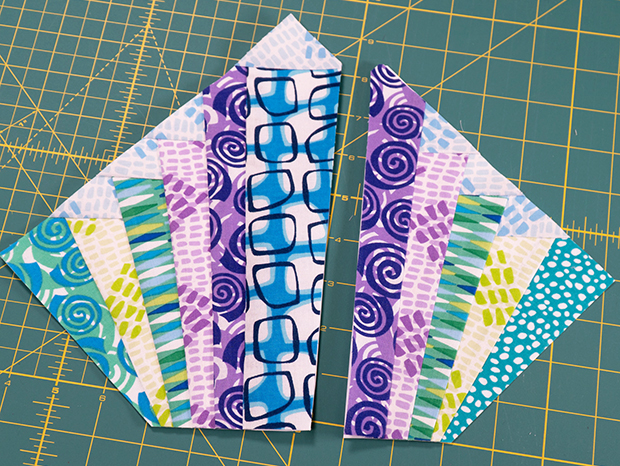
This will complete all of the sewing for the A side of the block!
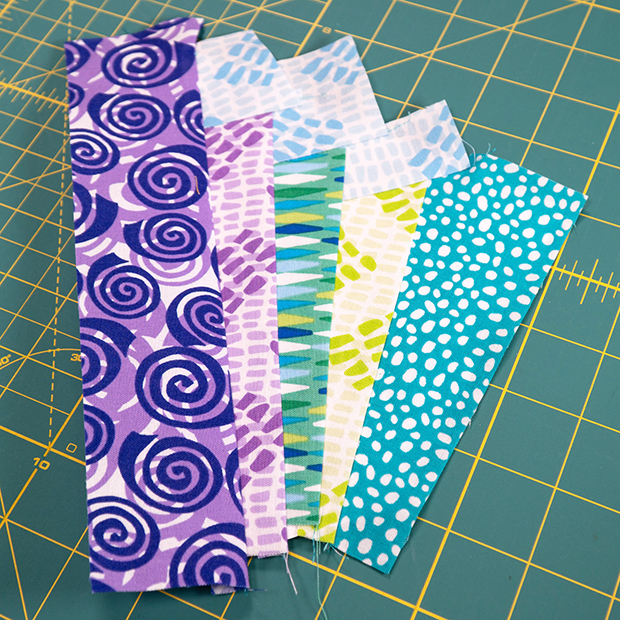
Foundation Paper Piecing by Christa Watson

Sewing the B Units

Now repeat the process for the B half of the block. It has a total of 10 units to piece. Remember to fold, trim, sew and press each and every unit, just like before!

Notice that I used a triangle instead of a square for the B10 unit. This made more efficient use of the fabric when cutting, but it’s still the same process as before.
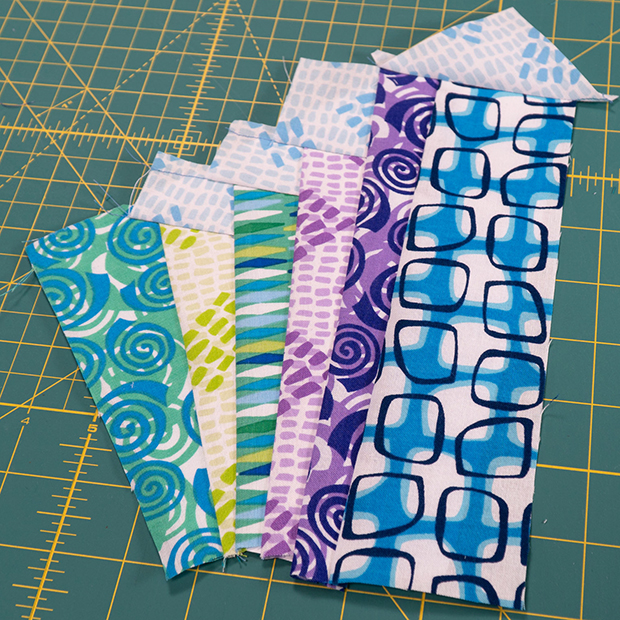
Foundation paper piecing

Once you’ve sewn all of the Section A and Section B blocks, trim them along the outer dashed lines using a rotary cutter and ruler. Be sure you don’t trim off your triangle points! At this point, your paper should still be intact to keep the blocks stable.

Paper Pieced Primrose by Christa Watson

Sew the A and B unit together. Then sew the oversized corner triangle to the bottom of the block. It’s oversized so that you don’t have to line it up perfectly. (See below, left).

Trim the excess fabric from the triangle to match the rest of the block. (see below right).

Paper Pieced Primrose

After making one test block, continue in the same manner to sew the number of blocks you need for the size you are making. I’m creating this quilt in both the warm and cool colorways of my Abstract Garden fabric line, but the process is exactly the same!
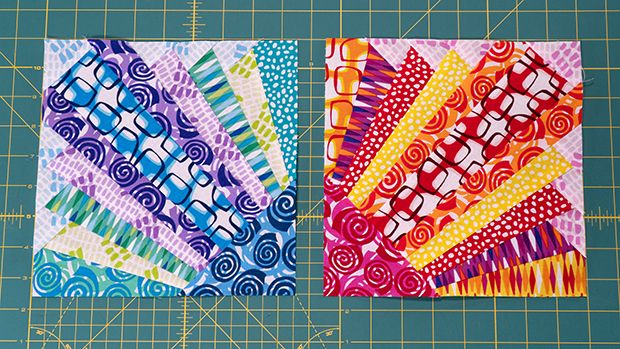
Pieced Primrose Blocks by Christa WatsonAbove is the same block in warm and cool colorways of Abstract Garden.